- What makes cavities so common in children and why do they matter?
- How do pediatric dentists prevent cavities before they start?
- What is a caries risk assessment and how is it used?
- How does fluoride varnish for children work and is it safe?
- What are dental sealants for kids and when are they recommended?
- How do daily home habits protect against early childhood caries?
- What foods and drinks support tooth decay prevention for children?
- How often should children have dental checkups and cleanings?
- What is silver diamine fluoride and when might it be considered?
- How does community water fluoridation help families in Laguna Niguel, CA?
- What California and national guidelines shape preventive dentistry for children?
- What can parents expect at a first preventive visit?
- How do sealants compare with fillings for growing smiles?
- Where can families find a Laguna Niguel pediatric dentist for preventive care?
- How does Kidz Modern Dentistry support preventive dentistry for children in Laguna Niguel, CA?
- Where can I find the sources referenced in this article?
What makes cavities so common in children and why do they matter?
Cavities are one of the most common chronic conditions of childhood in the United States. National data show that by age eight, more than half of children have had a cavity in their primary teeth, and a significant number of children aged five to eleven have untreated decay [1]. Early childhood caries can affect comfort, sleep, nutrition, speech development, school attendance, and self confidence. The good news is that cavities are largely preventable with a thoughtful plan that blends professional care with daily home habits supported by parents and caregivers.
When you understand what causes decay, prevention becomes more manageable. Tooth decay happens when bacteria in dental plaque use sugars and starches from foods and drinks to produce acids that pull minerals from tooth enamel. Over time and without remineralization support from fluoride and saliva, these microscopic changes can become visible holes. Early intervention helps stop this process before it progresses, which is why consistent prevention is a central focus of pediatric dental care [2].
How do pediatric dentists prevent cavities before they start?
Pediatric dentists use a comprehensive prevention plan that accounts for each child’s age, medical history, diet, fluoride exposure, and oral hygiene routine. Core strategies include a structured caries risk assessment, periodic fluoride varnish, dental sealants for kids on cavity prone molars, coaching on brushing and flossing techniques, age specific diet guidance, and routine dental checkups and cleanings. This whole child approach is designed to build healthy habits early and reinforce them as children grow [3] [4] [5].
In our educational approach, we emphasize Pediatric preventive dentistry as the foundation for long term oral health. This means we prioritize personalized prevention plans, teach techniques that children can actually use, and schedule follow ups that match each child’s risk level so small issues are addressed before they become bigger challenges [3].
What is a caries risk assessment and how is it used?
A caries risk assessment is a structured review of factors that influence a child’s likelihood of developing decay. Pediatric dentists use validated tools to gather a concise picture of risk that includes medical and dental history, visible plaque, past or current decay, fluoride exposure from toothpaste and water, dietary patterns, oral hygiene habits, and family and social factors that affect daily routines [3].
Why does this matter? Risk level guides the care plan. For example:
- Low risk children may benefit from routine six month exams, standard fluoride toothpaste use, and sealants when molars erupt.
- Moderate risk children often receive more frequent fluoride varnish and coaching to elevate brushing and flossing skill and consistency.
- High risk children may need shorter recall intervals, targeted diet changes, additional preventive agents such as silver diamine fluoride when appropriate, and a closer follow up schedule to confirm progress [3] [10].
Risk assessment is not a one time event. Children’s habits and exposures change as they move through school years and sports, and plans are updated accordingly to keep prevention on track [3].
How does fluoride varnish for children work and is it safe?
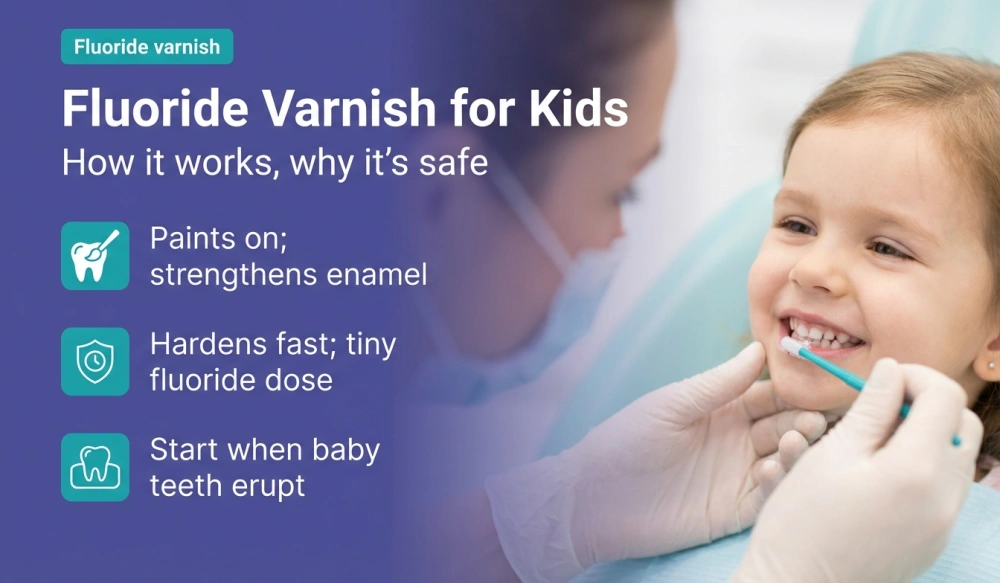
Fluoride varnish is a concentrated fluoride coating brushed onto teeth during a visit. It hardens quickly in contact with saliva and delivers fluoride to the enamel surface to support remineralization. Leading guidelines recommend fluoride varnish for all children starting when primary teeth erupt, with frequency tailored to the child’s caries risk [2].
Fluoride is a well studied mineral that strengthens enamel and helps reverse early decay. Safety guidance emphasizes correct dosing according to age, using a smear sized amount of fluoride toothpaste for children under three and a pea sized amount for ages three to six. Parents can help by supervising brushing and encouraging children to spit out toothpaste without rinsing, which keeps a thin protective layer on teeth [4].
For children without access to optimally fluoridated water, clinicians may discuss oral fluoride supplements when indicated. Recommendations consider age, weight, cavity risk, and tested fluoride levels in the main drinking water supply [2].
What are dental sealants for kids and when are they recommended?
Dental sealants are thin, protective coatings placed on the chewing surfaces of back teeth to block bacteria and food from collecting in deep grooves. Pediatric dentists typically recommend sealants soon after the first and second permanent molars erupt, which usually occurs around ages six and twelve. Sealants are painless to place and can be highly effective at preventing cavities in these high risk sites [5] [6].
Evidence from public health and clinical research shows that sealants can reduce cavity risk in molars substantially during the first years after placement. Public health data indicate that sealants protect against a large proportion of molar cavities in the short term, and regular dental checkups allow the team to monitor and maintain sealants so they continue to perform well over time [6].
Sealants are one part of a prevention plan. They complement daily brushing with fluoride toothpaste and periodic fluoride varnish. Your child’s dentist will evaluate when molars are ready and discuss materials, placement steps, and maintenance so you know exactly what to expect [5].
How do daily home habits protect against early childhood caries?
Small, consistent habits make the biggest difference. A child who brushes twice daily with a fluoride toothpaste and receives a quick assist from a parent will typically remove more plaque and get the right fluoride benefits than a child who brushes alone inconsistently. The AAPD recommends a smear sized amount of fluoride toothpaste for toddlers and a pea sized amount for preschool and early school years, with supervision to minimize swallowing [4].
Flossing becomes important once neighboring teeth touch. Floss picks can make the motion easier for small hands, and parents can help with technique until the child demonstrates consistent skill. Children who wear braces or other appliances may need extra instruction and tools like interdental brushes to clean around brackets and wires effectively. Routine home care partners with professional cleanings to keep gums healthy and plaque under control.
Many families also find it helpful to set a routine anchor for oral hygiene. For example, brush right after breakfast and again before bedtime. A simple chart or timer can turn the routine into a game and build the habit.
What foods and drinks support tooth decay prevention for children?
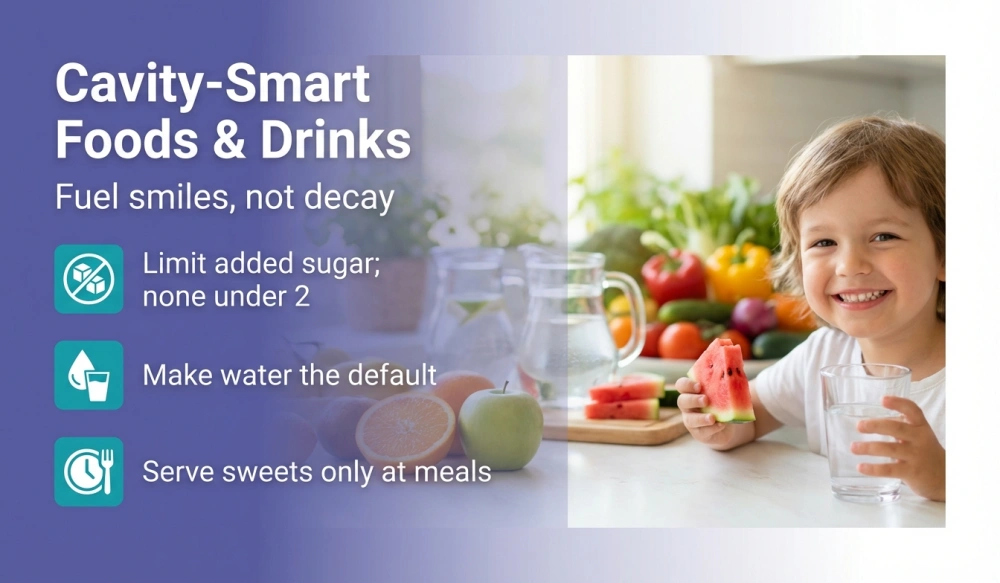
Diet is central to tooth decay prevention for children. Frequent exposure to sugary drinks and snacks gives mouth bacteria more fuel to produce acids that weaken enamel. Federal nutrition guidance recommends limiting added sugars to less than ten percent of total daily calories for children two years and older and avoiding added sugars entirely for children younger than two. Water and milk are preferred beverages, and water is the best choice between meals [7].
Practical strategies include:
- Make water the default choice in lunchboxes, sports practices, and car rides. Add slices of fruit for flavor without added sugar.
- Reserve sweet treats for mealtimes rather than all day grazing. Saliva flow is higher during meals and helps neutralize acids.
- Offer tooth friendly snacks such as cheese, yogurt without added sugar, nuts where age appropriate, and crunchy vegetables.
- Beware sticky snacks that cling to grooves, including gummy candies and fruit snacks. If given, pair with a meal and encourage a water rinse.
How often should children have dental checkups and cleanings?
Routine dental checkups and cleanings allow the team to monitor growth and development, reinforce home care techniques, apply fluoride varnish as needed, and place or maintain sealants at the right time. Many children do well on six month intervals, but the schedule can be personalized using caries risk. Higher risk children benefit from shorter intervals to maintain momentum and catch changes early [3].
The first dental visit is recommended by the first birthday or within six months of the first tooth coming in. Early visits build comfort and allow parents to ask questions about feeding, teething, fluoride, and brushing. These visits also help the dentist identify individual risk factors and set a prevention plan that matches your child’s stage of development [8].
What is silver diamine fluoride and when might it be considered?
Silver diamine fluoride, often called SDF, is a topical liquid used to arrest early cavities and reduce sensitivity on affected teeth. SDF can be useful for very young children, those with special health care needs, or situations where conventional restorative care needs to be deferred. An important consideration is that SDF darkens the area of active decay, which is a normal and expected effect. Dentists discuss benefits, limitations, and esthetics with parents to determine if SDF fits the child’s care plan [10].
SDF does not replace good home care, fluoride toothpaste, or sealants. Instead, it can be a bridge that stabilizes an area while broader prevention strategies continue. Pediatric dental teams use SDF selectively within a comprehensive approach after evaluating risk and alternative options [10].
How does community water fluoridation help families in Laguna Niguel, CA?
Community water fluoridation adjusts fluoride to an optimal level that helps prevent tooth decay across the population. The current federal recommendation is 0.7 milligrams per liter of water. This level supports enamel while minimizing risk of fluorosis. Families who drink tap water and brush with fluoride toothpaste receive daily exposure that complements in office prevention like varnish and sealants [9].
If you primarily use bottled or filtered water, ask your child’s dentist whether your source contains fluoride and whether your filtration system affects fluoride content. This helps your care team calibrate prevention recommendations in a way that fits your household [2] [9].
What California and national guidelines shape preventive dentistry for children?
Preventive dentistry for children in California follows national clinical recommendations and state regulations. At the national level, the United States Preventive Services Task Force recommends fluoride varnish for all infants and children with erupted teeth and oral fluoride supplementation for children at elevated risk whose primary water source is deficient in fluoride [2]. The American Academy of Pediatric Dentistry publishes evidence based guidelines on caries risk assessment, fluoride use, and minimally invasive approaches such as SDF [3] [4] [10]. The American Dental Association provides evidence reviews supporting the placement and maintenance of pit and fissure sealants [5].
In California, dental professionals are licensed and regulated by the Dental Board of California under the Dental Practice Act. Practices follow state law and adopt federal infection prevention guidance from the Centers for Disease Control and Prevention to protect patients and teams in clinical settings [11] [12].
What can parents expect at a first preventive visit?
The first preventive visit focuses on getting to know your child and building trust. For infants and toddlers, the exam may be completed with a knee to knee position that allows your child to stay near you while the dentist gently examines the teeth and gums. For older children, we introduce the visit step by step so they can ask questions and explore at their own pace. You can expect a brief exam, a review of medical and dental history, a caries risk assessment, and coaching on age appropriate brushing and flossing strategies. If appropriate, the dentist may apply fluoride varnish and discuss timing for sealants as molars erupt [3] [8].
We invite parents to share concerns about habits such as night time feeding, thumb or finger sucking, and sports mouthguards. These conversations help us recommend practical steps that support healthy growth and minimize risk for early childhood caries [3].
How do sealants compare with fillings for growing smiles?
Sealants and fillings serve different purposes. Sealants are preventive and are placed on sound tooth surfaces to protect deep grooves before decay occurs. Fillings are restorative and are used to repair teeth after cavities form. When prevention is timely, many molars never need fillings because decay is avoided in the highest risk pits and fissures [5] [6].
Parents often ask whether sealants last. Sealants can be long lasting when placed correctly and maintained. They are checked at routine visits and can be repaired or replaced if needed. Compared with fillings, sealants are simpler, remove no tooth structure, and support a conservative philosophy that prioritizes keeping natural enamel intact as children grow [5].
Where can families find a Laguna Niguel pediatric dentist for preventive care?
If you are searching for a kids dentist near me and live in Laguna Niguel, you have access to a range of pediatric services focused on prevention. Pediatric dentists in the area collaborate with families to plan dental sealants for kids at the right ages, provide fluoride varnish for children, and tailor home hygiene guidance for each stage. These steps are a practical way to approach pediatric dentist cavity prevention with confidence and clarity.
For families seeking Pediatric preventive dentistry in Laguna Niguel, your child’s care can be built around a personalized risk assessment, evidence based varnish and sealant timing, and supportive coaching that fits busy schedules. A thoughtful plan paired with regular checkups can help reduce the likelihood of new decay while building habits that last into the teen years [2] [3] [5].
How does Kidz Modern Dentistry support preventive dentistry for children in Laguna Niguel, CA?
At Kidz Modern Dentistry, our focus is prevention that feels comfortable, clear, and achievable for families. We serve children and teens across Laguna Niguel and neighboring South Orange County communities with an approach designed to lower cavity risk and make visits a positive part of growing up. Our team provides same day support for urgent concerns, kid friendly sedation when appropriate, and comprehensive preventive services that match each child’s stage of development.
Here is how our approach helps parents plan next steps with confidence:
- Personalized prevention We start with a caries risk assessment and build a plan that fits your child’s needs, including fluoride varnish timing, dental sealants for kids as molars erupt, and home routines that match your family’s schedule.
- Child centered visits We explain each step in child friendly language, use tell show do methods, and check in often so children feel safe and heard.
- Clear communication We translate research into everyday strategies parents can use at home, with simple visuals for brushing and flossing tips for kids.
- Evidence aligned care We follow national recommendations and state regulations to deliver preventive dentistry for children based on current guidelines.
- Comfort and safety From infection prevention to behavior guidance and sedation options when indicated, our systems are designed with safety as the priority.
- Access to qualified professionals Parents interact directly with licensed pediatric providers who welcome questions and partner with you on decisions.
- Community focused We are proud to serve families in Laguna Niguel, CA and throughout South Orange County, partnering with local schools and activities to make prevention practical for busy families.
We are always ready to discuss Pediatric preventive dentistry and how a tailored plan can support your child’s smile. To schedule a visit or ask a question, call +1 949 273 0110. We look forward to helping your child build healthy habits that last.
Where can I find the sources referenced in this article?
- Children’s Oral Health – Centers for Disease Control and Prevention
- Dental Caries in Children Younger Than 5 Years Screening and Interventions – US Preventive Services Task Force
- Caries Risk Assessment and Management for Infants Children and Adolescents – American Academy of Pediatric Dentistry
- Use of Fluoride – American Academy of Pediatric Dentistry
- Pit and Fissure Sealants Evidence Based Clinical Guidance – American Dental Association
- Dental Sealants Prevent Cavities – Centers for Disease Control and Prevention
- Dietary Guidelines for Americans 2020 to 2025 – U.S. Department of Health and Human Services and U.S. Department of Agriculture
- Perinatal and Infant Oral Health Care – American Academy of Pediatric Dentistry
- Community Water Fluoridation – Centers for Disease Control and Prevention
- Use of Silver Diamine Fluoride for Dental Caries Management – American Academy of Pediatric Dentistry
- Laws and Regulations Dental Practice Act – Dental Board of California
- Infection Prevention and Control in Dental Settings – Centers for Disease Control and Prevention
Common Questions About This Topic
Find answers to frequently asked questions related to this article.