
- What Are “Shark Teeth” in Children?
- Why Do Adult Teeth Come in Behind Baby Teeth?
- Understanding Normal Tooth Eruption in Children
- When Should Baby Teeth Fall Out on Their Own?
- When Should You See a Pediatric Dentist?
- What Happens During a Pediatric Dental Exam for This Issue?
- Tooth Extraction vs. Watchful Waiting: Which Approach Is Right?
- Could This Affect My Child’s Bite or Need for Braces?
- Frequently Asked Questions
- About Kidz Modern Dentistry in Laguna Niguel
- References
You are brushing your child’s teeth one evening and notice something unexpected: a brand-new adult tooth pushing up right behind a baby tooth that has not even come close to falling out yet. Two rows of teeth. It looks a little alarming, and you are probably wondering what on earth is going on. You are not alone in this concern. This situation is actually one of the most common questions parents bring to a pediatric dentist, and in most cases, it turns out to be far less worrisome than it initially appears.
Still, understanding why adult teeth come in behind baby teeth and knowing when a professional evaluation is important can make all the difference in your child’s long-term oral health. This guide walks you through the science behind the phenomenon, what the typical timeline looks like, what warning signs deserve prompt attention, and when a visit to a dental professional in Laguna Niguel, California is the right next step.
What Are “Shark Teeth” in Children?
The term “shark teeth in children” is a colloquial nickname parents and dental professionals alike use to describe a condition called ectopic eruption or lingually erupting mandibular incisors. It gets the nickname from sharks, which famously grow multiple rows of teeth simultaneously. When you see a permanent tooth erupting directly behind or even slightly to the side of the corresponding baby tooth, that is what dentists are referring to.
The condition is most often observed in the lower front teeth (mandibular incisors) between the ages of about 5 and 7, though it can occasionally occur in the upper arch or in the back of the mouth near the molars. It is a recognized and studied dental phenomenon, discussed in clinical guidance from organizations such as the American Academy of Pediatric Dentistry (AAPD) [1].
Why Do Adult Teeth Come in Behind Baby Teeth?
Under typical circumstances, a permanent tooth forms in the jaw beneath its corresponding primary tooth. As the permanent tooth begins its slow upward journey, it naturally dissolves the roots of the baby tooth through a process called root resorption. This gradual dissolving of the baby tooth’s roots is what causes the primary tooth to become loose and eventually fall out, making way for the adult tooth to erupt in the correct position.
When permanent teeth come in behind baby teeth, it typically means one of the following has occurred:
- The permanent tooth erupted at an angle or in the wrong position inside the jawbone, so it did not apply the necessary upward pressure on the baby tooth’s roots to start resorption.
- The baby tooth’s roots were particularly resistant and did not dissolve at the usual rate, leaving the primary tooth firmly anchored even as the permanent tooth began to push through the gum tissue.
- Crowding in the dental arch may have redirected the path of the incoming permanent tooth, causing it to emerge slightly behind or beside the primary tooth rather than directly beneath it.
- Delayed baby tooth loss can sometimes be associated with genetics, diet, or individual variation in dental development timing.
Researchers and dental clinicians have noted that this type of eruption pattern tends to resolve itself in the majority of cases, particularly in the lower front teeth of younger children. The tongue’s natural pressure, combined with normal chewing forces, often guides the permanent tooth forward into proper alignment once the baby tooth is removed [3].
Understanding Normal Tooth Eruption in Children
To put this issue in context, it helps to understand the typical child tooth eruption sequence. The American Dental Association (ADA) provides eruption charts that map out when primary and permanent teeth typically emerge [2]. Keep in mind that every child develops at their own pace, and variations of several months in either direction are completely within the range of normal.
| Tooth | Primary Tooth Eruption | Primary Tooth Loss | Permanent Tooth Eruption |
|---|---|---|---|
| Lower Central Incisor | 6 to 10 months | 6 to 7 years | 6 to 7 years |
| Upper Central Incisor | 8 to 12 months | 6 to 7 years | 7 to 8 years |
| Lower Lateral Incisor | 10 to 16 months | 7 to 8 years | 7 to 8 years |
| Upper Lateral Incisor | 9 to 13 months | 7 to 8 years | 8 to 9 years |
| First Molar (upper/lower) | 13 to 19 months | 9 to 11 years | 6 to 7 years |
It is worth noting that the first permanent molars erupt around age 6 to 7 as well, but these come in behind the last primary molars rather than replacing any baby tooth. These are often called the “6-year molars.” The eruption of permanent lower incisors at the same time creates a period during which parents may notice several changes in their child’s mouth simultaneously.
According to the National Institute of Dental and Craniofacial Research (NIDCR), by age 21 all 32 permanent teeth have typically erupted [4]. The transition from primary to permanent dentition is a lengthy, gradual process spanning roughly from ages 5 to 13 for most children.
When Should Baby Teeth Fall Out on Their Own?
Delayed baby tooth loss is a real consideration when looking at the shark teeth phenomenon. In most healthy children, the sequence of primary tooth loss follows a fairly predictable pattern that mirrors the eruption chart above. The lower central incisors are usually the first to go, loosening and falling out around age 6 to 7.
Once a primary tooth becomes loose, it typically takes several weeks to a few months before it falls out on its own. Children may experience mild discomfort or sensitivity during this period, which is completely normal. Encouraging children to gently wiggle a loose tooth with clean hands can help move the process along, though forcing a tooth out before it is ready can cause unnecessary trauma to the gum tissue.
A baby tooth that shows no signs of looseness when the permanent tooth behind it is already visibly erupting through the gumline is the key indicator that the natural root resorption process may not have occurred as expected. That is the scenario most likely to warrant a visit to a pediatric dentist for evaluation.
When Should You See a Pediatric Dentist?
This is the question most parents are really asking. The short answer is: sooner is generally better than later, but not every instance of a double row of teeth is an emergency.
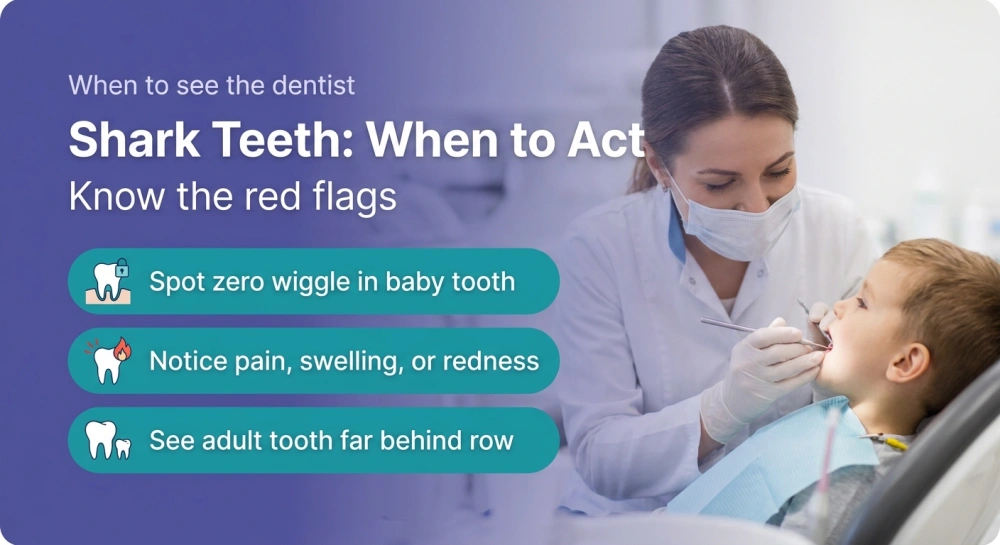
Signs That Warrant Prompt Attention
- The baby tooth shows no looseness at all and the permanent tooth has been visible for two to four weeks or longer without any change.
- Your child is experiencing pain or significant discomfort in the area where the double row of teeth is present.
- The permanent tooth has erupted far behind or in a notably unusual position relative to the baby tooth row.
- Multiple teeth are affected simultaneously, which may suggest a more systemic pattern worth examining.
- Your child’s bite feels different or they are having difficulty chewing comfortably.
- Signs of irritation, swelling, or redness are visible in the gum tissue surrounding the new tooth.
When a Watch-and-Wait Approach May Be Reasonable
If the baby tooth in front of the new permanent tooth is already slightly loose and your child is in the typical age range (roughly 5 to 7 years for lower front teeth), a dentist may recommend monitoring the situation for a few weeks before intervening. Many cases in the lower front incisor area resolve without any treatment once the primary tooth falls out naturally [3].
That said, even in cases that appear straightforward, scheduling a pediatric dental exam is a sound decision. A qualified dentist can take a closer look, and if appropriate, use digital imaging to assess the position of both teeth and the state of the primary tooth’s roots. This removes any guesswork and provides you with clear, professional guidance.
If you are in the Laguna Niguel area, pediatric dental care in Laguna Niguel is accessible and designed to make these evaluations comfortable and stress-free for children of all ages.
What Happens During a Pediatric Dental Exam for This Issue?
When you bring your child in for an evaluation of potential shark teeth or ectopic eruption, the dentist will typically follow a structured assessment process. Knowing what to expect can help you prepare your child and reduce any anxiety about the visit.
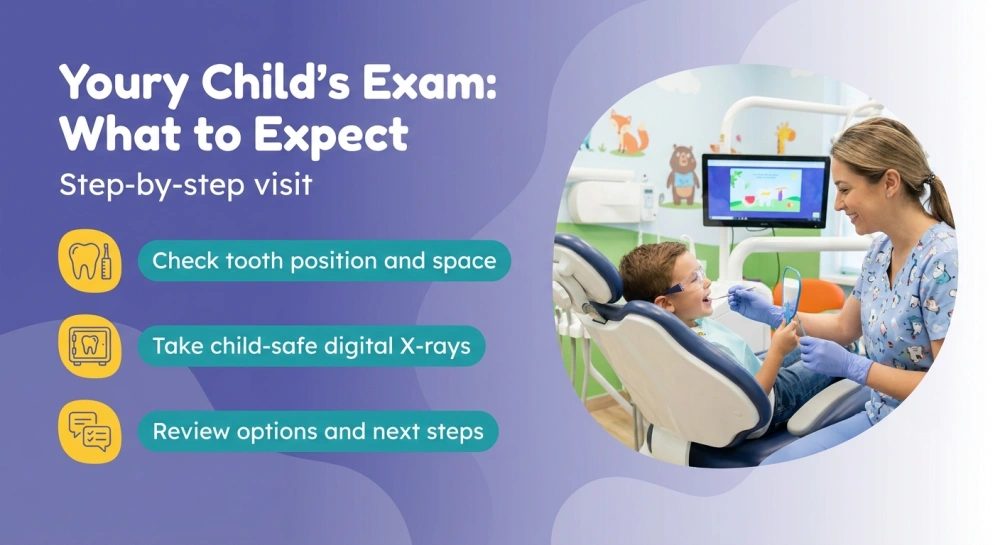
Visual Examination
The dentist will carefully examine the area, noting the position of the incoming permanent tooth, the degree of the baby tooth’s mobility (or lack thereof), and the overall alignment of the dental arch. They will also look for any signs of gum irritation or early crowding.
Digital Radiographs (X-Rays)
Pediatric digital X-rays are an invaluable diagnostic tool in these situations. Low-radiation dental X-rays for kids allow the dentist to see beneath the gumline and evaluate whether the primary tooth’s roots are resorbing as expected, how much root remains, and the exact trajectory of the incoming permanent tooth. This information is critical for making an informed decision about whether extraction is necessary or whether waiting is appropriate [5].
Treatment Planning
Based on the examination findings, the dentist will present you with a clear treatment recommendation. In many cases for younger children with lower front teeth, the recommendation may be to extract the retained baby tooth in the dental office. This is typically a quick, straightforward procedure. In other cases, continued monitoring may be the chosen path.
Tooth Extraction vs. Watchful Waiting: Which Approach Is Right?
One of the most common questions parents ask after spotting this issue is whether the baby tooth needs to be pulled out or whether it will come out on its own. The decision depends on several clinical factors that only a hands-on dental evaluation can properly assess.
Factors Favoring Extraction
- No mobility in the primary tooth after several weeks of the permanent tooth being visible.
- The permanent tooth has erupted significantly and is nearing full height while the baby tooth remains firmly rooted.
- X-rays show significant root remaining on the primary tooth, suggesting natural resorption has stalled.
- Crowding concerns indicate the baby tooth is impeding proper positioning of the permanent tooth.
- Upper arch involvement, which tends to self-correct less reliably than lower arch cases.
Factors Supporting Watchful Waiting
- The baby tooth is already slightly loose and appears to be on its way out naturally.
- The child is young (around 5 to 6) and the lower incisors are involved, where self-correction is most likely.
- The permanent tooth is just beginning to emerge and has not yet fully cleared the gumline.
- X-rays show minimal root remaining on the primary tooth, suggesting it will fall out shortly on its own.
When gentle tooth extractions for children are indicated, pediatric tooth extractions performed in a child-friendly environment are typically quick and well-tolerated. Modern techniques and appropriate local anesthesia keep discomfort to a minimum. Specialized pediatric offices are particularly skilled at making this type of procedure as relaxed and reassuring as possible for young patients.
Could This Affect My Child’s Bite or Need for Braces?
This is a fair and forward-thinking question. Parents naturally want to know whether a double row of teeth now means orthodontic treatment later. The good news is that in the majority of lower front tooth cases, once the baby tooth is removed and the tongue provides natural forward pressure on the new permanent tooth, the adult tooth gradually moves into a normal position on its own over the course of several weeks to a few months.
Research and clinical experience in pediatric dentistry consistently show that the lower permanent incisors have a strong tendency to self-align after the primary tooth obstacle is removed, provided the child is young enough and there is adequate space in the arch [3].
However, early orthodontic monitoring is a wise complement to any treatment for this condition. A pediatric dentist trained in growth and bite monitoring can assess whether the overall dental arch is developing properly, whether space is adequate for all incoming permanent teeth, and whether early intervention could prevent more complex orthodontic needs down the road. This kind of proactive monitoring, sometimes called interceptive orthodontics, can make a meaningful difference in your child’s long-term dental alignment outcomes.
When Should Orthodontic Evaluation Be Considered?
The American Association of Orthodontists recommends that children receive their first orthodontic screening no later than age 7. This does not mean treatment will begin at that age; rather, it provides an opportunity for a professional to identify any developing concerns early, when options are often simpler and more effective.
Frequently Asked Questions
Is it painful for a child when permanent teeth come in behind baby teeth?
It can be mildly uncomfortable, similar to the general sensitivity of teething, but it is rarely severely painful. If your child is experiencing significant or persistent pain in the area, that is a reason to schedule an evaluation promptly. In most cases, discomfort is mild and manageable with appropriate pediatric pain-relief measures as recommended by your dentist.
How common is the shark teeth phenomenon in children?
Ectopic eruption of permanent incisors behind primary teeth is one of the more frequently encountered developmental dental variations in children. It is particularly common around ages 5 to 7 when the lower front permanent teeth begin to emerge. While precise prevalence statistics vary across studies, most pediatric dental clinicians consider it a routine finding in everyday practice rather than a rare event.
Can shark teeth occur in the back of the mouth, not just the front?
Yes, ectopic eruption can occur in the molar region as well. When the first permanent molars erupt, they can sometimes become partially impacted against the roots of the second primary molars in a pattern that requires monitoring or early intervention. This is a distinct situation from the lower incisor scenario and may require different management, making professional evaluation particularly important [1].
Will my child’s permanent tooth straighten out on its own after the baby tooth falls out?
For lower front teeth in young children, yes, self-correction is common and well-documented. The tongue and the natural forces within the arch often guide the permanent tooth forward into the correct position within a few weeks to a few months. For upper front teeth or cases where crowding is significant, self-correction is less predictable and a dental professional can advise on whether additional monitoring or early orthodontic assessment is warranted.
What if my child is nervous about having a baby tooth removed?
This is a very real concern for many families. Dental anxiety in children is common, and a good pediatric dental practice will have strategies in place to address it. Options can include careful numbing with topical and local anesthetics, child-friendly communication approaches, distraction techniques, nitrous oxide (laughing gas), and in some cases sedation options for particularly anxious children. The goal is always to make the experience as calm and positive as possible.
Should I wiggle or pull the baby tooth myself if it seems loose?
If the baby tooth is already clearly loose and your child is comfortable, gentle wiggling with clean hands is generally fine and can help the tooth come out naturally. However, forcibly pulling a tooth that is not ready can damage the surrounding gum tissue, break the root, and increase the risk of infection. When in doubt, have a dental professional take a look before attempting to remove it at home.
Does diet affect how quickly baby teeth fall out?
Nutrition plays a role in overall dental development, including root resorption. Children with adequate nutrition supporting bone and tooth development generally follow expected timelines. However, the specific timing of individual tooth loss is largely determined by the position of the incoming permanent tooth and genetics rather than diet alone.
About Kidz Modern Dentistry in Laguna Niguel, California
When parents in Laguna Niguel notice something unusual about their child’s dental development, such as adult teeth coming in behind baby teeth, having a trusted, child-focused dental team to turn to makes all the difference. At Kidz Modern Dentistry, we specialize exclusively in pediatric dental care, meaning every aspect of our office, our approach, and our team is built around the needs of children from infancy through their teenage years.
We understand that discovering a double row of teeth in your child’s mouth can feel alarming in the moment. Our experienced pediatric dental team is here to walk you through exactly what is happening, show you the diagnostic images, explain your options in plain language, and help your child feel completely at ease throughout the process. Whether the situation calls for a simple extraction, a short monitoring period, or early orthodontic evaluation, we provide clear, honest guidance tailored to each child’s unique development.
Our Approach to Child-Friendly Dental Care
Every child who visits our practice in Laguna Niguel, California receives individualized attention from the moment they walk through our door. We use a kid-friendly, warm, and reassuring approach that transforms what could be an anxious experience into a positive one. For children who need a little extra support, we offer sedation options specifically designed for pediatric patients, including nitrous oxide and other forms of conscious sedation, so that even the most apprehensive children can receive the care they need comfortably.
For families concerned about shark teeth or delayed primary tooth loss, our team routinely performs comprehensive pediatric dental exams that include child-safe digital dental X-rays to assess exactly what is happening beneath the surface. These low-radiation images let us evaluate root resorption, permanent tooth positioning, and overall arch development with precision and minimal exposure for your child.
Comprehensive Services Under One Roof
Our Laguna Niguel practice offers a full range of pediatric dental services including routine preventive care, gentle tooth extractions, space maintainers for cases where early tooth loss may affect the developing arch, early orthodontic monitoring, and same-day pediatric dental emergencies for situations that require urgent attention. We also provide oral habit counseling for children who may have habits affecting their dental development, as well as specialized care for children with special needs.
We believe that every dental visit should leave your child feeling good about their experience. A positive early relationship with dental care pays dividends throughout a lifetime of oral health. Pediatric preventive dental care through regular checkups, cleanings, and early intervention when needed is the foundation of everything we do.
Serving Families in Laguna Niguel and the Surrounding Communities
Kidz Modern Dentistry proudly serves families throughout Laguna Niguel and the surrounding communities in Orange County, California. Our team combines years of pediatric dental training and clinical experience with a genuine passion for making children comfortable and confident in the dental chair.
If you have noticed adult teeth coming in behind baby teeth in your child’s mouth, or if you have any questions about your child’s dental development, we welcome you to reach out to our team directly. We are here to help.
Kidz Modern Dentistry
Laguna Niguel, California
Phone: +1 (949) 273-0110
References
- American Academy of Pediatric Dentistry (AAPD) – Clinical Guidelines and Reference Manual
- Eruption Charts: Primary and Permanent Teeth – MouthHealthy, American Dental Association
- Ectopic Eruption of Mandibular Incisors: Clinical Outcomes and Management – PubMed, National Library of Medicine
- Children’s Oral Health – National Institute of Dental and Craniofacial Research (NIDCR), National Institutes of Health
- Dental X-Rays and Children’s Oral Health – National Institute of Dental and Craniofacial Research (NIDCR)
- Babies and Kids Oral Health – MouthHealthy, American Dental Association
- Parent Resources: Tooth Development and Eruption – American Academy of Pediatric Dentistry
- PubMed Central – National Center for Biotechnology Information, National Library of Medicine
- American Dental Association – Professional Dental Standards and Patient Education
- American Association of Orthodontists – Early Orthodontic Evaluation Guidelines
Common Questions About This Topic
Find answers to frequently asked questions related to this article.
It can be mildly uncomfortable, similar to the general sensitivity of teething, but it is rarely severely painful. If your child is experiencing significant or persistent pain in the area, that is a reason to schedule an evaluation promptly. In most cases, discomfort is mild and manageable with appropriate pediatric pain-relief measures as recommended by your dentist.
Ectopic eruption of permanent incisors behind primary teeth is one of the more frequently encountered developmental dental variations in children. It is particularly common around ages 5 to 7 when the lower front permanent teeth begin to emerge. While precise prevalence statistics vary across studies, most pediatric dental clinicians consider it a routine finding in everyday practice rather than a rare event.
Yes, ectopic eruption can occur in the molar region as well. When the first permanent molars erupt, they can sometimes become partially impacted against the roots of the second primary molars in a pattern that requires monitoring or early intervention. This is a distinct situation from the lower incisor scenario and may require different management, making professional evaluation particularly important [1].
For lower front teeth in young children, yes, self-correction is common and well-documented. The tongue and the natural forces within the arch often guide the permanent tooth forward into the correct position within a few weeks to a few months. For upper front teeth or cases where crowding is significant, self-correction is less predictable and a dental professional can advise on whether additional monitoring or early orthodontic assessment is warranted.
This is a very real concern for many families. Dental anxiety in children is common, and a good pediatric dental practice will have strategies in place to address it. Options can include careful numbing with topical and local anesthetics, child-friendly communication approaches, distraction techniques, nitrous oxide (laughing gas), and in some cases sedation options for particularly anxious children. The goal is always to make the experience as calm and positive as possible.
If the baby tooth is already clearly loose and your child is comfortable, gentle wiggling with clean hands is generally fine and can help the tooth come out naturally. However, forcibly pulling a tooth that is not ready can damage the surrounding gum tissue, break the root, and increase the risk of infection. When in doubt, have a dental professional take a look before attempting to remove it at home.
Nutrition plays a role in overall dental development, including root resorption. Children with adequate nutrition supporting bone and tooth development generally follow expected timelines. However, the specific timing of individual tooth loss is largely determined by the position of the incoming permanent tooth and genetics rather than diet alone.
