
- What are lip tie and tongue tie and how might they affect breastfeeding?
- What feeding signs could suggest an oral restriction in your newborn?
- How are tongue tie and lip tie evaluated in infants?
- When is treatment considered and what options exist?
- How does a laser frenectomy compare with scissors?
- What happens during an infant frenectomy visit at our pediatric office?
- What should you expect after a release and what about stretches?
- Could an upper lip tie alone cause breastfeeding difficulties?
- How do we collaborate with lactation consultants and your medical team?
- What local considerations matter for families in South Orange County?
- When should you call a pediatric dentist and what questions help you decide?
- Why choose Kidz Modern Dentistry for infant feeding concerns?
- What common questions do parents ask about lip tie and tongue tie?
- References
What are lip tie and tongue tie and how might they affect breastfeeding?
Many new parents hear terms like lip tie and tongue tie in the first days of feeding. Tongue tie is the common name for ankyloglossia, a condition where the band of tissue under the tongue, called the lingual frenulum, restricts movement. Lip tie refers to a tight upper labial frenulum, the small fold connecting the upper lip to the gums. When these tissues limit motion, babies may have trouble creating and maintaining a deep latch, which can affect milk transfer and comfort for both baby and parent [1] [2].
Not every visible frenulum causes feeding problems. Many infants have a prominent frenulum that is completely normal. What matters most is function. Can the tongue lift, extend, and cup the breast effectively. Can the upper lip gently flare to create a seal that supports a smooth latch. Professional organizations emphasize that diagnosis should focus on how the baby feeds and how the parent feels during feeding, not only on appearance [1] [2].
When an oral restriction does disrupt feeding, families might notice nipple pain, sliding or shallow latching, clicking sounds, frequent breaks in suction, longer feeds, or poor weight gain. Some babies swallow excess air and become gassy or fussy. Others may show reflux like symptoms that improve as latch improves. An evidence informed evaluation can help pinpoint whether the frenulum is part of the problem or whether positioning, supply, or other medical factors are at play [2] [8].
What feeding signs could suggest an oral restriction in your newborn?
Every baby is unique, and not all signs point to a frenulum restriction. Still, common patterns can raise helpful questions for your care team. If you see several of the signs below, consider an evaluation with your pediatrician, an International Board Certified Lactation Consultant, and a pediatric dentist.
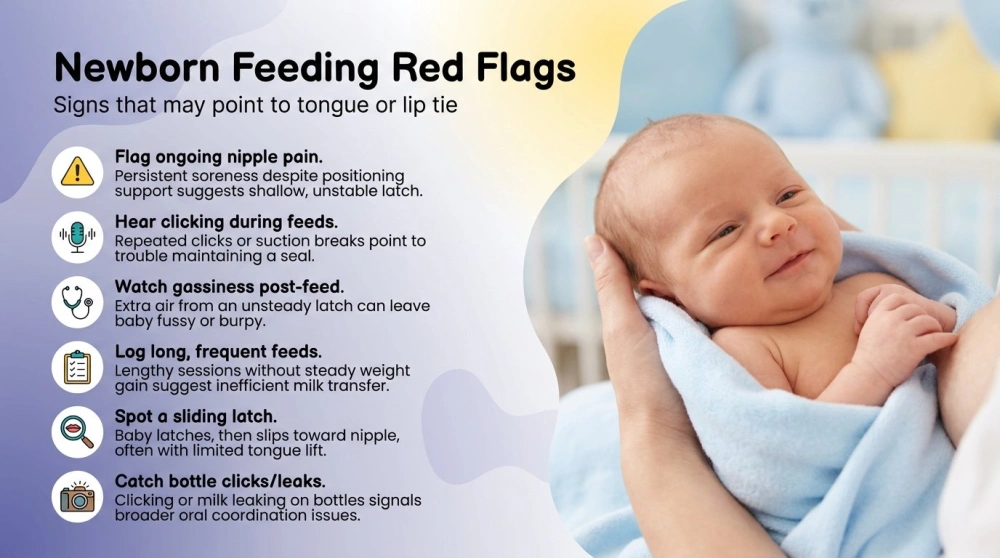
- Persistent nipple pain or damage that does not improve with positioning support or time can suggest a shallow or unstable latch [2] [8].
- Clicking while nursing or frequent loss of suction can reflect difficulty maintaining a seal, especially when the tongue cannot cup and stabilize the breast [2].
- Gassy or fussy behavior after feeds can happen if baby swallows extra air due to an unsteady latch [2].
- Reflux like symptoms such as frequent spit up or arching can have many causes. Latch issues are one factor to consider among others [2].
- Prolonged or very frequent feeds without clear weight gain may signal inefficient milk transfer that warrants a careful assessment [1] [2].
- Poor latch or sliding latch where baby seems to latch, then slips toward the nipple, can accompany limited tongue lift or extension [2].
- Clicking on the bottle or leaking milk during bottle feeds can also point to oral coordination challenges, even outside breastfeeding [2].
Feeding challenges are common for many families and can improve with skilled help. National data show most families start breastfeeding, yet many encounter hurdles in the early weeks and appreciate hands on support to reach their goals [9] [8].
How are tongue tie and lip tie evaluated in infants?
A thorough assessment looks beyond a quick glance. Your team will take a full feeding history, examine the mouth, and observe how your baby latches and transfers milk. This functional approach is endorsed by pediatric and breastfeeding organizations because form alone does not predict feeding success [1] [2].
Several clinical tools can support a structured exam. The Hazelbaker Assessment Tool for Lingual Frenulum Function and the Bristol Tongue Assessment Tool are examples used by trained clinicians to document appearance and function. They are not stand alone diagnostic tests but can help guide care when combined with clinical judgment and a live feeding assessment [13] [12].
Because feeding is a dyad experience, collaboration with an International Board Certified Lactation Consultant can be crucial. IBCLCs are credentialed professionals with specialized education in latch, positioning, milk supply, and infant feeding challenges. They help families optimize latch and comfort before and after any procedure that might be considered [6] [2].
When families and clinicians find clear functional limitations related to the frenulum that persist despite skilled lactation support, a discussion of treatment may be appropriate. Many infants improve with conservative measures alone, and when procedures are considered, the goal is to target a specific functional problem, not simply to treat an appearance [1] [2] [5].
When is treatment considered and what options exist?
When feeding challenges are clearly linked to a restricted frenulum, clinicians may consider a release procedure. In infants, this is often called a frenotomy or frenectomy. The procedure divides the tight tissue to allow improved range of motion. Evidence suggests that in select infants, frenotomy can reduce maternal nipple pain in the short term, while effects on longer term outcomes and weight gain can vary. Decisions should be individualized and shared with your care team [3] [1] [2].
Before any procedure, families are usually encouraged to work with an IBCLC for latch optimization, positioning, paced bottle feeding if needed, and strategies to support supply. For some babies, targeted therapy with a speech language pathologist or occupational therapist experienced in infant feeding can be helpful. A measured approach aligns with guidance from pediatric and breastfeeding organizations [1] [2] [5].
Clinicians perform releases with sterile scissors or with dental lasers designed for soft tissue. Each method has its own considerations related to technique and training. Regardless of the instrument, safety, comfort, and careful selection of candidates are essential. Pediatric dental teams also discuss potential risks such as brief bleeding, temporary fussiness, and the possibility that a single procedure may not fully resolve all feeding challenges. Your team will also plan follow up and feeding support after the procedure [4] [1] [2].
Pediatric frenectomy can be part of a comprehensive care plan when function is clearly limited and conservative support has not fully resolved problems. A clear plan and informed consent help families make decisions that align with their goals and values [2] [4].
How does a laser frenectomy compare with scissors?
Soft tissue lasers are widely used in pediatric dentistry for procedures that involve gum and frenulum tissue. A laser converts light energy to a precise thermal effect at the target, which can allow controlled tissue removal. In selected cases, clinicians appreciate that lasers may provide precise cutting with minimal contact and can help with hemostasis. Both laser and scissor techniques require appropriate training and careful handling to promote comfort and safety [7] [4].
There is no single best technique for every baby. The key is the clinical skill of the provider, the appropriateness of the indication, and the integration of feeding support before and after the procedure. Families can ask about the specific laser used, such as a carbon dioxide laser for soft tissues, how anesthesia or topical agents are handled, how safety eyewear is used, and how the team monitors the infant during and after the procedure. These details reflect standard pediatric dental laser protocols and are discussed with families during consent [7] [4].
Professional guidance documents emphasize that outcomes depend on comprehensive care, not only the instrument. After release, infants benefit when feeding is observed and supported, and when parents receive clear instructions for comfort and wound care. Close follow up allows timely adjustments if a baby still struggles with latch or transfer [2] [1].
What happens during an infant frenectomy visit at our pediatric office?
Our approach is centered on safety, comfort, and communication. At your visit, we begin with a careful review of your feeding history and a gentle exam. If we have not already seen a lactation assessment, we may bring an IBCLC into the discussion. If a release is appropriate, we explain the steps and answer every question so you feel prepared and supported at each stage [2] [6].
Many families ask what the procedure itself looks like. Infants are swaddled for comfort and gentle stabilization. The area is dried and illuminated for a clear view. With a laser approach, protective eyewear is used for everyone in the room as part of standard safety protocols. Your clinician carefully releases the tight tissue and checks for improved movement and the ability to lift and extend the tongue. The baby is typically offered feeding shortly after so you can assess comfort and latch in real time with guidance from the team [7].
Laguna Niguel Pediatric frenectomy is one part of a complete plan. Many families appreciate a follow up call and visit to partner on wound care, feeding progress, and comfort. We map out the next steps so you know whom to contact for any concerns that arise, including after hours needs. If additional support is beneficial, we coordinate with lactation, pediatric medicine, or feeding therapy professionals in the community [2] [6].
What should you expect after a release and what about stretches?
After a release, most babies feed and rest, then may have a brief fussy period as they adjust. Your team will review comfort measures, such as contact, soothing, and feeding strategies tailored to your baby. You will also receive instructions on keeping the area clean. Your clinicians discuss signs that would prompt a check in, such as persistent bleeding, fever, or difficulty feeding. Serious complications are uncommon, yet prompt communication helps us support you quickly if you have concerns [1] [2].
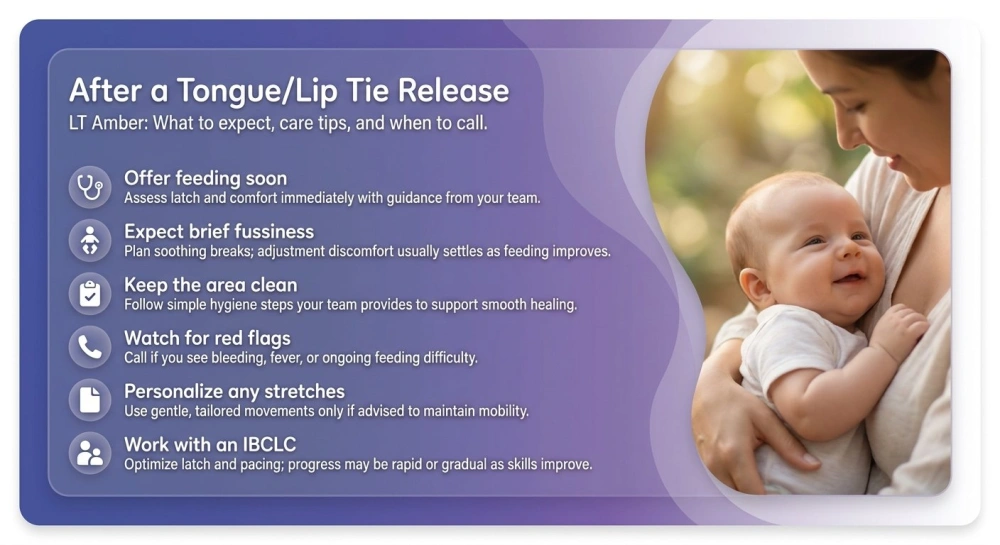
There is ongoing discussion in the field about the role of post procedure stretches. Some protocols include gentle movement of the released area to help maintain mobility. Current position statements note that evidence for specific stretching routines is limited and that any exercises should be individualized to reduce discomfort and avoid oral aversion. We will walk you through our approach and adjust based on your baby’s response and your feedback [2] [1].
Feeding support remains central. An IBCLC can help your baby practice a deeper latch with new range of motion and can guide paced bottle techniques when needed. Many families see latch comfort improve shortly after release, while others experience a steadier progression over days as coordination and strength build. Ongoing check ins allow your team to refine strategies for your baby’s unique needs [3] [2].
Could an upper lip tie alone cause breastfeeding difficulties?
Upper lip frenula vary widely in appearance and are often a normal finding. Evidence directly linking upper lip tie alone to breastfeeding problems is limited. Leading specialty groups note that the decision to treat an upper lip frenulum should be based on clear functional issues seen during feeding, not solely on how the tissue looks. In many cases, latch techniques that support a wide, deep latch can address symptoms without a procedure. If treatment is considered, your team will discuss indications, potential benefits, and risks in the context of your baby’s overall feeding picture [5] [2] [1].
How do we collaborate with lactation consultants and your medical team?
Feeding is a team effort. We work closely with International Board Certified Lactation Consultants for latch optimization, milk transfer coaching, and positioning strategies. When an evaluation suggests that a frenulum release could help, we coordinate timing so you receive immediate feeding support before and after the procedure. Collaboration improves assessment quality and helps families feel supported with practical steps in real time [6] [2].
Your pediatrician remains central to your baby’s care. We share our findings and plan with your physician and loop in other specialists as needed. For example, speech language pathologists and occupational therapists can add targeted feeding therapy when coordination or tone are contributing factors. Ear, nose, and throat specialists may assist in complex cases. This multidisciplinary model aligns with current consensus recommendations [5] [1].
What local considerations matter for families in South Orange County?
Families in Laguna Niguel, Laguna Hills, Laguna Beach, Aliso Viejo, Mission Viejo, and San Juan Capistrano often seek care that is close to home and coordinated across providers. California licensed dentists perform infant oral procedures within the California Dental Practice Act, follow state infection control standards, and maintain records in compliance with privacy laws. If sedation is considered for older children, practitioners follow state specific training and monitoring requirements. Your consent process covers the procedure plan, alternatives, and questions so that you can make an informed decision that fits your family [11].
Local support matters during the fourth trimester. We can help connect you with lactation resources that serve South Orange County, including IBCLC led clinics and community programs. Your pediatrician can also refer you to county or hospital based breastfeeding support. These connections are particularly helpful if you are navigating newborn feeding issues, nipple pain, and latch concerns while adjusting to life with a new baby [6] [8].
When should you call a pediatric dentist and what questions help you decide?
Reach out any time you feel stuck or concerned about breastfeeding latch issues. If you live in or near Laguna Niguel and notice multiple signs listed above, a coordinated evaluation may bring clarity. Our role is to help you understand what is happening during feeds and whether a frenulum restriction is part of the picture.
- Ask about function first by requesting a live feeding assessment and a checklist of specific findings that point to a functional limitation [1] [2].
- Ask about conservative care including latch work with an IBCLC and how progress will be measured over a few days or weeks [2] [6].
- Ask about technique and safety including the instrument used for release, comfort measures, and how your baby is monitored during the procedure [7] [4].
- Ask about follow up including wound care, feeding support, and how to reach your team with questions after hours.
- Ask about expected outcomes framed as ranges rather than promises, and how your team will adapt care if feeding does not improve as expected [3] [1].
Pediatric frenectomy in Laguna Niguel is considered when there is a clear functional indication and when families prefer to proceed after discussing benefits and risks. We are here to answer questions and coordinate care with your lactation and pediatric medical teams [2] [1].
Why choose Kidz Modern Dentistry for infant feeding concerns?
At Kidz Modern Dentistry, our mission is to make dental visits a positive experience for little ones while supporting families through real world feeding challenges. We serve families in Laguna Niguel and nearby cities including Laguna Hills, Laguna Beach, Aliso Viejo, Mission Viejo, and San Juan Capistrano. Parents often come to us because they want clear answers, a gentle approach, and coordinated support that respects their feeding goals.
How do our services relate to breastfeeding latch issues and oral restrictions?
We provide comprehensive evaluations for newborn feeding issues that may involve lip tie or tongue tie. Our team looks at feeding function, not only appearance, and we partner with IBCLCs for latch optimization. When a release is appropriate, our clinicians use modern laser technology designed for soft tissues along with child centered comfort measures. We guide you through each step, from the initial consult to follow up feeding support.
Where do we operate and how do we serve South Orange County families?
We welcome families from Laguna Niguel, Laguna Hills, Laguna Beach, Aliso Viejo, Mission Viejo, and San Juan Capistrano. Our office is designed for infants and children of all ages, with flexible scheduling and same day availability for urgent concerns when possible. If you need to speak with our team, call +1 949 273 0110 and we will help you plan the next step.
What is our approach to evaluation and treatment planning?
- Functional focus We assess how your baby feeds at the breast or bottle and document specific findings that support any treatment decision.
- Collaborative care We coordinate with lactation consultants, pediatricians, and feeding therapists so you receive a unified plan.
- Evidence guided recommendations We align our approach with current guidance from pediatric, dental, and breastfeeding organizations and discuss the strength and limits of available evidence [1] [2] [4].
- Comfort centered procedures We use gentle swaddling, topical or local anesthesia when appropriate for infants, and a calm environment tailored to your baby.
- Clear aftercare We provide practical, written instructions and check in after your visit to help you navigate the first days of healing and feeding.
Do we use any specialized tools or processes for infant frenectomy?
Our clinicians use dental laser systems built for soft tissue care in pediatric dentistry. These tools support precise tissue release under high visibility and with careful control. We use protective eyewear and follow standard laser safety protocols. Our process includes a structured functional assessment, informed consent, real time feeding support, and scheduled follow up to address questions quickly [7].
What experience and leadership does our team bring?
- Focused pediatric training Our pediatric dental team is experienced in infant evaluations and collaborates closely with lactation professionals.
- Community partnership We maintain a network of local IBCLCs and pediatric providers to streamline referrals and continuity of care.
- Commitment to education We spend time teaching families how to observe feeds, position comfortably, and recognize signs that progress is on track.
What results have families experienced and what benefits can you expect?
Families often share that they feel more confident and supported after a clear evaluation and plan. Many report improved comfort and latch after coordinated care that may include release and lactation follow up. Because every baby is different, we discuss likely ranges rather than guarantees and adapt the plan to your baby’s unique needs, with the goal of making each feeding session more comfortable and effective over time [3] [2].
How can you take the next step?
If you are navigating nipple pain, poor latch, clicking while nursing, reflux like symptoms, or other breastfeeding difficulties, we are ready to help you sort through the causes and options. Call +1 949 273 0110 to schedule an evaluation. We will listen to your story, observe a feed when possible, and create a plan that supports your feeding goals with clear next steps.
What common questions do parents ask about lip tie and tongue tie?
How do I know whether my baby’s frenulum is the cause of our feeding challenges?
The surest way is to combine a careful feeding history with a live feeding assessment, guided by professionals who work together. Many babies with a visible frenulum feed well without intervention, while some with a subtle restriction struggle. A functional exam focused on latch depth, suction stability, milk transfer, and comfort helps clarify whether the frenulum is a key factor [1] [2].
Will a release fix breastfeeding right away or could progress be gradual?
Both patterns occur. Some families notice immediate reduction in pain and improved latch stability. Others see a steady improvement over days as the baby learns to use new range of motion and as supply and coordination adjust. Ongoing support from an IBCLC can make the difference by fine tuning latch, positioning, and feeding rhythm after the procedure [3] [2].
Is a laser better than scissors for infant frenectomy?
Each method can be effective in trained hands. Lasers offer precise soft tissue release and hemostasis benefits, while scissors are a simple and time tested tool. Provider experience, careful selection of candidates, safety protocols, and integrated feeding support are more important than the specific instrument [7] [4].
What risks should I consider before consenting to a release?
Potential risks include brief bleeding, temporary fussiness, discomfort, and incomplete improvement in feeding. Serious complications are uncommon but possible. Your clinician will review how they minimize risks through sterile technique, careful visualization, appropriate comfort measures, and follow up support, and will explain how to contact the team for any concerns [1] [2].
Do we need to do post procedure stretches and how often?
There is limited evidence on optimal stretching routines. Some clinics recommend gentle movements to promote mobility, while others prioritize comfort and feeding practice without structured stretches. We will tailor recommendations to your baby and adjust based on healing and feeding progress, always aiming to avoid oral aversion and excess discomfort [2] [1].
Could tongue tie explain reflux like symptoms or gassiness?
Latch instability can increase air intake during feeds, which may contribute to gassy behavior in some babies. That said, reflux like symptoms have many causes and should be evaluated broadly. Improving latch with lactation support and, when indicated, release may help some infants, but not every case relates to the frenulum [2] [8].
What if my baby is bottle feeding and not breastfeeding, do these issues still matter?
Yes. Some infants with oral restrictions show clicking, leaking, or fatigue with bottles. A functional evaluation still applies, and feeding therapy strategies or a release may be considered depending on the findings and your goals [2].
How soon should a newborn be evaluated if we are concerned?
If you are experiencing significant nipple pain, poor latch, or frequent feeds with limited weight gain, reach out early. Early support improves comfort and helps you stay on track toward your feeding goals. We can usually coordinate with lactation and your pediatrician promptly so you do not have to wait long for answers [8] [9].
References
- Identification and Management of Ankyloglossia and its Effect on Breastfeeding in Infants – American Academy of Pediatrics
- Ankyloglossia in Breastfeeding Dyads Position Statement – Academy of Breastfeeding Medicine
- Frenotomy for Tongue-tie in Newborn Infants – Cochrane Library
- Policy on Management of the Frenulum in Pediatric Dental Patients – American Academy of Pediatric Dentistry
- Clinical Consensus Statement Ankyloglossia in Children – Otolaryngology Head and Neck Surgery
- What is an IBCLC – International Board of Lactation Consultant Examiners
- Use of Lasers for Pediatric Dental Patients – American Academy of Pediatric Dentistry
- Breastfeeding Challenges – American College of Obstetricians and Gynecologists
- Breastfeeding Rates and Data – Centers for Disease Control and Prevention
- Division of Ankyloglossia for Breastfeeding – National Institute for Health and Care Excellence
- Laws and Regulations – Dental Board of California
- The Bristol Tongue Assessment Tool Evaluation of Reliability – PubMed
- Reliability and Validity of the Hazelbaker Assessment Tool for Lingual Frenulum Function – International Breastfeeding Journal
Common Questions About This Topic
Find answers to frequently asked questions related to this article.