- What are the most common dental problems in toddlers?
- What is early childhood caries and why does it matter?
- How does baby bottle tooth decay happen and how can you prevent it?
- What teething problems are normal and when should you call a dentist?
- How can you spot gum inflammation in toddlers?
- What should you do after dental trauma in toddlers?
- How should you brush toddler teeth and choose toothpaste?
- What role does fluoride for toddlers play?
- Are dental sealants for kids useful for toddlers?
- How do thumb sucking and pacifier habits affect teeth?
- When should the first dental visit age one happen?
- What counts as a dental emergency for children in Laguna Niguel CA?
- What are kid friendly sedation options for anxious little ones?
- How do California and national guidelines shape toddler dental care?
- How can you prepare your toddler for a positive dental visit?
- How does Kidz Modern Dentistry support families in Laguna Niguel CA?
- Where can you find the references and resources used here?
What are the most common dental problems in toddlers?
It can feel overwhelming when your toddler is fussy about brushing or you notice a spot on a tooth. You are not alone. Tooth decay and related issues are common in early childhood, but there is a lot you can do to protect your child. National health agencies report that many children experience cavities in their primary teeth before kindergarten, and untreated decay can affect nutrition, sleep, speech development, and quality of life [1] [2]. Understanding the early signs and what to do next can reduce stress and help you act with confidence.
Parents often ask about the problems they are most likely to encounter between the first tooth and the preschool years. The most frequent issues include early childhood caries also called cavities, baby bottle tooth decay, teething discomfort, gum inflammation, dental trauma from falls, and challenges with brushing. Each topic below offers practical steps you can take at home and guidance on when to reach out to a pediatric dentist Laguna Niguel for help.
- Cavities in baby teeth Tooth decay can start soon after the first tooth erupts, especially with frequent snacking or sugary drinks [2].
- Teething concerns Irritability and drooling are common. High fever and severe diarrhea are not typical teething symptoms and warrant medical advice [7].
- Gum inflammation Redness or bleeding is often related to plaque buildup and can improve with better cleaning habits.
- Dental trauma Toddlers take tumbles. Chipped, loosened, or knocked out teeth need prompt evaluation [10].
- Brushing and toothpaste choices Using the right amount of fluoride toothpaste and a routine that fits your family is essential [4].
What is early childhood caries and why does it matter?
Early childhood caries is the scientific term for cavities that occur in children under six. It develops when bacteria feed on sugars in foods and drinks, producing acids that gradually dissolve tooth enamel. Without early care, decay can spread, causing pain, infection, and difficulty eating or sleeping. National institutes and pediatric experts consider early childhood caries a significant public health issue with preventable causes and effective treatments [1] [2] [9].
What signs of early childhood caries should you watch for?
- White chalky spots on teeth near the gumline that can be an early warning sign of enamel demineralization [2].
- Brown or black areas that do not brush off.
- Sensitivity or pain when eating sweet or cold foods.
- Bad breath or gum swelling near a tooth.
How is early childhood caries managed and prevented?
- Professional evaluation A pediatric dentist can assess risk, apply treatments like fluoride varnish, and create a home care plan [3].
- Daily home care Brush twice a day with a fluoride toothpaste in child appropriate amounts and clean where the toothbrush cannot reach with floss as directed [4].
- Smart nutrition Limit sugary snacks, juice, and frequent grazing. Offer water between meals and milk during meals [1].
- Regular checkups Early visits let your dental team spot changes quickly and guide you through each stage of growth [8].
Pediatric preventive dental care is the long term foundation for healthy smiles, and it starts as soon as the first tooth erupts.
How does baby bottle tooth decay happen and how can you prevent it?
Baby bottle tooth decay refers to cavities often seen on the upper front teeth and first molars in toddlers who fall asleep with a bottle or sip on sweet drinks throughout the day. Frequent exposure to liquids that contain sugar like juice, sweetened milk, or flavored beverages creates an environment where cavity causing bacteria thrive. National oral health authorities describe early and prolonged sugary liquid exposure as a major risk factor for tooth decay in young children [1] [2].
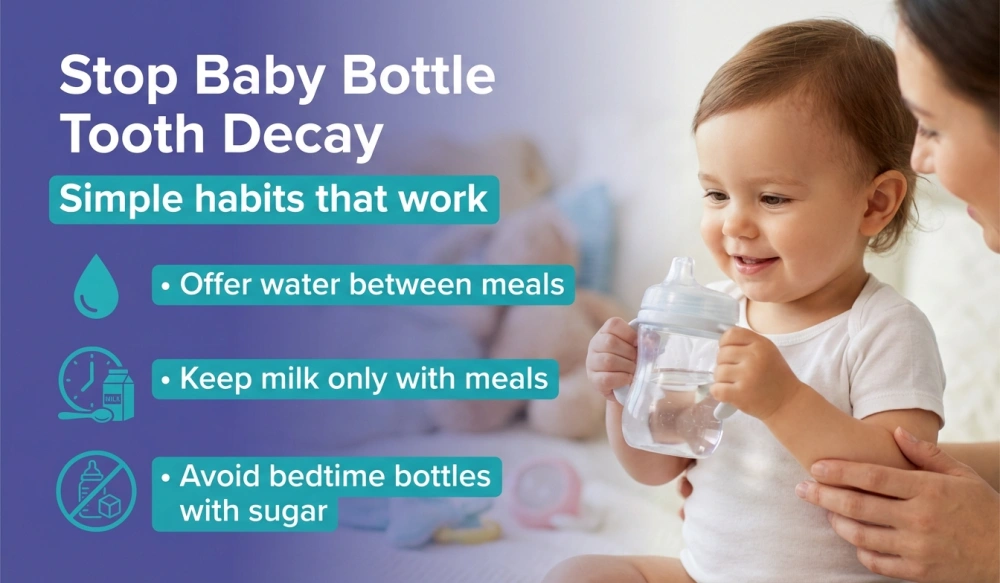
What habits help prevent baby bottle tooth decay?
- Choose water for thirst Offer water between meals. Keep milk and other drinks at mealtimes.
- Avoid bedtime bottles with sugar If a bedtime bottle is part of your routine, fill it with plain water only [2].
- Practice mouth cleaning early Wipe gums with a clean, damp cloth before the first tooth, then brush with fluoride toothpaste once teeth appear [4].
- Do regular checks Lift the lip to look for white chalky areas or brown spots along the gumline.
What teething problems are normal and when should you call a dentist?
Teething usually begins around six months and continues into the toddler years as new teeth erupt. Irritability, drooling, and a desire to chew are common. Low grade temperature changes can happen, but high fever and severe symptoms are not typical of teething and should be evaluated by your pediatrician [7].
What can you safely do to soothe teething discomfort?
- Offer firm rubber teething toys Chilled in the refrigerator is fine. Avoid freezing.
- Gently massage gums Use a clean finger to rub the area for short periods.
- Use safe liquids Offer sips of cool water if your child is old enough.
- Avoid topical gels with benzocaine The United States Food and Drug Administration has warned against these products for children due to safety concerns. Ask your pediatrician about appropriate pain management if needed [7].
When should you contact a dentist about teething?
- Persistent swelling or a bluish bubble like area over an erupting tooth that does not improve.
- Teeth erupting in unusual positions or crowding concerns.
- Any sign of decay such as white chalky spots or brown areas.
How can you spot gum inflammation in toddlers?
Gum inflammation in toddlers is often caused by plaque buildup along the gumline. Signs include redness, swelling, and bleeding during brushing. With consistent cleaning and fluoride toothpaste, these symptoms can improve. Regular professional checkups also help identify whether the inflammation is a local hygiene problem or related to another condition that needs attention [1] [4].
How can you reduce gum inflammation at home?
- Brush twice daily Angle the bristles toward the gumline and use gentle circles.
- Clean between teeth Use flossers or floss when teeth touch.
- Stay consistent Make brushing part of the morning and bedtime routine.
What should you do after dental trauma in toddlers?
Toddlers are energetic learners which sometimes means minor injuries to the mouth. Dental injuries range from small chips to loosened teeth. Severe injuries need prompt care. If a baby tooth is completely knocked out, do not attempt to reimplant it. Reimplanting primary teeth can harm the developing permanent tooth. Instead, call your pediatric dentist promptly for guidance [10] [13].
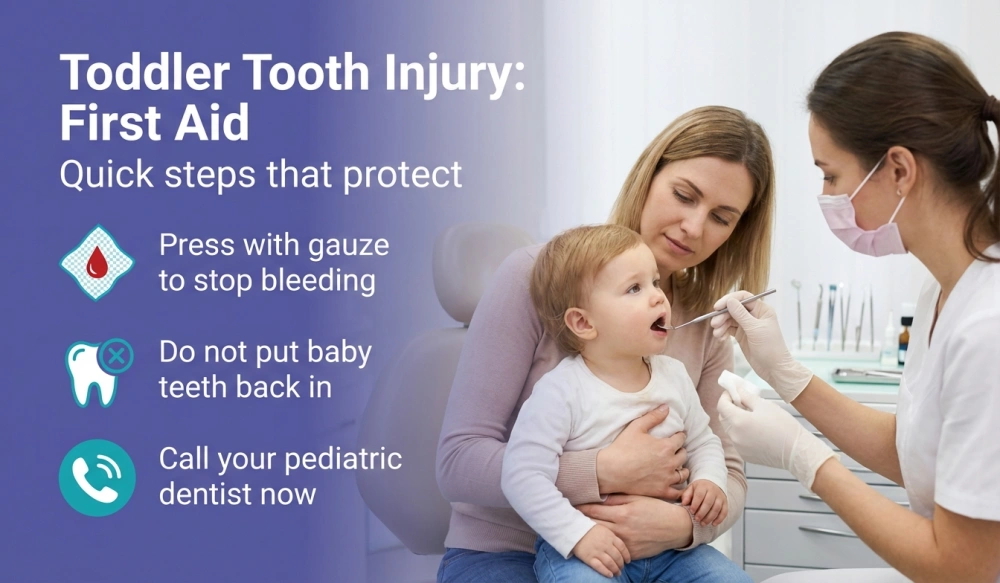
What immediate steps help after a tooth injury?
- Stay calm and check for other injuries If there is heavy bleeding or head injury, seek urgent medical care.
- Control bleeding Apply gentle pressure with a clean cloth or gauze.
- Protect the area Offer soft foods and avoid chewing on the injured side.
- Call your pediatric dentist Early evaluation helps prevent complications and supports healing [13].
When is same day care important?
- Knocked out or displaced tooth Primary teeth are not reimplanted, but the area should be checked quickly [10].
- Severe pain or swelling These can be signs of infection or deep injury.
- Lip or cheek lacerations Deep cuts may need stitches.
How should you brush toddler teeth and choose toothpaste?
Daily brushing is the single most important home habit to prevent cavities. For toddlers, choose a small soft bristled brush and a fluoride toothpaste. The American Dental Association recommends a smear the size of a grain of rice for children under three and a pea sized amount for children three to six. Parents should help or supervise brushing to ensure all surfaces are clean and to prevent swallowing toothpaste [4].
How can you make brushing easier for your toddler?
- Use a fun routine Count teeth, sing a short song, or play a two minute timer game.
- Try different positions Sit knee to knee with your child or cradle them with their head on your lap for better visibility.
- Let them practice Give your child a turn, then you finish to reach every tooth.
- Keep toothbrushes handy Having a brush in the bathroom and a travel brush for naps away from home can help consistency.
How often should you replace a toddler toothbrush?
Replace toothbrushes about every three months or sooner if bristles appear worn or after an illness. Fresh bristles clean more effectively and are softer on gums.
What role does fluoride for toddlers play?
Fluoride strengthens enamel and helps repair early mineral loss, reducing the risk of cavities. Two common sources for toddlers are fluoride toothpaste and professionally applied fluoride varnish. The United States Preventive Services Task Force recommends that primary care clinicians apply fluoride varnish to the teeth of all children starting at the eruption of the first tooth and up to age five, regardless of risk. They also recommend prescribing fluoride supplements for children at high risk who do not have access to fluoridated water [3]. Public health agencies also provide detailed information on fluoride varnish safety and benefits [11].
How do you know if your tap water has fluoride?
In California, community water fluoridation is supported as a safe and effective way to prevent tooth decay. You can check local water reports or contact your water provider to learn about fluoride levels. The California Department of Public Health publishes resources on community water fluoridation across the state [12].
Are dental sealants for kids useful for toddlers?
Dental sealants are thin protective coatings placed on the chewing surfaces of back teeth to block bacteria and food from collecting in deep grooves. While sealants are most common on permanent molars in school aged children, they can be appropriate for some primary molars in young children with a higher risk of decay. The American Dental Association discusses the benefits of sealants and supports their use as part of an overall prevention plan. Current clinical practice guidelines also support sealants to prevent and arrest pit and fissure caries when indicated [5] [6].
How do you know if your toddler could benefit from sealants?
Your pediatric dentist assesses risk by looking at past cavities, diet, fluoride exposure, and the depth of grooves on molars. If sealants are recommended, the procedure is quick, painless, and can be completed during a routine visit.
How do thumb sucking and pacifier habits affect teeth?
Non nutritive sucking is common in infancy and early toddlerhood. Most children stop on their own. If thumb, finger, or pacifier use continues for a long time, it can affect how teeth and jaws grow, potentially leading to an open bite, changes in the bite relationship, or palate shape concerns. Your dental team can offer gentle strategies for pacifier weaning and reducing thumb sucking. Many families find that a mix of positive reinforcement, consistent routines, and a gradual approach helps their child transition away from the habit [2].
What are supportive ways to help your child stop?
- Pick calm times Work on habit change when life is otherwise steady and stress is low.
- Use praise and rewards Celebrate small successes and consider a sticker chart.
- Provide comfort tools Replace the habit with a favorite toy or soothing routine at bedtime.
- Ask for guidance Your dentist can suggest age appropriate techniques and timing.
When should the first dental visit age one happen?
Professional organizations recommend that children see a dentist by age one or within six months of the first tooth erupting. An early visit gives you a personalized plan for home care, nutrition tips, and cavity risk reduction long before problems start. It also helps your child build comfort and trust with the dental team. Pediatric focused resources outline what families can expect at an early visit, including a gentle exam, brushing guidance, and time to answer your questions [8].
What happens during the first visit?
- Risk assessment The dentist discusses diet, fluoride exposure, and daily routines.
- Growth and development check Teeth, gums, and jaw development are evaluated.
- Home care coaching You will learn how to brush toddler teeth, how much toothpaste to use, and how to make routines easier [4].
- Prevention plan Depending on risk, fluoride varnish may be applied, and recall timing is set [3].
What counts as a dental emergency for children in Laguna Niguel CA?
For toddlers, emergencies typically include significant dental pain, facial swelling, trauma that moved or fractured a tooth, and signs of infection like fever with a swollen face. Quick evaluation can reduce complications and discomfort. If a permanent tooth is knocked out later in childhood, it is often a true emergency, but for toddlers with primary teeth the priority is to prevent harm to the developing permanent tooth, so do not reimplant the baby tooth. Contact your pediatric dentist for instructions and timely care [10] [13].
What should you do before you reach the dental office?
- Control bleeding Apply gentle pressure with gauze for ten minutes.
- Reduce swelling Use a cold compress on the cheek in short intervals.
- Keep fragments if a tooth chipped Place them in clean milk for evaluation.
- Call ahead Let the dental team know what happened so they can prepare.
Pediatric preventive dental care in Laguna Niguel supports families with timely guidance to lower risk and respond confidently if problems arise.
What are kid friendly sedation options for anxious little ones?
Some children feel nervous during dental treatment, especially if they have had pain or are very young. Pediatric dentists use behavior guidance as the first step, including tell show do, distraction, and breaks. When needed, minimal sedation such as nitrous oxide can help an anxious child relax. For some procedures or for children who cannot tolerate care due to age, health, or developmental needs, deeper sedation or general anesthesia may be considered and delivered by qualified clinicians in appropriately equipped settings. The approach is individualized to your child and follows professional guidelines for safety and monitoring from pediatric medical and dental organizations [14].
How can parents support safe and smooth sedation visits?
- Share a full health history Include medications, allergies, and recent illnesses.
- Follow fasting and preparation instructions These steps are important for safety.
- Plan recovery time Your child may be drowsy and need rest after the appointment.
- Ask questions Your care team will explain options, benefits, and risks.
How do California and national guidelines shape toddler dental care?
Families in Laguna Niguel benefit from a framework of federal recommendations and California state guidance that support safe, effective care for children.
Which national guidelines matter for prevention?
- Fluoride varnish in primary care The United States Preventive Services Task Force recommends fluoride varnish for children starting with the first tooth and fluoride supplements when water is not fluoridated for those at high risk [3].
- Fluoride toothpaste use The American Dental Association provides clear guidance on toothpaste amounts for young children [4].
- Sealants The American Dental Association supports sealants to prevent and arrest pit and fissure caries when appropriate [5] [6].
What state policies are relevant in California?
- Community water fluoridation The California Department of Public Health supports fluoridation and offers public resources on programs across the state [12].
- Sedation permits and oversight The Dental Board of California regulates permits for sedation and anesthesia to help protect patient safety and set training requirements [15].
These frameworks guide practices and help families understand why certain recommendations such as fluoride varnish or regular checkups are part of a child focused prevention plan.
How can you prepare your toddler for a positive dental visit?
Small steps at home can make a big difference in comfort and cooperation. Building positive associations, practicing open wide, and keeping expectations realistic help your toddler feel safe and supported in the dental setting.
What simple strategies help before the appointment?
- Practice at home Count teeth in the mirror and let your child hold a toothbrush so the process feels familiar.
- Choose words that reassure Use friendly terms and avoid scary language.
- Bring comfort items A favorite toy, blanket, or music can help your child relax.
- Plan the timing Pick an appointment time when your child is usually well rested and fed.
How do you support your child during and after the visit?
- Use calm presence Your steady voice and gentle touch give reassurance.
- Follow the dental team’s lead They will guide you on ways to help, including modeling behavior and offering praise.
- Celebrate small wins Positive reinforcement builds confidence for next time.
- Keep routines consistent Continue brushing and healthy eating habits at home to build momentum.
How does Kidz Modern Dentistry support families in Laguna Niguel CA?
As a pediatric focused practice, we care for children across infancy, toddlerhood, and the school years. Our team prioritizes comfort, clear explanations, and evidence informed care so parents feel supported and children feel safe. We provide same day help for urgent concerns when possible, and we offer kid friendly sedation options when appropriate, delivered by trained professionals and aligned with current guidelines [14] [15].
How do our services align with the needs discussed in this guide?
- Early prevention visits We welcome first visits by age one and create step by step home care plans to reduce the risk of early childhood caries [8].
- Comfort focused care From teething checks to gentle cleanings, we adapt to your child’s age and temperament.
- Nutrition and habit guidance We provide practical coaching on snack choices, how to brush toddler teeth, fluoride for toddlers, and pacifier weaning strategies [3] [4].
- Protective treatments When indicated, we offer fluoride varnish and discuss dental sealants for kids in the context of individual risk [3] [5] [6].
- Emergency support For dental trauma in toddlers or acute pain, our team provides prompt evaluation and care with compassionate communication [10] [13].
Where do we serve families and how can you reach us?
We serve children and families in Laguna Niguel, CA and surrounding communities throughout South Orange County. If you have questions about toddler cavities, baby bottle tooth decay, gum inflammation in toddlers, or need an emergency pediatric dentist Laguna Niguel, call us at +1 949 273 0110. We are here to help you decide the next best step, whether that is a quick phone consultation or an in person visit.
What is our approach to comfort, safety, and communication?
- Personalized visits We take time to understand your child’s unique needs, learning style, and past experiences so care feels predictable and supportive.
- Clear guidance We explain findings in everyday language and send you home with written tips you can put into practice.
- Team training Our professionals maintain current certification, continuing education, and follow standards for monitoring and safety during sedation when needed [14] [15].
- Coordinated care We collaborate with pediatricians and specialists when appropriate to support your child’s overall health.
How do we measure success for little smiles?
- Prevention first Our goal is fewer cavities over time through strong home routines and regular checkups.
- Comfort and confidence We celebrate progress like smoother visits, better brushing skills, and growing independence.
- Family partnership We value open communication and tailor follow up to your family’s schedule and goals.
If you are building a long term plan for your child’s oral health, Pediatric preventive dental care can anchor the routines and visits that keep small problems from turning into big ones.
Where can you find the references and resources used here?
- Childrens Oral Health – Centers for Disease Control and Prevention
- Tooth Decay in Children – National Institute of Dental and Craniofacial Research
- Prevention of Dental Caries in Children Younger Than 5 Years Recommendation Statement – United States Preventive Services Task Force
- Fluoride Toothpaste – American Dental Association
- Dental Sealants – American Dental Association
- Sealants Evidence Based Clinical Practice Guideline – American Dental Association
- Teething What to Look For – HealthyChildren dot org American Academy of Pediatrics
- First Dental Visit What to Expect – HealthyChildren dot org American Academy of Pediatrics
- Early Childhood Caries – StatPearls – NCBI Bookshelf
- Avulsed Tooth – StatPearls – NCBI Bookshelf
- Fluoride Varnish – Centers for Disease Control and Prevention
- Community Water Fluoridation – California Department of Public Health
- Trauma Guidelines – International Association of Dental Traumatology
- Guidelines for Monitoring and Management of Pediatric Patients During and After Sedation – American Academy of Pediatrics
- Permits Sedation and Anesthesia – Dental Board of California
Common Questions About This Topic
Find answers to frequently asked questions related to this article.