
<?xml encoding=”UTF-8″>
- Why do cavities need to be treated before braces?
- What happens if cavities are not treated before braces?
- How do braces make cavities form faster and why?
- What is included in a pre orthodontic dental exam?
- How do pediatric dentists and orthodontists coordinate your child’s care?
- When should cavities be treated relative to the braces timeline?
- Which treatments are recommended before braces for kids?
- How can you prevent decay under brackets during orthodontic treatment?
- What school day routines help kids care for braces and prevent cavities?
- What regulations and safety standards apply to pediatric dental care in California?
- How can you prepare an anxious child for fillings before braces?
- What questions should parents ask at the orthodontic clearance exam?
- What signs during braces mean you should call the dentist?
- How do sealants and fluoride help protect teeth with braces?
- How is enamel protected when braces are removed?
- How does Kidz Modern Dentistry support your child before and during braces in South Orange County?
- References
Why do cavities need to be treated before braces?
If your child is getting ready for braces, treating any cavities first protects their smile, helps the orthodontic plan stay on schedule, and reduces the risk of new decay around brackets and wires. Cavities are areas where tooth structure has been permanently damaged by acids from plaque bacteria. Once braces are placed, cleaning those areas becomes harder, which can allow decay to progress faster, sometimes silently, under or around brackets. Professional groups encourage regular dental care before and during orthodontics so that teeth are healthy enough to handle appliances and so that problems are handled early [1] [2] [7] [8].
For families in Laguna Niguel and across South Orange County, a pre orthodontic plan that includes cavity detection, appropriate treatment, and preventive steps can make braces smoother from start to finish. This is especially important for kids, since childhood and adolescence are peak years for cavity risk [1] [2].
What happens if cavities are not treated before braces?
Leaving active cavities in place before braces can lead to complications that affect comfort, treatment progress, and overall oral health. Untreated decay can worsen under a bracket, cause sensitivity that makes chewing or brushing painful, or spread to nearby teeth. In some cases, the orthodontist may need to remove a bracket to address a problem tooth, which can delay alignment until the tooth is restored. Untreated decay increases the chance of enamel demineralization and white spot lesions that are common in orthodontic patients when oral hygiene is challenging [7] [8].
There is also a broader health angle. Children and teens already have a high prevalence of tooth decay, and braces can add to daily cleaning challenges. The Centers for Disease Control and Prevention reports that more than half of children ages 6 to 8 have had a cavity in a primary tooth and that many adolescents have had decay in permanent teeth [1]. If a cavity is ignored before appliances go on, the chance of a bigger problem later increases.
How do braces make cavities form faster and why?
Brackets and wires create new places for plaque to collect. Plaque bacteria feed on sugars and starches, producing acids that pull minerals out of enamel. The appliance hardware makes it harder for toothbrush bristles and floss to reach every surface, and the result can be prolonged acid exposure near the gumline and around bracket edges. When demineralization outpaces natural remineralization from saliva and fluoride, white spot lesions can form, which are early signs of enamel damage that can progress to cavities if care routines falter [7] [8].
Because diet and hygiene patterns change during busy school and activity schedules, kids may snack more often or miss ideal brushing times, which keeps acid levels higher. Using topical fluoride and professional guidance can help tilt the balance back toward remineralization, but the best strategy is to enter orthodontic care with a cavity free baseline and a realistic plan for daily cleaning [3] [4] [6].
What is included in a pre orthodontic dental exam?
A pre orthodontic dental exam, sometimes called an orthodontic clearance exam, checks that teeth and gums are healthy for brackets or aligners and identifies any treatment needed beforehand. For most kids and teens, the visit includes:
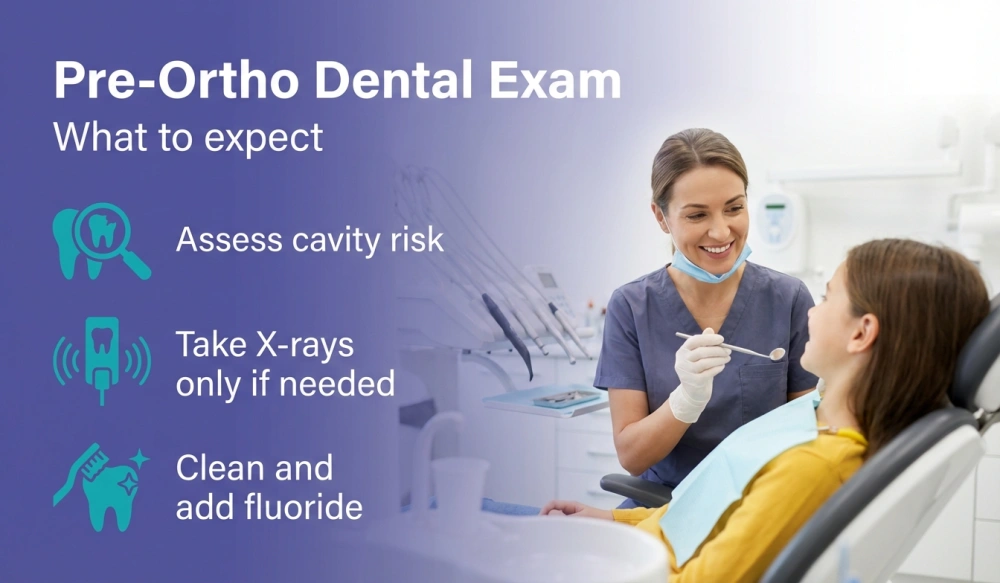
- Clinical exam to look for cavities, white spot lesions, plaque and calculus buildup, gum health, and any enamel defects.
- Digital imaging and X rays when appropriate to spot decay between teeth, assess root and bone health, and evaluate developing teeth and spacing needs, following professional guidelines that limit exposure to what is necessary [5].
- Caries risk assessment that reviews diet, fluoride exposure, hygiene habits, and past decay history to tailor a prevention plan [3].
- Cleaning and fluoride to remove plaque and tartar and strengthen enamel before brackets go on [4] [6].
- Discussion of home care tools such as interdental brushes, floss threaders, and fluoride toothpaste or rinses.
When decay is found, your pediatric dentist explains the findings, shares images when helpful, and outlines treatment steps and timing before orthodontic appliances are placed. This collaborative process prepares your child to succeed in braces with a clear and manageable plan [3] [5].
How do pediatric dentists and orthodontists coordinate your child’s care?
Pediatric dentists and orthodontists work together to align the sequence of care. The pediatric dentist diagnoses and treats any decay, gum inflammation, or enamel issues and then communicates with the orthodontist about clearance and timing. The orthodontist plans bracket placement, space management, and appliance choices with the dental health status in mind. Families benefit most when both teams exchange imaging, photos, and written notes so that everyone is on the same page. Orthodontic care also includes regular reminders to continue routine dental checkups during active treatment, because dental cleanings and exams remain essential while wearing braces [7].
This coordinated model is especially helpful for pediatric cavities before orthodontics, because early intervention and clear prevention steps reduce the chances of mid treatment setbacks and extra appointments [3] [7].
When should cavities be treated relative to the braces timeline?
As a general rule, treat active decay before brackets or aligners are placed. The schedule often looks like this:
- Step 1 Complete the pre orthodontic dental exam and cleaning.
- Step 2 Address any cavities and gum issues. Simple restorations can often be completed in a single visit. Teeth requiring more complex care may need additional time before orthodontics begins.
- Step 3 Apply preventive measures such as fluoride varnish and possibly sealants on molars that are not receiving brackets to reduce future risk [4] [6].
- Step 4 Provide the orthodontist with clearance and a tailored hygiene plan for the first weeks in appliances.
If a cavity is discovered after braces have started, many fillings can still be placed without removing a bracket, but the orthodontist may recommend moving a bracket temporarily if access is limited. This is another reason proactive care is important for kids braces preparation.
Which treatments are recommended before braces for kids?
Before orthodontic treatment, your pediatric dentist may recommend a combination of restorative and preventive care based on your child’s risk level:
- Dental fillings for kids to restore areas where decay has removed enamel and dentin, sealing out bacteria and making the tooth easier to clean during braces [3].
- Professional fluoride varnish to strengthen enamel and make it more resistant to acids produced by plaque bacteria [6].
- Sealants on molars to fill in deep grooves that trap plaque, especially useful for children and teens at elevated risk [4].
- Gum health therapy if needed to reduce inflammation before brackets are placed, which helps with comfort and oral hygiene.
- Nutritional and hygiene coaching to build daily routines that fit school and activity schedules.
For families in Laguna Niguel, Mission Viejo, Aliso Viejo, Laguna Hills, Laguna Beach, and San Juan Capistrano, thoughtful preparation can keep orthodontic progress steady and reduce the chance of urgent visits.
How can you prevent decay under brackets during orthodontic treatment?
Preventing tooth decay under brackets and wires is all about consistent hygiene, smart nutrition, and routine professional support. Here is a practical plan you can start on day one:
- Brush after meals and snacks with a soft brush and fluoride toothpaste. Angle bristles at the gumline and around brackets, and use a proxy brush to reach under wires [7].
- Floss daily with floss threaders or a reusable interdental flosser designed for orthodontic appliances.
- Use a fluoride rinse in the evening to deliver extra fluoride to areas around brackets [4].
- Choose tooth friendly snacks like cheese, yogurt, nuts, and crisp vegetables. Limit frequent sipping on sweet drinks that keep acid levels high.
- Schedule routine checkups and cleanings every six months or more frequently if your dentist recommends it during orthodontic treatment [7].
Talk with your pediatric dentist about decay under braces prevention that fits your child’s risk level. The plan should be realistic and easy to follow at home and at school.
What school day routines help kids care for braces and prevent cavities?
Small daily habits at school protect enamel and keep breath fresh. Pack a compact kit and set reminders so routines are easy to remember:
- Pack a pocket kit with a travel toothbrush, small toothpaste, proxy brush, and a few floss threaders.
- Rinse right after lunch if brushing is not possible. Swish water for 30 seconds to loosen food and lower acid levels.
- Choose water over sweet drinks during class and activities to avoid frequent sugar exposure.
- Store a mouthguard in the backpack for sports and practice to protect lips, cheeks, and brackets.
- Set phone reminders for quick hygiene moments after lunch and practice.
Consistent habits become automatic within a few weeks and make a clear difference in how clean the teeth and brackets look at each checkup.
What regulations and safety standards apply to pediatric dental care in California?
Parents often ask about safety standards for X rays, sedation, and infection control. In California, pediatric dental practices follow state and national guidelines designed to protect children:
- Imaging safety follows selection criteria that limit X rays to when they are needed for diagnosis and treatment planning, with techniques that minimize exposure. Professional guidelines help dentists choose the smallest number of images needed for each child’s situation [5].
- Sedation standards require specific permits, training, and emergency preparedness when sedation is offered, as regulated by the Dental Board of California [9].
- Radiologic oversight in California is supported through the Department of Public Health Radiologic Health Branch, which oversees radiation safety programs and compliance [10].
- Behavior guidance for children focuses on communication, desensitization, and child friendly techniques before considering pharmacologic options, following professional best practices [11].
These standards help ensure that care, including the pre orthodontic dental exam, is both effective and appropriate for each child’s needs.
How can you prepare an anxious child for fillings before braces?
It is common for kids to feel nervous about dental visits. Reducing anxiety makes treatment smoother and helps children feel proud of their progress. Consider these approaches:
- Practice the story by explaining what will happen in simple steps, focusing on the goal of making teeth strong for braces.
- Use modeling by reading a short picture book or watching a brief kid friendly video about dental visits.
- Schedule thoughtfully when your child is typically well rested and not rushed.
- Bring comfort items like a favorite hoodie, small stuffed toy, or music with headphones.
- Ask about behavior guidance and coping strategies the dental team uses to help kids feel calm and in control [11].
If needed, ask about options such as nitrous oxide or other pediatric sedation approaches that meet California standards and are tailored to your child’s health history [9] [11].
What questions should parents ask at the orthodontic clearance exam?
Bring a short list to make the most of your visit. Helpful questions include:
- Which teeth have early signs of enamel demineralization and how can we reverse those changes at home?
- Are any fillings needed before braces and how soon can those be completed?
- Will sealants help reduce risk during treatment, and which teeth are good candidates?
- What fluoride plan do you recommend for my child’s cavity risk and age?
- Which home care tools will fit our routine, and can you show us how to use them?
- How often should we schedule cleanings during orthodontic treatment?
- Who should we contact first if we notice sensitivity, a loose bracket, or signs of swelling?
Asking these questions ensures that your child has a personalized plan for cavities and braces that fits life at home and school.
What signs during braces mean you should call the dentist?
Call your pediatric dentist if you notice any of the following during orthodontic treatment:
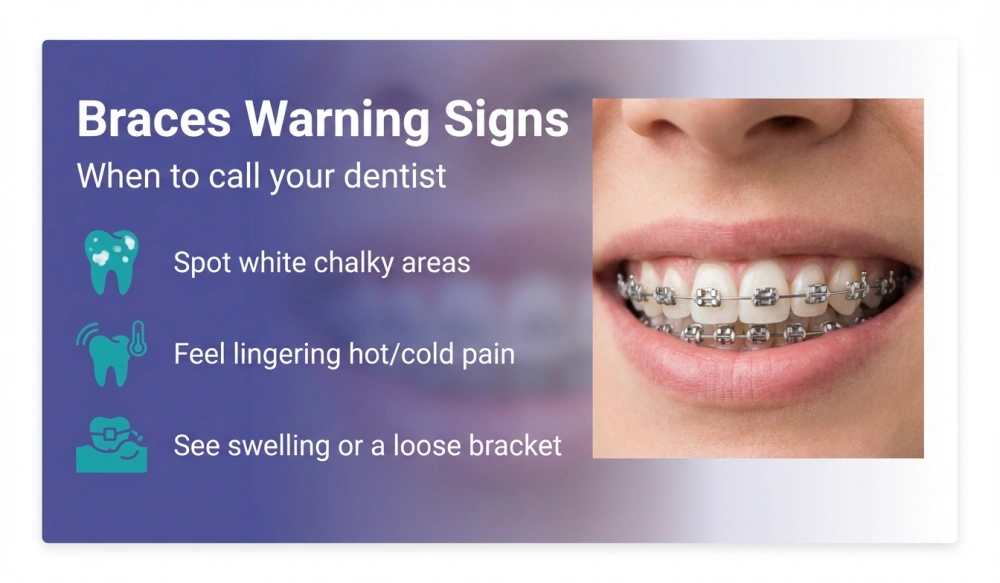
- Persistent sensitivity to sweets or temperature in one area after a few days of consistent hygiene.
- White or chalky spots near the gumline that do not brush away.
- Food consistently catching in the same place, even with careful cleaning.
- Swelling or bleeding around a specific tooth that does not improve with better hygiene over a week.
- Fractured or lost bracket that makes cleaning or chewing difficult.
Early calls prevent small issues from growing into larger problems and help keep treatment on track.
How do sealants and fluoride help protect teeth with braces?
Sealants and fluoride are proven, complementary strategies that protect enamel during orthodontic treatment:
- Sealants shield the deep grooves of molars where plaque and food particles hide, decreasing the chance of cavities in those areas during treatment [4].
- Fluoride varnish and toothpaste support remineralization by replenishing minerals and making the enamel more resistant to acid attacks, which is especially important around bracket edges [4] [6].
For children at higher risk, your dentist may suggest fluoride varnish at routine cleanings. A Cochrane review supports the use of varnish in children and adolescents to reduce caries, which is valuable during braces when daily cleaning is more complex [6].
How is enamel protected when braces are removed?
When braces come off, teeth are carefully cleaned and polished to remove any remaining adhesive. If white spot lesions appeared during treatment, your pediatric dentist may recommend fluoride therapy, remineralizing creams, or other approaches to improve enamel appearance and strength. Ongoing hygiene coaching and professional checkups help maintain results after the appliances are removed [4] [6] [7].
This is also a great time to review nutrition habits and schedule regular cleanings, since the smooth tooth surfaces are easier to maintain without brackets and wires. Children’s dentistry South Orange County teams often coordinate this visit with the orthodontist to celebrate results and set maintenance goals that keep smiles healthy.
How does Kidz Modern Dentistry support your child before and during braces in South Orange County?
At Kidz Modern Dentistry, we focus on education, prevention, and gentle care so that your child starts orthodontic treatment with a healthy foundation and stays on track through every phase. Our team serves families across Laguna Niguel, Mission Viejo, Aliso Viejo, Laguna Hills, Laguna Beach, and San Juan Capistrano with a coordinated approach to pediatric cavities before orthodontics and braces care.
We begin with a thorough pre orthodontic dental exam that is tailored to your child’s age, risk level, and orthodontic plan. We review images together, explain findings in clear terms, and outline next steps in a way that feels manageable for busy families. When treatment is needed, we provide Dental fillings for kids using child friendly techniques that prioritize comfort and long term oral health.
For families seeking local, convenient care, we offer Dental fillings for kids in Laguna Niguel with scheduling designed to minimize time away from school. If your child is nervous about care, our kid friendly sedation options follow California regulations, and our behavior guidance methods help children feel confident and supported at each visit.
Our method includes:
- Clear coordination with orthodontists to align timing and share updates so braces can start and progress smoothly.
- Preventive planning with fluoride varnish, sealants when appropriate, and practical home routines that work during school and activities.
- Education first so kids understand what to expect, how to care for brackets and wires, and why their efforts matter.
- Same day emergency availability for urgent issues whenever possible, so small problems do not disrupt progress.
- Kid friendly technology including digital imaging and gentle instruments sized for children.
Our clinicians combine years of experience in pediatric dentistry with a warm, easygoing style that helps kids and parents feel at home. We are committed to evidence based care and follow professional guidelines from trusted organizations to keep your child’s smile healthy before, during, and after braces [3] [4] [5] [7] [9].
If you have questions about cavities and braces, or you want to schedule a pre orthodontic dental exam, call us at +1 949 273 0110. We are happy to help you plan the next steps and support your family throughout the orthodontic journey.
References
- Children’s Oral Health Fast Facts – Centers for Disease Control and Prevention
- Dental Caries in Children Age 2 to 11 – National Institute of Dental and Craniofacial Research
- Caries Risk Assessment and Management for Infants, Children, and Adolescents – American Academy of Pediatric Dentistry
- Fluoride Therapy Best Practices – American Academy of Pediatric Dentistry
- Dental X Rays Oral Health Topic and Radiographic Recommendations – American Dental Association
- Fluoride Varnishes for Preventing Dental Caries in Children and Adolescents – Cochrane Review
- Braces Care and Oral Hygiene – American Dental Association MouthHealthy
- Public Resources and Oral Hygiene Guidance During Orthodontic Treatment – American Association of Orthodontists
- Sedation and Anesthesia Permits and Requirements – Dental Board of California
- Radiologic Health Branch and Radiation Safety – California Department of Public Health
- Behavior Guidance for the Pediatric Dental Patient – American Academy of Pediatric Dentistry
- Use of Dental Sealants Best Practices – American Academy of Pediatric Dentistry
Common Questions About This Topic
Find answers to frequently asked questions related to this article.
