
- What makes a pediatric dentist the most reliable guide for knowing if and when your child needs braces?
- When should your child have an orthodontic evaluation?
- What signs might suggest your child needs braces?
- What happens during an early orthodontic assessment at a pediatric dental office?
- Why does the age 7 orthodontic checkup matter for developing smiles?
- Which orthodontic problems benefit from early treatment and which can wait?
- How do pediatric dental X rays support safe and accurate orthodontic evaluation?
- What is the orthodontist’s role and when will your pediatric dentist refer?
- Could clear aligners such as Invisalign First be appropriate for kids?
- How do growth and development monitoring visits help children ages 6 to 12?
- What can parents do at home to support orthodontic readiness and comfort?
- How do insurance, timing, and budgeting typically work for braces for kids?
- What local considerations apply for families in South Orange County?
- Which frequently asked questions do parents ask about braces for kids?
- How does Kidz Modern Dentistry help families decide the best time for braces?
- Which references and resources support this guide?
What makes a pediatric dentist the most reliable guide for knowing if and when your child needs braces?
Pediatric dentists focus on the unique growth patterns, dental development, and day to day behaviors of children. That means we see more than just teeth that look crooked. We study overall facial growth, oral habits such as thumb or finger sucking, airway and breathing considerations during sleep, and how the jaws and bite come together as your child grows. Because we see children as early as the first birthday and continue through the mixed dentition years, we build a continuous record that helps us identify the right moment to consider braces for kids, refer to an orthodontist, or simply watch and wait with periodic checks [1] [2].
Parents often ask whether they should wait until all permanent teeth are in. Waiting may be the right choice in some situations, but it is not universal. Certain conditions respond better to early guidance while the jaws and bite are still developing. A pediatric dentist can explain the difference, outline options, and coordinate care so that treatment, if needed, is timely and thoughtful rather than rushed [2].
We also translate clinical findings into plain language. You get a clear explanation of what we see, why it matters, what the research says, and what next steps make sense for your child’s unique situation. This collaborative approach helps families make informed choices without pressure or guesswork [7] [8].
As part of comprehensive care, we use Orthodontic monitoring to track changes at regular intervals. This ongoing record helps us avoid unnecessary treatment while catching issues early enough to guide growth when indicated [2].
When should your child have an orthodontic evaluation?
Many professional organizations advise that children receive an orthodontic evaluation by around age 7. At this age, most kids have a mix of baby and permanent teeth, and we can see how the bite is forming and whether there is emerging crowding or spacing. An early look does not mean treatment will start right away. It simply means we begin planning and tracking your child’s growth and dental development so we can act at the right time if a need appears [1] [2].
If your child is younger but you notice concerns such as an underbite, a crossbite, or persistent mouth breathing, do not wait. An earlier visit is appropriate. Likewise, if there is a history of trauma to the front teeth or prolonged oral habits, a pediatric dentist can check the bite and recommend simple interventions that may reduce future challenges [2] [6].
What signs might suggest your child needs braces?
Every smile is unique, and not all irregularities require braces. Still, certain patterns are worth checking. If you notice any of the following, consider scheduling an orthodontic evaluation:
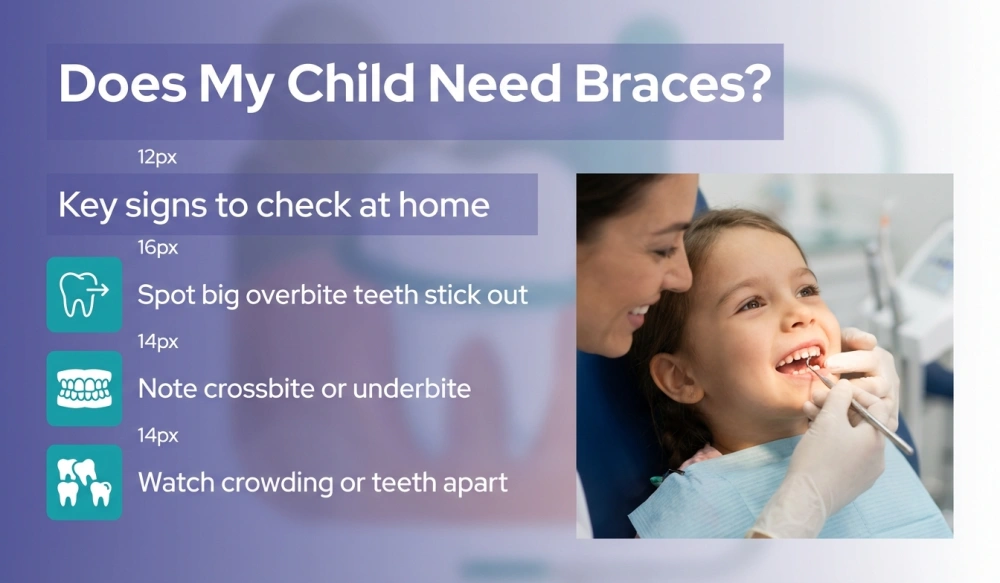
- Overbite in children that makes upper front teeth significantly more prominent or at risk for injury [6].
- Underbite or crossbite where lower teeth or the lower jaw extend ahead of upper teeth, or where upper teeth bite inside lower teeth on one side [2].
- Open bite where front teeth do not meet when your child bites down, often linked to tongue thrust or prolonged thumb sucking [2].
- Dental crowding where teeth do not have enough space to come in straight, or primary teeth are slow to fall out because of lack of room [2].
- Spacing that is excessive, especially if related to missing teeth or a lip or tongue tie that affects tooth position [2].
- Difficulty chewing or biting, speech concerns, or consistent mouth breathing that may relate to bite or jaw growth patterns [8].
- Early tooth loss or large cavities that change the space available for permanent teeth to erupt, which sometimes calls for space maintainers [2].
These signs do not automatically mean braces are needed. They are simply reasons to have a pediatric dentist take a careful look, discuss the findings, and decide if early orthodontic assessment or interceptive orthodontics may help [2].
What happens during an early orthodontic assessment at a pediatric dental office?
An early assessment is comfortable and kid friendly. We focus on understanding how your child’s teeth and jaws are growing and how that growth affects the bite. Here is what we typically include.
- Thorough health and dental history including habits such as thumb sucking, nail biting, clenching, grinding, or mouth breathing. We ask about sleep quality and daytime energy because breathing patterns can influence jaw growth [8].
- Clinical examination of facial symmetry, jaw position, and how upper and lower teeth meet. We evaluate the shape of the dental arches and the pattern of tooth eruption as new teeth come in [2].
- Pediatric dental X rays only when clinically indicated, following national guidance to minimize exposure while gaining essential information. X rays help us see developing permanent teeth, roots, and any obstacles that may alter eruption paths [3] [4].
- Photos or digital scans to document the baseline. These records help us compare changes over time and guide decisions about timing [8].
- Discussion of findings in clear language. We outline whether we recommend observation, habit guidance, or a referral to an orthodontist for interceptive steps such as a palatal expander [2].
By coordinating these steps over time, we build a timeline that respects growth changes and avoids starting treatment too early or too late. When observation is the best plan, we map out future checkpoints so you know what to expect and when to return.
Why does the age 7 orthodontic checkup matter for developing smiles?
Around age 7, most children have their first permanent molars and several permanent incisors. This gives us a preview of the bite and how crowded or spaced things may become. At this point, we can often identify whether the upper jaw is narrower than the lower, whether front teeth are at higher risk for trauma due to increased overjet, and whether early guidance would be helpful [1] [6].
Early interceptive orthodontics does not aim to finish the entire treatment in one phase. Instead, the goal is to correct specific growth or space issues that are best addressed while bones and soft tissues are more adaptable. This can lower the risk of injury to protruding front teeth, improve function, and make later comprehensive treatment shorter or more predictable. Evidence suggests that early correction of certain overjet patterns may reduce the chances of dental trauma to front teeth [6].
For other children, there is no advantage to starting early. In those cases, careful observation is the most sensible plan. Your pediatric dentist will explain why and set a schedule to recheck at intervals, so the window for the right timing is not missed [2].
Which orthodontic problems benefit from early treatment and which can wait?
Not every bite issue requires early action. Here is an overview to help you understand common scenarios we assess during an early orthodontic evaluation.
Which issues often benefit from interceptive orthodontics while a child is still growing?
- Crossbite of front or back teeth where the upper jaw is narrower than the lower. A palatal expander may help widen the upper arch to improve balance in the bite [2].
- Significant overjet with protruding front teeth. Early guidance may reduce the risk of trauma to front teeth and improve lip closure [6].
- Severe crowding that blocks normal eruption. Guidance of eruption and selective space management can help permanent teeth come in more naturally [2].
- Open bite or habit related bite changes linked to thumb sucking or tongue thrust. Habit appliances and counseling can support healthier function and allow the bite to normalize as growth continues [2].
- Premature loss of baby teeth from decay or injury. Space maintainers can preserve room for the permanent tooth to emerge in the right spot [2].
Which issues can often wait until more permanent teeth have erupted?
- Mild crowding or spacing that may improve as the jaw grows and baby teeth loosen and fall out [2].
- Cosmetic alignment when bite function is acceptable and no trauma risk is present. Comprehensive braces can be timed during later childhood or early teen years [8].
In every scenario, a personalized plan is essential. What looks similar in two children can have different causes and different best timing. That is why coordination through your pediatric dentist and, when needed, an orthodontist is so helpful [1] [8].
How do pediatric dental X rays support safe and accurate orthodontic evaluation?
Dental X rays are a valuable tool for seeing tooth buds, root development, missing or extra teeth, and any obstacles to eruption. For orthodontic planning, these details matter. We follow national recommendations that emphasize using the lowest exposure that will still provide the diagnostic information needed. This is sometimes called the ALARA principle, which means as low as reasonably achievable [3] [4].
Guidelines from federal agencies and professional organizations recommend individualized selection of X rays based on your child’s age, caries risk, clinical findings, and dental history. We do not take X rays on a set schedule. We take them when the exam and history indicate that an image will meaningfully inform care decisions. This approach balances safety with the need to see hidden conditions that visual exams cannot reveal [3] [4].
You can expect us to explain why an image is recommended, what we are looking for, and how the result will guide the orthodontic evaluation. If your child had recent images taken at another office, we will request those records to avoid unnecessary duplication whenever possible [4].
What is the orthodontist’s role and when will your pediatric dentist refer?
Pediatric dentists and orthodontists work as a team. Pediatric dentists focus on prevention, growth and development, behavioral guidance, and the daily realities of oral health for children. Orthodontists complete specialized training to diagnose and treat dental and jaw alignment concerns using braces, aligners, expanders, and related appliances. Board certified orthodontists demonstrate an additional credential by completing a rigorous exam and case review process through the American Board of Orthodontics [11].
Your pediatric dentist will coordinate an orthodontist referral when the timing and scope of treatment suggest that a dedicated orthodontic plan is appropriate. In many cases we continue to see your child for routine cleanings and checkups during orthodontic care, working closely with the orthodontist to support oral hygiene and comfort [1] [8].
Could clear aligners such as Invisalign First be appropriate for kids?
Clear aligner systems for children have expanded in recent years. Some products are designed for mixed dentition and early guidance. Invisalign First is one example, and it may be considered in select cases. Suitability depends on your child’s specific bite, growth stage, and goals. An orthodontist can evaluate whether a clear aligner approach is appropriate now or whether traditional braces or other appliances would be a better fit [12].
Regardless of the appliance chosen, consistent wear and good oral hygiene are essential for success. Your pediatric dentist can help your child practice aligner routines and check for any signs of irritation or difficulty with brushing and flossing while appliances are in place [7] [8].
How do growth and development monitoring visits help children ages 6 to 12?
From first grade through middle school, children experience steady changes in jaw growth and tooth eruption. Regular checkups allow us to track these changes and adjust plans so that orthodontic treatment, if needed, is neither rushed nor delayed.
- Growth checks help us spot whether the upper and lower jaws are growing in harmony or whether early guidance may support better balance [2].
- Eruption tracking confirms that permanent teeth have a clear path into the mouth and helps us identify crowding early enough to guide eruption if indicated [2].
- Habit review lets us support families as children outgrow thumb sucking, improve tongue posture, and practice nasal breathing patterns that encourage healthy development [2].
- Hygiene coaching reinforces skills needed to care for teeth during and after orthodontic treatment, lowering the risk of cavities and gum inflammation [5] [7].
These visits build confidence through predictability. You will know when to watch for changes, when to consider intervention, and when it makes sense to simply let growth proceed and reassess at the next milestone.
What can parents do at home to support orthodontic readiness and comfort?
Parents play a powerful role in helping children feel at ease and grow into their best smile. Small daily steps make a big difference over time.
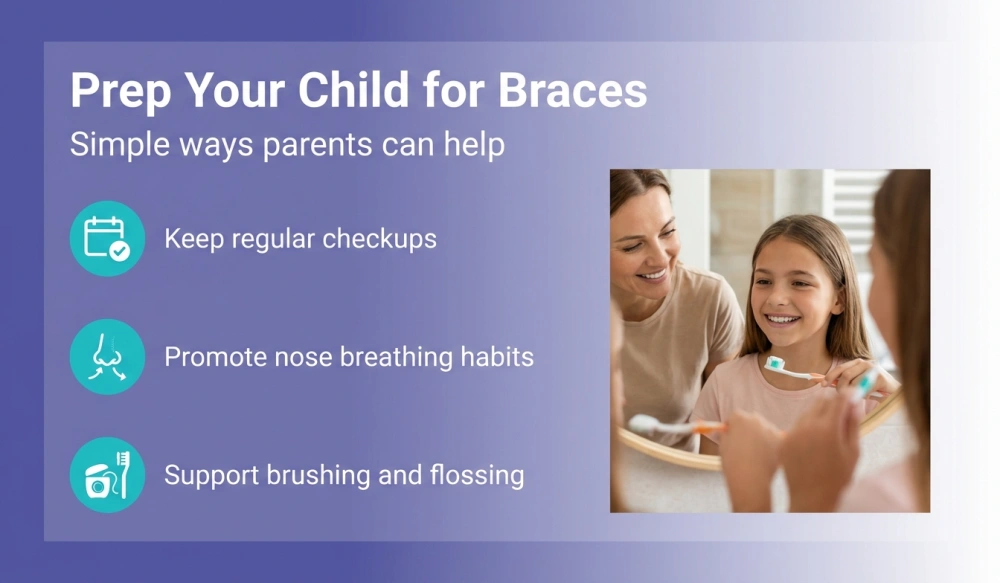
- Keep regular checkups so we can catch changes early and celebrate progress together [2].
- Encourage healthy habits like nose breathing, lips together at rest, and chewing a balanced diet that supports jaw function. If thumb sucking persists beyond early childhood, ask us about gentle strategies and habit appliances when appropriate [2].
- Support brushing and flossing especially around new permanent molars and any appliance. Consistent hygiene reduces the chance of white spot lesions and cavities during treatment [5] [7].
- Use protective gear for sports and let us know about any dental trauma right away, since injury can change the timing and approach to orthodontic care [7].
If you ever have questions about comfort, appliance wear, or school routines, reach out. Together we can adjust the plan so it works for your family.
How do insurance, timing, and budgeting typically work for braces for kids?
Coverage varies by plan. Some plans contribute a portion toward orthodontic treatment for children, often with a lifetime maximum. Others may not include orthodontic benefits. Because timing affects coverage and out of pocket expenses, your pediatric dentist and the orthodontist can coordinate a pre treatment estimate to clarify details before you decide.
- Pre authorization may be recommended to estimate coverage and understand any age related provisions.
- Phased treatment can separate interceptive steps from later comprehensive treatment, which may influence how benefits apply.
- Flexible payment options are commonly available through orthodontic practices to make care more manageable.
Our aim is to help you understand the clinical need first, then align the timing with what is practical for your family. We avoid promises about outcomes or timelines and instead provide an honest picture of the path ahead.
What local considerations apply for families in South Orange County?
Families in Laguna Niguel, Laguna Hills, Mission Viejo, Aliso Viejo, Laguna Beach, and San Juan Capistrano value convenience and continuity of care. We coordinate records, X rays when indicated, and referral communication so that your child’s orthodontic journey is smooth across visits. Your pediatric dentist remains your partner for routine cleanings and cavity prevention while the orthodontist supplies specialized treatment when needed [1] [8].
We follow California licensing standards and radiation safety requirements and work within state and federal guidance for imaging and child centered care. If your child needs radiographic imaging, we explain the benefit, follow ALARA principles, and maintain compliance with California’s Radiologic Health Branch oversight and the Dental Board of California rules [9] [10] [4].
Parents often ask about growth check intervals. In our area, after an initial early orthodontic assessment, many children benefit from six to twelve month reviews to confirm eruption patterns and bite balance. The exact interval depends on your child’s findings and risk factors. That is one reason Orthodontic monitoring in Laguna Niguel can be so helpful for timely and thoughtful decisions [2].
Which frequently asked questions do parents ask about braces for kids?
Is thumb sucking after age four a concern for future braces needs?
Persistent thumb or finger sucking can influence the shape of the palate and contribute to an open bite or flared front teeth. If the habit continues beyond the early years, gentle counseling and habit appliances may help. The goal is to support your child in a positive way and allow natural growth to guide the bite back toward balance [2].
Can baby teeth be safely moved during interceptive orthodontics?
Yes, interceptive treatment often involves guiding both baby teeth and early permanent teeth. The aim is not cosmetic perfection but rather improvement of growth patterns and space for eruption. Your pediatric dentist and orthodontist will explain the plan and how it supports later stages of care [2] [8].
How long does a palatal expander typically stay in place?
Expanders often remain for several months to achieve widening and then stabilize while new bone forms. The exact duration varies with age, goals, and response to treatment. Your orthodontist will review activation, hygiene, and progress checks during visits [2].
Will early overjet correction reduce the risk of front tooth injuries?
Evidence suggests that early treatment for certain types of increased overjet can reduce the risk of dental trauma to front teeth. Your team will consider this factor along with overall growth, function, and your child’s comfort when discussing timing [6].
Are retainers needed after early treatment?
Often yes. Retention maintains gains while growth continues and while the remaining permanent teeth come in. The type of retainer and how long it is worn will depend on the treatment performed and how your child is growing [8].
Could clear aligners be used during mixed dentition years?
Some clear aligner systems are designed for younger patients with a mix of baby and permanent teeth. Suitability is case specific. An orthodontic consultation will clarify whether aligners, braces, or a different appliance best fits your child’s needs now [12].
How often will my child need checkups during orthodontic care?
Frequency depends on the appliance and goals. Many plans involve adjustments or checks every four to eight weeks. Your pediatric dentist will continue to schedule cleanings and cavity prevention visits in between, which supports overall health during treatment [7] [8].
What if a permanent tooth is missing or extra?
A small percentage of children have congenitally missing or extra teeth. X rays and exams help us find and plan around these differences. Treatment may combine space management, alignment, and restorative steps once growth is complete. Your pediatric dentist and orthodontist will outline a staged plan with milestones along the way [3] [8].
Will braces affect my child’s ability to play sports or musical instruments?
With a few adjustments, most children adapt quickly. Mouthguards protect during sports. For instruments, a short period of practice helps the lips and cheeks adapt. Your care team can suggest comfort wax, hygiene tips, and practice strategies to ease the transition [7].
How can we keep teeth clean during braces?
Focus on thorough brushing around brackets and along the gumline, daily flossing with threaders or specialized tools, and mindful snacking choices. Professional cleanings and timely cavity prevention visit intervals keep the smile healthy while treatment progresses [5] [7].
How does Kidz Modern Dentistry help families decide the best time for braces?
At Kidz Modern Dentistry, our mission is to make dental visits a positive, engaging experience while delivering careful, evidence based guidance about growth, bite, and orthodontic timing. We serve families across Laguna Niguel, Laguna Hills, Mission Viejo, Aliso Viejo, Laguna Beach, and San Juan Capistrano with same day emergency availability, kid friendly sedation options when appropriate, and comprehensive pediatric care that adapts to your child’s needs.
How do our services relate to orthodontic decisions and next steps?
- Early orthodontic assessment during routine checkups helps us identify the right time to act, refer, or continue observing.
- Space maintainers and habit appliances are available when needed to support balanced development and protect eruption space.
- Coordinated referrals connect you with trusted orthodontic partners for full evaluations, expanders, braces, or aligners when the time is right.
Where do we operate and how do we support local families?
- South Orange County focus with convenient access for families in Laguna Niguel, Laguna Hills, Mission Viejo, Aliso Viejo, Laguna Beach, and San Juan Capistrano.
- Seamless records sharing so your orthodontist has everything needed to plan precisely.
- Clear communication about what to expect at each stage and when to return for growth checks.
What is our approach and methodology for child centered care?
- Compassionate, age appropriate visits that build trust and keep kids comfortable.
- Stepwise planning that favors the least invasive path that still achieves the desired health and functional outcomes.
- Evidence guided recommendations that draw on current professional guidance and research.
Do we use any proprietary tools or processes?
- Structured growth tracking that aligns dental photos, clinical measurements, and periodic imaging when indicated, which supports precise timing for braces.
- Coordinated care templates that keep everyone on the same page, from parents to orthodontic partners.
How does leadership and experience shape our orthodontic guidance?
- Years of combined pediatric experience in prevention, behavior guidance, and growth assessment inform every decision.
- Ongoing collaboration with orthodontists who specialize in childhood and teen care.
How do we personalize service and give you direct access to qualified professionals?
- Direct communication with our pediatric dentists for questions in between visits.
- Flexible scheduling for school and activity friendly appointments.
- Clear, written summaries after significant visits so families can review together at home.
Can we share examples of successful outcomes?
- Early crossbite correction that allowed later alignment to be shorter and more straightforward.
- Habit guidance success where open bite gradually resolved as the habit faded and growth caught up.
- Space maintenance after early tooth loss that preserved room for a healthy eruption path.
If you are wondering when to start an orthodontic evaluation or how to plan next steps, we are here to help. Call Kidz Modern Dentistry at +1 949 273 0110 and our team will help you book a visit, gather records, and outline a comfortable plan for your child.
Which references and resources support this guide?
- For Parents – American Association of Orthodontists
- Oral Health Policies and Best Practices – American Academy of Pediatric Dentistry
- Dental Radiography – U S Food and Drug Administration
- Dental Radiographic Examinations Recommendations for Patient Selection and Limiting Radiation – U S Food and Drug Administration
- Children’s Oral Health – Centers for Disease Control and Prevention
- Early orthodontic treatment for Class II division 1 malocclusion – Cochrane
- Braces – American Dental Association MouthHealthy
- Orthodontics – National Institute of Dental and Craniofacial Research
- Dental Board of California – State of California
- Radiologic Health Branch – California Department of Public Health
- Patient Education – American Board of Orthodontics
- Invisalign First – Invisalign Official Site
Common Questions About This Topic
Find answers to frequently asked questions related to this article.
