- What should parents know about kids dental emergencies in South Orange County?
- What counts as a true pediatric dental emergency?
- What immediate first aid steps can you take before you reach a dentist?
- How do pediatric dentists evaluate and treat common dental emergencies?
- What do national and California guidelines say about emergency pediatric dental care?
- How can you plan ahead to reduce the risk or impact of dental emergencies?
- Where can families in Laguna Niguel and South Orange County find help today?
- How does Kidz Modern Dentistry support families during children dental emergencies?
- Which sources and further reading are available?
What should parents know about kids dental emergencies in South Orange County?
When a child has sudden tooth pain, a broken or knocked out tooth, or facial swelling, parents often have the same first thought. How fast should we act and what can we safely do at home until a pediatric dentist sees our child. Quick, calm steps can protect the tooth, ease discomfort, and lower the chance of long term problems. Understanding the basics of avulsed teeth, fractures, toothaches, soft tissue injuries, and orthodontic issues helps you feel ready to respond while you contact an emergency pediatric dentist.
Families across Laguna Niguel, Laguna Hills, Laguna Beach, Aliso Viejo, Mission Viejo, and San Juan Capistrano share similar questions. Which symptoms are urgent. What is different for baby teeth versus permanent teeth. Which pain relief options are safe for children. Where can we get same day care close to home. We cover clear first aid steps, what to expect from a pediatric urgent visit, and how professional guidelines shape care for kids. We also explain when to call 911 if there are signs of a medical emergency like trouble breathing or uncontrolled bleeding, and we include references to recognized organizations so you can verify each point [7].
Every minute counts with some Pediatric dental emergencies, especially when a permanent tooth is knocked out. Storing the tooth correctly and seeking timely care can improve outcomes [1] [8] [9].
What counts as a true pediatric dental emergency?
Not every chipped tooth needs immediate treatment, yet some situations are time sensitive. Here are common scenarios and how urgent they usually are. If you are unsure, call a pediatric dentist for guidance and next steps.
When is a knocked out tooth an emergency for a child?
Knocked out teeth require fast action. For permanent teeth that are fully avulsed, replantation or proper storage during rapid transport provides the best chance to save the tooth. Do not replant a baby tooth because this can damage the developing permanent tooth. Keep the child calm, control any bleeding with gentle pressure, and contact a pediatric dentist right away [1] [2] [8] [9].
What should you do if a tooth is chipped or fractured?
Chips and fractures vary from small enamel breaks to larger cracks that expose the inner nerve. Sensitivity to cold, pain on biting, or visible pink tissue are signs that evaluation is needed soon. Save any tooth fragments in milk and bring them to the visit. Prompt care may allow the dentist to bond a fragment back or protect the tooth with a restoration [2] [7].
How should you handle severe toothache or swelling in a child?
Toothaches can stem from deep cavities, cracked teeth, erupting teeth, or gum infections. If pain is severe, persistent, wakes your child from sleep, or is combined with facial swelling, fever, or difficulty opening the mouth, call a pediatric dentist the same day. Facial swelling that spreads or affects breathing is a medical emergency and requires immediate medical attention. Evidence based guidance supports nonopioid first line pain management for dental pain in children [3] [11].
What if your child has injured their lip, tongue, or cheek?
Soft tissue cuts inside the mouth can bleed more than expected and may look alarming. Rinse gently with clean water or saline, apply firm pressure with gauze, and use a cold compress on the outside of the face to control swelling. If the cut is deep, continues to bleed after 10 to 15 minutes of pressure, or if there is a puncture wound, seek urgent care. A pediatric dentist can evaluate for tooth fragments lodged in the tissue and for associated dental injuries [7].
What if braces or appliances are causing pain or injury?
Wires that poke cheeks or lips can cause sores and bleeding. Cover the wire end with orthodontic wax, a small piece of sugar free gum, or a cotton pellet until you can be seen. If a bracket is loose but attached to the wire, leave it in place and contact your orthodontic or pediatric dental office for instructions. Severe pain, cuts, or suspected swallowed pieces need professional evaluation the same day [7].
What immediate first aid steps can you take before you reach a dentist?
Simple, safe measures at home can protect teeth and tissues while you travel to a clinic. The actions below are supported by trauma and pediatric dental guidance. If you are in doubt about any step, call a pediatric dentist for help on the phone.
How do you manage a knocked out permanent tooth safely?
- Find the tooth Pick it up by the crown, which is the white chewing surface. Avoid touching the root to protect living cells that help reattachment [1] [9].
- Rinse briefly if dirty Use a gentle stream of cold running water for no more than 10 seconds. Do not scrub or use soap or chemicals [1] [9].
- Replant if possible If your child is alert and cooperative, place the tooth back into the socket with gentle pressure and have your child bite on gauze to hold it in place. Call a pediatric dentist immediately [1].
- Store correctly if replanting is not possible Place the tooth in a tooth preservation solution if available, cold milk, saline, or have your child hold it in the cheek if old enough not to swallow it. Do not store dry or in tap water for long periods [1] [8] [9].
- Avoid replanting baby teeth Primary teeth should not be replanted due to risk to the developing permanent teeth. Seek urgent dental evaluation instead [2].
How do you stabilize a broken tooth or filling?
- Rinse gently Use warm water to clean the area. If there is bleeding, apply pressure with gauze.
- Protect sharp edges If a sharp edge is cutting the tongue or cheek, cover it with orthodontic wax or sugar free gum until you are seen [7].
- Save fragments Place broken pieces in milk and bring them to the dentist. Sometimes they can be bonded back to the tooth [2].
What can you do for dental pain until you are seen?
- Use age appropriate pain relief Nonopioid options such as ibuprofen and acetaminophen, used per weight based dosing and pediatric guidance, are recommended first line for acute dental pain in children and adolescents [3] [11].
- Apply a cold compress Place a cold pack on the outside of the cheek for 10 minutes on and 10 minutes off to reduce discomfort and swelling.
- Keep the area clean Gently brush and rinse to remove food debris that can worsen pain. Avoid very hot, cold, or sugary foods until evaluated.
When should you call 911 or go to an emergency department?
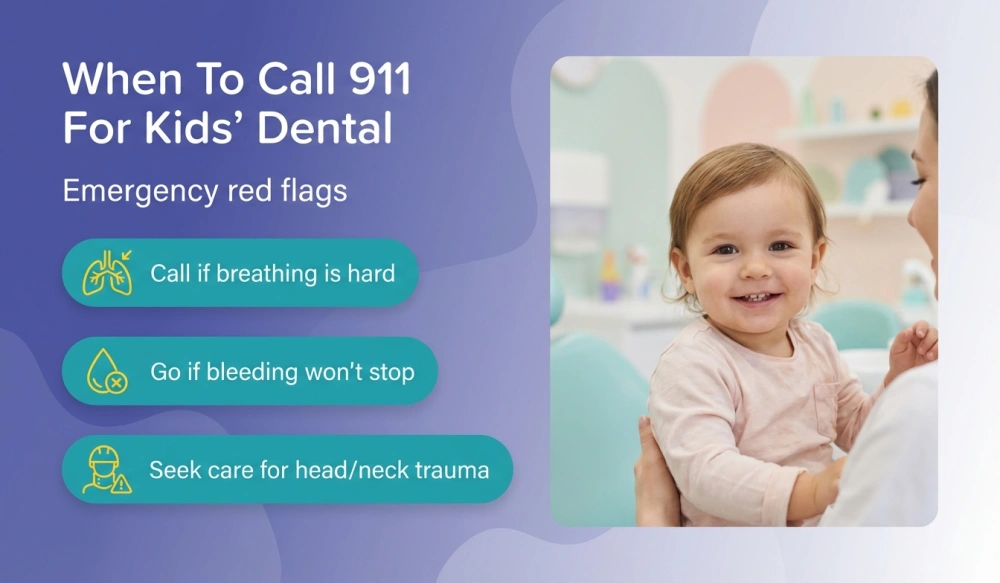
- Breathing or swallowing problems If swelling makes it hard to breathe or swallow, seek emergency medical care immediately.
- Uncontrolled bleeding If bleeding does not stop with firm pressure after 10 to 15 minutes, go to the nearest emergency department.
- Head or neck injury If there was a high impact injury, loss of consciousness, or concern for concussion, prioritize medical evaluation first. Dental treatment can follow once medically cleared [7].
How do pediatric dentists evaluate and treat common dental emergencies?
Urgent pediatric visits focus on pain relief, stabilizing injuries, and preserving oral development. Treatment plans are tailored to your child’s age, tooth type, and stage of growth.
What assessments and X rays are used for kids in urgent visits?
Pediatric dentists begin with a calm history and exam that considers the time since injury, how the injury occurred, and prior dental history. A focused clinical exam looks for mobility, tenderness, cracks, and discoloration. Digital X rays, typically periapical and occlusal views, help assess root development, the presence of fractures, and the position of displaced teeth. Pediatric imaging protocols minimize exposure and follow the as low as reasonably achievable principle while still providing the information needed for safe care [2].
Which treatments are common for fractures and deep cavities?
- Smoothing and bonding Small enamel chips may be polished. Larger fractures can be restored with tooth colored bonding or protective covers, taking care to preserve healthy structure [2].
- Pulp therapy If the inner nerve is exposed or inflamed, treatments like protective liners, partial pulpotomy, or root canal therapy for mature teeth may be recommended to relieve pain and preserve the tooth [2].
- Temporary stabilization Splints are used for certain injuries to keep teeth stable during healing. Follow up exams and imaging monitor recovery and development [1] [2].
- Drainage and antibiotics when indicated For spreading infections or systemic signs, drainage and targeted antibiotics may be part of care. Pediatric guidelines emphasize judicious antibiotic use and clinical indicators for prescribing [12].
How is dental trauma in developing teeth monitored over time?
Pediatric dentists schedule follow up visits to check for healing and track tooth vitality, root development, and possible complications like discoloration or resorption. Because children’s teeth and jaws are still growing, injuries can have delayed effects. Structured follow up guided by professional protocols helps detect changes early and adjust care as needed [1] [2].
What do national and California guidelines say about emergency pediatric dental care?
Clinical decisions for children’s urgent dental needs rely on professional consensus statements, best practice guidelines, and state regulations. Below is a plain language summary with citations to help you review the details.
What do expert guidelines recommend for avulsed teeth?
- Immediate action The International Association of Dental Traumatology recommends immediate replantation for avulsed permanent teeth when possible, or placement in a suitable storage medium such as milk or a tooth preservation solution for rapid transport to a dentist. Baby teeth are not replanted [1] [8] [9].
- Timely follow up Splinting, tetanus review, and pulp therapy decisions are based on age, tooth maturity, and time outside the socket. Ongoing evaluation is essential to track healing [1] [2].
What are safe pain control options for children?
- First line medicines Nonopioid analgesics, including ibuprofen and acetaminophen used as directed, are recommended for acute dental pain in children and adolescents. Combining the two can offer additional benefit when appropriate. Opioids are generally not needed for most acute dental pain scenarios in pediatric patients [3] [11].
- Nonmedicine measures Cold compresses, gentle salt water rinses, and soft foods can help comfort while awaiting care. Parents should consult a pediatric dentist for personalized dosing and options [3].
How do infection control and consent work in California?
- Infection control California regulations outline specific sterilization and disinfection standards for dental settings, including instrument processing, water quality, and personal protective equipment. Licensed dental teams follow these rules to protect patients and staff during routine and emergency visits [5].
- Consent and documentation Dental teams obtain informed consent from a parent or legal guardian for minors, except in rare circumstances guided by state law. Practices maintain thorough records of injury details, findings, treatments, and follow up plans in accordance with California requirements [5].
How is sedation used safely for urgent pediatric care?
- Team training and monitoring Joint guidance from pediatric medical and dental organizations sets standards for monitoring and managing pediatric patients during and after sedation. This includes presedation evaluation, fasting guidance, appropriate equipment, trained personnel, and continuous monitoring [4].
- California permits In California, dentists must hold specific permits for different levels of sedation and anesthesia. These permits require training, equipment, and facility preparedness that align with state regulations and recognized safety standards [6].
How can you plan ahead to reduce the risk or impact of dental emergencies?
Some emergencies are unavoidable. Still, a few practical steps can lower risks and improve outcomes if an injury happens. Building a family plan makes it easier to stay calm and act quickly.
What items belong in a family dental first aid kit?
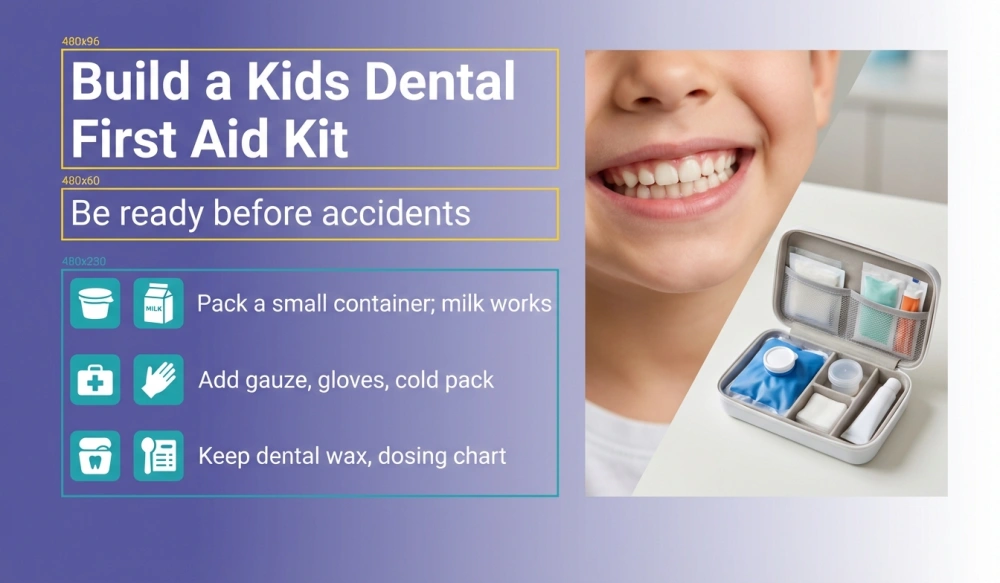
- Clean container or tooth preservation kit A small, sealable container and tooth preservation solution, when available, help transport an avulsed tooth safely. Milk is a good backup medium [1] [8].
- Gauze and gloves Sterile gauze pads help control bleeding. Nonlatex gloves support clean handling.
- Orthodontic wax Temporary protection for sharp edges or poking wires.
- Cold pack Useful for bumps, bruises, and mild swelling.
- Pain relief guidance A written dosing chart from your pediatrician or pediatric dentist for over the counter ibuprofen and acetaminophen can prevent dosing errors [3].
How can sports mouthguards and habits prevention help?
- Sports mouthguards Well fitting mouthguards are recommended for many youth sports and can reduce the risk and severity of dental injuries. Custom options made by a dentist offer a personalized fit that stays in place and allows normal breathing and speaking [10].
- Habit counseling Guidance on nail biting, pencil chewing, and grinding can reduce tooth wear and fracture risk. Your pediatric dentist can suggest age appropriate strategies and protective devices when needed.
How does regular preventive care lower emergency risk?
- Routine exams Regular checkups identify weak spots, small cavities, and enamel defects before they lead to pain or breakage. Early treatment is simpler and more comfortable for kids [2].
- Sealants and fluoride Evidence supports sealants on permanent molars and appropriate fluoride exposure to strengthen enamel, which can reduce the chance that minor trauma leads to larger fractures [2].
- Home care coaching Brushing with fluoride toothpaste twice daily and healthy snack choices support strong teeth, lowering the risk that a small bump becomes a big problem [2].
Where can families in Laguna Niguel and South Orange County find help today?
If your child is in pain or has dental trauma, calling a pediatric dentist right away is the most important step. Share the injury details, your child’s age, and when the issue started. The care team can advise you on immediate actions and arrange a prompt visit if needed. For life threatening symptoms like difficulty breathing or uncontrolled bleeding, call 911 or go to the nearest emergency department before dental treatment.
Parents often search for an emergency pediatric dentist in Laguna Niguel or a pediatric dentist near me when the unexpected happens. If you are local to Laguna Niguel, Laguna Hills, Laguna Beach, Aliso Viejo, Mission Viejo, or San Juan Capistrano, you can reach a same day pediatric dentist who understands children’s needs and can coordinate care with your pediatrician or orthodontist when appropriate. Pediatric dental emergencies in Laguna Niguel can be managed effectively when families know what to do in the first minutes and where to go next [1] [2].
Even if you are unsure whether a situation is urgent, a quick phone call can clarify next steps. Short, early visits often prevent larger problems later and help kids feel better faster. When you call, let the office know if your child has allergies, medical conditions, or takes regular medicines so the team can prepare for safe care.
How does Kidz Modern Dentistry support families during children dental emergencies?
At Kidz Modern Dentistry, we help parents make confident decisions during kids dental emergencies by combining timely access with a calm, child centered approach. Our pediatric team provides same day visits on weekdays, kid friendly sedation options when appropriate, and clear guidance from the first phone call through follow up. We serve families across Laguna Niguel and South Orange County, including Laguna Hills, Laguna Beach, Aliso Viejo, Mission Viejo, and San Juan Capistrano.
Where do we provide same day care for kids in South OC?
Our clinic in Laguna Niguel is designed for urgent pediatric visits and routine care. We prioritize appointments for acute injuries, severe toothaches, facial swelling, and orthodontic issues that cause pain. We coordinate care with nearby medical providers if a child needs medical clearance or imaging before dental procedures. When parents search for a walk in pediatric dentist, we ask that you call ahead so we can prepare the room, team, and materials for your child’s specific needs. We also support families who are new to the area by helping transfer records quickly.
What is our approach to comfort, safety, and communication?
- Calm first contact When you call +1 949 273 0110 our team listens carefully and offers step by step first aid guidance while we arrange your visit.
- Child friendly environment We use tell show do techniques, gentle language, and distraction tools to reduce fear and help kids feel in control.
- Evidence based care Our clinical decisions reflect recognized pediatric dental and trauma guidelines for injuries, pain control, and follow up schedules [1] [2] [3] [11].
- Safety systems Infection control, emergency readiness, and monitoring protocols align with California regulations and national recommendations for pediatric sedation when used [4] [5] [6].
What does access look like after hours and weekends?
Dental problems do not follow business hours. Same-day emergency visits are available during our regular weekday hours. After hours and on weekends, you can text the office at (949) 273-0110 for guidance on whether to seek immediate care or come in on the next business day; after-hours treatment is not guaranteed. For trouble breathing, uncontrolled bleeding or a head injury, call 911 or go to the nearest emergency department. Our aim is to reduce uncertainty and make sure your child is comfortable and safe while we arrange care.
Why do local parents choose our pediatric team?
- Experience and training Our pediatric focused team brings years of combined experience in urgent and routine care for infants, children, and teens.
- Integrated services From digital imaging to same day restorations, we deliver efficient care that reduces the need for multiple appointments.
- Personalized plans Every child’s situation is unique. We discuss options with you, consider your child’s comfort and medical history, and outline clear next steps.
- Community reach We welcome families from Laguna Niguel and nearby cities across South Orange County and help coordinate referrals when specialty services are needed.
When you need support, call us at +1 949 273 0110. We are here to guide you through Pediatric dental emergencies with clear instructions, careful treatment, and thoughtful follow up.
Which sources and further reading are available?
- Guidelines for the Management of Traumatic Dental Injuries Avulsion of Permanent Teeth 2020 – International Association of Dental Traumatology
- Best Practices Acute Pediatric Orofacial and Dental Trauma – American Academy of Pediatric Dentistry
- Oral Analgesics for Acute Dental Pain – American Dental Association
- Guidelines for Monitoring and Management of Pediatric Patients During and After Sedation – AAP and AAPD
- Regulations and Infection Control Standards – Dental Board of California
- Dental Sedation and Anesthesia Permit Requirements – Dental Board of California
- Tooth Injuries Overview – MedlinePlus NIH
- Knocked Out Tooth Patient Guidance – National Institute of Dental and Craniofacial Research
- Tooth Saving Tips for Knocked Out Teeth – American Association of Endodontists
- Mouthguards and Sports Safety – American Dental Association
- Dental Pain Care and Nonopioid Therapy – Centers for Disease Control and Prevention
- Use of Antibiotic Therapy for Pediatric Dental Patients – American Academy of Pediatric Dentistry
Common Questions About This Topic
Find answers to frequently asked questions related to this article.