- What is the difference between a pediatric dentist and a family dentist for infants?
- When should your baby see a dentist for the first time?
- How does specialized pediatric training benefit babies and toddlers?
- What should you expect during an infant oral health exam?
- How does fluoride varnish protect baby teeth?
- How can you prevent baby bottle tooth decay at home?
- What if your baby has a tongue tie or feeding difficulty?
- How do comfort strategies and behavior guidance differ between offices?
- What should parents know about sedation for infants in California?
- How can you choose between a pediatric dentist and a family dentist in Laguna Niguel?
- How can you prepare for the first dental visit for your baby?
- What questions should you ask a dental office before scheduling your infant?
- Why choose Kidz Modern Dentistry for infant and early childhood care in Laguna Niguel?
- Where can you find the sources referenced in this article?
What is the difference between a pediatric dentist and a family dentist for infants?
Both pediatric dentists and family dentists help keep children healthy, but their training and focus are not the same. Pediatric dentists complete dental school and then pursue an additional two to three years of accredited residency focused solely on the oral health of infants, children, adolescents, and people with special health care needs [1] [2]. This advanced education covers growth and development, behavior guidance, infant specific prevention, dental trauma, and management of complex conditions. Many pediatric dentists also complete board certification through the American Board of Pediatric Dentistry, which involves further evaluation of knowledge and clinical judgment [3].
Family dentists, sometimes called general dentists, receive comprehensive training to care for patients across all ages after dental school. Many family dentists are comfortable seeing young children, and some have considerable experience with babies. The key difference is the formal pediatric residency and specialty scope that pediatric dentists complete, which is recognized by the American Dental Association [1].
For parents deciding between the two, the practical question is whether your baby may benefit from the environment, preventive approach, and behavior techniques common in a pediatric practice. Pediatric offices are set up for children from the front desk to the treatment rooms, with age appropriate equipment and comfort strategies. Family offices may also be very welcoming to children. Both can be good choices when they provide evidence based, infant centered care.
When should your baby see a dentist for the first time?
Professional organizations recommend establishing a dental home by the first birthday or within six months of the first tooth erupting [4] [5]. Early visits help parents learn daily care techniques, catch early changes while they are simple to manage, and build comfort with dental visits from the start. This first appointment is preventive and educational. It is not about doing a lot of procedures. It is about setting a healthy path for your child.
Infant dental care is not only about checking teeth. It is also about monitoring growth of the jaws and oral tissues, nutrition guidance, feeding habits, and risk assessment for tooth decay [4]. These topics matter long before all the baby teeth erupt.
Laguna Niguel Infant dental care becomes most effective when parents have clear guidance before problems develop. If you are wondering whether your baby is too young to see a dentist, you can safely schedule that first visit as soon as the first teeth appear or by the first birthday [4] [5].
How does specialized pediatric training benefit babies and toddlers?
Pediatric dentists develop expertise in several areas that are especially helpful during infancy and toddlerhood:
- Child development understanding including normal eruption patterns, signs of delayed development, and how to anticipate growth and spacing needs [2].
- Behavior guidance methods that keep visits predictable and low stress for young children and parents. These include tell show do, positive reinforcement, voice control, distraction, and protective stabilization when appropriate and with consent [6].
- Prevention protocols tailored to risk such as counseling on feeding practices, home care, and professional fluoride varnish for babies at risk of cavities [7] [8].
- Care for special health care needs with individualized planning and collaboration with pediatricians and other specialists [2].
Family dentists may provide similar care for many infants, especially in communities where they routinely see children. The most important factor is that the dentist you choose follows current pediatric guidelines and communicates clearly about your child’s unique needs.
What should you expect during an infant oral health exam?
Most infant visits are quick, gentle, and informative. The appointment is designed for comfort and teaching, not lengthy procedures. Here is what usually happens:
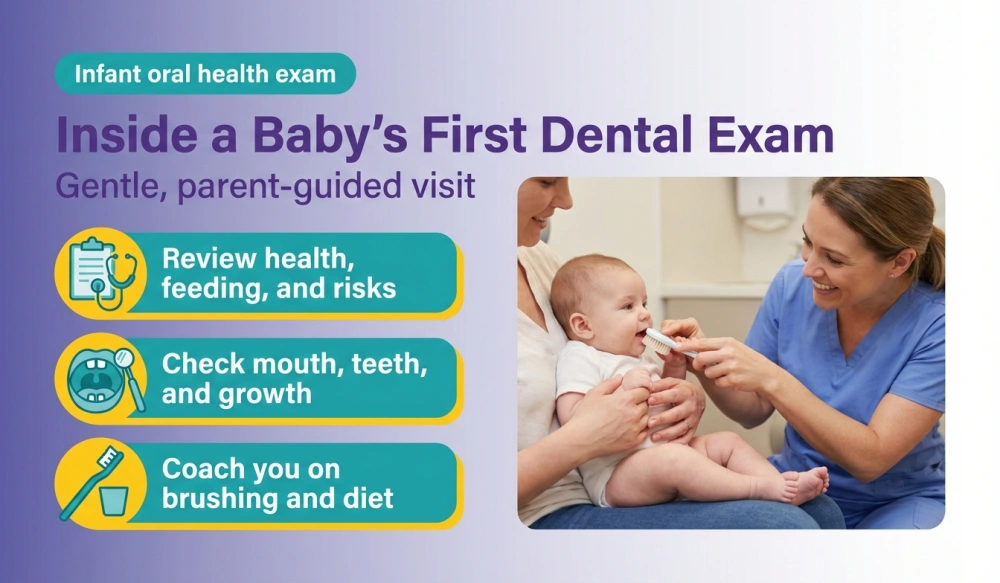
- Warm welcome and history Your dentist will ask about your baby’s health, feeding patterns, fluoride exposure, and family dental history [4].
- Knee to knee exam Many infant exams use a parent dentist position that lets your baby lie back safely while you provide comfort and eye contact.
- Soft tissue and tooth check The dentist examines the lips, cheeks, tongue, palate, and gum tissues, then looks for early signs of enamel defects, decalcification, or cavities [4].
- Growth and bite evaluation The clinician notes eruption sequence, spacing, and any habits that could affect the bite.
- Home care coaching You will get age specific guidance about brushing, toothpaste use, nutrition, and habits like thumb sucking or pacifier use [4].
- Fluoride varnish if indicated If your child is at risk for cavities, the dentist may apply a quick, safe fluoride varnish to strengthen enamel [7] [8].
- Next steps and recall You will leave with a plan for monitoring, prevention, and the timing of the next visit based on your baby’s risk level [4].
Infant dental care focuses on prevention. The earlier you start, the more natural the experience feels for your child, and the easier it is to intercept small issues before they become bigger problems.
How does fluoride varnish protect baby teeth?
Fluoride varnish is a professional treatment painted onto teeth in seconds. It hardens on contact and continues to work for several hours after application. Research and public health authorities support fluoride varnish for reducing tooth decay risk in young children, including infants and toddlers [7] [8]. The United States Preventive Services Task Force recommends that primary care clinicians apply fluoride varnish to the primary teeth of all infants and children once they erupt, and many pediatric dental practices do the same as part of a preventive plan [7].
Fluoride varnish is simple, quick, and well tolerated. It is commonly used at intervals based on your child’s risk level and current evidence. Your dentist will help you decide on timing. This is one example of how pediatric training and preventive protocols support families during the earliest stages of oral health.
How can you prevent baby bottle tooth decay at home?
Early childhood caries often begins when teeth are frequently exposed to sugary liquids, especially at night when saliva flow is lower. Parents can lower risk with a few consistent habits:
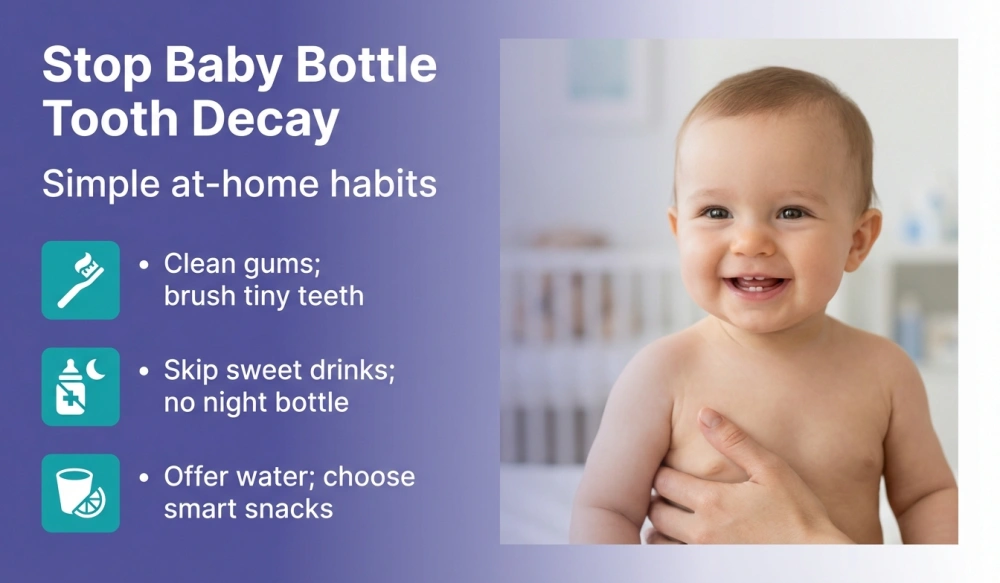
- Clean the gums and teeth Wipe gums with a clean soft cloth after feedings before teeth erupt, then brush twice daily with a small smear of fluoride toothpaste as soon as the first tooth appears [4].
- Avoid frequent sugary drinks Limit juice and sweetened beverages. Offer water between meals. Do not put your baby to bed with a bottle that contains anything other than water [9].
- Use cups as your child grows Work toward a cup as your baby develops readiness. Avoid extended sipping on sweet drinks during the day.
- Choose tooth friendly snacks Offer balanced snacks and limit sticky, sugary foods that can cling to teeth.
- Schedule regular preventive visits Consistent checkups and professional fluoride can lower risk and catch early changes quickly [7] [8].
Dental caries remains one of the most common chronic conditions of childhood, but it is largely preventable with early education and routine care [10]. Building a dental home for infants gives you a trusted place for guidance when questions come up.
What if your baby has a tongue tie or feeding difficulty?
Tongue tie is a term used when the lingual frenulum restricts tongue movement. Some babies with tongue tie can have feeding challenges, while others feed well. Evaluation should consider symptoms, function, and the whole clinical picture. A team approach with your pediatrician, lactation professional, and dentist can help you decide on next steps.
Recent pediatric guidance emphasizes careful diagnosis and shared decision making before considering frenotomy. Not all restrictive frenula require surgical release. When function is affected and conservative measures are not successful, a frenotomy may be appropriate [11]. During an infant oral health exam, your dentist can assess the frenulum, oral tissues, and feeding history, and if needed, coordinate care with your child’s medical providers.
If you are looking for a tongue tie evaluation, ask the office about their experience with infants, how they assess function, and whether they collaborate with lactation professionals. A thoughtful process can help achieve the best outcome for your baby [11].
How do comfort strategies and behavior guidance differ between offices?
Pediatric dental teams are trained to create a calming environment for babies and young children. Comfort strategies include short appointments when possible, parent assisted positioning, soothing language, distraction techniques, and child friendly spaces. These methods are described in professional behavior guidance guidelines and help most young children complete visits without medication [6].
Family practices may also implement similar strategies and can be a good fit when they see many children. The most important questions to ask are how the team approaches infant visits, what comfort techniques they use, and how they involve parents during care. If your child needs more support, pediatric dentists have additional training in behavior guidance and can coordinate with medical providers when necessary [6].
What should parents know about sedation for infants in California?
Most infant visits do not require sedation. When treatment is necessary and a child is not able to tolerate care with comfort strategies alone, dentists may consider pharmacologic approaches. Sedation and anesthesia for pediatric dental patients must follow strict national guidelines for safety, monitoring, and team training [12].
In California, the Dental Board issues permits for minimal, moderate, and general anesthesia, including a pediatric endorsement that specifies training and equipment standards for treating young children [13] [14]. Parents can ask which permits the provider holds, who will be present during the procedure, and what monitoring and emergency protocols are in place. For some situations, treatment may be completed under in-office IV sedation or general anesthesia with an anesthesia team where appropriate [12].
If you are searching for kid friendly sedation Laguna Niguel, look for teams who are transparent about risks and benefits, use the least invasive option that meets your child’s needs, and follow state and national standards. Your child’s safety and comfort come first.
How can you choose between a pediatric dentist and a family dentist in Laguna Niguel?
Start by considering your child’s age, temperament, health history, and risk for dental caries. Young children who are anxious, have special health care needs, or require complex procedures often benefit from a pediatric specialty setting. Families who prefer a single location for all ages may choose a family dentist with substantial experience with infants. Either way, ask about training, office environment, prevention focus, and collaboration with pediatricians and lactation professionals.
Look for an office that supports Infant dental care with clear preventive plans and education. You can also consider convenience factors like same day availability for urgent concerns, gentle imaging when needed, and clear communication about what to expect during early visits. Pediatric dentist Laguna Niguel options and family dentist for infants choices both exist locally, so choose the team that best matches your baby’s needs and your preferences for care.
Infant dental care in Laguna Niguel is available across different practice types. What matters most is a caring approach, adherence to current guidelines, and a setting where you and your child feel respected and supported.
How can you prepare for the first dental visit for your baby?
Preparation can make the first visit smooth and positive for you and your baby:
- Pick a time when your baby is rested Schedule after a nap and feeding when possible.
- Bring comfort items A favorite blanket or toy can help your baby feel secure.
- Complete forms in advance Health history, medications, and feeding details guide personalized advice.
- Practice gentle mouth touch At home, playfully touch your baby’s lips and cheeks during routine care so the exam feels familiar.
- Plan questions Write down concerns about brushing, toothpaste, teething, feeding, or habits to discuss with your dentist.
- Anticipate a quick, educational visit The first appointment focuses on prevention and parent coaching, not lengthy treatment [4].
What questions should you ask a dental office before scheduling your infant?
Asking the right questions helps you find a good fit:
- Do you regularly see infants and toddlers How often and what does a typical first visit include
- Are you a pediatric specialist If so, where did you complete residency and do you hold board certification [3]
- How do you approach prevention Do you use risk based plans and offer fluoride varnish for infants when indicated [7] [8]
- What behavior guidance techniques do you use How do you keep infant visits calm and parent inclusive [6]
- If treatment is needed, what are the options Do you offer minimally invasive approaches and how do you handle situations that might require sedation [12]
- What permits does your team hold in California If sedation might be considered, do you hold the appropriate permits and pediatric endorsement if applicable [13] [14]
- How do you coordinate care Do you collaborate with pediatricians, lactation professionals, and specialists for tongue tie or complex needs [11]
Why choose Kidz Modern Dentistry for infant and early childhood care in Laguna Niguel?
We created our practice to support families from the very first tooth through the teen years. Our team welcomes new parents, newborns, and toddlers and focuses on prevention, comfort, and clear communication. If you are choosing between a pediatric dentist for babies and a family dentist for infants, our goal is to make the decision easy by offering a setting designed for infants and young children alongside a thoughtful, evidence based approach to every visit.
How do our services guide the next steps for your baby?
We start with a gentle infant oral health exam and a simple plan for home care. We review feeding patterns, brushing techniques, and nutrition to lower cavity risk. When appropriate, we offer fluoride varnish for infants in a quick, comfortable visit grounded in national recommendations [7] [8]. If you have questions about tongue tie evaluation, we collaborate with pediatricians and lactation professionals to support feeding and growth [11].
Where do we operate and how do we help families locally?
We serve families in Laguna Niguel, CA and nearby communities. Same day appointments are available for urgent concerns when possible, and our team guides you on when to call and what to expect. Our office environment is built for little ones with parent inclusive exams and calm, child centered spaces.
What is our approach to technology, comfort, and safety?
We use age appropriate imaging only when it supports diagnosis and prevention, and we follow professional guidelines for behavior guidance and monitoring. When a child needs extra support beyond non pharmacologic methods, we use the least invasive options, and we comply with California permit requirements and national safety standards for any pharmacologic care [12] [13] [14].
How does leadership and experience shape your child’s care here?
Our pediatric focused clinicians have advanced training in child development, behavior guidance, and preventive care. We emphasize parent education and shared decision making at every step. Our culture values gentle communication, predictable visits, and developmentally appropriate techniques so your child builds confidence from the start.
What personalized service can you expect from our team?
You can expect a clear, written plan after each visit, direct access to licensed professionals for questions, and attentive follow up. We listen closely to your goals and tailor recommendations to your baby’s needs and your family’s routines. We offer guidance for establishing a dental home for infants and making each visit positive and effective [4].
What is our track record with prevention and family education?
Families often share that early visits helped them feel confident with daily care and feeding choices. We see the benefits of consistent prevention when children return with healthy smiles and predictable milestones. While every child is different, steady prevention and compassionate coaching support calm visits and fewer surprises over time.
How can you reach us to schedule your baby’s first visit?
Call us at +1 949 273 0110 to schedule a first dental visit for baby, ask about a board certified pediatric dentist, or learn more about creating a dental home for infants in our community. We are happy to answer questions about pediatric dentist vs family dentist choices and help you find the right path for your child in Laguna Niguel.
Where can you find the sources referenced in this article?
- Recognized Dental Specialties – American Dental Association
- Accreditation Standards for Advanced Education Programs in Pediatric Dentistry – Commission on Dental Accreditation
- What Is Board Certification – American Board of Pediatric Dentistry
- Perinatal and Infant Oral Health Care – American Academy of Pediatric Dentistry
- Baby’s First Dental Visit – American Dental Association
- Behavior Guidance for the Pediatric Dental Patient – American Academy of Pediatric Dentistry
- Prevention of Dental Caries in Children Younger Than Five Years – US Preventive Services Task Force
- Fluoride Varnish for Clinicians – Centers for Disease Control and Prevention
- Baby Bottle Tooth Decay – National Institute of Dental and Craniofacial Research
- Children’s Oral Health Fast Facts – Centers for Disease Control and Prevention
- Identification and Management of Ankyloglossia and its Effect on Breastfeeding – Pediatrics via PubMed
- Monitoring and Management of Pediatric Patients Before, During, and After Sedation – American Academy of Pediatric Dentistry
- Anesthesia Permits Overview – Dental Board of California
- Pediatric Endorsement for Permit Holders – Dental Board of California
- Fluoride Varnishes for Preventing Dental Caries in Children and Adolescents – Cochrane Library
Common Questions About This Topic
Find answers to frequently asked questions related to this article.