<?xml encoding=”UTF-8″>
- What causes lip and cheek biting after a dental visit in children?
- How does local anesthesia work in kids and how long does numbness last?
- What is OraVerse and how can it help reverse dental numbness safely?
- Is OraVerse safe for children and who might be a good candidate?
- How can you prevent lip and cheek biting at home after your child’s visit?
- What should you do if your child already bit their lip or cheek?
- How do dentists decide whether to use a reversal agent for your child?
- What safety and regulatory standards guide pediatric dental anesthesia in California and the United States?
- How does Kidz Modern Dentistry support your family with post dental numbness care?
- What questions do parents in Laguna Niguel commonly ask about reversing numbness for kids?
- References
What causes lip and cheek biting after a dental visit in children?
After a dental appointment that uses local anesthesia, many kids feel strange or tingly sensations in their lips, cheeks, or tongue. Since those soft tissues feel swollen or different, children may chew or bite the area out of curiosity without realizing it can hurt. This is one of the most common reasons for accidental soft tissue injuries in young patients. The risk is highest while numbness is still present and a child cannot fully sense pressure or pain. Professional organizations regularly remind parents that vigilant supervision and soft food choices can significantly reduce this risk while sensation returns [2] [6].
We also see lip and cheek biting after dental work because numb tissues can feel as if they are thick or puffy. Kids may test those areas with their teeth or fingers, or they may rub or scratch them. Chewing on the affected side or trying to drink from a straw can also irritate numb tissues and lead to accidental injury. These behaviors are completely understandable for a child who wants to explore a new sensation, but knowing what to expect and how to guide them through recovery helps you prevent problems [2] [4].
What are the early signs your child might be chewing or biting numb tissues?
Watch for subtle cues as you head home and during the hours after care. Common early signs include repeatedly touching the lip or cheek, drooling more than usual, puckering or stretching the lip, or small teeth marks on the inside of the cheek. Some children say their lip or tongue feels fluffy or too big. If you notice these behaviors, gently redirect your child and offer safe alternatives like a cold compress on the outside of the face or sips of cool water with an open cup. Careful observation in this window goes a long way toward preventing an avoidable sore or ulcer later that day [2] [6].
Why are younger children at higher risk for soft tissue injuries after anesthesia?
Young children have less experience with dental numbness and may not connect cause and effect in the moment. They also tend to be more curious, more tactile, and quicker to explore new sensations by chewing or biting. In addition, their soft tissues are more delicate and can swell more easily after an accidental bite. This is why pediatric specific guidance emphasizes close monitoring, clear reminders not to chew the numb side, and age appropriate food choices until normal feeling returns [2] [4].
How does local anesthesia work in kids and how long does numbness last?
Dental local anesthetics temporarily block nerve signals in a targeted area so a child can stay comfortable during care. Your dentist selects a medicine and technique based on the tooth, the procedure, your child’s medical history, and the expected duration of comfort needed. In children, typical soft tissue numbness may last longer than the tooth level numbness itself. That is why a child feels fine chewing pressure before the lip or cheek feels normal again. Professional guidance provides ranges for expected soft tissue recovery and encourages families to continue precautions until sensation returns fully [2] [4].
Which factors influence how long numbness lasts in children?
Several variables affect how long numbness persists. The location and type of injection make a difference since nerve blocks that affect the lower jaw can keep lips and cheeks numb longer than simple infiltrations in the upper teeth. The specific anesthetic and whether it includes a vasoconstrictor such as epinephrine can influence both onset and duration. A child’s age, body weight, circulation, and the extent of treatment also contribute. Your pediatric dental team considers each of these elements when planning the visit and giving you customized home instructions [2] [4].
Can numbness end sooner than expected without additional treatment?
Sometimes numbness fades quickly on its own, especially after small, localized numbing for a shorter procedure. Sipping room temperature water, keeping the head slightly elevated, and avoiding pressure on the numb side may support a smoother return of sensation. These steps do not actively reverse the anesthetic, but they can make the waiting period easier for your child. If you need faster return of soft tissue feeling to reduce the chance of lip or cheek biting, ask your pediatric dentist about whether a reversal medicine is appropriate for your child’s situation [2] [6].
What is OraVerse and how can it help reverse dental numbness safely?
OraVerse is a formulation of phentolamine mesylate used by dentists to help speed the return of normal soft tissue feeling after routine dental anesthesia. It is administered by injection in the same area after treatment is completed. The medicine works as an alpha adrenergic antagonist that helps increase local blood flow so the anesthetic is carried away from the soft tissues more quickly. In appropriate patients, this can reduce the time your child’s lips and cheeks feel numb, which may lower the chance of accidental biting during the recovery period [1].
Who can receive phentolamine mesylate for dental anesthesia reversal?
According to the United States Food and Drug Administration label, phentolamine mesylate for reversal of soft tissue anesthesia is indicated in adults and in children who meet specific age and weight criteria. The prescribing information includes guidance on dosing by cartridge volume relative to the amount and location of anesthetic used in the procedure. Your pediatric dentist will follow the label and current professional guidance to determine if this option is appropriate for your child and will discuss the expected benefits and considerations with you before proceeding [1] [2].
How does OraVerse reduce the chance of lip or cheek injury for kids?
Because many accidental soft tissue injuries occur in the first hours after a visit, reducing the duration of numbness can be helpful. By supporting a quicker return of normal sensation in the lips, cheeks, and tongue, children are more likely to recognize pressure and avoid persistent chewing or biting. While no approach removes all risk, using a reversal agent as part of a broader prevention plan that also includes supervision and soft food choices can be a practical strategy discussed during your child’s visit [1] [2] [6].
Is OraVerse safe for children and who might be a good candidate?
Safety is always the top priority. The FDA approved label outlines when phentolamine mesylate may be used for dental reversal and provides details about age, weight, and dosing considerations. Like any medicine, it may not be suitable for every child. Your pediatric dentist will review medical history, current medications, cardiovascular status, and the type of dental procedure to weigh whether the expected benefit of faster soft tissue recovery is a good fit for your child today [1] [2].
Which children might benefit most from a reversal agent?
Many families ask whether their child is a good candidate for faster return of feeling. Reversal may be considered for kids who tend to chew or bite lips when numb, who have had a previous soft tissue injury after dental work, who have sensory processing differences that increase the urge to explore numb tissues, or who must return to school or activities where supervision is limited. Children undergoing procedures that require a longer lasting block in the lower jaw may also benefit, since the lips and cheeks can remain numb longer with those techniques [1] [2].
What are the common considerations and possible side effects?
Most children tolerate the reversal injection well when it is administered with the same gentle technique used for local anesthesia. The FDA label lists potential adverse events and precautions to consider when selecting patients. Your dentist will discuss these with you in clear terms so you can decide together. As always, your care team will provide guidance on what to watch for after you leave and how to reach the office if you have questions [1].
How can you prevent lip and cheek biting at home after your child’s visit?
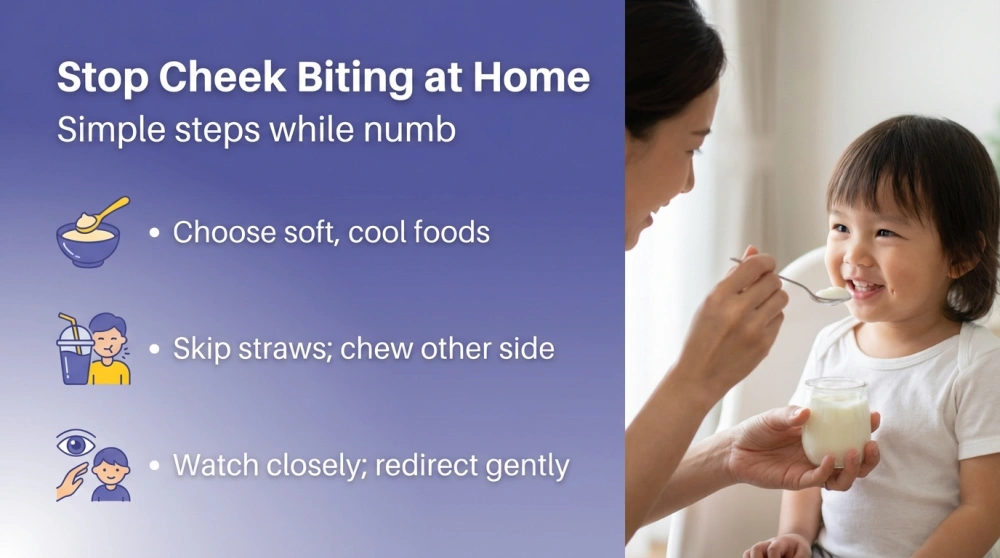
You can do a lot to help your child avoid soft tissue injuries while numbness fades. A short plan, a calm tone, and a few simple tools make a big difference. If you choose soft foods, supervise closely, and remind your child not to chew the numb side, you will set them up for a smooth afternoon or evening. These steps align with professional guidance for pediatric post visit care and are easy to tailor to your child’s age and routine [2] [6].
What food and drink choices are safest until feeling fully returns?
- Choose soft and cool foods Offer yogurt, applesauce, scrambled eggs, smoothies with a spoon, or mashed potatoes. Avoid crunchy, hot, or spicy foods until your child can feel both sides of the mouth again [6].
- Skip straws and chewing on the numb side Straws can encourage suction and cheek biting. Remind your child to place food on the non numb side and to take small bites [2] [6].
- Keep snacks simple and frequent Small soft snacks every couple of hours can keep kids comfortable while they wait for full sensation to return [6].
How should you supervise your child during the first few hours?
- Watch closely for nibbling or lip pulling Redirect gently and offer a distraction like a favorite book or calm screen time until the tingling passes [2].
- Use a clean cold compress on the outside If your child wants to touch the area, try a cool compress on the cheek for 10 minutes on and 10 minutes off to soothe the odd sensation without chewing [6].
- Use clear, age appropriate language Try phrases like let your cheek rest or lips are sleeping right now which can help younger children understand without feeling worried [2].
What role can a reversal agent play in home prevention?
If your dentist recommends phentolamine mesylate, the goal is a quicker return of normal soft tissue feeling. That reduced window of numbness may make supervision easier and lower the chance of accidental biting. It is still important to follow the same home steps until your child says everything feels normal. Think of the reversal agent as a helpful assist within a full prevention plan [1] [2].
What should you do if your child already bit their lip or cheek?
Even with the best plan, accidents can happen. If your child bites their lip or cheek, you can usually manage the area at home and then call us if you have any concerns. Most soft tissue injuries heal well with basic care and gentle reassurance. If your child is very uncomfortable, we can guide you on next steps or see them for a quick check if needed. The guidance below reflects common pediatric dental advice and home care principles for minor soft tissue injuries [2] [6].
How can you care for a minor bite at home?
- Rinse gently with cool water Swish and spit or use a clean gauze pad moistened with water to tidy the area. Avoid vigorous rinsing that can irritate the tissue [6].
- Apply a cool compress outside the cheek Ten minutes on and ten minutes off can limit swelling and ease discomfort [6].
- Stick to soft, bland foods Continue soft foods and avoid spicy or acidic items that can sting while the area heals [6].
- Keep hands away Remind your child not to pick or chew the sore area to avoid reopening it [2].
When should you call a pediatric dentist for help?
- Bleeding does not stop with gentle pressure If bleeding persists or recurs frequently, give us a call for guidance [2].
- Swelling or pain worsens after a day or two Worsening symptoms or signs of infection merit a check in so we can assess and support healing [2].
- You are unsure what you are seeing If the area looks unusual or your child is very distressed, we are here to help you decide next steps [2].
How do dentists decide whether to use a reversal agent for your child?
Pediatric dentists use a careful, stepwise approach that includes your child’s medical history, the procedure performed, the anesthetic chosen, and your family’s needs that day. They also consider age and weight based eligibility from the label for phentolamine mesylate and any medical conditions or medications that warrant caution. If reversal is likely to help with safety and comfort, your dentist will explain the option, answer questions, and proceed only with your consent [1] [2].
What does shared decision making look like for parents?
Shared decision making is a conversation that balances preferences and clinical guidance. Your care team will outline the expected duration of numbness, the potential benefits of faster return of feeling, and any considerations or alternatives. You can share your child’s past experiences and your plans for the hours after the visit. Together, you choose the approach that best aligns with your child’s safety and your family’s routine that day [2] [4].
How do professional standards guide dosing and monitoring?
Professional bodies publish recommendations that help dentists dose and monitor medicines appropriately for pediatric patients. The FDA label provides specific dosing guidance for phentolamine mesylate in the dental setting, and dental organizations share best practices for using local anesthesia and monitoring recovery in children. These standards help ensure that if a reversal agent is used, it is used in a way that is consistent with evidence and safeguards for young patients [1] [2] [3].
What safety and regulatory standards guide pediatric dental anesthesia in California and the United States?
Dental teams follow a framework that includes federal approvals, national professional standards, and state regulations. At the federal level, the FDA sets labeling for medicines used in dentistry, including phentolamine mesylate for reversal of soft tissue anesthesia. Nationally, organizations such as the American Dental Association and the American Academy of Pediatric Dentistry publish evidence informed policies and best practices for local anesthesia and monitoring children during and after care. In California, the Dental Board oversees permits and standards for anesthesia and sedation in dental offices, complementing national guidance with state specific requirements [1] [2] [3] [4] [5] [7] [8].
How do these standards protect your child during and after dental care?
Standards focus on training, preparation, communication, and follow up. Dentists practicing in California adhere to requirements for anesthesia related permits where applicable, maintain emergency readiness, and update protocols as professional guidance evolves. For children, there is additional emphasis on developmentally appropriate communication, informed consent, and monitoring during recovery. These layers of oversight help your family feel confident that choices like using a local anesthetic reversal agent are considered within a system designed to protect children’s health [2] [3] [7].
What should families in Laguna Niguel, CA ask before choosing reversal of numbness?
- Ask about eligibility and dosing Confirm that your child meets age and weight criteria and that dosing follows the FDA label [1].
- Discuss benefits and considerations Review how reversal could help your child that day and any precautions based on health history [2].
- Plan after visit care Agree on a simple home plan and learn when to call the office for help [2] [6].
How does Kidz Modern Dentistry support your family with post dental numbness care?
At Kidz Modern Dentistry in Laguna Niguel, CA, our focus is your child’s comfort, safety, and confidence. We help families understand what numbness feels like, how to prevent accidental lip and cheek biting, and when a local anesthetic reversal agent such as OraVerse may be appropriate. We listen first, then create a plan that fits your child’s age, temperament, and the specific treatment completed. If you have questions at any point, our team is here to support you with clear instructions and practical tools you can use right away.
Many parents ask how our services relate to preventing lip or cheek injuries after a visit. We start by tailoring local anesthesia to the procedure and your child’s needs, then we share a step by step home care plan that is simple to follow. When a shorter window of numbness could help your child avoid chewing or biting, we discuss whether phentolamine mesylate is an option that day. We make this decision together and only proceed if it fits your child’s medical history and your preferences, in alignment with current professional guidance [1] [2].
Our approach is supported by training in pediatric behavior guidance, child friendly communication, and attentive follow up. You will receive clear, written instructions and a direct line to our office so you can reach a qualified professional if you need help. We care for families across Laguna Niguel and nearby Orange County communities and we coordinate with pediatricians or specialists when indicated to keep your child’s care connected and consistent.
Families sometimes explore comfort options for future visits. We provide care within a complete pediatric framework that includes gentle local anesthesia, careful monitoring, and when appropriate, Laguna Niguel Pediatric sedation dentistry for children who need added support beyond numbing alone. These services are always discussed transparently so you can choose the path that best aligns with your child’s needs and your comfort level [3] [5].
We combine modern technology with a calm, welcoming environment. Our dentists and clinical team have years of combined experience in pediatric care and stay current with evidence informed protocols for anesthesia and recovery. We use proven, child centered methods that make visits smoother, from behavioral coaching to visual supports and kid friendly tell show do explanations. We also focus on continuity, so your child sees familiar faces and builds trust over time. This steady relationship makes it easier to introduce tools like a reversal agent when it is right for your family, because your child already feels comfortable with the team.
When unexpected questions arise at home, our staff is ready to help. If your child seems to be chewing a numb cheek, if a small sore appears, or if you simply want reassurance, call us at +1 949 273 0110. We will walk you through next steps, offer same day guidance, and if needed arrange a quick check. Our goal is to keep little setbacks little and to help your child get back to normal activities comfortably and safely.
We are here for education as much as treatment. Parents often want to understand how reversal works, when to consider it, and how it fits into long term oral health. We take time to answer those questions in clear, straightforward language and provide easy handouts you can keep on your phone. The result is a plan you feel good about, whether that is waiting patiently for numbness to fade, choosing softer foods and close supervision, or using a reversal agent when it suits your child best.
For families seeking a broader comfort plan, we also provide Pediatric sedation dentistry as one part of comprehensive pediatric care. Pediatric sedation dentistry in Laguna Niguel is considered only when there is a clear need and is delivered according to state and national standards with detailed parental guidance before and after the visit [3] [7].
We welcome you to reach out any time you want to talk through options for preventing lip and cheek biting after your child’s appointment. Together, we will personalize a plan that keeps your child safe, comfortable, and confident.
What questions do parents in Laguna Niguel commonly ask about reversing numbness for kids?
Can my child eat right after dental treatment if a reversal agent is used?
Even if a reversal agent is used, we recommend starting with soft, cool foods and confirming your child can feel both sides of the mouth before moving to regular textures. It is wise to avoid chewy, crunchy, or hot foods until your child says the tingling is gone. This helps prevent accidental biting and irritation while tissues settle [2] [6].
How quickly does feeling return when OraVerse is given?
The reversal agent is intended to speed the return of normal soft tissue sensation. The exact timing varies based on factors like the anesthetic used, the location of the injection, and your child’s individual response. Your dentist will explain what to expect for your child that day and will provide home instructions for the hours after the visit [1].
Is reversal always recommended after fillings or extractions?
Not always. The choice depends on your child’s needs, your schedule, and the estimated duration of numbness. For some children, simple prevention strategies at home work well. For others at higher risk of chewing or biting, using a reversal agent may be part of a safer plan. The best step is to talk through the options with your pediatric dentist and decide together [2].
Does OraVerse change the way the tooth itself feels?
OraVerse is intended to help reverse soft tissue numbness in the lips, cheeks, and tongue. The tooth may regain normal sensation on a different timeline depending on the original anesthetic and the procedure. Your child should still avoid chewing on the numb side until both soft tissues and the tooth feel normal again [1] [2].
What if my child has a heart condition or takes specific medications?
Always share your child’s medical history and medications with your dentist, including any heart or vascular conditions and any prescription or over the counter medicines. The care team will consider the FDA label, professional guidance, and your pediatrician’s input if needed to decide whether reversal is appropriate. Safety comes first, and any decision is made with careful review [1] [2] [3].
Will insurance cover a dental anesthetic reversal agent?
Coverage varies. Some plans include it as part of the visit while others consider it an adjunctive service. Our front desk team can help you check benefits and provide a clear estimate before you decide. If it is not covered, we will discuss costs openly so there are no surprises. Your choice will always center on what best supports your child’s safety and comfort.
What if we are traveling from another Orange County community for care?
Families visit us from throughout Orange County. If you are heading home by car after treatment, we will tailor home instructions to the drive and your plans for the rest of the day. We will also make sure you have a simple list of what to watch for and our phone number so you can call with any questions on the way or once you get home.
How do I explain numbness and reversal to my child without causing worry?
Use calm, simple phrases. You can say your lip is sleeping and will wake up soon or your cheeks are resting. If a reversal agent is used, try your lip wake up helper is going in now and your smile will feel normal sooner. Keep your tone light and reassure your child that these feelings are temporary and expected [2].
Should we schedule school or sports the same day as dental work?
Plan lighter activities until normal feeling returns. If you expect a longer period of numbness, or if your child tends to chew or bite when bored, consider a quiet schedule at home. If reversal is used, we will explain the likely timeline so you can plan safe rest and a smooth return to routine.
What contact information should I keep handy after the visit?
Save our number +1 949 273 0110 in your phone before you arrive. If you notice persistent bleeding, worsening swelling, or anything that worries you, call us. We are happy to advise you, and if a quick check is helpful, we will find a time that same day whenever possible.
References
- OraVerse Phentolamine Mesylate Injection Prescribing Information – U.S. Food and Drug Administration
- Use of Local Anesthesia for Pediatric Dental Patients – American Academy of Pediatric Dentistry
- Monitoring and Management of Pediatric Patients Before, During, and After Sedation – American Academy of Pediatric Dentistry
- Anesthesia and Sedation in Dentistry – American Dental Association
- Policy on the Use of Sedation and General Anesthesia by Dentists – American Dental Association
- Anesthesia and Numbing for Dental Treatment – MouthHealthy by American Dental Association
- Anesthesia and Sedation Permits – Dental Board of California
- Laws and Regulations – Dental Board of California
- Anesthesia and Sedation in Dentistry Overview – National Institute of Dental and Craniofacial Research
- Reversal of soft tissue anesthesia with phentolamine mesylate in dental patients – PubMed
- Use of phentolamine mesylate to reverse soft tissue anesthesia in pediatric dental patients – PubMed
- Injection Safety and Local Anesthetics Frequently Asked Questions – Centers for Disease Control and Prevention
Common Questions About This Topic
Find answers to frequently asked questions related to this article.