- Are cavities really genetic or is something else going on?
- How do genes and environment work together in tooth decay?
- Which inherited traits can raise or lower a child’s cavity risk?
- How does oral bacteria spread within families and what does that mean for kids?
- What role do diet, sugar, and snacking patterns play compared with genetics?
- How does fluoride protect children’s teeth and is it safe?
- What are dental sealants and when should children get them?
- What daily routines help if my child has a family history of cavities?
- How do dentists measure a child’s cavity risk and personalize a plan?
- What should parents in Laguna Niguel and South Orange County consider locally?
- When should we see a pediatric dentist if we are worried about genetic risk?
- Frequently asked questions about genetics and cavities in kids
- Who is Kidz Modern Dentistry and how can we help your family?
- References
Are cavities really genetic or is something else going on?
Parents often wonder whether cavities run in families. You might notice that you, your partner, and your own parents had lots of fillings and worry your child is destined for the same. The short answer is that genes can influence risk but they are only one part of the picture. Tooth decay is a process that involves the interaction of bacteria, sugar exposure, time, saliva, and the hard tissues of the teeth. Public health data show that tooth decay is very common in childhood, yet it is largely preventable with the right habits, professional care, and supportive community measures such as water fluoridation [1] [2].
To understand why some children seem to get cavities more easily, it helps to break the problem into parts. Certain inherited traits can affect enamel structure, saliva composition, taste preferences, and immune responses. These traits may nudge risk up or down. At the same time, daily choices and routines such as brushing with fluoride toothpaste, how often a child snacks on sugary foods, and regular checkups strongly influence outcomes. That balance is encouraging because families can control many of the most important factors regardless of genetics [2].
Families in Laguna Niguel, Laguna Beach, Aliso Viejo, Laguna Hills, Mission Viejo, and San Juan Capistrano often ask whether a family history of cavities means their child will have the same experience. We talk through risk factors, coach on daily routines, and create prevention plans tailored to your child’s needs so you can feel confident about the next steps.
That is why Preventive dentistry is a cornerstone of childhood oral health. It gives families a clear path to protect smiles even when there is a strong family history of tooth decay.
How do genes and environment work together in tooth decay?
Tooth decay is not a single gene condition. It is a complex, multifactor trait. Many genes influence structures and functions that matter for cavities, including how well enamel forms, how saliva buffers acids, and how the immune system interacts with oral bacteria. At the same time, environmental factors such as sugar frequency, oral hygiene, and fluoride exposure have powerful effects on whether those risks play out. Research in children and adolescents supports that both heredity and environment contribute to decay experience [2] [7].
Think of genes as setting the baseline. Environment and habits tilt the scale. Even in families where parents had many cavities, children who get early prevention, use fluoride properly, eat a tooth friendly diet, and see a pediatric dentist consistently can do very well. That is why the focus is on building daily and periodic habits that reduce sugar exposure, control bacterial levels, strengthen enamel with fluoride, and keep watch for early white spot lesions before they turn into cavities [3] [10].
Which inherited traits can raise or lower a child’s cavity risk?
Several inherited characteristics can influence how easily decay develops. No single trait will decide a child’s future, but together they can shape the risk profile [2] [13] [14].
How can enamel formation and mineral density affect risk?
Enamel is the outer crystalline layer that protects teeth. Subtle differences in mineral content or structure can make enamel more or less resistant to acid. If enamel is slightly softer or more porous, it may demineralize faster when exposed to sugary foods and drinks. Children with these traits benefit especially from consistent fluoride, which enhances remineralization and makes enamel more acid resistant [2] [3].
Why does saliva quantity and composition matter?
Saliva neutralizes acids, brings minerals like calcium and phosphate to the tooth surface, and washes away food debris. Inherited variations in salivary flow or buffering capacity can change how fast acids are cleared from the mouth. Lower flow or weaker buffering is linked with higher caries risk, so optimizing hydration, using fluoride, and scheduling regular checkups become even more important for these children [14].
Could taste preferences and dietary tendencies be partly inherited?
Studies suggest that preference for sweet tastes and certain eating patterns have genetic components. If a child is drawn to frequent sweet snacks, that increases the time teeth are exposed to acids. Parents can help by shaping the home food environment, choosing lower sugar options, and setting a predictable schedule for meals and snacks so teeth get recovery time between exposures [6].
Do immune factors and oral microbiome differences play a role?
How the immune system recognizes and responds to oral bacteria may be influenced by genetics. This can affect which bacteria flourish in dental plaque. Still, diet and hygiene strongly shape the microbial community, which is why daily brushing with fluoride toothpaste and smart snacking remain key even when there is a known family history of cavities [2].
How does oral bacteria spread within families and what does that mean for kids?
The bacteria that drive tooth decay, including mutans streptococci, commonly pass from caregivers to children through everyday contact like sharing utensils or cleaning a pacifier with the mouth. This is known as vertical transmission. Reducing sugar exposure and maintaining caregiver oral health can limit how quickly these bacteria reach high levels in a child’s mouth. Early dental guidance during pregnancy and infancy helps families build protective habits before bacteria take hold at high levels [12].
For infants and toddlers, small steps such as not sharing spoons, avoiding putting a pacifier in your own mouth, and establishing twice daily brushing as soon as the first tooth appears are powerful. Caregivers can also keep their own oral health in good shape, since fewer cavities and less plaque in the household reduces the overall bacterial challenge the child encounters [12].
What role do diet, sugar, and snacking patterns play compared with genetics?
Diet is one of the strongest and most controllable drivers of caries risk. When sugary foods and drinks are consumed, oral bacteria metabolize the sugars and produce acids that dissolve minerals from enamel. Frequent snacking or sipping keeps the mouth in an acidic state for longer periods, which accelerates decay. International and national public health organizations advise limiting free sugar intake and reducing the number of sugary exposures per day to lower caries risk [6] [1].
The practical takeaway is to focus on frequency and stickiness. Reserve sweet treats for mealtimes when saliva flow is higher and avoid grazing on sugary snacks between meals. Offer water rather than sweet drinks between meals. Pairing smart diet choices with fluoride toothpaste and routine checkups goes a long way toward protecting enamel even in kids with a strong family history of cavities [2] [10].

- Limit sugary exposures Choose set snack times and avoid frequent sipping on sweet beverages [6].
- Pick tooth friendly options Favor fresh fruits, vegetables, cheese, nuts, and water over sticky candies or sweet crackers [1].
- Save sweets for meals Enjoy treats with meals so saliva can help neutralize acids and clear sugars [1].
How does fluoride protect children’s teeth and is it safe?
Fluoride supports the natural repair cycle of enamel. When acids draw minerals out of tooth structure, fluoride helps drive calcium and phosphate back into the surface and forms a more acid resistant mineral. This process reduces the likelihood that early white spot lesions will progress to cavities. Children in fluoride adjusted communities and those who use fluoride toothpaste have lower rates of decay than those without fluoride exposure, according to public health reviews and clinical guidelines [4] [3] [9].
Professional organizations recommend using a smear of fluoride toothpaste for children younger than three years and a pea sized amount for children three to six years, with adult supervision to minimize swallowing. Your pediatric dentist may also recommend periodic fluoride varnish for children at elevated risk. Guidance is individualized based on age, risk, and local water fluoride levels [3] [10].
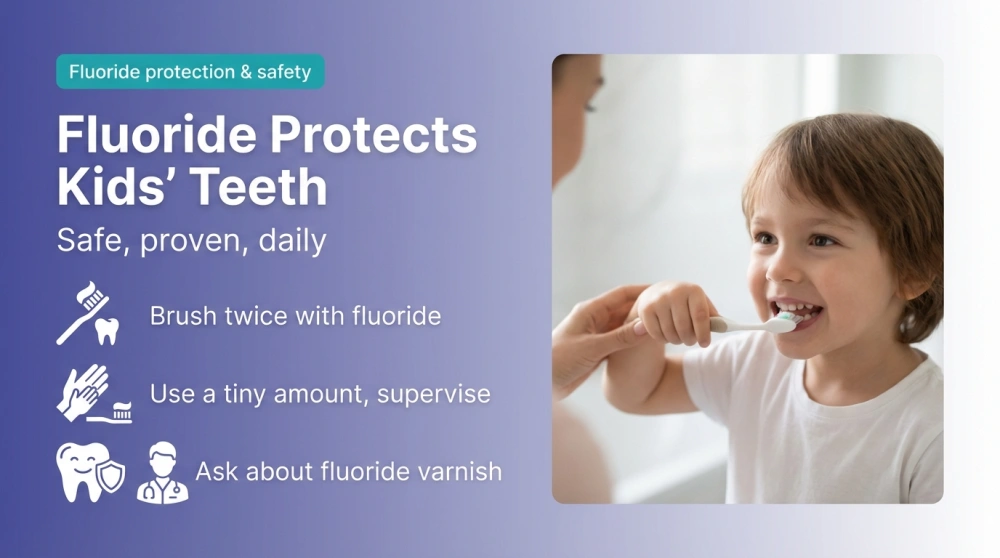
- Safety profile At recommended levels, fluoride in water and toothpaste is considered safe and effective for reducing tooth decay in children [4] [9].
- Daily use matters Twice daily brushing with fluoride toothpaste is a core habit for preventing cavities in kids [3].
- Varnish for higher risk Your dental team may apply fluoride varnish at checkups to further guard vulnerable surfaces [10].
What are dental sealants and when should children get them?
Sealants are thin protective coatings placed on the chewing surfaces of molars where most cavities in school age children begin. By sealing the deep pits and grooves, they block bacteria and food from getting trapped, making those areas easier to keep clean. Public health data and clinical guidelines support sealants as a proven method to lower decay in permanent molars for children and teens [5].
For many children, the first permanent molars erupt around age six and the second molars around age twelve. Those ages are common times for sealant placement, often right after a molar erupts. Sealants work hand in hand with fluoride and good hygiene. Together, these steps help counterbalance any genetic tendencies toward weaker enamel or higher bacterial levels [5].
- Quick and comfortable Sealant placement is noninvasive and typically completed in a single visit [5].
- Target the grooves The chewing surfaces of molars benefit most from sealants because of their deep pits [5].
- Part of a plan Sealants complement fluoride, diet, and hygiene for a layered prevention strategy [5].
What daily routines help if my child has a family history of cavities?
Even with inherited risk factors, day to day routines can protect your child’s smile. Practical, consistent habits deliver real results. The steps below align with pediatric and public health recommendations for lowering childhood caries risk [1] [3] [10].
- Brush twice a day with fluoride toothpaste Use a smear for under three and a pea sized amount for ages three to six, with adult help to reach every surface [3].
- Floss once a day Begin when teeth touch, focusing on contacts between molars where plaque collects [2].
- Keep a steady snack routine Offer water between meals and avoid grazing on sweets, especially sticky snacks [6].
- Protect new molars with sealants Ask your pediatric dentist about timing when first and second permanent molars erupt [5].
- Schedule regular checkups Routine visits allow early detection and timely fluoride varnish for higher risk children [10].
For families across Laguna Niguel and nearby communities, consistent routines paired with a trusted dental home make it easier to manage risk and keep kids on track.
To make prevention practical for busy families, many parents choose Preventive dentistry in Laguna Niguel so care aligns with school schedules, sports, and after school routines.
How do dentists measure a child’s cavity risk and personalize a plan?
Pediatric dentists use structured risk assessment tools that consider medical and dental history, dietary patterns, fluoride exposure, clinical findings, and socioeconomic factors. The American Academy of Pediatric Dentistry provides caries risk assessment forms that guide individualized care plans. Based on risk level, your child’s dentist may recommend different intervals for checkups, fluoride varnish applications, and counseling on diet and hygiene. This approach helps target resources where they make the biggest difference [7] [10].
- Low risk Emphasis on twice daily brushing with fluoride, routine exams, and ongoing coaching.
- Moderate risk Add professional fluoride varnish and sealants when indicated, plus closer dietary guidance.
- High risk More frequent recalls, strong focus on reducing sugary exposures, professional fluoride, and early intervention for white spot lesions.
Risk can change over time, so reassessment at each visit helps keep the plan current as your child grows and habits evolve [7].
What should parents in Laguna Niguel and South Orange County consider locally?
Families in Laguna Niguel, Laguna Beach, Aliso Viejo, Laguna Hills, Mission Viejo, and San Juan Capistrano have access to a strong network of pediatric dental services and public health resources. Water fluoridation is one community measure that supports lower decay rates. You can learn more about water fluoride and its role in prevention from national resources and check your local water quality report to understand community levels. Your pediatric dentist can help interpret those reports and tailor fluoride guidance for your family [9] [4].
Local families also benefit from school based sealant programs where available, and from pediatric dental practices that coordinate with primary care for early fluoride varnish when indicated. If your child plays sports in South Orange County, ask about mouthguard options to protect teeth from injury during practices and games, especially for contact sports.
Pediatric dentist Laguna Niguel teams often coordinate with families from Laguna Hills and Mission Viejo who want a prevention first approach. For many parents searching for a kids dentist Laguna Niguel or a South Orange County pediatric dentist, the priority is a calm, child centered experience that makes visits positive while keeping prevention front and center.
When should we see a pediatric dentist if we are worried about genetic risk?
Early is best. The first visit is recommended by the first birthday or within six months of the first tooth coming in. An early start gives your family time to build strong habits and address any risk factors right away. If cavities run in your family, schedule that first appointment even sooner after the first tooth appears. Your dentist can also help with strategies to limit bacterial transmission at home and show you how to brush and floss an infant or toddler safely and effectively [12] [10].
At each visit we review diet, home care, fluoride use, and any concerns you have about spots on the teeth, sensitivity, or changes in color. Routine exams also make it easier to time preventive steps like sealants on new molars and to watch areas that may need extra attention.
Frequently asked questions about genetics and cavities in kids
Can a child inherit weak enamel that causes more cavities?
Children can inherit enamel traits that make teeth a bit more vulnerable to acid. That does not mean cavities are inevitable. With fluoride toothpaste, smart snacking, and regular dental visits, most children with a family history still do very well [2] [3].
Do some kids get more cavities because they prefer sweet foods?
Preference for sweet tastes has genetic and learned components. What you keep at home, how often sweets are offered, and sticking to set snack times can keep sugar exposures in check even for kids who love sweets [6].
Can parents pass cavity causing bacteria to their kids?
Yes. The bacteria that drive tooth decay commonly pass from caregivers to children during everyday interactions. Good caregiver oral health and not sharing utensils can help reduce early transmission [12].
Is fluoride safe for young children with baby teeth?
Fluoride used as recommended is considered safe and effective. Use a smear for under three and a pea sized amount for ages three to six. Your pediatric dentist can adjust based on local water levels and your child’s risk [3] [4].
Do dental sealants really work for kids with high risk?
Yes. Sealants protect the grooves of molars where most cavities start. They are especially helpful for children with elevated risk and complement fluoride, diet, and hygiene measures [5].
What should I do if my child already has a white spot on a tooth?
Schedule a visit. Early white spots can often be stabilized with fluoride, diet changes, and improved brushing before a cavity forms. Professional guidance helps you act quickly and appropriately [3] [10].
How often should my child see a dentist if there is a family history of cavities?
Most children do well with twice yearly visits, but kids with higher risk may benefit from more frequent recalls for fluoride varnish and monitoring. Your dentist will tailor the schedule based on risk assessment [7].
Does community water fluoridation reduce cavities for kids?
Yes. Community water fluoridation is associated with lower rates of tooth decay. It is one of the simplest ways communities support oral health in children and adults [4] [9].
What if my child hates the taste of toothpaste?
Try a different child friendly flavor and focus on the routine. A small smear of fluoride paste is enough for toddlers. Focus on gentle technique and praise to build comfort and consistency [3].
Can genetics ever outweigh good habits?
Some rare conditions cause severe enamel defects, but for most families, habits and professional care have a greater impact than genetics. A prevention first plan helps tip the balance in your child’s favor [2].
Who is Kidz Modern Dentistry and how can we help your family?
At Kidz Modern Dentistry, we understand the importance of keeping families in Laguna Niguel and the surrounding areas of South Orange County informed about oral health. We believe that knowledge is power when it comes to taking care of our children’s teeth. Genetics, diet, bacteria, and enamel strength all play a crucial role in determining your child’s oral health. Many parents often ask us if cavities are genetic. Our team is here to listen carefully to your family history and concerns. We want to understand the specific needs of both you and your child so that we can create a personalized prevention plan tailored specifically for your schedule and your child’s unique dental requirements. We believe in empowering families with knowledge and tools necessary to make informed decisions when it comes to their children’s oral health care. Our goal is to help you understand the relationship between genetics, diet, bacteria, and enamel strength so that you can provide the best possible care for your child. With our guidance, we hope to encourage healthy habits and behaviors that will lead to a lifetime of beautiful smiles.
How do our services support families focused on prevention?
Our practice specializes in pediatric dental care with same-day attention for emergencies when necessary. We prioritize gentle sedation methods when needed and aim to create positive dental experiences from the very first visit onwards. Our approach combines evidence-based guidance with practical advice, helping parents simplify their children’s daily oral hygiene routines at home. We focus not just on routine checkups and cleanings but also on preventive measures such as fluoride varnish and sealants. We help families understand the factors contributing to cavities in kids that they can control, while we monitor any other contributing factors. If you’re searching for a child-centric dental practice in Laguna Niguel that prioritizes prevention, look no further – our team is here to guide and support you every step of the way.
Where do we operate and whom do we serve?
We take great pride in serving families within the cities of Laguna Niguel, Laguna Beach, Aliso Viejo, Laguna Hills, Mission Viejo, and San Juan Capistrano. Many parents are actively seeking a pediatric dentist in Laguna Niguel or a children’s dentist in Laguna Niguel because they appreciate the importance of a child-focused environment that is close to home. We welcome families from all areas throughout South Orange County and make sure we cater our advice to your local water reports, school schedules, and local community sports routines.
What is our unique approach to planning care?
- Personalized risk assessment We start with a structured caries risk assessment and a conversation about diet, home care, and family history so your plan is truly individualized [7].
- Layered prevention We combine fluoride for kids, dental sealants for children when indicated, and step by step hygiene coaching that fits your child’s age and abilities [3] [5].
- We prioritize comfort and forward-thinking approaches when interacting with children, because we believe that they learn best when they feel safe and secure. Our experienced team adopts age-appropriate explanations and employs gentle techniques, establishing trust gradually so that every child feels comfortable in our care.
- Collaboration We coordinate with your pediatrician when helpful, including fluoride varnish timing for infants and toddlers who are at higher risk [10].
Which tools and processes help us deliver consistent results?
- Evidence guided protocols Our prevention plans are aligned with recommendations from respected public health and professional organizations so families receive current, practical guidance [1] [3] [10].
- We closely monitor and provide feedback to ensure we’re keeping an eye on any potential risks and tracking their progress throughout our visits. This way, we can adapt our plan for your child as they grow, ensuring that we’re always one step ahead in providing them with the best possible care.
- Family-friendly dental care: Understanding the reasons behind every treatment for parents ensures they feel empowered at home. Particularly when there’s a strong family history of cavities, we make sure to clarify each step and its purpose so you can provide the best oral care for your little ones.
How does our experience benefit your child?
Our pediatric team, with years of collective experience in caring for infants, children, and teens, including those with complex needs, aims to help families who once thought genetic cavities in their kids were inevitable. We guide them in understanding how minor, consistent changes can protect their child’s smile. Many parents report that their child now brushes independently without reminders, consumes snacks more consciously, and looks forward to visits, making dental care a simpler part of their year-to-year growth and maintenance journey.
What are the next steps for your family?
- Schedule a first visit If your child has not seen a pediatric dentist yet, we recommend a first visit by age one or soon after the first tooth appears [12].
- Please feel free to bring up any questions or concerns you have regarding your oral health and hygiene. We would love to hear about your family’s dental history, the type of diet you follow, if you have been using fluoride regularly, and any issues that might be bothering you so we can create a personalized plan together.
- We’re always here to assist! Don’t hesitate to get in touch if you ever need support adjusting your routines or grasping any new developments. We’ll be more than happy to help between visits, whenever you require our assistance.
Contact Kidz Modern Dentistry at +1 949 273 0110 to get started. We are here to support your family with clear guidance and a prevention first mindset, whether you live in Laguna Niguel, Aliso Viejo, Laguna Hills, Mission Viejo, Laguna Beach, or San Juan Capistrano.
References
- Children’s Oral Health – CDC
- Tooth Decay – NIDCR
- Policy on Use of Fluoride – American Academy of Pediatric Dentistry
- US Public Health Service Recommendation for Fluoride Concentration in Drinking Water – Public Health Reports
- Dental Sealants – CDC
- Guideline Sugars Intake for Adults and Children – World Health Organization
- Caries Risk Assessment and Management for Infants Children and Adolescents – AAPD
- Evidence Based Clinical Practice Guideline for Sealants – Journal of the American Dental Association
- Community Water Fluoridation – CDC
- Prevention of Dental Caries in Children Younger Than Five Years Screening and Interventions – USPSTF
- Fluoride Toothpastes for Preventing Dental Caries in Children and Adolescents – Cochrane Review on PubMed
- Policy on Perinatal and Infant Oral Health Care – AAPD
- Oral Health and the Human Genome – NIDCR
- Dry Mouth – NIDCR
- California Oral Health Program – California Department of Public Health
Common Questions About This Topic
Find answers to frequently asked questions related to this article.