- What makes children’s toothpaste different?
- Why does fluoride toothpaste for children matter?
- How much fluoride is right for my child’s age?
- Which ingredients in kids toothpaste should I look for or avoid?
- How do I read ADA accepted toothpaste labels?
- How do I choose between fluoride and fluoride free kids toothpaste?
- What about toddlers and training toothpaste?
- How much toothpaste should my child use each time?
- How do sensitivity and enamel needs change the choice?
- How can I match toothpaste to braces white spots or higher risk?
- What brushing habits make toothpaste work better?
- How do local factors in Laguna Niguel CA influence my choice?
- When should I talk to a pediatric dentist?
- How can Kidz Modern Dentistry in Laguna Niguel CA help your family choose the right toothpaste?
- References
What makes children’s toothpaste different?
Children’s toothpaste is formulated to support developing enamel, reduce the risk of cavities, and make daily brushing easier for kids who are still learning. It usually features gentler flavors, smaller packaging, and clear age guidance. The most important difference is the fluoride concentration and the label guidance that helps parents use a safe amount for each age group [1] [2].
Many parents ask what really counts as the best toothpaste for kids. The most helpful choice is the one your child will reliably use that also contains the right amount of fluoride, carries credible safety review such as the ADA Seal of Acceptance, and matches your child’s specific needs such as sensitivity or higher cavity risk [1].
As part of overall oral care, Pediatric preventive dentistry helps families create daily routines that protect baby teeth and permanent teeth. A child friendly plan brings toothpaste, brushing technique, diet tips, and regular checkups together to lower risk over time [3].
Why does fluoride toothpaste for children matter?
Fluoride is a naturally occurring mineral that strengthens enamel and helps reverse early signs of decay by boosting remineralization. Regular brushing with a fluoride toothpaste is linked to fewer cavities in children and teens, with stronger benefits as concentration increases and brushing is consistent [4] [5]. The ADA and the American Academy of Pediatric Dentistry recommend using a smear or pea sized amount of fluoride toothpaste from the time the first tooth erupts, with close adult supervision to limit swallowing [1] [2].
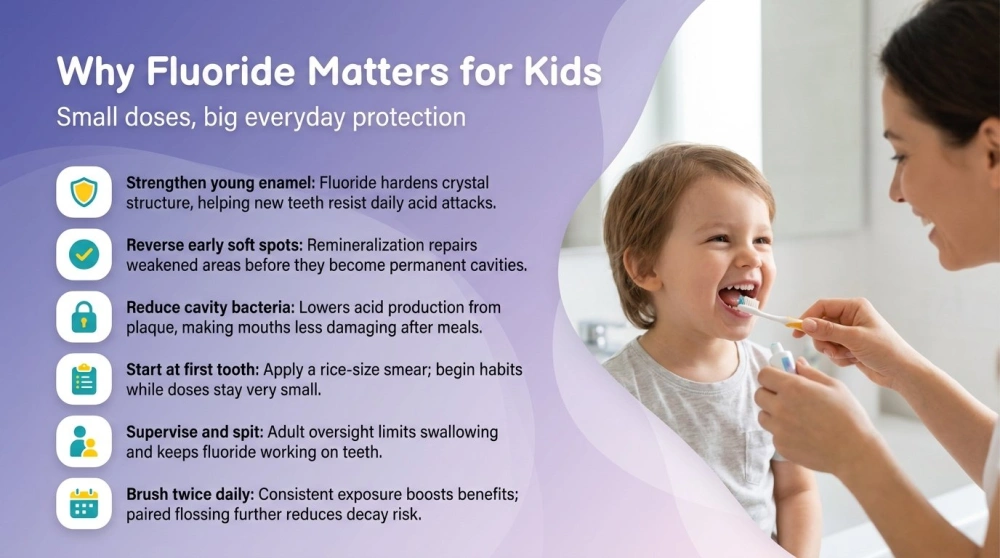
Fluoride works at the tooth surface. It reduces the ability of cavity causing bacteria to produce acid and makes enamel more resistant to the acid that does form. Paired with brushing and flossing, fluoride toothpaste is a simple daily tool that supports enamel protection for baby teeth and emerging permanent teeth [5] [6].
How much fluoride is right for my child’s age?
In the United States, toothpaste labels list fluoride as a percent, often 0.24 percent sodium fluoride or 0.76 percent sodium monofluorophosphate, which correspond to about 1000 to 1100 parts per million. This level has strong evidence for reducing cavities when used as directed and measured in small amounts for young children [4] [5].
- Under age 3 Use a smear sized amount roughly the size of a grain of rice. Brush twice daily and wipe away excess foam. Help your child spit when they can, but do not worry if a small smear is swallowed while you supervise the brushing process [1] [2].
- Ages 3 to 6 Use a pea sized amount of toothpaste. Supervise brushing and teach your child to spit out the toothpaste after brushing. Keep the tube out of reach between uses [1] [2] [7].
- Ages 6 and up Continue twice daily brushing with a fluoride toothpaste. Most children can brush independently by this point, but a quick parental check helps make sure all tooth surfaces are cleaned [1].
Toothpaste is regulated as an over the counter anticaries drug in the United States, and labels include specific directions and warnings such as keeping the product out of the reach of children and contacting a professional if more than used for brushing is swallowed [7].
Which ingredients in kids toothpaste should I look for or avoid?
Choosing a children’s toothpaste becomes simpler when you understand which ingredients matter and why. Your goals are to strengthen enamel, gently clean, and make brushing appealing so your child builds a lasting habit.
What active ingredients actually prevent cavities?
- Fluoride compounds Look for sodium fluoride or sodium monofluorophosphate at levels around 1000 to 1100 parts per million. These are the most studied active ingredients for cavity prevention in kids toothpaste and have strong clinical support [4] [5].
- Stannous fluoride Some pastes use stannous fluoride. It provides anticaries benefits and can also help with gum health and sensitivity in older children, though taste can be slightly different. Always follow age guidance on the label and ask your dentist if you have questions about fit for your child [6].
Which flavors sweeteners and foaming agents are safe?
- Flavor oils and mild sweetness Kid friendly flavors like mild mint or fruit can increase acceptance. Sweeteners such as xylitol or sorbitol are commonly used to improve taste without feeding cavity causing bacteria. Evidence for xylitol as a toothpaste additive is mixed for cavity reduction, so it should be viewed as a flavoring aid rather than a replacement for fluoride [8].
- Foaming agents Many pastes contain sodium lauryl sulfate. Some children and adults find SLS irritating. If your child has mouth sores, a SLS free toothpaste for children may feel more comfortable, and small studies suggest it can reduce sore frequency in susceptible people [9].
Should I choose SLS free toothpaste for children?
If your child experiences frequent canker sores or oral irritation, a SLS free option can be worth trying. Research has shown that toothpastes without sodium lauryl sulfate may reduce the number of aphthous ulcers in those who are prone to them. Switching to a non SLS formula is a simple experiment to improve comfort, and you can continue to select one that includes fluoride for cavity prevention [9].
Also consider practical safety. Some children’s toothpastes use xylitol for taste. While xylitol is commonly used in oral products, it is dangerous for pets even in small amounts, so store toothpaste out of reach of animals at home [10].
How do I read ADA accepted toothpaste labels?
The ADA Seal of Acceptance is a voluntary program where products are independently evaluated for safety and effectiveness. When a toothpaste carries the ADA Seal, it means the manufacturer has provided strong evidence that it works as claimed and that it uses appropriate fluoride concentration and safe ingredients. The label will also include the intended age group and directions for use [1] [3].
- Look for the Seal The ADA Seal image appears on the box or tube. This tells you the paste meets ADA criteria for cavity prevention when used as directed [3].
- Check the active ingredient Confirm the fluoride compound and percentage. Most children’s toothpastes list 0.24 percent sodium fluoride or a similar effective level [1].
- Read age guidance Use the amount recommended for your child’s age and supervise brushing to limit swallowing [2] [7].
Funding an ADA accepted toothpaste is a practical way to quickly narrow your choices without having to decode every formulation detail every time you shop [3].
How do I choose between fluoride and fluoride free kids toothpaste?
For most children, a fluoride toothpaste is recommended by leading organizations to prevent cavities. Fluoride free kids toothpaste may be considered for limited scenarios, such as early training if a child cannot yet spit at all, or for families with specific guidance from a clinician. Even then, evidence for cavity prevention is tied to fluoride, so the goal is generally to transition to fluoride as soon as your child can reliably spit and you can control the application amount [1] [2] [5].
If you are unsure, ask your pediatric dentist for personalized guidance. Children at higher risk of cavities gain meaningful benefit from fluoride toothpaste used twice daily, and small amounts are considered safe under supervision [2] [6].
What about toddlers and training toothpaste?
Toddler toothpaste often emphasizes gentle flavors and a non foaming feel to help little ones accept brushing. If you choose a training paste without fluoride for a short period while coaching a new brusher, pair it with focused practice on spitting and gradually introduce a smear sized amount of fluoride paste once your child accepts the brush. The ADA and AAPD advise introducing fluoride toothpaste at first tooth eruption, using a tiny smear to keep the dose small while still delivering a protective benefit [1] [2].
Remember to keep all toothpaste out of reach between brushings. Toothpaste labels include safety warnings because active ingredients are regulated and dose matters. Following the pea sized amount of toothpaste guideline for preschoolers is a simple way to make brushing safe and effective [7].
How much toothpaste should my child use each time?
Use a smear size similar to a grain of rice for children under 3 years old and a pea sized amount for ages 3 to 6. Older children can continue with a thin strip, but more paste does not equal better cleaning. The toothbrush bristles and your child’s technique do the heavy lifting. The toothpaste provides fluoride exposure and helps suspend and clear debris. Always encourage your child to spit out after brushing [1] [2] [7].
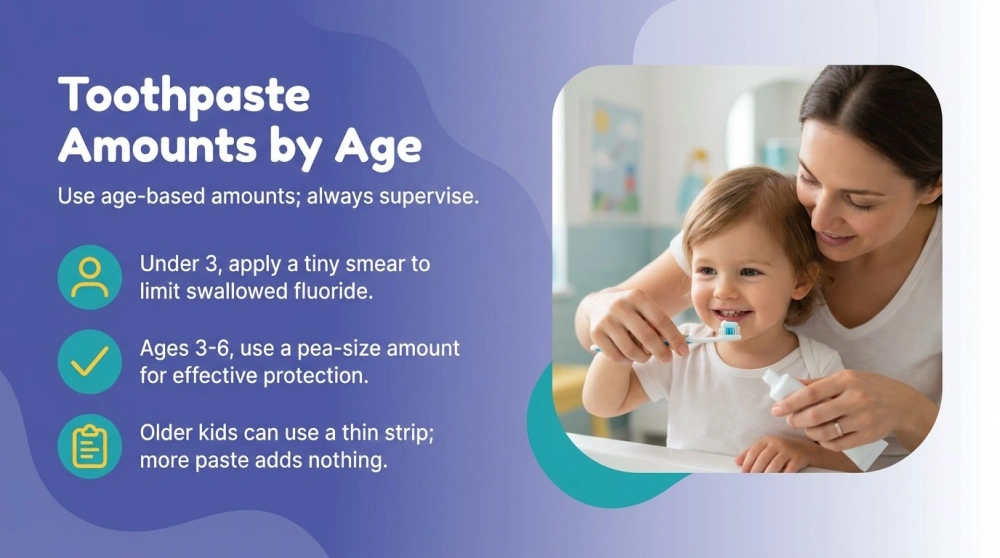
- Smear For toddlers, a smear helps limit total swallowed fluoride if spitting is inconsistent [2].
- Pea sized For preschoolers and early grade school, this is the sweet spot for daily prevention with low risk [1].
- Supervise Gently guide brushing and keep the tube in your hands, then put it away when done [7].
How do sensitivity and enamel needs change the choice?
Some children report cold sensitivity, especially with newly erupted permanent teeth. A standard fluoride toothpaste is often enough, but products with stannous fluoride can provide added benefit for older children who can follow directions. Many sensitivity pastes with potassium nitrate are labeled for ages 12 and up, so always follow the age guidance on the box and check with your dentist before using them with younger children [7] [6].
Children with enamel defects, frequent snacking, dry mouth due to medications, or a history of cavities may need tailored strategies. Your children’s dentist in Laguna Niguel can recommend brushing frequency, a specific fluoride concentration, or added professional treatments based on your child’s risk level [2].
How can I match toothpaste to braces white spots or higher risk?
Braces make hygiene harder, and children in orthodontic treatment face a higher chance of plaque buildup and white spot lesions. A fluoride toothpaste used carefully around brackets is key. Pair it with a soft brush, interproximal brushes, and careful technique. Your orthodontic team and pediatric dentist can help coach positioning and timing for best results. Consistency is often more important than special ingredients when it comes to preventing white spots during braces [2] [5].
If your child has white spot areas already, talk with a pediatric dentist. Professional fluoride varnish, careful home care, and follow up coaching can help stabilize these areas. Toothpaste choices matter most as part of a daily routine that your child can maintain. Laguna Niguel Pediatric preventive dentistry also includes sealants, varnish when indicated, and regular checkups that reinforce healthy habits between orthodontic visits [2].
What brushing habits make toothpaste work better?
Toothpaste is one part of a simple routine that prevents cavities. The habits below increase the protective effect of fluoride and keep your child’s mouth healthier between checkups.
- Brush twice daily Morning and before bed are the best times. Night brushing is especially important because saliva flow drops during sleep [6].
- Use a soft brush and gentle circles Angle bristles toward the gumline and spend a few seconds on each tooth surface. Younger kids benefit from hand over hand guidance.
- Spit out the excess Encourage spitting after brushing. This keeps enough fluoride on teeth without swallowing the foam [1].
- Floss the tight spots Clean between teeth where a brush cannot reach. Flossers or floss picks can help small hands complete the job.
- Limit frequent sipping and sticky snacks Grazing bathes teeth in acids. Offer water between meals and keep sweet treats to specific times [6].
- Schedule regular dental visits Professional cleanings and checkups allow personalized coaching and early intervention when needed [2].
How do local factors in Laguna Niguel CA influence my choice?
Local water fluoride levels, your child’s diet, and individual risk all play a role in how you choose a kids toothpaste. Families in Laguna Niguel, CA can check their water fluoride status using national tools and local water quality reports. Knowing whether your home water is optimally fluoridated helps your dentist guide how to use fluoride at home and in the office [11].
Regardless of community water status, daily brushing with a fluoride toothpaste makes a measurable difference in cavity prevention. If you prefer a gentler flavor or foam level, choose a formulation your child will use without a struggle. Pediatric dentist recommendations often focus on brushing consistency, supervision, and using the right amount of paste for age rather than on a single brand [1] [5].
When should I talk to a pediatric dentist?
Reach out to a pediatric dentist if you are unsure which toothpaste fits your child’s needs, if your child has white spots, sensitivity, special health care needs, or a history of cavities, or if brushing battles are common at home. A quick conversation can save time and stress, and your care team can offer age appropriate toothpaste choices and coaching that match your child’s stage and temperament [2].
Pediatric preventive dentistry in Laguna Niguel gives families a clear plan to support day to day hygiene at home, coordinate with your orthodontist if needed, and build confidence for regular visits. Simple adjustments to toothpaste choice, brushing technique, and routines can make a long term difference.
How do I choose between flavors packaging and applicators?
Flavor, texture, and packaging often decide whether a child accepts toothpaste. Choose options that feel friendly and familiar. If a strong mint is a turnoff, try a mild mint or a gentle fruit flavor that still includes fluoride. Some families like pumps because they dispense small, repeatable amounts and make it easier to stick with a smear or pea sized amount. For children with motor challenges, larger grips or an electric brush with a small head can help you place paste precisely on the bristles and guide the motion.
- Start small Introduce a tiny amount on the brush and praise effort. Build up to the full two minute routine.
- Let your child help choose Offer two parent approved options. Shared choice can increase buy in and consistency.
- Track routine Visual timers or a favorite two minute song can make brushing time predictable and fun.
How can I balance natural ingredients and effectiveness?
Parents sometimes prefer simpler ingredient lists. A short, familiar list can be reassuring, but effectiveness still depends on proven actives. If you select a paste with fewer additives, keep the fluoride content appropriate for your child’s age and risk. Look for ADA accepted toothpaste options with straightforward formulas. When in doubt, bring the tube to your next appointment so your care team can confirm it meets your goals [3] [5].
What local and federal rules apply to kids toothpaste?
In the United States, fluoride toothpaste is regulated by the Food and Drug Administration under the over the counter anticaries monograph. That is why labels show active ingredient, concentration, age directions, and warnings. California families can also consult state and local water reports for community fluoridation status to complement home care decisions. These frameworks help ensure consistent safety information on packaging and public water data you can trust [7] [11] [12].
How can Kidz Modern Dentistry in Laguna Niguel CA help your family choose the right toothpaste?
We help parents in Laguna Niguel, CA translate science into simple daily routines. Our team works with infants, toddlers, school age kids, and teens to match toothpaste choices with real life habits, taste preferences, and clinical needs. We focus on education first so you feel confident about what to buy and how to use it at home.
Our approach brings together age based coaching, personalized risk assessment, and friendly communication. During routine visits we discuss your child’s brushing routine, demonstrate smear and pea sized amounts, and review labels you bring in. If your child has braces, white spots, or sensitivity, we suggest specific toothpaste options and home care adjustments that fit your schedule.
- Local expertise As a Laguna Niguel pediatric dentist team, we understand community needs and help families interpret local water reports alongside ADA and AAPD guidance.
- Comfort focused care Same day emergency support, child friendly sedation when appropriate, and gentle techniques make appointments smoother for anxious kids and busy parents.
- Clear next steps We provide printed or digital home care guides tailored to your child’s age and risk so you can shop with confidence.
- Team access You can call us with quick toothpaste or brushing questions between visits. Direct access to qualified professionals helps you stay on track.
- Experience Our pediatric specialists and hygienists bring years of combined experience helping families build sustainable brushing routines that reduce cavity risk.
If you would like help choosing kids toothpaste for your child, or you want a friendly review of your current routine, call Kidz Modern Dentistry at +1 949 273 0110. We are happy to guide you step by step, support healthier habits, and coordinate care with your broader medical and orthodontic team when needed.
References
- Fluoride Toothpaste Use for Young Children – American Dental Association
- Guideline on Fluoride Therapy – American Academy of Pediatric Dentistry
- ADA Seal of Acceptance Program – American Dental Association
- Fluoride Toothpastes of Different Concentrations for Preventing Dental Caries in Children and Adolescents – Cochrane Database of Systematic Reviews
- Fluoride: Facts and Benefits – National Institute of Dental and Craniofacial Research
- Oral Health Fast Facts – Centers for Disease Control and Prevention
- Anticaries Drug Products for Over the Counter Human Use 21 CFR Part 355 – U.S. Food and Drug Administration
- Policy on the Use of Xylitol in Caries Prevention – American Academy of Pediatric Dentistry
- The Effect of Toothpaste Containing Sodium Lauryl Sulfate on Recurrent Aphthous Ulcers – PubMed
- Xylitol and Dogs – U.S. Food and Drug Administration
- My Water’s Fluoride Tool – Centers for Disease Control and Prevention
- Community Water Fluoridation in California – State Water Resources Control Board
Common Questions About This Topic
Find answers to frequently asked questions related to this article.
