
- What should parents know about snacking and tooth decay in kids?
- How does tooth decay develop when kids snack?
- What matters more for cavities, sugar frequency or amount?
- Which snacks are most likely to cause cavities in children?
- Do sippy cups, bottles, and juice increase cavity risk?
- What are dentist approved healthy snacks for children’s teeth?
- How can families build a tooth friendly snack plan for school and sports?
- What daily habits protect against cavities between snacks?
- When should kids see a pediatric dentist and what happens at a preventive visit?
- What local and federal rules in California support children’s dental health?
- How does Kidz Modern Dentistry help families prevent cavities from snacking?
- FAQs about snacking and tooth decay in kids
- References
What should parents know about snacking and tooth decay in kids?
Parents often tell us that snacks keep their kids happy and fueled during a busy day. That part is true. What can catch families off guard is how the timing and type of snacks influence the risk of tooth decay. Cavities are still one of the most common chronic conditions in childhood. National data show that more than half of children ages six to eight have had a cavity in a baby tooth, and about one in five children ages five to eleven have untreated decay[1]. The good news is that small, practical changes to snack routines can reduce risk without making mealtimes a battle.
To keep this simple, think of three levers you can control. First is what kids snack on. Second is how often they snack. Third is what cleanup and protection happens after they snack. Together, these choices shape the mouth environment where decay either gets a foothold or stays under control[2]. This is exactly what Pediatric preventive dentistry focuses on through education, coaching, and routine care.
In Laguna Niguel and throughout South Orange County, parents juggle school, sports, and commutes. It is normal to rely on convenience snacks. With the science in mind, you can still choose quick options that are kinder to enamel and set up simple routines that fit a family schedule.
How does tooth decay develop when kids snack?
Tooth decay does not happen overnight. It is a process. Certain mouth bacteria feed on fermentable carbohydrates that include sugars and many refined starches. As they digest these carbs, they release acids. Those acids lower the pH next to the tooth surface and begin to pull minerals like calcium and phosphate out of enamel. This stage is called demineralization[2]. Saliva and fluoride can tip the balance back toward repair, called remineralization, if there is enough time between acid attacks.
Here is why snacks matter. Each time kids sip or nibble on sugary or starchy foods, acids rise quickly and stay elevated for some time before saliva gradually buffers them. Frequent exposures repeat that cycle before teeth can recover. Over weeks and months, the balance favors mineral loss, white spot lesions can develop, then cavities can form and progress[2]. This is why grazing throughout the day is tougher on teeth than eating the same calories in fewer sittings.
- Acid attacks start fast Saliva pH drops quickly after sugars and starches contact plaque bacteria, which begins to soften enamel[2].
- Recovery takes time Saliva buffers acids and brings minerals back, but it needs breaks between exposures to work well[2].
- Fluoride supports repair Low levels of fluoride from toothpaste or water help enamel take minerals back in more efficiently[2].
What matters more for cavities, sugar frequency or amount?
Both amount and frequency matter, but frequency often drives risk for kids. Evidence reviews and international guidance highlight that regular, repeated intakes of free sugars are strongly linked with caries across populations, and that limiting how often sugar is consumed can reduce risk[3][4]. In everyday terms, a sweet treat eaten with a meal is typically less harmful than the same treat slowly sipped or nibbled across the afternoon. That is why frequent juice boxes, sports drinks, or sticky snacks between meals tend to raise decay risk more than occasional sweets served at mealtime.
- Bundle sweets with meals Eating sweets with a balanced meal increases saliva flow and reduces the time acids contact enamel[4].
- Cap snack sessions Try to serve snacks at defined times rather than grazing, so teeth get long enough breaks to recover[3].
- Favor water as the sip Water helps rinse food debris and restores moisture without feeding plaque bacteria[2].
Which snacks are most likely to cause cavities in children?
The highest risk snacks are those that are sugary, sticky, slow to clear, acidic, or sipped for long periods. This includes familiar items that appear in lunch boxes and on sidelines. Many packaged snacks marketed as energy boosts or even as natural choices can still be carb dense and clingy.
- Sticky sweets and dried fruit Fruit leather, gummies, caramels, and chewy granola bars stick to grooves and feed bacteria for a long time[13].
- Refined crackers and chips Simple starches like crackers and puffs quickly break down into sugars and can lodge between teeth[13].
- Sugar sweetened beverages Sodas, fruit punches, energy and sports drinks raise caries risk and also can erode enamel if acidic[9].
- Frequent 100 percent juice Even without added sugar, fruit juice contains natural sugars and acids and can contribute to decay when sipped often[5].
- Sweetened yogurts and flavored milk These can be sugar dense. If served, pair with meals and check labels for added sugars[10].
It helps to read labels and think about stickiness and sip time. Many families find that one small change, like trading a daily sports drink for water, makes a meaningful difference over a season.
Do sippy cups, bottles, and juice increase cavity risk?
When used for water, cups and bottles are helpful. Problems start when sugary liquids are offered frequently or are used as comfort items. Guidance from pediatric health organizations advises against putting juice or sweetened beverages in bottles or sippy cups and recommends limiting the amount and timing of juice intake by age[5]. Bedtime or nap time use with anything other than water raises the risk of severe early decay because the mouth produces less saliva during sleep[2].
- Reserve juice for meals Offer whole fruit for snacks and keep juice to mealtimes in small portions by age[5].
- Use open or straw cups as kids grow Transition away from prolonged sippy cup use that encourages frequent sipping[5].
- Only water for overnight Water is the safest choice for nap or bedtime to avoid long acid contact while saliva is low[2].
What are dentist approved healthy snacks for children’s teeth?
You do not need to reinvent your pantry. The goal is to offer snacks that clear quickly, do not fuel plaque bacteria for long, and support overall nutrition. Choose options that combine protein, fiber, and fat, which satisfy kids and reduce the urge to graze.
- Crunchy vegetables Carrot sticks, cucumber slices, bell pepper strips, and snap peas encourage chewing and clear quickly. Pair with hummus for protein[13].
- Whole fruit Apple slices, berries, oranges, and melons are better than juice. Rinse with water after sticky fruits like banana[13].
- Cheese and plain yogurt Dairy provides calcium and protein. Choose plain yogurt and add fruit at home to limit added sugars[10].
- Nuts and seeds For children who can safely chew them, almonds, walnuts, or pumpkin seeds add crunch and healthy fats[13].
- Lean proteins Turkey roll ups, hard boiled eggs, or edamame keep kids full and are tooth friendly choices[13].
- Water first Make plain water the default sip. It helps wash away food particles and supports saliva function[2].
When a sweet is part of a celebration or reward, serve it with a meal and follow with a water rinse. Xylitol gum for older children who can chew gum safely may help saliva flow between meals. As always, ask your pediatric dentist before starting any new product with your child.
How can families build a tooth friendly snack plan for school and sports?
Think in terms of predictable snack windows, sports fuel when needed, and easy cleanup habits. If your school follows the federal Smart Snacks standards, many snack choices on campus already meet nutrition criteria that limit added sugars and encourage whole foods[6]. You can mirror that at home with a simple weekly plan.
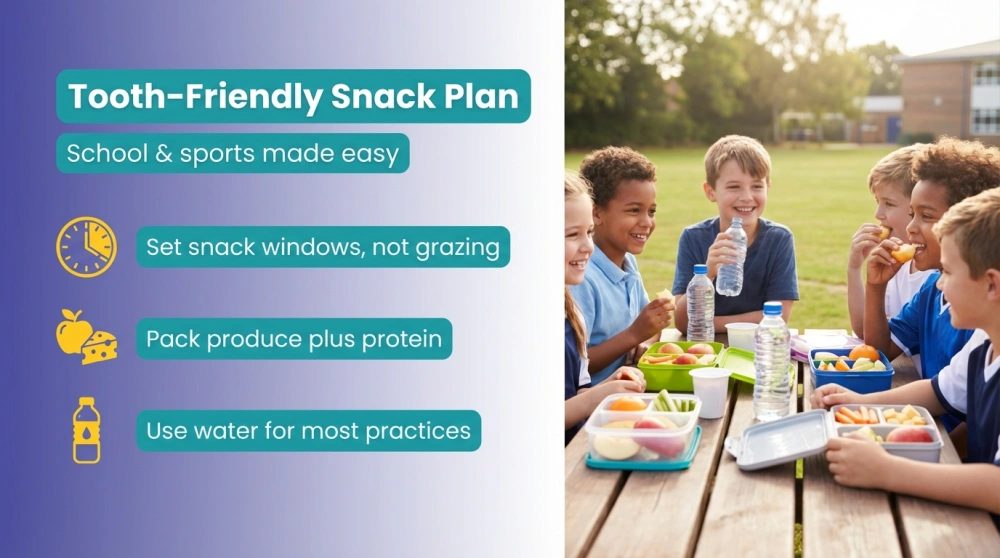
- Set snack times Offer a mid morning and mid afternoon snack instead of open grazing so teeth get recovery time[3].
- Pack balanced combos Choose one produce item plus one protein or whole grain. For example, apple slices with cheese, or whole grain crackers with hummus[6].
- Fuel for sports wisely For practices under one hour, water is usually enough. Save sports drinks for rare high intensity or long duration events and then rinse with water[9].
- Rinse and brush when you can A quick water rinse after snacks and brushing with fluoride toothpaste in the morning and before bed go a long way[11].
If you need personalized guidance, ask your pediatric dentist. Pediatric preventive dentistry in Laguna Niguel can include nutrition coaching that fits your child’s age, schedule, and preferences so changes are realistic for your family.
What daily habits protect against cavities between snacks?
Daily routines help tip the balance toward enamel repair and resilience. Combine home care with professional prevention for the best protection.
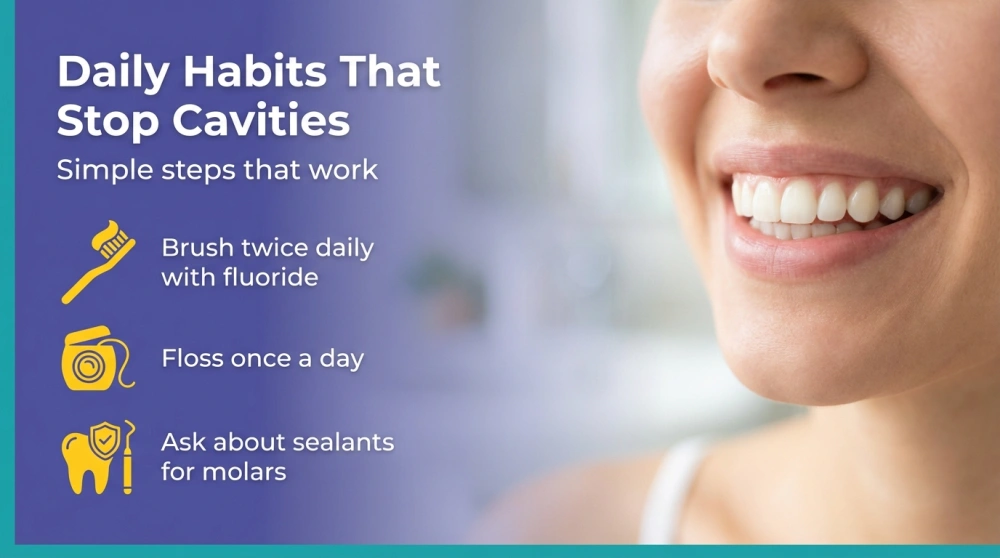
- Brush with fluoride toothpaste Brush twice daily. Use a smear the size of a grain of rice for ages under three and a pea sized amount for ages three to six, and help your child brush until they have the hand skills to do it well[11].
- Floss once daily Clean between teeth that touch to remove plaque where brushes cannot reach[2].
- Use fluoridated water Community water fluoridation is a proven, safe public health measure that strengthens enamel. Check your local water quality report to see if your supply is fluoridated[15].
- Consider professional fluoride Many children benefit from fluoride varnish applied in the dental office or primary care setting as recommended by national guidelines[7][12].
- Ask about sealants for molars Dental sealants placed on permanent first and second molars can reduce cavity risk in chewing grooves by about eighty percent in the first years after placement[8].
Consistent routines build protection over time. If your child is sensitive to mint or new toothpaste flavors, ask your pediatric dental team for product suggestions that match your child’s age and preferences.
When should kids see a pediatric dentist and what happens at a preventive visit?
Professional organizations recommend establishing a dental home by the first birthday or within six months of the first tooth coming in. Early visits focus on prevention, guidance for parents, and comfort in the dental setting[12]. If you are looking for a Laguna Niguel pediatric dentist, choose a team that welcomes questions and provides clear take home steps.
At a typical visit, we review medical and dental history, examine teeth and gums, discuss habits such as snacking and drinks, and provide a cleaning when appropriate. We apply fluoride varnish when indicated and discuss sealants for permanent molars at the right age. We also create a personalized plan that factors in diet, saliva flow, enamel risk, and family routines[7][8][12]. If you are searching for a family dentist near me for siblings of different ages, ask how the office coordinates care so visits are efficient for caregivers.
What local and federal rules in California support children’s dental health?
Parents in Laguna Niguel, Laguna Hills, Aliso Viejo, Mission Viejo, Laguna Beach, and San Juan Capistrano can lean on several public health supports.
- California kindergarten oral health requirement The state asks that children receive a dental check by May of their first school year in a California public school. This encourages early detection and prevention[14].
- Community water fluoridation Many California communities provide fluoridated drinking water at optimal levels to reduce decay. Families can review local water system reports to confirm status[15].
- Smart Snacks standards Schools that participate in federal meal programs follow snack and beverage nutrition standards that help reduce added sugars on campus[6].
- Primary care fluoride varnish Federal recommendations support fluoride varnish for young children during primary care visits in addition to dental visits, which helps reach more families[7].
If you are unsure how these apply to your child’s school or city, your pediatric dental team can help you find local resources and water reports.
How does Kidz Modern Dentistry help families prevent cavities from snacking?
At Kidz Modern Dentistry, we partner with parents to make prevention practical. Our team serves families across Laguna Niguel and South Orange County, including Laguna Hills, Aliso Viejo, Mission Viejo, Laguna Beach, and San Juan Capistrano. We welcome same day emergencies, offer kid friendly sedation when needed, and provide comprehensive care for children of all ages. Most importantly for snack related decay, we focus on education that respects your child’s unique needs and your family routine.
We start with a friendly preventive visit where we assess risk, review snack patterns, and agree on small steps you can try at home. We place sealants on molars at the right time, apply fluoride varnish when it is indicated by current guidelines, and offer easy to follow brushing and flossing coaching based on age and hand skills. We also coordinate with you to plan recall intervals that match your child’s risk level so we can catch changes early and reinforce what works for your family.
- Personalized prevention We tailor snack and drink guidance to fit school schedules, sports, and sensory preferences so changes are sustainable for your child.
- Comfort first Our gentle approach and child centered communication help kids build confidence and trust during visits.
- Modern tools We use proven preventive services including fluoride varnish and sealants. When care is needed, we offer conservative treatment options and kid friendly sedation.
- Team expertise Our clinicians bring years of combined experience caring for children and collaborating with parents on daily routines that reduce cavity risk.
- Clear next steps You leave with a written home plan and a follow up schedule that support progress without pressure.
If you have questions about your child’s snack routine or notice white spots, sensitivity, or frequent snack cravings, reach out. You can call us at +1 (949) 273-0110 to schedule a visit or to speak with our team. We are here to help you choose simple, tooth friendly habits that fit a busy life in South Orange County.
Our prevention philosophy is simple. Small consistent changes add up. That is why we emphasize Pediatric preventive dentistry as a foundation for every child’s care plan.
FAQs about snacking and tooth decay in kids?
How many snacks per day are reasonable for most kids?
Most school age children do well with one mid morning and one mid afternoon snack, though needs vary with growth and activity. Defined snack times reduce grazing and give teeth recovery time between acid challenges[3].
Is juice okay if it is 100 percent fruit juice?
Small portions with meals can fit into a balanced diet, but frequent sipping increases cavity risk. Pediatric guidance recommends limiting amounts by age and favoring whole fruit for snacks[5].
Are sports drinks necessary for kids during regular practices?
Usually not. For typical youth practices under an hour, water is adequate. Sports drinks contribute sugars and acids that can raise caries and erosion risk when used often[9].
Do dried fruits like raisins count as sticky snacks?
Yes. Many dried fruits cling to teeth and fuel bacteria. If served, pair with a meal and follow with water and brushing later[13].
What toothpaste amount should my child use by age?
Use a smear the size of a grain of rice for children under three and a pea sized amount for ages three to six. Help with brushing until your child can clean all surfaces well on their own[11].
When are dental sealants recommended for children?
Sealants are typically recommended when permanent molars erupt, which is often around ages six and twelve. Sealants protect chewing grooves and can reduce cavity risk significantly[8].
Does water fluoridation really make a difference?
Yes. Community water fluoridation at recommended levels is a well studied public health measure that helps reduce tooth decay. You can check your local water system status through public reports[15].
Can my child get fluoride varnish outside the dental office?
Often yes. Federal recommendations support fluoride varnish for young children in medical primary care settings, which increases access to preventive care[7].
How should I handle treats at parties or school events?
Enjoy treats with the meal, serve water alongside, and plan a thorough brush at home later. Avoid sending sticky candies for class snacks and consider nonfood rewards for celebrations[4][13].
What if my child has frequent cavities despite good brushing?
Ask for a cavity risk assessment. Your dentist can review snack frequency, saliva factors, fluoride exposure, and enamel grooves. Options may include more frequent cleanings, topical fluoride, sealants, and tailored diet coaching[7][8][12].
References
- Children’s Oral Health – CDC
- Dental Caries Overview – National Institute of Dental and Craniofacial Research
- A reappraisal of the quantitative relationship between sugar intake and dental caries – BMC Public Health
- Guideline Sugars intake for adults and children – World Health Organization
- Fruit Juice and Your Child – American Academy of Pediatrics HealthyChildren
- Smart Snacks in School Standards – United States Department of Agriculture
- Prevention of Dental Caries in Children Younger Than 5 Years – United States Preventive Services Task Force
- Dental Sealants Effectiveness and Use – Centers for Disease Control and Prevention
- Sugar sweetened beverages and dental caries in children a systematic review and meta analysis – International Journal of Paediatric Dentistry via PubMed
- Added Sugars and Cardiovascular Disease Risk in Children – American Heart Association Scientific Statement
- Fluoride Toothpaste Use for Young Children – American Dental Association
- Fluoride Therapy Best Practices – American Academy of Pediatric Dentistry
- Policy on Dietary Recommendations for Infants Children and Adolescents – American Academy of Pediatric Dentistry
- Kindergarten Oral Health Assessment Program – California Department of Public Health
- Community Water Fluoridation in California – California Department of Public Health
Common Questions About This Topic
Find answers to frequently asked questions related to this article.
