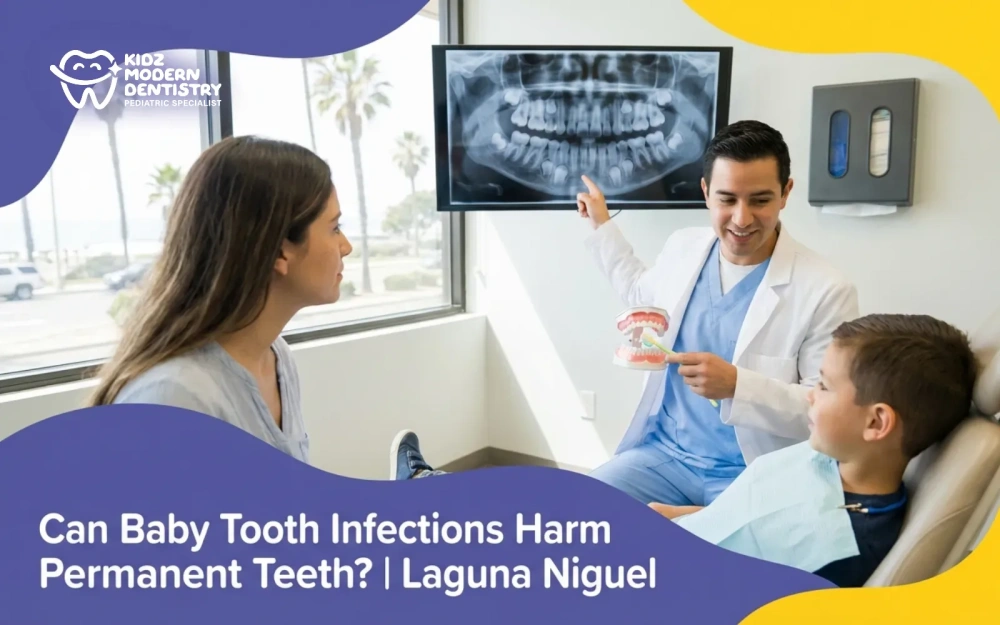
- What does a baby tooth infection mean and why should parents pay attention?
- Can a baby tooth infection affect permanent teeth?
- What signs of tooth infection in a child should you watch for?
- How do infected baby teeth cause problems for developing permanent teeth?
- When is a baby tooth abscess a dental emergency?
- How do pediatric dentists diagnose an infected baby tooth safely?
- What treatments does a pediatric dentist use for baby tooth infections?
- Do baby tooth cavities affect permanent teeth even without infection?
- How do we prevent baby tooth infections and protect permanent teeth?
- What regulations and evidence guide pediatric dental care in California?
- How should parents in Laguna Niguel and nearby communities plan next steps?
- Who is Kidz Modern Dentistry and how do we help families in South Orange County?
- Which sources and guidelines did we reference today?
What does a baby tooth infection mean and why should parents pay attention?
When a cavity in a primary tooth grows deep, bacteria can reach the soft inner tissue called the pulp. That can lead to inflammation or a pocket of pus called an abscess. You might hear this described as a baby tooth infection or an infected baby tooth. While baby teeth eventually fall out, they are crucial for chewing, speech development, jaw growth, and saving space for permanent teeth that are forming right next to them. Because of that close relationship, an untreated infection can cause pain now and create preventable problems later for the developing adult tooth [4].
In children, tooth decay is common and can progress faster than in adults because baby tooth enamel is thinner. National data show that cavities remain one of the most common chronic conditions of childhood. The good news is that tooth decay is preventable and treatable when caught early [4]. Taking action when you notice early symptoms can reduce the need for more complex care and help protect the health of the incoming permanent teeth.
Can a baby tooth infection affect permanent teeth?
Yes, a serious infection in a primary tooth can affect the developing permanent tooth that sits nearby in the jaw. Inflammation from an abscess can irritate the tissues around the permanent tooth germ. Depending on severity and duration, this may contribute to changes in enamel development, color irregularities, or disturbances in the timing and path of eruption. In some situations, extraction of a severely infected primary tooth is recommended to protect the developing permanent tooth and surrounding tissues [1].
Professional guidelines for pediatric dentistry emphasize timely diagnosis and appropriate treatment for infected primary teeth to relieve pain, control infection, and preserve the health of surrounding structures. These goals align with protecting the developing permanent teeth and reducing the risk of later complications [1].
What signs of tooth infection in a child should you watch for?
It is not always easy for children to describe what they feel, so it helps to know what to look for. See a pediatric dentist promptly if you notice any of the following signs of tooth infection in child:

- Toothache that lingers especially after eating or at night
- Sensitivity to hot or cold that does not resolve quickly
- Swelling of the gums or face especially if the area looks puffy or tender
- Gum pimple or bump that may drain fluid
- Fever or general malaise along with mouth pain
- Bad breath that does not improve with brushing
- Tooth discoloration such as a gray or dark appearance of a single tooth
If breathing or swallowing becomes difficult, or if facial swelling spreads or your child has a high fever, contact an emergency pediatric dentist or urgent care immediately. Infections that spread beyond the tooth can be serious and must be evaluated right away [2] [3].
How do infected baby teeth cause problems for developing permanent teeth?
Baby teeth and permanent teeth develop in close proximity. The permanent successor forms within the jawbone just above or below the baby tooth. When a cavity reaches the nerve and a baby tooth abscess develops, the resulting inflammation and bacterial byproducts can irritate the tissues surrounding the permanent tooth bud. Over time, this irritation can contribute to enamel mineralization disturbances or enamel hypoplasia, discoloration, or in some cases changes in eruption timing. Prompt treatment of infection reduces these risks and helps maintain a healthy environment for tooth development [1].
Even when a tooth must be removed because infection has compromised its structure, your dentist may recommend ways to protect the space and guide the permanent tooth into position. That is one reason early evaluation is so important. When a dental team can act before the infection progresses, they have more options to save the baby tooth or to remove it in a controlled way that preserves space for the adult tooth [1].
When is a baby tooth abscess a dental emergency?
Call for same day care if your child has facial swelling, significant pain, fever, trouble opening the mouth, difficulty swallowing, or if swelling seems to be spreading. These can be signs that the infection has moved into surrounding tissues. Children can become dehydrated quickly if pain makes it hard to eat or drink, so do not wait to seek care. Your pediatric dentist will evaluate your child and recommend urgent steps to relieve pressure, drain infection when appropriate, and choose a definitive treatment for the tooth [2] [3].
Parents sometimes ask if antibiotics alone can fix a dental abscess. Antibiotics can be helpful in select situations, such as when a spreading infection is present, but they do not resolve the source of the infection inside the tooth. A procedure to remove infected tissue and seal the tooth or to remove the tooth is usually required to fully address the problem. Current guidance encourages careful, appropriate use of antibiotics in dentistry and prioritizes definitive dental treatment whenever possible [2] [3].
How do pediatric dentists diagnose an infected baby tooth safely?
Your pediatric dentist will begin with a gentle exam and ask about symptoms such as pain with chewing or sensitivity to temperature. They may tap lightly on the tooth, check how it responds to cold, and look for gum swelling or a draining bump. Small digital dental images are often taken to confirm whether decay has reached the nerve or if there is an abscess at the root tip. Modern digital radiographs use very low doses of radiation and are taken only when clinically necessary to answer a specific question, following national safety recommendations for children [8].
These steps help the dentist decide if the tooth can be saved or if removal is the safer option. The plan is designed to relieve pain, control infection, and protect the developing adult teeth that are forming nearby [1].
What treatments does a pediatric dentist use for baby tooth infections?
Treatment depends on the extent of the cavity, whether the infection has reached the nerve, and the overall health of the tooth. Common, evidence guided options include Pulp therapy, pulpotomy for baby teeth, pediatric root canal treatment, stainless steel or tooth colored pediatric crowns, and when necessary, gentle extraction followed by space maintainers to preserve room for the permanent tooth [1].
What is a pulpotomy for baby teeth?
A pulpotomy removes the infected or inflamed tissue from the upper part of the pulp chamber while preserving healthy tissue in the roots. The chamber is then medicated and sealed, and a protective crown is often placed to restore strength. This procedure can relieve pain and allow the child to keep the tooth until it is time for the permanent tooth to come in. Professional guidelines describe pulpotomy as a predictable option for primary teeth with deep decay but without advanced root infection or abscess spreading into surrounding tissues [1].
What is a pediatric root canal?
When infection or inflammation extends into the root canals of a baby tooth, a complete removal of the pulp tissue may be recommended. This is sometimes called a pulpectomy or pediatric root canal. The canals are gently cleaned, filled with a child appropriate material that can resorb as the tooth’s roots resorb naturally, and the tooth is restored. This approach can maintain the tooth’s function and space for the permanent successor when the remaining structure is healthy enough to support a crown [1].
When are pediatric crowns or space maintainers needed?
Baby teeth with large cavities or after pulp treatment are often restored with stainless steel or tooth colored pediatric crowns to provide full coverage and durability. If a severely infected baby tooth cannot be saved and must be removed, your dentist may recommend a space maintainer to hold the spot for the future permanent tooth. This can help prevent crowding or shifting that might otherwise lead to bite problems [1].
When are antibiotics used for a baby tooth abscess?
Antibiotics may be used as an adjunct when there is facial swelling, fever, or signs of infection spreading beyond the tooth. They are not a substitute for dental procedures that remove the source of infection inside the tooth. Professional organizations and public health agencies advise careful antibiotic stewardship to reduce unnecessary use and the risk of resistance, and they emphasize timely definitive dental treatment whenever possible [2] [3].
Do baby tooth cavities affect permanent teeth even without infection?
Yes, even when a cavity has not yet caused an infection, it can still affect the future alignment and health of adult teeth. Pain from decay may lead a child to chew on one side, avoid certain foods, or brush less effectively. If a tooth breaks or is lost early due to decay, surrounding teeth can drift, reducing the space available for the permanent tooth. That can lead to crowding and a more complicated path for the adult tooth to come in. Preserving baby teeth through timely fillings, crowns, or other care helps maintain eating comfort and guides the proper spacing for the next set of teeth [1] [13].
How do we prevent baby tooth infections and protect permanent teeth?
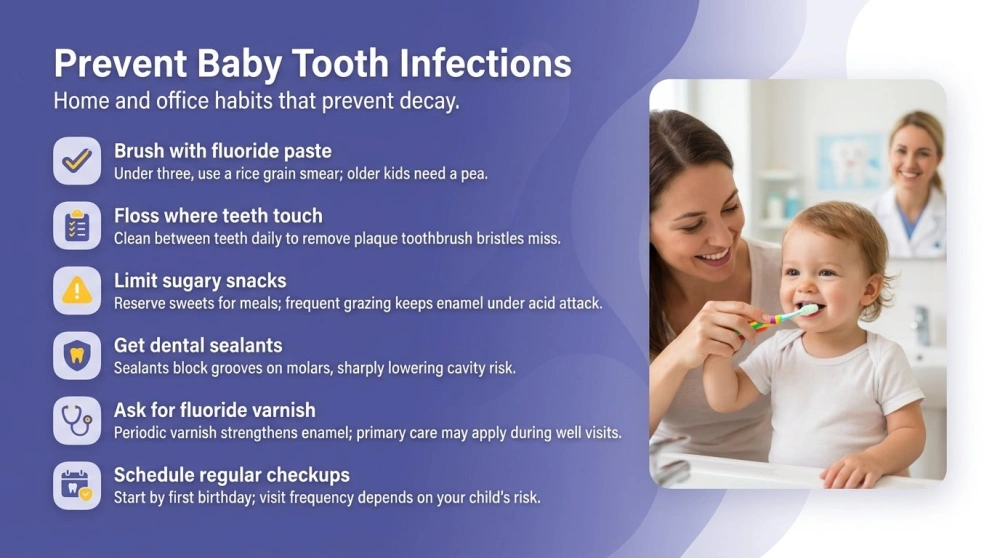
Prevention starts at home and continues with regular pediatric dental visits. Together, we can lower the risk of baby tooth decay, reduce the chance of infection, and create a healthier path for the permanent teeth that are forming now. Here are the pillars of prevention supported by clinical guidelines and public health recommendations.
What role do dental-sealants-and-fluoride-varnish-play?
Dental sealants are thin coatings placed on the chewing surfaces of back teeth to block food and bacteria from settling into grooves. Sealants can significantly reduce cavities in those hard to clean pits and fissures in children’s molars. Applying them is quick and comfortable, and they act like a shield to keep germs out of the deepest grooves [5] [11].
Fluoride varnish is a concentrated form of fluoride painted onto the teeth to strengthen enamel and reduce the risk of cavities. Medical and dental organizations recommend fluoride varnish for many children at regular intervals, especially for those at higher risk for decay. Primary care providers may also apply fluoride varnish during well child visits for younger children, which complements dental office care [6] [7].
How should home care and diet change to reduce risk?
- Brush with fluoride toothpaste twice daily as soon as the first tooth appears, using a smear the size of a grain of rice for children younger than three and a pea sized amount for older children, unless your dentist advises otherwise [7].
- Floss daily where teeth touch to remove plaque between teeth that a toothbrush cannot reach [13].
- Limit sugary snacks and drinks and reserve them for mealtimes. Frequent sipping or grazing increases cavity risk because enamel spends more time under acid attack [14].
- Offer water between meals and after snacks. In communities with fluoridated water, this also adds a small protective benefit throughout the day [4].
- Establish regular dental checkups so small problems can be addressed before they become painful infections [13].
How often should children in California see a pediatric dentist?
Professional guidelines recommend that children visit a dentist regularly, starting by the first birthday or when the first tooth erupts. The frequency of recall visits is personalized based on your child’s risk for cavities, growth and development needs, and any ongoing treatment. Many children benefit from visits about every six months, and children with higher risk may be scheduled more often. These visits allow your pediatric dentist to monitor tooth development, apply preventive treatments such as fluoride varnish, and catch early signs of decay before infection develops [13].
What regulations and evidence guide pediatric dental care in California?
Families in Laguna Niguel, Aliso Viejo, Mission Viejo, Laguna Beach, Laguna Hills, and San Juan Capistrano can expect care that follows current clinical guidelines and state regulations. Pediatric dentists draw on evidence based recommendations for pulp therapy, caries prevention, behavior guidance, and judicious use of antibiotics. These standards support safe, effective care that is tailored to children.
- Clinical practice standards for treating deep decay and infected baby teeth guide when to use pulpotomy, pediatric root canal, crowns, or extraction to protect the child’s comfort and the developing permanent teeth [1].
- Antibiotic stewardship in dentistry supports careful prescribing only when indicated for spreading infections or systemic involvement and prioritizes definitive dental treatment as soon as possible [2] [3].
- Radiation safety practices for children rely on the lowest exposure that achieves diagnostic benefit, using shields and child sized settings as recommended [8].
- State oversight for sedation ensures that providers who offer sedation for children meet training and permitting requirements, with additional monitoring standards for safety in California [10].
- Public health programs in California promote prevention, early intervention, and access to care for children and families across the state [9].
How should parents in Laguna Niguel and nearby communities plan next steps?
If you suspect an infected baby tooth or see a gum bump or facial swelling, call a pediatric dentist promptly. Describe what you see and any symptoms like fever or trouble eating. Offer simple comfort measures at home such as cold compresses on the cheek and over the counter pain relief as advised by your child’s physician. Avoid placing aspirin on the gums and do not attempt to drain a bump. Timely assessment allows the dental team to relieve discomfort, stop the infection, and plan treatment to safeguard the developing adult teeth [1] [2].
If your child has deep decay but no swelling, do not delay. Earlier appointments often mean simpler procedures and less time away from school and activities. Families in South Orange County who need guidance can call us for same day care when available and for clear next steps. If your child needs Pulp therapy in Laguna Niguel, we will discuss options, comfort measures, and how the treatment supports the healthy development of the permanent teeth while keeping your child comfortable and at ease during care [1].
Who is Kidz Modern Dentistry and how do we help families in South Orange County?
We are Kidz Modern Dentistry, a pediatric dental clinic dedicated to same day emergencies, kid friendly sedation, and comprehensive care for children of all ages. Our focus is to make dental visits a positive experience for your child while providing clear, parent friendly guidance on what to do next. If you are navigating a baby tooth abscess or wondering how to treat baby tooth infection, we will explain every step in plain language, outline options, and help you choose a plan that protects comfort today and supports healthy permanent teeth.
Our team serves families in Laguna Niguel, Aliso Viejo, Mission Viejo, Laguna Beach, Laguna Hills, and San Juan Capistrano. From the first call to follow up visits, you will have direct access to qualified pediatric dental professionals who listen, answer questions, and create a calm environment for your child.
- Personalized diagnosis and care built around your child’s comfort, symptoms, and stage of development, with clear explanations and visual aids so you feel confident about the plan [1].
- Evidence guided treatment options that include pulpotomy for baby teeth, pediatric root canal when appropriate, pediatric crowns, and space maintainers to preserve room for incoming permanent teeth [1].
- Prevention focused visits with fluoride varnish, dental sealants, and coaching on home care, diet, and cavity risk reduction that fit your family’s routine [5] [6] [7].
- Thoughtful pain and anxiety management using behavior guidance techniques and, when needed, sedation options that comply with California safety and permitting standards [10] [12].
- Rapid response for urgent needs when you need an emergency pediatric dentist for facial swelling or significant pain, with practical after hours instructions for getting help quickly [2] [3].
- Commitment to safety with low dose digital images taken only when clinically necessary for diagnosis, following pediatric imaging recommendations [8].
Our approach is collaborative. We guide you through the options for treating an infected baby tooth and explain how each choice affects the comfort and function of the tooth and the effect on permanent teeth. When a tooth can be saved, we discuss crowns and maintenance. When removal is the better choice, we plan for space maintainers so your child’s bite develops on track. Throughout, we keep the focus on prevention to lower the chance of another baby tooth infection.
We understand that you want to act quickly when your child is hurting. If you need help today, call us at 949 273 0110. We will do our best to see your child as soon as possible and to provide a clear, step by step plan that fits your child’s needs and your family’s schedule.
For parents comparing options, you can also ask about Pulp therapy to understand when it is recommended and how it helps protect the developing adult tooth while relieving pain. We take time to answer questions about procedures, materials, comfort options, and aftercare, so you feel informed and supported at every visit [1].
Which sources and guidelines did we reference today?
- Pulp Therapy for Primary and Immature Permanent Teeth – American Academy of Pediatric Dentistry
- Use of Antibiotic Therapy for Pediatric Dental Patients – American Academy of Pediatric Dentistry
- Dentists Be Antibiotics Aware – Centers for Disease Control and Prevention
- Tooth Decay in Children – National Institute of Dental and Craniofacial Research
- Dental Sealants – American Dental Association MouthHealthy
- Prevention of Dental Caries in Children Younger Than 5 Years – U S Preventive Services Task Force
- Use of Fluoride – American Academy of Pediatric Dentistry
- Dental Radiography Information for Parents and Patients – U S Food and Drug Administration
- California Oral Health Program – California Department of Public Health
- Anesthesia and Sedation Permits – Dental Board of California
- Pit and fissure sealants for preventing dental decay in permanent teeth – Cochrane Library
- Behavior Guidance for the Pediatric Dental Patient – American Academy of Pediatric Dentistry
- Periodicity of Examination and Preventive Dental Services – American Academy of Pediatric Dentistry
- Oral Health Fact Sheet – World Health Organization
Common Questions About This Topic
Find answers to frequently asked questions related to this article.