- What are the most common tooth brushing mistakes parents make for kids?
- When should parents start brushing a baby’s teeth and what changes as kids grow?
- How much fluoride toothpaste for kids is appropriate and why?
- How long should kids brush their teeth and how can families make two minutes fly by?
- What is the best toothbrush for children and how do you choose the right one?
- What brushing technique for toddlers and older kids helps the gumline and hard to reach spots?
- Should parents supervise kids brushing and for how long?
- How often should you replace a children’s toothbrush and how do you keep it clean?
- How does diet, snacking, and water affect children’s oral hygiene between brushes?
- What mistakes happen with nighttime routines and what can parents change tonight?
- Are electric toothbrushes safe for kids and when are they helpful?
- How do braces, spacers, or special health needs change kids tooth brushing?
- What local and national guidelines should California parents know about children’s oral care?
- How can you turn tooth brushing into a positive habit your child owns?
- What are quick pediatric tooth brushing tips you can use this week?
- How does Kidz Modern Dentistry support families in and around Laguna Niguel?
- Where can you read more trusted guidance?
What are the most common tooth brushing mistakes parents make for kids?
As parents, we want to protect our child’s smile, yet some everyday habits quietly work against that goal. Tooth decay remains one of the most common chronic conditions of childhood, which is why small improvements in daily care can make a real difference [1]. Below are frequent kids tooth brushing mistakes we see, alongside practical ways to fix them.
- Starting late: Waiting until many teeth come in can allow early plaque buildup and cavities. Begin cleaning as soon as a tooth erupts [7].
- Using the wrong amount of toothpaste: Too much toothpaste can lead to unnecessary swallowing of fluoride. A smear for toddlers and a pea sized amount for preschool and school age kids is commonly recommended by professional bodies [4][5].
- Brushing too quickly: Many children brush for under a minute. The two minute brushing rule helps fluoride work and improves plaque removal [2].
- Missing the gumline: Plaque often hides where teeth meet gums. Gentle angles and small strokes help reach these spots [2].
- Skipping the tongue: The tongue can harbor bacteria that contribute to bad breath. A quick tongue brushing can help freshen breath [14].
- No supervision: Young children benefit from hands on help to avoid swallowing toothpaste and to cover all surfaces [4].
- Old or frayed brush: Worn bristles clean less effectively. Swap the brush every three to four months or sooner if bristles fray [3].
- Frequent grazing on sugary drinks or snacks: Constant exposure to sugars feeds cavity causing bacteria. Water and structured snack times support children’s oral hygiene between brushes [13].
Families in Laguna Niguel, Laguna Hills, Aliso Viejo, Mission Viejo, Laguna Beach, and San Juan Capistrano often ask how to brush kids teeth better without turning it into a daily struggle. You are not alone. With a few small changes and consistent routines, children can build strong habits and confidence.
When should parents start brushing a baby’s teeth and what changes as kids grow?
You can begin oral care before the first tooth arrives. Gently wipe your baby’s gums with a clean, damp cloth after feedings. Once the first tooth erupts, use a soft, baby sized brush with a tiny smear of fluoride toothpaste for kids. These early steps help remove plaque, introduce routine, and reduce the risk of early childhood caries [7].
What should oral care look like from birth to age three?
- Before teeth erupt: Wipe gums with a clean damp cloth to clear milk residue.
- First tooth to age three: Brush twice daily with a soft brush and a smear of fluoride toothpaste, about the size of a grain of rice. Avoid letting your child fall asleep with a bottle containing anything other than water [4][7].
What changes from age three through early school years?
- Pea sized toothpaste: From around age three, use a pea sized amount of fluoride toothpaste. Continue to supervise brushing to limit swallowing and improve technique [4][5].
- Two minute routine: Aim for two minutes, twice a day, covering all tooth surfaces [2].
Regular dental visits complement home care. Early visits offer guidance, risk assessment, and coaching tailored to your child’s stage of development [10].
How much fluoride toothpaste for kids is appropriate and why?
Fluoride strengthens enamel and helps prevent cavities, which is why correct dosing matters. The recommended amounts balance cavity prevention with minimizing the risk of mild fluorosis from swallowing too much during the years when enamel is forming [4][5].
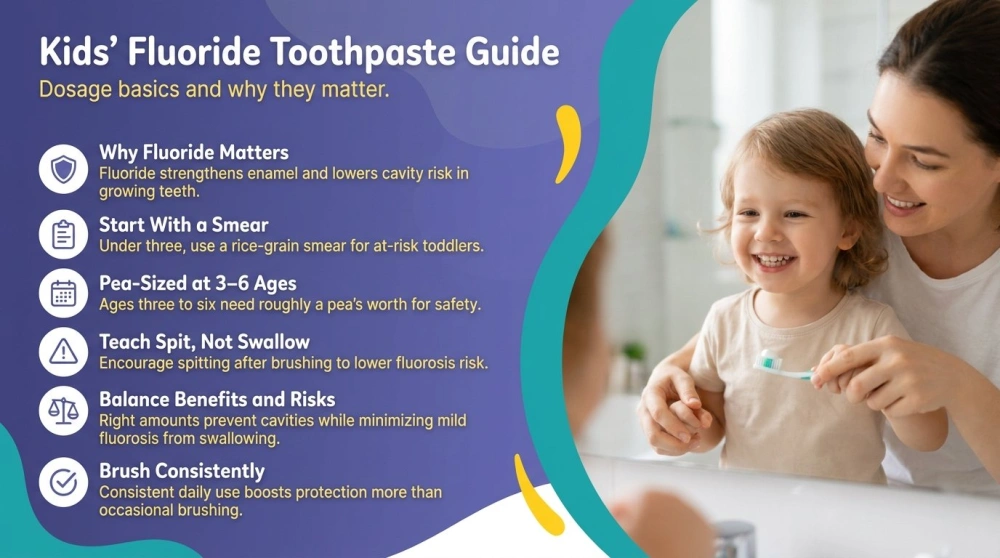
- Smear for toddlers: A thin smear, about the size of a grain of rice, is recommended for children under three who are at risk of caries or as advised by a dental professional [4].
- Pea sized for ages three to six: A pea sized amount provides the protective effect of fluoride while limiting the amount if swallowed [4][5].
- Spit, do not swallow: Encourage spitting after brushing. Supervise young children to reduce toothpaste swallowing [4].
Evidence from randomized and controlled studies shows fluoride toothpaste reduces cavities in children, with benefits related to fluoride concentration and consistent use [6].
How long should kids brush their teeth and how can families make two minutes fly by?
The general recommendation is two minutes, twice per day. This gives time to clean all tooth surfaces and to let fluoride contact the enamel. Short brushing sessions tend to leave plaque behind, especially on the back teeth and along the gumline [2].
How can you help your child enjoy the two minute brushing rule?
- Use a timer or song: Play a favorite two minute song or use a visual timer.
- Divide the mouth into sections: Spend about thirty seconds on each quadrant to cover all areas.
- Brush together: Children learn by copying. Family brushing time makes it fun and consistent.
- Try reward charts: Stickers and small non food rewards can build momentum for new routines.
- Switch hands on the second minute: This refocuses attention and improves coverage.
What is the best toothbrush for children and how do you choose the right one?
The best toothbrush for children is one they can use comfortably with soft bristles and a head sized for their mouth. Manual and powered brushes can both be effective when used correctly. Look for brushes with comfortable handles that your child can grip well [2][3].
Which brush features matter most for comfort and effectiveness?
- Soft bristles: Gentle on gums and effective for plaque removal when paired with correct technique [2].
- Small head: Reaches back teeth more easily in small mouths.
- Simple handle: A handle that fits your child’s hand promotes better control.
- Fun design: Characters and colors can boost motivation to brush.
Replace brushes regularly, since worn bristles are less effective at cleaning and can be uncomfortable [3].
What brushing technique for toddlers and older kids helps the gumline and hard to reach spots?
A steady, gentle technique matters as much as the tool. Help your child angle the bristles toward the gumline at about forty five degrees, use short strokes, and cover the outside, inside, and chewing surfaces of every tooth. Do not forget to tilt the brush behind the front teeth and to gently brush the tongue for fresher breath [2][14].
What is an easy step by step routine you can coach?
- Start along the gumline: Place the bristles at an angle where the tooth meets the gum and use small circles.
- Clean outer and inner surfaces: Move methodically around the mouth so nothing is missed.
- Focus on chewing surfaces: Use gentle back and forth strokes on molars where grooves trap food.
- Brush the tongue: A few quick passes help reduce odor causing bacteria [14].
Remind kids to be gentle. Too much pressure can irritate the gums and bend bristles so they do not clean well [2].
Should parents supervise kids brushing and for how long?
Yes. Young children need hands on help and ongoing supervision to ensure effective brushing and to reduce toothpaste swallowing. Caregivers should position themselves where they can see the teeth, offer coaching, and take a turn guiding the brush as needed. Supervision remains valuable beyond the preschool years, especially for children who rush or miss areas [4][10].
What are practical ways to supervise without battles?
- Stand behind your child: Gently tilt the chin up under good lighting for a clear view.
- Guide and release: Offer help on tricky areas, then let your child finish so they feel capable.
- Use a checklist: Outside, inside, chewing surfaces, gumline, tongue.
- Celebrate effort: Praise thoroughness rather than speed to build good habits.
How often should you replace a children’s toothbrush and how do you keep it clean?
Swap a toothbrush every three to four months or sooner if bristles look frayed. A worn brush cannot clean effectively and may feel scratchy. After brushing, rinse the brush, store it upright to air dry, and avoid covering the bristles or letting brushes touch if storing multiple brushes in one holder [3].
Is it helpful to sanitize a toothbrush?
Routine rinsing and air drying are sufficient. Avoid harsh cleaners. Replace the brush if it is contaminated or after illness if you prefer, and always keep separate from other brushes during storage [3].
How does diet, snacking, and water affect children’s oral hygiene between brushes?
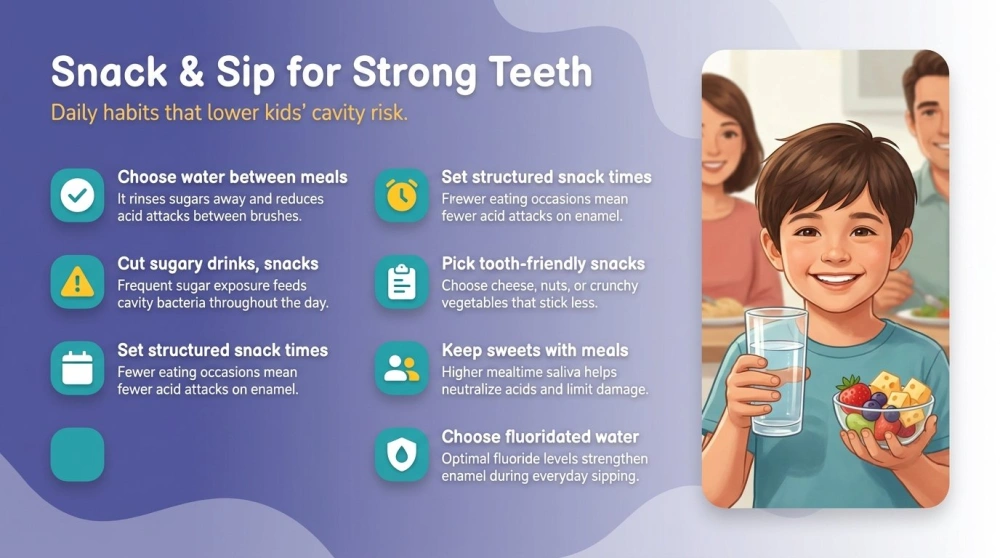
What children eat and drink influences cavity risk throughout the day. Frequent exposure to sugars and starches provides constant fuel for cavity causing bacteria. Reducing sugary drinks and snacks and encouraging water helps protect enamel. Health organizations recommend limiting free sugars in children’s diets to support overall health and reduce caries risk [13].
Which snack and drink habits help protect teeth?
- Water first: Offer water between meals and after snacks. In communities with optimally fluoridated water, this further supports enamel [8][9].
- Structured snack times: Fewer eating occasions reduces the time sugars are present in the mouth.
- Tooth friendly snacks: Cheese, nuts, and crunchy vegetables are good choices.
- Reserve sweets for mealtime: Saliva flow is higher during meals, which helps neutralize acids.
What mistakes happen with nighttime routines and what can parents change tonight?
Nighttime is prime time for plaque because saliva flow decreases during sleep. That makes a thorough brush and floss routine before bed especially valuable.
- Skipping the last brush: Make the bedtime brush non negotiable, even on busy days [2].
- Bedtime bottles or cups with sugary liquids: Offer only water at bedtime to reduce decay risk [7].
- Not brushing after sticky snacks: Plan sweet or sticky treats earlier in the evening and follow with water, then a full brush at bedtime.
Bring kids into the routine. Let them choose the toothbrush color, a favorite song, or place a sticker on a calendar after they complete the routine.
Are electric toothbrushes safe for kids and when are they helpful?
Powered toothbrushes can be safe and effective for children who can use them properly. Some children brush more thoroughly with a powered brush because the vibration or oscillation helps remove plaque. Evidence in broader populations shows powered brushes can reduce plaque and gingivitis compared with manual brushes when used as directed. For children, the key is correct use and supervision [12][3].
What tips make powered brushes work well for children?
- Choose a child sized head: Smaller heads fit better and improve comfort.
- Let the brush do the work: Guide the head slowly tooth by tooth rather than scrubbing.
- Use a timer: Many powered brushes include a built in timer that supports two minute brushing.
- Keep supervision: Continue to coach technique and toothpaste use, especially for young children [4].
How do braces, spacers, or special health needs change kids tooth brushing?
Appliances and certain health conditions raise the stakes for consistent, careful brushing. Brackets and bands create additional plaque traps, and some medications or conditions may reduce saliva or increase cavity risk. That is why daily technique and professional guidance are essential.
What adjustments help with braces or space maintainers?
- Angle and slow down: Brush above and below brackets and along the gumline.
- Use interdental tools: Floss threaders and interproximal brushes help clean around wires and bands.
- Rinse and inspect: Swish with water and check mirrors for missed spots before finishing.
How can families manage higher risk situations?
- Ask for personalized guidance: Regular checkups allow your dental team to tailor instructions and recommend helpful tools [10].
- Be mindful of diet: Limit sticky and hard foods that cling to brackets or damage appliances [13].
- Stay consistent: Two thorough brushes a day and careful cleaning around appliances protect gums and enamel [2].
What local and national guidelines should California parents know about children’s oral care?
California parents can follow widely accepted national guidance and consult state resources for local support. Professional associations recommend the first dental visit by age one, regular checkups, caregiver supervised brushing with fluoride toothpaste in age appropriate amounts, and risk based preventive services such as fluoride varnish applied by clinical professionals [10][11]. Community water fluoridation at the recommended level supports enamel strength, and you can verify local water information through a public database [9][8].
Regular checkups, cleanings, and coaching are cornerstones of Pediatric preventive dentistry that help families stay on track with daily care and evidence based prevention [10].
Where can families look up local water fluoridation?
You can search your community’s water system to see if it participates in community water fluoridation and view reported levels using a national database that includes California systems [8].
How can you turn tooth brushing into a positive habit your child owns?
Children are more likely to stick with routines that feel doable and positive. Your consistency, encouragement, and modeling matter as much as the brush itself.
What strategies build skills and independence without sacrificing quality?
- Model and mirror: Brush together so your child can copy your movements and timing.
- Coach key zones: Call out a different focus area each night, like brushing along the gumline or tilting behind the front teeth.
- Give choices: Let your child choose the brush color or the song to play while brushing.
- Use small goals: Aim for a full week of morning and night brushing, then celebrate with a fun, non food activity.
- Make it visual: Place a calendar or app reminder at eye level in the bathroom.
If challenges persist, ask your dental team for personalized pediatric tooth brushing tips. A hands on demonstration can transform a tough routine into a manageable habit [10].
What are quick pediatric tooth brushing tips you can use this week?
- Start right away: Begin cleaning when the first tooth erupts and keep a steady routine [7].
- Use the correct toothpaste amount: Smear for toddlers and pea sized for preschoolers and older children [4][5].
- Time it: Aim for two minutes, twice daily. Split the mouth into quadrants for even coverage [2].
- Check the gumline: Angle bristles toward the gumline and use short strokes [2].
- Clean the tongue: A quick tongue brushing can help reduce odor [14].
- Supervise wisely: Offer guidance and take a turn as needed, especially for young children [4].
- Refresh the brush: Replace every three to four months or sooner if worn [3].
- Choose water: Offer water between meals and limit sugary drinks to reduce cavity risk [13][9].
If you are unsure where to begin, a brief visit for coaching and routine care can simplify your plan. Personalized guidance and regular touchpoints are core parts of Pediatric preventive dentistry that support healthy daily habits [10].
How does Kidz Modern Dentistry support families in and around Laguna Niguel?
At Kidz Modern Dentistry, our team partners with parents to make daily brushing easier and more effective. We care for children from infancy through adolescence and tailor guidance to your child’s stage, temperament, and risk profile. We welcome families from Laguna Niguel, Laguna Hills, Aliso Viejo, Mission Viejo, Laguna Beach, and San Juan Capistrano.
Where do we operate and how can you reach us?
We serve families across South Orange County with a convenient home base in Laguna Niguel. To schedule a visit or ask a question, call us at +1 949 273 0110.
What is our approach to helping you master children’s oral hygiene at home?
- Coaching first: We demonstrate step by step brushing techniques, show how much toothpaste to use, and share age specific tips you can practice at home.
- Comfort focused visits: A welcoming environment and child centered communication help kids feel relaxed and confident.
- Personalized care plans: We tailor prevention and home care guidance based on your child’s needs and risk profile.
- Clear next steps: You leave every visit with simple actions to reinforce healthy brushing and diet habits.
Which services connect to your goals for fewer cavities and easier routines?
- Preventive visits: Exams, cleanings, risk assessments, and guidance that support strong daily habits [10].
- Fluoride therapies: Evidence based options like varnish that complement home brushing for at risk children [11].
- Support for special situations: Coaching for braces, space maintainers, and unique health needs so brushing stays effective.
- Kid friendly comfort options: When needed, safe sedation choices help anxious children receive care comfortably, guided by professional standards.
- Same day help for urgent needs: If a dental problem arises, we make room to see children quickly so you have answers and a plan.
Our team believes that small, consistent changes at home are just as important as what happens in the chair. We help you set up simple systems for the morning and bedtime routines, choose a best toothbrush for children that fits your child, and use fun motivators so brushing becomes a habit your child owns. We proudly provide Pediatric preventive dentistry in Laguna Niguel alongside compassionate guidance that fits real family life.
Parents tell us they value clear explanations, realistic goals, and trustworthy follow up. That is why every visit includes time for your questions about kids tooth brushing mistakes, fluoride toothpaste for kids, how long should kids brush teeth, and how to supervise kids brushing without battles. We are here to make children’s oral hygiene easier and more predictable, one small win at a time.
Where can you read more trusted guidance?
- Children’s Oral Health – Centers for Disease Control and Prevention
- Toothbrushing – American Dental Association
- Toothbrushes – American Dental Association
- Policy on the Use of Fluoride – American Academy of Pediatric Dentistry
- Fluoride Toothpaste – American Dental Association
- Fluoride toothpastes of different concentrations for preventing dental caries in children and adolescents – Cochrane Review
- Children’s Oral Health – National Institute of Dental and Craniofacial Research
- My Water’s Fluoride – Centers for Disease Control and Prevention
- U.S. Public Health Service Recommendation for Fluoride Concentration in Drinking Water – CDC
- Periodicity of Examination, Preventive Dental Services, Anticipatory Guidance, and Oral Treatment for Children – AAPD
- Prevention of Dental Caries in Children Younger Than 5 Years: Interventions – U.S. Preventive Services Task Force
- Powered toothbrushes for plaque control and gingival health – Cochrane Review
- Guideline: Sugars intake for adults and children – World Health Organization
- Clean Your Tongue – American Dental Association
Common Questions About This Topic
Find answers to frequently asked questions related to this article.