- What are metal free tooth colored pediatric crowns and why might a child need one?
- How do zirconia pediatric crowns compare to stainless steel crowns in kids?
- What materials are used in white crowns for baby teeth and are they safe?
- When is a pediatric crown recommended for cavities or fractures?
- How are minimally invasive pediatric crowns prepared and placed?
- How durable are baby tooth crowns and how long do they last?
- Can tooth colored crowns for kids be used on front and back teeth?
- What should parents know about BPA free dental materials for kids?
- How do you keep kids comfortable including sedation dentistry for children?
- What happens during same day pediatric dental emergencies involving broken baby teeth?
- How do we care for a childs crown at home to keep it looking natural?
- What are the benefits of tooth colored fillings for kids versus crowns?
- What does treatment cost and how does insurance typically handle pediatric dental crowns?
- What guidelines and regulations apply in California for pediatric crown treatment?
- Why choose Kidz Modern Dentistry in Laguna Niguel for natural looking pediatric crowns?
- Frequently asked questions about pediatric crowns at Kidz Modern Dentistry?
- References
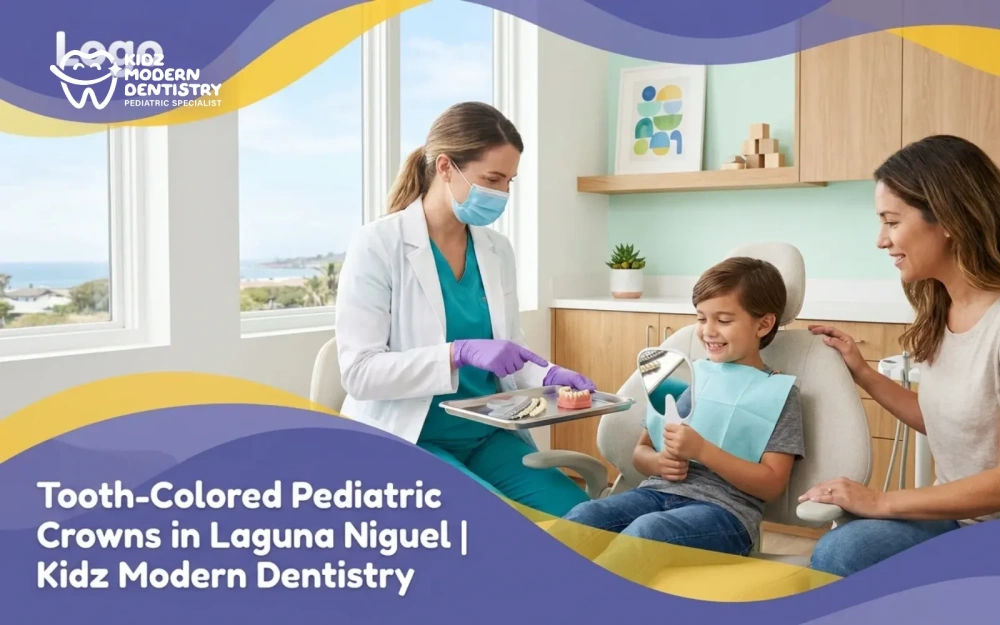
What are metal free tooth colored pediatric crowns and why might a child need one?
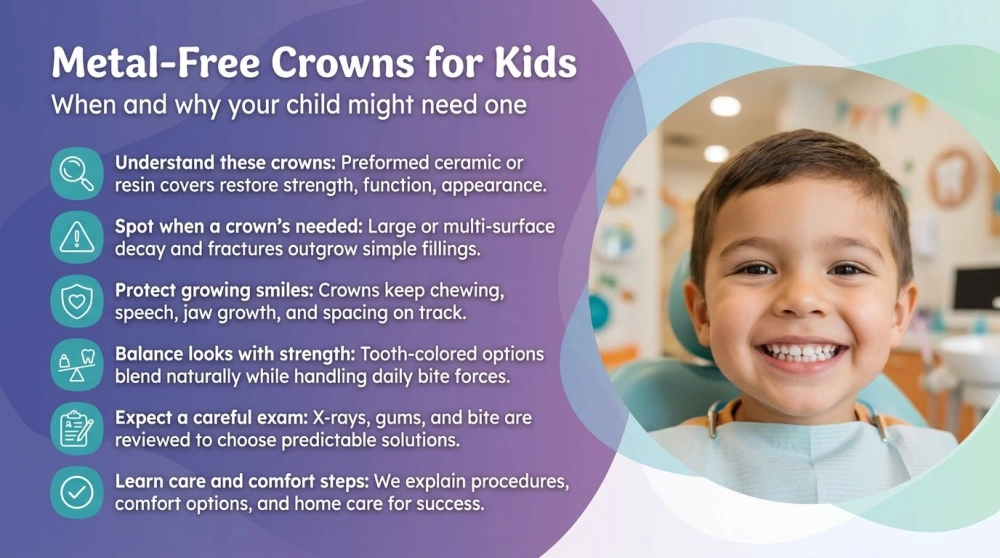
Metal free, tooth colored pediatric crowns are preformed ceramic or resin based restorations that cover a baby tooth to restore strength, function, and appearance after significant decay or injury. If your child has a large cavity, multiple surface decay, enamel defects, or a fracture that a simple filling cannot reliably repair, a crown can help protect the tooth until it naturally falls out. Keeping primary teeth healthy supports chewing, clear speech, jaw development, and comfortable spacing for future adult teeth [2]. Parents often prefer options that blend in with a child’s smile, which is why white crowns for baby teeth are popular choices for front teeth and many back teeth cases.
For many families, aesthetics matter, and durability matters too. Tooth-colored pediatric crowns are designed to provide a natural look while standing up to daily chewing. At the same time, clinical decisions are based on your child’s needs and safety, not only appearance. We review X rays, evaluate gum health, and consider bite forces to help you choose a solution that balances strength, comfort, and looks [3].
To help you make an informed decision, we explain what each material can do, how the procedure works, ways to keep your child comfortable, and how to care for the new crown at home. We also discuss when we can use conservative approaches and when a crown is the most predictable path to stop disease from progressing.
How do zirconia pediatric crowns compare to stainless steel crowns in kids?
Zirconia pediatric crowns are made from a strong, tooth colored ceramic known for excellent wear resistance, biocompatibility, and polished surfaces that can help resist plaque accumulation when properly maintained [6]. Stainless steel crowns have been the long standing standard for primary molars and remain a dependable option with extensive research support for strength and longevity in multi surface decay and after pulp therapy [4].
- Appearance Zirconia crowns are tooth colored and designed to look natural in the smile. Stainless steel crowns are silver colored and more visible.
- Preparation Zirconia crowns are rigid and non adjustable, so the tooth is shaped precisely to fit the preformed crown. Stainless steel crowns can be trimmed and crimped, sometimes requiring less precision during placement, and certain techniques may be more conservative depending on the case [3].
- Durability Both materials are strong when placed correctly. Cochrane evidence supports the long term success of preformed metal crowns for decayed primary molars compared with fillings in many cases [4], while emerging clinical literature reports high short term survival and parental satisfaction with zirconia crowns on primary teeth [7].
- Gum health Smooth, polished zirconia surfaces may help with plaque control when brushing and flossing are consistent. Stainless steel crowns also perform well when margins are adapted and home care is good. Either option requires daily hygiene and regular checkups [3].
We talk through these differences together so you can choose what feels right for your child. If you are deciding between stainless steel vs zirconia crowns, we will share case photos, discuss your child’s bite, and consider the tooth’s location, chewing forces, and risk of new cavities.
What materials are used in white crowns for baby teeth and are they safe?
Many white crowns for baby teeth are made from zirconia, a ceramic that has been widely studied for strength and compatibility with oral tissues [6]. Some aesthetic options also combine a durable substructure with a tooth colored facing. When adhesives and cements are used, your dentist selects child friendly materials and techniques aimed at a secure fit and gentle tissue response.
Parents sometimes ask about BPA in dental materials for kids. The American Dental Association reports that potential BPA exposure from dental materials is low and occurs primarily at the time of placement, and recommends steps to minimize exposure when appropriate. Evidence to date has not shown harm from dental materials at these low exposure levels, and professional guidance continues to support their use when indicated [5].
If you prefer BPA free dental materials for kids, let us know. We can discuss options and explain any tradeoffs. Our goal is to match safe, proven materials with your child’s clinical needs and your family’s preferences.
When is a pediatric crown recommended for cavities or fractures?
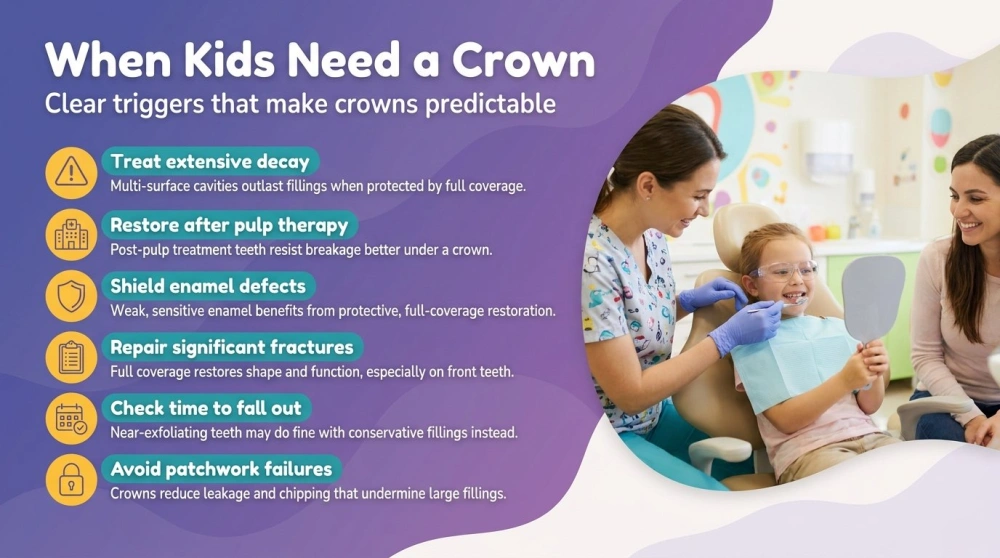
We recommend a pediatric crown when there is not enough healthy tooth structure to support a long lasting filling, when there are multiple surfaces involved, after pulp therapy such as a pulpotomy, for enamel defects like hypoplasia, or for fractures that extend beyond the enamel. These situations make a strong, full coverage option more predictable than patchwork fillings that might chip or leak over time [3].
- Large decay Multi surface cavities in primary molars are common, and a crown can reduce the risk of future breakdown in high stress areas [4].
- After pulp therapy When decay reaches the nerve, pulp treatment followed by a full coverage restoration is often recommended to protect the tooth [8].
- Enamel defects Developmental conditions can leave teeth brittle or sensitive, and a crown can help shield the tooth from wear and discomfort [3].
- Fractures For many primary tooth fractures, a full coverage crown can restore shape and function, especially on front teeth where appearance matters.
We also consider the expected time until the tooth naturally falls out. If a tooth is close to exfoliation and the problem is small, a conservative filling may be reasonable. If a tooth has years to go and the defect is significant, a crown can be a smart investment in comfort and function.
How are minimally invasive pediatric crowns prepared and placed?
For zirconia pediatric crowns, we take careful steps to preserve tooth structure while preparing a uniform shape for a precise fit. We remove soft decay, smooth edges, and try in the preformed crown to ensure proper seating. The crown is then cemented with a biocompatible dental cement and checked for the child’s bite. For stainless steel options, the crown is selected, adjusted, and crimped for a custom fit before cementation. Our approach aims to minimize time in the chair and keep your child comfortable throughout [3].
We practice child centered behavior guidance and use gentle local anesthesia only where needed. If your child is anxious or has special healthcare needs, we can talk through additional comfort strategies, including minimal or moderate sedation when appropriate under current pediatric guidelines [9]. Your child’s safety is our top priority, and we follow evidence based protocols for every step.
How durable are baby tooth crowns and how long do they last?
Durability depends on the material, the size of the cavity, the child’s bite and habits, and daily home care. Research shows preformed crowns for primary molars, especially stainless steel, have strong longevity compared with multi surface fillings in many cases [4]. Zirconia crowns have demonstrated promising short to medium term clinical success and high parental satisfaction, with ongoing research adding to the evidence base [7].
Good brushing and flossing, a tooth friendly diet, and routine checkups all support long lasting results. We will show you how to clean around the crown and what to watch for as your child grows. If the crown is placed on a tooth that still has several years before it falls out, we plan follow up visits to monitor health, bite, and spacing.
Can tooth colored crowns for kids be used on front and back teeth?
Yes. Tooth colored crowns for kids can be used on front teeth where appearance is critical and on many back teeth where strength and aesthetics are both important. Zirconia options are especially popular for front teeth that have extensive decay or fractures. For back teeth, we evaluate chewing forces, spacing, and the child’s risk for new decay to determine if an aesthetic option is suitable or if a traditional approach is the better choice based on durability needs [3].
We also consider how the crown will interact with the gumline and neighboring teeth. A properly placed crown supports healthy gum tissue and can be cleaned like a natural tooth. We will teach your child a simple routine so the new restoration looks and feels great every day.
What should parents know about BPA free dental materials for kids?
Parents deserve clear information about what goes into a child’s mouth. Some dental adhesives can have trace amounts of BPA derivatives that convert to BPA at very low levels at placement. The American Dental Association notes that exposure levels are low and brief and offers techniques to reduce potential exposure, such as polishing and rinsing after adhesive procedures [5]. If you value BPA free choices, we can discuss which cements and materials meet that preference and whether there are clinical considerations to weigh.
- Ask about material choices We can explain the cement and adhesive used and why it is selected for your child’s tooth.
- Request rinsing or surface cleaning steps Your dental team can take additional measures after placement, consistent with professional guidance [5].
- Focus on prevention A cavity prevented is a cavity that never needs adhesive materials. Fluoride use and sealants where indicated support prevention [12].
How do you keep kids comfortable including sedation dentistry for children?
Comfort begins with communication. We explain every step in child friendly language, use topical numbing gels, and practice tell show do methods to build trust. For anxious children or those with special healthcare needs, pediatric sedation dentistry can be considered. Minimal or moderate sedation is provided only when appropriate, with careful screening, informed consent, and continuous monitoring that follows national pediatric sedation guidelines developed by pediatric experts and anesthesiology partners [9].
In California, sedation services in dental offices are regulated, and providers must meet training, equipment, and permit requirements. That includes age appropriate emergency equipment and trained personnel who monitor children throughout the visit [10]. If your child might benefit from these options, we will review benefits, risks, and alternatives so you can make a confident choice.
What happens during same day pediatric dental emergencies involving broken baby teeth?
We reserve time for urgent visits so that children with pain, fractures, or swelling can be seen quickly. If a primary tooth breaks, we first assess nerve involvement, check for soft tissue injury, and take any necessary X rays. For small chips, smoothing or a quick bonding repair might be all that is needed. For larger fractures or deep decay, a crown can stabilize the tooth and restore comfort. We follow evidence based trauma guidance for baby teeth that prioritizes comfort and safety and aims to protect developing permanent teeth [11].
Families appreciate having a plan when the unexpected happens. Call us right away and we can advise you on steps like saving any broken pieces, applying a cool compress, and avoiding biting on the injured side until we evaluate the tooth. When appropriate, we offer same day pediatric dental emergencies care to help your child feel better fast.
How do we care for a childs crown at home to keep it looking natural?
Home care is simple. Brush twice daily with a fluoride toothpaste and a soft brush, floss once a day, and keep regular checkups. Show your child how to clean gently at the gumline around the crown. Avoid very sticky candies and hard objects like ice or pen caps that can stress any restoration. Maintain a tooth friendly diet rich in water, vegetables, dairy, and lean proteins to support oral health [2].
- Brush the gumline Angle bristles into the gumline around the crown to remove soft plaque.
- Floss daily Slide the floss under the contacts to keep the sides of the crown and neighboring teeth clean.
- Rinse after snacks Water between meals helps clear sugars and acids.
- Keep checkups Routine visits let us monitor fit, gum health, and bite as your child grows. We follow stringent infection prevention practices to keep visits safe for every family [13].
What are the benefits of tooth-colored fillings for kids versus crowns?
Tooth colored fillings for kids are excellent for small to moderate cavities, especially when decay is limited to one surface. Fillings can preserve more natural tooth structure and be completed quickly. When decay is extensive or involves multiple surfaces, a crown is often more reliable for long term function and to reduce the chance of new fractures or leakage at the edges. We use cavity treatment options that fit the size of the problem so we do not over treat or under treat the tooth [3].
In very early decay or when traditional drilling is not the best first step, we can also discuss non invasive or minimally invasive approaches such as silver diamine fluoride to slow decay progression in selected cases, often as a bridge to a definitive restoration later when appropriate [14]. Every plan is individualized for your child’s comfort, safety, and oral health goals.
What does treatment cost and how does insurance typically handle pediatric dental crowns?
Costs vary based on the tooth, the extent of decay, the material selected, whether pulp therapy is needed, and the child’s comfort needs. Many dental plans offer coverage for pediatric dental crowns when they are medically necessary. Coverage for aesthetic options may differ by plan. We provide estimates in advance, help you review your benefits, and send pre authorizations when advised. If your family does not have insurance, we will outline payment options clearly so you can plan with confidence.
We encourage you to bring your insurance information and any questions about your plan. Our team has extensive experience coordinating benefits for families and can help you understand typical coverage for fillings, crowns, X rays, and visits so there are no surprises.
What guidelines and regulations apply in California for pediatric crown treatment?
Clinical care is guided by national best practices and state regulations. We align treatment planning with the American Academy of Pediatric Dentistry’s restorative and pulp therapy best practices so that decisions are consistent with current pediatric standards [3][8]. If sedation is considered, we follow the joint pediatric sedation guideline for monitoring and management, including pre visit evaluation, fasting instructions where applicable, and continuous physiologic monitoring [9].
In California, dentists who provide sedation must hold the appropriate permits, maintain approved equipment, and document staff training as outlined by the Dental Board of California. The state requires specific emergency preparedness, record keeping, and reporting practices designed to protect patients [10]. In addition, we adhere to Centers for Disease Control and Prevention recommendations on infection prevention and safe care in dental settings [13].
Why choose Kidz Modern Dentistry in Laguna Niguel for natural looking pediatric crowns?
As a pediatric dentist in Laguna Niguel, CA, our practice focuses on evidence based care that feels comfortable and clear for families. We help you compare options for front and back teeth, including ceramic choices designed for a natural appearance. We also explain when a traditional approach might be best for strength based needs. Our team balances appearance and durability using current guidance from pediatric organizations and peer reviewed research [3][4].
We provide comprehensive pediatric dental crowns with a supportive, step by step experience. From the first visit, we listen to your goals, review images together, and answer every question in plain language. If you are exploring Tooth-colored pediatric crowns in Laguna Niguel, we can show you how these restorations look and function in real life and what to expect during and after the visit.
- Kid friendly comfort methods Gentle numbing, behavioral guidance, and calming techniques are standard. When indicated, we offer pediatric sedation consistent with national guidelines and California permit requirements [9][10].
- Preventive focus We pair restorations with cavity risk assessment, fluoride guidance, and diet coaching so repaired teeth stay healthy longer [12].
- Same day attention for urgent needs We make time for urgent visits and dental injuries so your child can be comfortable as quickly as possible, guided by recognized trauma protocols for baby teeth [11].
- Clear choices We lay out aesthetic and traditional options, discuss expected longevity, and review home care so you can choose confidently for your child.
- Personal attention You work directly with pediatric dental professionals who know your child’s smile and growth pattern, not a rotating team.
Our service area includes Laguna Niguel and neighboring communities throughout South Orange County. Families appreciate practical scheduling, on time visits, and a cheerful environment that helps kids relax. We are happy to coordinate with your child’s pediatrician or specialists when helpful.
We understand how important it is for your child to feel secure, especially during longer visits. We pace appointments to your child, provide breaks, and explain each step before we do it. You will leave with written care instructions and our number in case you have questions later. If you would like to talk through options for Tooth-colored pediatric crowns, we welcome your call at +1 949 273 0110.
Frequently asked questions about pediatric crowns at Kidz Modern Dentistry?
Will my child feel pain during the procedure?
We use topical gels and local anesthesia to numb the tooth so your child is comfortable. We also offer child friendly distraction and relaxation techniques. If anxiety is a concern, we can discuss minimal or moderate sedation options in line with pediatric guidelines [9].
Are zirconia crowns safe for children?
Zirconia is a ceramic that has been widely used in dentistry and studied for strength and biocompatibility. When placed properly and cared for with good hygiene, zirconia crowns are considered a safe and effective option for many children [6].
How long do crowns on baby teeth last?
Many crowns can last until the tooth naturally falls out. Longevity depends on the child’s age, bite, habits, and home care. Evidence supports strong performance for preformed crowns, especially on molars with multi surface decay [4].
Can a crown be done in one visit?
Yes, most pediatric crowns are preformed and placed in a single appointment after tooth preparation. In urgent cases, we often provide same day care to relieve discomfort and stabilize the tooth.
What if my child has a cavity but is too young for a long visit?
We can discuss interim approaches like silver diamine fluoride to slow decay and buy time until your child can tolerate a longer visit, then complete definitive treatment later when appropriate [14].
How do you prevent new cavities around a crown?
Daily brushing with fluoride toothpaste, flossing, a tooth smart diet, and routine checkups are the keys. We will also reassess risk and recommend fluoride or sealants for other teeth as needed [12].
Will the crown look like my child’s natural tooth?
Tooth colored crowns are made to blend with the smile. We match size and shape to your child’s dentition and discuss shade options when available so the result looks natural in photos and in person.
Is a crown always better than a filling for kids?
No. Many small cavities do well with a filling. We recommend a crown only when the tooth needs full coverage for reliable function and protection, based on best practice guidance [3].
What happens if a crown comes loose?
Save the crown if possible and call us. We will evaluate the tooth, clean the area, and recement or replace the crown as needed. Avoid giving your child sticky foods until the tooth is repaired.
How can I schedule a visit in Laguna Niguel CA?
Call our office at +1 949 273 0110 or send us a message to request an appointment. We are here to help you explore options that fit your child’s needs and your family’s goals.
References
- Children’s Oral Health Statistics and Prevention Tips – Centers for Disease Control and Prevention
- Children’s Oral Health Overview – National Institute of Dental and Craniofacial Research
- Restorative Dentistry Best Practices – American Academy of Pediatric Dentistry
- Preformed Crowns for Decayed Primary Molars Review – Cochrane Library
- Bisphenol A and Dental Materials – American Dental Association
- Zirconia as a Dental Biomaterial Review – National Center for Biotechnology Information
- Clinical Performance and Parental Satisfaction of Pediatric Zirconia Crowns Systematic Review – PubMed
- Pulp Therapy for Primary and Immature Permanent Teeth – American Academy of Pediatric Dentistry
- Monitoring and Management of Pediatric Patients During Sedation – American Academy of Pediatric Dentistry
- Sedation Permit Requirements – Dental Board of California
- IADT Guidelines for Primary Dentition Injuries 2020 Update – PubMed
- Use of Fluoride in Caries Prevention – American Academy of Pediatric Dentistry
- Infection Prevention in Dental Settings Summary – Centers for Disease Control and Prevention
- Use of Silver Diamine Fluoride for Caries Management – American Academy of Pediatric Dentistry
Common Questions About This Topic
Find answers to frequently asked questions related to this article.
