- What should parents know when choosing kids toothpaste?
- How do fluoride and hydroxyapatite work to protect children’s teeth?
- What does the research say about cavity prevention with fluoride toothpaste for kids?
- What does current evidence show about hydroxyapatite toothpaste for kids?
- How safe are fluoride and hydroxyapatite for children?
- When should children start fluoride toothpaste and how much should they use?
- How do you choose between hydroxyapatite and fluoride for your child?
- What label details and ingredients should parents look for on pediatric toothpaste?
- How do age, risk factors, and local water fluoride levels affect your choice?
- What brushing routines help kids get the most benefit from their toothpaste?
- How can parents reduce the risk of dental fluorosis while protecting against cavities?
- Which common myths about kids toothpaste should parents ignore?
- What do local parents in Laguna Niguel, Aliso Viejo, and Laguna Hills ask most often?
- Why partner with a pediatric dentist for personalized toothpaste advice?
- How does Kidz Modern Dentistry support your child’s oral health journey?
- References
What should parents know when choosing kids toothpaste?
Picking toothpaste for your child can feel like a small decision, but it has a big impact on daily oral health. Parents in Laguna Niguel, Aliso Viejo, and Laguna Hills often ask whether hydroxyapatite toothpaste for kids can stand in for fluoride toothpaste for kids, and how to decide what is safest and most effective. Toothpaste is just one part of a complete plan for preventing cavities, and the right choice can change as your child grows and as their cavity risk changes. National health organizations emphasize that tooth decay remains one of the most common chronic conditions in childhood, which is why smart daily habits matter so much [4].
In this guide, we break down the science behind both fluoride and hydroxyapatite, explain how to match toothpaste type and strength to your child’s age and risk, and share practical steps for safe use. We include evidence summaries from professional associations, federal agencies, and peer reviewed studies so you can feel confident about your next trip to the store [2] [3] [11].
Pediatric preventive dentistry helps you combine the right toothpaste with professional care, diet guidance, and habits that fit your child’s needs. When you understand what each ingredient does and how to use it safely, you can help your child build strong teeth and simple routines for life.
How do fluoride and hydroxyapatite work to protect children’s teeth?
What is fluoride and how does it strengthen enamel?
Fluoride is a mineral that helps prevent tooth decay by speeding up remineralization of weak enamel and making it more resistant to acid from foods and bacteria. When used in toothpaste at appropriate concentrations, fluoride reduces the risk of cavities in both baby and permanent teeth. Large evidence reviews show a clear caries preventive effect across products with sufficient fluoride concentration [3].
What is hydroxyapatite and why is it called biomimetic?
Hydroxyapatite is a form of calcium phosphate that mimics the mineral that already makes up most of tooth enamel and dentin. Because it is similar to natural tooth mineral, hydroxyapatite can integrate with the enamel surface, helping to fill microscopic defects and support remineralization. Researchers describe it as a biomimetic ingredient that may improve surface hardness and early lesion repair in certain situations [11].
How do these ingredients compare in everyday use?
Both ingredients aim to protect against early demineralization and support enamel repair. Fluoride has a long track record and broad guideline support for children’s caries prevention [2] [3]. Hydroxyapatite is supported by growing but more recent clinical research, including randomized trials in specific populations, and may be considered when parents prefer a non fluoride option in close consultation with a pediatric dentist [10] [12].
What does the research say about cavity prevention with fluoride toothpaste for kids?
What level of evidence supports fluoride toothpaste for children?
The evidence for fluoride toothpaste is extensive. A Cochrane review found that toothpaste with fluoride at appropriate concentrations reduces cavities in children and adolescents compared with non fluoride toothpaste [3]. Professional guidelines from pediatric and general dental organizations recommend fluoride toothpaste from the eruption of the first tooth with a tiny smear for very young children and a pea sized amount for older children, used under adult supervision [1] [2].
Does fluoride toothpaste work even if a child already has early enamel changes?
Yes. Fluoride promotes remineralization, which can slow or reverse early white spot lesions if combined with good brushing technique and diet changes. For higher risk children, additional professional fluoride varnish applications may be recommended in primary care or dental settings to enhance protection [13].
How does community water fluoride relate to toothpaste use?
Public health authorities set a recommended level of fluoride in community water to balance cavity prevention with minimal risk of fluorosis, currently at 0.7 milligrams per liter in the United States [6]. Even with optimal water levels, twice daily brushing with fluoride toothpaste remains an important part of daily prevention [4] [5].
What does current evidence show about hydroxyapatite toothpaste for kids?
What studies exist on hydroxyapatite and caries prevention?
Hydroxyapatite toothpaste has been studied in several clinical and laboratory settings. A randomized trial in patients with orthodontic appliances found that a microcrystalline hydroxyapatite toothpaste performed comparably to a fluoride control in preventing early caries lesions during treatment [10]. Laboratory and clinical studies also suggest hydroxyapatite can support remineralization and reduce sensitivity, though more pediatric specific research is still emerging [11] [12].
Is hydroxyapatite approved and considered safe in oral care?
Hydroxyapatite has been evaluated for safety as a cosmetic and oral care ingredient in various jurisdictions. Reviews describe it as biocompatible and similar to tooth mineral, and safety assessments have supported its use in toothpaste within specified parameters [11]. Parents considering non fluoride toothpaste for toddlers can discuss hydroxyapatite options with their pediatric dentist to ensure that overall cavity risk and diet are carefully managed.
Does hydroxyapatite replace fluoride in all cases?
Not necessarily. Fluoride remains a cornerstone of caries prevention in many guidelines, especially for children at moderate to high risk of decay [2] [3]. Hydroxyapatite may be considered when families prefer a non fluoride toothpaste for toddlers, hydroxyapatite can be discussed as part of a supervised plan with regular professional monitoring [11].
How safe are fluoride and hydroxyapatite for children?
What is dental fluorosis and how can it be avoided?
Dental fluorosis is a change in the appearance of enamel that can occur if children ingest too much fluoride during the years when teeth are forming. It usually appears as faint white streaks and is typically mild in the United States. Using the right amount of toothpaste and supervising brushing are effective ways to reduce risk while still protecting against cavities [5] [6].
What label warnings should parents know about?
Over the counter fluoride toothpaste is regulated with Drug Facts labeling. Labels include instructions for use, active ingredient concentration, and a warning to keep out of reach of children under 6 and to seek professional help or contact a poison control center if more than used for brushing is swallowed [7]. Always review the Drug Facts label and follow age based use amounts.
Is hydroxyapatite safe if swallowed?
Hydroxyapatite is a calcium phosphate mineral similar to tooth structure. Safety reviews and research describe it as biocompatible in oral care applications when used as directed [11]. As with any toothpaste, supervise brushing to limit swallowing and teach children to spit as they are able.
When should children start fluoride toothpaste and how much should they use?
When is it appropriate to start fluoride toothpaste?
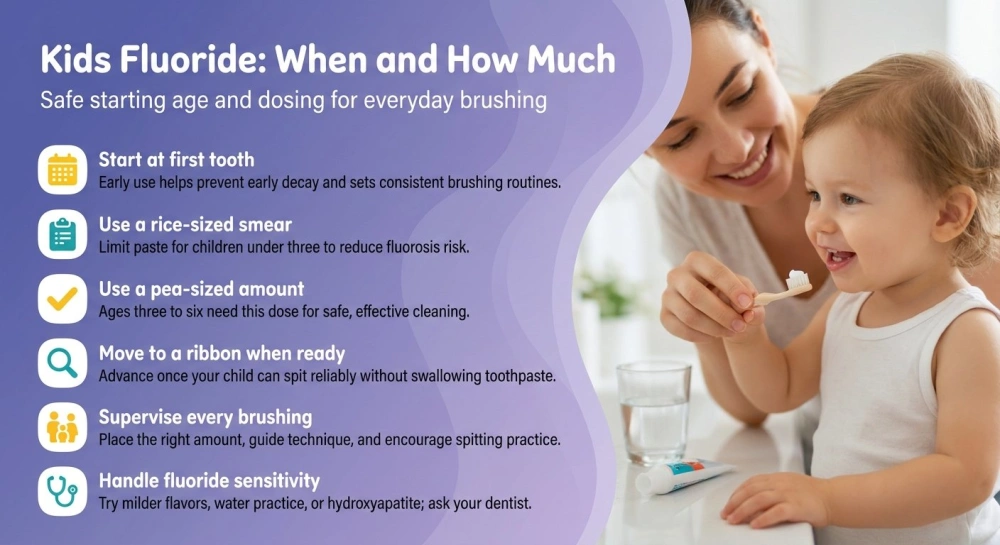
Authoritative guidance supports starting fluoride toothpaste when the first tooth erupts, which can be as early as around 6 months. Use a tiny smear about the size of a grain of rice for children younger than 3, and a pea sized amount for children ages 3 to 6. Always supervise brushing to help children use the correct amount and to encourage spitting as they learn [1] [2].
How much toothpaste for kids is recommended at different ages?
The amount depends on age and swallowing ability. For infants and toddlers under 3, a rice sized smear is typically recommended. For children 3 to 6, a pea sized amount is advised with adult supervision. For older children who can reliably spit, a standard ribbon can be used. If your child is at higher risk for cavities, your pediatric dentist may tailor these recommendations [2].
What if a child does not tolerate fluoride toothpaste?
Some kids just won’t cooperate. Maybe the mint burns, maybe they gag, maybe spitting is still a mystery. Loop in your pediatric dentist and ask what they’d try. A few things that tend to help: practicing with plain water first, testing a milder flavor at the same strength, or going with a hydroxyapatite option for a stretch while the habits catch up. The real goal here is pretty simple, which is getting plaque off every day with a paste your child will actually tolerate.
How do you choose between hydroxyapatite and fluoride for your child?
What factors should guide your choice?
Start with the basics. How old is your kid, how prone are they to cavities, what’s their snacking situation, how much fluoride are they already getting from water, how cooperative are they at the sink, and honestly, what does your family actually feel comfortable with? For most families, fluoride toothpaste is still the go-to because the evidence behind it is pretty solid and the professional guidance is clear [2] [3] . But if you’re set on a non fluoride toothpaste for toddlers, hydroxyapatite is worth bringing up with your dentist as part of a supervised plan with regular checkups [11] .
How can a dentist help you personalize the plan?
A pediatric dentist can estimate cavity risk, review your child’s brushing skills, and look at the early signs of enamel change. Together, you can select a remineralizing toothpaste for children that fits current needs and plan to reassess as your child grows. Pediatric preventive dentistry supports you with coaching, varnish when indicated, and a schedule that catches small changes early.
What does this look like in real life?
Two kids, two totally different plans. A preschooler who’s snacking constantly and showing early white spots usually needs a fluoride toothpaste at the right concentration, a pea sized dab, a parent standing right there, plus some honest conversations about the between-meal grazing and regular visits to catch any changes early. A toddler who can’t stand the flavor or the foamy texture is a different puzzle. Your dentist might walk you through a training phase with really small amounts, and hydroxyapatite could play a role during that transition, as long as you’re coming back for close follow up.
What label details and ingredients should parents look for on pediatric toothpaste?
Which active ingredient and concentration should you confirm?
Check the Drug Facts label for the active ingredient and its concentration in parts per million of fluoride when applicable. Common examples include sodium fluoride at levels allowed for anticaries products. Matching concentration to your child’s age and risk is part of choosing the best toothpaste for children in your home [7].
Does the ADA Seal of Acceptance matter?
The ADA Seal of Acceptance indicates that a product has been independently reviewed for safety and effectiveness according to program criteria. While not required, it can be a helpful shortcut when comparing multiple options on the shelf [8].
What about flavors, foaming agents, and sweeteners?
Flavor matters. A lot, actually. If your kid hates the taste, you can forget about a smooth two minutes at the sink, so go with something they’ll put up with. Milder flavors tend to win. The foam thing is real too. Some pastes get super foamy and that bothers certain kids, especially if their mouth gets irritated, and when that happens it’s worth asking your dentist about other options. Most children’s toothpastes use sweeteners that don’t cause cavities, which is probably why your kid actually tolerates it. Not sure what you’re looking at? Just bring the tube to your next appointment and let your care team walk through the ingredients with you.
How do age, risk factors, and local water fluoride levels affect your choice?
Why do local water fluoride levels matter?
Community water typically targets a fluoride level that optimizes cavity prevention and minimizes fluorosis risk. The current public health recommendation in the United States is 0.7 milligrams per liter. Families can look up their water system on public resources to understand local levels and incorporate that information into toothpaste decisions with their dentist [6] [14].
How does cavity risk change with habits and history?
Risk increases with frequent snacking, sugary drinks, limited brushing, and a history of cavities. Children with enamel defects, orthodontic appliances, or dry mouth may also need more protection. For higher risk children, professional guidance typically favors fluoride toothpaste at appropriate strength, careful dosing, and supervised brushing [2] [3].
How do you adapt as your child grows?
As children gain motor skills and can spit reliably, parents can move from a rice sized smear to a pea sized amount, and eventually to a standard ribbon. Reassess every 6 to 12 months with your dentist to confirm whether your current plan remains the right fit based on diet, school routines, and any orthodontic changes.
What brushing routines help kids get the most benefit from their toothpaste?
How often should kids brush?
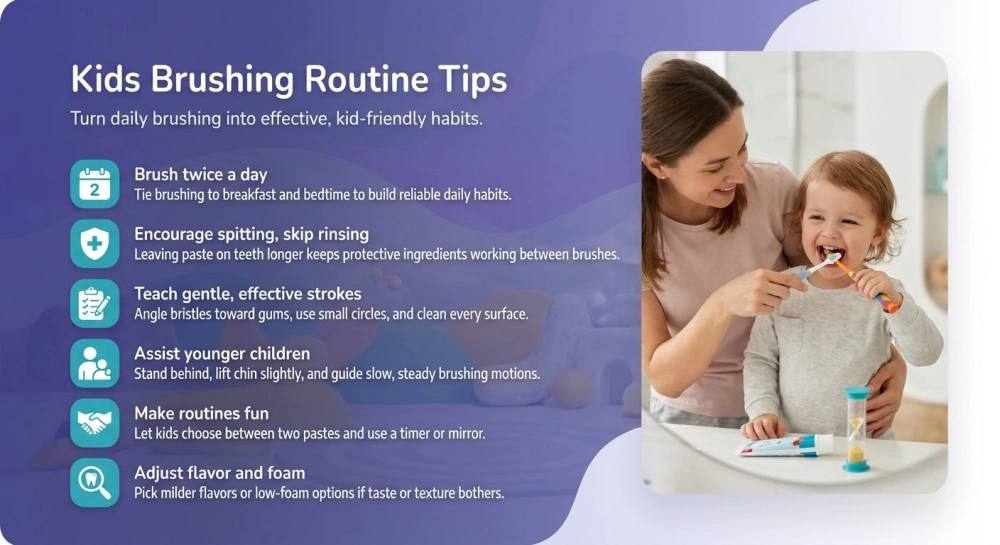
Brushing twice a day with an effective toothpaste is a key step for cavity prevention. Pairing morning and bedtime routines makes consistency easier for families. Encouraging kids to spit rather than rinse can leave more beneficial ingredients on the enamel surface, which can support ongoing protection [4].
What techniques make brushing more effective?
Show children how to angle bristles toward the gumline, make gentle circles, and cover all surfaces. For younger children, a parent can stand behind, tilt the chin slightly upward, and guide motions. A simple routine that lasts long enough to clean all surfaces helps fluoride or hydroxyapatite work on the areas that need it most.
How can parents troubleshoot resistance at home?
Keep toothpaste flavors mild for sensitive kids. Let children pick from two parent approved options to increase buy in. Use a small mirror or timer to make it fun. If foaming bothers your child, talk with your dentist about low foam options. Remember that the goal is gentle, thorough plaque removal with a safe amount of paste.
How can parents reduce the risk of dental fluorosis while protecting against cavities?
What are the top steps to balance benefits and risks?
- Match the amount to age Use a rice sized smear for children younger than 3 and a pea sized amount from 3 to 6 under supervision [1] [2].
- Supervise brushing Help children place the right amount and encourage spitting as skills develop [5].
- Know your water level Check community water fluoride levels and share this information with your dentist when discussing toothpaste choices [6] [14].
- Use products as labeled Follow Drug Facts label guidance and keep toothpaste out of reach between brushings [7].
When should you talk with a dentist about additional fluoride?
Ask your dentist about professional fluoride varnish for children with elevated risk or early enamel changes. Primary care pediatric providers may also apply varnish for young children as part of comprehensive prevention strategies [13].
Which common myths about kids toothpaste should parents ignore?
Is more toothpaste always better?
No. More is not better for kids. Using more than the age appropriate amount does not add protection and can increase the chance of swallowing excess fluoride. Stick to a rice sized smear for very young children and a pea sized amount for preschool and early elementary ages [1] [2].
Do natural toothpastes always protect against cavities?
Not all natural toothpastes are designed for cavity prevention. If a toothpaste does not contain an active anticaries ingredient such as fluoride or hydroxyapatite, it may not provide the same level of protection. Look for evidence based active ingredients and consider products with recognized professional seals [8].
Is fluoride unnecessary if my child drinks tap water?
Even in communities with optimally fluoridated water, brushing with fluoride toothpaste twice a day remains a widely recommended practice for added local protection on tooth surfaces [4] [5].
What do local parents in Laguna Niguel, Aliso Viejo, and Laguna Hills ask most often?
Which option is better for a toddler who cannot spit yet?
For toddlers who cannot spit, many professional bodies still recommend fluoride toothpaste from the first tooth with a rice sized smear, used under careful supervision. Some families prefer to start with hydroxyapatite during brushing skill building. Discuss your child’s habits, diet, and risk with a pediatric dentist to decide what fits best now and how to transition as your child grows [1] [2] [11].
How can we support cavity prevention toothpaste habits during busy school weeks?
Keep a routine tied to consistent events like breakfast and bedtime. Use a soft child sized brush and pick a paste flavor your child accepts. If your child has braces, ask your dentist about tools and pastes that make it easier to clean around brackets. If you are looking for support, Pediatric preventive dentistry can coach your family on small changes that make a big difference.
Does local water quality change what we should buy?
Southern California families can check publicly available tools to see local water fluoride levels. Share this information with your dentist when choosing concentration and type. Your child’s risk, brushing skills, and diet will also guide your decision [6] [14].
Pediatric preventive dentistry in Laguna Niguel helps local families align toothpaste choices with real world routines, school schedules, and snack patterns so that prevention works in daily life.
Why partner with a pediatric dentist for personalized toothpaste advice?
How does a pediatric dentist personalize care for your child?
A pediatric dentist evaluates your child’s unique risk factors, enamel health, and daily habits. They help you weigh fluoride toothpaste for kids and hydroxyapatite toothpaste for kids based on the latest evidence and your preferences. They can also time preventive visits to reinforce skills and spot any changes early [2] [3].
What can you expect during a preventive visit?
Visits typically include a gentle exam, coaching on brushing and flossing, and discussion of toothpaste selection and dosage by age. When appropriate, a dentist may recommend varnish or sealants, and help you choose cavity prevention toothpaste options that fit your child’s needs and taste preferences.
How does professional guidance support long term success?
Regular preventive care aligns home routines with clinical findings. That teamwork helps parents feel confident about when to start fluoride toothpaste, how much toothpaste for kids is right, and whether a remineralizing toothpaste for children could be a good fit at a given stage.
How does Kidz Modern Dentistry support your child’s oral health journey?
Where do we serve families and what can you expect at your visit?
Kidz Modern Dentistry welcomes children from Laguna Niguel, Aliso Viejo, and Laguna Hills, CA. Our team focuses on friendly guidance, clear education, and gentle techniques that help kids feel comfortable. From first teeth through the teen years, we help you choose kids toothpaste that matches your child’s age, risk, and preferences, and we revisit that plan as your child grows.
How do our services connect to your questions about kids toothpaste?
We help parents compare hydroxyapatite toothpaste for kids and fluoride toothpaste for kids in the context of your child’s overall risk and daily routine. We review product labels with you, show how much to place on the brush, and share simple coaching tips for successful home care. Our clinicians stay current with research so that recommendations reflect up to date guidance and evidence [2] [3] [11].
What is our approach to comfort and access for families?
Children deserve visits that feel calm and positive. Our office offers same day support for urgent needs when possible and uses kid friendly behavior techniques and sedation options when appropriate, always with safety and communication at the center of care. Parents have direct access to qualified professionals who listen and explain each step in plain language.
What tools and processes help us monitor progress over time?
We combine thorough clinical exams with preventive planning, including fluoride varnish when indicated and sealants on eligible molars. We review brushing technique at each visit, revisit toothpaste choices as habits and diets change, and share personalized checklists that make home care easier. For families seeking a pediatric dentist Laguna Niguel or a kid friendly dentist Aliso Viejo, we tailor scheduling and reminders to fit busy lives.
How do we measure progress and celebrate wins together?
We focus on achievable milestones like consistent twice daily brushing, correct paste amounts by age, and fewer new spots of early demineralization. When children meet goals, we celebrate with positive reinforcement and next step plans that keep momentum going. This supportive style helps families build confidence and consistency.
What experience do we bring to your child’s care?
Our pediatric team brings years of combined experience in children’s dental care Laguna Hills and surrounding communities. We support infants, toddlers, school age children, and teens, and we educate parents on choosing and using the best toothpaste for children in practical daily routines. We welcome questions about non fluoride options, remineralizing toothpaste for children, and product labels so you feel prepared at home.
How can you reach us and plan your next step?
If you are comparing options like hydroxyapatite or fluoride for your child, a quick conversation can help you move forward with clarity. Call Kidz Modern Dentistry at +1 949 273 0110 to schedule a visit or ask a question. We are here to support your family with information, prevention, and caring follow up that fits your goals.
References
- ADA recommends fluoride toothpaste for all children starting at first tooth – American Dental Association
- Best Practices Fluoride Therapy – American Academy of Pediatric Dentistry
- Fluoride toothpastes of different concentrations for preventing dental caries – Cochrane Library
- Children’s Oral Health Basics – Centers for Disease Control and Prevention
- Community Water Fluoridation – Centers for Disease Control and Prevention
- U.S. Public Health Service recommendation for fluoride concentration in drinking water – Public Health Reports
- Anticaries drug products for over the counter human use – Electronic Code of Federal Regulations
- Seal of Acceptance Program – American Dental Association
- Dental Caries in Children – National Institute of Dental and Craniofacial Research
- Randomized clinical trial on microcrystalline hydroxyapatite in caries prevention during orthodontic treatment – PubMed
- Synthetic hydroxyapatite as a biomimetic oral care ingredient – Materials Journal via PMC
- Remineralization effects of nano hydroxyapatite toothpaste on early caries lesions – PubMed
- Prevention of dental caries in young children primary care interventions – U.S. Preventive Services Task Force
- My Water’s Fluoride tool – Centers for Disease Control and Prevention
- Toothpastes overview – American Dental Association
Common Questions About This Topic
Find answers to frequently asked questions related to this article.
