
- Why do baby teeth matter for speech development?
- How does speech develop in early childhood?
- Which speech sounds rely on baby teeth and tongue placement?
- What does the tooth eruption timeline mean for articulation?
- Could missing front teeth cause a lisp in children?
- How do pacifier use and thumb sucking influence speech and bite?
- Do dental caries and oral pain affect early speech development?
- When should parents see a pediatric dentist about speech concerns?
- What can families do at home to support clear speech habits?
- How do dentists and speech language pathologists work together for speech concerns?
- What local and national guidelines should California parents know?
- What common questions do parents ask about baby teeth and speech?
- How does Kidz Modern Dentistry in Laguna Niguel support your child?
- References
Why do baby teeth matter for speech development?
Baby teeth do much more than help children chew and smile. They guide jaw growth, hold space for future adult teeth, and provide the contact points that help shape clear sounds. When your child experiments with new words, the tongue, lips, and cheeks learn to coordinate around the primary teeth and gums to create precise speech sounds. Small changes to tooth position, spacing, or bite can influence how air flows and how the tongue touches or approximates the teeth for sounds like s, z, t, d, f, v, and th. These are called sibilants and fricatives, and they often depend on steady tooth edges and predictable tongue placement for crisp articulation [1] [2].
Healthy primary teeth also make daily routines more comfortable. When children are free of tooth pain and infection, they can practice new words, eat a variety of textures, and rest well, all of which support early speech development. Nationwide data show that cavities remain common in children, which is a reminder that prevention and routine care matter for both oral health and the everyday learning that happens during play and conversation [4] [11].
How does speech develop in early childhood?
Speech develops in a predictable sequence as the brain, nerves, and muscles coordinate breathing, voicing, and movements of the tongue and lips. Early on, babies explore sounds through cooing and babbling. As baby teeth erupt and the bite evolves, children learn to shape airflow and contact points for more precise consonants. Many children produce early sounds like p, b, m, and n before they master later developing sounds like s and r. Developmental timelines vary, and mild articulation differences can be part of typical growth. Persistent difficulty with specific sounds, frustration with being understood, or drooling that affects speech clarity can be signs that a professional evaluation would help [1].
Why do some speech sounds emerge later than others?
Later developing sounds often require refined control of tongue placement and narrow airflow channels. For example, s and z depend on a fine groove in the tongue and steady incisor edges to direct air. These skills build over time with practice and exposure to language models. Structural factors, such as an anterior open bite or significant spacing, can alter tongue rest and movement patterns for sibilants in some children, which is one reason dental growth and articulation are often considered together in early speech development [2].
Which speech sounds rely on baby teeth and tongue placement?
Primary teeth and their alignment influence how the tongue and lips form several consonants. Here are common examples and how tooth position can play a role:
- Alveolar sounds such as t and d can involve the tongue tip contacting the gum ridge just behind the upper front teeth. Stable contact points support crisp release for these stop sounds [1].
- Labiodental sounds such as f and v involve the lower lip approaching or lightly contacting the upper front teeth. Changes to upper incisor position can influence the feel and timing of these sounds [1].
- Interdental and dental fricatives such as the th sounds often require light contact or close approximation of the tongue to the upper front teeth, which guides airflow [1].
- Sibilants such as s and z rely on a narrow midline tongue groove and a steady edge near the upper incisors to create a focused airflow. Gaps or altered bite relationships can contribute to a whistle or distortion in some children [2].
Not every child with spacing or a developing bite pattern will have articulation differences. Many children adapt well, and typical development continues as the mouth grows. Still, understanding how tongue placement and teeth interact can help you spot when reassurance is appropriate and when early guidance could help your child feel more confident.
What does the tooth eruption timeline mean for articulation?
Primary teeth erupt in a general sequence from the front to the back over the first three years. Front incisors usually appear first, followed by canines and molars. This timetable supports the gradual acquisition of new sounds as children gain more contact points and chewing function. While exact timing varies, most children will have a full set of 20 primary teeth by age three, which aligns with growth in vocabulary and sound variety. Eruption charts from professional associations offer helpful visuals for what to expect and when [3].
How do eruption differences influence daily speech practice?
Speech is learned through many short interactions each day. If a tooth is erupting or a child has tender gums, you may hear temporary changes in sound precision or see a preference for softer foods. These short phases usually pass as the tooth finishes erupting. If you notice a pattern that persists beyond a few weeks or causes frustration, share examples with your child’s pediatric dentist or speech language pathologist for targeted guidance [5].
Could missing front teeth cause a lisp in children?
When a child loses a front primary tooth earlier than expected, airflow for s and z can change in the short term. Some children compensate well, while others may develop a temporary lisp or whistle. The effect depends on individual anatomy, timing, tongue posture, and whether more than one front tooth is missing. Many children regain typical sound patterns as they adapt or as teeth are restored or replaced when appropriate. If sound changes persist for more than a couple of months or affect your child’s confidence, a joint look by a pediatric dentist and a speech language pathologist can identify the best next step [1] [2].
What if spacing is normal but s and z still sound slushy?
Slushy or lateralized sibilants often relate to tongue posture and airflow direction rather than tooth size alone. A careful evaluation considers tongue resting position, oral muscle patterns, and any bite features such as an anterior open bite. Support may involve targeted home practice from a speech language pathologist and dental monitoring to make sure the bite is developing on track [2] [7].
How do pacifier use and thumb sucking influence speech and bite?
Non nutritive sucking habits like pacifier use or thumb sucking are common comforts in infancy. Prolonged or intensive habits can change the growth pattern of the front teeth and palate in some children, leading to open bite or crossbite. These changes can, in turn, influence speech sound production, especially for sounds that require precise tongue to tooth relationships. Evidence shows that longer duration of these habits is associated with a higher chance of developing certain bite relationships in the primary dentition [6] [8].
Pediatric oral habit counseling can help families phase out habits in an age appropriate way while supporting a child’s need for comfort and self regulation. Guidance is individualized, and the goal is to protect healthy growth without creating stress around change [6].
When is it best to reduce or stop comfort sucking habits?
Many children naturally reduce pacifier or thumb use between ages two and four. If a habit continues beyond this period or leaves the front teeth separated when the back teeth are together, your pediatric dentist can suggest gentle strategies to reduce frequency and duration. When needed, a short series of check ins can help track bite changes as speech patterns mature [6].
Could habit changes help articulation improve over time?
As open bites resolve and the tongue finds a more neutral rest posture, some children experience easier airflow control for sibilants. A team approach with a speech language pathologist can add simple home cues to reinforce clear sound patterns. For families in Orange County, Laguna Niguel Pediatric oral habit counseling can be integrated with periodic articulation check ins to keep growth and communication goals aligned [6] [7].
Do dental caries and oral pain affect early speech development?
Tooth decay is the most common chronic disease of childhood. National surveillance shows that many children experience cavities in primary teeth, and a portion of these go untreated. Oral pain, infection, or missing teeth from severe decay can reduce a child’s willingness to talk, explore foods, or practice new sounds during important developmental windows. Prevention through fluoride, routine cleanings, and early exams supports comfort and the daily practice that makes speech more automatic [4] [11].
Which preventive steps make the biggest difference for young children?
- Establish a dental home early by the first birthday or within six months of the first tooth so that prevention, guidance, and growth tracking start on time [5].
- Use fluoride appropriately with a rice sized smear of fluoride toothpaste for children under three and a pea sized amount once they can expectorate, as recommended by professional guidelines [5] [11].
- Schedule regular exams and cleanings so small concerns are addressed early and the bite can be monitored as speech develops [5].
When should parents see a pediatric dentist about speech concerns?
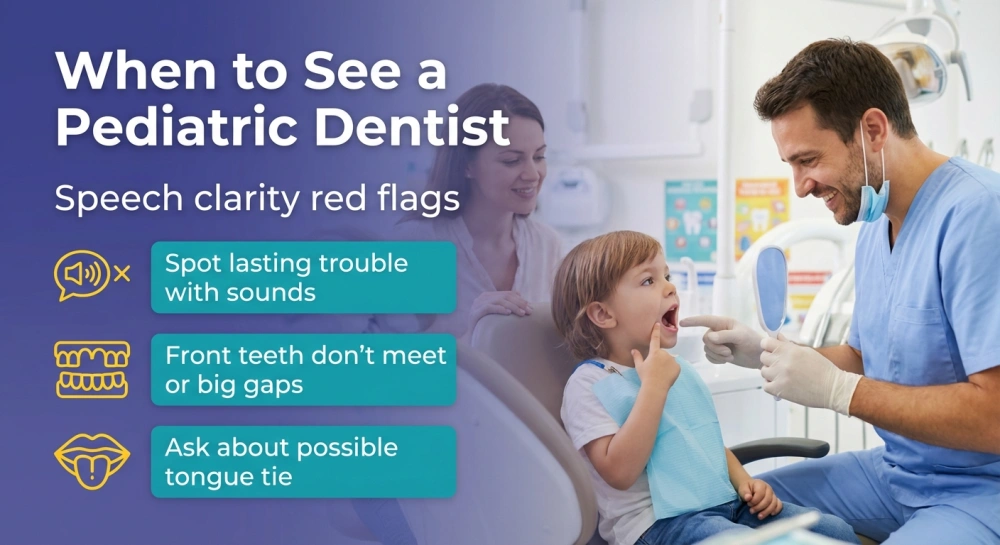
Trust your instincts if you notice changes in your child’s speech that persist. A pediatric dentist can assess the teeth, gums, and bite to see whether structure is contributing to the concern. Consider scheduling a visit if you observe any of the following:
- Persistent difficulty with s, z, f, v, t, d, or th that does not improve over a few months of practice and modeling [1].
- Anterior open bite when the back teeth touch but the front teeth do not, especially with an ongoing thumb or pacifier habit [6] [8].
- Early loss of front primary teeth due to injury or decay, especially if your child expresses frustration about being understood [1].
- Suspected tongue tie or lip tie that seems to restrict movement for feeding or speech sounds [9] [10].
For many families, a first orthodontic check by around age seven provides reassurance or early guidance about the bite as new adult teeth arrive. This visit does not always lead to treatment, but it can inform planning for speech and jaw growth during the mixed dentition years [7].
Pediatric oral habit counseling in Laguna Niguel can also be part of a proactive plan for children who are working on reducing comfort sucking and want to protect clear articulation as the habit fades [6].
What can families do at home to support clear speech habits?
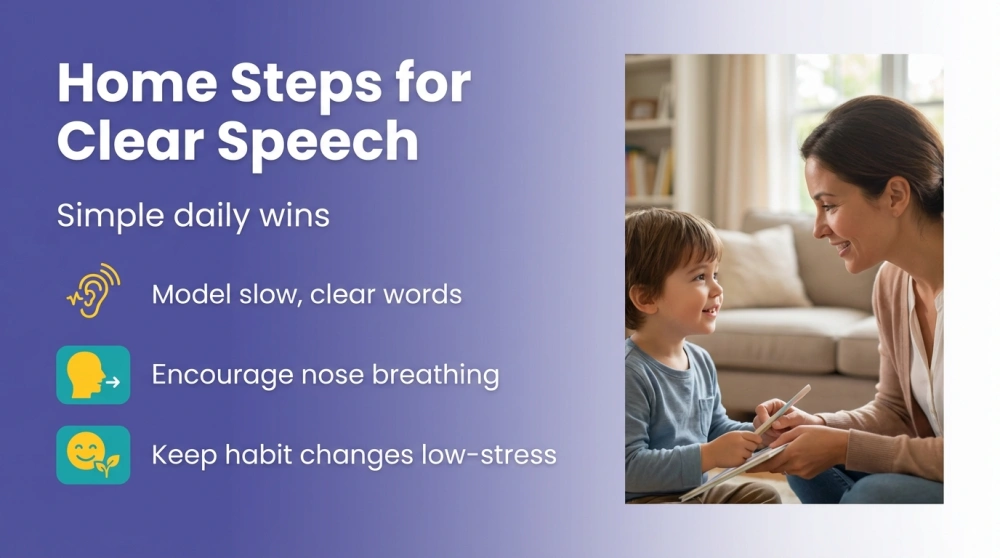
Small, consistent routines help children feel confident as they learn new sounds. Try these family friendly steps:
- Model slow, clear speech during playtime and reading, highlighting target sounds in short words without pressure.
- Encourage nose breathing and good posture with gentle reminders and fun games that involve slow breathing and soft tongue rest against the palate [2].
- Offer varied textures at meals as recommended by your pediatrician to support oral motor development and chewing endurance.
- Keep a relaxed pace for changes like pacifier weaning, pairing comfort alternatives with praise to reduce stress around habit transitions [6].
- Schedule routine dental visits to track tooth eruption, spacing, and bite changes that relate to primary teeth and articulation [5].
How do dentists and speech language pathologists work together for speech concerns?
Clear communication often benefits from a team model. A pediatric dentist evaluates tooth position, spacing, jaw growth, and oral health. A speech language pathologist assesses sound production, oral motor patterns, and language use in real life contexts. Together, they can determine whether a child needs time and reassurance, targeted speech activities, dental habit guidance, or orthodontic monitoring. This collaboration is especially helpful when a child has mixed factors such as a developing open bite and a lateralized sibilant pattern [1] [2] [7].
What happens if a tongue tie is suspected?
If mobility of the tongue appears limited, your team will consider feeding history, speech goals, and the degree of restriction. Not all restrictive frenula cause speech problems, and many children compensate well. When function is clearly affected and conservative measures are not sufficient, a release may be considered after a careful, individualized assessment and shared decision making with parents [9] [10].
What local and national guidelines should California parents know?
Parents in Laguna Niguel and throughout California can take confidence from state and national standards that support safe and ethical pediatric dental care. Understanding the basics can help you ask the right questions and feel prepared for visits.
- Prevention and early visits are recommended by national pediatric dental guidelines, which outline periodic exams, cleanings, fluoride use, and anticipatory guidance for infants, children, and adolescents [5] [11].
- Early orthodontic evaluation by age seven is advised by professional orthodontic associations to monitor bite development and plan care if needed [7].
- Sedation safety standards in California require specific permits and training for dentists who provide sedation, including pediatric endorsements, so families can expect clear pre visit instructions and monitoring protocols when sedation is appropriate [12].
- Privacy protections for your child’s health information are governed by federal privacy rules that outline how clinics handle and share records with your consent [13].
- School based support for speech services may be available through public education programs when a child qualifies under federal law, which can complement your dental care plan and speech therapy [14].
What common questions do parents ask about baby teeth and speech?
Is a tongue tie always the cause of speech delay?
No. Speech delay and articulation differences have many possible factors. Some children with a restrictive frenulum have no speech difficulty, while others benefit from therapy and, in selected cases, a release. A collaborative evaluation looks at function, not just appearance, before any procedure is considered [9] [10].
Will spacing between baby teeth help or hurt speech clarity?
Modest spacing is common and can be helpful for cleaning. Many children speak clearly with natural spacing. In contrast, significant gaps or bite patterns like open bite may influence sibilants for some children. Regular dental monitoring keeps growth and articulation goals on track [2] [5].
Can early orthodontic evaluation improve speech outcomes?
An early orthodontic evaluation does not guarantee a change in speech, but it identifies bite features that could influence tongue posture and airflow. When the bite is guided into a more neutral relationship, some children find it easier to produce certain sounds clearly. A first check around age seven is a common milestone [7].
Do dental X rays play a role in assessing speech related concerns?
Dental radiographs, when indicated by a dentist, can help evaluate developing teeth, missing teeth, or structural factors that might influence the bite and spacing. Decisions about imaging balance diagnostic benefit with radiation safety, following professional guidelines for children [5].
How long after a dental extraction might speech sound different?
Some children adapt within days to weeks, while others need more time. If your child is frustrated or changes persist for more than a couple of months, a check in with your pediatric dentist and a speech language pathologist can help identify simple strategies to support clear articulation during healing [1] [2].
How does Kidz Modern Dentistry in Laguna Niguel support your child?
At Kidz Modern Dentistry, our focus is a calm, kid friendly experience that helps your child thrive during key milestones in early speech development. We care for families in Laguna Niguel, California and nearby communities, offering same day emergency care, gentle sedation options when appropriate, and comprehensive pediatric services that align with your child’s growth stage and communication goals.
How do our services connect to baby teeth and articulation goals?
- Growth centered exams monitor tooth eruption, spacing, and bite patterns that relate to baby teeth and speech development, with clear explanations and practical next steps at each visit.
- Habit guidance with empathy supports families as pacifier or thumb routines change, using age appropriate strategies to protect bite development and support clear sound production.
- Collaboration with local speech professionals ensures that dental and articulation plans complement each other, especially for children working on sibilants or airflow control.
What is our unique approach for young communicators?
- Comfort first through tell show do techniques, child friendly language, and a calm environment so children feel safe to practice new words and sounds during visits.
- Evidence based protocols for prevention, fluoride use, and monitoring, aligned with national pediatric dental guidelines and early orthodontic recommendations [5] [7].
- Personalized plans that fit your child’s stage, whether that means reassurance, monitoring, or timely referral to a speech language pathologist for targeted practice.
Where do we provide care and how can you reach us?
We welcome families from Laguna Niguel and surrounding areas in Orange County. If you have questions about your child’s primary teeth and articulation, our team is here to help you decide on next steps. Call us at +1 (949) 273-0110 to schedule a visit with a pediatric dentist in Laguna Niguel.
What experience and tools support our care model?
- Comprehensive pediatric training across prevention, restorative care, and growth monitoring so you receive consistent guidance as your child’s teeth and speech evolve.
- Kid friendly technology for diagnostics and comfort, paired with careful radiation safety practices and parent education at each step [5].
- Coordinated care pathways that make it simple to combine dental checkups with referrals for speech evaluation when helpful, minimizing delays in support.
How do results and family stories guide our continuous improvement?
Parents often share that routine checkups, early guidance on habits, and thoughtful monitoring of the bite made conversations at home smoother and more fun. We learn from each family’s journey and keep refining our approach so children feel encouraged, supported, and proud of their progress.
References
- Speech Sound Disorders: Articulation and Phonology – American Speech Language Hearing Association
- Orofacial Myofunctional Disorders – American Speech Language Hearing Association
- Tooth Eruption Charts – American Dental Association
- Children’s Oral Health – Centers for Disease Control and Prevention
- Periodicity of Examination and Preventive Dental Services – American Academy of Pediatric Dentistry
- Policy on Oral Habits – American Academy of Pediatric Dentistry
- What Age Should Children See an Orthodontist – American Association of Orthodontists
- Effects of Non nutritive Sucking Habits on the Primary Dentition – PubMed
- Policy on Management of the Frenulum in Pediatric Patients – American Academy of Pediatric Dentistry
- Ankyloglossia – NCBI Bookshelf
- Prevention of Dental Caries in Children Younger Than Age 5 Years – U.S. Preventive Services Task Force
- Sedation Permits and Requirements – Dental Board of California
- HIPAA Privacy Rule Summary – U.S. Department of Health and Human Services
- Individuals with Disabilities Education Act – U.S. Department of Education
Common Questions About This Topic
Find answers to frequently asked questions related to this article.
