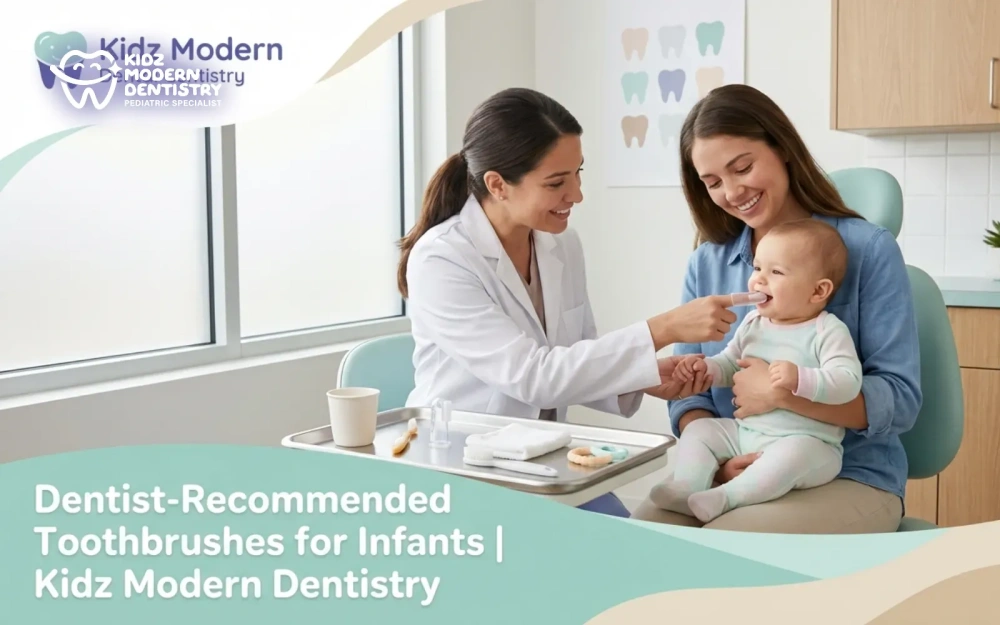
- Which toothbrushes do dentists recommend for infants?
- When should you start brushing your baby’s gums and first teeth?
- What are the main types of infant toothbrushes and where do they fit?
- How do you choose the first toothbrush for your baby safely?
- How much fluoride toothpaste should babies use and why?
- How do you brush infant teeth step by step without tears?
- What safety and hygiene tips keep baby toothbrushes clean?
- When should your baby see a pediatric dentist in South Orange County?
- What local and national guidance matters for families in Laguna Niguel?
- What buyer’s checklist can you use when choosing an infant toothbrush?
- How can Kidz Modern Dentistry help your family take the next step?
- References and resources
Which toothbrushes do dentists recommend for infants?
Choosing a baby toothbrush can feel confusing when you are standing in front of a shelf full of options. Most pediatric dentists agree that a small, soft bristle infant toothbrush is the right place to start as soon as the first tooth erupts. A soft brush is gentle on delicate gums but effective at disrupting early plaque. The American Dental Association describes soft bristles, a small head, and proper replacement every three to four months as core toothbrush features that support oral hygiene for all ages, with design adaptations for babies and toddlers [1].
For newborns and babies before the first tooth, a clean, damp cloth or a newborn gum brush can help wipe away milk residue and get your little one used to oral care. As soon as a tooth appears, you can introduce the first toothbrush for baby with a rice sized smear of fluoride toothpaste for added protection [2] [3]. Getting into a twice daily routine early supports long term Infant oral health and reduces the risk of early childhood caries [4] [7].
Most families in Laguna Niguel and nearby communities are looking for practical guidance they can act on today. Below, we will compare infant toothbrush types, share step by step how to brush infant teeth, and explain fluoride toothpaste use so you can feel confident about caring for your baby’s smile.
When should you start brushing your baby’s gums and first teeth?
Dentists recommend that parents begin cleaning the mouth even before teeth come in by gently wiping the gums with a soft, clean cloth once daily. Once the first tooth erupts, brush twice daily with a soft bristle infant toothbrush and a tiny smear of fluoride toothpaste [2] [3] [6]. This timing often starts around six months, though teething can begin earlier or later for each child.
Why does early brushing matter so much? Early plaque control and consistent fluoride exposure help harden enamel and reduce the risk of early cavities, which remain a common chronic condition in childhood according to federal data [7]. Early habits also make it easier for babies to accept toothbrushing as a normal part of the day.
What are the main types of infant toothbrushes and where do they fit?
There are three broad categories you will see when shopping for a toothbrush for 0 to 12 months. Each has a role depending on your baby’s stage and your comfort level.
What is a silicone finger toothbrush and when is it helpful?
A silicone finger toothbrush is a small sleeve that fits over your finger with soft silicone nubs that gently massage gums and wipe early plaque. Many parents find it less intimidating during the first weeks after a tooth appears and during teething. It can also function as a newborn gum brush before any teeth erupt. If you choose to use a silicone finger toothbrush, look for food grade, BPA free silicone and make sure it fits your finger securely so it does not slip. While finger brushes can help with acclimating your baby to oral care, a small soft bristle infant toothbrush is usually better for thorough plaque removal once multiple teeth erupt because nylon bristles can reach into small grooves more effectively [1].
What is a soft bristle infant toothbrush and why is it preferred?
A soft bristle infant toothbrush is designed with a very small head, extra soft bristles, and a short, easy to grip handle. Pediatric dentists often recommend this as the primary tool once the first tooth comes in because it provides precise, gentle cleaning around the gumline and between emerging teeth. The ADA emphasizes soft bristles and proper technique as the safest and most effective way to remove plaque and protect enamel and gums [1]. For very young babies, choose a brush labeled for infants with the smallest available head to fit tiny mouths comfortably.
Are powered toothbrushes appropriate for babies under two?
Powered toothbrushes can reduce plaque compared with manual brushes in many users, according to systematic reviews, but most powered brush models are labeled for older children rather than infants and young toddlers [8]. For babies under two, a manual soft bristle infant toothbrush is typically sufficient and simpler to control. If you are considering a powered brush as your child gets older, check the manufacturer’s age guidance and choose a head that is specifically sized for small mouths. Always supervise brushing to make sure your child is not biting hard on the head and to ensure proper coverage [1].
How do you choose the first toothbrush for your baby safely?
A dentist recommended baby toothbrush shares a few key traits. When you pick up a package, check for these details and use your judgment about what will feel comfortable for your child and for you.
Which bristle softness protects delicate gums best?
Choose soft or extra soft bristles for infants. Softer bristles flex easily, which helps them sweep plaque off the enamel without scratching or irritating the gums. Harder bristles can be too abrasive for new teeth and tender gum tissue. The ADA highlights soft bristles as a core design feature for healthy brushing and gum comfort across age groups [1].
What brush head size and handle design work for tiny mouths?
Look for a very small, rounded head that fits behind the front teeth without bumping the cheeks or palate. A short, wide handle can make it easier for parents to maintain a light touch. Some training toothbrush for babies designs include a safety shield to prevent over insertion, which can add peace of mind for parents whose babies like to grab and chew. Make sure any shield sits comfortably and does not interfere with gentle brushing strokes.
Why look for an ADA Seal when picking a baby toothbrush?
The ADA Seal of Acceptance indicates that a product has been independently evaluated for safety and efficacy based on scientific evidence and agreed upon testing criteria. When you see the ADA Seal on a baby toothbrush or toothpaste, you can be confident it meets quality benchmarks for bristle integrity, handle safety, and labeling. The ADA maintains a public list of Seal products for families and professionals to review [9]. Choosing an ADA approved baby toothbrush is a simple way to narrow the field to credible options.
How much fluoride toothpaste should babies use and why?
Fluoride strengthens enamel and helps reverse early demineralization, which is why dentists recommend it even in the earliest brushing stages. The key is using a very small amount for infants to minimize swallowing while still delivering protective benefits.
What fluoride amounts are recommended for ages birth to three?
For children younger than three years, use a smear of fluoride toothpaste about the size of a grain of rice. For children three to six years, increase to a pea sized amount. These quantities are supported by national pediatric and dental guidance and balance cavity prevention with safety for young children who may not be able to spit reliably [2] [3] [6].
What if your baby swallows toothpaste during brushing?
It is normal for infants to swallow some toothpaste because they cannot spit yet. Using only a rice sized smear keeps fluoride exposure at a prudent level while still protecting enamel. Gently wipe away excess foam with a clean cloth after brushing if needed. As your child grows, encourage spitting without rinsing so a thin layer of fluoride remains on the teeth for a few minutes after brushing [3].
How does fluoride protect early enamel?
Fluoride works in three main ways. It helps rebuild weak enamel by forming a stronger mineral on the tooth surface, slows mineral loss during acid attacks from sugars, and limits the acid production of cavity causing bacteria. The combined effect is greater resistance to decay, especially when used consistently in small amounts twice daily as part of brushing [12]. For families curious about local water fluoride levels, public tools are available to check community fluoridation status, though toothpaste use remains important regardless of water source [7].
How do you brush infant teeth step by step without tears?
Even the calmest baby can wiggle during brushing. A simple routine and the right position can make all the difference.
What positions and routines make brushing easier with a wiggly baby?
Try the knee to knee position with your partner or a helper. Sit facing each other with knees touching and lay your baby across your laps, gently supporting the head. This allows you to see the teeth clearly and keep your hands steady. If you are alone, cradle your baby’s head in the crook of your arm and tilt the head slightly back. Then follow these steps:

- Use a rice sized smear Place a tiny amount of fluoride toothpaste on the soft bristle infant toothbrush [3].
- Angle the bristles Tilt the bristles toward the gumline at about forty five degrees to sweep plaque where the tooth and gum meet [1].
- Make tiny circles Use gentle, small circles on the front, back, and chewing surfaces, spending a few seconds on each tooth.
- Lift the lip Gently raise the upper lip to see along the gumline and clean thoroughly.
- Brush the tongue A quick sweep can reduce bacteria and help with fresh breath.
- Finish with praise Offer a cuddle or a favorite song so brushing ends on a positive note.
How can you clean gums before the first tooth erupts?
Before the first tooth comes in, use a clean, damp cloth or a silicone finger brush to gently wipe along the gums once daily. This removes residual milk or formula and helps your baby become comfortable with something touching the gums. As soon as a tooth appears, transition to a small infant toothbrush and begin twice daily brushing with a smear of fluoride toothpaste [4] [6].
How often should you replace a baby toothbrush?
Replace your baby’s toothbrush every three to four months, or sooner if the bristles look frayed or after an illness. Worn bristles are less effective and can be rough on gums. The ADA advises timely replacement as part of safe and effective brushing at all ages [1].
What safety and hygiene tips keep baby toothbrushes clean?
Good brush care reduces the spread of germs and protects gums.
Why should toothbrushes never be shared between siblings?
Sharing toothbrushes can transfer bacteria and viruses that live in saliva, including those linked to tooth decay. Each child should have their own clearly labeled toothbrush. Health authorities emphasize not sharing oral hygiene items to limit infections at home [1] [12].
How should you store and sanitize a baby toothbrush at home?
- Rinse and air dry After brushing, rinse bristles with tap water, shake off excess, and store upright to air dry in an open container.
- Avoid closed caps Fully closed containers can trap moisture and encourage microbial growth. Use them only for short travel as needed.
- Keep brushes separated Make sure bristles from different family brushes do not touch in storage.
- Clean holders regularly Wash cups or stands periodically to remove residue.
These simple steps reflect common sense hygiene practices aligned with dental organization guidance on toothbrush care and storage [1].
Can a toothbrush double as a teething aid safely?
Some training toothbrush designs are marketed for teething and gum massage. It is fine to let your baby explore the toothbrush briefly under supervision, but avoid prolonged chewing that can bend bristles or damage the brush head. For teething discomfort, discuss options with your pediatrician and be aware that the Food and Drug Administration advises against over the counter benzocaine topical gels for babies and young children due to safety concerns [10]. A cold clean washcloth or a safe teething toy may be more appropriate for soothing while you reserve the toothbrush mainly for cleaning.
When should your baby see a pediatric dentist in South Orange County?
Pediatric dental organizations recommend establishing a dental home by your child’s first birthday, or within six months of the first tooth erupting, whichever comes first [4] [5]. Early visits allow your dentist to check tooth and jaw development, offer personalized infant oral care tips, and help you plan for teething, fluoride use, and feeding habits. If you are seeking a pediatric dentist in Laguna Niguel, early scheduling ensures you have a trusted resource on call for questions and urgent concerns.
What early visit timelines do AAPD and AAP recommend?
The American Academy of Pediatric Dentistry and the American Academy of Pediatrics both support a first dental visit by age one, with periodic recall based on your child’s risk factors and needs. Early and regular dental contact is a cornerstone of Infant oral health and helps families get proactive about cavity prevention, diet counseling, and injury prevention [4] [6].
What happens at the first infant dental visit?
- Gentle exam The dentist examines the gums, lips, cheeks, tongue, and any erupted teeth.
- Risk assessment You will discuss diet, feeding routines, fluoride exposure, and family history to tailor prevention plans [4].
- Toothbrushing coaching Your care team will demonstrate how to brush and help you choose the right infant toothbrush for home.
- Fluoride guidance You will receive specific recommendations on toothpaste amounts and professional fluoride as appropriate [3].
- Scheduling The team will suggest a return interval based on developmental milestones and risk.
What local and national guidance matters for families in Laguna Niguel?
Families in Laguna Niguel and South Orange County can rely on national pediatric and dental guidance for daily home care decisions. In addition, state and local programs offer educational resources and community support.
Which California and federal resources can parents rely on?
- American Dental Association Product safety criteria and the ADA Seal list can help you identify reliable infant toothbrush and toothpaste options [1] [9].
- American Academy of Pediatric Dentistry Best practice documents on infant visits and fluoride use provide evidence informed recommendations for families and clinicians [3] [4] [5].
- American Academy of Pediatrics The Brush Book Bed program offers a simple evening routine that pairs reading and brushing for predictable habits [6].
- Centers for Disease Control and Prevention National statistics highlight the importance of early prevention and dental visits [7].
- California Department of Public Health State oral health resources and programs can connect families with local education and prevention initiatives [11].
- National Institute of Dental and Craniofacial Research Parent friendly guides explain fluoride benefits and children’s oral health basics [12].
For parents in South Orange County communities including Aliso Viejo, Laguna Hills, Laguna Beach, San Juan Capistrano, and Mission Viejo, following these trusted sources supports consistent habits at home and informed questions during dental visits.
What buyer’s checklist can you use when choosing an infant toothbrush?
Use this quick checklist to compare options on the shelf and select a dentist recommended baby toothbrush that fits your child’s stage.

- Bristle label Look for soft or extra soft bristles to protect enamel and gums [1].
- Head size Choose the smallest rounded head for infants so you can reach back surfaces comfortably.
- Handle control Pick a short, wide handle that lets you guide the brush with a light touch.
- Age guidance Confirm the package indicates use for infants or the intended age range.
- ADA Seal Prefer an ADA approved baby toothbrush when available to confirm independent review [9].
- Material quality If using a silicone finger toothbrush, choose food grade silicone that fits securely on your finger.
- Safety features Consider a removable safety shield if your baby tries to push the brush too far.
- Toothpaste match Pair the brush with a fluoride toothpaste and use a rice sized smear for children under three [2] [3].
- Replacement plan Plan to replace every three to four months or sooner if bristles fray [1].
If you are ever unsure, bring the product to your baby’s next visit so your pediatric dentist can check the fit and make personalized suggestions. This is a simple step that can make daily brushing more effective and comfortable.
How can Kidz Modern Dentistry help your family take the next step?
We know parents want clear, caring guidance rather than guesswork. At Kidz Modern Dentistry, our pediatric team supports families from the first tooth through the teen years with practical coaching, gentle care, and evidence informed recommendations. Our approach is built around partnership, prevention, and positive visits that make oral care part of your child’s everyday routine.
Our services connect directly to questions about infant toothbrush choices. During a first visit, we demonstrate brushing techniques with your own infant toothbrush and offer personalized tips on fluoride toothpaste for babies based on your child’s age and risk factors. We can also recommend a training toothbrush for babies or a soft bristle infant toothbrush that matches your child’s mouth size and temperament. This is part of our commitment to Infant oral health and creating a comfortable dental home for your family.
We serve families in Laguna Niguel and across South Orange County including Aliso Viejo, Laguna Hills, Laguna Beach, San Juan Capistrano, and Mission Viejo. If you are searching for guidance you can trust, we welcome your questions and can help you plan a brushing routine that works for your baby’s stage of development. For prompt scheduling or same day concerns, call us at +1 949 273 0110 so our team can help you find a convenient time.
Our methodology focuses on prevention and comfort. We provide early cavity risk assessments, simple habit coaching, and compassionate care tailored to growing smiles. When needed, we offer kid friendly sedation options and same day emergencies to support your child’s comfort and safety. Our clinicians draw on years of combined experience in pediatric dentistry and stay current with guidelines from professional organizations and public health agencies. You can expect clear explanations, step by step demonstrations, and follow up support between visits.
Parents frequently share success stories about smoother routines at home after hands on coaching with our team. Many families report that brushing becomes faster, calmer, and more thorough once we fine tune positioning and choose a toothbrush style that suits their baby’s mouth and personality. If your child has unique sensory preferences or special health care needs, we adapt our tools and techniques so you feel supported and your child can build confidence.
We also help you navigate decisions such as when to move from a silicone finger toothbrush to a small manual brush, how to introduce a toddler toothbrush when the molars erupt, and when a powered brush might make sense for an older child. We will never rush recommendations. Instead, we discuss options, demonstrate each, and help you pick an approach your child will actually accept. This parent centered process is designed to set you up for long term success.
If you live in or near Laguna Niguel, our team can coordinate your first infant visit around nap schedules and feeding routines. We are happy to answer questions about Infant oral health in Laguna Niguel and to partner with your pediatrician when coordination is helpful. Your next step is simple. Reach out with your questions, bring the toothbrushes you are considering, and let us help you confirm a safe, comfortable choice for your baby.
References and resources
- Toothbrushes: Oral Health Topics – American Dental Association
- ADA Urges Use of Fluoridated Toothpaste for Young Children – American Dental Association
- Best Practices: Fluoride Therapy – American Academy of Pediatric Dentistry
- Perinatal and Infant Oral Health Care – American Academy of Pediatric Dentistry
- Policy on the Dental Home – American Academy of Pediatric Dentistry
- Brush Book Bed: A Program of the AAP – HealthyChildren.org
- Children’s Oral Health Fast Facts – Centers for Disease Control and Prevention
- Powered versus manual toothbrushing for oral health – Cochrane Review
- ADA Seal of Acceptance Products – American Dental Association
- Teething Pain Relievers for Babies and Children – U.S. Food and Drug Administration
- California Oral Health Program – California Department of Public Health
- Children’s Oral Health – National Institute of Dental and Craniofacial Research
Common Questions About This Topic
Find answers to frequently asked questions related to this article.
