
- Why does grazing all day matter for kids teeth?
- What happens in the mouth when kids snack constantly?
- Why are young children especially vulnerable to cavities?
- How common is tooth decay in children?
- Which snacks cause the most trouble?
- Are goldfish crackers raisins and sippy cup drinks a problem?
- How do drinks between meals affect cavities?
- What does a tooth friendly snack pattern look like?
- How can parents reduce frequent snacking and cavities without battles?
- What other steps help with cavity prevention for kids?
- When should you call a dentist about possible decay?
- What should Laguna Niguel parents know about local prevention support?
- How does Kidz Modern Dentistry help families take the next step?
- References
Why does grazing all day matter for kids teeth?
If you have ever felt like your child is asking for just one more bite every hour, you are not alone. For many families, grazing can feel normal. A handful of crackers in the car, a pouch after school, a few bites while watching a show, then milk or juice later. The issue is not only what kids eat. It is also how often their teeth are exposed to food and drink.
This is why grazing and cavities in kids are so closely connected. Cavities form when bacteria in the mouth use sugars and other carbohydrates from food and drinks to make acids. Those acids pull minerals out of tooth enamel over and over again. The Centers for Disease Control and Prevention explains that cavities are caused by a breakdown of the tooth surface and that bacteria, frequent snacking, and sipping sugary drinks can all contribute to this process [1][2].
When your child eats a meal, the mouth becomes more acidic for a period of time. Saliva then helps bring things back toward normal. But if a child snacks often throughout the day, the mouth can keep cycling back into that acid attack stage again and again. That repeated exposure is a major reason frequent snacking and cavities are linked.
Parents often focus on candy alone, but many everyday snack foods also feed cavity causing bacteria. Crackers, chips, cereal bars, dried fruit, sweetened yogurt, fruit snacks, and juice can all play a role. Even foods that do not taste very sweet can be broken down into sugars in the mouth.
For families looking for child dental health tips, one of the most important ideas is simple. Teeth need breaks between eating and drinking so saliva has time to help protect them.
What happens in the mouth when kids snack constantly?
Every time your child eats or drinks something other than plain water, oral bacteria get new fuel. According to the National Institute of Dental and Craniofacial Research, tooth decay happens when bacteria produce acids that attack the teeth, and repeated acid attacks can lead to cavities [2]. The American Academy of Pediatric Dentistry also warns that more frequent consumption of sugars and carbohydrates increases cavity risk because it increases how often teeth are exposed to acid producing conditions [3].
Here is the pattern in everyday terms.
- Food hits the teeth. Sugars and starches stay on tooth surfaces and in tiny grooves.
- Bacteria use those leftovers. They produce acid as they break those foods down.
- The enamel softens. Minerals leave the tooth surface during the acid attack.
- Saliva tries to help. It washes food away, neutralizes acids, and helps replace lost minerals.
- Another snack restarts the cycle. If this keeps happening all day, the mouth gets less recovery time.
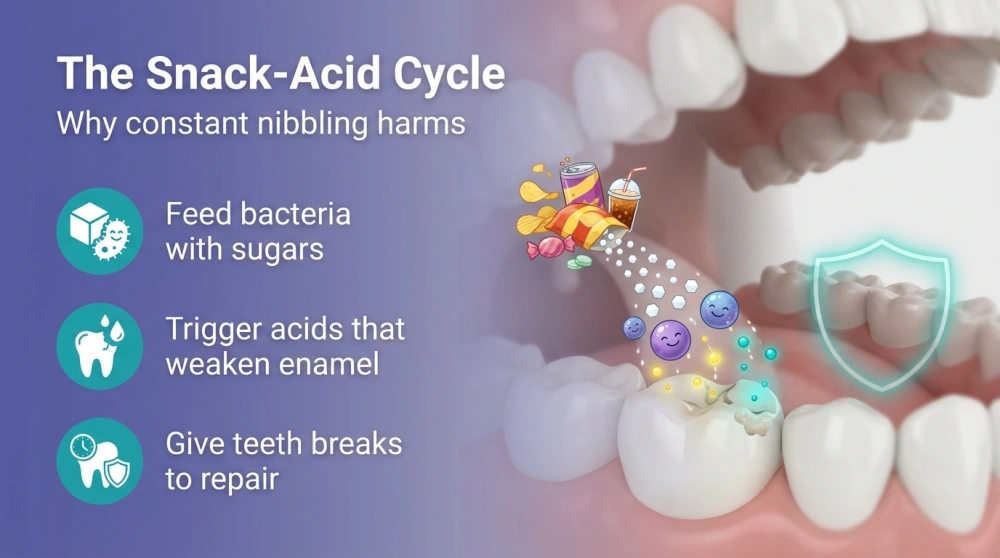
That recovery time matters. The problem with kids tooth decay causes is often not one dramatic event. It is repeated little exposures. A child who has one cookie with lunch may have less risk than a child who nibbles crackers and sips juice for three straight hours.
Sticky foods can make things worse because they cling to pits, grooves, and spaces between teeth. Drinks can be just as important. If a child slowly sips juice, chocolate milk, sports drinks, or sweetened milk alternatives over time, the teeth stay exposed longer.
Parents in Laguna Niguel often tell us they thought a child was eating small portions, so it seemed harmless. In reality, constant grazing may keep the mouth in an almost continuous acid challenge.
Why are young children especially vulnerable to cavities?
Young children are still learning brushing skills, still developing routines, and often prefer snack foods that are easy to chew and quick to grab. Their enamel is also thinner on baby teeth than on permanent teeth, which means decay can move faster once it starts. The CDC notes that cavities in baby teeth can cause pain, infection, trouble eating, speaking issues, and missed school [4].
Children are also more likely to:
- Snack for comfort. Tiredness, boredom, and transitions often trigger requests for food.
- Use cups or pouches often. Repeated sipping and sucking can increase tooth exposure to sugars and acids.
- Need help with brushing. Many kids are not able to brush thoroughly on their own for years.
- Prefer soft processed foods. These can stick easily to teeth.
The American Academy of Pediatric Dentistry recommends avoiding frequent consumption of sugary liquids and solid foods and emphasizes the importance of structured meal and snack patterns for children [3]. This is a practical part of cavity prevention for kids, not just a nutrition issue.
It is also why early prevention matters. The AAPD recommends an early dental visit by age 1 and ongoing preventive care based on a child’s risk level [5][6]. When families understand snack timing early, they can often avoid a cycle of white spots, sensitivity, or early cavities.
How common is tooth decay in children?
Tooth decay in children is very common. CDC data show that about 21 percent of children ages 2 through 5 had a cavity in primary teeth, and about 51 percent of children ages 6 through 11 had a cavity in permanent or primary teeth during the time period measured [7]. Those numbers make it clear that cavities are not rare or unusual.
This is one reason the topic matters so much for parents. When families ask about kids tooth decay causes, they are often asking about a very widespread problem. Cavities can affect sleep, appetite, school performance, and daily comfort. They can also lead to more complicated treatment if decay is not found early.
Public health agencies treat children’s oral health as part of overall health. Health.gov advises parents to start caring for teeth early, brush with fluoride toothpaste, limit sugary foods and drinks, and see a dentist regularly [8]. California’s oral health program also focuses on prevention, education, and access to care for children across the state [9].
For families in Laguna Niguel, California, these statistics are a reminder that a child who seems healthy and active can still be at risk if daily habits create frequent acid exposure.
Which snacks cause the most trouble?
Not all snacks affect teeth the same way. The most troublesome snacks tend to be the ones that combine one or more of these features: they are sugary, sticky, starchy, slowly sipped, or eaten very often.
- Sticky foods. Dried fruit, chewy granola bars, fruit snacks, and gummies can stay on teeth longer.
- Refined starches. Crackers, chips, pretzels, puffs, and cookies break down into sugars and can pack into grooves.
- Sweet drinks. Juice, sports drinks, soda, flavored milk, sweet tea, and many pouch drinks bathe teeth in sugar or acid.
- Slow snack habits. A snack stretched over an hour creates more exposure than one finished at once.
- Frequent repeat snacks. Even small portions can add up when the mouth never gets a break.
The American Academy of Pediatric Dentistry advises limiting frequent exposures to fermentable carbohydrates, especially sticky foods and drinks consumed over long periods [3]. Fermentable carbohydrates include many common toddler and kid snacks that seem ordinary in daily life.
This does not mean your child can never have crackers or a treat. It means timing and frequency matter. A snack served once, followed by water and then a break before the next eating time, is usually less risky than continuous nibbling.
Healthy snacking for teeth usually means choosing foods that are less sticky and serving them in a more structured way.
Are goldfish crackers raisins and sippy cup drinks a problem?
They can be. Many parents are surprised by this because these foods are common in lunchboxes and diaper bags. But from a tooth perspective, the question is not whether a snack is popular. The question is how it behaves in the mouth.
Crackers and similar snacks can dissolve into a soft paste that sits in the grooves of molars. Raisins and other dried fruits can cling to teeth. Sippy cup drinks and pouches can expose teeth repeatedly if used over long stretches. Juice is especially important to watch because it combines sugar with frequent sipping habits.
According to the CDC, if children drink or eat foods with sugar often, they are more likely to get cavities [1]. That is the key issue. A serving with a meal is different from small amounts throughout the day.
If your child loves these foods, you do not have to panic. Instead, adjust the pattern.
- Serve them with a meal or set snack time. This reduces all day exposure.
- Offer water afterward. Water helps rinse the mouth.
- Avoid letting a child carry snack cups around for hours. The goal is to finish and move on.
- Brush well at bedtime. Overnight is a high risk time because saliva flow drops during sleep.
These are some of the most practical child dental health tips families can use right away.
How do drinks between meals affect cavities?
Drinks are one of the biggest hidden issues in grazing and cavities in kids. Many parents think mainly about snack foods, but sipping habits can be just as damaging. Juice, flavored milk, sports drinks, sweetened tea, soda, and many packaged kid beverages can expose teeth to sugar over and over. Some are also acidic, which adds another challenge for enamel.
Even milk can be a concern if it is used for prolonged sipping throughout the day or at bedtime after brushing. The issue is pattern and frequency, not fear of one specific beverage in isolation.
Tooth friendly drink habits usually look like this:
- Plain water between meals. Water is the safest choice for frequent sipping.
- Other drinks with meals when possible. This limits extra exposure windows.
- No bedtime sugary drinks after brushing. Teeth are more vulnerable overnight.
- Avoid all day cup carrying. Constant access often turns sipping into grazing.
The CDC and Health.gov both support limiting sugary drinks and promoting water for children’s oral health [1][8]. For many families, simply changing what is in the cup between meals can noticeably lower cavity risk.
What does a tooth friendly snack pattern look like?
A tooth friendly pattern does not require perfection. It means giving teeth more recovery time and making snack choices a little more intentional.
Here is a helpful framework for parents.
- Keep meals and snacks structured. Aim for planned eating times instead of constant nibbling.
- Choose snacks with less stickiness. Cheese, yogurt without added sugar overload, nuts if age appropriate, fresh fruit, vegetables, and other less retentive foods may be easier on teeth.
- Pair foods wisely. Serving a sweet item as part of a meal is often better than offering it alone repeatedly.
- Offer water after snacks. This is simple and realistic.
- Save brushing focus for morning and bedtime. Bedtime brushing is especially important.
The AAPD’s dietary guidance supports balanced eating patterns, limiting frequent sugar exposure, and encouraging habits that support oral and overall health [3].
If you are trying to reduce frequent snacking and cavities, think less about banning foods and more about creating breaks. Teeth do better when they are not under attack all day.
In many cases, this is where Preventive dentistry becomes part of the conversation. Preventive care is not only about cleanings. It is also about helping parents spot the small daily habits that raise risk over time.
How can parents reduce frequent snacking and cavities without battles?
Most parents do not want every snack to become a fight. The good news is that small changes can work well without making food stressful.
- Name snack times clearly. Kids often respond better when they know another eating time is coming.
- Offer two or three planned options. This gives children some choice while keeping the routine structured.
- Use water as the default between eating times. That one habit can reduce a lot of exposure.
- Move snacks to the table when possible. Car grazing and screen grazing often stretch eating time much longer.
- Watch the bedtime routine closely. Snacks or sweet drinks after brushing can undo a lot of good effort.
If your child is used to constant snacking, change gradually. For example, start by turning one free range snack window into a seated snack plus water after. Then work on reducing sipping of sweet drinks. Families often find that children adapt when routines become predictable.
Parents in Laguna Niguel sometimes worry that reducing snacks will leave kids hungry. In many cases, improving meal balance helps. Children who get filling meals with protein, fiber, and healthy fats may snack less aimlessly. That is a nutrition discussion to have with your pediatrician or a registered dietitian if needed, especially if appetite patterns are complicated.
If your child already has a history of decay, Laguna Niguel Preventive dentistry can help identify whether the problem is mostly brushing, fluoride exposure, diet frequency, or a combination of factors.
What other steps help with cavity prevention for kids?
Snack timing is a major factor, but it is only one piece of the picture. Cavity prevention for kids works best when several protective habits work together.
- Brush twice daily with fluoride toothpaste. The AAPD and other professional groups support fluoride use because it helps strengthen enamel and reduce decay risk [10].
- Help your child brush well. Many children need hands on help longer than parents expect.
- Keep regular dental visits. The AAPD recommends early and ongoing dental care based on risk and age [5][6].
- Ask about fluoride and sealants when appropriate. These are common preventive tools for many children [10].
- Watch for early white spots or brown areas. Early decay can sometimes be managed before it becomes a larger cavity.
The CDC states that fluoride varnish and dental sealants can help prevent cavities in children [4]. Preventive care is especially valuable for kids who have a history of grazing, visible plaque buildup, dry mouth, or previous cavities.
If you are looking for solid child dental health tips, combine home habits with professional guidance rather than relying on one or the other alone.
When should you call a dentist about possible decay?
Sometimes parents assume they should wait until a child says something hurts. Unfortunately, cavities can grow before pain starts. It is a good idea to schedule an evaluation if you notice any of the following:
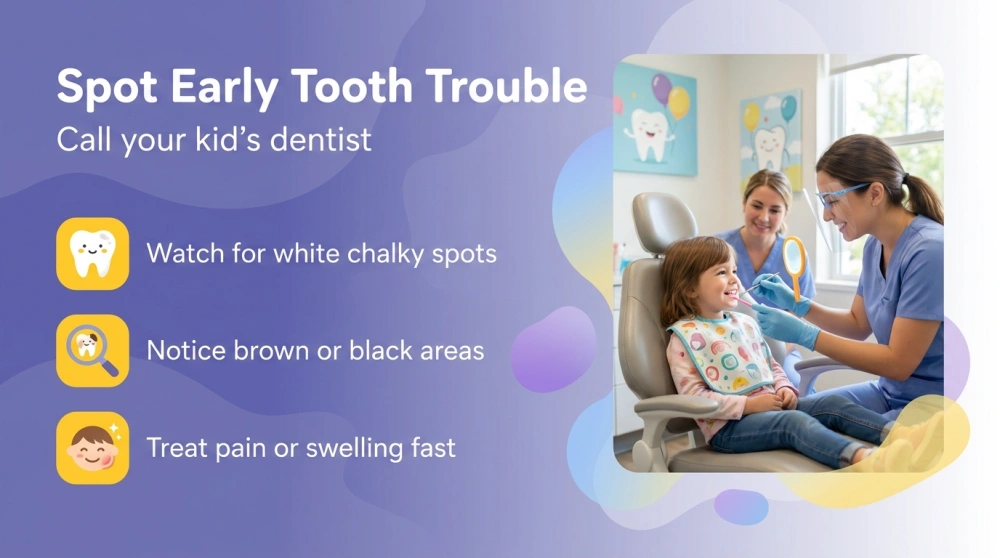
- White chalky spots near the gumline. These can be an early sign of enamel changes.
- Brown, gray, or black spots. These may suggest active decay.
- Food trapping often between certain teeth. This can point to areas that need closer attention.
- Sensitivity to cold or sweets. Some children will mention this, others will simply avoid certain foods.
- Bad breath that does not improve. It can be related to oral hygiene or decay.
- Pain, swelling, or trouble chewing. These signs need prompt professional attention.
If your child has pain, swelling, a broken tooth, or signs of infection, seek professional dental care as soon as possible. Same day evaluation may be important in those situations.
Parents should also reach out if they know their child has a strong grazing habit and has not had a recent exam. Even without obvious pain, a dentist can check for early changes and talk through realistic home strategies.
What should Laguna Niguel parents know about local prevention support?
Families in Laguna Niguel, California benefit from being in a community where preventive health awareness is high, but busy schedules can still make snack routines tough. School pickups, sports, traffic, errands, and long afternoons often turn into snack all the time patterns. When life is full, a bag of crackers and a drink cup can quietly become an all day routine.
That is why education matters. A local dental team can look at your child’s specific habits, cavity history, brushing routine, and diet pattern rather than giving generic advice. A toddler who carries milk around the house has different needs than a school age child who sips sports drinks at practice.
If you have been searching for a pediatric dentist Laguna Niguel families can talk to about snacking habits, look for a practice that explains the why behind recommendations. Parents usually do better with changes when they understand the pattern causing the problem.
In California, public health and professional guidance both emphasize prevention, early access, fluoride use, and regular dental care for children [9][10]. Those ideas line up closely with what many families need most: realistic guidance before a small problem becomes a larger one.
How does Kidz Modern Dentistry help families take the next step?
Kidz Modern Dentistry serves families in Laguna Niguel, California and focuses on pediatric dental care that is supportive, practical, and child centered. Our role in a topic like grazing and cavities in kids is to help parents understand risk factors, spot early signs of trouble, and build a prevention plan that fits real family life.
We provide comprehensive care for children of all ages, including preventive visits, cavity evaluations, and guidance on everyday habits that affect oral health. When a child already has signs of decay, we help families understand what is happening and what treatment or monitoring may be appropriate. When a child is anxious or has urgent needs, our office also offers same day emergencies and kid friendly sedation options as part of care within our scope.
Our approach is centered on making dental visits a positive experience for little ones while giving parents direct access to qualified dental professionals who can answer practical questions. That includes questions about snack timing, drinks, brushing routines, fluoride, and what changes are likely to make the biggest difference at home.
For families trying to improve healthy snacking for teeth, we typically look at patterns rather than blame. We talk through what a normal day actually looks like, from breakfast to bedtime. That may include school snacks, sports drinks, car snacks, pouches, bedtime milk habits, or resistance to brushing. From there, we help families identify manageable next steps.
Because every child is different, our process is personalized. A child with early enamel changes may need closer monitoring and preventive support. A child with pain or visible cavities may need treatment planning. A child with anxiety may need a gentler pace and added comfort measures. Our goal is not to overwhelm families. It is to help them understand what matters most and where to start.
We operate in Laguna Niguel and support local families who want clear answers and child focused dental care. If you are concerned about frequent snacking and cavities, or if your child is showing signs of decay, a professional dental evaluation can help clarify the next step. To contact Kidz Modern Dentistry, call +1 (949) 273-0110.
References
- About Cavities – CDC
- Tooth Decay in Children – National Institute of Dental and Craniofacial Research
- Policy on Dietary Recommendations for Infants Children and Adolescents – American Academy of Pediatric Dentistry
- Children’s Oral Health – CDC
- Perinatal and Infant Oral Health Care – American Academy of Pediatric Dentistry
- Periodicity of Examination Preventive Dental Services Anticipatory Guidance and Oral Treatment for Children – American Academy of Pediatric Dentistry
- Selected Oral Health Characteristics of Children and Adolescents Age 2 to 19 United States 2015 through 2018 – CDC National Center for Health Statistics
- Take Care of Your Child’s Teeth – Health.gov
- Oral Health Program – California Department of Public Health
- Use of Fluoride – American Academy of Pediatric Dentistry
Common Questions About This Topic
Find answers to frequently asked questions related to this article.
