
- What is kids dental anxiety and why does it matter?
- What causes fear of the dentist in children?
- How does child development influence dental anxiety?
- How do pediatric dentists create a calm environment?
- What behavior guidance techniques work for kids at the dentist?
- What should you expect at a first pediatric dental visit?
- How do we talk to kids about the dentist in positive ways?
- What role do pain control and numbing play for children?
- What is nitrous oxide for kids and how is it used?
- Is pediatric sedation dentistry safe in California?
- How should parents prepare on the day of the visit?
- How can we support children with special health care needs?
- How do x rays and imaging work safely for children?
- How do infection control and safety protocols protect your family?
- How do we prevent dental anxiety over time at home?
- What questions can you ask your pediatric dentist in Laguna Niguel?
- How can local resources in Laguna Niguel support your child?
- How do you choose a gentle pediatric dentist near Laguna Niguel?
- How does Kidz Modern Dentistry support calm, confident visits for children in Laguna Niguel?
- Which references and resources were used?
What is kids dental anxiety and why does it matter?
Kids dental anxiety is the fear, stress, or worry children feel about dental care. You might notice your child clinging to you, crying, avoiding appointments, or feeling upset after a previous difficult visit. This is very common and understandable. Children are still learning how to cope with new places, new people, and unfamiliar sensations. When we understand why anxiety happens and respond with patience and good guidance, we help kids build strong lifelong habits that support oral health.
Dental anxiety matters because tooth decay is widespread in childhood and early dental care can prevent pain and bigger problems later. National data show that many children experience cavities in their baby teeth, especially between ages six and eight[1]. Oral health is closely tied to overall health, comfort, and school readiness, and timely preventive visits can reduce treatment needs and discomfort[2]. When visits feel safe and predictable, children are more likely to return routinely and accept care with confidence.
What causes fear of the dentist in children?
Every child is unique, but several common factors can contribute to child dental anxiety:
- Fear of the unknown New faces, lights, masks, sounds, and tools can feel overwhelming at first.
- Previous uncomfortable experiences A past episode of pain, gagging, or feeling out of control can leave a strong memory.
- Parental anxiety Kids often mirror how we feel. If we are very worried, children can pick up on that.
- Sensory sensitivities Bright lights, tastes, vibrations, and smells may be challenging for some children.
- Developmental stage Younger children naturally prefer familiar routines and may resist new procedures.
Pediatric dentists use behavior guidance strategies to address these factors with empathy and structure. Approaches such as tell show do, positive reinforcement, and distraction are core methods recommended for children[3].
How does child development influence dental anxiety?
Children think and feel differently at each age. What seems simple to an older child may feel confusing to a toddler. Understanding developmental stages helps set realistic expectations and tailor the visit experience.
- Toddlers and preschoolers This group may fear separation, dislike strong sensory input, and want control over small choices. Short visits and simple explanations work well.
- Early school age children Many are ready for brief explanations and love encouragement for brave behavior. Visual aids and rewards help.
- Older children and preteens They benefit from more detailed descriptions, involvement in decisions, and clear coping plans.
Behavior guidance frameworks from pediatric dentistry emphasize developmentally appropriate communication and gradual exposure, which can reduce anxiety over time[3].
How do pediatric dentists create a calm environment?
Pediatric dental offices are designed to feel welcoming, playful, and predictable. From the waiting room to the clinical area, the goal is to set a tone of calm and respect while maintaining safety and clinical quality.
- Child centered design Friendly decor, smaller equipment, and sensory aware lighting reduce overstimulation.
- Clear communication Providers narrate what will happen in simple, honest language so kids know what to expect.
- Choice and control Small choices such as picking a toothbrush flavor help children feel involved.
- Comfort positions Lap to lap or knee to knee positions for infants and supportive seating help little ones feel secure[3].
- Safety protocols Infection control and monitoring standards protect families and staff during every visit[7].
What behavior guidance techniques work for kids at the dentist?
Behavior guidance brings structure to the visit and turns a stressful situation into a learning experience. The American Academy of Pediatric Dentistry outlines evidence based techniques that are widely used[3]:
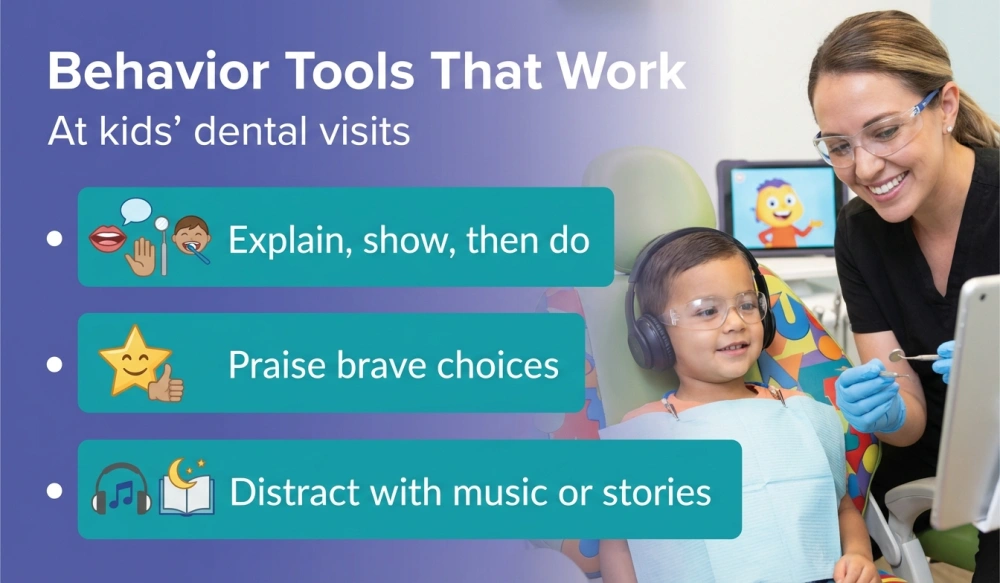
- Tell show do The team explains a step in kid friendly words, shows how it looks on a finger or model, then gently performs the step.
- Positive reinforcement Specific praise and small rewards reinforce brave choices and cooperation.
- Distraction and redirection Music, stories, bubble breathing, or counting help shift attention away from worry.
- Desensitization Short practice visits and gradual exposure build comfort before longer care.
- Parental presence For many children, a calm caregiver in the room increases security and trust.
- Protective stabilization Only when truly necessary for safety and with informed consent, supportive positioning may be considered for specific situations[3].
Most children do well with nonpharmacologic methods. When anxiety or treatment needs are higher, sedation options may be considered within professional guidelines[4].
What should you expect at a first pediatric dental visit?
The first visit sets the foundation for a positive dental home. Professional groups recommend that children see a dentist by their first birthday or when the first tooth erupts[12]. For families in Laguna Niguel, an early check builds trust and gives you practical tips for home care.
- Warm welcome The team greets your child by name, learns about preferences, and sets a calm pace.
- Gentle exam The dentist checks teeth, gums, growth, and bite and looks for early signs of decay.
- Prevention guidance You will receive tailored advice on brushing, fluoride, diet, and habits such as thumb sucking based on age and risk level[12].
- Fluoride varnish when indicated Fluoride varnish is a quick, safe application that helps prevent decay in young children and is supported by independent recommendations[8].
- Visit plan You will leave with a plan for recall visits and any needed steps for treatment.
How do we talk to kids about the dentist in positive ways?
Words matter. Simple language, honest descriptions, and upbeat framing help children feel prepared without becoming worried.
- Use simple words Say we will count your teeth and clean sugar bugs instead of using medical terms that may sound scary.
- Describe feelings not fear Explain you might feel water tickles or a gentle buzzy brush instead of it will not hurt.
- Practice at home Role play a visit using a toothbrush and a mirror so the routine feels familiar.
- Set expectations Share that the dentist will look, clean, and help teeth stay strong and that you will be nearby.
- Celebrate effort Praise brave moments and teamwork rather than focusing on perfection.
What role do pain control and numbing play for children?
Appropriate pain control supports comfort and reduces fear. Pediatric dentists follow best practices for local anesthesia, topical numbing gels, and preventive measures like desensitization.
- Topical anesthetic A flavored gel numbs the surface before a local anesthetic is given.
- Local anesthesia Dosages are carefully calculated based on weight, and aspiration and slow delivery help reduce discomfort[11].
- Tell show do with numbing Kids are shown the cotton roll, mirror, and suction and given time to ask questions.
- Distraction Breathing and story telling ease tension during injections or drilling.
- Aftercare Parents receive guidance to prevent lip or cheek biting while numb and to manage any mild soreness.
These steps are part of a comprehensive plan to keep children comfortable and to build trust for future care[11].
What is nitrous oxide for kids and how is it used?
Nitrous oxide often called laughing gas is a blend of nitrous oxide and oxygen that helps children relax while staying awake and responsive. It is delivered through a small nasal mask and adjusted throughout the visit by trained clinicians[5].
- How it helps Children often feel calmer, less worried, and more willing to accept care while still cooperating.
- How it works The gas is breathed through the nose and its effects wear off quickly once it is removed.
- Safety steps Scavenging systems and room ventilation reduce occupational exposure for staff and maintain a safe environment[10].
- Who may benefit Children with mild to moderate anxiety, a strong gag reflex, or special sensory needs may be good candidates under professional guidance[5].
Decisions about nitrous oxide are made with parents after discussing goals, alternatives, and any health conditions that could affect care[5].
Is pediatric sedation dentistry safe in California?
Safety is the shared priority of families, dental teams, and regulators. California requires specific permits and training for dentists who provide moderate sedation or general anesthesia, with equipment, staffing, and monitoring standards that must be met[6]. National professional guidelines also outline continuous monitoring, rescue readiness, and discharge criteria for sedated children[4].
- Training and permits Dentists must hold the appropriate state permits for the level of sedation provided and maintain ongoing education[6].
- Monitoring standards Pulse oximetry, observation of breathing, and documentation are required, and capnography is used for deeper levels of sedation consistent with guidelines[4].
- Team roles A trained team monitors the child throughout the procedure and during recovery, with an emergency plan in place[4].
- Informed decisions Families receive explanations of risks, benefits, and alternatives before consenting to sedation.
For many children, behavior guidance and simple techniques are enough. When sedation is considered, the plan is individualized and aligned with state and national standards[6][4].
How should parents prepare on the day of the visit?
Preparation lowers stress for everyone and sets up a steady, predictable experience.
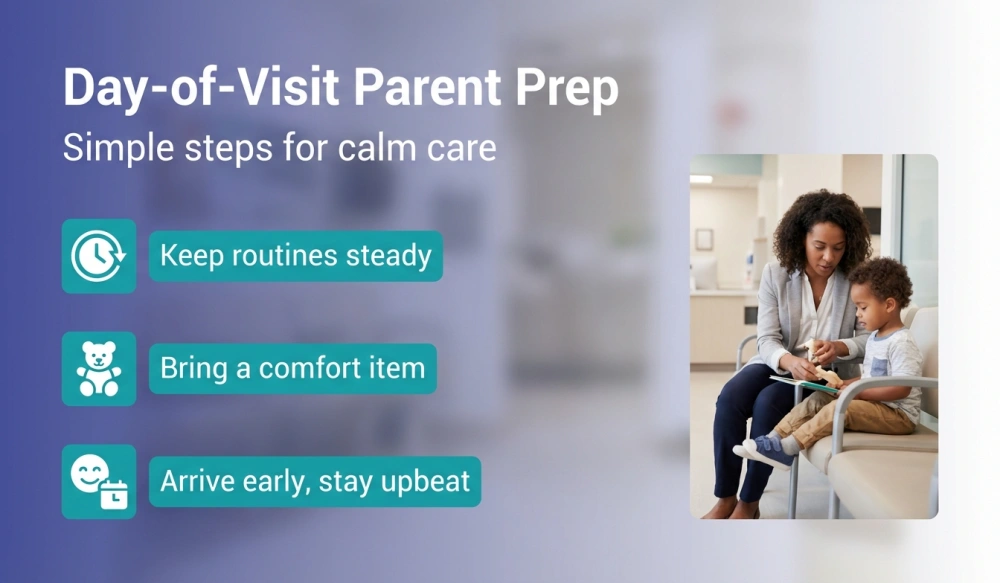
- Keep routines steady Plan meals, naps, and snacks as you normally would unless you were given special instructions for sedation.
- Bring comfort items A favorite toy, blanket, or playlist can help your child feel at home.
- Arrive a little early A few minutes to breathe, check in, and use the restroom helps avoid rushing.
- Share medical updates Tell the team about recent illnesses, medications, or allergy concerns so care can be adjusted as needed.
- Frame the visit positively Keep your words upbeat, brief, and confident to model calm expectations.
What if sedation is planned for the visit?
If your child is scheduled for sedation, follow the instructions provided by your dentist. These often include dietary guidance, arrival timelines, and recovery plans based on professional monitoring recommendations[4].
How can we support children with special health care needs?
Children with special health care needs benefit from tailored plans that address communication, sensory preferences, and medical considerations. Pediatric dentists follow best practices that emphasize collaboration with parents and medical providers[13].
- Share details Let the team know what works well at home or school, including preferred words, visuals, and calming strategies.
- Plan short, structured visits Multiple brief appointments may be more comfortable and productive.
- Consider desensitization visits Short practice sessions build trust and familiarity with equipment and staff.
- Coordinate with other providers A care plan can be aligned with pediatricians, therapists, or specialists as needed[13].
- Discuss sedation options if appropriate For some children, nitrous oxide or another option may support safe, effective care under guideline based monitoring[5][4].
How do x rays and imaging work safely for children?
Dental x rays help identify cavities between teeth, track growth, and guide treatment. Pediatric dentists follow the principle of using the lowest radiation that reasonably meets clinical needs and only when the information will change care decisions[9].
- Individualized timing The decision to take x rays is based on age, risk, and symptoms rather than a fixed schedule[9].
- Digital sensors Modern sensors can limit exposure compared with older systems.
- Protective measures Collimated beams, thyroid collars when indicated, and precise technique support safety[9].
Parents are encouraged to ask when and why imaging is recommended and how the results will guide care.
How do infection control and safety protocols protect your family?
Dental teams follow current infection control practices designed for clinical settings, including use of protective equipment, disinfection, device sterilization, and water safety. Evidence based guidance from public health agencies informs these protocols[7].
- Standard precautions Hand hygiene, gloves, masks, and eye protection reduce transmission risk in healthcare settings[7].
- Instrument sterilization Heat sterilization and biological monitoring are part of routine safety checks[7].
- Dental water quality Regular maintenance and monitoring help ensure safe water for dental care[7].
When you see consistent procedures and transparent communication, you can feel confident that safeguards are in place for your child and family.
How do we prevent dental anxiety over time at home?
Anxiety often softens when visits are routine, predictable, and paired with strong prevention at home. Small daily habits can reduce treatment needs and build trust in the dental experience.
- Start early Introduce the toothbrush as soon as the first tooth appears and schedule the first dental visit by age one[12].
- Make brushing fun Use songs, timers, and sticker charts to celebrate consistency.
- Use fluoride as recommended Fluoride toothpaste in a smear or pea sized amount by age and varnish applications as advised help protect enamel[8][12].
- Watch snacks and drinks Limit frequent sipping of sweet beverages and choose water between meals to reduce acid exposure[1].
- Practice coping skills Teach belly breathing and positive self talk for use at the office.
When home routines are steady and supportive, children are more likely to show up relaxed and ready to participate.
What questions can you ask your pediatric dentist in Laguna Niguel?
Arriving with a short list of questions makes the most of your visit and helps your child feel seen and heard.
- What behavior guidance steps will you use for my child Ask how the team will communicate and encourage cooperation during care[3].
- What preventive plan fits my child Discuss fluoride varnish, sealants when age appropriate, and recall timing based on risk[8][12].
- When are x rays needed Request an explanation of benefits and timing tailored to your child[9].
- How do you handle anxiety or sensory concerns Explore options such as desensitization visits or nitrous oxide when appropriate[5].
- What are your sedation training and permits If sedation is discussed, ask about credentials that align with California requirements[6].
How can local resources in Laguna Niguel support your child?
Community supports can make a big difference. Schools, pediatric clinics, and parent groups often share tips and help coordinate care. Your pediatric dentist can also coordinate with your child’s physician about fluoride varnish in the medical home for very young children and about dental referrals when needed, consistent with national recommendations[8].
- School readiness Healthy teeth support attendance and focus, which helps kids thrive in class[2].
- Medical dental integration Pediatricians and dentists can partner on fluoride varnish, risk assessment, and timely referrals for families[8].
- Parent networks Local groups can share coping strategies and dentist communication tips that worked for their children.
How do you choose a gentle pediatric dentist near Laguna Niguel?
Choosing a children’s dentist is about the right fit for your child’s personality and needs. Consider these points during your search for a Laguna Niguel pediatric dentist.
- Training and experience Look for a pediatric specialist with residency training in child development, behavior guidance, and care for special health care needs[3].
- Communication style Ask how the team prepares children, involves parents, and supports coping skills.
- Safety protocols Confirm infection control practices, imaging policies, and emergency readiness aligned with public guidance[7][9].
- Sedation policies when offered If sedation is available, ask about permits, monitoring, and team training based on state and national standards[6][4].
- Office environment A calm, child centered space with flexible scheduling and desensitization options can be very helpful.
How does Kidz Modern Dentistry support calm, confident visits for children in Laguna Niguel?
At Kidz Modern Dentistry, our mission is to help children feel safe, respected, and proud of their dental visits. We serve families in Laguna Niguel and nearby communities with care that balances comfort, clinical quality, and education for parents and kids.
Where do we provide care and how can you reach us?
We care for children of all ages in Laguna Niguel, California, and surrounding neighborhoods. For questions or to schedule a visit, call +19492730110.
What is our approach to calming kids at the dentist?
- Warm communication We use kid friendly language, gentle pacing, and consistent routines so children know what will happen next.
- Personalized behavior guidance Tell show do, positive reinforcement, and stepwise desensitization are tailored to your child’s age, temperament, and sensory preferences.
- Comfort forward design A child centered environment with familiar visuals, quiet zones, and flexible seating helps reduce stress.
How do our services align with pediatric dentistry best practices?
- Prevention first We emphasize early visits, fluoride guidance, and home coaching that follow professional recommendations[12][8].
- Pain management Topical and local anesthesia are delivered with careful dosing, slow technique, and active distraction consistent with pediatric guidance[11].
- Nitrous oxide when appropriate For children who may benefit, nitrous oxide is administered with scavenging and monitoring, and we review goals, alternatives, and aftercare with families[5][10].
Do we offer sedation options and how do we handle safety?
When additional support is needed, we discuss sedation options that match your child’s health needs and treatment plan. We follow California permit requirements and national monitoring standards, and we review the plan thoroughly with you before proceeding[6][4].
What tools or processes help children succeed during visits?
- Stepwise planning Short get to know you visits and practice sessions develop familiarity before longer procedures.
- Care coordination We collaborate with pediatricians, therapists, and schools to support children with special health care needs.
- Same day attention for urgent needs When aches or injuries happen, same day emergency visits can reduce pain and worry while keeping children on track.
What experience and values guide our team?
- Child first mindset We respect each child’s pace and comfort while delivering clinical care that meets professional standards.
- Family partnership We listen to parents, explain options clearly, and make decisions together.
- Track record of positive visits Parents share stories of children who once felt anxious and now show up proud and engaged. Each child’s journey is unique, and we celebrate every step forward.
What are the next steps if your child has dental anxiety?
- Schedule a gentle first visit A short, low pressure appointment helps us learn your child’s strengths and set goals together.
- Share your child’s story Tell us what comforts your child and what has been challenging so we can tailor the plan.
- Build a steady routine Regular recall visits, home habits, and positive language help reduce fear over time.
We are honored to support your family and look forward to helping your child build healthy, confident dental habits in Laguna Niguel.
Which references and resources were used?
- Children’s Oral Health Facts – Centers for Disease Control and Prevention
- Oral Health in America Advances and Challenges – National Institute of Dental and Craniofacial Research
- Behavior Guidance for the Pediatric Dental Patient – American Academy of Pediatric Dentistry
- Guidelines for Monitoring and Management of Pediatric Patients During and After Sedation – American Academy of Pediatrics and American Academy of Pediatric Dentistry
- Use of Nitrous Oxide for Pediatric Dental Patients – American Academy of Pediatric Dentistry
- Anesthesia and Sedation Permits Information – Dental Board of California
- Infection Prevention and Control in Dental Settings – Centers for Disease Control and Prevention
- Prevention of Dental Caries in Children Younger Than Five Years – United States Preventive Services Task Force
- Dental Radiography Recommendations – United States Food and Drug Administration
- Controlling Exposures to Nitrous Oxide in the Workplace – National Institute for Occupational Safety and Health
- Local Anesthesia for Pediatric Dental Patients – American Academy of Pediatric Dentistry
- Periodicity of Examination and Preventive Dental Services – American Academy of Pediatric Dentistry
- Policy on the Management of Dental Patients with Special Health Care Needs – American Academy of Pediatric Dentistry
Common Questions About This Topic
Find answers to frequently asked questions related to this article.
