
- What should you do first when your child injures a tooth?
- Which tooth injuries count as a pediatric dental emergency?
- How do you give immediate first aid for a kids chipped tooth or child cracked tooth?
- What should you do if a knocked out tooth kid loses a permanent tooth?
- What should you do if a baby tooth is knocked out and how is it different?
- How can you control bleeding, swelling, and pain safely at home?
- What common mistakes should parents avoid during tooth injury first aid kids?
- When should you choose an emergency pediatric dentist versus the ER?
- How do California rules and local considerations affect pediatric dental emergencies?
- How can you protect your child after an injury and prevent future trauma?
- What questions do parents ask most about kids tooth injuries?
- How does Kidz Modern Dentistry support families during dental emergencies?
- References
What should you do first when your child injures a tooth?
First, take a breath. We know it is scary to see a kids chipped tooth, a child cracked tooth, or a tooth that was knocked out. Your calm response helps your child feel safe. Start by checking for serious signs like trouble breathing, loss of consciousness, heavy bleeding that will not stop with pressure, or suspected head or neck injury. If any of those are present, call emergency services right away.
If your child seems stable, look inside the mouth with a clean light. Gently wipe away blood with a clean cloth or gauze so you can see what happened. If a tooth fragment or a whole tooth fell out, find it and keep it moist. The way you store a tooth or piece of tooth matters for saving it later [1] [2].
Next, call a trusted pediatric dental office. Explain exactly what you see and how the injury happened. The team can guide you on whether to come in immediately for pediatric same day care. If you are searching for a pediatric emergency dentist in Laguna Niguel, call us for guidance and an urgent visit if needed. We help families in Laguna Niguel, Aliso Viejo, Laguna Hills, Mission Viejo, Laguna Beach, and San Juan Capistrano.
While you prepare to leave, help your child rinse gently with clean water to see the area, apply light pressure to bleeding gums with gauze for ten minutes, and use a cold compress on the lip or cheek to limit swelling. If a permanent tooth was knocked out, follow the exact steps below because time is critical [1] [2].
Which tooth injuries count as a pediatric dental emergency?
Some injuries can be managed at home for a short time, while others need immediate professional care. The following typically require urgent evaluation by an emergency pediatric dentist:
- Knocked out permanent tooth A tooth that is fully out of the socket needs immediate action and fast dental care because quick replantation improves survival of the tooth cells [1] [2].
- Tooth pushed out of position If a tooth is displaced, loosened, or driven into the gums, it should be assessed quickly to protect the nerve and supporting structures [3].
- Large fracture with pain or visible pink or red center Exposure of the tooth pulp needs prompt care to reduce pain and infection risk [3].
- Uncontrolled bleeding or deep cuts Wounds of the lips, cheeks, or tongue that will not stop bleeding need urgent attention for cleaning and closure [6].
- Signs of infection Fever, facial swelling, warmth, or pus around a tooth after an injury should be addressed promptly [6].
Other situations may be less urgent but still deserve timely care, such as a small enamel chip, mild tooth tenderness after a bump, or a tooth fragment that you can bring to the appointment. A pediatric dentist can assess stability, take digital imaging if needed, and recommend the right next step for your child [3].
How do you give immediate first aid for a kids chipped tooth or child cracked tooth?
Small chips are common in childhood, often from falls during play or sports. Many can be smoothed or restored once a dentist evaluates the tooth. Here is how to help at home right away:
- Rinse gently Have your child rinse with clean, lukewarm water to clear blood and debris so you can see the tooth better [6].
- Save any pieces If you find a broken piece of tooth, place it in milk or saline and bring it to the visit. Sometimes, it can be bonded back on [2] [4].
- Cover sharp edges If a rough edge is irritating the cheek or tongue, place a tiny amount of dental wax or sugar free gum over it until you arrive at the clinic [6].
- Use cold on the cheek Apply a cold compress outside the mouth for ten to twenty minutes at a time to reduce swelling and soreness [6].
- Offer soft foods Choose yogurt, bananas, eggs, pasta, and smoothies for the first day to prevent more stress on the tooth [6].
If you are unsure whether a crack is minor or more serious, look for prolonged sensitivity to cold air or liquids, pain when biting, or a visible pink spot in the center of the tooth. These signs suggest a deeper fracture that needs prompt evaluation. A pediatric dentist may smooth the chip, place a tooth colored filling, or discuss other restorative options based on the size and location of the break [3].
If you are searching online for what to do chipped tooth child, the safe takeaways are to keep the area clean, avoid biting hard foods, and see a pediatric dentist soon for an exam and comfort focused care [3].
What should you do if a knocked out tooth kid loses a permanent tooth?
Quick and calm action can save a permanent tooth. The top priorities are to avoid touching the root, keep the root cells alive, and get to a pediatric dental emergency appointment quickly. Follow these steps and do not delay:
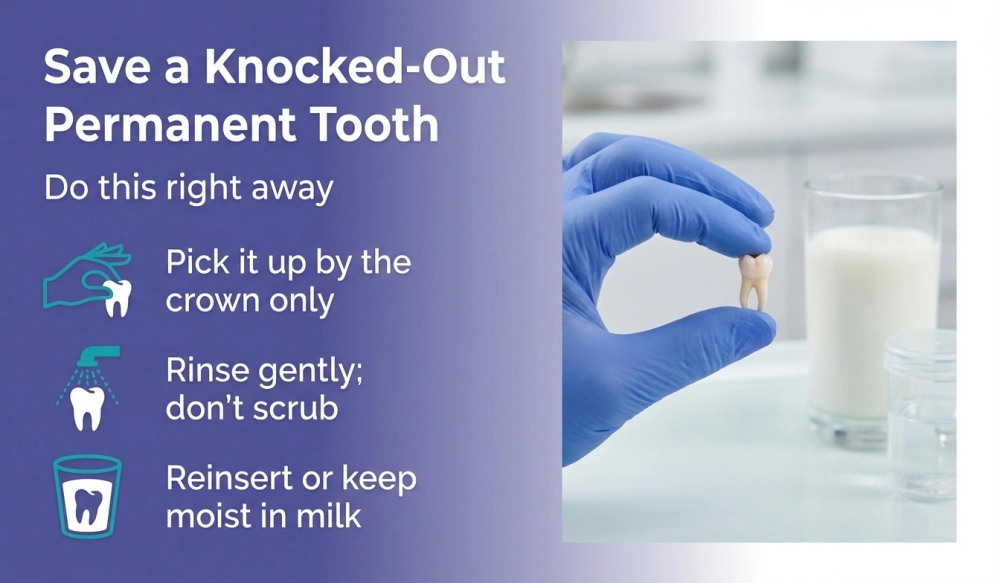
- Find the tooth carefully Pick it up by the crown only, which is the white part you normally see in the mouth. Do not touch the root because it has delicate cells that help the tooth reattach [1] [2].
- If dirty, rinse briefly Rinse for only a few seconds under a gentle stream of cold water. Do not scrub or use soap or chemicals [1].
- Replant if you can If your child is alert and cooperative, gently place the tooth back into the socket in the correct orientation. Have your child bite on a clean cloth to hold it in place. This step gives the best chance of saving the tooth if done quickly [1] [2].
- Keep it moist if replanting is not possible Do not let the tooth dry out. The ideal option is a tooth preservation solution. If that is not available, save knocked out tooth in milk or place it in the child’s cheek pouch if they are old enough not to swallow it accidentally. Saline is also acceptable [1] [2] [4].
- Get care immediately Seek a pediatric dental emergency visit right away. Time out of the mouth affects outcomes, and earlier treatment improves the chance of long term success [1] [2].
These steps are based on international and national trauma guidelines for avulsed permanent teeth. They emphasize rapid replantation or proper storage media to protect periodontal ligament cells that are critical for healing [1] [2].
What should you do if a baby tooth is knocked out and how is it different?
A primary tooth has a different plan than a permanent tooth. Do not reinsert a baby tooth that was knocked out. Reinserting a primary tooth can injure the developing permanent tooth under the gums. Instead, control bleeding with gentle pressure, comfort your child, and contact a pediatric dentist for an evaluation. The dentist will check for soft tissue injury, tooth fragments under the gums, and trauma to other teeth. A follow up plan may include observation, soft diet, and gentle cleaning. Your child’s smile can still develop normally with a missing primary tooth, and space management may be discussed if needed [3] [10].
How can you control bleeding, swelling, and pain safely at home?
In the first hours after a dental injury, comfort and safety are the priorities. These tips can help until you reach the dental office:
- Apply steady pressure Place clean gauze or a soft cloth over the area and have your child bite down firmly for ten minutes. Replace with fresh gauze if needed. If bleeding continues after twenty minutes of steady pressure, seek urgent care [6].
- Use a cold compress Apply cold on the outside of the mouth near the injured area. Hold for ten to twenty minutes at a time to reduce swelling. Do not place ice directly against the gums or teeth [6].
- Rinse gently with water After the first few hours, gentle rinses can keep the area clean. Avoid strong mouthwashes that can sting [6].
- Consider over the counter pain relievers If appropriate for your child, you may use acetaminophen or ibuprofen according to the product label and your pediatrician’s guidance. Sedating medications should be avoided unless prescribed and monitored according to pediatric sedation guidelines [7].
- Stay with soft foods Choose cool, soft foods and plenty of fluids. Avoid using straws if the lip or gum was cut because suction can disturb clots [6].
What common mistakes should parents avoid during tooth injury first aid kids?
During a stressful moment it is easy to reach for the nearest solution, but certain actions can reduce the chance of a good result. Try to avoid these common mistakes:
- Do not scrub a tooth root Root cells are delicate and needed for healing. A quick gentle rinse is best if the tooth is dirty [1].
- Do not store a tooth dry A dry tooth is less likely to survive. Use a tooth preservation kit, milk, saline, or the child’s cheek if safe [2] [4].
- Do not reinsert a baby tooth Primary teeth should not be replanted. Call for an evaluation instead [3] [10].
- Do not delay care after an avulsion Every minute counts for a permanent tooth that has been knocked out. Call right away and head in [1] [2].
- Do not use home glues or harsh cleaners Chemicals can damage living tissues and make treatment more complicated. Keep it simple with water and clean gauze [6].
When should you choose an emergency pediatric dentist versus the ER?
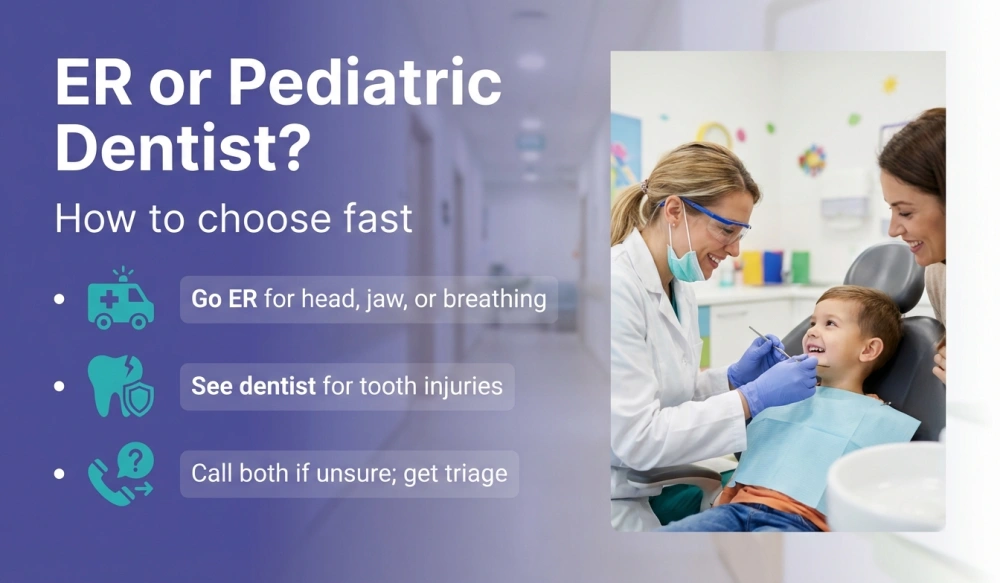
Most tooth injuries are best handled by a pediatric dentist who can assess the mouth, take appropriate imaging, and stabilize the tooth. You should go to the ER instead if you suspect a concussion or head injury, if there is uncontrollable bleeding, if your child cannot breathe comfortably, or if the jaw appears broken. For tooth specific injuries without those signs, an emergency pediatric dentist can typically see your child faster and provide focused dental care. If you are unsure, call both your pediatric dentist and your pediatrician and describe what you see so a clinician can triage your child’s needs.
Most tooth injuries are best handled by a pediatric dentist who can assess the mouth, take appropriate imaging, and stabilize the tooth. You should go to the ER instead if you suspect a concussion or head injury, if there is uncontrollable bleeding, if your child cannot breathe comfortably, or if the jaw appears broken. For tooth specific injuries without those signs, an emergency pediatric dentist can typically see your child faster and provide focused dental care. If you are unsure, call both your pediatric dentist and your pediatrician and describe what you see so a clinician can triage your child’s needs.
How do California rules and local considerations affect pediatric dental emergencies?
Parents in California benefit from clear state requirements that support safety and access during urgent dental visits.
- Emergency consent for minors California law allows emergency medical care when a parent or guardian cannot be reached and delay would pose a significant risk, which can apply to urgent dental situations when immediate treatment is needed to prevent serious harm. Your provider will document attempts to contact caregivers and act in the child’s best interest [9].
- Safety for sedation During some procedures, pediatric dentists may use nitrous oxide or other sedation in accordance with national guidelines and California permit rules. In California, dentists must hold specific permits and follow monitoring standards to protect children during and after sedation [7] [8].
- Local access to care Families in Laguna Niguel and nearby communities like Aliso Viejo, Laguna Hills, Mission Viejo, Laguna Beach, and San Juan Capistrano can often find same day or after hours support by calling a pediatric emergency dentist near me. Describing your child’s symptoms helps the office plan imaging and comfort measures before you arrive.
How can you protect your child after an injury and prevent future trauma?
A good recovery plan helps with comfort and healing, and prevention reduces the chance of another injury. Here are practical steps families can use:
What comfort and hygiene tips help in the first week?
- Choose soft foods Offer smoothies, yogurt, oatmeal, mashed vegetables, eggs, and pasta. Avoid hard, sticky, or crunchy foods that can bump the tooth or irritate soft tissues [6].
- Keep the area clean Brush gently around injured teeth with a soft brush. A warm salt water rinse can help keep cuts clean after the first day if your dentist recommends it [6].
- Watch for changes Report increasing pain, swelling, fever, a bad taste, or color changes of the tooth. These may indicate infection or other complications that deserve prompt follow up [6].
How can sports mouthguards reduce dental trauma risk?
- Use a mouthguard for practices and games Mouthguards reduce the risk and severity of dental injuries in contact and collision sports. Custom options generally fit better and are more comfortable for children, which supports consistent use [5].
- Replace damaged mouthguards A torn or distorted guard may not protect well. Bring it to your pediatric dentist for a quick check and replacement guidance [5].
What follow up visits should you expect after a dental injury?
- Early reassessment Follow up visits help monitor healing, check tooth vitality, and confirm that the bite is comfortable. Your dentist will tailor the schedule based on the type of injury [3].
- Restorative touch ups Small chips may be polished or restored with tooth colored materials. Larger breaks might need more comprehensive care, which your pediatric dentist will discuss with you in detail [3].
What questions do parents ask most about kids tooth injuries?
How fast do I need to act if a permanent tooth is knocked out?
Act immediately. Ideally, replant the tooth right away or keep it moist in a tooth preservation solution or milk while you head to the dentist. Earlier treatment is tied to better outcomes for the periodontal ligament cells that help the tooth reattach [1] [2].
Should I try to reinsert a baby tooth that was knocked out?
No. Do not reinsert a primary tooth because it could harm the developing permanent tooth. Control the bleeding, comfort your child, and contact a pediatric dentist for evaluation and guidance [3] [10].
Is milk really an acceptable storage medium for a knocked out tooth?
Yes. If a commercial tooth preservation solution is not available, cold milk is a widely recommended option to help keep the root cells viable on the way to the dentist. Saline is also acceptable. Avoid water if possible, and do not let the tooth dry out [1] [2] [4].
What if my child will not let me put the tooth back in?
Do not force it. Keep the tooth moist as recommended and head to the dentist immediately. Focus on keeping your child calm and comfortable while you travel. The dentist can replant or stabilize the tooth once you arrive [1] [2].
How do I know if a crack is serious or if it is just a small chip?
Watch for pain with biting, sensitivity that lasts, or a pink or red spot in the center of the tooth. These signs suggest deeper involvement and the need for prompt care. A small enamel chip without pain may be smoothed and restored at a timely visit [3] [6].
Can my child go back to school or sports right after a chipped tooth?
For a minor chip without pain, your child may return to routine activities with caution. For larger fractures, displaced teeth, or a reimplanted tooth, your dentist will recommend limiting activity and using a mouthguard for protection. Follow professional advice to protect healing tissues [3] [5].
Do we need X rays after a dental injury?
Many injuries benefit from imaging to check tooth roots and surrounding bone. Pediatric dentists use techniques and equipment designed for children to minimize exposure and maximize comfort, and will recommend imaging based on the exam findings [3].
What should I tell the school nurse or coach after an injury?
Share the dentist’s instructions, including activity limits, diet suggestions, and any medications. Coaches should reinforce mouthguard use for sports and watch for signs of discomfort or swelling. If an injury occurred at school or during sports, note the time and details for your dentist [5] [6].
How does Kidz Modern Dentistry support families during dental emergencies?
Kidz Modern Dentistry provides same day support for pediatric dental emergency situations throughout Laguna Niguel and neighboring cities including Aliso Viejo, Laguna Hills, Mission Viejo, Laguna Beach, and San Juan Capistrano. Our team focuses on compassionate communication, clear next steps, and child centered comfort from the first phone call to follow up care. You can reach us at +1 949 273 0110.
Laguna Niguel Emergency dentist for kids in Laguna Niguel services are coordinated to help families navigate urgent needs with clarity. We provide triage by phone, rapid scheduling, and coordinated care with pediatricians or specialists when appropriate. Our goal is to restore comfort and protect your child’s long term oral health with evidence based care.
What is our approach to urgent care and comfort?
- Same day scheduling We reserve time for kids same day dental care so your child can be seen quickly for chipped, cracked, or avulsed teeth.
- Child centered communication We explain each step in child friendly language and involve you in decisions so you feel confident about the plan.
- Sedation options when appropriate For anxious children or complex procedures, we offer kid friendly sedation dentistry consistent with national pediatric sedation guidelines and California permit requirements [7] [8].
- Modern imaging and conservative care We use child appropriate imaging and minimally invasive techniques whenever possible to support healing and comfort.
Where do we serve families and how do we coordinate care after hours?
- Local access We support families across Laguna Niguel, Aliso Viejo, Laguna Hills, Mission Viejo, Laguna Beach, and San Juan Capistrano with timely guidance and care.
- After hours support If your child experiences a dental trauma in the evening or on a weekend, call our office line for instructions and connection to after hours pediatric dentist support when indicated.
How do our experience and tools help in dental trauma in children?
- Experienced pediatric team Our clinicians have years of combined experience managing dental trauma in children, from small enamel chips to complex injuries.
- Stabilization and restoration We offer smooth polishing for small chips, tooth colored restorations, protective splinting for displaced teeth, and coordinated referrals when needed, all explained in family friendly terms.
- Prevention focus We help fit sports mouthguards and provide coaching on home care to reduce future risk for active kids [5].
Parents in our community often ask about finding an emergency pediatric dentist near me who can help right away without adding stress. Our practice design emphasizes gentle communication, clear expectations, and timely follow up to support your child’s healing and your peace of mind. If you have questions about what to do for a kids chipped tooth, a child cracked tooth, or a knocked out tooth kid scenario, call us so we can talk you through safe first steps and see your child promptly.
References
- IADT Guidelines for the Management of Traumatic Dental Injuries Avulsion of Permanent Teeth – Dental Traumatology
- Recommended Guidelines of the American Association of Endodontists for the Treatment of Traumatic Dental Injuries – American Association of Endodontists
- Guideline on Management of Acute Dental Trauma – American Academy of Pediatric Dentistry
- Knocked Out Tooth – American Dental Association
- Mouthguards – American Dental Association
- Dental Injuries – MedlinePlus
- Guidelines for Monitoring and Management of Pediatric Patients During and After Sedation – American Academy of Pediatrics
- Anesthesia and Sedation Permits – Dental Board of California
- Family Code Section 6910 Emergency Medical Care – California Legislative Information
- IADT Guidelines for the Management of Traumatic Dental Injuries Primary Dentition – Dental Traumatology
- Dental Injuries – UCSF Benioff Children’s Hospitals
- Dental Emergencies – American Dental Association
Common Questions About This Topic
Find answers to frequently asked questions related to this article.
