- What makes cavities in baby teeth a real health issue?
- Why are baby teeth essential for speech chewing and adult tooth alignment?
- When should you fill cavities in baby teeth?
- What happens if a cavity in a baby tooth is left untreated?
- How do pediatric dentists diagnose and treat early childhood caries?
- How do fluoride and sealants protect kids teeth?
- What comforts and safety standards are used during pediatric care?
- How can you prevent cavities in toddlers at home and between visits?
- What should you do in a pediatric dental emergency?
- How do cost and timing affect decisions for treating baby teeth?
- How does dental care in Laguna Niguel CA support families?
- Who is Kidz Modern Dentistry and how do we help families in Laguna Niguel?
- Where can you find the research and guidelines referenced in this article?
What makes cavities in baby teeth a real health issue?
Cavities in baby teeth are not simply a temporary nuisance. They are an active infection that can progress quickly, cause pain, and affect how your child eats, sleeps, and learns. Dental caries is among the most common chronic conditions in children, and it often appears earlier than many parents expect [1]. When we treat decay in primary teeth, we are not just fixing a tooth. We are protecting your child’s overall health and quality of life.
Tooth decay can form when bacteria in the mouth use sugars from foods and drinks to produce acids. Those acids soften and break down tooth enamel over time. In young children the enamel is thinner than adult enamel, so cavities can spread more rapidly [2]. If a cavity reaches the inner layer of the tooth, pain and infection can follow.
Leaving decay untreated increases the risk of dental abscess, facial swelling, and difficulty eating. Children with poor oral health are more likely to miss school and may have trouble focusing in class because of discomfort [1]. Treating cavities promptly helps kids feel better and supports healthy routines at home and at school.
Why are baby teeth essential for speech chewing and adult tooth alignment?
Baby teeth do much more than fill a smile. They help your child chew nutritious foods, develop clear speech patterns, and maintain space for permanent teeth to come in correctly [2]. When a primary tooth is lost too early to cavities, nearby teeth can drift into the empty space. That movement may lead to crowding or bite problems later, possibly requiring more involved orthodontic care [7].
Healthy primary teeth guide the eruption of adult teeth like small signposts. They also support the jaw as it grows and help kids learn precise sounds. Maintaining these teeth keeps daily life comfortable and supports your child’s social confidence during the years when they are learning, playing, and making friends.
When should you fill cavities in baby teeth?
If your child has a cavity that is not limited to the very outer surface, a filling is usually recommended to remove the decay and restore the tooth’s function. Timely treatment reduces the risk of deeper infection and preserves the tooth until it is naturally ready to fall out [3]. A pediatric dentist will consider your child’s age, the size and location of the cavity, the expected time until the tooth exfoliates, and your child’s comfort and cooperation during visits.
In some cases for very early noncavitated lesions, nonrestorative approaches like fluoride varnish or silver diamine fluoride can arrest or slow progression while we monitor closely [4]. Once a cavity has cavitated or threatens the inner dentin, restoration becomes the practical choice to stop the process and keep the tooth working well [3].
What happens if a cavity in a baby tooth is left untreated?
When decay advances, it can reach the nerve of the tooth and cause pain, swelling, or infection. This can lead to interrupted sleep, difficulty concentrating, and avoidance of certain foods. Infections from teeth can spread beyond the mouth and occasionally require urgent care [1]. Untreated cavities can also contribute to speech changes and loss of space for adult teeth, especially if a tooth is lost before its time [7].
In short, ignoring decay rarely saves time or cost. Early and appropriate care is more comfortable for children and usually involves less invasive procedures. If you have questions about timing, talk with a pediatric dentist who will examine the tooth, discuss options, and outline a plan that fits your child’s needs [3].
How do pediatric dentists diagnose and treat early childhood caries?
The first step is a gentle examination to look for signs of early childhood caries, including chalky white spots, brown discoloration, or obvious holes. We also evaluate your child’s risk factors, such as diet, brushing routines, and fluoride exposure. When needed, dental X rays help us see areas between teeth that are not visible to the eye. Radiation exposure from modern dental X rays is kept as low as reasonably achievable using digital systems, protective aprons, and careful selection of images [5].
What do exams and X rays look for?
During an exam, we check each tooth surface, the gums, and the bite. If there are tight contacts between back teeth, small bitewing X rays may be recommended to detect hidden decay. This allows us to confirm the size of a lesion, whether it involves the inner dentin, and how close it is to the nerve chamber. Clear information allows your family to decide on the best next step [5].
Which treatments are common for small and moderate cavities?
For small to moderate cavities that do not involve the nerve, the decayed area is gently removed and the tooth is restored. Many families prefer tooth colored options that bond to enamel and blend in with the smile [3]. Kids composite dental fillings can rebuild the tooth’s shape so your child can chew comfortably and keep the area clean with daily brushing.
When a cavity is larger or on a chewing surface that takes more force, a preformed crown may be recommended to protect the tooth until it is ready to exfoliate. The goal is always the same. We want your child to be comfortable, able to eat a full range of foods, and better protected against future decay in that spot [3].
Families who prefer care close to home often ask about treatment availability. Kids composite dental fillings in Laguna Niguel are a common choice for restoring function while keeping a natural appearance, and they are planned with your child’s comfort and long term oral health in mind [3].
When is a baby tooth root canal needed?
If decay reaches the nerve but the tooth is still restorable, a baby tooth root canal called pulp therapy can relieve pain and preserve the tooth until it is naturally shed. The specific approach pulp capping, partial removal of affected tissue, or a full pulpotomy depends on the diagnosis and the extent of inflammation or infection [6]. This procedure is different from adult root canal therapy and is designed specifically for primary teeth. When successful, it helps maintain normal chewing and spacing until the adult tooth is ready to come in.
When are space maintainers recommended?
If a primary molar must be removed early and the adult successor is not ready to erupt, a space maintainer can hold space so neighboring teeth do not drift. This can reduce the chance of crowding and future bite problems. Your pediatric dentist will evaluate whether a fixed or removable option is appropriate and will monitor it at regular visits [7].
How do fluoride and sealants protect kids teeth?
Fluoride helps teeth resist acid attacks by supporting remineralization of enamel. For young children at risk of cavities, professional fluoride varnish applied in a dental office can reduce new decay. Primary care clinicians are also recommended to apply fluoride varnish for children younger than six when appropriate [8]. At home, using a smear or pea sized amount of fluoride toothpaste as directed helps protect teeth daily [2].
Dental sealants for kids are thin protective coatings placed on the grooves of molars to block bacteria and food from settling in hard to clean pits. Sealants are shown to lower the chance of cavities in permanent molars and are a widely used preventive strategy in pediatric care [9]. For children with deep grooves in primary molars or high caries risk, your dentist may also discuss sealing those surfaces to reduce risk.
Some families ask about silver diamine fluoride for arresting early lesions. SDF can stop progression of certain cavities, though it can darken the treated area. It is often used for very young or anxious children or when a quick noninvasive option is needed, with a plan to restore later if appropriate [4].
What comforts and safety standards are used during pediatric care?
Your child’s comfort is central to positive dental experiences. Pediatric teams use behavior guidance techniques like tell show do, distraction, and simple explanations to build trust. Topical anesthetics numb the surface, and local anesthesia is used when needed to prevent pain during cavity care. For children with high anxiety, a strong gag reflex, or special health care needs, sedation options may be discussed and planned carefully with parents [10].
In California, dentists who provide sedation for children must meet specific training, staffing, facility, and permit requirements established by state regulators. These standards support careful patient selection, informed consent, monitoring, and emergency readiness during procedures [10]. If sedation is part of the plan, your dentist will review what to expect, how to prepare, and how your child will be monitored throughout the visit.
Regarding imaging, modern digital systems and protective measures help keep radiation doses low. Only necessary images are taken, and techniques follow national guidance so that benefits clearly outweigh risks [5].
How can you prevent cavities in toddlers at home and between visits?
Prevention is a shared effort between families and the dental team. Simple daily routines can dramatically lower the risk of tooth decay in toddlers and preschoolers. Start brushing as soon as the first tooth appears using a soft brush and a smear of fluoride toothpaste about the size of a grain of rice, then a pea sized amount at age three. Help your child brush twice a day and clean between teeth once the contacts close [2].
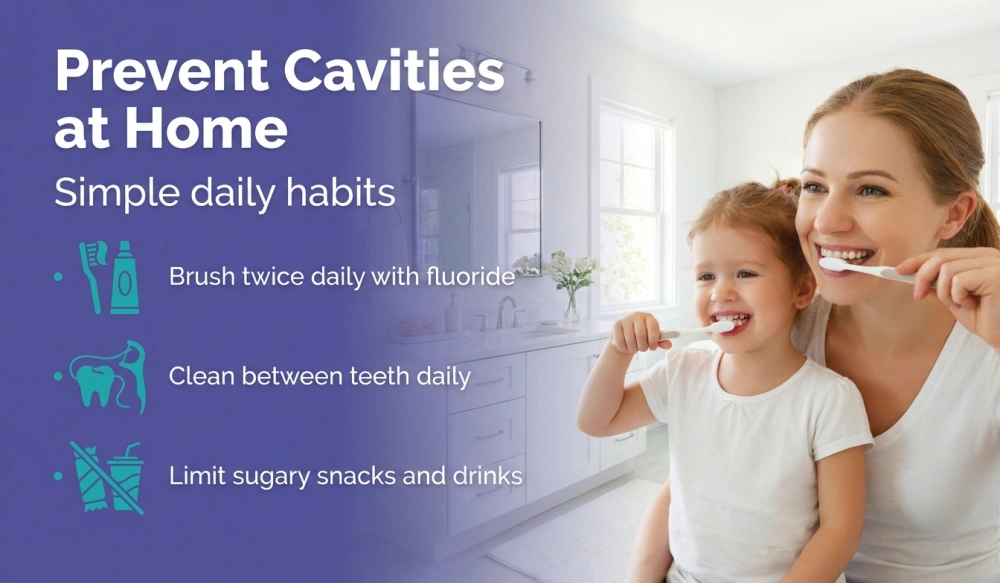
Limit the frequency of sugary snacks and drinks, especially between meals. Offer water regularly and reserve juice for mealtimes in small portions, following pediatric nutrition guidance. The American Academy of Pediatrics recommends limiting fruit juice for young children and prioritizing whole fruit instead [11]. The Dietary Guidelines for Americans also encourage reducing added sugars to support overall health [12].
Consider fluoride treatment for children during well visits at the dental office. Professionally applied fluoride varnish can strengthen enamel and is quick and comfortable for kids [8]. Talk with your dental team about your child’s specific risk and the best plan to prevent cavities in kids based on age, habits, and diet [3].
As your child grows, discuss sealants for newly erupted molars. Sealants are especially helpful for children with deep grooves or those who have had earlier decay [9]. Regular checkups allow the team to monitor teeth, reinforce brushing habits, and catch small issues before they become bigger problems.
What should you do in a pediatric dental emergency?
Call your pediatric dentist right away if your child has a broken tooth, facial swelling, a toothache that wakes them at night, or a knocked out permanent tooth. Quick guidance helps protect the tooth and ease discomfort. If a permanent tooth is avulsed, keep it moist in milk or a tooth preservation solution and seek care immediately. If a baby tooth is knocked out, do not try to reinsert it. Instead, call for instructions and an urgent evaluation to check the area and plan for space maintenance if needed [7].
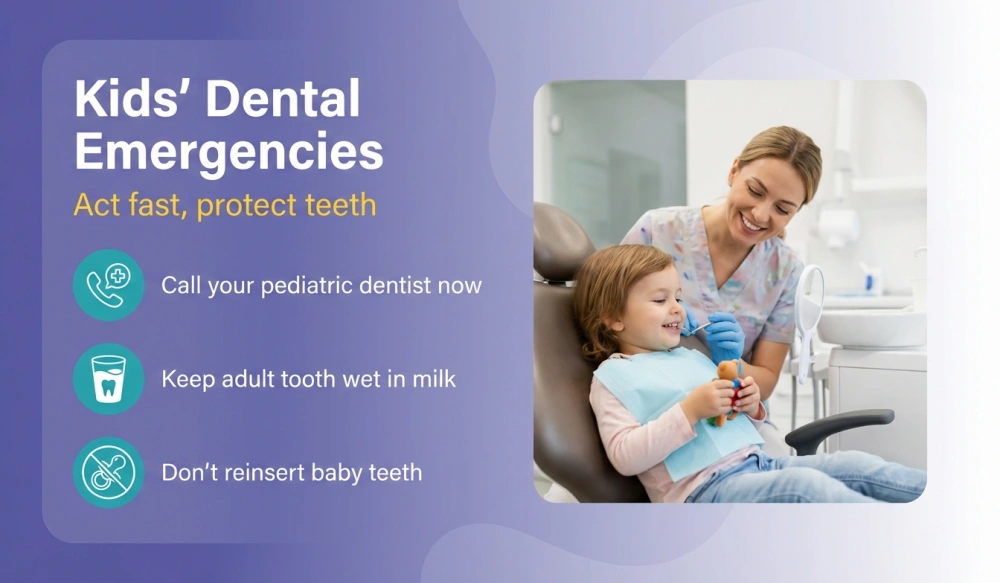
For mouth injuries with bleeding, gentle pressure with clean gauze can help while you contact the office. If swelling or fever is present with a toothache, the situation may require same day evaluation. Teams experienced in pediatric dental emergencies can provide fast directions by phone and arrange care that fits the urgency of the problem.
How do cost and timing affect decisions for treating baby teeth?
It is natural to weigh timing and cost. Treating cavities early is often simpler and more comfortable than waiting. Early care can reduce the likelihood of more extensive procedures like a baby tooth root canal or extraction with space maintenance [6]. Preventive treatments such as fluoride and sealants are usually more affordable than restorative care and help reduce new decay [9].
During your visit, the pediatric dentist will review options, discuss expected lifespan of the tooth, and outline home care steps that protect your investment. If a tooth is close to natural exfoliation, the team may consider a conservative approach. If a tooth still has years to function, restoring it supports chewing, speech, and healthy development.
How does dental care in Laguna Niguel CA support families?
Parents in Laguna Niguel benefit from access to comprehensive children’s dental care Laguna Niguel services that emphasize prevention, comfort, and evidence guided treatment. From early checkups to cavity prevention and timely restorations, the focus is on practical steps that keep kids smiling and healthy at every age. If you are seeking a pediatric dentist Laguna Niguel or a kids dentist Laguna Niguel, look for a team that welcomes questions, explains options clearly, and partners with you on a plan that fits your child.
Local practices coordinate with your child’s pediatrician when helpful, especially for fluoride varnish for younger children and for families managing medical conditions that affect oral health. If your family has questions about water fluoridation, brushing routines, or nutrition, your dental team can provide resources and guidance aligned with recognized public health recommendations [8] [12].
Who is Kidz Modern Dentistry and how do we help families in Laguna Niguel?
At Kidz Modern Dentistry we care for children of all ages in Laguna Niguel California and nearby communities. Our team provides same day attention for urgent concerns, kid friendly sedation when appropriate, and comprehensive preventive and restorative care that aligns with current pediatric guidelines. We combine welcoming communication with technology and techniques designed to make visits positive for children and reassuring for parents.
Here is how our services connect directly to the topic of cavities in baby teeth and what your family can expect next:
- Clear evaluation and personalized plans We perform gentle exams and use digital imaging only when necessary to confirm whether a cavity is present and how deep it is. We review treatment choices side by side so you can make informed decisions that match your goals.
- Conservative and effective treatment options We treat small and moderate decay with minimally invasive methods that respect healthy tooth structure. When a restoration is needed, we discuss appearance, durability, and daily care so you know what to expect as your child grows.
- Support for anxious or very young children Behavior guidance techniques are used first. If additional support is indicated, we offer sedation options that follow state permits and safety protocols. Parents receive clear pre visit and post visit instructions and direct access to our clinicians for questions.
- Space management and growth monitoring If a tooth requires extraction, we evaluate timing and the need for a space maintainer. We also monitor bite development to help guide healthy eruption of adult teeth.
- Preventive focus for lasting benefits We emphasize fluoride treatment for children when indicated, dental sealants for kids on newly erupted molars, nutrition guidance, and coaching on brushing routines to lower the risk of new decay.
- Same day help when problems arise We set aside time for pediatric dental emergencies so that pain and infections can be addressed quickly. We guide you by phone and coordinate in office care without delay.
Our practice serves families in Laguna Niguel CA and nearby communities. You can reach us at +1 949 273 0110 to ask questions or arrange a visit. We believe every parent deserves clear information and every child deserves care that feels comfortable, respectful, and tailored to their needs. Our clinicians work collaboratively and bring years of combined experience in pediatric dentistry, including prevention, restorative treatments, pulp therapy for primary teeth, and space maintenance planning.
We value communication after the visit just as much as during it. If your child is receiving treatment, we check in to review comfort, healing, and home care routines. For families planning care over several visits, we set milestones and keep you updated about progress and next steps. Our goal is to help you feel confident about when to fill baby teeth and how to prevent future problems with practical, family friendly strategies.
Where can you find the research and guidelines referenced in this article?
- Children’s Oral Health Facts and Impact – Centers for Disease Control and Prevention
- Tooth Decay in Children Overview – National Institute of Dental and Craniofacial Research
- Restorative Dentistry for the Pediatric Patient Best Practices – American Academy of Pediatric Dentistry
- Evidence Based Guideline on Nonrestorative Treatments for Carious Lesions – Journal of the American Dental Association
- Dental Radiography Including X Rays – U.S. Food and Drug Administration
- Pulp Therapy for Primary and Immature Permanent Teeth Best Practices – American Academy of Pediatric Dentistry
- Management of the Developing Dentition and Occlusion Best Practices – American Academy of Pediatric Dentistry
- Prevention of Dental Caries in Children Younger Than 6 Years Recommendation – U.S. Preventive Services Task Force
- Dental Sealants Proven to Prevent Cavities Fact Sheet – Centers for Disease Control and Prevention
- Sedation and General Anesthesia Permits Requirements – Dental Board of California
- Fruit Juice in Infants Children and Adolescents Policy Statement – American Academy of Pediatrics
- Dietary Guidelines for Americans Current Edition – U.S. Departments of Agriculture and Health and Human Services
Common Questions About This Topic
Find answers to frequently asked questions related to this article.