- What is holistic pediatric dentistry and how does it differ from traditional care?
- How does whole body thinking apply to children’s oral health?
- Which treatments and materials are common in holistic dentistry for children?
- Does nutrition really affect cavities and development in kids?
- How does airway focused orthodontics relate to pediatric dental care?
- When are dental X rays appropriate for children in California?
- What should parents know about safety regulations and professional guidelines in California?
- How do you decide if holistic dentistry is right for your child?
- What questions should you ask a pediatric holistic dentist in Laguna Niguel?
- How does Kidz Modern Dentistry support families seeking integrative care in Laguna Niguel?
- Where can I find the references used in this article?
What is holistic pediatric dentistry and how does it differ from traditional care?
Holistic pediatric dentistry looks at your child’s mouth as part of the whole body. It blends evidence informed dentistry with healthy lifestyle guidance that supports growth, development, and comfort. In practical terms, that can include careful selection of dental materials, an emphasis on prevention, and close attention to habits such as breathing, sleep, and nutrition. It does not replace conventional pediatric dentistry. Instead, it adds a broader focus on how choices in the dental office can align with your family’s wellness values while staying within established clinical standards and safety guidelines from professional and government bodies [2] [5] [6].
Parents often ask whether holistic care is only about natural products. The core idea is more comprehensive than that. A pediatric holistic dentist weighs risk and benefit for each child, uses materials with strong safety records, and follows a minimally invasive care path whenever possible. In children, dental caries is one of the most common chronic conditions, so a prevention first mindset is central to this approach [1].
Within this framework, you will still see familiar services such as cleanings, sealants, and restorative care when needed. The difference is in how decisions are made and communicated. Expect a focus on education, shared decision making, and options that respect individual sensitivities and parental preferences, while adhering to respected guidelines for safety and effectiveness [2] [6].
How does whole body thinking apply to children’s oral health?
Whole body oral health for kids recognizes that the mouth can influence and reflect overall wellness. For example, early childhood tooth decay can affect eating, learning, sleep, and behavioral development. National data show that a significant number of young children experience cavities, which can disrupt daily life if not managed early [1]. Holistic pediatric dentistry addresses these links by combining clinical care with guidance on routines at home that support the mouth and body together.
Here are ways this perspective comes to life in the care plan:
- Breathing and sleep Pediatric dentists can screen for signs of mouth breathing and sleep disordered breathing, which can impact growth and behavior. When findings suggest concern, a referral to your child’s physician or an airway specialist may be recommended in alignment with pediatric policies on sleep health [10].
- Nutrition and hydration Diet shapes the cavity risk landscape. Simple changes like limiting sugar frequency and choosing tooth friendly snacks can lower risk without making mealtimes stressful [15].
- Gentle prevention Using home care coaching, professional cleanings, fluoride varnish when appropriate, and sealants for susceptible teeth can help keep treatment needs small and comfortable over time [6].
For many families, this is a practical, supportive path that puts daily habits and early monitoring at the center. It also aligns with the value many parents place on early and consistent Preventive care choices for their children.
Which treatments and materials are common in holistic dentistry for children?
Holistic dentistry for children uses many standard pediatric treatments, with particular attention to safety, comfort, and material selection. The following topics highlight frequent questions parents ask and how they are addressed with guidance from professional associations, federal agencies, and scientific reviews.
What does mercury free and BPA free care mean for my child?
Mercury free care refers to choosing restorative materials that do not contain dental amalgam. The United States Food and Drug Administration provides recommendations regarding the use of amalgam in certain higher risk populations, including children, due to potential mercury exposure. Many pediatric practices have transitioned away from amalgam in favor of other materials, consistent with these recommendations and parental preferences [4].
BPA free often comes up when discussing sealants and tooth colored fillings. Bisphenol A related compounds can be present in small amounts in some resin based materials. Research indicates that any exposure from dental treatment is generally low and short lived. Professional organizations provide strategies to reduce potential exposure even further, such as thoroughly curing and rinsing treated teeth. Parents who value minimizing potential exposures can discuss product choices and placement techniques with their dentist [5].
How are low radiation dental X rays used for kids safely?
Dental X rays are a valuable diagnostic tool, but they are prescribed thoughtfully for children. The Food and Drug Administration and the American Dental Association recommend taking images only when they are likely to improve diagnosis and treatment, using child sized exposure settings, rectangular collimation, and thyroid collars as appropriate. These steps follow the as low as reasonably achievable principle for radiation [2] [3]. California also offers guidance specific to dental radiography to help practices set protocols and maintain safety [13].
- Individualized timing The interval for bitewings or other views depends on cavity risk, growth stage, and clinical findings rather than a fixed schedule [2].
- Child focused technique Modern digital sensors, careful positioning, and protective shielding help reduce exposure while producing diagnostic images that inform better decisions [2] [3].
If you have questions about imaging frequency, ask your pediatric dentist to walk you through why a specific image is recommended now, what it will show, and how it will change care planning [2].
What options exist for minimally invasive dentistry for children?
Minimally invasive dentistry aims to control disease and preserve healthy tooth structure. This approach can be particularly reassuring for children who are anxious or sensitive. Common options include:
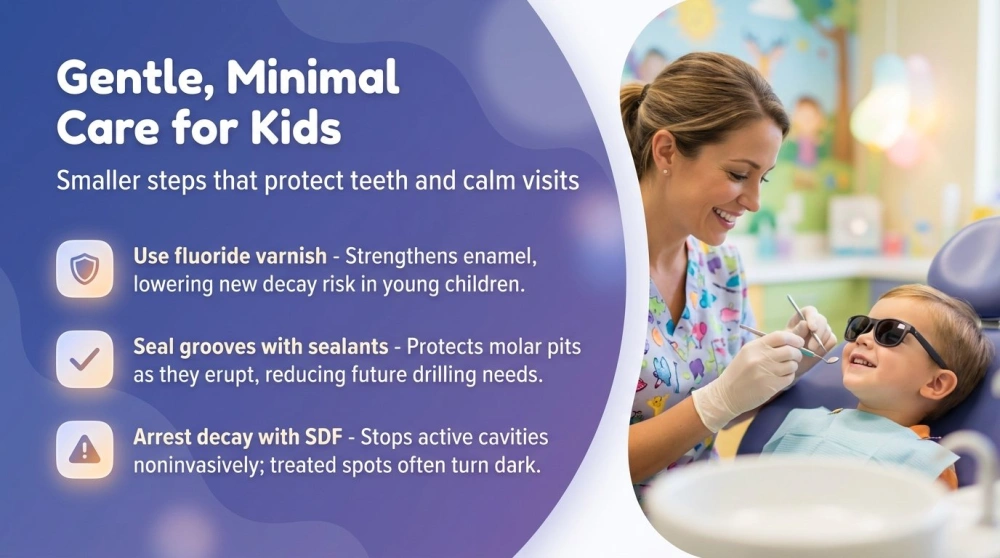
- Fluoride varnish and sealants Professional fluoride varnish can strengthen enamel and reduce risk of new decay in primary teeth, especially for higher risk toddlers and preschoolers. Sealants can protect grooves on permanent molars as they erupt [6].
- Silver diamine fluoride SDF can arrest active decay in select cases, buying time for young or anxious children until a conventional restoration is appropriate. It often darkens the area treated, which your dentist will discuss before application [7].
- Atraumatic restorative techniques Hand instruments and adhesive materials may be used to remove soft decay and place a restoration with minimal vibration and noise. Your dentist can explain when this technique is appropriate for your child’s lesion and risk level [6].
Can laser dentistry help children and when is it considered?
Lasers can be helpful in soft tissue procedures such as tongue tie releases and management of small soft tissue lesions, and they may aid in select hard tissue applications in children. The American Academy of Pediatric Dentistry provides guidance on training, safety, and case selection for laser use in pediatric patients. If your child is a candidate, your dentist will explain expected benefits, alternatives, and aftercare so you can make a confident choice [9].
Is ozone therapy dentistry supported by strong evidence for kids?
Parents sometimes ask about ozone applications as a chemical method to manage bacteria in early decay. Evidence reviews to date have found limited and inconsistent support for ozone in treating dental caries. Because of this, many pediatric dentists prioritize preventive measures and well studied treatments first, using ozone only within research informed contexts and with careful discussion of benefits and limits [8].
What is biocompatibility testing and is it needed for dental materials?
Biocompatibility refers to how a material interacts with the body. Medical device guidance incorporates international standards for testing materials before they are cleared for clinical use. In routine pediatric dentistry, special allergy testing is rarely required, but it may be considered if a child has a known or suspected sensitivity to a material component. Your pediatric dentist can coordinate with your child’s physician or an allergy specialist when appropriate [11] [12].
Does nutrition really affect cavities and development in kids?
Yes. Diet patterns strongly influence cavity risk. Sugary foods and drinks feed oral bacteria that produce acids, and frequent snacking reduces the time teeth have to recover. Global and national public health recommendations encourage limiting added sugars and choosing nutrient dense foods for children to support both oral and overall health [15] [1].
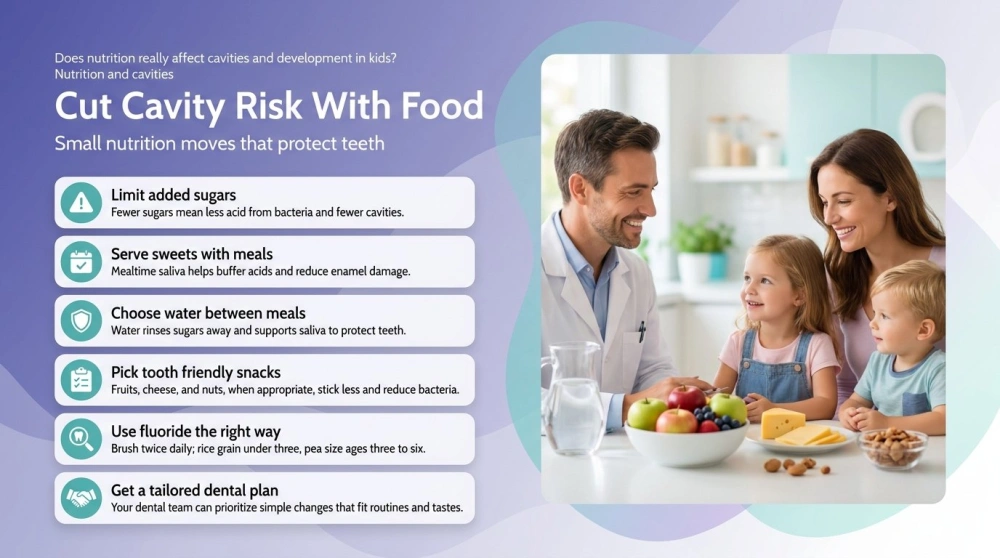
- Snack timing matters Offer sweets with meals rather than as frequent snacks, and choose water as the default drink between meals [15].
- Tooth friendly swaps Fresh fruit, cheese, nuts where age appropriate, and crunchy veggies can be better options than sticky or sugary snacks [15].
- Fluoride and home care Twice daily brushing with a fluoride toothpaste in a rice grain amount for children under three and a pea sized amount for ages three to six supports enamel strength. Your pediatric dentist will tailor advice to your child’s needs and risk factors [6].
Nutrition and oral health go hand in hand. If you are making changes at home, your dental team can help prioritize simple steps that fit your child’s palate and routine [15].
How does airway focused orthodontics relate to pediatric dental care?
Airway focused orthodontics considers how jaw growth, dental arch development, and oral habits may relate to breathing and sleep. Pediatric dentists can screen for signs such as chronic mouth breathing, snoring, or narrow arches, and refer to appropriate medical or orthodontic providers for evaluation. The aim is to support healthy function, not just tooth alignment. Policies from pediatric dental organizations encourage early identification and collaborative care when sleep disordered breathing is suspected [10].
If your child shows symptoms like restless sleep, daytime fatigue, or attention challenges, speak with your pediatrician and dentist. A team approach can help determine whether dental, orthodontic, or medical steps are indicated and in what sequence [10].
When are dental X rays appropriate for children in California?
In California, as elsewhere, dental X rays are prescribed based on individual risk, age, and clinical findings. National guidance emphasizes taking images only when they are expected to influence diagnosis or treatment and using exposure reduction strategies for children. California’s public health resources further support practices in implementing equipment checks, technique training, and quality assurance programs for dental radiography [2] [13].
- First visit and risk assessment Your dentist will review your child’s history, perform an exam, and determine if any images are warranted on day one. Many low risk children do not need images at every visit [2].
- Protection and positioning Child sized settings, thyroid collars when appropriate, and careful sensor placement help get the needed image with the least possible exposure [2] [3].
Ask how imaging supports the plan for your child today. A transparent explanation is a key part of family centered care [2].
What should parents know about safety regulations and professional guidelines in California?
California families can expect their pediatric dental providers to follow both national guidelines and California specific rules. Here are key areas and where they come from:
- Imaging practices Providers follow national recommendations for radiographs and consult state guidance on dental radiography practices and quality assurance in California [2] [13].
- Sedation permits and safety The Dental Board of California issues permits for pediatric sedation levels and sets training and facility requirements. If your child might benefit from sedation, ask your dentist about their permit status and monitoring protocols [14].
- Material choices and advisories Federal communications guide recommendations on materials such as dental amalgam, with clinicians considering these in shared decision making with parents [4].
These frameworks support safe care while allowing room for individualized decisions that fit your child’s needs and your family’s values [2] [14].
How do you decide if holistic dentistry is right for your child?
Choosing a care philosophy is personal. Consider the following questions as you think about holistic dentistry for your child:
- Do you prefer to start with prevention and the least invasive option? If yes, you will likely appreciate the emphasis on risk assessment, coaching, and conservative treatments when appropriate [6] [7].
- Are you interested in detailed discussions about materials? Holistic minded teams welcome conversations about resin chemistry, fluoride use, and alternatives for special circumstances [5].
- Would you like attention to breathing, sleep, and posture? Screening for airway related concerns and collaboration with pediatricians can be part of a thoughtful plan [10].
If this resonates, schedule a consultation to review your child’s history, diet, habits, and previous dental experiences. A pediatric holistic dentist in Laguna Niguel can outline options and timelines so you can make a comfortable, informed decision together.
What questions should you ask a pediatric holistic dentist in Laguna Niguel?
Bringing a short list to your first visit can help organize the conversation. Here are parent friendly prompts:
- How do you decide when X rays are needed for kids? Ask how risk level, age, and clinical findings guide the decision and what protective steps are used [2] [3] [13].
- Which materials do you recommend for fillings and sealants, and why? Invite a comparison of options including safety profiles and durability for children [5].
- What minimally invasive options do you offer? Discuss fluoride varnish, sealants, SDF, and conservative restorations where appropriate [6] [7].
- How do you collaborate on nutrition and home care? Look for practical, age specific coaching and check in plans [6] [15].
- Do you screen for airway or sleep issues and coordinate with physicians? Ask about referrals and communication with your pediatrician when needed [10].
- What is your approach to comfort and anxiety reduction? Explore behavioral techniques, numbing methods, and whether sedation is available when truly needed in compliance with California permits [14].
How does Kidz Modern Dentistry support families seeking integrative care in Laguna Niguel?
At Kidz Modern Dentistry in Laguna Niguel CA, we focus on calm visits, clear communication, and choices that respect your family’s preferences. Our team provides same day help for urgent concerns, kid friendly sedation when appropriate, and comprehensive pediatric care tailored to each child’s age and needs.
Here is how our approach connects to the holistic topics in this guide:
- Whole child perspective We listen to your goals and consider growth, habits, sleep, and school schedules when designing care plans that fit your family.
- Material mindfulness We select materials with strong safety and performance records, discuss BPA free options, and do not place amalgam in children in line with current recommendations for at risk groups [4] [5].
- Imaging with intention We prescribe child specific X rays only when they inform diagnosis, use protective measures, and follow national and California specific guidance [2] [13].
- Gentle, conservative care We emphasize early risk assessments, coaching, fluoride varnish when indicated, sealants, and SDF to keep treatment as simple as possible for kids [6] [7].
- Comfort and anxiety support Our kid friendly environment and behavior guidance help set the stage for positive experiences. When needed, we discuss sedation options consistent with California permit standards and safety protocols [14].
We serve families across Laguna Niguel and nearby communities in South Orange County. Parents often start with a new patient visit focused on a relaxed meet and greet, a cavity risk check, and questions about daily routines and diet. This is a simple way to map out Preventive care in Laguna Niguel for the months ahead with your child’s comfort in mind.
We welcome your call at +1 949 273 0110 to schedule a visit or ask questions. You will speak with a friendly team member who can help you plan next steps without pressure. If your child has special considerations, such as sensory sensitivities or a medical condition, let us know so we can prepare accommodations that support a smooth, positive appointment for your family.
Where can I find the references used in this article?
- Children’s Oral Health Fast Facts – Centers for Disease Control and Prevention
- Dental Radiography Recommendations – U.S. Food and Drug Administration
- Dental Imaging Resources – Image Gently Alliance
- Dental Amalgam in High Risk Groups – U.S. Food and Drug Administration
- Bisphenol A in Dental Materials – American Dental Association
- Caries Prevention in Children – U.S. Preventive Services Task Force
- Silver Diamine Fluoride Policy – American Academy of Pediatric Dentistry
- Ozone Therapy for Dental Caries – Cochrane Library
- Lasers in Pediatric Dentistry – American Academy of Pediatric Dentistry
- Obstructive Sleep Apnea Policy – American Academy of Pediatric Dentistry
- Biocompatibility Guidance ISO 10993 – U.S. Food and Drug Administration
- Allergic Contact Dermatitis Overview – American Academy of Allergy Asthma and Immunology
- Dental Radiography Resources – California Department of Public Health
- Sedation Permit Information – Dental Board of California
- Healthy Diet Fact Sheet – World Health Organization
Common Questions About This Topic
Find answers to frequently asked questions related to this article.
