
- What is the typical baby teeth timeline for eruption and loss?
- When do the different primary teeth usually come in?
- When do baby teeth usually fall out and which ones are first?
- What symptoms can you expect during teething and what is normal?
- How can you help soothe teething discomfort safely?
- When should your child have the first dental visit and why does it matter in Laguna Niguel?
- How do dental milestones affect chewing speech and jaw growth?
- What does an easy to use tooth eruption chart look like?
- Which factors can make teeth come in earlier or later?
- What should you do if teeth seem late early or out of order?
- How do you care for baby teeth to prevent cavities from the start?
- What should families in Laguna Niguel and Orange County know about fluoride and water?
- How are pacifiers thumb and finger habits related to the timeline?
- What should you do after a dental injury to a baby tooth?
- What changes happen when permanent molars arrive during mixed dentition?
- How safe are dental X rays for children and when are they needed?
- What month by month milestones can you expect in the first year?
- Which teething and eruption myths should you ignore?
- Who is Kidz Modern Dentistry and how do we help families in Laguna Niguel?
- Where can you find the references used for this guide?
What is the typical baby teeth timeline for eruption and loss?
Most children start teething around the middle of the first year, and they begin losing baby teeth in the early school years. The first primary tooth often appears around six months and the full set of twenty primary teeth usually emerges by about age three [1]. These teeth generally start to loosen and fall out around age six, making way for permanent teeth through the preteen years [1].
It is completely normal for the schedule to vary by several months from child to child. Genetics, overall health, and individual growth patterns can all influence timing [1]. If your child is a few months early or late compared to a chart, that alone is not a reason to worry. If you have concerns about pain, swelling, or delayed eruption beyond what is expected for your child’s growth, a visit with a pediatric dentist in Laguna Niguel can help you get answers and a clear plan that fits your child’s needs.
When do the different primary teeth usually come in?
Knowing the order helps you anticipate what is coming next and how to keep your child comfortable. Typical patterns are as follows, with a reminder that a normal range exists for each tooth [1][2]:
- Lower central incisors usually erupt first around six to ten months [1][2].
- Upper central incisors often follow around eight to twelve months [1].
- Upper and lower lateral incisors come next around nine to sixteen months [1].
- First molars tend to arrive around thirteen to nineteen months [1].
- Canines commonly appear around sixteen to twenty three months [1].
- Second molars usually erupt last around twenty three to thirty three months [1].
You might notice emerging teeth in pairs, especially the incisors, and you may also see pauses between stages. Both are normal. If your child appears uncomfortable, the next sections outline what is typical and what you can do at home while you plan a routine check with a kids dentist in Laguna Niguel.
When do baby teeth usually fall out and which ones are first?
Baby teeth tend to fall out in roughly the same order they came in. Many children start losing their lower central incisors around age six. From there, upper central incisors and lateral incisors usually follow, then first molars, canines, and second molars. This process often continues through around age twelve [1].
While the order is fairly predictable, timing can vary. A difference of several months is common and usually not concerning. If a baby tooth is very delayed in falling out after the permanent tooth is already visible behind or above it, your pediatric dentist can evaluate if a simple intervention is helpful.
What symptoms can you expect during teething and what is normal?
Teething is a normal developmental process. Many children experience mild irritability, drooling, gum rubbing, and a desire to chew on safe objects. Sleep may be disrupted for a day or two when a new tooth is pushing through. These symptoms are typically short lived and manageable with simple comfort strategies [2][12].
Concerning symptoms that may point to illness rather than teething include high fever, persistent diarrhea, widespread rash, or symptoms that appear severe or prolonged. These concerns warrant a call to your pediatrician. When in doubt, seek professional guidance locally and do not assume teething is the cause of significant illness [12].
How can you help soothe teething discomfort safely?
For most children, gentle steps can make a big difference. Consider these options, and talk with your pediatric dentist or pediatrician if you need more guidance:
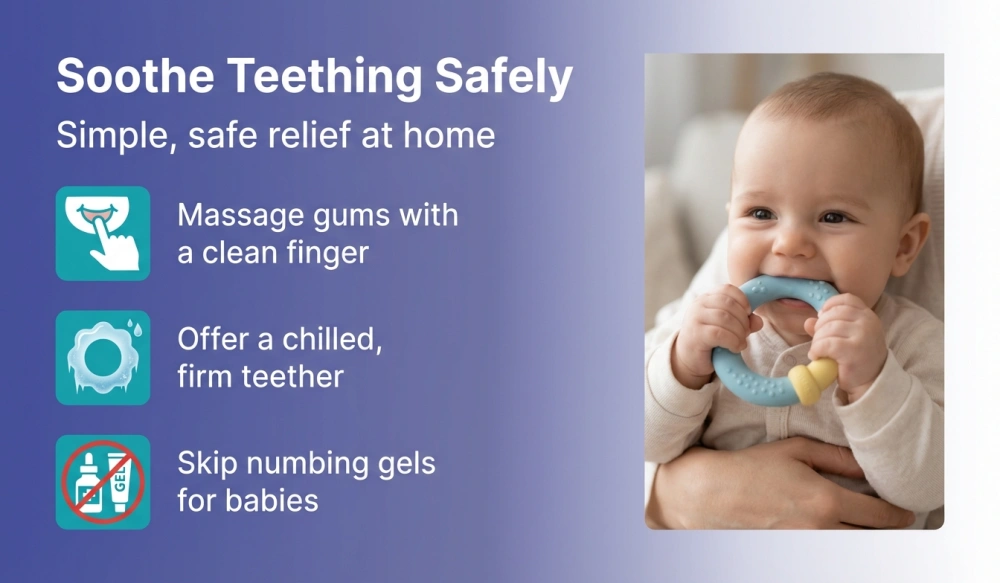
- Massage the gums with a clean finger or a soft damp cloth to provide pressure and relief [2].
- Offer a chilled teething ring that is firm and safe. Avoid anything that is frozen solid to prevent gum injury [2].
- Maintain good oral hygiene by wiping gums and brushing the new tooth as soon as it appears [3].
- Avoid topical numbing gels that contain benzocaine for young children due to known safety risks. The United States Food and Drug Administration advises against these products for teething pain in infants and young children [5].
- Check any homeopathic products and be cautious about unproven remedies. If you are unsure about a product, consult your pediatrician or pediatric dentist [5].
If your child seems uncomfortable despite simple measures, reach out to a pediatric dentist in Laguna Niguel for personalized tips. For persistent pain, fever, or swelling, contact your pediatrician.
When should your child have the first dental visit and why does it matter in Laguna Niguel?
Both the American Academy of Pediatric Dentistry and many public health organizations recommend that children establish a dental home and have the first visit by the first birthday or within six months of the first tooth erupting [7]. Early visits support comfort with the dental setting, allow cavity prevention through coaching and fluoride varnish when indicated, and help spot any growth or eruption concerns early [4].
In Laguna Niguel and across Orange County, early care also connects families with guidance about local water sources, fluoride exposures, and regional diet habits. This matters because small adjustments at home, such as brushing with the right amount of fluoride toothpaste and scheduling routine checkups, can significantly reduce the risk of early childhood caries [3][4].
How do dental milestones affect chewing speech and jaw growth?
Eruption timing and the sequence of emerging teeth affect how well children can bite, chew, and speak clearly. Incisors help with speech sounds and biting into foods like fruits and vegetables, while molars grind and support thorough chewing. Proper contact between upper and lower teeth supports jaw growth and alignment. If primary teeth are lost very early, the space may narrow and affect where permanent teeth come in later. This is one reason routine visits help maintain a healthy path through the baby teeth timeline [1].
Concerns such as prolonged pacifier use or thumb and finger habits beyond the preschool years can influence alignment and should be discussed with your pediatric dentist to guide gentle habit change if needed [8].
What does an easy to use tooth eruption chart look like?
While charts are guides rather than strict rules, they are helpful references for parents. Here is a simple overview that you can bookmark and compare with your child’s growth. The ranges below align with widely used professional references [1]:
Which primary teeth usually erupt in the first two years?
- Lower central incisors come in around six to ten months.
- Upper central incisors come in around eight to twelve months.
- Upper and lower lateral incisors come in around nine to sixteen months.
- First molars come in around thirteen to nineteen months.
- Canines come in around sixteen to twenty three months.
- Second molars come in around twenty three to thirty three months.
When do primary teeth typically fall out?
- Lower and upper central incisors often loosen and fall out around ages six to seven.
- Lateral incisors usually follow around ages seven to eight.
- First molars are often shed around ages nine to eleven.
- Canines typically fall out around ages nine to twelve.
- Second molars usually fall out around ages ten to twelve.
Permanent molars, especially the first permanent molars, often erupt around age six even though no baby tooth falls out in that location. This is a key milestone for sealants and preventive care as described below [9][14].
Which factors can make teeth come in earlier or later?
Several factors can influence timing for both eruption and exfoliation:
- Family pattern plays a meaningful role. If you or close relatives teethed early or late, your child may follow a similar pattern [1].
- Overall growth and health can affect the pace of development. Prematurity, low birth weight, or certain medical conditions may change timing [1].
- Nutrition and fluoride exposure support strong enamel. Appropriate fluoride levels and balanced nutrition help teeth form and emerge in a healthy way [3][12].
If your child’s timeline is substantially different from expected patterns, your pediatric dentist can evaluate spacing, tooth positions, and growth using an exam and, when appropriate, limited X ray images to check the position of developing teeth [6].
What should you do if teeth seem late early or out of order?
Start by noting your child’s age and which teeth you expected to see. A difference of a few months is usually not significant. Early, late, or out of sequence eruption may still be within normal variation. Consider these steps:
- Schedule a checkup with a kids dentist in Laguna Niguel to confirm healthy growth and to review an eruption chart personalized for your child.
- Ask about spacing and alignment so you know whether space needs to be preserved for incoming permanent teeth.
- Discuss imaging only if needed based on exam findings and risk, following established recommendations to keep radiation as low as reasonably achievable [6].
Many cases simply need time. If there is a true delay or obstruction, your pediatric dentist will explain options and help you plan the next steps.
How do you care for baby teeth to prevent cavities from the start?
Good habits in the first years set the stage for a lifetime of healthy smiles. Here are evidence informed steps supported by public health recommendations:
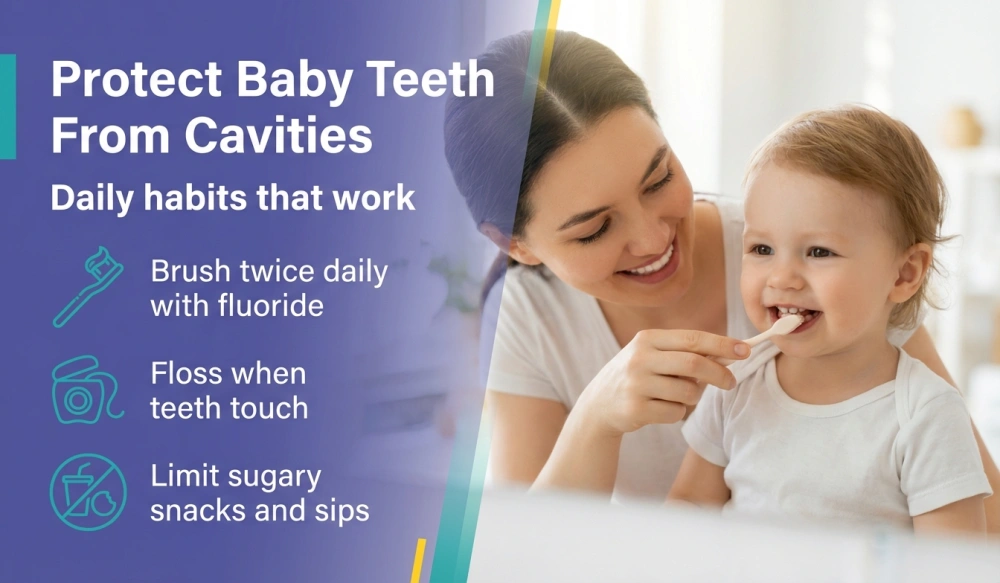
- Brush twice daily with fluoride toothpaste using a smear the size of a grain of rice for children under three and a pea sized amount for ages three to six, unless your dentist gives different instructions for your child [3].
- Floss once contact points close so the bristles can no longer clean between teeth. Begin flossing gently, often when molars contact [3].
- Ask about fluoride varnish during well child or dental visits, especially for children at higher risk of cavities. Professional varnish applications reduce cavity risk in young children [4].
- Keep snacks and drinks tooth friendly by limiting frequent sugary exposures. Offer water between meals and save treats for mealtime.
- Consider sealants on permanent molars when they erupt to protect the deep grooves where toothbrush bristles do not reach well [9][14].
These simple steps pair well with routine dental visits. If you ever feel unsure about technique, ask your pediatric dentist to demonstrate brushing and flossing at your child’s appointment.
What should families in Laguna Niguel and Orange County know about fluoride and water?
Many communities in California use community water fluoridation at levels recommended to prevent cavities. The state maintains information on fluoridation programs, and your local water provider can share current levels for your neighborhood [12]. Fluoride strengthens enamel and makes it more resistant to acid attacks from plaque and sugars. Daily brushing with fluoride toothpaste and appropriate professional fluoride, such as varnish, offer additional benefits for children at risk [3][4].
If you use bottled or filtered water, ask about fluoride content, as some filtration systems reduce fluoride. Your pediatric dentist in Laguna Niguel can help you understand your child’s overall fluoride exposure and whether any adjustments are recommended.
How are pacifiers thumb and finger habits related to the timeline?
Comfort habits are common in infants and toddlers, and most children stop on their own during the preschool years. When habits continue as teeth erupt and the bite develops, they can influence alignment or palate shape. Your pediatric dentist can help you monitor effects and offer gentle strategies if change is needed. Professional guidance suggests that persistent habits beyond the preschool years may increase the risk of changes to tooth position and bite, so early coaching and encouragement can be helpful [8].
What should you do after a dental injury to a baby tooth?
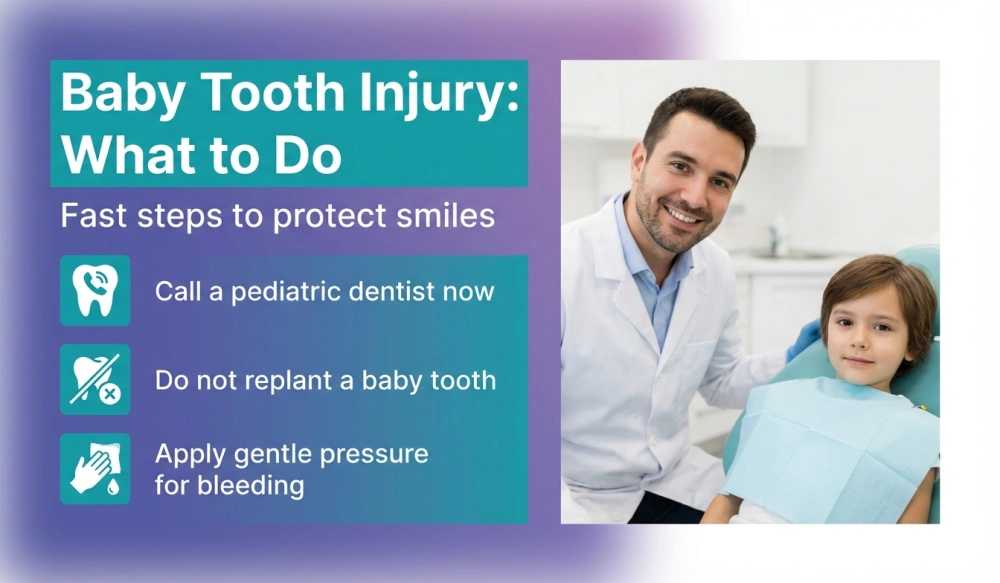
Falls and playground bumps happen. If a baby tooth is pushed, chipped, or knocked out, call a pediatric dentist right away for specific next steps and to protect the developing permanent tooth beneath. In general, parents should know that an avulsed baby tooth should not be replanted because of the risk to the developing permanent tooth [10]. Apply gentle pressure with a clean cloth if there is bleeding and seek same day care for pain, loose teeth, or any change in the way the teeth come together [10].
What changes happen when permanent molars arrive during mixed dentition?
A major milestone in the baby teeth timeline is the arrival of the first permanent molars around age six. They erupt behind the last baby molars, so no baby tooth falls out first. These new molars have deep grooves and are important for chewing and jaw support. Sealants applied by your dentist can reduce the risk of decay in these grooves, and children benefit from coaching on brushing angles and flossing around the new teeth [9][14].
Mixed dentition describes the years when both primary and permanent teeth are present. It is a good time to watch spacing and the bite. Your dentist may discuss limited imaging or referral if crowding or bite concerns appear as the permanent incisors and molars settle into place [6].
How safe are dental X rays for children and when are they needed?
Pediatric dentists follow established recommendations to take X rays only when the expected information will benefit diagnosis or treatment. This approach supports the principle to keep exposure as low as reasonably achievable and to use shielding and modern digital techniques that limit dose while providing clear images [6]. Decisions about timing consider your child’s age, cavity risk, eruption pattern, and symptoms like pain or swelling.
If you have questions about the need for an image, ask your dentist to explain what the picture will show and how it changes the plan. Families deserve clear conversations about benefits and risks, and your care team is happy to help.
What month by month milestones can you expect in the first year?
Although each child is unique, this month by month guide can help you anticipate the first few teeth and build good habits:
- Months one to three Caring for gums sets the stage. Wipe the gums gently with a soft cloth after feedings and before bed to remove milk residue and to introduce a routine [3].
- Months four to six Watch for drooling, gum rubbing, and interest in chewing. The first tiny edge of a lower front tooth may appear late in this window [2].
- Months six to eight The first tooth often arrives. Begin brushing twice a day with a tiny smear of fluoride toothpaste and a soft baby brush [3].
- Months eight to ten Upper front teeth may emerge. Teething discomfort can be managed with gum massage and safe chilled rings [2].
- Months ten to twelve More incisors often appear. Plan the first dental visit by the first birthday so you can review home care, diet, and fluoride with a pediatric dentist [7].
After the first birthday, molars and canines come in over the next year or two, with spacing patterns unique to your child. If you live in Laguna Niguel or anywhere in Orange County, regular checkups also help align dental care with your family’s lifestyle, school routines, and sports activities.
Which teething and eruption myths should you ignore?
It is easy to hear conflicting advice from friends and social media. These clarifications can help:
- Teething is not a cause of high fever. Seek medical advice for significant fever, persistent diarrhea, or widespread rash [12].
- Topical numbing gels are not recommended for infants. Products with benzocaine pose known risks for young children and should not be used for teething pain [5].
- Eruption charts are guides rather than deadlines. Healthy children can be a little early or late and still be on track [1].
- Baby teeth matter because they hold space for permanent teeth and support nutrition, speech, and confidence. Early care prevents problems later [1][3].
Who is Kidz Modern Dentistry and how do we help families in Laguna Niguel?
Kidz Modern Dentistry provides pediatric focused care for infants, toddlers, children, and teens in Laguna Niguel and across Orange County. We welcome new families for routine checkups, the first dental visit by the first birthday, and same day emergencies when urgent needs arise. Our team emphasizes simple education, calm visits, and clear next steps so parents feel confident at home.
How do our services relate to your child’s baby teeth timeline?
- Early prevention visits help you understand eruption stages, track spacing, and build brushing and flossing routines that match your child’s age.
- Comfort focused teething guidance offers practical tips for soothing while keeping safety first in line with public health recommendations.
- Growth and alignment checks allow us to monitor how new teeth fit together and to discuss habits that might affect the bite.
Where do we operate and whom do we serve?
- Service area includes Laguna Niguel, Dana Point, Aliso Viejo, Mission Viejo, and nearby Orange County communities.
- Access is designed for busy families with convenient scheduling and same day emergency availability when possible.
What is our approach to comfort and child friendly care?
- Kid friendly sedation options are available for select cases and are delivered under licenses and permits in line with California Dental Board standards for safety and monitoring [11].
- Positive visit design uses gentle communication, tell show do techniques, and clear explanations to reduce anxiety for children and parents.
Which tools and methods support clear decisions for families?
- Low dose imaging is used only when needed and consistent with national recommendations to keep exposure as low as reasonably achievable [6].
- Preventive focus includes fluoride varnish when indicated, sealants for permanent molars, and home coaching on brushing and flossing [4][9][14].
Why choose a local pediatric dentist in Laguna Niguel for your family?
- Personalized care means direct access to a pediatric focused team that knows your child and tracks milestones over time.
- Experience with children of all ages helps us adapt visits to toddlers, school age kids, and teens in a way that keeps them engaged and comfortable.
- Track record of calm visits comes from patient education, parent partnership, and routines that support positive experiences.
If you have questions about when baby teeth will come in or fall out, or if you want help planning a first visit, call Kidz Modern Dentistry at +1 949-273-0110. Our goal is to make dental visits a positive part of your child’s routine and to support healthy smiles from the very first tooth.
Where can you find the references used for this guide?
- Tooth Eruption Charts and Timing – American Dental Association
- Teething Facts for Parents – National Institute of Dental and Craniofacial Research
- Children’s Oral Health and Fluoride Toothpaste Guidance – Centers for Disease Control and Prevention
- Prevention of Dental Caries in Children Younger Than Five Years – United States Preventive Services Task Force
- Teething Pain Guidance and Benzocaine Risks – United States Food and Drug Administration
- Dental Radiographic Examinations and Patient Selection – United States Food and Drug Administration
- First Dental Visit By Age One – American Academy of Pediatric Dentistry
- Policy on Oral Habits and Developing Dentition – American Academy of Pediatric Dentistry
- Dental Sealants for Children – National Institute of Dental and Craniofacial Research
- Guidelines for Traumatic Dental Injuries In The Primary Dentition – International Association of Dental Traumatology
- Sedation Permits and Standards – Dental Board of California
- Community Water Fluoridation in California – State Water Resources Control Board
- Teething Overview and Symptoms – MedlinePlus National Library of Medicine
- Sealants Help Prevent Tooth Decay in Children – Centers for Disease Control and Prevention
Common Questions About This Topic
Find answers to frequently asked questions related to this article.
