- What makes a pediatric dentist different from a general dentist who treats adults?
- When should your child first see a pediatric dentist?
- How does specialized training translate to safer and gentler care for kids?
- What preventive treatments help prevent cavities and protect baby teeth?
- How do pediatric dentists help prevent crooked teeth and guide growth early?
- How do pediatric dentists manage dental anxiety in children?
- What should parents know about nitrous oxide for kids and sedation safety?
- How do pediatric dentists care for children with special health care needs?
- How do child friendly dental offices support better visits and outcomes?
- How do emergencies and dental trauma in kids get handled differently?
- What local and federal standards apply to pediatric dental care in California?
- How can parents support better oral health at home between visits?
- Where can families in Laguna Niguel and nearby cities find pediatric dentistry near me and what should they look for?
- Why choose Kidz Modern Dentistry for pediatric dental care in Laguna Niguel and South Orange County?
- Where can you review the research and guidelines referenced?
What makes a pediatric dentist different from a general dentist who treats adults?
If you are deciding between a pediatric dentist and a general dentist who mostly treats adults, the key difference is specialization in the needs of infants, children, and adolescents. A pediatric dentist is a child dental specialist. Their training focuses on growth and development, behavior guidance, prevention for growing smiles, and care tailored to children with diverse learning styles and medical needs. Pediatric dental care is designed around the way kids learn, communicate, and feel safe.
Pediatric dentists complete dental school and then additional specialty training in caring for children, including infants and teens. That training includes child psychology, behavior management, minimally invasive approaches, and sedation care that is appropriate for young patients. This focus supports gentler techniques, age specific communication, and care plans that match a child’s stage of development [1]. Professional organizations emphasize that pediatric providers build a dental home early so that prevention, risk assessment, and anticipatory guidance are consistently aligned with each child’s age and needs [1].
General dentists provide important care for adults and families. Many are comfortable treating children for routine needs. When your child needs a team that lives in the world of kids every day, a pediatric dentist brings training, tools, and an environment built just for children. This includes child friendly communication, smaller instruments, behavior guidance strategies, and preventive programs proven to reduce the risk of cavities and other concerns in childhood [6].
In South Orange County communities such as Laguna Niguel, Mission Viejo, Aliso Viejo, Laguna Hills, Laguna Beach, and San Juan Capistrano, parents often ask about the difference because they want visits to feel positive. A pediatric dentist’s entire office and approach are centered on your child’s comfort, confidence, and long term health from the first tooth through adolescence [1].
When should your child first see a pediatric dentist?
Professional guidance recommends that children establish a dental home by their first birthday or within six months of the first tooth coming in [1]. Early visits are short and gentle. The goal is to identify risk, help you plan everyday care at home, and make the office feel familiar and welcoming to your child. Starting early helps prevent problems before they start and allows your child to build trust with a kids dentist.
To understand why timing matters, consider that tooth decay is common in childhood. National data show that about half of children aged six to eight have had a cavity in their baby teeth. Among adolescents aged twelve to nineteen, over half have had a cavity in permanent teeth [3]. Those numbers show why prevention and regular checkups with a children’s dentist are so important.
At the first visit, your pediatric dentist will review baby teeth care, nutrition tips, cavity risk, and home routines that make brushing and flossing easier. You will also get practical guidance on fluoride treatments, tooth friendly snacks, and habits to avoid. Early appointments are usually calm and brief, helping your child feel in control and curious rather than worried [1].
What happens during an early childhood visit?
Early visits typically include a gentle exam, a review of health history, and coaching for parents on daily routines. If needed, the team may apply fluoride varnish to strengthen enamel. You will have time to ask questions about teething, pacifiers, thumb sucking, and injury prevention. Your pediatric dentist will explain how often to return, based on your child’s individual risk and growth pattern [1][5].
How does specialized training translate to safer and gentler care for kids?
Children think, feel, and communicate differently from adults. Pediatric dentists train in behavior guidance and communication tailored to children so that procedures are more comfortable and predictable. Techniques such as tell show do, positive reinforcement, distraction, and parental involvement are used to reduce fear and build confidence. These strategies are part of widely accepted guidelines used by pediatric dentists [6].
Safety is a priority in pediatric dental care. Radiographs are taken only when they contribute to diagnosis and treatment, and practices follow national recommendations that emphasize using the lowest radiation dose that achieves the clinical goal. Parents should expect protective measures, careful selection of images, and equipment set for children [10].
Pediatric dentists also receive training in the safe use of nitrous oxide and other sedation options when needed. Sedation is not routine for every child, but for those who benefit, pediatric teams follow clear monitoring and safety protocols from professional organizations with training specific to caring for children [7].
What preventive treatments help prevent cavities and protect baby teeth?
Prevention is the heart of pediatric dental care. Your child’s smile grows and changes quickly, and small improvements today can have a lasting effect. A pediatric dentist will create a plan that supports strong enamel, healthy gums, and balanced habits.
Which in office preventive services matter most?
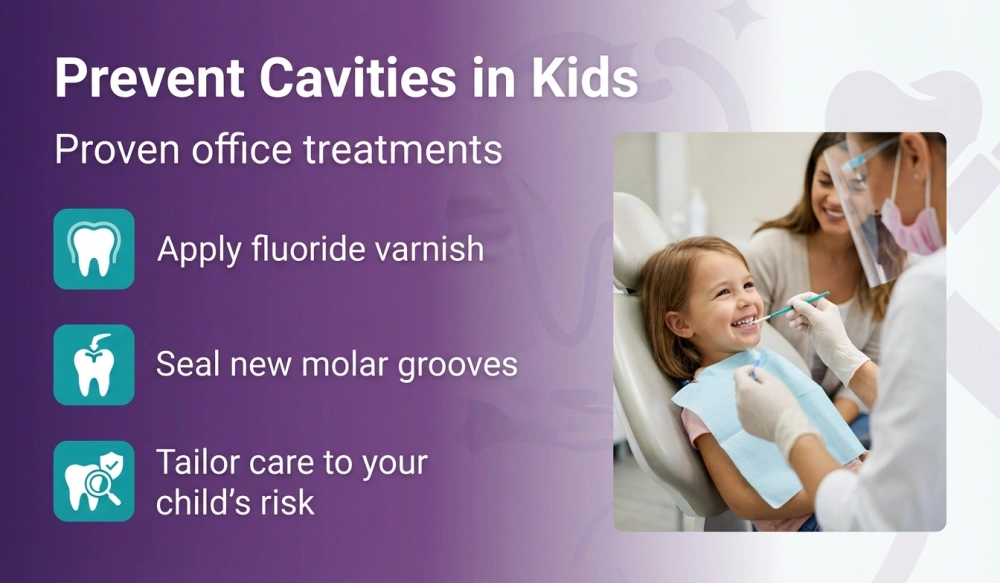
- Fluoride treatments Fluoride varnish is a quick coating that strengthens enamel and lowers cavity risk for children at all levels of risk. Evidence supports its use in primary care and dental settings for children with erupted teeth [5].
- Dental sealants for children Sealants protect the chewing surfaces of permanent molars by covering the grooves where bacteria and food can get stuck. Research shows sealants can reduce cavities in molars by around eighty percent during the first two years after placement and continue to be effective beyond that time frame [4].
- Individualized risk assessment A pediatric dentist will assess diet, fluoride exposure, brushing habits, medical conditions, and family history to tailor prevention. This makes each visit personalized and focused on what will help your child most [1].
How can home routines prevent cavity risk day to day?
- Brush with fluoride toothpaste For most children, brushing twice daily with a small smear or pea size amount of fluoride toothpaste supports enamel strength and helps prevent cavity formation. Your pediatric dentist will guide you on the right amount for your child’s age and risk [11][5].
- Make flossing a family habit Floss the tight spaces once a day once teeth touch. Children often need hands on help well into grade school to do a thorough job [1].
- Choose tooth friendly snacks and drinks Limit frequent sipping of sweet drinks and sticky snacks. Offer water, especially between meals, and save sweets for occasional treats with toothbrushing afterward when possible [11].
- Use protective gear for play For sports or active play, ask about mouthguards to reduce injury risk to teeth and lips. Pediatric dentists can guide you on fit and comfort for growing mouths [13].
Why do baby teeth deserve just as much attention as permanent teeth?
Healthy primary teeth are important for chewing, speech, nutrition, and confidence. They also hold space for permanent teeth and guide proper eruption. Treating baby teeth protects comfort and function now and supports healthy growth of the face and jaws over time [11]. Regular visits to a children’s dentist help you stay ahead of small issues so they do not become bigger problems.
How do pediatric dentists help prevent crooked teeth and guide growth early?
Baby teeth and jaws are constantly changing, and the earlier a pediatric dentist evaluates your child’s bite, the more options there are to guide balanced growth. Interceptive steps can reduce crowding, maintain necessary space, and improve the way upper and lower teeth meet. This is especially important after early loss of a baby tooth due to decay or injury. Space maintainers can hold the place for a future permanent tooth and help reduce the chance of shifting that leads to crowding [9].
Parents often say seeing a pediatric dentist early help prevent crooked teeth before braces become a full time personality trait. That playful idea points to a real concept. Early evaluation can identify habits such as prolonged thumb sucking or mouth breathing. It can also guide timing for referrals to orthodontists when needed. The goal is to support healthy jaw growth and make any future orthodontic care more efficient and comfortable [9].
Your pediatric dentist monitors the eruption timeline, spacing, and bite at each visit. If a space maintainer or habit guidance tool is recommended, you will receive clear instructions and regular checkups to confirm it remains comfortable and effective [9].
How do pediatric dentists manage dental anxiety in children?
Dental anxiety in children is common, and it is understandable. Pediatric teams use research supported behavior management that helps kids feel safe and capable. Expect simple words, demonstrations, and praise for every step your child completes. Short visits, tell show do, and giving children small choices can boost confidence and trust. Parents are partners in this process, and your pediatric dentist will coach you on how to support your child before, during, and after the appointment [6].
For some children, distraction tools such as music, screens, or guided breathing are helpful. For others, desensitization where a child practices sitting in the chair and opening for a count works well. These approaches come from established pediatric behavior guidance and are adapted to each child’s developmental stage and temperament [6].
If anxiety or medical needs make treatment challenging, your provider may discuss options such as nitrous oxide for kids or other forms of sedation. These are used thoughtfully, with clear safety protocols, and only when the benefits outweigh the risks for your child [7].
What should parents know about nitrous oxide for kids and sedation safety?
Nitrous oxide is a blend of nitrous oxide and oxygen inhaled through a small nose cup to help children relax. Many children remain awake, responsive, and able to communicate while feeling calmer. It can be useful for mild anxiety and for certain procedures. Parents may appreciate that it starts working quickly and wears off shortly after it is turned off. Pediatric dentists use it in combination with behavior guidance and careful monitoring [7].
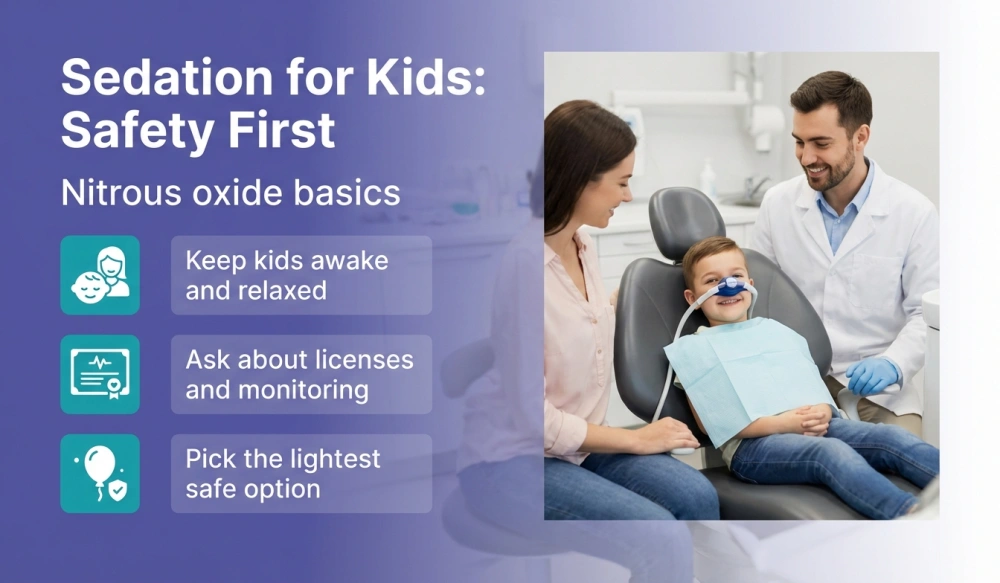
In California, dental teams that provide sedation beyond nitrous oxide hold specific permits and follow training and equipment requirements set by the state. These standards include emergency preparedness, monitoring, and documentation. You can always ask your child dental specialist about training, permits, and how your child will be monitored during care [8].
No sedation method is right for every child. Your pediatric dentist will review your child’s health history, medications, and past experiences. The plan will focus on safety, comfort, and the least invasive option that meets your child’s needs. Professional guidelines outline monitoring and recovery steps for children so that care is consistent with current standards [7].
How do pediatric dentists care for children with special health care needs?
Special needs dentistry is an essential part of pediatric care. Children with medical, developmental, sensory, or behavioral differences benefit from a provider who understands their unique strengths and stressors. Pediatric dentists learn to adapt the environment, communication, and pacing to match each child’s needs. This might include extra time, a social story before the visit, sensory friendly tools, or planning around medication schedules [12].
Pediatric dentists coordinate with pediatricians, therapists, and specialists when needed. They also plan preventive care that considers diet, dry mouth, or oral habits related to medical conditions. The focus is on making dentistry accessible and comfortable for every child and caregiver while protecting oral health and quality of life [12].
How do child friendly dental offices support better visits and outcomes?
A child friendly dental office is more than bright colors. It is a purpose built space that helps children feel oriented and calm. The team uses simple language, explains what to expect, and offers choices when possible. Visual schedules, gentle lighting, kid size chairs, and familiar characters all help lower the stress of a new environment. The result is more cooperative visits and a positive relationship with dental care over time [6].
Parents in Laguna Niguel and South Orange County value offices that welcome questions, honor cultural preferences, and give practical guidance you can use at home. A pediatric dentist will also review growth, habits, and nutrition in a way that is free of judgment and centered on your child’s wellbeing [1].
How do emergencies and dental trauma in kids get handled differently?
Active kids sometimes experience injuries to the mouth or teeth. Pediatric dentists are trained to evaluate and manage common dental injuries such as chipped teeth, displaced teeth, or knocked out teeth. The approach depends on your child’s age, the stage of tooth development, and whether the injured tooth is primary or permanent. Decisions about replantation, stabilization, and follow up are guided by evidence based recommendations specific to children and adolescents [13].
Parents receive clear instructions for home care after an injury and a plan for monitoring healing. Prevention also matters. During sports and active play, a properly fitted mouthguard can reduce the risk of tooth and lip injuries. Your pediatric dentist can discuss options that match your child’s age and activity level [13].
What local and federal standards apply to pediatric dental care in California?
Parents in Laguna Niguel and surrounding South Orange County communities can expect their pediatric dentist to follow both state and national standards. In California, the Dental Board oversees licensure and permits related to sedation, including requirements for training, monitoring equipment, and emergency readiness. You can ask your provider about permits and protocols for any level of sedation that may be considered for your child [8].
At the national level, professional guidelines outline behavior guidance, monitoring for sedation, and safety during procedures for children. These guidelines inform clinical policies in pediatric dental offices and aim to keep care consistent and safe [6][7].
Infection prevention procedures are based on recommendations from federal health agencies. Families should expect routine use of personal protective equipment, sterilization of instruments, and environmental cleaning that meets established standards for dental settings [14].
Radiation safety practices follow recommendations that balance diagnostic benefits with minimizing exposure. Offices that care for children tailor imaging to the smallest patient and use protective measures during radiographs [10].
How can parents support better oral health at home between visits?
Small daily steps add up. With a clear plan and a few family habits, you can lower your child’s risk for cavities and make each dental visit smoother. Your pediatric dentist will personalize guidance for your child, and the following tips are a helpful starting point.
- Keep a simple brushing routine Brush twice daily for two minutes with fluoride toothpaste. Use a tiny smear for toddlers and a pea size amount for older children. Help your child until you are confident they can reach all surfaces on their own [11].
- Floss once a day when teeth touch Flossers can make it easier for little hands. Many children need an adult to floss thoroughly until later grade school years [1].
- Limit sugary snacks and sticky foods Offer balanced meals and snacks. Encourage water between meals. Save sweets for occasional moments and have children brush afterward when possible [11].
- Ask about fluoride treatments Fluoride varnish in the office can provide extra protection for children at risk for cavities. Your pediatric dentist will recommend the right interval based on risk [5].
- Schedule regular checkups Consistent visits support personalized prevention, early detection, and timely guidance as your child grows. Establishing a dental home makes it easier to stay on track [1].
- Use sealants when appropriate When permanent molars come in, ask about sealants to protect the deep grooves [4].
Where can families in Laguna Niguel and nearby cities find pediatric dentistry near me and what should they look for?
Parents in Laguna Niguel, Laguna Hills, Aliso Viejo, Laguna Beach, Mission Viejo, and San Juan Capistrano can look for a pediatric dentist who focuses on prevention, communicates clearly with children, and follows current professional guidelines. Consider the following when choosing a kids dentist.
- Specialized training with a child focus Ask about residency training in pediatric dentistry and ongoing education in behavior guidance and prevention [6].
- Child friendly environment Look for an office that feels welcoming to kids, with staff who use simple language and show children what to expect.
- Preventive options Confirm that the office provides fluoride treatments and dental sealants for children, and that prevention is customized to your child’s risk [4][5].
- Safety and transparency Ask how the office approaches radiographs, infection prevention, and monitoring during any sedation [10][14].
- Care for special health needs If your child has medical or developmental needs, confirm that the team adapts communication and environment appropriately [12].
A pediatric dentist is a partner in your child’s health journey. The right fit is a provider who listens, explains options clearly, and makes visits feel positive and predictable for your family.
Why choose Kidz Modern Dentistry for pediatric dental care in Laguna Niguel and South Orange County?
At Kidz Modern Dentistry, our mission is to make every visit a positive step toward lifelong health. We provide pediatric dental care for children of all ages, from infants to teens, with a focus on prevention, comfort, and personalized plans. Families throughout Laguna Niguel and South Orange County, including Laguna Hills, Aliso Viejo, Laguna Beach, Mission Viejo, and San Juan Capistrano, trust our team to deliver care that fits their child’s needs.
How does our approach help your child take the next step with confidence?
- Specialized pediatric focus Care is led by pediatric dentists who use child centered communication, behavior management, and age specific techniques supported by professional guidelines [6].
- Prevention first We prioritize fluoride treatments, dental sealants for children, risk based checkups, and practical coaching for baby teeth care at home [4][5].
- Kid friendly sedation options For children who benefit from calming support, we offer nitrous oxide for kids and follow evidence based monitoring protocols. We discuss options thoroughly so families can make informed choices [7][8].
- Comfortable, child friendly dental office From first tooth visits to teens, our environment helps reduce dental anxiety in children. We use tell show do and positive reinforcement to guide each visit [6].
- Same day emergencies When urgent needs arise, we strive to see children the same day. Our team is experienced in gentle evaluation and stabilization for dental injuries with clear instructions for follow up [13].
- Special needs dentistry We collaborate with parents and caregivers to adapt visits for children with special health care needs, including sensory friendly accommodations and flexible scheduling [12].
- Growth guidance and space maintainers We monitor eruption and bite changes at each visit and offer space maintainers when appropriate to help maintain alignment and function [9].
Where do we serve and how can you reach us?
We serve families in Laguna Niguel and throughout South Orange County. Our service areas include Laguna Hills, Aliso Viejo, Laguna Beach, Mission Viejo, and San Juan Capistrano. To ask a question or book a visit, call us at +19492730110. Our team is happy to help you plan a comfortable first visit or a preventive checkup tailored to your child.
What sets our methodology apart for your child’s day to day care?
- Personalized prevention plans We match visit frequency, fluoride treatments, and sealants to each child’s risk and growth stage, and we coach parents on easy ways to prevent cavity risk at home [4][5].
- Clear communication and access Parents receive practical guidance in plain language, with direct access to our pediatric dentists for questions about growth, habits, and next steps.
- Team training and continual improvement Our clinicians maintain current knowledge of pediatric guidelines for behavior management, sedation monitoring, and infection prevention so that care aligns with recognized standards [6][7][14].
We believe children deserve a joyful start with dental care. Whether you are seeking pediatric dentistry near me for a first visit or looking for a child dental specialist for specific concerns like dental anxiety in children, space maintainers, or fluoride treatments, our team is here to support your family with compassionate, evidence based care.
Where can you review the research and guidelines referenced?
- Periodicity of Examination and Preventive Dental Services – American Academy of Pediatric Dentistry
- Children’s Oral Health Fast Facts – Centers for Disease Control and Prevention
- Sealants Keep Children Cavity Free – Centers for Disease Control and Prevention
- Prevention of Dental Caries in Children Through Primary Care Interventions – US Preventive Services Task Force
- Behavior Guidance for the Pediatric Dental Patient – American Academy of Pediatric Dentistry
- Monitoring and Management of Pediatric Patients Before, During, and After Sedation – American Academy of Pediatric Dentistry
- Anesthesia and Sedation Permits – Dental Board of California
- Management of the Developing Dentition and Occlusion in Pediatric Dentistry – American Academy of Pediatric Dentistry
- Dental X Ray Exams Recommendations for Patients – US Food and Drug Administration
- Childhood Cavities Information – National Institute of Dental and Craniofacial Research
- Policy on Pediatric Dental Care for Patients With Special Health Care Needs – American Academy of Pediatric Dentistry
- Traumatic Dental Injuries Resources – American Academy of Pediatric Dentistry
- Infection Prevention and Control in Dental Settings – Centers for Disease Control and Prevention
Common Questions About This Topic
Find answers to frequently asked questions related to this article.