
- What does it mean when baby teeth do not fall out on time?
- When do baby teeth usually get loose and fall out?
- What causes a retained baby tooth?
- What are shark teeth in kids and why do they happen?
- Should you try to pull a loose baby tooth at home?
- How can you help a loose tooth come out comfortably?
- When is it time to see a pediatric dentist?
- What will a pediatric dentist evaluate during an exam?
- Which treatments help when a baby tooth will not fall out?
- What happens during extraction of a retained primary tooth?
- How do dentists decide whether to extract or wait?
- Is a retained baby tooth a dental emergency?
- How can you prevent problems with baby teeth not falling out?
- What California rules and standards are relevant for your child’s dental care?
- How does this relate to children with special health care needs?
- When should you contact a dentist in Laguna Niguel, CA?
- What questions should you ask your child’s dentist about retained teeth?
- What can you expect at Kidz Modern Dentistry in Laguna Niguel, CA?
- Where can you find the sources for this guide?
What does it mean when baby teeth do not fall out on time?
If a baby tooth stays in place longer than expected, dentists call it a retained primary tooth or simply a retained baby tooth. This happens when the root of the baby tooth does not dissolve completely, the adult tooth comes in at a different angle, or the adult tooth is missing entirely. Retained teeth are common and often resolve naturally, but sometimes a timely check with a pediatric dentist helps protect the bite, guide erupting adult teeth, and avoid crowding or gum irritation. Professional guidance supports healthy development of the jaws and teeth as they transition from the primary set to the permanent set [1] [2].
As a parent, seeing a permanent tooth growing behind a baby tooth can be surprising. You might hear people refer to this as shark teeth in kids. It can look dramatic, yet it is usually manageable and not a cause for panic. Understanding what is typical and what might need care can help you decide whether to wait and watch or to schedule a visit with a pediatric dentist Laguna Niguel for a quick evaluation [1] [3].
When do baby teeth usually get loose and fall out?
Most children begin to lose baby teeth around ages six to seven, starting with the lower front teeth, then the upper front teeth. The process continues through the early teen years as molars and canines transition. While every child is different, dentists often look at general age ranges and eruption patterns to guide parents on what to expect. An adult tooth typically appears after the baby tooth root dissolves and the crown becomes loose. If the timing falls within a normal window and your child is comfortable, simple monitoring may be all that is needed [2] [12].
There is a wide range of normal. Some children lose teeth earlier and others later. Delays of a few months do not always signal a problem. Still, if a tooth remains firm while an adult tooth is visibly erupting nearby for several months, a short exam can confirm whether the baby tooth is ready to come out naturally or whether assistance would benefit spacing and hygiene [1].
What causes a retained baby tooth?
Several factors can keep a baby tooth from falling out at the expected time. These include:
- Minimal root resorption The baby tooth root may not dissolve enough for the tooth to loosen on schedule [1].
- Ectopic eruption The adult tooth may erupt at an unusual angle or position, sometimes behind the baby tooth, which can leave the primary tooth in place [1].
- Missing adult tooth In some cases, a permanent tooth did not develop, which can leave the baby tooth without a successor. This sometimes allows the baby tooth to remain stable for years, though it might require monitoring and planning for long term bite health [1] [12].
- Ankylosis The baby tooth may fuse to the bone, which prevents normal loosening and exfoliation. Clinical and radiographic assessment helps identify this condition [1].
- Crowding or lack of space If the jaw is small or teeth are crowded, adult teeth can have difficulty finding a path, leaving a baby tooth held in place longer [1].
- Past trauma Previous injury to a primary tooth or developing permanent tooth may change the normal eruption path [1].
What are shark teeth in kids and why do they happen?
Shark teeth in kids is a common nickname for a permanent tooth growing behind a baby tooth, usually along the lower front teeth and sometimes the upper front teeth. It happens because the adult tooth takes a slightly different path. Many times, the baby tooth will still loosen and fall out on its own as your child chews and gently wiggles it. If the baby tooth remains firmly in place and the adult tooth continues to erupt, your dentist may suggest removing the baby tooth to create space and support the proper position of the adult tooth [1] [12].
Even when it looks unusual, this eruption pattern is frequently just a variation of normal. A quick evaluation confirms whether the baby tooth’s root is dissolving or whether it is time to help it along. Pediatric dentists use child friendly approaches and, when needed, take a small radiograph following established safety recommendations to visualize the developing teeth and roots [4].
Should you try to pull a loose baby tooth at home?
Gentle wiggling with clean fingers or the tongue is usually fine. For a loose baby tooth that will not come out, avoid forceful pulling. If a tooth is only slightly loose or your child feels pain when you try to tug it, stop and give it more time. Pulling too early can cause avoidable bleeding or discomfort and can make routine brushing sensitive for a few days. If an adult tooth is already visible behind a still firm baby tooth, it is smart to call your child’s dentist for guidance instead of trying to remove it at home [1].
How can you help a loose tooth come out comfortably?
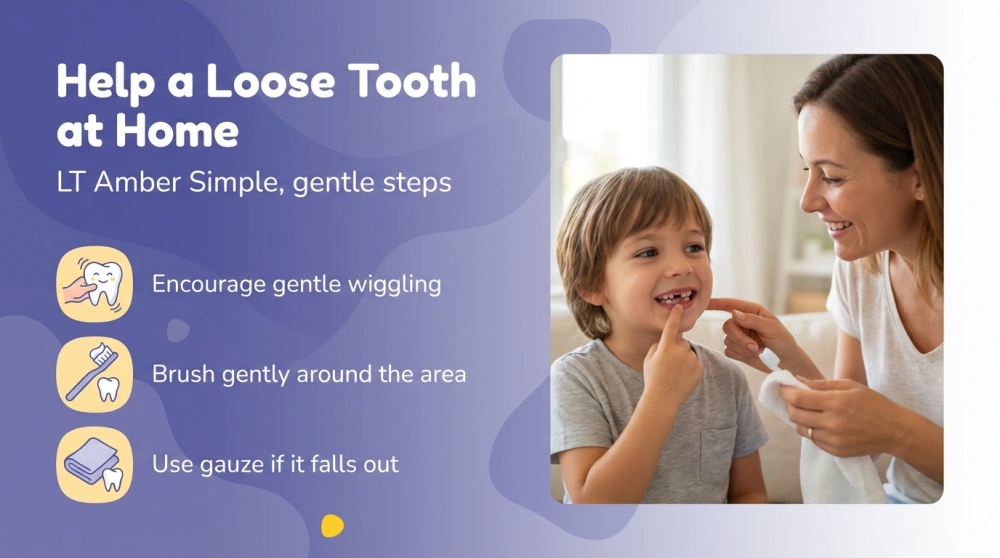
You can support your child with simple steps at home while the tooth loosens naturally. These ideas can make things easier and more comfortable:
- Encourage gentle wiggling Ask your child to use a clean finger or their tongue to slowly wiggle the tooth during the day. Gentle movement helps the final fibers release over time [1].
- Offer soft foods Softer textures reduce pressure on a very loose tooth and help your child stay comfortable during meals [10].
- Use a clean tissue after it comes out If the tooth falls out at home, have your child bite on clean gauze or a tissue for a few minutes to control light bleeding. A cool compress can soothe tender gums [10].
- Keep the area clean Brush gently around the loose tooth and along the gums. A soft brush and a slow sweeping motion maintain hygiene without irritating the area [10].
- Call if something seems off Pain, swelling, fever, bad taste, or persistent bleeding are reasons to call a dentist for timely evaluation [1].
When is it time to see a pediatric dentist?
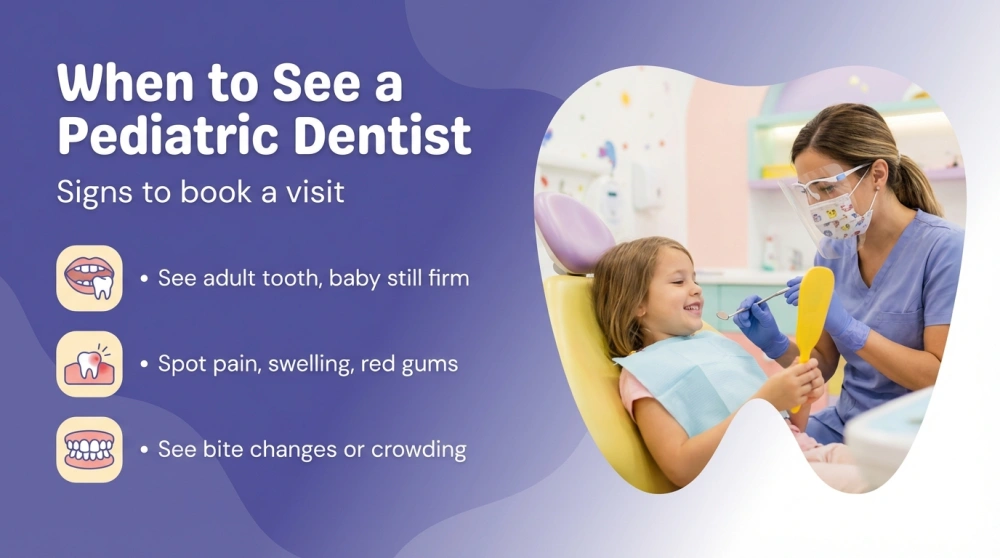
Knowing when to seek care helps you protect your child’s smile without unnecessary stress. Consider scheduling a visit if you notice any of the following:
- Permanent tooth is visible but the baby tooth is not loosening This is a common reason to ask for advice, especially if months have passed with little change [1].
- Pain, swelling, or gum irritation Discomfort or inflamed tissue near a firm baby tooth may call for attention [1].
- Changes in bite or crowding Overlapping front teeth or side shifting when biting can be a signal to check in sooner [1].
- Delayed loss beyond expected timing Your dentist can compare your child’s development with typical eruption windows and decide if radiographs are helpful [2] [12].
The American Association of Orthodontists suggests that children receive an orthodontic evaluation by age seven. This early look helps spot crowding, crossbites, or eruption issues that can influence decisions about retained teeth and timing of care [3].
What will a pediatric dentist evaluate during an exam?
Your child’s dentist will start with a conversation and a gentle clinical exam. The visit usually includes a review of tooth eruption patterns, mobility of the baby teeth, space for the incoming teeth, gum health, and your child’s comfort. If needed, the dentist may recommend a small radiograph to check the root of the baby tooth, the position of the adult tooth, and any crowding or ankylosis. Radiographs are taken only when appropriate, using well established selection criteria that limit radiation exposure and follow national recommendations [4].
For children who feel anxious, pediatric dentists use behavior guidance techniques to build trust and comfort. When necessary, they may offer local anesthesia and child appropriate options for relaxation or sedation that comply with professional guidelines and state permit rules for pediatric care [8] [9] [6].
Which treatments help when a baby tooth will not fall out?
The right plan depends on your child’s age, how loose the tooth is, the position of the permanent tooth, and overall spacing. Common approaches include:
- Observation If the baby tooth is moving and the adult tooth is nearly in place, the dentist may recommend more time and gentle wiggling. Follow up visits help track progress [1].
- Selective removal of the baby tooth When a primary tooth remains firm while the permanent tooth erupts into the mouth, removal can prevent crowding, reduce gum irritation, and help the adult tooth settle correctly. Pediatric tooth extractions are performed with child specific techniques to maximize comfort and healing [1] [9].
- Space maintenance If a baby molar needs removal earlier than expected and there is risk of neighboring teeth drifting, a small device called a space maintainer may help preserve room for the adult tooth to erupt properly [1].
- Orthodontic guidance In situations with crowding, crossbite, or ectopic eruption, early orthodontic monitoring or interceptive treatment can guide teeth into healthier positions and reduce future complexity [3] [1].
Every plan aims to balance comfort, development, and long term function. Your dentist will explain options, answer questions, and invite you to participate in decisions so you feel confident about the next steps.
What happens during extraction of a retained primary tooth?
If your child needs help with extraction of a retained primary tooth, the process is typically brief and focused on comfort. After a calm explanation, the dentist numbs the area with a topical gel, then places a small amount of local anesthetic so your child feels pressure but not sharp sensation. Most retained baby teeth come out quickly because their roots are already short. The dentist may place a small piece of gauze afterward and provide simple care instructions. Over the next day or two, your child can return to normal brushing with gentle technique around the area [9] [8].
Behavior guidance and child friendly communication help many kids sail through this appointment. For very anxious children or those with special health care needs, your dentist may discuss additional comfort options that follow professional standards and state permit requirements, always with parental consent and careful monitoring [8] [6].
How do dentists decide whether to extract or wait?
Decisions are individualized. Dentists consider several clinical factors before recommending removal:
- Degree of mobility A baby tooth that is already quite loose can be allowed more time, while a very firm tooth with an adult tooth erupting into the mouth may benefit from earlier removal [1].
- Root resorption Radiographs, when indicated, help assess how much of the baby tooth root remains and whether it is likely to loosen on its own soon [4] [1].
- Position of the permanent tooth The direction and space available for the adult tooth guide whether to wait, extract, or coordinate with orthodontic monitoring [1] [3].
- Age and eruption sequence If timing significantly differs from typical ranges or the sequence is out of order, a targeted intervention may be appropriate [2] [12].
- Comfort and hygiene Sore gums, difficulty brushing, or food trapping can tip the balance toward removal for relief and better cleaning [1].
Is a retained baby tooth a dental emergency?
Usually not. A baby tooth that lingers without pain or swelling can often be monitored. It rises to a pediatric dental emergency if your child has significant pain, facial swelling, fever, difficulty swallowing, or trauma to the tooth or lips. In those cases, contact a dentist promptly for guidance and care. If you are unsure, a quick phone call can clarify whether same day attention is recommended or whether a routine visit is sufficient [10] [5].
How can you prevent problems with baby teeth not falling out?
You cannot control every aspect of tooth eruption, but healthy habits and routine checkups set your child up for smoother transitions. Consider the following preventive steps:
- Establish a dental home early Pediatric groups encourage the first dental visit by the first birthday or within six months of the first tooth. Early visits build comfort and make later transitions easier [11] [10].
- Keep up with regular checkups Dentists track eruption patterns and can spot issues like ectopic eruption or crowding before they become challenging [1].
- Practice daily brushing and flossing Clean gums and teeth reduce inflammation around loosening baby teeth and help your child stay comfortable [10].
- Use fluoride as recommended Fluoride strengthens enamel, supports comfortable brushing around loose teeth, and protects incoming adult teeth [10].
- Ask about sealants for molars Thin protective coatings on chewing surfaces help prevent decay as permanent molars erupt, making oral care easier as your child transitions to the adult set [14] [15].
- Consider early orthodontic evaluation An assessment around age seven helps identify bite and spacing issues that can affect the timing and path of erupting teeth [3].
What California rules and standards are relevant for your child’s dental care?
Parents in Laguna Niguel, CA can expect dentists to follow state and federal rules that protect safety, privacy, and informed decision making. Key points include:
- Parental consent for minors Dentists obtain informed consent from a parent or legal guardian for examinations, radiographs, and any treatment, with clear explanations of benefits and risks.
- Radiation safety When radiographs are indicated, California providers follow state oversight and national recommendations that emphasize selection criteria and exposure limits. The goal is to capture needed information while keeping exposure as low as reasonably achievable [7] [4].
- Sedation and anesthesia permits California requires specific permits and safety protocols for providers who offer oral conscious sedation, deep sedation, or general anesthesia to children. Teams use monitoring, trained personnel, and emergency readiness in line with permit requirements [6].
- Infection prevention Dental offices follow federal infection prevention standards, including sterilization, surface disinfection, hand hygiene, and safe injection practices to protect every visit [5].
- Privacy and records Patient information is protected under federal privacy laws. Parents can expect secure handling of health information and respectful communication about care.
These safeguards are in place to help every family feel confident about routine visits, focused exams for retained teeth, and any needed procedures.
How does this relate to children with special health care needs?
Children with special health care needs may experience different timelines for tooth eruption, sensory preferences during exams, or unique medical considerations. Pediatric dentists develop individualized plans that blend behaviour guidance, communication strategies, and when appropriate, additional comfort measures that align with clinical guidelines and state permits. When a loose baby tooth will not come out, careful planning ensures safe, kind, and effective visits for your child and your family [8] [6].
When should you contact a dentist in Laguna Niguel, CA?
Reach out if you notice a permanent tooth growing behind a baby tooth that is not getting looser, if your child has pain or swelling, or if you are unsure about when to pull baby teeth safely. A quick evaluation can help you decide whether to wait, encourage gentle wiggling, or plan for extraction of a retained primary tooth. If you are searching for a children’s dentist near me or a kids dentist Laguna Niguel, look for a team that welcomes questions, explains options clearly, and supports your child’s comfort at every step [1] [3].
What questions should you ask your child’s dentist about retained teeth?
- Is the timing within a normal range Ask whether your child’s eruption pattern and sequence look typical or whether extra monitoring would help [2] [12].
- Is the adult tooth in a healthy position Find out if the adult tooth is on track or if its angle suggests the baby tooth needs help coming out [1].
- What are the pros and cons of waiting Discuss the benefits and risks of observation versus removal for your child’s specific situation [1].
- Will my child need a radiograph If imaging is recommended, ask how it will guide care and what safety measures are used [4].
- How will you keep my child comfortable Review behavior guidance, local anesthesia, and any additional comfort options, if needed [8] [9].
- Could orthodontic monitoring help Ask whether an orthodontic evaluation might support spacing and alignment as adult teeth come in [3].
- What should we do at home Request specific tips on how to help a loose tooth come out and how to keep the area clean and comfortable [10].
What can you expect at Kidz Modern Dentistry in Laguna Niguel, CA?
At Kidz Modern Dentistry, we focus on clear guidance, kind communication, and practical solutions for families in Laguna Niguel, CA who are navigating baby teeth not falling out. Our dentists help you understand what is normal, when to wait, and when a simple in office visit may help your child feel better. If a tooth stays firm while a permanent tooth is erupting, we will discuss options that fit your child’s needs and your family’s goals.
We provide same day care for urgent concerns, kid friendly sedation options when appropriate, and comprehensive support for children of all ages. Families who are considering Pediatric tooth extractions in Laguna Niguel can expect a calm, step by step approach that makes comfort and safety top priorities while following state and national standards.
Our methodology emphasizes preventive guidance first, including tracking eruption patterns, encouraging healthy home care, and using radiographs only when they add clear value. When treatment is indicated, we offer conservative procedures delivered by a friendly team that explains every step. We coordinate with orthodontists when spacing or crowding could affect outcomes, and we tailor care for children with special health care needs to create successful, positive visits.
Parents appreciate having direct access to qualified professionals who listen and respond quickly. We share practical tips on how to help a loose tooth come out, outline when to pull baby teeth safely, and describe what to expect during extraction of a retained primary tooth if that becomes the best choice. Pediatric tooth extractions are performed with gentle techniques, appropriate local anesthesia, and post visit guidance that makes recovery simple.
We serve families across Laguna Niguel and nearby communities throughout South Orange County. If you have questions about a retained baby tooth, shark teeth in kids, or a permanent tooth growing behind baby tooth, we are here to help you decide on next steps. To talk with our team or schedule a visit, call +1 (949) 273 0110. We welcome both routine visits and timely evaluations for concerns that feel urgent so your child can get back to smiling with confidence.
Where can you find the sources for this guide?
- Management of Developing Dentition and Occlusion in Pediatric Dentistry – American Academy of Pediatric Dentistry
- Eruption Charts – American Dental Association
- When Should My Child See an Orthodontist – American Association of Orthodontists
- Dental Radiographic Examinations: Recommendations for Patient Selection and Limiting Radiation Exposure – U.S. Food and Drug Administration
- Summary of Infection Prevention Practices in Dental Settings – Centers for Disease Control and Prevention
- Permits for Sedation and Anesthesia – Dental Board of California
- Radiologic Health Branch – California Department of Public Health
- Behavior Guidance for the Pediatric Dental Patient – American Academy of Pediatric Dentistry
- Use of Local Anesthesia for Pediatric Dental Patients – American Academy of Pediatric Dentistry
- Children’s Oral Health – National Institute of Dental and Craniofacial Research
- Dental Home – American Academy of Pediatric Dentistry
- Tooth Eruption and Exfoliation – StatPearls – NCBI Bookshelf
- Pulp Therapy for Primary and Immature Permanent Teeth – American Academy of Pediatric Dentistry
- Sealants – American Dental Association
- Use of Pit and Fissure Sealants – American Academy of Pediatric Dentistry
Common Questions About This Topic
Find answers to frequently asked questions related to this article.
