
- What does early removal of a baby tooth really mean and why might it be recommended?
- Why do some baby teeth need to be removed sooner than expected?
- How do tooth decay and infection lead to early extraction decisions?
- When does dental trauma in kids make removing a baby tooth the safer option?
- Could crowding or orthodontic reasons lead to taking out a baby tooth sooner?
- What are the risks of waiting too long when a baby tooth is causing problems?
- How do space maintainers protect your child after early loss of a baby tooth?
- What should you expect during a gentle pediatric tooth extraction visit?
- Which pain control and sedation options are considered safe for children?
- How do dentists decide whether to save a baby tooth or remove it?
- What should you expect for healing and at home care after a baby tooth is removed early?
- When is a baby tooth problem an emergency that needs same day attention?
- What can parents do to lower the chances of early removal in the future?
- How do California and national guidelines influence pediatric dental care choices?
- How can local care help families in Laguna Niguel and South Orange County make timely decisions?
- What questions should you ask before agreeing to remove a baby tooth early?
- How does Kidz Modern Dentistry support families facing early baby tooth removal?
- References
What does early removal of a baby tooth really mean and why might it be recommended?
Early removal of a baby tooth means a primary tooth is taken out before it would naturally fall out on its own. While most baby teeth loosen and shed on a typical timetable, certain problems like severe decay, infection, trauma, or orthodontic crowding can make it healthier to remove a tooth earlier. Pediatric dentists aim to protect the surrounding teeth, gums, and the developing permanent tooth underneath. When a baby tooth is too damaged to repair safely, removal can prevent pain from worsening, reduce infection risk, and safeguard proper spacing for the adult teeth that will follow [1] [2].
If your child is dealing with an infected baby tooth, severe tooth decay in children, or dental trauma in kids, you are not alone. National data show that tooth decay is one of the most common chronic conditions of childhood, and untreated decay can lead to pain, missed school, and bite problems if it spreads [3]. Removing a tooth is never taken lightly. It is considered when it supports your child’s comfort and long term oral development.
Why do some baby teeth need to be removed sooner than expected?
A pediatric dentist evaluates each tooth based on your child’s age, symptoms, X rays when appropriate, and the condition of surrounding teeth and gums. The most common reasons to remove a baby tooth early include:
- Extensive decay that cannot be predictably restored When a cavity has destroyed much of the tooth structure or has reached the nerve, repair might not be stable or safe [1].
- Infection or abscess that threatens nearby tissues An infection in a baby tooth can affect the supporting bone and the developing permanent tooth bud [4].
- Trauma that fractures the root or displaces the tooth Certain injuries in the primary dentition are better managed by removing the tooth to protect the area and reduce complications [5].
- Crowding and orthodontic extraction In select cases, removing a baby tooth helps guide eruption and make room for adult teeth, often as part of an orthodontic plan [1].
Each situation is different, and the decision is individualized. Many times conservative treatments are attempted first. When early removal is the healthier route, your pediatric dentist will also plan for space maintenance if needed to support normal bite development [1] [6].
How do tooth decay and infection lead to early extraction decisions?
Tooth decay in baby teeth can progress quickly. If decay reaches the pulp, the tooth may become painful, sensitive to temperature, or swollen. Dentists consider a range of therapies, from fillings and crowns to pulp therapy designed to maintain the tooth when possible. When decay or infection is too advanced, or when a repair would have a poor long term outlook, removal protects the surrounding tissues and supports your child’s health [4].
Common signs that may suggest an infected baby tooth include persistent pain, swelling or a pimple on the gums, fever, or difficulty chewing on one side. If you notice these changes, contact an emergency pediatric dentist for timely triage. Prompt guidance helps reduce the chance of the infection spreading and supports a safer plan of care [4] [3].
Imaging may be recommended to evaluate the extent of decay or infection. Dentists follow evidence based selection criteria to limit radiation exposure, choosing images only when the likely benefit outweighs risk, and adjusting settings for children [7].
When does dental trauma in kids make removing a baby tooth the safer option?
Falls and playtime injuries are common in childhood. Many primary tooth injuries are managed with observation and comfort care. However, some injuries such as deep fractures, intrusive displacement, or severe mobility can endanger the developing permanent tooth or increase infection risk. In those cases, removal may be recommended to protect long term oral health and comfort [5].
If a baby tooth is pushed into the gums, significantly loose after a hit, or the lip and gum are cut, a same day dental appointment is wise. Expert evaluation can determine whether the tooth can stay or whether removal prevents complications. Follow up is also important to monitor healing and eruption of the permanent successor [5].
Could crowding or orthodontic reasons lead to taking out a baby tooth sooner?
Sometimes a baby tooth stands in the way of an erupting permanent tooth or contributes to crowding. Early extraction in these cases is carefully timed to guide eruption and reduce the risk of impaction or misalignment. The goal is not simply to remove a tooth, but to support a healthier bite with fewer obstacles as the adult teeth come in. Orthodontic evaluations around the early school years can help identify these patterns and plan conservative steps [6] [8].
When crowding is present, dentists and orthodontists may coordinate to remove a stubborn baby tooth so that the underlying permanent tooth can erupt into a healthier position. Space maintainers may still be considered depending on timing and which tooth is involved [1] [6].
What are the risks of waiting too long when a baby tooth is causing problems?
Waiting can seem easier in the moment, but delaying care for a painful or damaged baby tooth may increase complications. Risks can include:
- Worsening infection and pain Untreated decay and infection can spread to the bone and affect daily activities like sleep and eating [3] [4].
- Damage to the developing permanent tooth Primary tooth infections or severe trauma can disturb enamel formation and eruption of the successor tooth [5].
- Loss of space for adult teeth Early loss without space maintenance can allow drifting, leading to crowding that may be harder to correct later [1] [9].
- Increased treatment complexity More involved procedures or longer orthodontic treatment may be needed when problems are left to worsen [6].
How do space maintainers protect your child after early loss of a baby tooth?
Baby teeth act as natural placeholders. When one is lost early, the neighboring teeth can drift into the gap. A custom space maintainer is a small appliance designed to hold that space open until the permanent tooth is ready to erupt. This helps support proper alignment and can reduce the need for more extensive orthodontic correction later [1] [9].
Evidence suggests that space maintainers can reduce space loss and guide eruption in select situations. The decision depends on your child’s age, which tooth was removed, and the timing of the permanent successor. Your dentist will review the pros and cons and outline how often the appliance should be checked for fit and cleanliness [9] [6].
Pediatric tooth extractions are planned with future spacing and bite development in mind. When space maintenance is recommended, the appliance is fitted comfortably and monitored during routine visits so it continues to do its job as your child grows [1].
What should you expect during a gentle pediatric tooth extraction visit?
It is normal to feel nervous about your child having a tooth removed. A visit is structured to be calm, predictable, and comfortable. Here is a typical outline of what happens:
- Evaluation and imaging when needed The dentist confirms the diagnosis and reviews images if appropriate, following child specific selection guidelines to limit exposure [7].
- Comfort planning Options may include local anesthesia and, when appropriate, sedation based on age, anxiety level, and medical history following established safety guidelines [10] [11].
- Gentle removal Specialized pediatric instruments and techniques are used to minimize pressure and protect surrounding tissues.
- Hemostasis and protective dressing Gauze pressure controls bleeding and post visit instructions are reviewed with you.
- Space maintainer planning If indicated, an impression or digital scan may be taken for a custom appliance.
Visits are paced to your child’s comfort level. Questions are welcomed so you know what to expect at each step.
Which pain control and sedation options are considered safe for children?
Comfort and safety are central to any pediatric dental procedure. Local anesthesia numbs the area, and for children with higher anxiety or complex needs, sedation may be considered. Pediatric dentists follow established guidelines for dosing, monitoring, and recovery to promote safety before, during, and after sedation. The American Academy of Pediatric Dentistry and the American Academy of Pediatrics publish joint guidance that outlines these standards, including continuous observation and trained personnel throughout the visit [10] [11].
Sedation decisions are individualized. For many children, nonpharmacologic behavior guidance and local anesthesia are enough. For others, options range from minimal to deeper levels of sedation. Your dentist will review benefits and risks in clear language and will ask about health history, allergies, and any medications your child takes [11] [10].
How do dentists decide whether to save a baby tooth or remove it?
Saving a tooth is considered when treatment can be predictable and safe. Options include tooth colored fillings, stainless steel or tooth colored pediatric crowns, and different forms of pulp therapy to calm or preserve the nerve. When a tooth has extensive structural loss, uncontrolled infection, or a poor long term outlook even with aggressive therapy, removal becomes the healthier choice. The conversation balances your child’s comfort, the health of nearby teeth and gums, and the expected eruption of the permanent tooth [4] [1].
Expect a collaborative approach. You will hear a clear explanation of findings, visuals from X rays when obtained, and a stepwise plan that includes what to watch for at home.
What should you expect for healing and at home care after a baby tooth is removed early?
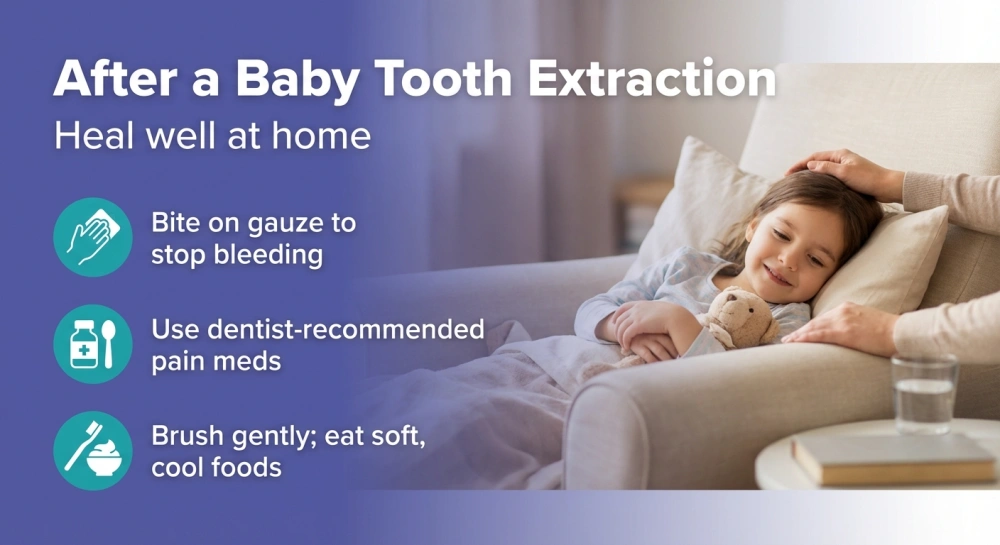
The mouth usually heals quickly. A small amount of oozing is normal for the first few hours. Most children return to school and regular activities by the next day. Your care team will review written instructions tailored to your child. Common guidance may include:
- Manage bleeding Bite gently on folded gauze as directed. Replace if needed until bleeding slows.
- Reduce discomfort Use over the counter pain relievers as advised by your dentist and your pediatrician.
- Eat soft foods and cool liquids Avoid very hot, crunchy, or spicy foods for the first day.
- Protect the area Remind your child not to poke the site with fingers or toys.
- Keep the mouth clean Brush the other teeth normally and gently clean near the site after the first day.
- Watch for concerns Call if there is increasing pain, swelling, fever, or bleeding that does not improve with gentle pressure.
Follow up visits help confirm proper healing and, if a space maintainer is planned, ensure the appliance fits well.
When is a baby tooth problem an emergency that needs same day attention?
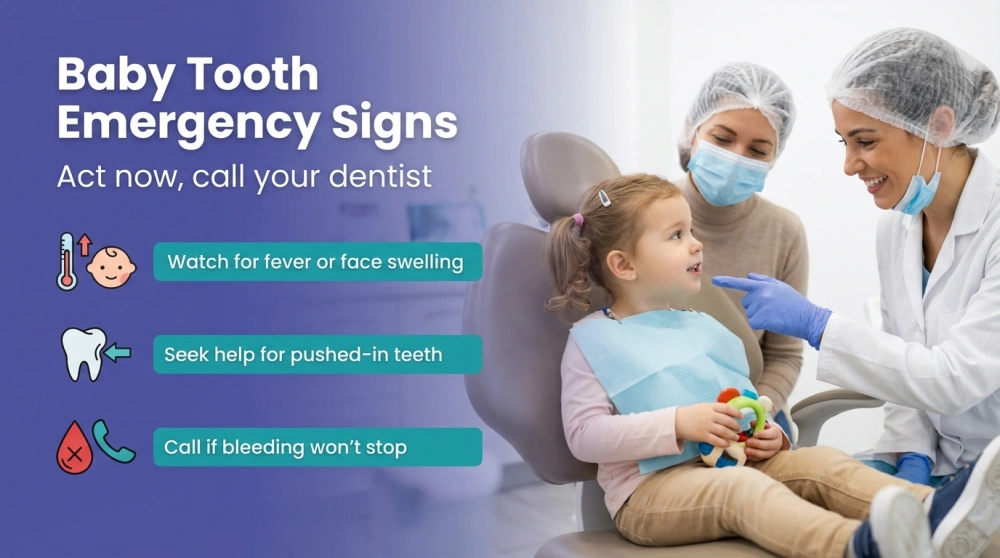
Call for immediate guidance if you see any of the following:
- Fever or facial swelling with dental pain These may signal spreading infection that needs urgent care [4].
- Trauma with displaced or intrusive primary teeth Timely evaluation helps protect the developing permanent teeth [5].
- Uncontrolled bleeding in the mouth Ongoing bleeding after an injury or recent procedure requires prompt advice.
- Severe pain that does not improve with comfort measures Rapid assessment can reduce complications and discomfort.
Emergency teams prioritize children in pain. If your child needs help outside routine hours, your dental practice can guide you to the next best step.
What can parents do to lower the chances of early removal in the future?
Many early removals are preventable. Small daily steps add up to meaningful protection. Consider these parent friendly strategies:
- Keep regular checkups Routine visits allow early detection of small problems before they become painful or complex [3].
- Support daily brushing with fluoride toothpaste Brush twice a day with a smear or pea sized amount of fluoride toothpaste based on age, and help your child until brushing skills are reliable [3].
- Ask about sealants and fluoride varnish These protective treatments can lower cavity risk for many children [12].
- Limit frequent sipping of sugary drinks Choose water between meals and keep juice and sports drinks as occasional treats [3].
- Plan early orthodontic evaluations A check around the early school years can identify crowding patterns and eruption concerns [8].
- Use a mouthguard for sports Custom or well fitted stock guards help protect against dental injuries during play.
Consistency is key. Small habits practiced each day can spare your child from discomfort and reduce the likelihood of early removal later on.
How do California and national guidelines influence pediatric dental care choices?
Dental teams in California follow both national best practices and state regulations to protect children. Sedation services require specific training and permits in California, along with equipment and emergency readiness protocols. National organizations publish detailed recommendations on when to use radiographs, how to minimize radiation exposure, and how to plan space maintenance and orthodontic interventions. These frameworks help clinicians deliver care that is consistent, safe, and evidence based [7] [10] [11] [1] [13].
If your child needs care that includes sedation or complex procedures, you can ask your dental team how their training, permits, and protocols align with state and national standards. Transparent answers help you feel confident about each step of the plan.
How can local care help families in Laguna Niguel and South Orange County make timely decisions?
Local access matters when a child has dental pain or an urgent concern. Families in Laguna Niguel and nearby communities like Laguna Hills, Laguna Beach, Aliso Viejo, San Juan Capistrano, and Mission Viejo benefit from timely evaluations, flexible scheduling for urgent needs, and care that fits the needs of growing kids. Clear communication, calm clinics, and age appropriate comfort strategies help children feel safe while parents receive straightforward guidance.
Pediatric tooth extractions in Laguna Niguel are planned with a focus on growth and development as well as day to day comfort. If a tooth needs to come out early, your dentist will explain the why, the how, and the what comes next, including whether a space maintainer is recommended and how to care for the site at home [1] [9].
What questions should you ask before agreeing to remove a baby tooth early?
It is helpful to ask focused questions so you understand the reasons and the plan. Consider these prompts:
- What is the exact diagnosis and what did you see on exam or imaging Ask for a clear explanation of findings and how they affect nearby teeth [7].
- What are the treatment options and expected outcomes Compare the benefits and risks of repairing the tooth versus removing it.
- How will you keep my child comfortable Review local anesthesia, behavior guidance, and whether sedation is appropriate for my child [11].
- Will a space maintainer be needed and when Understand timing and maintenance needs if the tooth is removed [1] [9].
- What are the home care steps and follow up plan Clarify how to manage the first day at home and when to return.
These questions keep the conversation centered on your child’s comfort, safety, and long term oral development.
How does Kidz Modern Dentistry support families facing early baby tooth removal?
We help parents make informed decisions about early removal of baby teeth by pairing clinical expertise with clear communication. Our team provides evaluations for baby tooth extraction, pediatric tooth extraction planning, and space maintainers when needed. From the first call, we focus on comfort, clarity, and practical next steps that fit your child’s needs.
We serve families in Laguna Niguel and South Orange County including Laguna Hills, Laguna Beach, Aliso Viejo, San Juan Capistrano, and Mission Viejo. Same day emergencies are available when possible, and our scheduling team works to find prompt appointment times so children in pain can be seen quickly.
Our approach includes:
- Team based pediatric expertise Pediatric dentists and support professionals coordinate care that considers growth, eruption timing, and bite development.
- Comfort first We use child friendly behavior guidance, local anesthesia, and sedation options when appropriate following national safety guidelines [11].
- Clear imaging standards We follow evidence based selection criteria and child specific settings when radiographs are indicated [7].
- Space maintenance and growth monitoring If a baby tooth is removed early, we review whether a space maintainer is needed and track eruption at follow ups [1] [9].
- Personalized home care guidance Families receive written and verbal instructions designed for easy reference at home.
Our practice philosophy emphasizes steady communication and gentle techniques. We design visits that fit each child’s comfort level and provide direct access to qualified professionals who can answer questions in real time.
Pediatric tooth extractions are performed with careful attention to your child’s unique anatomy and the position of the developing permanent teeth. We also coordinate with orthodontists when crowding or eruption guidance is part of the plan, keeping parents up to date about timing and expectations [6].
If you need to talk with a pediatric dentist Laguna Niguel about an infected baby tooth, dental trauma in kids, or premature loss of primary teeth, call us at +1 949 273 0110. We can help you understand whether your child needs a same day dental appointment and what to do next while you prepare for a visit.
Pediatric tooth extractions are recommended based on clinical findings and current guidelines. We welcome second opinions and invite parents to ask any questions that help them feel confident about the plan.
References
- Developing Dentition and Occlusion in Pediatric Dentistry – American Academy of Pediatric Dentistry
- Eruption Charts for Primary and Permanent Teeth – American Dental Association
- Children’s Oral Health Fast Facts – Centers for Disease Control and Prevention
- Use of Antibiotic Therapy for Pediatric Dental Patients – American Academy of Pediatric Dentistry
- Traumatic Injuries in the Primary Dentition – American Academy of Pediatric Dentistry
- First Orthodontic Check Up No Later Than Age 7 – American Association of Orthodontists
- Dental Radiographic Examinations Recommendations for Patient Selection and Limiting Radiation Exposure – U.S. Food and Drug Administration
- Why an Orthodontic Check Up by Age 7 Matters – American Association of Orthodontists
- Space maintainers for the prevention of dental problems in children caused by premature loss of primary teeth Cochrane Review – PubMed
- Monitoring and Management of Pediatric Patients During and After Sedation for Diagnostic and Therapeutic Procedures – AAP and AAPD
- Behavior Guidance for the Pediatric Dental Patient – American Academy of Pediatric Dentistry
- Prevention of Dental Caries in Children Primary Care Interventions – U.S. Preventive Services Task Force
- Anesthesia and Sedation Permits Overview – Dental Board of California
Common Questions About This Topic
Find answers to frequently asked questions related to this article.
