
- What is halitosis in children and why does it happen?
- What are the most common causes of bad breath in kids?
- How can you fix bad breath in kids at home?
- When should you see a pediatric dentist in Laguna Niguel?
- What regulations and guidelines protect your child during dental care in California?
- How can you support fresher breath at home and at school?
- Who is Kidz Modern Dentistry and how do we help families in South Orange County?
- References
What is halitosis in children and why does it happen?
If you have noticed a lingering odor on your child’s breath, you are not alone. Bad breath in kids, also called halitosis in children, is common and usually has an identifiable cause. Most odors come from the mouth itself when bacteria break down food debris on the tongue, teeth, and gums, releasing sulfur containing compounds that smell unpleasant. Poor oral hygiene, dry mouth in children, and diet choices often play a role. In some cases, child bad breath causes include issues beyond the mouth, such as nasal or throat problems that lead to postnasal drip, or certain medications and medical conditions that change saliva flow or odor. A trusted summary from MedlinePlus notes that common causes include poor dental hygiene, gum disease, dry mouth, and infections of the mouth, nose, or throat [1].
It helps to think of bad breath as a symptom and not a diagnosis. That mindset guides us to look for the source and fix it. Sometimes the solution is as simple as improving brushing and flossing. Sometimes the answer involves treating cavities, calming gum inflammation, addressing allergies or sinus infections, or improving hydration and diet. If odor persists despite daily care, a pediatric dental checkup can help identify what is going on and map out the next steps [1].
How common is kids bad breath and what does research show?
Children commonly develop plaque and food buildup on teeth and the tongue, and many are still learning how to clean effectively. Tooth decay is widespread in childhood. National data show that more than half of children aged six to eight have had a cavity in at least one primary tooth, and more than half of adolescents have had a cavity in a permanent tooth. These same bacteria and plaque that drive cavities can also contribute to odor [2]. The shared biology helps explain why improving daily hygiene and getting timely dental care can reduce both cavities and unpleasant breath.
What are the most common causes of bad breath in kids?
There is rarely a single reason for kids bad breath. More often, a few factors pile up. Understanding the likely causes can help you decide what to try first at home and when to schedule a pediatric dental checkup.
Could poor oral hygiene and tongue coating be the main reason?
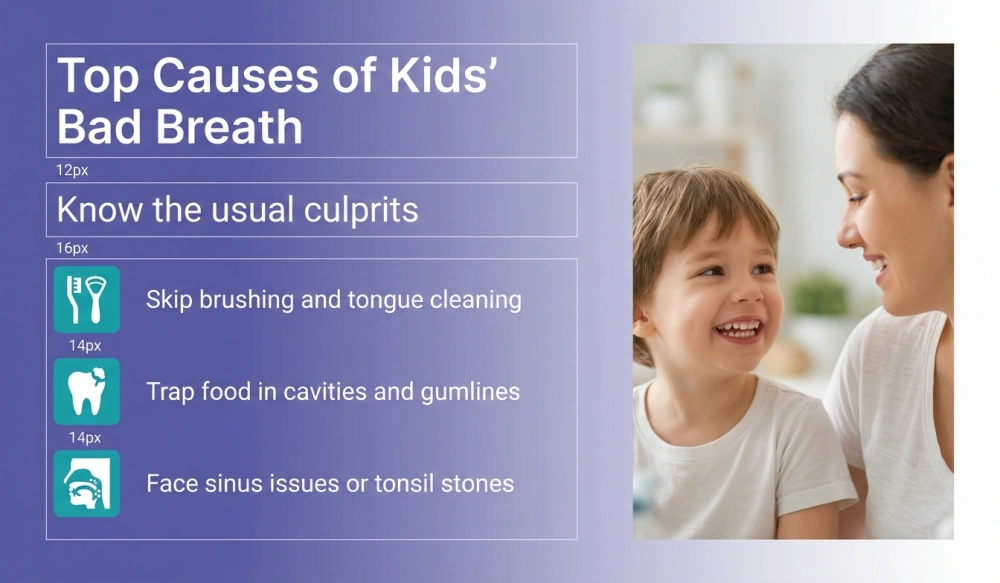
Yes. When children do not clean well, plaque and food debris linger on teeth and gums. The back of the tongue can develop a visible coating that traps bacteria and odor producing compounds. Gentle but thorough brushing twice a day and cleaning the tongue can make a noticeable difference. MedlinePlus highlights poor dental hygiene as a leading cause of bad breath in children and adults [1].
Can cavities and bad breath be linked in children?
Absolutely. Cavities form when acids from bacteria weaken tooth enamel. The pits and holes created by decay trap food and bacteria, which can produce a persistent odor. Because many children experience tooth decay, it is a frequent piece of the halitosis puzzle. The Centers for Disease Control and Prevention reports that tooth decay is one of the most common chronic conditions of childhood, affecting both primary and permanent teeth [2]. Treating cavities, reinforcing daily hygiene, and applying professional fluoride are proven strategies to reduce risk and help breathe fresher.
Does gum disease in children cause odor?
Gingivitis, the earliest stage of gum disease, can develop when plaque remains along the gumline. Gums may appear red, puffy, or bleed with brushing. This inflamed environment supports bacteria that release volatile sulfur compounds linked with odor. The American Academy of Pediatric Dentistry recommends routine examinations and cleanings to identify and manage gingivitis early, before it progresses [3].
Could tonsil stones in kids or throat infections be to blame?
Sometimes the source is not the teeth at all. Tonsil stones in kids, also called tonsilloliths, are small accumulations of debris that can form in the folds of the tonsils. They may cause a foreign body sensation, throat irritation, or noticeable bad breath. The American Academy of Otolaryngology Head and Neck Surgery describes symptoms that include unpleasant odor and explains that many cases can be managed with gentle oral hygiene and gargling, while persistent or troublesome cases may need medical evaluation [6].
Can sinus infections or allergies cause kids bad breath?
Yes. Sinus infections and allergies can lead to postnasal drip. Mucus that drains into the throat provides a food source for bacteria and can cause halitosis in children. The American Academy of Pediatrics clinical practice guideline notes typical sinusitis patterns, such as persistent nasal discharge or cough, and helps clinicians differentiate between viral and bacterial causes [7]. When nasal symptoms accompany bad breath, your pediatrician or pediatric dentist may suggest a medical assessment to address the underlying condition that is contributing to odor.
How does mouth breathing and dry mouth in children contribute?
Saliva helps cleanse the mouth and neutralize acids. If your child breathes through the mouth during sleep or sports, or takes medicines that reduce saliva, the mouth can feel dry and odors may intensify. The National Institute of Dental and Craniofacial Research explains that dry mouth can make chewing and speaking difficult and raises the risk of tooth decay, which indirectly contributes to breath concerns [5]. Sipping water regularly, using sugar free gum with xylitol when age appropriate, and checking in with your dentist or pediatrician about possible medication side effects can help.
Could diet, sugar, and dehydration be part of the problem?
Diet plays a larger role than many parents expect. Frequent snacking on sticky or sugary foods leaves residue that bacteria ferment, which increases caries risk and can add to odor. Dehydration concentrates oral compounds and reduces the flushing action of saliva. The American Heart Association advises limiting added sugars in children to support overall health, a habit that also benefits teeth and breath [8]. Encouraging water as the main drink and offering fiber rich fruits and vegetables can support fresher breath.
Do medications or medical conditions play a role?
They can. Some medicines reduce saliva flow or have an odor altering effect. Medical conditions that affect the nose, throat, or digestive system may also influence breath. MedlinePlus lists dry mouth and infections of the mouth, nose, or throat as recognized causes of halitosis [1]. If your child’s breath changes after a new medicine starts or alongside other symptoms such as fever, weight loss, or sleep disturbance, seek a medical and dental evaluation.
How can you fix bad breath in kids at home?
You can make meaningful progress with a few consistent habits. Focus on age appropriate brushing and interdental cleaning, gentle care of the tongue, smart snacks, hydration, and prompt professional guidance when needed. The goal is steady improvement rather than a quick fix. Here is a step by step plan that works for many families.
What daily oral hygiene routine works for different ages?
Start with a baseline routine anchored to morning and bedtime. The American Dental Association recommends brushing twice daily for two minutes with a fluoride toothpaste appropriate for your child’s age and risk level [4]. For young children, a smear the size of a grain of rice is recommended, and for children six and older, a pea sized amount is common guidance. Parents should help or closely supervise brushing until children demonstrate the hand skills to clean all tooth surfaces thoroughly.
- Preschool and early elementary: Brush twice daily, floss where teeth touch, and let your child watch you brush to model the motions [4].
- Upper elementary and teens: Continue twice daily brushing with attention to the gumline and back molars, and add floss or interdental brushes daily for tight contacts.
- Sports and sleep routines: If your child mouth breathes during sleep or sports, encourage water before bed and after activity, and consider a medical check if snoring, daytime sleepiness, or concentration challenges appear.
How should parents handle tongue scraping for kids safely?
The back of the tongue often harbors odor producing bacteria. For many children, gently cleaning the tongue surface after brushing helps. You can use a soft toothbrush or a child sized tongue cleaner. Aim for light pressure, moving from back toward the front, stopping if your child gags or feels uncomfortable. The ADA encourages cleaning the tongue as part of a complete oral hygiene routine for fresher breath [4]. Go slowly, keep it comfortable and quick, and let your child rinse with water afterward.
Which toothpastes and mouthrinses help and are safe for children?
Fluoride toothpaste strengthens enamel and reduces cavity risk, which indirectly improves breath. Choose an age appropriate fluoride toothpaste with clear dosing guidance, and remind children to spit out the toothpaste after brushing. If you consider a mouthrinse, ask your pediatric dentist first. Some children benefit from a fluoride rinse or a nonalcohol antibacterial rinse, but product selection depends on age, swallowing ability, and individual risk. Guidance from your pediatric dentist can tailor options to your child’s needs [3].
How can diet changes help reduce odor without being restrictive?
You do not need a perfect diet to see improvements. Small, sustainable habits make a difference.
- Offer water often: Keep a refillable water bottle handy to support saliva flow and oral cleansing.
- Time sweets with meals: When sweets are part of life, serve them with meals and avoid grazing during the day.
- Pick tooth friendly snacks: Choose cheese, yogurt with no added sugar, nuts when age appropriate, and crunchy vegetables or apples.
- Limit added sugars gradually: The American Heart Association advises sensible limits on added sugars for children as part of heart healthy habits that also support oral health [8].
Could better hydration and nasal care help with morning breath?
Yes. Encourage a bedtime routine that includes water after brushing and a clean nose, especially during allergy season. Saline nasal rinses that your pediatrician recommends may help reduce postnasal drip in some children. When the nose is clear and the mouth is moist, morning breath often improves. If nasal symptoms linger, ask your pediatrician about allergy or sinus evaluation [7].
What if home care is solid but the breath still smells?
That is your sign to bring in a professional. Persistent halitosis in children despite consistent brushing, interdental cleaning, tongue care, and diet improvements deserves an exam. Odor can be the first noticeable sign of a cavity between teeth, gingivitis, an erupting molar with trapped plaque, a tonsil stone, or an evolving sinus issue. Parents often find that a single visit clarifies the cause and the solution. Your pediatric dentist will also review brushing technique and tailor advice to your child’s age and lifestyle [3].
When should you see a pediatric dentist in Laguna Niguel?
Any time you are concerned, it is reasonable to schedule an appointment. If bad breath in kids lasts more than a couple of weeks despite home care, if there is pain or bleeding, or if you notice loose permanent teeth, swelling, or fever, do not wait. MedlinePlus recommends dental evaluation when bad breath continues after improving oral hygiene, or when other signs are present that suggest infection or illness [1]. If you are searching for a pediatric dentist Laguna Niguel, our team is here to help you find the cause and create a plan that fits your child.
Which signs mean a pediatric dental checkup is needed soon?
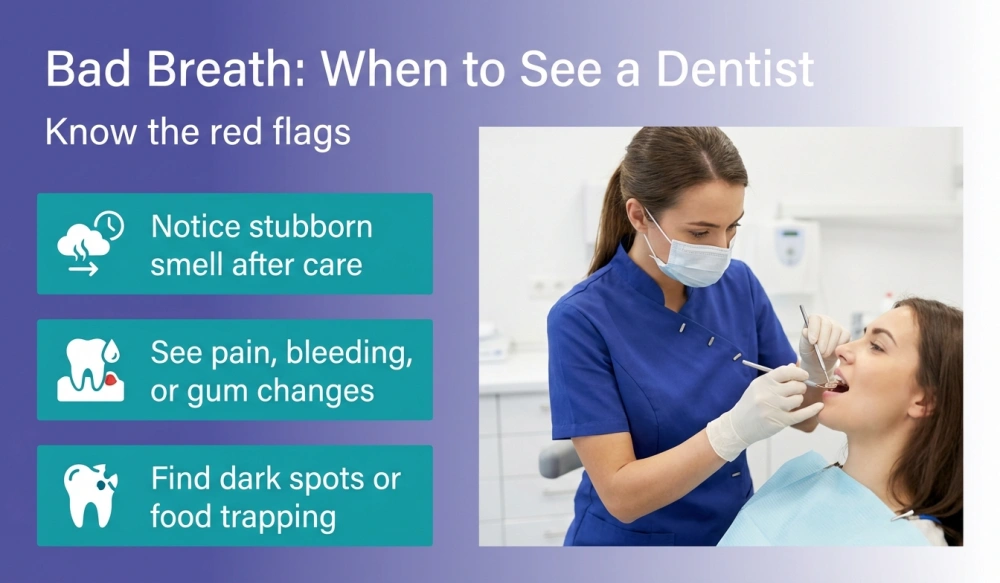
- Persistent odor: Breath remains unpleasant after consistent brushing, flossing, and tongue cleaning for two to three weeks [1].
- Tooth symptoms: Sensitivity to cold or sweets, visible holes or dark spots, or food trapping between teeth [2].
- Gum changes: Red, puffy, or bleeding gums that do not improve with brushing and flossing [3].
- Throat or nose clues: Frequent sore throat, visible tonsil stones, nasal discharge, or chronic cough [6] [7].
- Dry mouth: Sticky or dry feeling, trouble chewing or speaking, or cracked lips that point to low saliva flow [5].
What will a dentist check during a visit for halitosis in children?
At the visit, expect a friendly conversation about daily routines, diet and drink patterns, nasal or throat symptoms, and any medicines. The exam typically includes a careful look at the teeth, gums, tongue, cheeks, and palate, plus a view of the tonsils and throat. We may suggest professional cleaning, targeted cavity detection, and tailored hygiene coaching. Routine care and education are at the heart of Kids dental checkups, which help catch small issues before they become bigger problems [3].
Depending on your child’s age and risk, your dentist may recommend dental X rays to check for hidden decay or bone changes. Federal guidance developed with professional groups helps dentists select X rays only when needed and limit radiation exposure using child sized settings and protective measures [10]. Families seeking support for Kids dental checkups in Laguna Niguel can expect an age appropriate, step by step approach that keeps children comfortable and informed.
How are problems like cavities, gum inflammation, or tonsil stones treated?
Treatment plans match the cause. Cavities are restored and future risk is reduced with home care coaching and professional fluoride when indicated. Gingivitis is managed with a gentle cleaning to remove plaque and tartar, plus daily brushing and interdental cleaning at home. If tonsil stones or nasal issues are involved, your pediatric dentist may suggest salt water rinses, improved tongue cleaning, or a referral to your pediatrician or an ear, nose, and throat specialist for additional care [6] [7].
What regulations and guidelines protect your child during dental care in California?
Parents deserve to know that dental care follows strong safety standards. In California, pediatric dental care is shaped by state licensing rules, recognized clinical guidelines, and national health and safety standards.
How do California licensing and sedation rules safeguard children?
Dentists in California are licensed by the Dental Board of California, which enforces the California Dental Practice Act and related regulations. When sedation is considered for children, additional permits and training are required, and practices must follow specific monitoring and emergency preparedness rules. The Dental Board provides public information on sedation permits and consumer protections, helping families understand how safety is prioritized [12].
What infection control and radiation safety standards apply?
Infection prevention is guided by national recommendations from the Centers for Disease Control and Prevention. Dental teams follow standard precautions, use personal protective equipment, clean and disinfect patient care areas, and sterilize instruments according to established protocols [9]. When X rays are indicated, dentists use techniques that follow federal guidance to select images only when necessary and to limit exposure through child appropriate settings and shielding [10].
What privacy and record protections should you expect?
Health information privacy rights are protected by federal law. The Health Insurance Portability and Accountability Act outlines how providers handle personal medical and dental information and when disclosures are allowed. Families can expect clear explanations of privacy practices and the option to request copies of records [11].
How can you support fresher breath at home and at school?
Small steps add up. These practical ideas help children build habits that support fresh breath and healthy smiles.
- Create a routine: Keep brushes and floss visible and ready. Use a timer or favorite song for two minute brushing sessions [4].
- Make water easy: Send a water bottle to school and remind your child to sip during the day.
- Pack smart snacks: Include crunchy vegetables, cheese, or nuts when age appropriate, and limit sticky sweets.
- Add tongue care: A quick tongue clean after brushing can noticeably improve morning breath [4].
- Check the nose: Treat allergies with your pediatrician’s guidance to reduce postnasal drip and odor [7].
- Stay on schedule: Put future appointments on the calendar so preventive care stays consistent [3].
If you are in Laguna Niguel, Laguna Hills, Aliso Viejo, Mission Viejo, Laguna Beach, or San Juan Capistrano, our community has many park and school activities that keep kids on the go. Planning for quick water breaks, tooth friendly snacks, and nightly brushing helps keep breath fresh even on busy days.
Who is Kidz Modern Dentistry and how do we help families in South Orange County?
At Kidz Modern Dentistry, our mission is to help parents understand child bad breath causes and partner on solutions that fit real life. We provide same day emergencies, kid friendly sedation when appropriate, and comprehensive care for children of all ages. Our approach is calm, clear, and step by step so your child feels safe and supported throughout the visit.
We serve families across South Orange County, including Laguna Niguel, Laguna Hills, Aliso Viejo, Mission Viejo, Laguna Beach, and San Juan Capistrano in California. Whether your goal is to learn how to fix bad breath in kids or to schedule a pediatric dental checkup to investigate a lingering concern, our team is ready to help.
Our methodology focuses on careful diagnosis and personalized planning. We start with a conversation about your child’s routines, sleep, allergies, diet, and medications. We then perform a gentle exam that may include professional cleaning and selective imaging guided by national recommendations. We use kid centered communication, show and tell, and comfort strategies to make visits positive. When specialized care is needed, we coordinate with your pediatrician, ear nose and throat specialists, or other providers so your family has a clear, coordinated plan.
Breath concerns are often solved with consistent home care and thoughtful prevention. For more complex cases, we offer restorative treatments for cavities, care for gum inflammation, and guidance for managing tonsil stones or sinus related issues in collaboration with medical colleagues. We emphasize practical education so families leave with confidence about next steps.
Parents value direct access to qualified professionals who take time to listen. From your first call to follow up check ins, we keep you informed and involved. If you prefer a quieter time of day, sensory supports, or extra introductions for your child, our team is happy to plan for those needs.
We believe that strong prevention habits benefit the whole family. Our team supports regular recall visits, risk based fluoride treatments when appropriate, and coaching that grows with your child. If an urgent issue arises, our same day care helps you get answers quickly. For children who are anxious or have special health care needs, kid friendly sedation options are available after a thorough discussion of benefits and risks, consistent with California regulations and professional guidelines.
If you would like to talk with our team or schedule a visit, call us at +1 949 273 0110. We are here to answer questions and help your child feel great about their smile.
References
- Bad Breath – MedlinePlus
- Children’s Oral Health Fast Facts – Centers for Disease Control and Prevention
- Periodicity of Examination and Preventive Dental Services – American Academy of Pediatric Dentistry
- Brushing Teeth: How to Brush – American Dental Association
- Dry Mouth – National Institute of Dental and Craniofacial Research
- Tonsil Stones – American Academy of Otolaryngology Head and Neck Surgery
- Clinical Practice Guideline: The Diagnosis and Management of Acute Bacterial Sinusitis in Children – American Academy of Pediatrics
- Added Sugars and Cardiovascular Disease Risk in Children – American Heart Association
- Summary of Infection Prevention Practices in Dental Settings – Centers for Disease Control and Prevention
- Dental Radiographic Examinations: Recommendations for Patient Selection and Limiting Radiation Exposure – Food and Drug Administration
- HIPAA Privacy Rule – U.S. Department of Health and Human Services
- California Dental Practice Act and Laws – Dental Board of California
Common Questions About This Topic
Find answers to frequently asked questions related to this article.
