
- What should you look for in a pediatric dentist in Orange County, CA?
- Why do board certifications and credentials matter when choosing a children’s dentist?
- When should your child have the first dental visit and how does timing affect long term health?
- How do preventive services like fluoride and sealants protect kids’ teeth?
- What supports help with dental anxiety in kids and care for children with special needs?
- How can you evaluate safety, infection control, and dental X rays in a kid friendly office?
- What should you ask about sedation dentistry for children in California?
- How do you judge emergency readiness and same day access for families in Laguna Niguel and Laguna Hills?
- Which questions reveal whether a practice is truly kid friendly and family centered?
- How do insurance, costs, and transparency fit into choosing a pediatric dentist?
- How do you narrow your search for the best pediatric dentist Orange County families can rely on?
- What step by step checklist can you use on your first call or visit?
- Who is Kidz Modern Dentistry and how do we support families in Laguna Niguel and Laguna Hills?
- References
What should you look for in a pediatric dentist in Orange County, CA?
Choosing a pediatric dentist is a big decision. You want a team that understands kids, makes visits positive, and partners with you on preventive care. Parents often search phrases like best pediatric dentist Orange County or kid friendly dentist Orange County because there are many options and it can be tough to filter what truly matters. A practical way to decide is to focus on five pillars you can verify before you book.
- Credentials you can verify: Look for pediatric dental residency training and board certification pathways that you can confirm through professional associations and licensing boards. You can also confirm active licensure and any sedation permits in California.
- Preventive care philosophy: Ask how the practice guides families on diet, home care, fluoride, and sealants. Prevention should be explained in plain language and adapted to your child’s age.
- Comfort and communication: Notice how the team speaks with your child, addresses fears, and explains procedures. Patient centered communication reduces stress and builds trust.
- Safety standards: Discuss infection control protocols, X ray practices, and emergency procedures. These should follow national and state guidelines with transparent explanations.
- Access and support: Confirm hours, after hours help, same day slots for urgent problems, and accommodations for children with special health care needs.
As you read on, we will walk through each pillar with practical questions and trusted resources from national associations, California regulators, and public health agencies. Where you see a bracketed number, you can jump to the source in the reference list, like this [1].
Why do board certifications and credentials matter when choosing a children’s dentist?
Pediatric dentists complete additional residency training focused on the growth, development, and behavior of children from infancy through adolescence. Beyond residency, some dentists pursue board certification through the American Board of Pediatric Dentistry. Parents may also hear the term American Board of Pediatric Dentistry Diplomates, which refers to pediatric dentists who have met certification requirements and maintain their certification. You can verify board certification status through the ABPD website’s verification tool [7].
Which credentials and permits are most relevant in California?
- Active California dental license: Confirm an active license and good standing with the Dental Board of California. The Board also publishes regulations for sedation and anesthesia permits in the state [6].
- Residency in pediatric dentistry: This specialized training prepares dentists to manage childhood growth changes, oral disease patterns in kids, behavior guidance, and care for children with special health care needs.
- Board certification pathway: When a pediatric dentist is board certified, you can verify their status through the ABPD verification page. This gives you a quick, reliable way to confirm credentials [7].
- Sedation permit if applicable: In California, specific permits are required for various levels of sedation. Ask the office which types they provide and how they comply with state rules [6].
You can also ask about continuing education, hospital privileges, and professional memberships. Parents do not need to memorize every abbreviation. What matters most is that the office can clearly explain their training and provide verification links that match what is posted by the relevant board or association.
When should your child have the first dental visit and how does timing affect long term health?
The American Academy of Pediatric Dentistry recommends establishing a dental home and completing the first visit by the first birthday or within six months of the first tooth. Starting early helps families prevent problems, personalize home care, and address habits like bottle use and thumb sucking before they cause harm [1].
Why does early care matter so much for Orange County families?
Tooth decay is one of the most common chronic conditions of childhood. National public health data shows that many children develop cavities early in life, which can affect eating, speech, sleep, and school performance [2]. Early visits let your dentist assess risk and coach your family on diet, brushing with fluoride toothpaste, and appropriate use of fluoride varnish or sealants when they become age appropriate [1].
What happens during a first dental visit for a toddler?
- Comfort first: Your child is introduced to the team and tools in a calm, friendly way to build familiarity and trust.
- Gentle exam: The dentist checks growth, tooth eruption, gum health, and any early signs of decay or enamel defects.
- Personalized prevention: You receive guidance on brushing, flossing, diet choices, fluoride use, and injury prevention that fits your child’s age and risk [1].
- Plan next steps: The office outlines a preventive schedule and any follow up needed for minor concerns.
How do preventive services like fluoride and sealants protect kids’ teeth?
Preventive pediatric dentistry is one of the most important filters in your search. Ask potential offices how they use fluoride treatments and sealants, and how they tailor prevention to your child’s risk level. Research shows sealants and fluoride can significantly reduce cavities in back teeth where most decay occurs.
What does the evidence say about sealants and fluoride for children?
- Sealants reduce cavities: Sealants can prevent around 80 percent of cavities in the back teeth for the first two years and continue providing protection for years after placement [3].
- Fluoride supports enamel: Appropriate use of fluoride varnish and toothpaste helps strengthen enamel and reduce decay risk, especially for higher risk children [13].
Which questions help you evaluate a practice’s preventive approach?
- Risk based plans: Does the office use a cavity risk assessment to guide how often cleanings, X rays, fluoride, and sealants are recommended [4]?
- Age appropriate education: Will the team demonstrate brushing and flossing in a way that makes sense to your child and to you?
- Nutrition coaching: Do you receive practical tips for snacks, drinks, and routines that fit your family’s lifestyle?
- Follow up support: How do they help if your child develops early signs of decay or enamel weakness despite good habits?
What supports help with dental anxiety in kids and care for children with special needs?
Many children feel worried about new places and new experiences. A pediatric practice should have a thoughtful plan for behavior guidance and sensory friendly care. This includes coaching you on preparing your child for the visit, using child friendly language, and layering coping tools that match your child’s needs. Professional guidance documents describe a spectrum of behavior management techniques that dentists use every day in a safe, supportive manner [9].
Which behavior guidance tools should a family friendly practice offer?
- Tell show do: The team explains, demonstrates, and then performs each step so your child knows what to expect [9].
- Distraction and positive reinforcement: Simple coping supports such as music, stories, or praise help reduce worry and encourage cooperation.
- Parental involvement: Practices often invite parents to participate in ways that help their child feel safe, while keeping the visit efficient and calm.
- Sensory supports: For children who are sensitive to sounds or textures, ask about quiet rooms, sunglasses, weighted blankets, or visual schedules.
How should a practice approach care for children with special health care needs?
Look for offices that can adapt scheduling, communication, and clinical techniques to make care achievable and comfortable. Professional recommendations emphasize individualized planning, consultation with medical providers when needed, and a focus on prevention to minimize extensive treatment [10]. If your child needs more advanced support, discuss whether the team coordinates with hospital facilities or anesthesiology teams when appropriate and medically indicated [5].
How can you evaluate safety, infection control, and dental X rays in a kid friendly office?
Safety is nonnegotiable. A practice should be able to explain infection control, instrument sterilization, and cleaning procedures in simple terms. The Centers for Disease Control and Prevention publishes core expectations for safe care in dental settings that offices follow and review with their teams [8].
What is a reasonable approach to dental X rays for children?
The goal is to use the lowest radiation exposure that reasonably achieves a clear diagnosis. Professional recommendations emphasize individualized X ray schedules based on a child’s age, dental development, and cavity risk, rather than a one size fits all calendar. You can ask about protective measures like thyroid collars and digital sensors that help minimize exposure [4].
Which safety questions should you ask any pediatric dental office?
- Training and drills: How often does the team practice medical emergency drills and review emergency equipment?
- Infection control updates: When did the office last review and train on CDC dental infection prevention practices [8]?
- X ray policy: How do you decide when X rays are needed for my child, and how will you minimize exposure [4]?
- Documentation: Can we review consent forms and care plans together so everything is clear before we begin?
What should you ask about sedation dentistry for children in California?
Sedation can be a useful tool for select children who need more support to complete necessary dental care. It is not the first step for most kids, and it should be provided by trained professionals following national guidelines and California regulations. The American Academy of Pediatric Dentistry and the American Academy of Pediatrics publish joint guidance on safe sedation, including pre appointment evaluation, fasting instructions, monitoring during care, and recovery criteria [5]. In California, sedation and anesthesia require specific permits and compliance with Dental Board of California rules [6].
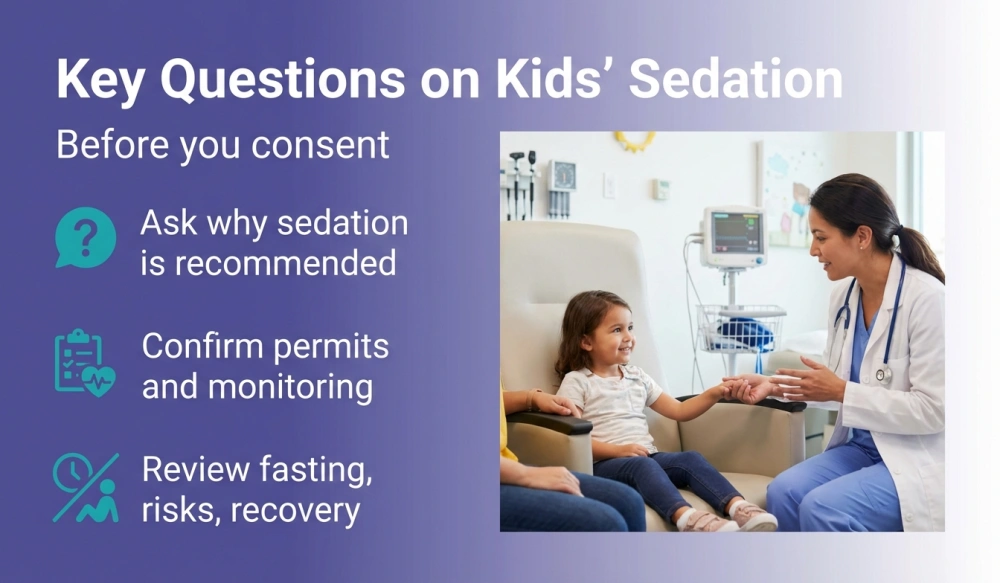
Which sedation questions should you ask before consenting?
- Why is sedation being recommended: Ask how the recommendation will help your child and what alternatives exist, including behavior guidance and staged care.
- Who provides and monitors sedation: Confirm training, permits, roles, and continuous monitoring plans based on the level of sedation [5] [6].
- What to expect before and after: Review fasting rules, medications, recovery criteria, and who to call with concerns after you go home [5].
- Facility readiness: Ask to see emergency equipment and medication checklists and how often they are reviewed.
How do you judge emergency readiness and same day access for families in Laguna Niguel and Laguna Hills?
Dental emergencies are stressful for children and parents, and prompt guidance can make a big difference. Ask how the office handles urgent calls, whether same day appointments are reserved for kids in pain or with injuries, and how after hours advice works. Families often need quick help for issues like toothaches, facial swelling, knocked out teeth, or broken fillings. Evidence based trauma recommendations provide clear steps for injuries like lost or displaced teeth, which your pediatric dentist can adapt to your child’s situation [11].
As you compare options, check whether the practice specifically offers Same-day pediatric dental emergencies in Laguna Niguel and if they provide instructions for after hours triage on their voicemail or website. Quick access matters for pain relief, infection control, and better outcomes after injuries [11].
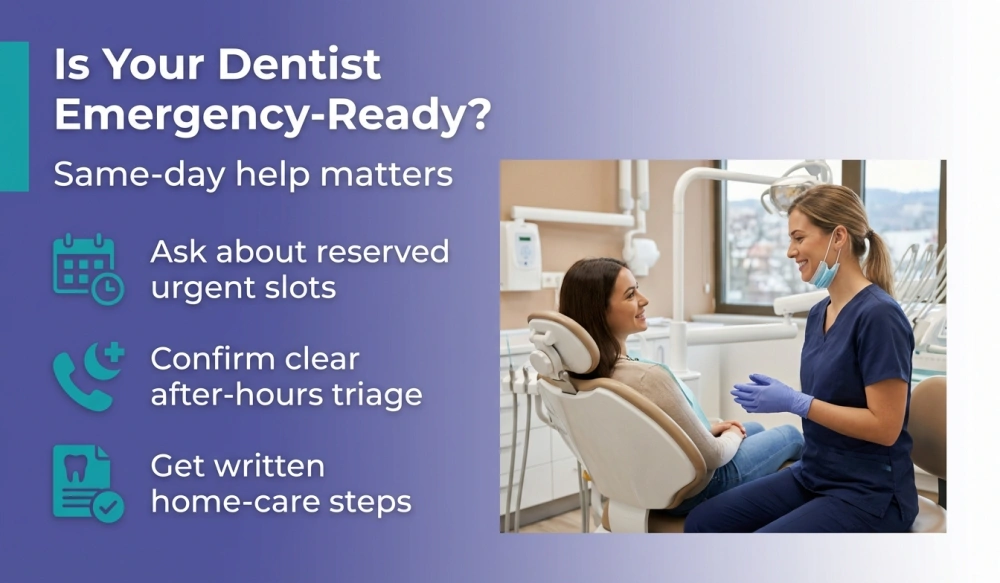
Which emergency readiness signs should you look for?
- Reserved urgent slots: Ask if the schedule includes openings for children with pain or trauma so you are not waiting days for care.
- Clear phone triage: The office should be able to advise you on first steps by phone and coordinate an evaluation the same day when needed.
- Written instructions: You should receive simple home care guides for common emergencies, including when to go directly to urgent medical care.
- Referral pathways: For complex injuries, practices should have referral relationships with specialists or hospital based teams.
Which questions reveal whether a practice is truly kid friendly and family centered?
The phrase kid friendly dentist Orange County should mean more than colorful walls. True child centered care shows up in how the team explains care, adapts to your child’s age and temperament, and supports you as a parent. When you tour or call an office, the following questions can help you evaluate fit.
How will the team help your child feel confident and calm?
- Warm welcome: Does the office greet your child by name, explain what happens next, and check comfort throughout the visit?
- Visual and hands on learning: Do they use models, pictures, and demonstrations so kids understand and feel included?
- Family partnership: Are you invited to participate in ways that help your child, and are your questions welcomed?
Does the office tailor care to your child’s stage of growth?
- Developmental guidance: Ask how they approach pacifier habits, thumb sucking, or orthodontic monitoring as your child grows [1].
- Sports safety: For active kids, discuss mouthguards and injury prevention tips supported by professional guidance.
- Ongoing prevention: Confirm how they update home care advice as your child’s diet and schedule change over time [3] [13].
How do insurance, costs, and transparency fit into choosing a pediatric dentist?
Clear communication about costs reduces stress and surprises. A parent centered office explains benefits and fees before care begins, outlines options when multiple approaches are reasonable, and helps you plan a schedule that fits your family. Transparency should include estimates, consent forms, and plain language handouts you can take home. If you use insurance, ask how the office works with your plan and how pre authorizations or predeterminations are handled. You can also ask how the practice shares records with you and other providers in a manner that protects privacy under federal rules [12].
What financial and scheduling questions should you ask up front?
- Written estimates: Will you provide a clear estimate for treatment recommendations and review alternatives in simple language?
- Coordination with benefits: How does the office verify coverage and help explain out of pocket costs?
- Flexible scheduling: Does the practice offer morning, afternoon, or weekend options that match school and family routines?
- Follow up clarity: Will you send a written plan that outlines the next steps, home instructions, and who to call with questions?
How do you narrow your search for the best pediatric dentist Orange County families can rely on?
Use a balanced approach that mixes credentials, comfort, access, and prevention. Start with a shortlist of practices that focus on children’s care, then call to ask a few questions. Listen for clear, supportive answers that match the guidance from trusted sources.
Which three quick checks help you decide?
- Verify training: Confirm pediatric residency, ask about board certification, and request the ABPD verification link if applicable [7].
- Ask about prevention: Listen for risk based plans, fluoride guidance, and a clear sealant strategy aligned with research [3] [13].
- Confirm access: Check same day help for urgent needs, after hours support, and realistic scheduling for busy families [11].
If you are comparing a children’s dentist Orange County based to a general office, remember that the right choice is the one that fits your child’s needs, your schedule, and your comfort. Do not hesitate to ask for a meet and greet or a tour before you decide.
What step by step checklist can you use on your first call or visit?
Here is a simple checklist you can copy into your notes app. Use it during your first phone call or first visit to keep everything organized.
Which questions should you ask during the first phone call?
- Care scope: Do you focus on pediatric dentistry, and how do you support toddlers, school age children, and teens?
- Credentials: Can you tell me about the dentist’s pediatric training and whether board certification has been completed or is in progress [7]?
- Prevention plan: How do you use fluoride treatments and sealants for children based on individual risk [3] [13]?
- X ray policy: What guides your decision to take X rays for kids, and how do you minimize exposure [4]?
- Emergency access: Do you reserve slots for urgent visits and offer same day care when a child is in pain or has an injury [11]?
What should you notice during a first visit or tour?
- Child centered environment: Is the space clean, calm, and friendly, with team members who speak directly to your child?
- Safety readiness: Are sterilization areas organized, and can the team explain infection control and emergency drills clearly [8]?
- Clear communication: Are options, risks, and benefits explained in everyday words, with time for your questions?
- Personalized guidance: Do you leave with practical home care tips and a written plan that matches your child’s needs?
If you prefer to plan ahead, ask for new patient forms and educational handouts by email. This lets you review consent documents and prepare your child with simple words and expectations at home.
Who is Kidz Modern Dentistry and how do we support families in Laguna Niguel and Laguna Hills?
At Kidz Modern Dentistry, our focus is comprehensive pediatric dental care that helps children build healthy habits and confident smiles. We serve families in Orange County, including Laguna Niguel and Laguna Hills, with a friendly approach that emphasizes prevention, comfort, and clear communication. Our team welcomes babies, toddlers, school age children, and teens for routine care, urgent visits, and personalized treatment plans. If you ever need urgent help, ask about our approach to Same-day pediatric dental emergencies in Laguna Niguel so your child can be seen quickly when timing matters.
How do our services relate to your next steps?
- Preventive care first: We tailor fluoride treatments and sealants to your child’s risk and growth stage, and we coach families on effective home care and nutrition.
- Comfort centered visits: Our team uses age appropriate communication, visual learning, and gentle techniques so children feel safe and included.
- Sedation options when appropriate: For children who need extra support, we discuss behavior guidance, local anesthesia, and sedation options, always aligned with professional guidelines and California requirements.
Where do we operate and how can you reach us?
- Service areas: We care for families across Orange County, with a special focus on Laguna Niguel and Laguna Hills.
- Contact: Call us at +1 949 273 0110 to ask questions, check availability, or schedule a visit.
What is our approach and methodology for pediatric care?
- Personalized prevention: We assess cavity risk and build a plan that fits your child’s age, health, and daily routine.
- Collaborative planning: We explain options in plain language, share written plans, and encourage questions so you always know what comes next.
- Evidence guided care: Our recommendations reflect current guidance from professional associations and public health agencies, adapted to your child’s needs.
How do we innovate and support families day to day?
- Kid first design: Our space and systems are built around children’s comfort, from scheduling to the way we introduce tools and procedures.
- Access minded scheduling: We reserve time for urgent concerns so families are not left waiting when a child is in pain.
- Continuity of care: We provide easy follow up and direct access to our clinical team for questions between visits.
What experience and track record do we bring to your child’s care?
- Comprehensive pediatric focus: We see children of all ages and adapt care as they grow, from first dental visit through the teen years.
- Collaborative partnerships: When needed, we coordinate with medical providers and specialists to support complex needs in a seamless way.
- Positive experiences: Parents tell us their children feel more confident with each visit, which is our goal as we build healthy habits together.
If you would like help deciding whether our office is a good fit, call +1 949 273 0110. We are happy to answer questions and outline next steps for your child’s first or next visit.
References
- Policy on the Dental Home – American Academy of Pediatric Dentistry
- Children’s Oral Health Fast Facts – Centers for Disease Control and Prevention
- Dental Sealants Frequently Asked Questions – Centers for Disease Control and Prevention
- Dental X rays and Radiographic Examinations – American Dental Association
- Guidelines for Monitoring and Management of Pediatric Patients During and After Sedation – AAPD and AAP
- Anesthesia and Sedation Regulations – Dental Board of California
- Verify Certification – American Board of Pediatric Dentistry
- Summary of Infection Prevention Practices in Dental Settings – Centers for Disease Control and Prevention
- Behavior Guidance for the Pediatric Dental Patient – American Academy of Pediatric Dentistry
- Management of Dental Patients With Special Health Care Needs – American Academy of Pediatric Dentistry
- Management of Acute Dental Trauma – American Academy of Pediatric Dentistry
- HIPAA Privacy Rule Summary – U.S. Department of Health and Human Services
- Community Water Fluoridation and Fluoride Use – Centers for Disease Control and Prevention
Common Questions About This Topic
Find answers to frequently asked questions related to this article.
