
- What makes a school snack tooth friendly?
- Which nutrients support strong teeth during the school day?
- How much sugar is too much for school snacks?
- Which snacks are dentist approved for school lunchboxes?
- What are smart snack swaps that reduce cavity risk?
- What are the best snacks for braces that kids can safely enjoy?
- How can you build a cavity friendly lunch that kids will actually eat?
- What should you look for on nutrition labels when shopping?
- How do drinks affect teeth at school?
- How often should kids snack during the day?
- What do California and federal school snack rules require?
- How can teachers and caregivers support healthy school snacking?
- When should you talk with a pediatric dentist about your child’s snack habits?
- Which common questions do parents ask about tooth friendly school snacks?
- Who is Kidz Modern Dentistry and how can we help your family?
- References and resources?
What makes a school snack tooth friendly?
Tooth friendly school snacks are foods and drinks that satisfy hunger, offer solid nutrition, and are less likely to feed the bacteria that cause tooth decay. Tooth decay begins when mouth bacteria use sugars and some starches to produce acids. Those acids pull minerals from tooth enamel during repeated acid attacks, and over time that can lead to cavities [2]. Snacks that are lower in added sugars, not very sticky, and paired with water help protect teeth between meals [2].
Here is a simple way to think about snack impact on teeth:
- Sugar exposure More sugar, more frequent snacking, and longer time that sugary food sits on teeth all raise cavity risk [2].
- Texture and stickiness Very sticky foods cling to grooves and can be harder to brush away, which keeps acids near enamel for longer periods [2].
- Acidity Sour candies and some drinks are acidic and can wear down enamel directly, separate from sugar content [3].
- Saliva support Crunchy vegetables and cheese can stimulate saliva, which helps neutralize acids and deliver minerals back to enamel [4].
Healthy snacks for kids teeth do not have to be complicated. If you center choices on whole foods like fruits, vegetables, dairy, proteins, and whole grains, and keep sweets for occasional treats, you are already helping your child’s smile.
Which nutrients support strong teeth during the school day?
Balanced snacks fuel learning and help keep enamel strong. A few nutrients matter most for growing smiles:
- Calcium Calcium supports healthy teeth and bones. Milk, yogurt, and cheese are reliable sources and can be easy to pack when kept cold [11].
- Protein Protein helps kids feel full and stabilizes energy. Good options include hard boiled eggs, hummus, nut butters if allowed, beans, and cheese [4].
- Phosphorus Phosphorus teams with calcium to support enamel. You will find it in dairy, meats, seeds, and legumes [11].
- Fiber Fiber slows sugar absorption and encourages chewing. Fresh fruits, vegetables, and whole grains provide fiber along with vitamins and minerals [4].
- Fluoride from water Sipping fluoridated water during the day can help strengthen enamel. Many communities provide fluoridated water, and refillable water bottles make it easy to choose water at school [10].
When you pair these nutrients with low sugar snacks for kids, you support both overall nutrition and oral health through the school day.
How much sugar is too much for school snacks?
National guidance recommends that added sugars make up less than 10 percent of calories per day for children ages two and older. For children under two, the guidance advises avoiding added sugars entirely [6]. Because snacks are just one part of a child’s daily eating pattern, a helpful target is to pick snacks with little to no added sugar whenever possible.
The Nutrition Facts Label now includes a line for Added Sugars. This is valuable for choosing dentist approved snacks for school. Look at both grams of Added Sugars and the percent Daily Value to compare products. Ingredients are listed in order by weight; words like sugar, corn syrup, honey, high fructose corn syrup, and fruit concentrate signal added sugars [5].
Cavities are common in childhood and adolescence, which is why parents often ask where sugar fits. In the United States, tooth decay remains one of the most common chronic diseases of childhood [1]. Keeping daily added sugars in check and limiting between meal sweets helps reduce risk while still leaving room for special treats.
Which snacks are dentist approved for school lunchboxes?
Below are kid tested, cavity friendly lunch ideas and snack combinations that travel well, taste good, and are easier on teeth. Many align with tips from professional dental organizations [4].
- Cheese sticks or cubes Provide calcium and protein, and they are very low in sugar [11].
- Plain yogurt with fruit Use plain yogurt and add sliced berries or a sprinkle of cinnamon. If sweetness is needed, add a small amount of fruit puree and keep portions modest [11].
- Fresh vegetables with dip Carrot sticks, cucumber rounds, snap peas, or bell pepper strips with hummus or yogurt dip add crunch and fiber.
- Fresh fruit in whole form Apples, pears, oranges, bananas, and berries bring natural sweetness and water content that helps rinse the mouth.
- Nuts or seeds where permitted Almonds, cashews, sunflower seeds, or pumpkin seeds add protein and healthy fats. Check school allergy policies.
- Hard boiled eggs Portable protein that pairs well with fruit or veggies.
- Whole grain crackers with cheese or nut butter Choose options with little to no added sugar and plenty of fiber.
- Turkey and cheese roll ups Simple and satisfying with very low sugar content.
- Chickpea snacks or roasted edamame Crunchy plant protein without added sugar.
- Homemade trail mix Mix unsweetened cereal, nuts or seeds, and a few unsweetened coconut flakes. Skip candy and limit dried fruit.
Teacher friendly, less messy snacks also help. Fresh fruit slices, cheese sticks, and veggie cups keep desks cleaner and cut down on sticky residues that cling to teeth [4].
What are smart snack swaps that reduce cavity risk?
Small changes can make a big difference. Try these practical snack swaps to prevent cavities while keeping flavor and fun.
- Swap fruit snacks for fresh fruit Fruit snacks often include added sugars and stick to teeth, while whole fruit delivers fiber and water [5].
- Trade sweetened yogurt for plain yogurt with fruit This reduces added sugars and keeps the creamy texture kids enjoy [5].
- Pick cheese and crackers instead of cookies Cheese offers protein and calcium with very low sugar [11].
- Choose water or plain milk instead of juice boxes Water and unsweetened milk are better for teeth during school hours [3][8].
- Replace sticky granola bars with nuts or seed mixes Many bars are high in added sugars and adhere to grooves in teeth.
- Buy unsweetened applesauce in place of sweetened cups Check the label for Added Sugars and select unsweetened varieties [5].
Snack swaps to prevent cavities work best when you involve kids in the choice. Offer two or three options, let your child pick, and celebrate the wins.
What are the best snacks for braces that kids can safely enjoy?
Kids with braces need snacks that are gentle on brackets and wires and still taste great. Hard, sticky, and chewy foods can bend wires or pull off brackets, and they are tough on enamel because they linger between teeth. National health resources recommend avoiding hard candies, caramels, gum with sugar, whole nuts, and popcorn while braces are on [9].
- Soft fruits Banana slices, ripe berries, melon cubes, or thin apple slices are easier to chew.
- Yogurt and cottage cheese Creamy, high protein choices that are gentle on orthodontic appliances [9].
- Cheese sticks and slices Simple, low sugar, and filling.
- Nut and seed butters Spread thinly on soft whole grain bread or apple slices, if permitted.
- Soft cooked vegetables Steamed carrots, zucchini, or peas offer vitamins without strain on brackets.
- Scrambled eggs or mini frittatas Pack warm in a thermos or serve chilled as bite size muffins.
- Hummus with soft pita or cucumber rounds Smooth and satisfying without the risk of breaking hardware.
For the best snacks for braces, cut foods into small pieces and encourage slow, careful chewing. A soft bristled brush and water rinse after eating help clear food from around brackets [9].
How can you build a cavity friendly lunch that kids will actually eat?
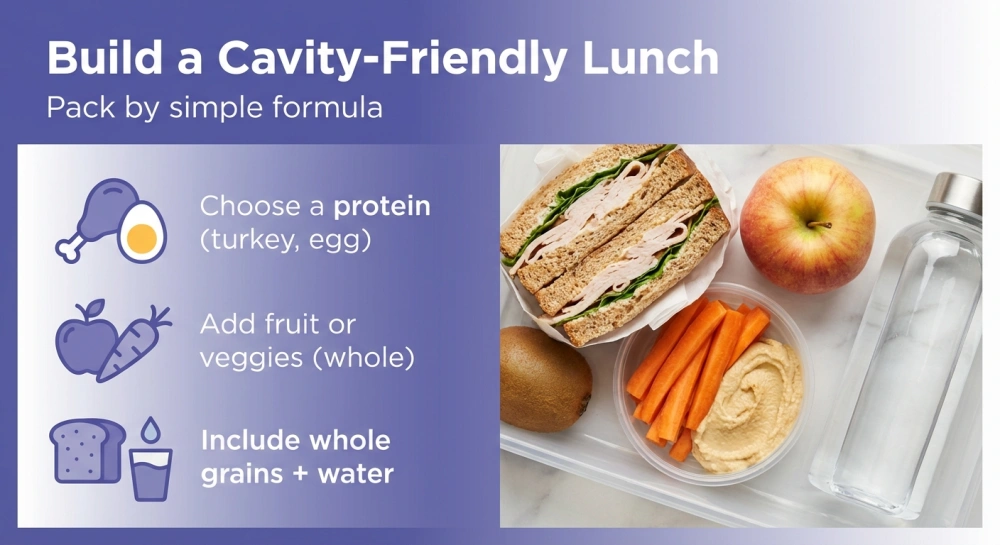
Think of a lunchbox as a simple formula. Choose one item from each category and adjust for taste.
- Protein pick Turkey roll ups, hard boiled egg, hummus, cheese, or yogurt provide staying power.
- Fruit or veggie Fresh whole fruit or raw veggies deliver crunch, water, and fiber.
- Whole grain Whole grain crackers, a small whole grain wrap, or oats in overnight oatmeal for a balanced base.
- Crunchy extra Roasted chickpeas or plain popcorn for kids without braces, or soft crackers for kids with braces.
- Drink Water first, with plain milk as a second choice for extra protein and calcium [3][11].
To keep meals exciting, rotate flavors and shapes. Cut sandwiches into small squares, roll a tortilla into pinwheels, or use silicone cups to separate colors. Invite your child to help pack lunch once or twice a week so they learn how to build lunchbox ideas for healthy teeth that they will actually eat.
What should you look for on nutrition labels when shopping?
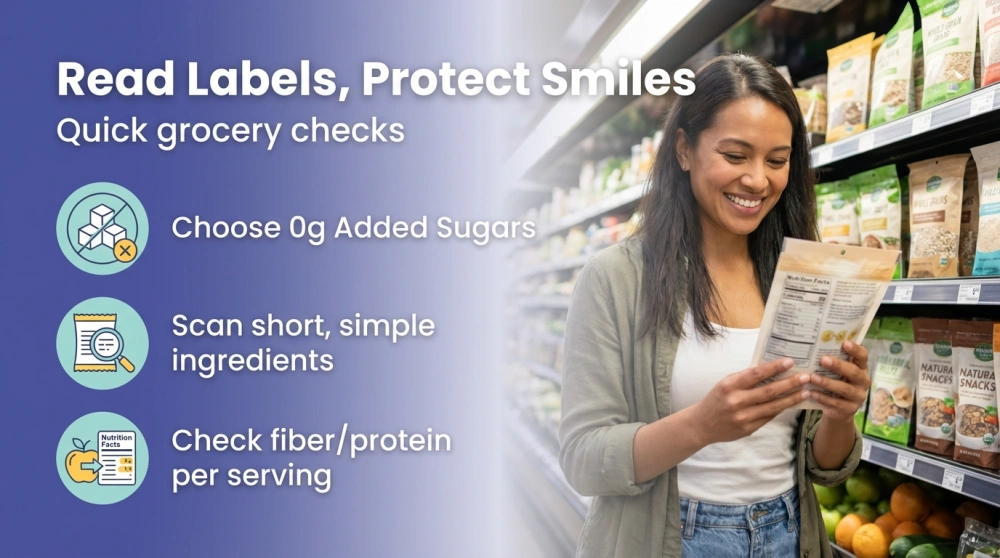
Labels can be confusing, so here are fast checks to use while scanning shelves for tooth friendly school snacks.
- Added Sugars Choose snacks with 0 grams Added Sugars whenever possible, and compare the percent Daily Value to pick lower sugar options [5].
- Ingredients list Shorter is often simpler. Avoid products that list sugars near the top or include multiple sweeteners [5].
- Fiber and protein Look for snacks with at least a few grams of fiber or protein to keep kids full and slow sugar absorption.
- Whole grains Select products that list whole grain as the first ingredient when buying crackers or cereals.
- Serving size Many child directed snacks look small but contain more than one serving. Teach kids to portion out a single serving at a time.
Reading labels together teaches kids how to make choices that are good for their bodies and their smiles.
How do drinks affect teeth at school?
Drinks can be a hidden source of sugar and acid, even when snacks look balanced. For school days, make water the go to and save sweet drinks for rare occasions.
- Water The best everyday drink for teeth. Fluoridated water helps strengthen enamel and wash away food particles [10].
- Plain milk A good source of calcium and protein. Serve without added flavors to avoid extra sugars [11].
- Juice Even 100 percent fruit juice contains natural sugars and acidity. Pediatric guidance recommends limiting portions and serving juice in open cups at meals, not in bottles or sippy cups [8].
- Sports and energy drinks Often acidic and sugary, and not needed for most school day activities. They can erode enamel and raise cavity risk [3].
Encourage kids to carry a refillable water bottle. If your child has a treat drink, have them finish it in one sitting with a meal instead of sipping all day to minimize time teeth spend under acid attack [2].
How often should kids snack during the day?
Spacing matters as much as what kids eat. Teeth need breaks between eating to allow saliva to neutralize acids and rebuild minerals. Aim for meal and snack routines with planned times, rather than continuous grazing. Encourage water between eating occasions [2].
Many families find that a mid morning snack and an afternoon snack fit well with school schedules. Keep snacks small and balanced, not meal sized. If your child participates in after school sports, choose a protein rich snack and water before practice, and plan a full dinner afterward.
What do California and federal school snack rules require?
Most public schools that participate in federal meal programs must follow the Smart Snacks in School standards for any food sold during the school day that is not part of a reimbursable meal. These standards set limits for calories, sodium, saturated fat, and added sugars, and include whole grain rich criteria for many grain products [7]. When you send snacks from home, you can mirror this approach by choosing items that are nutrient dense and lower in added sugars.
In California, child nutrition programs are administered by the California Department of Education Nutrition Services Division, which provides guidance and oversight for local districts that implement federal standards [12]. If your school has additional campus rules about snacks or allergens, your teacher or school office can share the latest details.
How can teachers and caregivers support healthy school snacking?
Healthy snacking is a team effort. Small classroom routines and caregiver habits can make a big difference for oral health.
- Set a water first norm Encourage students to bring water bottles and schedule quick water breaks between activities [10].
- Offer tooth friendly party menus Celebrate with fruit trays, veggie cups, cheese and crackers, and water or plain milk instead of cupcakes and soda [3][11].
- Use non food rewards Stickers, dance breaks, or extra story time are fun alternatives that avoid extra sugar.
- Share simple snack lists Provide families with a short list of approved, easy to find snack ideas.
- Align with sports schedules For team snacks, rotate fresh fruit, cheese sticks, and water to support smiles and performance.
When should you talk with a pediatric dentist about your child’s snack habits?
If your child has a history of cavities, wears braces or other appliances, has dry mouth from medications, or just struggles with picky eating, your dental team can tailor snack strategies that fit your family. Conversations about snacks are a comfortable and important part of preventive care visits, and they often lead to quick wins you can try the same day.
Snack choices are also a simple part of Preventive dentistry that you can practice daily. If you are searching for a pediatric dentist Laguna Niguel families can rely on for clear, practical guidance, we are happy to help you plan school friendly options that protect growing smiles.
Reach out sooner rather than later if you notice any of the following patterns:
- Frequent snacking and sipping All day grazing with sweetened drinks or sticky foods raises risk of enamel damage [2].
- Tooth sensitivity or pain Discomfort after sweets or cold foods can signal enamel changes that deserve attention [1].
- White or brown spots on teeth Early signs of decay are easier to manage with timely advice and care [1].
Which common questions do parents ask about tooth friendly school snacks?
Can dried fruit be part of a tooth friendly snack plan?
Dried fruit is concentrated in natural sugars and tends to be sticky, which means it can cling to teeth. If you include it, keep portions small, mix with nuts or seeds to reduce stickiness, and have kids drink water after. Fresh fruit is usually the easier choice for teeth [5].
Are flavored milks OK for school lunches?
Flavored milks often contain added sugars. For everyday lunchboxes, plain milk is the better pick. If flavored milk is offered at school, consider it an occasional treat and balance total added sugars for the day [11][6].
What about sugar substitutes in snacks and drinks?
Some products use low or no calorie sweeteners to reduce added sugars. These can lower sugar exposure for teeth, but not all products are nutrient dense. Focus first on whole foods and water. If you use diet beverages or sugar free items, keep them occasional and ask your dentist if they fit your child’s needs [3][6].
Is cheese really better for teeth than cookies?
Yes. Cheese is low in sugar and provides calcium and protein, which support enamel. Cookies typically deliver refined carbohydrates and added sugars that fuel acid production. Cheese and other dairy items like yogurt can be excellent after school or lunchbox additions [11][4].
Which cereals are better for breakfast before school?
Pick cereals with little to no added sugar and at least a few grams of fiber per serving. Pair with milk and a side of fruit to balance the meal. Check the label for Added Sugars and choose options with shorter ingredient lists [5].
Do gummy vitamins or fruit leathers affect teeth?
Sticky textures allow sugars to sit on enamel and between teeth, which can increase risk. If your child uses gummy vitamins, talk with your dentist about timing and rinsing after. For fruit leathers, save for rare treats and follow with water [2].
How can I make water more appealing without adding sugar?
Try chilled water, fun straws, or a squeeze of fresh citrus. Add mint or cucumber slices for a hint of flavor. A personalized water bottle can also encourage more sipping at school [10].
Are sports drinks necessary for school sports?
Most children do not need sports drinks for routine school day sports and activities. Water replaces fluids well for typical practices and games. Save sports drinks for prolonged, high intensity events if your pediatrician recommends them [3].
Which snack bars are better if we need a packaged option?
Look for bars with little to no Added Sugars, short ingredient lists, and a balanced mix of nuts or seeds and whole grains. Avoid sticky, candy like bars with coatings or chocolate pieces. Pair bars with water and pack them as backups rather than daily staples [5].
What are simple lunchbox ideas for healthy teeth when time is tight?
Combine a cheese stick, whole grain crackers, carrot sticks, a small apple, and a water bottle. Or pack plain yogurt, berries, a sprinkle of oats, cucumber rounds, and water. These take minutes to assemble and check all the boxes for taste and tooth friendliness [4][11].
Who is Kidz Modern Dentistry and how can we help your family?
At Kidz Modern Dentistry in Laguna Niguel, California, we care for children of all ages with a focus on comfort, clarity, and prevention. We understand that school days are busy and that parents want practical ideas that work. Our team helps families build snack routines that support healthy smiles and overall well being.
We provide Preventive dentistry in Laguna Niguel to guide families on cavity risk, daily routines, and school friendly choices. During visits we review your child’s snack patterns, share label reading tips, and discuss personalized strategies that fit your schedule and budget. When needed, we coordinate with your child’s pediatrician and school to help align goals.
Our services include same day attention for urgent needs, kid friendly sedation options when appropriate, and comprehensive care from toddlers through teens. If your child has braces, sensory preferences, or medical conditions that make eating or oral care more complex, we adapt our approach so that snack planning and home care are doable and positive.
Here is what families can expect when working with us:
- Clear next steps after each visit You leave with simple, written snack and home care ideas to try right away.
- Age specific guidance We tailor tips for toddlers, elementary students, and teens, including best snacks for braces and ways to cut added sugars without stress [9][5].
- Team based support We welcome questions from parents, caregivers, and teens so everyone understands the plan.
- Evidence informed recommendations Our guidance reflects national nutrition and dental health resources that families can trust [1][6][7].
- Comfort focused care From first visits to restorative needs, we aim to make each appointment a positive experience for your child.
Families often tell us that a few small snack shifts make mornings easier and reduce lunchtime battles. We invite you to call us at +1 (949) 273 0110 to schedule a visit or ask a question. We proudly serve Laguna Niguel and nearby communities across Orange County.
Healthy snack habits are one of the easiest ways to support long term oral health. Preventive dentistry is a shared effort between families and the dental team, and our goal is to partner with you in small, sustainable steps that fit everyday school life.
References and resources?
- Dental Caries Facts – Centers for Disease Control and Prevention
- Tooth Decay Overview – National Institute of Dental and Craniofacial Research
- Healthy Drinks Healthy Smiles – American Dental Association
- Nutrition Tips for a Healthy Mouth – American Dental Association
- Added Sugars on the New Nutrition Facts Label – U.S. Food and Drug Administration
- Dietary Guidelines for Americans 2020 to 2025 – U.S. Departments of Agriculture and Health and Human Services
- Smart Snacks in School Standards – U.S. Department of Agriculture Food and Nutrition Service
- Fruit Juice in Infants Children and Adolescents – American Academy of Pediatrics
- Braces Care and Food Choices – MedlinePlus U.S. National Library of Medicine
- Community Water Fluoridation Information – Centers for Disease Control and Prevention
- Dietary Guidelines for Americans – U.S. Department of Agriculture and U.S. Department of Health and Human Services
- Child Nutrition Programs Overview – California Department of Education Nutrition Services Division
Common Questions About This Topic
Find answers to frequently asked questions related to this article.
