- What makes a great pediatric dentist in Laguna Niguel and how do you choose?
- When should your child first see a dentist and what will happen during the visit?
- How common is tooth decay in children and what can you do to prevent it?
- Which preventive treatments are recommended for kids and why do they work?
- What should you know about dental X rays for children and radiation safety?
- What if your child has a dental emergency and needs same day care?
- How does sedation dentistry for children work and when is it appropriate?
- How do you support children with special needs or anxiety in the dental setting?
- When should kids see an orthodontist and what early signs should parents watch for?
- How does California law impact pediatric dental care for families in Laguna Niguel?
- How can you prepare your child for a positive dental visit at every age?
- How does Kidz Modern Dentistry serve Laguna Niguel families seeking pediatric dental care?
- Which sources were used for this article?
What makes a great pediatric dentist in Laguna Niguel and how do you choose?
Choosing a pediatric dentist is a big decision for any parent. The right fit blends clinical expertise with a calm, caring atmosphere that helps kids feel safe. In Laguna Niguel, CA, families often look for a children focused office with board trained pediatric clinicians, child sized equipment, and a team that communicates clearly with both kids and parents. Beyond personality and environment, training, safety protocols, and prevention focused care matter a great deal.
Here are practical points to consider as you compare options for a pediatric dentist Laguna Niguel:
- Training and credentials Ask about pediatric specific training, continuing education, and experience with infants, toddlers, school age kids, and teens. Pediatric dentists complete additional years of formal residency focused on child growth, behavior guidance, and care for children with medical complexities [1].
- Preventive philosophy Look for a practice that prioritizes early prevention, parent coaching, and evidence based care such as fluoride varnish and sealants when indicated [1].
- Age one dental home The American Academy of Pediatric Dentistry recommends establishing a dental home by the first birthday, which supports consistent checkups and timely guidance for caregivers [1].
- Radiation safety Ask how the practice limits exposure from X rays with selection criteria, digital sensors, lead aprons, and thyroid collars in line with national guidance [6] [7].
- Sedation readiness If your child has high anxiety or special health needs, confirm that any sedation is performed following recognized pediatric monitoring standards and California permit requirements where applicable [7] [8].
- Emergency availability Children have active lives, so same day response for urgent issues is helpful [11].
- Clear communication The best patient experiences start with friendly, simple explanations and ample time for questions.
As you read reviews or ask neighbors for recommendations, focus on consistent experiences that reflect compassion, safety, and outcomes rather than labels like best pediatric dentist Laguna Niguel. The right fit is the office where your child feels heard and supported at each visit.
When should your child first see a dentist and what will happen during the visit?
Pediatric experts advise scheduling the first dental check by age one or within six months after the first tooth erupts. This early visit is not about extensive treatment. It is about building familiarity, checking growth and development, and helping parents learn how to keep tiny teeth healthy at home. Establishing your child’s dental home early supports regular prevention and quick access to guidance when questions arise [1].
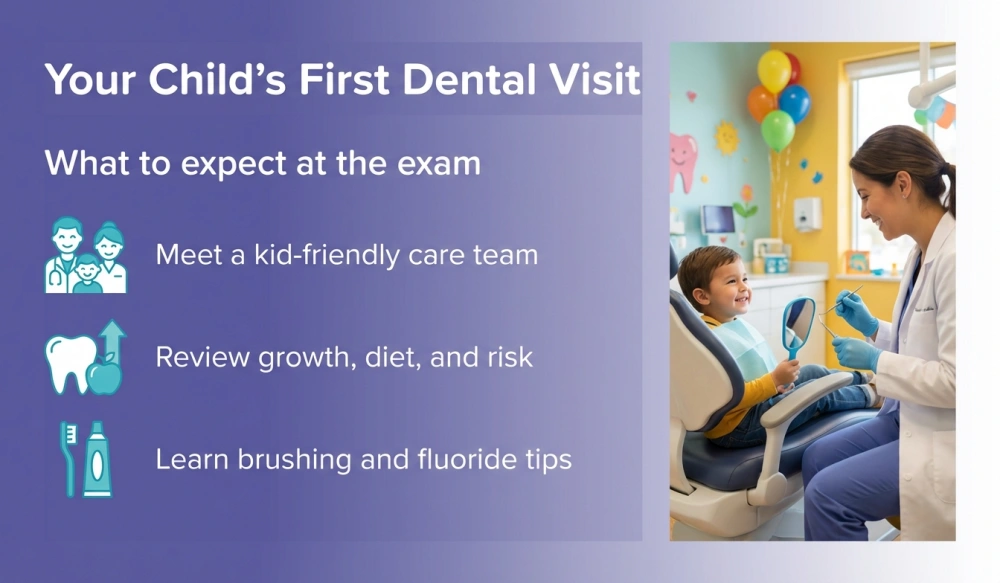
Here is what to expect during that first visit:
- Warm welcome The team will introduce your child to the sights and sounds of the office in a gentle way.
- Growth and risk review The dentist will review medical history, growth, diet, home care, and your child’s risk for tooth decay based on validated criteria [1].
- Clinical exam A quick but thorough look at the mouth, gums, and teeth checks for early signs of decay, enamel defects, tongue or lip ties, and normal eruption patterns.
- Home care coaching You will receive age specific guidance on brushing with fluoride toothpaste, nutrition tips, teething comfort, and use of bottles or sippy cups.
- Preventive options Depending on risk, your child may receive fluoride varnish to strengthen enamel and reduce cavity risk [5].
- Plan the next visit Regular checkups are individualized based on risk and age, often every six months for most children [1].
For parents seeking a children’s dentist Laguna Niguel, the goal of the first visit is to set a positive tone. Simple exposure and praise can reduce anxiety and build confidence for future visits.
How common is tooth decay in children and what can you do to prevent it?
Tooth decay is one of the most common chronic conditions in children. National data show a substantial number of kids experience cavities in primary or permanent teeth, and a meaningful fraction have untreated decay at any given time [2]. The good news is that a prevention first mindset at home and in the dental office can dramatically reduce risk.
Core prevention strategies include:
- Daily brushing with fluoride toothpaste Use a small smear for toddlers and a pea sized amount for kids who can spit. Fluoride strengthens enamel and helps prevent cavities [5].
- Smart drinks and snacks Choose water, dairy, and whole foods more often. Limit frequent sipping of sweetened beverages or sticky snacks that feed cavity causing bacteria [2].
- Fluoride varnish For children at higher risk or with early enamel changes, varnish applications in the dental office reduce the likelihood of future decay [5].
- Dental sealants Sealants protect the chewing grooves of molars and can greatly lower cavity rates in school age children [3].
- Community water fluoridation Fluoridated water is a safe, population wide prevention measure that helps lower tooth decay rates [13].
- Routine checkups Regular visits help track growth, monitor risk, and catch small issues before they become bigger problems [1].
Preventive dentistry in Laguna Niguel supports children and families with personalized risk assessments, simple education, and timely protective treatments that meet national guidelines [1].
Which preventive treatments are recommended for kids and why do they work?
Do fluoride treatments for children make a difference?
Yes. Fluoride varnish is a quick, paint on treatment that helps prevent and slow early decay in primary and permanent teeth. The United States Preventive Services Task Force recommends that clinicians apply fluoride varnish for children younger than five years who have erupted teeth, and that primary care clinicians prescribe fluoride supplements when drinking water is not fluoridated and a child is at high risk [5]. In a dental office, varnish may be recommended at routine intervals based on your child’s cavity risk and age [1].
Are dental sealants for kids effective and safe?
Sealants place a thin protective coating over the deep grooves of molars where toothbrush bristles often cannot reach. Evidence shows sealants can prevent approximately 80 percent of cavities in the first two years after placement and continue to protect for several years with maintenance [3]. Sealants are noninvasive and are considered safe for children.
How often are teeth cleaning and exams needed for kids?
Visit frequency depends on your child’s risk for cavities, growth stage, orthodontic status, and oral hygiene habits. Many children do well with checkups every six months, while some benefit from more frequent monitoring. Pediatric guidelines recommend individualized schedules informed by systematic risk assessment and the principle of minimal intervention when possible [1].
What role does diet and daily routine play in cavity prevention for kids?
Diet matters. Frequent exposure to sugar and fermentable carbohydrates fuels bacteria that produce acids which weaken enamel. Offer water throughout the day and reserve sweetened drinks for occasional treats. Encourage a consistent brushing and flossing routine. Caregivers can assist younger children to ensure plaque removal from all surfaces, especially along the gumline and in molar grooves [2].
Can community water fluoridation help my family in Orange County?
Community water fluoridation is a cornerstone of public health dentistry. It supports stronger enamel across populations and is recognized as a safe and cost effective measure to reduce cavities in children and adults [13]. If your household uses bottled or well water, ask your dentist about fluoride sources and whether supplemental strategies are appropriate for your child’s risk profile [5].
What should you know about dental X rays for children and radiation safety?
X rays are valuable diagnostic tools that help identify issues not visible to the eye, such as cavities between teeth, developmental differences, or bone changes. The key is to use them only when they will inform care. National recommendations emphasize patient selection criteria, the lowest radiation dose that can provide a diagnostic image, and the use of protective measures such as aprons and thyroid collars when appropriate [6] [7].
- Individualized need The dentist considers age, cavity risk, symptoms, and previous findings before recommending X rays [6].
- Digital sensors Many offices use digital systems that can reduce radiation compared to traditional film. Combined with careful technique, this approach follows national dose reduction principles [7].
- Communication You can ask why a specific image is needed and how it will change treatment decisions. Your child’s comfort and safety guide the process.
If you are comparing options for a kids dentist Laguna Niguel, ask how each practice applies evidence based criteria to decide when imaging is necessary and how they keep exposure as low as reasonably achievable while maintaining diagnostic value [6] [7].
What if your child has a dental emergency and needs same day care?
Active kids sometimes chip or knock a tooth, wake with a sudden toothache, or develop swelling. Knowing what to do in the first moments can protect your child’s comfort and the long term outcome. If you face a serious injury, uncontrolled bleeding, breathing trouble, or facial trauma, call emergency services right away. For urgent dental issues, many pediatric offices can offer same day guidance.
- Knocked out permanent tooth If a permanent tooth is avulsed, pick it up by the crown, gently rinse if dirty, and either place it back in the socket or keep it moist in cold milk while you seek immediate care. Time matters, with the best outcomes when the tooth is replanted quickly [10].
- Chipped or broken tooth Rinse the mouth, apply a cool compress, and save any pieces if possible. Pain relief and smooth edges can help until the tooth is restored.
- Toothache Gently clean the area and floss to remove trapped food. Avoid placing aspirin on gums. Call your dentist, especially if there is swelling or fever.
- Soft tissue injury Apply pressure with clean gauze to control bleeding. If the cut is deep or will not stop bleeding, seek urgent evaluation.
Practices that manage same day pediatric dental emergencies provide step by step support by phone and in the office, and they coordinate with medical providers when needed for complex injuries [11].
How does sedation dentistry for children work and when is it appropriate?
Sedation can be an appropriate option for some children based on age, anxiety, medical conditions, and the complexity of necessary care. The goal is to provide safe, comfortable treatment while protecting the child’s well being and ability to receive care. National pediatric guidelines outline careful screening, fasting, dosing, continuous monitoring, and recovery processes, as well as team training and emergency preparedness [7].
- Minimal and moderate sedation For anxious children or those needing longer procedures, oral or inhaled options may reduce anxiety while maintaining protective reflexes, guided by strict monitoring protocols [7].
- Deep sedation or general anesthesia For extensive treatment or certain medical needs, care may be performed with anesthesiology support in an appropriate setting. This path requires detailed assessment and informed consent [7].
- California permits In California, providers must hold specific permits for sedation or general anesthesia. You can ask your dentist which permits they carry and where services are provided [8].
- Communication and comfort Parents are encouraged to ask about options, preparation, and recovery so your child knows what to expect and you feel confident in the plan.
For families seeking sedation dentistry for children, a clear discussion of alternatives, benefits, and risks helps ensure care is matched to your child’s needs and preferences [7].
How do you support children with special needs or anxiety in the dental setting?
Every child deserves compassionate, accessible dental care. Children with developmental, behavioral, sensory, or medical considerations may benefit from a tailored approach that respects their pace and preferences. Pediatric guidance highlights collaboration with caregivers, thoughtful environment modifications, and stepwise desensitization to help children feel safe and successful [14].
- Individualized plans Pre visit phone calls, quiet appointment times, and visual schedules can reduce surprises and support comfort.
- Caregiver partnership Listening to what works at home and using familiar comfort items empowers children and builds trust.
- Behavior guidance Techniques such as tell show do, positive reinforcement, and short visits help children master each step.
- Accessibility and rights Health care providers must meet accessibility obligations for patients with disabilities. Ask how the office accommodates communication needs, mobility devices, and sensory supports [15].
When you look for a special needs pediatric dentist, ask about experience, training, and the ways the team adapts their methods to your child’s strengths and challenges [14].
When should kids see an orthodontist and what early signs should parents watch for?
The American Association of Orthodontists recommends that children have their first orthodontic check by around age seven. At that stage, a mix of baby and permanent teeth allows clinicians to spot developing issues, guide growth, and time any needed interventions. Not every child needs early treatment, but the visit gives you a clear baseline [12].
Signs worth discussing include early or late loss of baby teeth, finger or thumb habits, mouth breathing, crowding, crossbites, underbites, overbites, or difficulty chewing. Your pediatric dentist can coordinate orthodontic monitoring and refer as needed.
How do preventive and orthodontic teams work together for kids in Laguna Niguel?
Teamwork matters. Routine checkups and cleaning visits are a convenient time to monitor growth, habits, and eruption patterns. If orthodontic guidance is needed, your dental home can coordinate care that aligns with your child’s readiness and goals [1]. Laguna Niguel Preventive dentistry in Laguna Niguel supports timely orthodontic evaluations by flagging early changes that benefit from simple guidance or interceptive steps.
How does California law impact pediatric dental care for families in Laguna Niguel?
Understanding a few California specific points can make life easier for parents as you plan care and school readiness in Orange County.
- Kindergarten oral health assessment California Education Code requires that children entering public school for the first time in kindergarten or first grade have an oral health assessment by a licensed dental professional, completed during the school year or up to the prior twelve months [9]. Your pediatric dentist can complete the required form.
- Denti-Cal for kids Many California children are eligible for dental benefits through Denti-Cal. Covered services commonly include exams, cleaning, fluoride, sealants, fillings, and other care. Check the state program for current benefits and provider participation [8].
- Sedation permits California requires specific permits for sedation and general anesthesia, and it outlines facility and monitoring standards. You can ask your provider which permits they hold and where they provide these services [8].
If you have questions about forms, insurance, or timelines, your dental office can help you navigate requirements and keep your child on track for school and activities.
How can you prepare your child for a positive dental visit at every age?
Simple preparation can transform a dental visit into a confident step forward. Start with short, upbeat explanations and practice at home. For example, let your child open wide for a quick tooth count, read a picture book about visiting the dentist, and bring a comfort toy to the appointment.
- Keep language simple and positive Focus on what your child will see, hear, and feel. Avoid words that can create fear.
- Use routines Schedule visits when your child is well rested and fed. Bring any medications and a list of questions.
- Celebrate small wins Praise cooperation and bravery. Avoid promising rewards that create pressure.
- Model calm Children respond to your tone and body language. Your calm presence helps them feel safe.
Children thrive with consistency and encouragement. As you build a long term relationship with a pediatric dental team, you will receive age specific guidance and support for each milestone. Families who prioritize regular checkups often find that issues are caught early and addressed with simple, comfortable steps. This is the heart of preventive pediatric dentistry in Laguna Niguel, CA, and it is why building healthy habits early makes such a difference.
How does Kidz Modern Dentistry serve Laguna Niguel families seeking pediatric dental care?
We care for children from infancy through the teen years with friendly communication, gentle techniques, and a prevention first mindset. Our focus is to help parents understand each next step so that decisions feel comfortable and informed. We welcome families from Laguna Niguel and nearby Orange County communities.
- Comprehensive pediatric care From the first dental visit and teeth cleaning for kids to fluoride treatments for children, sealants, and cavity prevention for kids, we tailor care to your child’s needs and comfort.
- Same day support When urgent issues arise, our team prioritizes same day pediatric dental emergencies so your child can be seen and comforted quickly.
- Kid friendly sedation options For children who need extra support, we offer sedation options guided by national pediatric monitoring standards and California permit requirements, with clear explanations for parents at every stage [7] [8].
- Special needs expertise Our team adapts visits for children with developmental or medical considerations through thoughtful scheduling, communication supports, and collaboration with caregivers [14] [15].
- Technology and gentle techniques We use modern equipment and child sized tools to make visits smooth, and we follow national recommendations for imaging and radiation safety when X rays are needed [6] [7].
- Education at the center We spend time teaching brushing, flossing, nutrition tips, and age appropriate habits so your family feels confident between visits [1] [2].
Our approach is personal. You and your child see qualified professionals who explain choices clearly and respect your preferences. We believe that when parents understand the evidence behind options, they can choose the path that best fits their family. If you are searching for the best pediatric dentist Laguna Niguel for your child’s unique needs, we invite you to meet our team and learn how we help kids feel at ease from the first hello.
To schedule or ask a question, call us at +19492730110, we are here to help you plan your child’s first dental visit, discuss preventive pediatric dentistry, or coordinate care for a specific concern. We serve families across Laguna Niguel, CA, and the surrounding Orange County area.
Which sources were used for this article?
- Periodicity of Examination, Preventive Dental Services, Anticipatory Guidance, and Oral Treatment for Infants, Children, and Adolescents – American Academy of Pediatric Dentistry
- Children’s Oral Health Data and Statistics – Centers for Disease Control and Prevention
- Sealants Prevent Cavities – Centers for Disease Control and Prevention
- Prevention of Dental Caries in Children Younger Than 5 Years – U.S. Preventive Services Task Force
- Dental X Rays and Radiation Safety – American Dental Association
- Dental Radiographic Examinations – U.S. Food and Drug Administration
- Guidelines for Monitoring and Management of Pediatric Patients Before, During, and After Sedation – American Academy of Pediatric Dentistry
- Permits and Anesthesia Permits – Dental Board of California
- Oral Health Assessment for School Entry – California Department of Education
- IADT Guidelines for Avulsion of Permanent Teeth – Dental Traumatology Journal
- Dental Trauma Best Practices – American Academy of Pediatric Dentistry
- Orthodontic Evaluation Information for Parents – American Association of Orthodontists
- Community Water Fluoridation – Centers for Disease Control and Prevention
- Management of Dental Patients With Special Health Care Needs – American Academy of Pediatric Dentistry
- ADA Requirements for Health Care Providers – ADA.gov
Common Questions About This Topic
Find answers to frequently asked questions related to this article.