
- Why Choosing the Right Pediatric Dentist Matters
- What Kind of Training Does a Pediatric Dentist Have?
- What Qualities Define a Great Pediatric Dentist?
- What Makes an Office Truly Kid-Friendly?
- How Does a Great Pediatric Dentist Approach Preventive Care?
- What Should Parents Know About Sedation in Pediatric Dentistry?
- How Should a Pediatric Dental Practice Handle Emergencies?
- Can a Great Pediatric Dentist Work With Children Who Have Special Needs?
- What Should You Expect During Your Child’s First Dental Visit?
- How Do You Choose the Right Pediatric Dentist in Laguna Niguel and Aliso Viejo?
- Frequently Asked Questions
- About Kidz Modern Dentistry
- References
Why Choosing the Right Pediatric Dentist Matters
If you’re a parent searching for the right dental home for your child, you already know the stakes feel high. The early experiences a child has in a dental chair shape their attitude toward oral health for a lifetime. A warm, reassuring visit at age two can spark a lifelong habit of regular checkups. A stressful or painful one can create anxiety that follows a child well into adulthood.
Half of all kids have had cavities by age nine. That’s straight from the CDC [1] . And the gap between income brackets is real, kids from lower-income households end up with untreated cavities at more than twice the rate of their higher-income peers. There’s also the school piece. Roughly 34 million hours of class time disappear every year in the US thanks to unplanned dental care [1] . I mean, that’s staggering. It also makes it pretty obvious why steady, thoughtful pediatric dental care isn’t optional, it’s kind of the whole point.
Knowing what separates a good dental experience from a truly exceptional one helps you make a confident decision. So let’s walk through what a great pediatric dentist actually looks like in practice, from training and communication style to emergency preparedness and the office environment your child walks into.
What Kind of Training Does a Pediatric Dentist Have?
A pediatric dentist is not simply a general dentist who sees children. To become a licensed pediatric dentist in the United States, a clinician must complete four years of dental school followed by an additional two to three years of accredited specialty residency training focused exclusively on children’s oral health [2]. That residency covers child psychology, developmental stages of teeth, pediatric sedation, behavior management, and the treatment of infants, adolescents, and children with special health care needs.
The AAPD basically writes the rulebook. It’s the national professional organization for pediatric dental specialists, and it lays out the clinical guidelines and best practices trained dentists in the field are expected to follow [3] . If you’re vetting a pediatric dentist, I think confirming they’ve done the specialty training and stay current with continuing education is a pretty solid place to start. Small step, but a meaningful one.
Is board certification important when choosing a children’s dentist?
Board certification through the American Board of Pediatric Dentistry (ABPD) is an optional but meaningful credential. Diplomate status indicates that a dentist has passed rigorous written and oral examinations and has demonstrated a high level of clinical competence beyond the requirements for licensure [4]. While board certification is not required to practice, it reflects a commitment to professional excellence in the specialty. When evaluating a children’s dentist, asking about board certification status is entirely appropriate.
What Qualities Define a Great Pediatric Dentist?
Beyond credentials, what you are really looking for is a person and a team that your child can trust. The clinical knowledge matters enormously, but so does how a dentist connects with young patients. Here are the core qualities that tend to define excellence in this specialty.
Communication with children and parents alike
A great pediatric dentist speaks directly to your child in language they understand, using a calm, positive, and encouraging tone. They explain what they are doing in simple terms before they do it, often using a tell-show-do approach that previews each step of an examination or procedure. This technique is widely recognized by the AAPD as an effective behavior guidance strategy [3].
Equally important is how the dentist communicates with you as the parent. A skilled children’s dentist takes time after each appointment to clearly explain findings, discuss treatment options in plain language, and answer your questions without making you feel rushed. Transparency about what your child needs, and why, is a hallmark of trustworthy pediatric dental care.
Patience and emotional attunement
Children do not always cooperate. Some cry, some refuse to open their mouths, and some need several visits before they feel comfortable. A great pediatric dentist is not rattled by this. They adjust their pace, use distraction techniques, build rapport over multiple visits, and recognize that earning a child’s trust is part of the clinical process. Rushing a child through a procedure to save time often creates far bigger problems down the road.
A genuine commitment to low-stress visits
- Child-directed pacing: Allowing the child to acclimate to the environment before beginning an exam.
- Positive reinforcement: Using encouragement and praise throughout the appointment.
- Parental involvement: Knowing when to include parents chairside and when a child does better with some independence.
- Flexibility: Adapting the approach to each child’s age, temperament, and level of anxiety.
What Makes an Office Truly Kid-Friendly?
Walk into a great pediatric dental office and you will feel the difference almost immediately. The environment is intentionally designed to feel welcoming rather than clinical. This is not just about aesthetics. Research supported by the AAPD indicates that environmental factors, including sensory input and waiting area experiences, influence a child’s anticipatory anxiety before a procedure even begins [3].
How does office design affect a child’s dental experience?
A thoughtfully designed pediatric dental office often includes:
- Bright colors and engaging decor that signal safety rather than the cold sterility associated with medical settings.
- A separate waiting area for children with age-appropriate books, games, or media to help kids settle in before their appointment.
- Smaller, child-sized equipment that does not feel intimidating.
- Trained pediatric dental assistants who know how to interact with children at different developmental stages.
- A calm, consistent team that your child sees appointment after appointment, building familiarity and comfort over time.
A kid-friendly dentist also has systems in place so that appointments start on time. Long waits with anxious children in a waiting room rarely end with a smooth appointment.
How Does a Great Pediatric Dentist Approach Preventive Care?
Prevention is the foundation of quality pediatric dentistry. The AAPD recommends that children establish a dental home by the first birthday or within six months of the eruption of the first primary tooth [3]. A great pediatric dentist takes that guidance seriously and builds a relationship with your family from the very beginning, often meeting with parents during prenatal or infant wellness visits to discuss oral hygiene for babies.
Pediatric preventive dental care includes routine examinations, professional cleanings, fluoride treatments, and dental sealants when appropriate. Sealants applied to the chewing surfaces of back teeth have been shown to reduce the risk of cavities in those teeth by up to 80 percent in the first two years after application, according to the CDC [1]. A prevention-focused pediatric dentist discusses each of these tools with you and helps you understand what your child needs at each stage of development.
What role does anticipatory guidance play in pediatric dental care?
One of the distinguishing features of a thoughtful pediatric dentist is the use of anticipatory guidance, which means preparing parents for the oral health changes their child is about to experience at each developmental stage. This might include guidance on teething, thumb-sucking habits, the transition to a first toothbrush, and what to expect when permanent teeth begin to arrive. This kind of proactive education empowers you to support your child’s oral health at home between visits, which is where so much of the work actually happens.
What Should Parents Know About Sedation in Pediatric Dentistry?
For many children, and many parents, the topic of sedation brings up understandable questions. Pediatric sedation dentistry is a carefully regulated area of dental practice, and when provided by a properly trained and equipped team, it can make an enormous difference for children who experience significant dental anxiety, children with complex treatment needs, or very young children who cannot cooperate with an awake procedure.
The AAPD, in conjunction with the American Academy of Pediatrics, has published detailed guidelines on the monitoring and management of pediatric patients before, during, and after sedation [3]. These guidelines cover staffing requirements, emergency preparedness, monitoring equipment, and documentation standards. A great pediatric dentist follows these protocols without exception.
What sedation options are typically available for children?
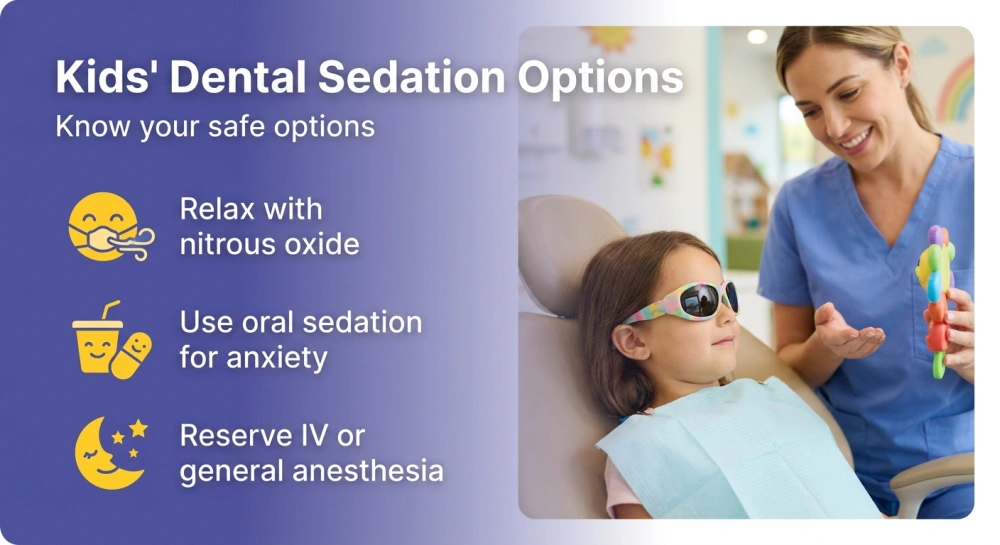
Options range from mild to deeper levels of sedation, depending on the child’s needs and the complexity of the procedure:
- Nitrous oxide (laughing gas): A mild inhalation sedation that helps a child relax while remaining fully conscious and responsive. It wears off quickly after the mask is removed.
- Oral conscious sedation: A liquid or pill medication given before the appointment that reduces anxiety and allows the child to stay calm, though awake.
- IV sedation or general anesthesia: Reserved for more complex procedures or children with significant anxiety or special health care needs. These options require additional medical oversight.
Pediatric sedation dentistry in Laguna Niguel is something families should discuss openly with their provider. A great pediatric dentist takes time to review your child’s health history thoroughly, explain the proposed sedation approach in detail, outline all pre-appointment preparations, and answer every question you have before moving forward. Informed consent is not a formality; it is a genuine conversation.
How Should a Pediatric Dental Practice Handle Emergencies?
Accidents happen. A child falls on the playground and chips a tooth. A toothache develops on a Saturday morning. A baby tooth gets knocked loose. What your pediatric dentist does in those moments matters as much as anything they do during a routine visit.
A great pediatric dental practice has a clear, accessible system for handling same-day pediatric dental emergencies. Parents should be able to reach a provider or a knowledgeable team member when something urgent happens, rather than being directed to an emergency room for a dental issue that can and should be addressed in the dental office. The AAPD’s policy on emergency oral care recognizes the importance of prompt, appropriate intervention for pediatric dental injuries and acute pain [3].
What dental situations in children are considered emergencies?
Situations that typically require prompt dental attention include:
- Knocked-out permanent tooth: Time is critical. A permanent tooth that is knocked out should be handled carefully, kept moist, and the child should be seen immediately.
- Cracked or fractured tooth: Even if the child is not in pain, a fracture should be evaluated promptly to rule out pulp involvement.
- Dental abscess: Signs of infection including swelling, fever, or a visible bump on the gum near a tooth require urgent attention.
- Severe toothache: Persistent pain that is disrupting a child’s sleep or eating warrants a same-day evaluation.
- Soft tissue injuries: Lacerations to the lips, tongue, or gums that do not stop bleeding or appear significant should be assessed by a dental professional.
Same-day pediatric dental emergencies in Aliso Viejo and surrounding areas of south Orange County deserve the same attentive response as a scheduled visit. A pediatric practice that is prepared for the unexpected is one you can truly rely on as a family dental home.
Can a Great Pediatric Dentist Work With Children Who Have Special Needs?
A genuinely skilled children’s dentist is prepared to care for children across the full spectrum of developmental, medical, and behavioral needs. This includes children with autism spectrum disorder, Down syndrome, cerebral palsy, sensory processing challenges, attention deficit hyperactivity disorder, congenital heart conditions, and many other diagnoses that may affect how a child experiences or tolerates dental care.
The AAPD has published detailed best practice guidelines on the management of dental patients with special health care needs, emphasizing individualized treatment planning, appropriate behavior support, and modified clinical techniques when necessary [3]. A great pediatric dentist takes a collaborative approach with your child’s other healthcare providers and takes the time to understand your child’s full history before the first appointment.
How should a dentist adapt their approach for a child with sensory sensitivities?
Accommodations vary by child, but they might include:
- Scheduling appointments during quieter times when the office is less stimulating.
- Allowing a pre-appointment visit to tour the office and meet the team without any clinical procedures.
- Using headphones, weighted blankets, or other sensory tools that help the child feel grounded during the appointment.
- Communicating through visual schedules or social stories for children who respond better to visual preparation.
- Adjusting the pace and length of appointments to match the child’s tolerance on any given day.
What Should You Expect During Your Child’s First Dental Visit?
The first visit is often more about building trust than performing a thorough clinical exam, especially for very young children. The AAPD recommends the first dental visit occur no later than the first birthday [3]. At that stage, the visit typically involves a gentle examination of the infant’s gums and any erupted teeth, a discussion of feeding habits and oral hygiene with the parent, and anticipatory guidance about what to expect in the months ahead.
For older children visiting a new dentist for the first time, a great dental team will take time at the start of the appointment to let the child get comfortable. The dentist may start with a count of the teeth, a gentle mirror exam, and a ride up and down in the dental chair before anything more involved takes place. The goal is for the child to leave the office feeling positive about what happened, ideally proud and ready to come back.
How can parents help prepare their child for a dental visit?
You play a significant role in how your child feels walking into that appointment. Some things that can help:
- Talk about the dentist in a neutral, matter-of-fact way rather than framing it as a big or scary event.
- Read age-appropriate books about dental visits to make the concept familiar.
- Avoid transferring your own dental anxiety onto your child, even inadvertently. Children pick up on parental cues very quickly.
- Schedule morning appointments when young children are typically better rested and more cooperative.
- Praise cooperation during and after the visit to reinforce the experience positively.
How Do You Choose the Right Pediatric Dentist in Laguna Niguel and Aliso Viejo?
For families living in Laguna Niguel, Aliso Viejo, and the broader south Orange County area, the process of choosing a great pediatric dentist benefits from a few practical steps.
What questions should you ask when evaluating a pediatric dental practice?
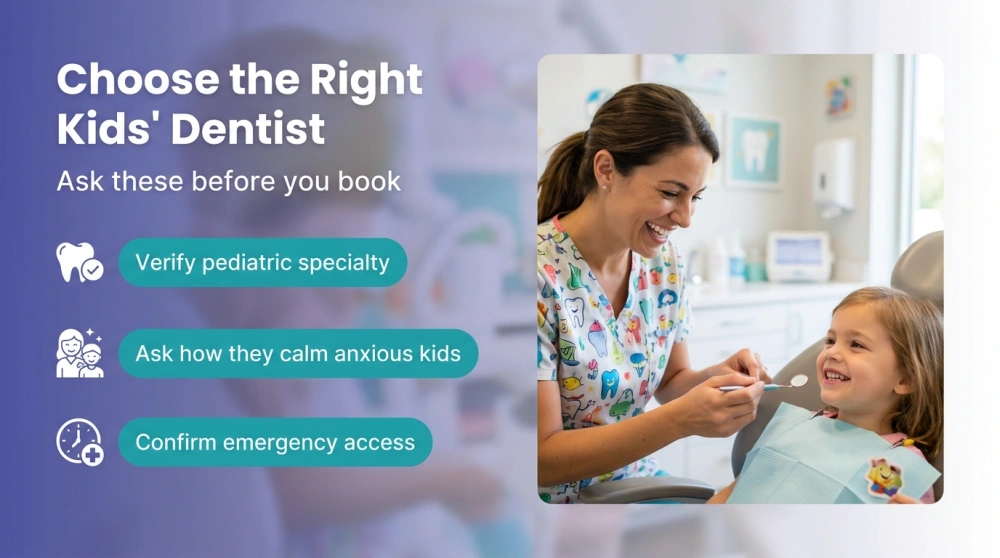
Here are some useful questions to explore before or during your first contact with a pediatric dental practice:
- Is the dentist a specialist? Ask whether they completed a pediatric dentistry residency after dental school.
- How does the practice handle anxious children? A thoughtful answer reflects real experience managing anxiety.
- What sedation options are offered? Understanding the available approaches helps you know what is available if your child needs it.
- How are dental emergencies handled? Ask about after-hours availability and the protocol for urgent situations.
- Does the practice see children with special health care needs? This is particularly important if your child has a diagnosis that affects care.
- What does a typical first visit look like? Their answer tells you a great deal about their philosophy.
Visiting the office before your child’s first appointment, if possible, gives you a feel for the physical environment, the warmth of the staff, and whether your instincts about the practice align with what you observe. Child dental visits go best when the entire team, from the front desk to the dental assistant to the doctor, feels engaged and genuinely interested in your child’s wellbeing.
Frequently Asked Questions
At what age should my child first see a pediatric dentist?
The American Academy of Pediatric Dentistry recommends that every child establish a dental home by their first birthday, or within six months after the first tooth appears [3]. Starting this early allows the dentist to monitor tooth development, catch any early signs of concern, and help you build sound oral hygiene habits from the very beginning of your child’s life.
How often should children have dental checkups?
For most children, the standard recommendation is a routine examination and cleaning every six months. However, a pediatric dentist who has assessed your child’s individual risk for cavities or other concerns may recommend more frequent visits. Children with higher cavity risk, active orthodontic treatment, or certain medical conditions may benefit from more frequent professional care. Your dentist should explain the rationale for the schedule they recommend for your specific child.
What is the difference between a pediatric dentist and a family dentist for children?
A family dentist or general dentist can see patients of all ages including children, but they do not hold the pediatric dentistry specialty certification. A board-eligible or board-certified pediatric dentist has completed two to three years of additional graduate training that focuses specifically on children’s oral development, behavior management, pediatric sedation protocols, and the treatment of children with special health care needs [2]. That additional training is particularly valuable for complex cases or for families whose children experience significant dental anxiety.
How can I tell if my child has a dental emergency?
Signs that your child needs prompt dental attention include: a tooth that has been knocked out or displaced, persistent or severe tooth pain that does not resolve, visible swelling on the face, jaw, or gums, a broken tooth with sharp edges, difficulty swallowing or breathing in association with oral symptoms, or bleeding in the mouth that does not stop within a reasonable time. When in doubt, contacting your child’s pediatric dentist directly is always the right move. A great practice will help you determine whether a situation warrants a same-day visit.
Is fluoride treatment safe for children?
Fluoride is a naturally occurring mineral that plays a well-documented role in strengthening tooth enamel and reducing the risk of cavities. Professional fluoride treatments in a dental office use concentrations that are formulated for each patient’s age and cavity risk. The AAPD supports the use of fluoride as a safe and effective part of comprehensive pediatric preventive dental care [3]. If you have specific concerns about fluoride, your child’s dentist is the right person to discuss them with in the context of your family’s circumstances.
What should I do if my child is extremely anxious about the dentist?
Dental anxiety in children is common and very manageable with the right team. Start by sharing your child’s concerns with the dental office before the appointment so they can plan accordingly. Many practices offer a low-pressure orientation visit before any clinical work is attempted. Techniques like nitrous oxide, tell-show-do communication, and positive reinforcement are often effective for mild to moderate anxiety. For children with more significant anxiety or complex needs, pediatric sedation dentistry may be discussed as an option. Your child’s dentist should never minimize what your child is feeling and should always treat anxiety as something worth addressing thoughtfully rather than working around.
Do pediatric dentists treat orthodontic issues?
Pediatric dentists are trained to monitor the development of the bite and jaw, and they often identify early signs that orthodontic evaluation may be warranted. The AAPD recommends an orthodontic screening for all children by age seven [3]. A great pediatric dentist coordinates with orthodontists when appropriate and ensures that any spacing, crowding, or bite concerns are flagged early enough for intervention to be most effective. They do not typically provide full orthodontic treatment themselves, but they serve as an important early detection resource.
About Kidz Modern Dentistry
Kidz Modern Dentistry is a pediatric dental practice serving families in Laguna Niguel and Aliso Viejo, California, with a focus on making every child’s dental experience a genuinely positive one. The practice was built on the understanding that how children feel about the dentist during their earliest visits shapes their approach to oral health for the rest of their lives, and that getting those early experiences right is worth every bit of effort and investment.
The team at Kidz Modern Dentistry provides comprehensive care for children of all ages, from infants establishing their first dental home to teenagers managing their developing dentition. Services range from routine wellness exams, professional cleanings, and fluoride treatments to tooth-colored restorations, pediatric crowns, pulp therapy, space maintainers, frenectomy, digital X-rays, and oral habit counseling. The practice also offers orthodontic monitoring so that any concerns about bite development can be identified early and addressed in collaboration with the appropriate specialists.
For children who experience anxiety or require more involved treatment, Kidz Modern Dentistry offers pediatric sedation dentistry options including nitrous oxide and other appropriate approaches, all administered in accordance with established safety guidelines. The team takes time to explain every option thoroughly and works with each family to identify the approach that makes the most sense for their child’s individual needs and health history.
When something unexpected happens, Kidz Modern Dentistry is prepared. The practice is structured to handle same-day pediatric dental emergencies so that families do not have to navigate a dental crisis without support. Whether a child has experienced a dental injury, developed a sudden toothache, or is showing signs of infection, the team is ready to respond promptly and compassionately.
Kidz Modern Dentistry also has meaningful experience working with children who have special health care needs, adapting clinical approaches, appointment structures, and communication styles to meet each child where they are. The practice understands that no two children are the same, and that truly patient-centered pediatric dental care requires flexibility, creativity, and a deep respect for each family’s experience.
Families in Laguna Niguel, Aliso Viejo, and the surrounding south Orange County communities are welcome to reach out to learn more about the practice or to schedule a visit. The team at Kidz Modern Dentistry can be reached at +1 (949) 273-0110.
References
- Oral Health Facts – Centers for Disease Control and Prevention (CDC)
- Pediatric Oral Health – American Dental Association (ADA)
- Reference Manual of Pediatric Dentistry: Oral Health Policies and Recommendations – American Academy of Pediatric Dentistry (AAPD)
- American Board of Pediatric Dentistry (ABPD)
- Parent Resources – American Academy of Pediatric Dentistry (AAPD)
- Oral Health in America: Advances and Challenges – National Institute of Dental and Craniofacial Research (NIDCR)
- Preventing Oral Diseases – Centers for Disease Control and Prevention (CDC)
- 2024 Oral Health Surveillance Report – CDC Division of Oral Health
- Behavior Guidance for the Pediatric Dental Patient – American Academy of Pediatric Dentistry (AAPD)
- Guidelines for Monitoring and Management of Pediatric Patients Before, During, and After Sedation – AAPD
Common Questions About This Topic
Find answers to frequently asked questions related to this article.
The American Academy of Pediatric Dentistry recommends that every child establish a dental home by their first birthday, or within six months after the first tooth appears [3]. Starting this early allows the dentist to monitor tooth development, catch any early signs of concern, and help you build sound oral hygiene habits from the very beginning of your child's life.
For most children, the standard recommendation is a routine examination and cleaning every six months. However, a pediatric dentist who has assessed your child's individual risk for cavities or other concerns may recommend more frequent visits. Children with higher cavity risk, active orthodontic treatment, or certain medical conditions may benefit from more frequent professional care. Your dentist should explain the rationale for the schedule they recommend for your specific child.
A family dentist or general dentist can see patients of all ages including children, but they do not hold the pediatric dentistry specialty certification. A board-eligible or board-certified pediatric dentist has completed two to three years of additional graduate training that focuses specifically on children's oral development, behavior management, pediatric sedation protocols, and the treatment of children with special health care needs [2]. That additional training is particularly valuable for complex cases or for families whose children experience significant dental anxiety.
Signs that your child needs prompt dental attention include: a tooth that has been knocked out or displaced, persistent or severe tooth pain that does not resolve, visible swelling on the face, jaw, or gums, a broken tooth with sharp edges, difficulty swallowing or breathing in association with oral symptoms, or bleeding in the mouth that does not stop within a reasonable time. When in doubt, contacting your child's pediatric dentist directly is always the right move. A great practice will help you determine whether a situation warrants a same-day visit.
Fluoride is a naturally occurring mineral that plays a well-documented role in strengthening tooth enamel and reducing the risk of cavities. Professional fluoride treatments in a dental office use concentrations that are formulated for each patient's age and cavity risk. The AAPD supports the use of fluoride as a safe and effective part of comprehensive pediatric preventive dental care [3]. If you have specific concerns about fluoride, your child's dentist is the right person to discuss them with in the context of your family's circumstances.
Dental anxiety in children is common and very manageable with the right team. Start by sharing your child's concerns with the dental office before the appointment so they can plan accordingly. Many practices offer a low-pressure orientation visit before any clinical work is attempted. Techniques like nitrous oxide, tell-show-do communication, and positive reinforcement are often effective for mild to moderate anxiety. For children with more significant anxiety or complex needs, pediatric sedation dentistry may be discussed as an option. Your child's dentist should never minimize what your child is feeling and should always treat anxiety as something worth addressing thoughtfully rather than working around.
Pediatric dentists are trained to monitor the development of the bite and jaw, and they often identify early signs that orthodontic evaluation may be warranted. The AAPD recommends an orthodontic screening for all children by age seven [3]. A great pediatric dentist coordinates with orthodontists when appropriate and ensures that any spacing, crowding, or bite concerns are flagged early enough for intervention to be most effective. They do not typically provide full orthodontic treatment themselves, but they serve as an important early detection resource.
