
- What are canker sores in children and how are they different from cold sores?
- Why do some kids get recurrent canker sores?
- What common triggers should parents watch for?
- How can you soothe a painful canker sore at home safely?
- How can you prevent canker sores from coming back?
- When should your child see a pediatric dentist or pediatrician in Laguna Niguel?
- What safety guidance and regulations matter for families in California and the United States?
- How does Kidz Modern Dentistry support families dealing with recurrent canker sores?
- Where can you find the references and resources used in this article?
What are canker sores in children and how are they different from cold sores?
Canker sores also called aphthous ulcers are small shallow sores that form inside the mouth. You might see them on the inner cheeks or lips on the tongue or along the soft tissues near the gums. They are not contagious and they usually heal on their own within one to two weeks [1]. In children they can be surprisingly painful even when the sore looks small. Your child may avoid brushing or eating because of the tenderness and that can make daily routines stressful for the whole family.
Canker sores are different from cold sores. Cold sores are caused by the herpes simplex virus and are contagious. They appear mostly on the outside of the mouth such as on the lips and they can spread through close contact like sharing utensils or kissing [2]. By contrast aphthous ulcers happen inside the mouth and are not caused by a virus. Knowing the difference helps you choose safe care at home and decide when to reach out to a pediatric dentist for guidance [1].
Canker sores are common in children and teens and they can recur. In the general population estimates range from about 5 to 25 percent depending on age and health factors [3]. If your child gets repeated mouth ulcers it is understandable to worry. The encouraging news is that most cases are manageable with simple steps and a thoughtful prevention plan [1].
Why do some kids get recurrent canker sores?
Recurrent canker sores usually happen due to a mix of local irritation immune sensitivity nutrition status and family tendency. There is not a single cause for every child which is why it helps to look closely at patterns. Here are the broad categories dentists and physicians consider when evaluating recurrent ulcers in children [3] [4]:
- Minor trauma Small accidental bites a new toothbrush with stiff bristles or rubbing from braces can irritate soft tissues and start a sore [6].
- Nutritional factors Low levels of iron folate or vitamin B12 can be associated with recurring ulcers and addressing a deficiency when present can help reduce episodes [3].
- Food sensitivities For some children acidic or spicy foods such as citrus tomatoes or certain seasonings seem to trigger a flare [8].
- Stress and sleep School and social pressures or a disrupted sleep routine can coincide with outbreaks in susceptible kids [3].
- Toothpaste ingredients Some children react to toothpaste with sodium lauryl sulfate a foaming agent that may irritate oral tissues. Choosing SLS free toothpaste can be helpful for sensitive mouths [8].
- Underlying conditions Less commonly recurrent aphthous ulcers can be associated with gastrointestinal conditions or autoimmune processes. A coordinated evaluation with your pediatrician is appropriate when ulcers are severe prolonged or occur with other symptoms [3] [11].
Because these factors often overlap a careful history is the best starting point. Keep a brief diary of foods routines toothpaste brands and new activities when an ulcer appears. Share that with your pediatric dentist. This collaborative approach is a core part of Pediatric preventive dentistry because we focus on early pattern spotting and practical changes that fit your child and family.
What common triggers should parents watch for?
Parents usually notice a pattern once they start tracking when sores appear. Below are frequent triggers and how they relate to your child’s day to day life.
Which everyday irritants can lead to mouth ulcers in children?
Soft tissues inside the mouth are delicate. Even small bumps or friction can set off an ulcer. Common examples include accidental cheek biting during sports or play and toothbrushing with a brush that has firm bristles. Orthodontic brackets or wires can rub on the inner cheeks or lips and start a sore. Dental wax and quick adjustments from your orthodontic team can reduce rubbing and lower the chance of a new ulcer [9]. If your child wears a mouthguard for sports make sure it fits comfortably and does not have sharp edges that irritate the cheeks or tongue.
Can food sensitivities and allergies contribute to canker sores?
Food related flares are common. Citrus fruits tomatoes chocolate and spicy snacks can sting and sometimes trigger a sore in sensitive children. Encourage your child to note any stinging or tingling right after eating. If a clear pattern emerges limit that food during healing and reintroduce slowly while monitoring symptoms. If reactions are intense or involve swelling rashes or breathing difficulty seek medical care immediately.
How do vitamins and minerals relate to mouth ulcers?
Nutritional status influences oral tissues and immune responses. Deficiencies in iron folate or vitamin B12 may be associated with more frequent aphthous ulcers in some children [3]. Your pediatrician can order simple blood tests if there are other signs like fatigue pallor or changes in appetite or growth. When a deficiency is confirmed guidance on diet and supplementation may help reduce recurrences. Some clinicians also discuss vitamin B12 supplementation for frequent ulcers particularly when diet is limited although plans should be individualized with your child’s healthcare team [3].
Could stress or sleep changes play a role?
Yes. Emotional stress tight schedules and disrupted sleep can coincide with outbreaks in school age children and teens. Supportive routines predictable bedtimes and simple coping skills like a short breathing exercise before bed can be practical protective steps. If your child’s stress feels overwhelming consider talking with your pediatrician or a counselor. Oral health often improves when overall well being is addressed [3].
When do underlying medical conditions need to be considered?
Occasional minor sores that heal within one to two weeks are usually not a cause for alarm. However persistent large or unusually frequent ulcers sometimes warrant a broader medical look. Certain gastrointestinal and autoimmune conditions can include recurrent aphthous ulcers among other signs. If ulcers last longer than two weeks are very large or are accompanied by fever fatigue weight changes rashes or stomach symptoms coordinate care with your pediatrician for appropriate testing [3] [11].
How can you soothe a painful canker sore at home safely?
Comfort care focuses on reducing pain protecting the sore and keeping the mouth clean and hydrated while the area heals. Always follow label instructions for any product and check age guidance for children.
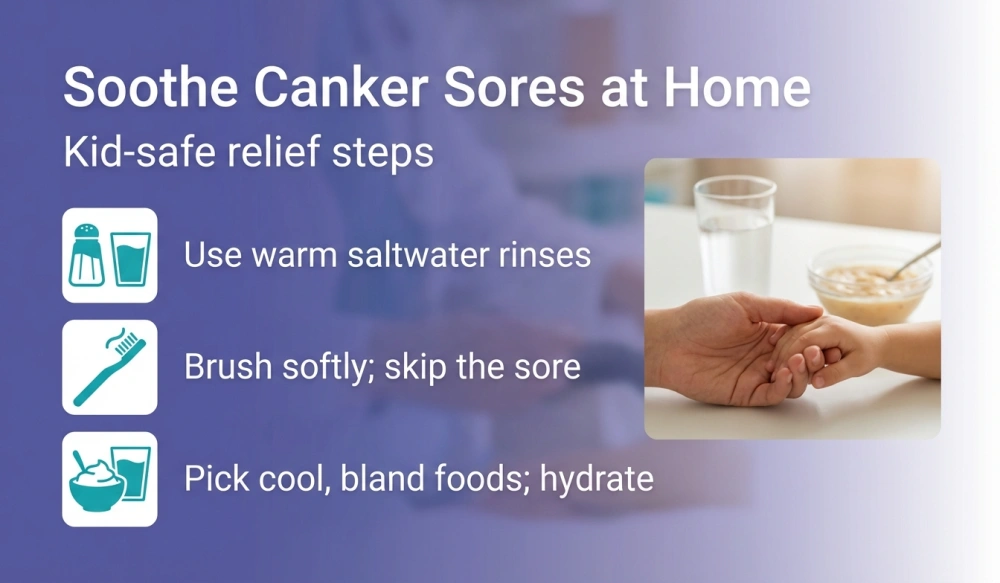
What simple rinses and home care steps are safe for kids?
- Gentle saltwater rinse A mild warm saltwater rinse can soothe tissues and help keep the area clean for children who can swish and spit without swallowing. Use a half teaspoon of table salt dissolved in a cup of warm water and rinse for several seconds before spitting. Repeat two to three times daily during healing [6] [10].
- Soft brushing Switch to a soft or extra soft toothbrush and slow gentle strokes. Avoid brushing directly over the sore if it is too tender but keep the rest of the mouth clean to prevent plaque buildup that could further irritate tissues [6].
- Cool and bland foods Offer cool smoothies yogurt or softer non acidic foods. Avoid citrus tomato based sauces very spicy snacks and crunchy chips until the area feels better [8].
- Hydration Encourage frequent sips of water to maintain moisture and comfort inside the mouth especially if your child is avoiding regular meals for a day or two.
Are topical anesthetics and protective gels helpful for children?
Over the counter products can provide temporary relief. Protective pastes that form a thin barrier over the sore help shield it from friction during eating and brushing. Topical anesthetics may numb the area for short periods in older children. Read labels carefully and avoid products not intended for young children. The United States Food and Drug Administration has advised against benzocaine products for teething in infants due to the risk of methemoglobinemia and urges caution with these products in general. Parents should discuss age appropriate options with a dentist or pediatrician and follow instructions exactly [7].
Prescription options may include medicated oral gels or rinses chosen by your child’s dentist based on the size and location of the ulcer and your child’s age and health history. These can shorten the duration of pain and help ulcers heal more comfortably in some cases [4].
When are prescription treatments considered?
If ulcers are frequent large interfere with eating and drinking or do not improve with simple care your dentist may consider prescription therapies. Options can include topical corticosteroid pastes or rinses which can reduce inflammation and speed healing when used as directed. In select cases antimicrobial rinses may be used to reduce bacterial load around the ulcer edge and support healing. Your pediatric dentist will tailor choices to your child’s needs and will coordinate with your pediatrician if a broader medical evaluation is appropriate [4] [3].
How can you prevent canker sores from coming back?
Prevention blends smart daily habits with attention to known triggers. The goal is not perfection. Instead think small consistent changes that make your child’s mouth more comfortable and resilient.
What daily oral care routines can reduce risk?
- Choose a gentle toothpaste Consider SLS free toothpaste if your child is sensitive to foaming agents and monitor for improvement in comfort and frequency of sores [8].
- Use a soft brush and slow strokes A soft or extra soft toothbrush with unhurried technique minimizes accidental irritation on the cheeks and tongue [6].
- Rinse after acidic or spicy foods A quick water rinse after snacks can reduce lingering acids and spices that may sting already sensitive tissues.
- Keep regular checkups Routine visits allow your pediatric dentist to catch irritation points early and suggest simple adjustments, from brushing technique to orthodontic wax use and dietary timing.
This is where Pediatric preventive dentistry shines because it emphasizes early identification of triggers and small habit changes that fit your child’s routine and preferences.
What nutrition and hydration habits help?
- Balanced meals and snacks Offer a variety of fruits vegetables proteins and whole grains for steady intake of iron folate and vitamin B12. If your child is a selective eater ask your pediatrician whether a brief nutrition screening is appropriate [3].
- Hydration first Drinking water throughout the day supports saliva flow and comfort which can make the mouth less vulnerable to irritation.
- Food timing If a food seems to trigger stinging try serving it with a meal rather than as a snack and follow with a water rinse. This can dilute acids and reduce friction on tender tissue.
How can orthodontic wax and mouthguards reduce irritation?
If your child has braces ask the orthodontic team to show you how to apply wax to any bracket or wire that rubs. This quick fix often makes an immediate difference. If a wire is loose or poking call your orthodontist for the next steps. For sports use a well fitted mouthguard and inspect it regularly for rough edges that could rub cheeks or lips. These simple adjustments can significantly lower mechanical irritation inside the mouth [9].
Families in and around Laguna Niguel also benefit from Pediatric preventive dentistry in Laguna Niguel as part of an ongoing plan to reduce day to day irritants and keep tiny injuries from turning into recurrent canker sores.
When should your child see a pediatric dentist or pediatrician in Laguna Niguel?
Most minor canker sores heal without treatment in one to two weeks. Still it is reasonable to check in with a pediatric dentist or your pediatrician if you have concerns. Seek care promptly if any of the following is true [1] [3]:
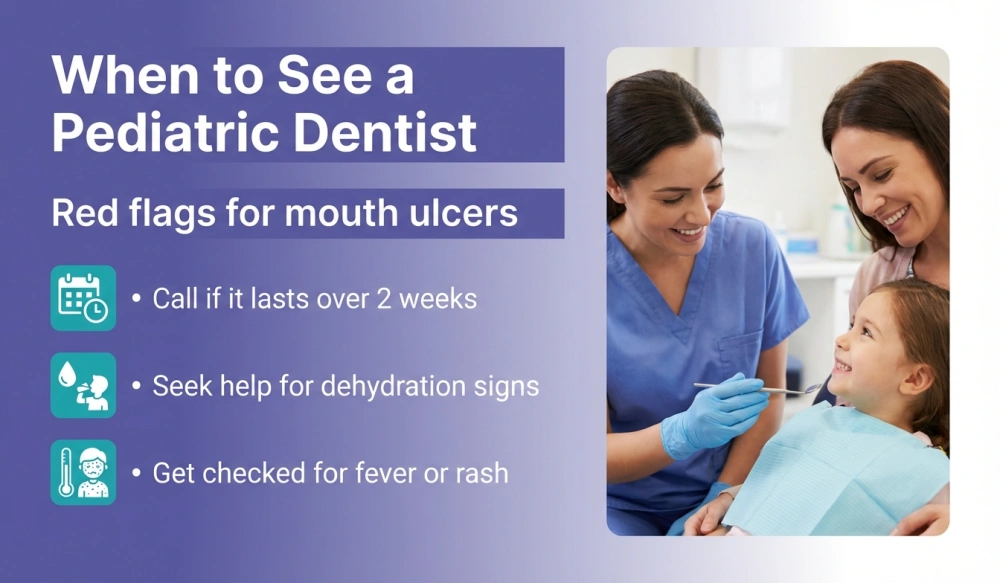
- The sore lasts longer than two weeks Persistent ulcers may need prescription care or evaluation for an underlying condition.
- Ulcers are unusually large or cluster repeatedly Frequent or severe episodes can warrant a closer look at nutrition allergy or systemic factors.
- Your child has trouble drinking or shows signs of dehydration Younger children can get dehydrated quickly when mouth pain limits intake.
- There is fever rash or widespread mouth involvement These can suggest a different type of condition requiring medical evaluation.
- You are unsure whether the sore is a canker sore or a cold sore A pediatric dentist can help distinguish and guide next steps [2].
If you are searching for a pediatric dentist Laguna Niguel families trust for practical guidance our team is here to help with gentle evaluation and a personalized plan for your child. For urgent pain related to mouth ulcers or braces rubbing we welcome same day support when possible so your child can feel more comfortable sooner.
What safety guidance and regulations matter for families in California and the United States?
Safety comes first when caring for children’s mouths. Here are a few points to know for families in Laguna Niguel Orange County and across California.
- Medication safety Follow age guidance on all over the counter products and check with your child’s dentist or pediatrician before using numbing gels or rinses. The FDA has issued safety communications about benzocaine use in young children and urges careful use only as directed [7].
- Professional oversight In California dentists follow state rules and standards for pediatric care and medication use including dosing and documentation to support safe care. When a prescription product is recommended it is chosen to match your child’s age health and the clinical picture.
- Public health resources The California Department of Public Health Oral Health Program offers statewide resources and education to support children’s oral health and access to care. These programs can help families learn practical prevention strategies and find local services when needed [12].
- Contagion awareness Cold sores are contagious while canker sores are not. Understanding this difference can guide home routines like not sharing utensils when a cold sore is active and reduces confusion about school and sports participation [2] [13].
How does Kidz Modern Dentistry support families dealing with recurrent canker sores?
We know recurring mouth ulcers can disrupt school meals and smiles. At Kidz Modern Dentistry we help parents understand why sores happen and what to do next. Our practice serves families in Laguna Niguel CA and throughout Orange County with kid friendly care clear explanations and practical plans that fit busy schedules.
Here is how we support families when a child keeps getting canker sores:
- Comfort focused visits We start by listening. We review your child’s history diet routines toothpaste products and any orthodontic appliances. We examine the mouth gently and discuss immediate comfort care that is age appropriate.
- Pattern finding and prevention planning We help you map likely triggers whether it is braces irritation specific foods or routine changes. Together we create a simple prevention toolkit and show your child how to use it at home and at school.
- Coordinated care If we suspect a nutritional deficiency or other contributing factor we coordinate with your pediatrician for testing and management. You get clear next steps and a team approach.
- Same day support when possible For pain related concerns we do our best to provide same day guidance or visits so your child can get relief quickly.
- Kid friendly sedation options when appropriate While sedation is rarely needed for canker sores it can help for other dental treatments that anxious children might delay. We explain options carefully and only when appropriate for your child and the procedure.
- Education for the whole family We coach kids on gentle brushing soft tissue awareness and how to use orthodontic wax. We also provide tips on choosing SLS free toothpaste and planning snack timing to reduce stinging.
- Local expertise and access We care for children from Laguna Niguel and nearby Orange County communities and we understand school calendars sports seasons and the common triggers we see locally.
Our approach puts your child at ease while giving you a clear plan. You have direct access to a pediatric dentist for questions and follow up. If your child’s ulcers are frequent or severe we design a stepwise plan that starts with comfort care and prevention and then builds if needed in coordination with your pediatrician.
We also incorporate Pediatric preventive dentistry into every care plan because it helps reduce the everyday irritants that often start a sore in the first place.
- Where we operate We serve families in Laguna Niguel CA and the greater Orange County area with a modern welcoming office designed for children.
- Our methods and tools We use child centered communication visual guides and gentle techniques to help kids participate in their own care. We also offer digital education tools that parents can review at home for reinforcement.
- Leadership and experience Our team brings years of combined pediatric experience to routine care urgent comfort visits and guidance for recurrent canker sores in children.
- Personalized service You can call us directly at +1 949 273 0110 for questions about your child’s mouth ulcers and we will help you decide the next step.
- Track record of care Families often report that simple changes such as switching toothpaste adjusting orthodontic wax use and planning snacks reduce both pain and frequency of sores. While every child is different our focus is to find the simplest effective steps for your child and to reassess together over time.
- Next steps for parents If your child is in pain today or you want a prevention plan we can help you schedule a visit and coordinate with your orthodontist or pediatrician as needed.
If you are searching for Orange County pediatric dentistry that is practical and child centered our team is ready to help. Whether you need quick comfort tips or a full review of recurrent ulcer patterns we will guide you with clear steps and supportive care.
Where can you find the references and resources used in this article?
- Canker Sores – National Institute of Dental and Craniofacial Research
- Cold Sores – National Institute of Dental and Craniofacial Research
- Aphthous Stomatitis – NCBI Bookshelf StatPearls
- Topical interventions for recurrent aphthous stomatitis – Cochrane Library
- Recurrent Aphthous Stomatitis – American Academy of Family Physicians
- Canker Sores – American Dental Association MouthHealthy
- Benzocaine Safety Communication – U.S. Food and Drug Administration
- Mouth ulcers – NHS
- Orthodontic Emergencies and Relief Tips – American Association of Orthodontists
- Mouth Sores – MedlinePlus
- Oral Manifestations of Celiac Disease – National Institutes of Health PMC
- Oral Health Program – California Department of Public Health
- Genital and Oral Herpes Overview – Centers for Disease Control and Prevention
Common Questions About This Topic
Find answers to frequently asked questions related to this article.
