- Why do baby teeth matter more than many people think?
- What can happen if baby teeth cavities are not treated?
- When is it better to fix a cavity instead of pulling the baby tooth?
- How do dentists decide between fillings crowns or nerve treatment for primary tooth decay?
- What gentle options help repair cavities in baby teeth with minimal drilling?
- How do space maintainers protect your child’s bite if a baby tooth must be removed?
- What should you do if your toddler has a toothache or facial swelling?
- How can you lower your child’s risk of early childhood caries starting today?
- What safety standards and regulations guide pediatric dental care in California and the United States?
- How do timing costs and insurance influence your decision to treat a cavity in a baby tooth?
- How can you help an anxious child feel calm before during and after a dental visit?
- Why is a pediatric dentist in Laguna Niguel CA a helpful partner for your family?
- How does Kidz Modern Dentistry support families in Laguna Niguel who want to save baby teeth when possible?
- Where can you find the references for this article?
Why do baby teeth matter more than many people think?
Baby teeth are not just practice teeth. They are essential for your child’s ability to chew, speak clearly, smile with confidence, and hold space for the permanent teeth that arrive later. Healthy primary teeth also support good nutrition and comfortable sleep. National health agencies report that tooth decay is one of the most common chronic conditions in childhood, and it can affect growth and daily life if not addressed [1] [2].
When you fix cavities in baby teeth rather than removing them too soon, you help preserve natural spacing and reduce the risk of crowding as your child grows. Preserving primary teeth can also support normal jaw development and clearer speech sounds during key language milestones [2].
While it is true that baby teeth eventually fall out, many remain in the mouth for years. For example, primary molars often stay until ages ten to twelve. If one of these teeth is lost early due to primary tooth decay, nearby teeth may drift into the empty space, which can complicate future alignment and bite. This is why thoughtful treatment planning matters for baby teeth [7].
What can happen if baby teeth cavities are not treated?
Untreated baby teeth cavities can progress from minor spots to deeper lesions that cause pain, infection, and difficulty eating. Children with untreated decay may miss school, have trouble sleeping, or avoid certain foods. In severe cases, an abscess can form and spread into nearby tissues, which requires urgent care [2] [13].
Parents sometimes wonder if it is fine to wait because a tooth will fall out on its own. The challenge is that decay can worsen faster than many expect, especially in toddlers with early childhood caries. The Centers for Disease Control and Prevention reports that about one in five children aged two to five has experienced dental caries, underscoring how common and impactful this condition can be [1].
- Pain and infection risk Untreated decay can lead to toothache, facial swelling, and the need for urgent care [13].
- Nutrition and sleep Sore teeth may limit chewing and disturb sleep, which can affect energy and behavior [2].
- Spacing and alignment Early loss of baby teeth may cause space loss and crowding that complicates future orthodontic needs [7].
- Quality of life Dental problems can affect speech, social confidence, and daily routines [2].
When is it better to fix a cavity instead of pulling the baby tooth?
In many cases, saving a baby tooth is preferable to removing it. A pediatric dentist will consider your child’s age, the tooth’s expected timeline for natural shedding, the size and location of the cavity, and whether the tooth shows signs of infection. If the tooth is expected to remain in the mouth for more than a year and can be comfortably restored, preserving it often supports better function and spacing [3] [7].
There are times when removal is the best choice, such as when the tooth is severely broken down, cannot be restored, or has an infection that affects surrounding tissues. In those cases, the dental team will discuss space maintainers and follow up to protect your child’s bite and alignment [7].
- Age and timing If a primary molar is expected to last years before natural shedding, saving it supports chewing and spacing [7].
- Extent of decay Shallow to moderate lesions can often be treated with fillings or noninvasive therapies [5].
- Nerve health If decay approaches the nerve, nerve focused care may preserve the tooth and relieve pain [3].
- Infection signs Swelling, fever, or loose teeth from infection may require extraction and prompt care [13].
How do dentists decide between fillings crowns or nerve treatment for primary tooth decay?
Every child and every tooth is different. Your pediatric dentist will take a careful history, examine the tooth, and use low dose digital X rays only when needed, following national guidelines for safety and diagnostic value [10]. Then, together you will weigh options to fix cavities in baby teeth that fit your child’s needs and comfort.
- Small cavities Early lesions may be managed with fluoride varnish or silver diamine fluoride to slow or arrest decay, along with diet and brushing coaching [4] [5] [8].
- Moderate cavities Tooth colored fillings can restore form and function when the tooth structure is still strong enough to hold a filling. In many cases, a conservative preparation and adhesive materials provide a comfortable result [11].
- Large cavities When much of the chewing surface is affected, a pediatric dental crown may protect the tooth more predictably. Crowns are commonly used for extensive decay or after nerve focused treatment in primary molars [11].
- Nerve focused care If decay has reached close to the nerve, dentists may recommend Pulp therapy to preserve the tooth while removing inflamed tissue and sealing the area for comfort and function [3].
These choices reflect evidence based care. Practice guidelines from professional organizations support the use of nonrestorative treatments like silver diamine fluoride in specific cases, adhesive fillings for moderate decay, and crowns for large lesions, especially in back baby teeth that handle heavy chewing [4] [5] [11].
What gentle options help repair cavities in baby teeth with minimal drilling?
For many families, comfort and a calm experience are top priorities. There are proven approaches that can reduce or even avoid drilling, depending on the tooth and the extent of decay.
- Silver diamine fluoride SDF is a professional topical liquid that can arrest many active cavities in baby teeth, especially in very young children or those with special health care needs. It is supported by clinical guidelines and systematic reviews as a noninvasive option, though it does leave a dark stain on treated decay areas [4] [6].
- Fluoride varnish In high risk children, fluoride varnish helps prevent new cavities and can slow early lesions, particularly on smooth surfaces. It is quick to apply and well tolerated [8].
- Sealants For deep grooves on molars, sealants can block food and bacteria, reducing the chance of future decay in permanent teeth and sometimes in primary molars with deep pits [9].
- Interim restorations In some cases, a temporary filling material can stabilize a tooth until a child is ready for a more definitive restoration [11].
Gentle techniques do not replace the need for daily home care. Your dental team will also coach on brushing with fluoride toothpaste, smart snacks, and simple routines that fit your family’s day [2] [8].
How do space maintainers protect your child’s bite if a baby tooth must be removed?
If a baby molar needs to be removed early, the goal is to hold the space so the adult tooth has room to emerge. Without space protection, neighboring teeth can drift into the gap. A space maintainer is a small custom device that gently holds that spot until the permanent tooth is ready. A pediatric dentist will determine whether a maintainer is needed based on your child’s age, the location of the missing tooth, and how close the permanent tooth is to erupting [7].
- Why it matters Preserving space can lower the risk of crowding and reduce the chance of more complex orthodontic needs later [7].
- Comfort and upkeep Most children adjust quickly. The team will share simple cleaning tips to keep the device and nearby gums healthy [7].
- Follow up Regular checks confirm the maintainer is secure and that the new tooth is moving as expected [7].
What should you do if your toddler has a toothache or facial swelling?
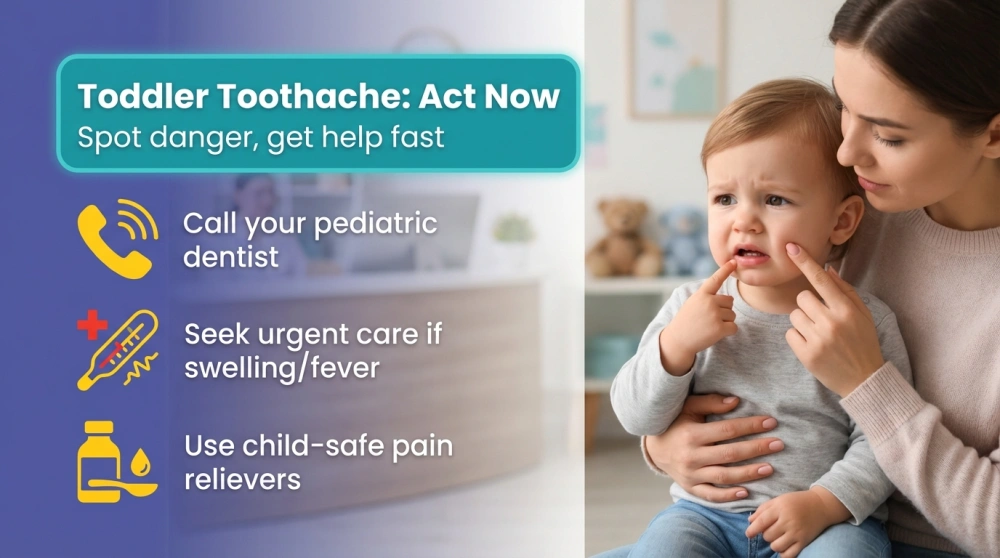
Tooth pain in toddlers can escalate quickly, and swelling around the face or jaw can signal a spreading infection. If your child has severe pain, swelling, fever, or trouble swallowing or breathing, call an emergency pediatric dentist or seek urgent care right away. These symptoms require prompt evaluation to protect your child’s airway and overall health [13].
- Call promptly Contact your dental home for same day guidance. If there is facial swelling or fever, seek urgent care [13].
- Do not delay Waiting can allow infection to progress and make treatment more complex [13].
- Pain control Use age appropriate over the counter pain relievers as advised by your pediatrician or dentist. Avoid placing aspirin on gums or teeth.
- Comfort first Keep your child hydrated and offer soft foods until seen.
If your family is in Laguna Niguel, CA and you need help after hours, search for an emergency pediatric dentist and let the provider know your child’s age, symptoms, and any allergies. Local teams understand how to accommodate young children and can coordinate referrals if hospital based care is necessary [12].
How can you lower your child’s risk of early childhood caries starting today?
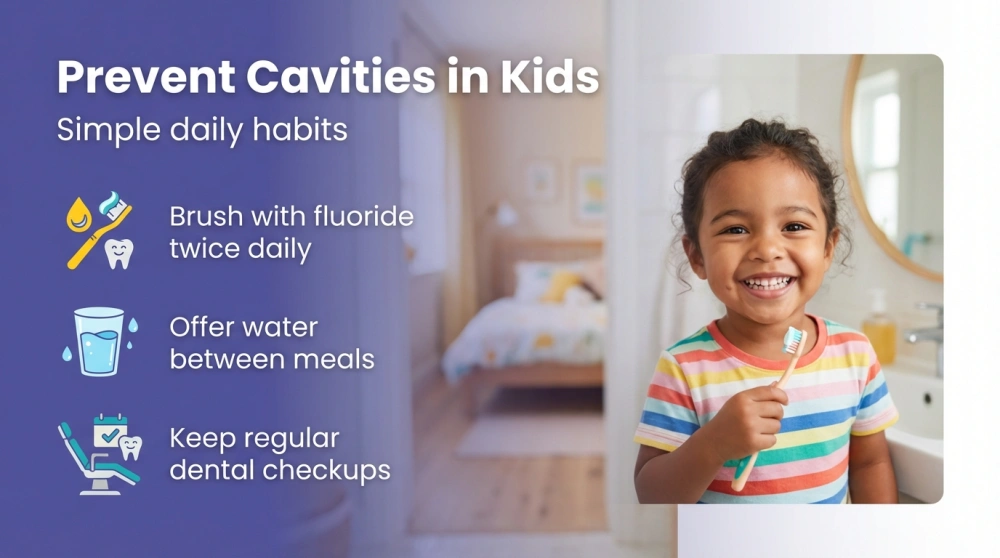
Early childhood caries often results from frequent exposure to sugary drinks and snacks combined with inconsistent brushing. The good news is that simple, steady habits make a big difference. Partnering with a kids dentist in your community also helps, since regular checkups catch small issues early and support prevention.
- Brush with fluoride toothpaste Use a small smear the size of a grain of rice for children under three and a pea sized amount for ages three to six. Brush twice daily and focus on the gumline where plaque collects [2].
- Time snacks and drinks Offer water between meals. Save juice and sweet snacks for mealtime to limit frequent sugar exposure [2].
- Fluoride varnish in the dental office Ask about professional fluoride varnish during routine visits, which can reduce risk in higher risk children [8].
- Sealants for grooves Consider sealants on permanent molars when they erupt to block food and bacteria from deep pits and fissures [9].
- Establish a dental home Regular visits with a pediatric dentist Laguna Niguel help keep care proactive and personalized for your child’s needs.
Prevention is a team effort. Your dental team will tailor tips to your child’s age, routines, and preferences, which increases the chance that new habits stick for the long term [2].
What safety standards and regulations guide pediatric dental care in California and the United States?
Parents deserve to know that the materials and methods used in children’s dentistry follow established safety and quality standards. In the United States, national organizations and state boards publish guidance to protect children in the dental setting.
- Materials and approvals Silver diamine fluoride is cleared by the U.S. Food and Drug Administration for dentin hypersensitivity. It is widely used off label to arrest caries in children according to professional guidelines and shared decision making with parents [11] [4].
- X ray safety Dentists follow the principle of keeping radiation as low as reasonably achievable and use patient selection guidelines to decide when images are needed, especially for children [10].
- Sedation standards When sedation is appropriate for a child, providers follow national behavior guidance standards and California permit rules for training, equipment, and monitoring [12] [14].
These safeguards help ensure that professional care remains focused on prevention, comfort, and appropriate treatment for each child.
How do timing costs and insurance influence your decision to treat a cavity in a baby tooth?
Families naturally think about costs and timing. Catching decay early often means simpler care that can be completed quickly and comfortably. Waiting can allow a small cavity to grow into a deeper problem that takes more visits and more extensive treatment. Your dental team can review options based on your benefits, your child’s needs, and your preferences so you can choose what fits best.
- Start with an exam An exam and any needed X rays help confirm whether a tooth can be repaired with a filling or crown, or whether removal is the safest choice [10] [11].
- Ask about noninvasive care When appropriate, SDF or interim restorations may stabilize a tooth and reduce the need for numbing or drilling [4] [5].
- Plan for space If extraction is needed, discuss space maintainers early to protect alignment and future costs [7].
- Coordinate benefits Many plans cover preventive services like cleanings, fluoride varnish, and sealants for children. Your dental office can help you understand coverage details.
How can you help an anxious child feel calm before during and after a dental visit?
It is normal for children to feel nervous about new experiences. Pediatric dental teams use child friendly language, show and tell methods, and positive reinforcement to create a supportive environment. Parents can help by practicing simple routines at home, reading picture books about visiting the dentist, and keeping explanations brief and reassuring. National behavior guidance resources outline strategies that make care more comfortable for children of all ages and abilities [12].
- Preview the visit Keep it simple and upbeat. Let your child know the team is friendly and there to help.
- Practice breathing Slow deep breathing or a favorite song can make a big difference during treatment.
- Bring comfort items A favorite toy or blanket can provide reassurance in the chair.
- Plan a routine A calm schedule and a healthy snack after the appointment help children reset.
Why is a pediatric dentist in Laguna Niguel CA a helpful partner for your family?
Families in Laguna Niguel, CA benefit from convenient access to care that understands local schools, schedules, and community resources. A kids dentist Laguna Niguel can personalize guidance about prevention and diet, coordinate with local pediatricians when needed, and offer same day support for urgent concerns. Having a trusted home for children’s dental care Laguna Niguel reduces stress and supports long term oral health.
For parents weighing whether to repair or remove a tooth, a local pediatric specialist can walk you through the timeline for natural tooth shedding, the likelihood of space loss, and the comfort options available to your child. With open conversations and clear education, you can make a confident decision that fits your family values and your child’s needs [7] [12].
How does Kidz Modern Dentistry support families in Laguna Niguel who want to save baby teeth when possible?
At Kidz Modern Dentistry, our focus is simple. We help families understand why baby teeth cavities matter and how to make thoughtful choices to protect comfort, function, and spacing. We provide complete pediatric care for children of all ages in Laguna Niguel, CA with same day attention for urgent problems and kid friendly options for anxious little ones.
Our clinical approach is collaborative and evidence based. We start with a gentle exam and only take digital X rays when helpful for diagnosis, following national recommendations for children. We explain findings in clear language so you know when a small filling makes sense, when a crown offers better protection, and when a tooth is better removed with space planning afterward [10] [11].
When decay is deep but the tooth can be preserved, we may recommend Pulp therapy to relieve pain and maintain normal chewing until the tooth is ready to fall out naturally, aligning with pediatric best practices [3]. When a tooth needs to be removed, we plan for space maintenance and routine follow up so the bite develops as expected [7].
- Services that fit your child We offer conservative fillings, pediatric dental crowns, silver diamine fluoride, fluoride treatment, dental sealants, and guidance for home care to match your child’s age and risk level [4] [5] [8] [9] [11].
- Comfort first Our team follows national behavior guidance standards and discusses comfort choices in advance so visits feel predictable and calm for you and your child [12].
- Emergency access If your child has a toothache in toddlers or swelling after a fall, we aim to see you quickly and coordinate care with your pediatrician when needed [13].
- Personal support You have direct access to qualified professionals who answer questions, explain options, and help you choose a plan that fits your timeline and goals.
We serve families across Laguna Niguel and nearby communities throughout Orange County. Our pediatric specialists bring years of combined experience caring for children with early childhood caries and primary tooth decay, and we continually train on the latest research and techniques that improve comfort and outcomes for kids [4] [5] [11].
If treatment is appropriate, we will map out each step with you. That may include simple fillings, a protective crown for a heavily worn chewing tooth, or Pulp therapy in Laguna Niguel when testing and imaging indicate the nerve is affected. If a baby tooth must be removed, we will discuss space maintainers and follow up visits so you know exactly what to expect [3] [7].
We welcome your questions and value shared decision making. To learn more or to schedule a visit, call us at +1 949 273 0110. Our goal is to make dental visits a positive experience for your little ones and to guide you with clear, reliable information every step of the way.
Where can you find the references for this article?
- Dental Caries and Sealant Prevalence in Children and Adolescents United States 2015 to 2016 – Centers for Disease Control and Prevention
- Tooth Decay in Children – National Institute of Dental and Craniofacial Research
- Pulp Therapy for Primary and Immature Permanent Teeth – American Academy of Pediatric Dentistry
- Use of Silver Diamine Fluoride for Dental Caries Management – American Academy of Pediatric Dentistry
- Nonrestorative Treatments for Caries – American Dental Association
- Silver Diamine Fluoride for Arresting Caries in Children and Adults – Cochrane Database of Systematic Reviews
- Management of the Developing Dentition and Occlusion – American Academy of Pediatric Dentistry
- Fluoride Varnish – Centers for Disease Control and Prevention
- Dental Sealants Fast Facts – Centers for Disease Control and Prevention
- Dental Radiographic Examinations Recommendations – American Dental Association
- Restorative Dentistry – American Academy of Pediatric Dentistry
- Behavior Guidance for the Pediatric Dental Patient – American Academy of Pediatric Dentistry
- Use of Antibiotic Therapy for Pediatric Dental Patients – American Academy of Pediatric Dentistry
- Sedation Permits and Requirements – Dental Board of California
Common Questions About This Topic
Find answers to frequently asked questions related to this article.