
- What are the common signs that a child’s face shape is changing?
- Which facial changes reflect normal growth and which may be concerning?
- How can mouth breathing in children influence orofacial growth?
- What oral habits and functional issues can affect a child’s facial development?
- When should parents consider an early orthodontic evaluation?
- What can families observe at home and what helps in the short term?
- What treatments might a pediatric dentist or orthodontist recommend?
- What laws and professional guidelines apply in California?
- How does Kidz Modern Dentistry support families in Laguna Niguel?
- Frequently asked questions
- References
What are the common signs that a child’s face shape is changing?
If you have noticed changes in your child’s face, you are not alone. Growing kids go through many phases, and some changes are part of normal development. Other changes can be early clues that breathing, jaw growth, or oral habits are affecting the way the face develops. Knowing the difference helps you decide when to check in with a pediatric dentist or orthodontist.
Parents often tell us they first spotted changes in pictures or during daily routines. Here are patterns you might notice:
- Longer or narrower facial appearance Some children look more long faced over time, especially if they keep their mouth open to breathe at rest.
- Dark circles under the eyes Ongoing mouth breathing or poor sleep can be associated with tired looking eyes and morning fatigue [4][5].
- Lips apart at rest If the lips are open most of the day, it can hint at nasal blockage or a habit of breathing through the mouth [3].
- Chapped lips and dry mouth Breathing through the mouth can dry the tissues, which may also raise risk for dental issues over time [3].
- Smiles that show narrow arches A high or narrow palate can make the smile look constricted and may be linked with crowding.
- Jaw shift or asymmetry A chin that seems off to one side, or a bite that meets unevenly, can be a sign that the upper and lower jaws are growing at different rates.
- Open bite or crossbite Front teeth that do not meet or back teeth that bite the wrong way can develop from habits or growth patterns [2].
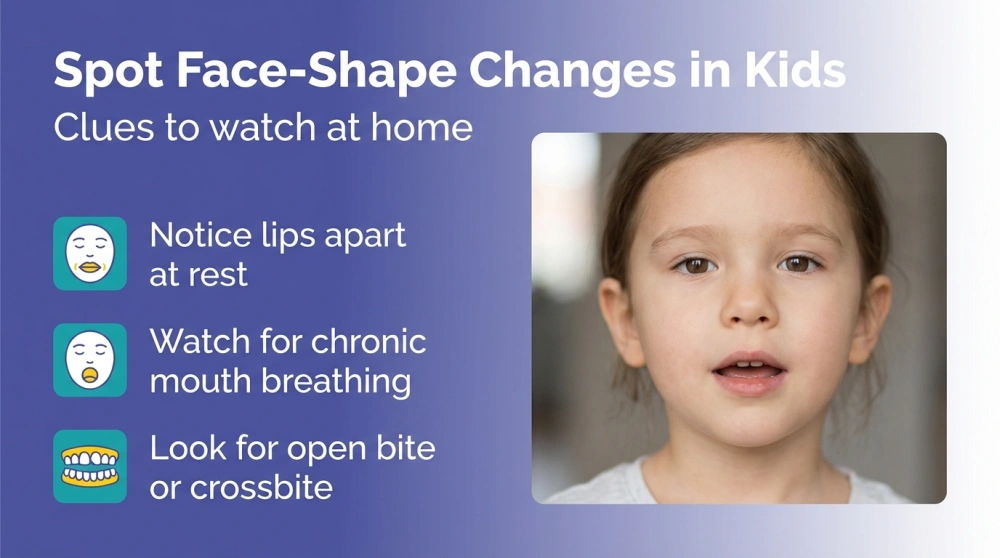
Changes like these do not always mean there is a medical problem, but they are useful clues. If you are unsure, an early look by a pediatric dentist or an orthodontist can provide reassurance and a plan if anything needs attention [1][2].
Which facial changes reflect normal growth and which may be concerning?
Children’s faces change rapidly as bones, muscles, teeth, and airways mature. Some shifts are expected and temporary. Others are better checked sooner than later so they can be guided while the bones are still growing.
What normal growth patterns might look surprising but are typical?
- Tooth transitions during mixed dentition[2].
- Growth spurts that change proportions
- Temporary changes in bite contacts
What changes suggest it is time to check in?
- Persistent mouth breathing day and night[3][5].
- Facial asymmetry or a jaw that shifts when closing[2].
- Open bite or crossbite that does not improve[2].
- Lip incompetence or drooling at rest[3].
- Chronic thumb or finger habits past early childhood[7].
Childhood sleep disordered breathing that includes frequent snoring or pauses in breathing is estimated to affect a meaningful portion of children. Obstructive sleep apnea in kids has been reported in the range of about one to five percent depending on the study and criteria used [5][6]. If you notice loud snoring, gasping, restless sleep, bedwetting after toilet training, or morning headaches, discuss these observations with your child’s dentist and pediatrician [3][5].
How can mouth breathing in children influence orofacial growth?
The way a child breathes and swallows can influence how the jaws and palate develop. When nasal breathing is difficult, children may adapt with a lower tongue posture and an open mouth rest position. Over time, this pattern can be associated with a higher and narrower palate and changes in how the upper and lower jaws relate. The relationships between airway, muscle function, and growth are complex, which is why a careful, team based evaluation can be valuable [2][3].
Potential contributors include nasal allergies, enlarged adenoids or tonsils, a deviated septum, or recurrent colds that keep the nose stuffy. Enlarged adenoids are a common source of nasal blockage in children and may present with chronic mouth breathing, snoring, and nasal speech [4]. If the airway is crowded, a child’s sleep quality can suffer, and that can affect daytime attention, mood, and learning [5].
Because these factors involve both dental and medical aspects, many families benefit from coordinated care with dentistry, orthodontics, ear nose and throat, allergy, and sleep medicine. An early orthodontic check can help identify whether dental arch development, habit patterns, or airway concerns are present and whether early guidance is appropriate [1][2].
What oral habits and functional issues can affect a child’s facial development?
Every child has habits, and most are harmless. Some oral habits and functional patterns can influence tooth position, bite, and the way the jaws grow when they persist beyond the toddler years.
How do thumb and finger habits impact bites and facial balance?
Thumb and finger sucking can place forward pressure on the upper front teeth and can encourage the tongue to rest low and forward. With time, this might contribute to an anterior open bite or a narrow upper arch. The American Dental Association notes that the intensity and duration of sucking habits matter more than frequency, and that many children stop on their own in early childhood. When habits persist, a gentle, supportive approach can help children quit and protect developing bites [7][2].
Could a tongue tie influence jaw and palate development?
Tongue tie describes a tight lingual frenulum that limits the tongue’s range of motion. In infants, restricted tongue function can affect breastfeeding. In older children, a tight frenulum can contribute to low tongue posture and compensatory swallowing patterns in some cases. A collaborative evaluation considers speech, feeding, dental, and airway factors. If treatment is considered, it is usually part of a broader plan that can include myofunctional exercises and habit coaching to help the tongue learn a healthy position and function [8].
Do enlarged adenoids in a child contribute to facial changes?
Enlarged adenoids can narrow the back of the nasal airway, prompting mouth breathing, snoring, and restless sleep. These patterns can be associated with changes in posture of the head and jaw. If you notice chronic nasal speech or your child often breathes with an open mouth, an evaluation with ear nose and throat can help determine whether the adenoids or tonsils are part of the picture [4][5].
When should parents consider an early orthodontic evaluation?
The American Association of Orthodontists recommends that children have an orthodontic check by age seven. At this age, many patterns of jaw growth and bite relationships can be seen, and early guidance can be considered if needed. Not every child needs treatment at seven. The goal is a baseline and a plan to monitor growth and changes as the adult teeth come in [1][2].
One useful approach is Orthodontic monitoring to follow how the bite, jaws, and dental arches develop over time with simple check visits and photographs.
What does an airway focused dental assessment include?
- Medical and sleep history[3][5].
- Growth and bite evaluation[2].
- Soft tissue and tongue function check[8].
- Dental radiographs only when indicated[10][11].
- Collaborative referrals[3].
Which bite problems like open bite or crossbite matter early?
- Posterior crossbite[2].
- Anterior open bite[2][7].
- Severe crowding or spacing concerns[2].
If you live in Laguna Niguel, California, you can seek an early visit with a pediatric dentist or orthodontist to build a plan that fits your child. Many families find it reassuring to establish care with a pediatric dentist in Laguna Niguel who understands pediatric airway dentistry and coordinates with medical partners when needed [3].
What can families observe at home and what helps in the short term?
While a professional evaluation is the best way to understand what is happening, your observations at home are valuable. Consider making simple notes for a week before your visit. Bring photos or videos if you can safely and respectfully capture them at home.
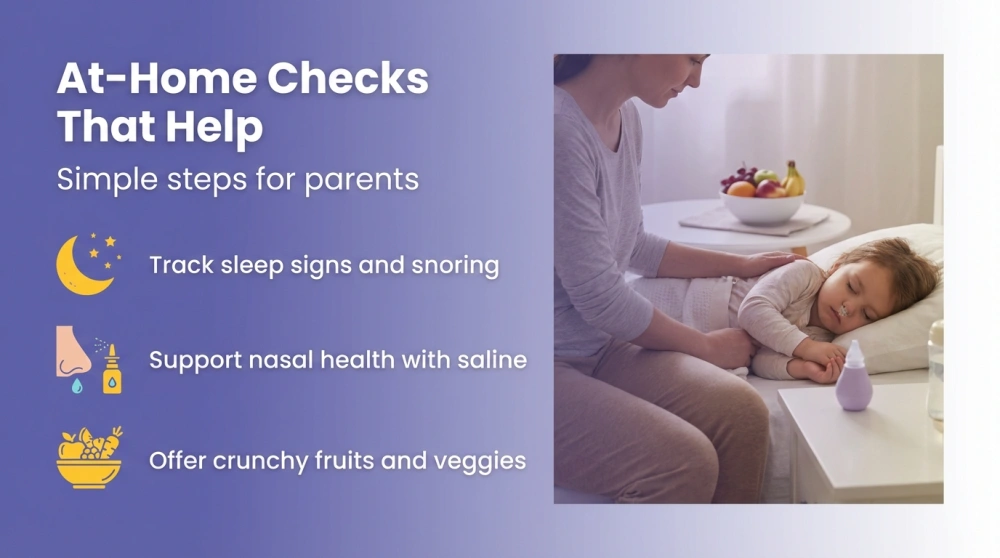
- Sleep observations[5].
- Daytime breathing
- Chewing and swallowing
- Oral habits[7].
- Nasal symptoms
Short term steps can make your child more comfortable while you plan next steps:
- Support nasal health
- Encourage upright reading and homework posture
- Offer chew friendly whole foods
- Use gentle habit strategies[7].
What treatments might a pediatric dentist or orthodontist recommend?
Plans are personalized. Some children simply need watchful waiting with periodic checks. Others benefit from gentle guidance during key growth windows. Your team will explain benefits and limitations, and will coordinate with medical providers when airway concerns are present.
How do interceptive orthodontics and expansion help certain cases?
Interceptive orthodontics aims to guide jaw and tooth development while the bones are still growing. Examples include palatal expansion for a true crossbite or creating room for permanent teeth. In selected children with narrow palates and airway related symptoms, expansion has been studied as part of a broader plan to improve nasal airflow. Evidence suggests expansion can improve some sleep related measurements in carefully chosen pediatric cases, though it is not a universal solution and requires appropriate diagnosis and follow up [2][12].
As a family, you will also hear about Orthodontic monitoring to track progress as your child grows.
What is myofunctional therapy for kids and when is it used?
Myofunctional therapy is a program of exercises that target tongue posture, lip seal, and healthy swallowing patterns. For children, it is sometimes used alongside dental or medical care to support better function. Research in adults shows that myofunctional therapy can reduce the severity of obstructive sleep apnea for some people, and pediatric research is evolving. For children, this approach is considered an adjunct that may help selected patients when combined with treatment of underlying causes such as nasal obstruction or dental arch constriction [9][3].
When is referral to ear nose and throat, allergy, or sleep medicine appropriate?
- Persistent snoring or suspected sleep apnea[5][6].
- Chronic nasal blockage[4].
- Speech or feeding concerns[8].
What laws and professional guidelines apply in California?
Parents in Laguna Niguel, California benefit from clear dental and medical standards that protect children and guide care. Here are key points to know:
- Age seven orthodontic check[1].
- Dentistry best practices for growing children[2][3].
- Dental radiograph safety[10][11].
- Sedation standards in California[13].
- Equipment and X ray regulation[14].
- Privacy and records[15].
These standards align with a child first approach. If you have questions about how your pediatric dentist follows these rules, simply ask. Clear communication helps everyone feel confident and informed.
How does Kidz Modern Dentistry support families in Laguna Niguel?
At Kidz Modern Dentistry, we care for children of all ages in Laguna Niguel, California with a supportive, team oriented approach. If you are noticing changes in your child’s face shape, bite, or breathing, we will listen to your concerns, examine gently, and help you understand practical next steps. We are here for preventive visits, early orthodontic checks, and same day emergencies, all in a child friendly space.
Our approach includes careful growth checks, photos, and digital charting tailored to children. That means Orthodontic monitoring is built into preventive care so we can see patterns early and discuss options at the right time.
Families who prefer close follow up appreciate Orthodontic monitoring in Laguna Niguel with a familiar team that coordinates with local ear nose and throat, allergy, and sleep medicine when needed.
What is unique about our process for airway and growth focused care?
- Whole child perspective
- Kid friendly comfort
- Coordinated care
- Education and coaching
- Responsive access
Where do we serve and how can you reach us?
We serve families in Laguna Niguel and surrounding communities in South Orange County. To schedule a visit or ask questions, call Kidz Modern Dentistry at +1 949 273 0110. If your child is due for a check or you have noticed changes in face shape, bite, or breathing, we are ready to help with a supportive, evidence guided plan.
How do we help parents decide next steps?
- Clear findings review
- Personalized options
- Transparent communication
Our goal is to be your partner in understanding pediatric facial growth, whether your child simply needs routine monitoring or a coordinated plan with a focus on breathing and function.
Frequently asked questions
Why does my child’s face look longer this year than last year?
Some changes are part of normal growth and temporary shifts in proportions. In other cases, an open mouth rest posture with low tongue position can contribute to a longer appearance over time. A pediatric evaluation can help distinguish normal variation from patterns that benefit from early guidance [2][3].
Can mouth breathing really affect how the jaws grow?
Mouth breathing often reflects nasal obstruction, which can change how the tongue rests and how the lips function. These factors are associated with differences in palate shape and jaw relationships in some children. Because each child is unique, a thorough dental and medical evaluation is the best way to understand your child’s pattern and whether treatment is needed [2][3][4].
When should my child have an orthodontic check if I am worried about facial asymmetry?
The American Association of Orthodontists recommends an evaluation by age seven. If you notice a jaw shift or asymmetry earlier, it is reasonable to schedule a visit sooner for guidance and monitoring [1][2].
Is thumb sucking still a concern at age six?
Thumb and finger habits that continue beyond early childhood can influence tooth position and bite, especially if the habit is strong or occurs many hours each day. A supportive plan that focuses on encouragement rather than pressure can help children stop successfully [7].
Could a tongue tie alone cause my child’s face to change?
Tongue tie can limit tongue movement and contribute to a low tongue rest posture in some children. It is usually one piece of a larger picture that includes breathing, swallowing, and habits. A careful team evaluation helps determine whether treatment is appropriate and which supports are most helpful [8].
What symptoms of sleep disordered breathing should I watch for?
Listen for snoring, gasping, or pauses in breathing. Watch for restless sleep, daytime sleepiness, morning headaches, and attention challenges. If these are present, talk with your pediatrician and pediatric dentist about next steps and possible sleep evaluation [5][6].
Will palatal expansion help my child breathe better?
Expansion can be appropriate when there is a true crossbite or a narrow palate. Some research suggests expansion may improve certain sleep related measures in selected children. Decisions are individualized and are best made with a team that includes dental and medical providers when airway concerns are present [2][12].
What is myofunctional therapy and is it proven for kids?
Myofunctional therapy is a series of exercises to improve tongue posture, lip seal, and swallowing. Evidence in adults shows improvement in sleep apnea severity for some people. Pediatric evidence is growing and therapy is generally used as an adjunct alongside care that addresses underlying causes like nasal obstruction or dental arch constriction [9][3].
Do I need a referral to see a pediatric dentist in Laguna Niguel for facial growth concerns?
No referral is needed to schedule with a pediatric dentist for an evaluation. If medical collaboration is helpful, your dentist can coordinate referrals to ear nose and throat, allergy, sleep medicine, or speech as appropriate [3].
How do I choose a local provider who understands pediatric airway dentistry?
Look for a team that discusses breathing, sleep, habits, and growth together. Ask about experience with interceptive orthodontics, habit counseling, and coordination with medical specialists. Many parents in South Orange County search for children’s orthodontics Laguna Niguel to find teams who collaborate with pediatric dentists and orthodontists close to home.
References
- First Orthodontic Check Up No Later Than Age 7 – American Association of Orthodontists
- Management of the Developing Dentition and Occlusion in Pediatric Dentistry – American Academy of Pediatric Dentistry
- Policy on Obstructive Sleep Apnea – American Academy of Pediatric Dentistry
- Adenoids – American Academy of Otolaryngology Head and Neck Surgery Foundation
- Sleep apnea in children – MedlinePlus
- Diagnosis and Management of Childhood Obstructive Sleep Apnea Syndrome – American Academy of Pediatrics
- Thumb sucking – American Dental Association
- Management of the Frenulum in Pediatric Patients – American Academy of Pediatric Dentistry
- Myofunctional therapy to treat obstructive sleep apnea: a systematic review and meta analysis – Sleep
- Dental radiographs for children – American Dental Association
- Dental Radiography – United States Food and Drug Administration
- Rapid maxillary expansion for pediatric obstructive sleep apnea: a systematic review and meta analysis – Sleep Medicine Reviews
- Anesthesia and Sedation Permits – Dental Board of California
- Dental X ray Devices and Facilities – California Department of Public Health
- HIPAA Privacy Rule – United States Department of Health and Human Services
Common Questions About This Topic
Find answers to frequently asked questions related to this article.
