- What is early orthodontic treatment and why might your child need it?
- What are the clearest signs your child may benefit from an early orthodontic evaluation?
- How does a palatal expander work and when is it considered?
- Could mouth breathing or thumb sucking affect jaw growth and bite?
- What problems can a narrow palate cause and how is it identified?
- Which bite issues like crossbite, overbite, or underbite suggest early care?
- How soon should children be seen for interceptive orthodontics in South Orange County?
- What happens during an early orthodontic evaluation at our pediatric clinic?
- What imaging and diagnostics are safe for children during evaluation?
- What should parents know about expanders, braces, and other Phase 1 options?
- How do growth patterns and timing influence treatment choices?
- How can parents support healthy oral habits and airway friendly routines at home?
- What questions should you ask during your child’s orthodontic consultation?
- How do California and national standards guide pediatric orthodontic care?
- Where can families in Laguna Niguel, Laguna Hills, Aliso Viejo, Laguna Beach, Mission Viejo, and San Juan Capistrano get help?
- Who are we and how do we support early orthodontic care in Laguna Niguel and South OC?
- References
What is early orthodontic treatment and why might your child need it?
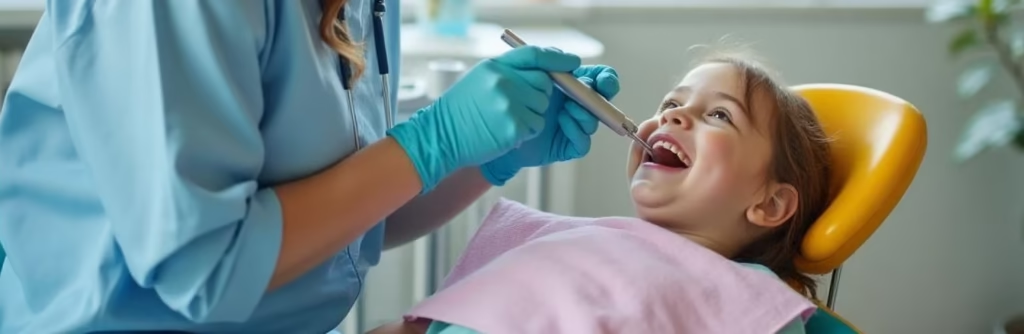
Early orthodontic treatment, also called interceptive orthodontics or Phase 1 orthodontics, focuses on guiding jaw growth and creating space for permanent teeth during the mixed dentition years when baby and adult teeth overlap. The goal is to address developing issues such as crossbite, crowding, or narrow palate before they become more complex to manage. Pediatric orthodontics pairs growth guidance with gentle appliances to help children breathe, chew, and smile comfortably. Professional organizations highlight that timely evaluation can uncover concerns that are not always obvious to parents or even visible in photos [1] [2].
Rather than simply moving teeth, early care can optimize how the upper and lower jaws fit together, help permanent teeth erupt into better positions, and sometimes reduce the time or complexity of comprehensive braces later. In many cases, early orthodontic evaluation is appropriate soon after the first permanent molars and incisors come in, which often aligns with lower elementary school years when growth centers are active and responsive [1].
If you are searching for an early orthodontic evaluation near me in Laguna Niguel and surrounding Orange County, CA, you may be wondering whether a palatal expander is necessary, or if simple habit coaching could be enough. A focused exam can clarify the best path, and it can also reassure you when watchful waiting is the most appropriate next step [1].
What are the clearest signs your child may benefit from an early orthodontic evaluation?
Parents often notice changes long before a child is old enough for full braces. Not every sign means treatment is needed right away, but these common patterns suggest it is wise to schedule a visit for interceptive orthodontics screening with a pediatric dentist in Laguna Niguel or a pediatric orthodontist nearby:
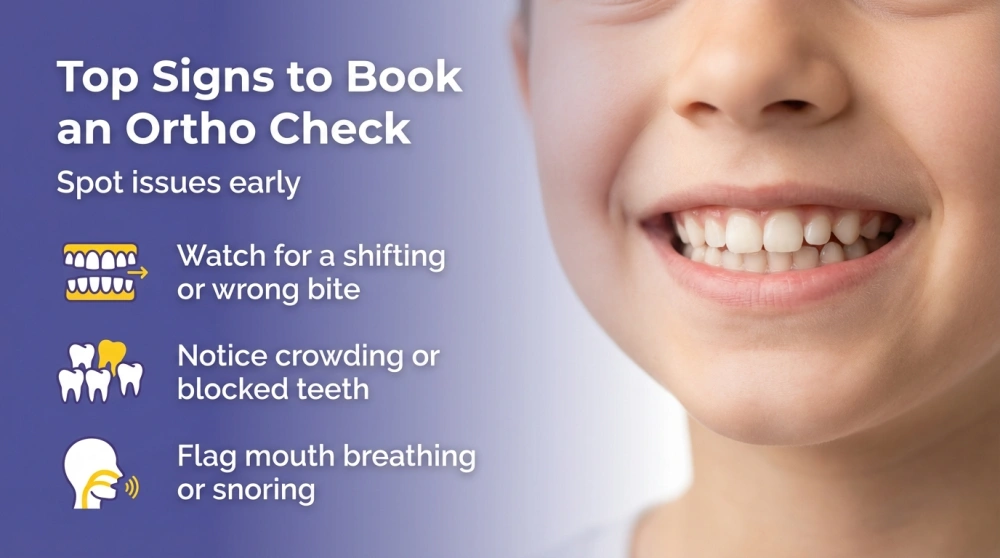
- Crossbite or shifting bite A bite that slides to one side when closing, or upper teeth that fit inside lower teeth, can indicate transverse discrepancies that respond well to guidance [1].
- Narrow smile or V shaped arch A high narrow palate can contribute to crowding and functional shifts and may be considered for expansion after a thorough evaluation [1] [2].
- Crowded or blocked out teeth If there is not enough room for adult incisors or canines to erupt in line, early space creation may help avoid impaction risks [1].
- Mouth breathing or snoring Persistent mouth breathing at rest or during sleep can signal airway or growth concerns that warrant a coordinated assessment with your dental and medical teams [5].
- Thumb or finger sucking beyond early years Ongoing oral habits can move teeth and affect the bite, particularly if frequent or forceful, and may benefit from coaching or habit appliances [1].
- Protruding front teeth Front teeth that stick out are more prone to injury and may benefit from protection or early alignment depending on the case [2].
- Early or late loss of baby teeth Teeth that exfoliate much earlier or later than expected can change available space for adult teeth and may call for monitoring or space guidance [1].
- Speech, chewing, or jaw discomfort If your child avoids certain foods, struggles to bite evenly, or reports jaw fatigue, a bite assessment can be helpful [2].
Decisions are individualized. Some children need only tracking and home habit support. Others benefit from brief, targeted appliances during a key growth window. Together, we will compare options based on your child’s stage of dental development, comfort, and goals.
How does a palatal expander work and when is it considered?
A palatal expander is a small custom device that gently widens the upper dental arch over weeks to months. In growing children, the seam in the roof of the mouth consists of two bones that have not yet fused. Expansion takes advantage of this natural growth center. When indicated, gradual widening can correct crossbite, create space for crowded teeth, and improve the way the jaws meet. Evidence based policies and clinical texts describe expanders as common tools in interceptive orthodontics for selected cases [1] [2].
Parents often ask if expanders are uncomfortable. Children usually adapt quickly. We plan gentle activation schedules and clear instructions for hygiene and diet. If an expander is recommended, it is because the expected benefits outweigh the inconvenience during the short treatment window. The decision follows careful diagnostics and a discussion of alternatives, expectations, and maintenance.
- Why use it early Expansion is most effective while the midpalatal suture is still responsive during childhood, making this a time sensitive option for some kids [1].
- What it helps Posterior crossbite, dental crowding, and a constricted upper arch are common reasons to consider a palate expander for kids [1] [2].
- How it is adjusted Tiny daily or weekly turns direct light forces that the bone can adapt to, with progress checked regularly for comfort and stability [2].
Could mouth breathing or thumb sucking affect jaw growth and bite?
Airway and oral habits can influence the way teeth and jaws develop. Persistent mouth breathing may relate to nasal or airway concerns and can be associated with a narrow palate or altered bite posture in growing children. While each child is unique and not every mouth breather develops orthodontic issues, it is reasonable to evaluate growth and function together and collaborate with your pediatrician or ENT when indicated [5].
Thumb or finger sucking is very common in toddlers and preschoolers and often resolves naturally. When the habit continues at higher intensity or into school age, it can affect tooth position and the bite. Gentle habit strategies, positive reinforcement, and, in some cases, a habit appliance can help guide change and protect developing occlusion [1].
- Watch for open bite or flared incisors Spacing between upper and lower front teeth when biting may signal ongoing habit effects that benefit from coaching and monitoring [1].
- Coordinate care for airway concerns If snoring, restless sleep, or nasal obstruction are present, we can partner with medical providers to support healthy breathing and growth [5].
What problems can a narrow palate cause and how is it identified?
A narrow palate is simply a tight upper arch that can crowd teeth and allow the lower teeth to sit outside the uppers on one or both sides. Signs may include a V shaped smile, crossbite, or asymmetric bite closure. Clinicians assess width relationships, dental crowding, facial growth patterns, and airway history. In some children, the best approach is observation and growth tracking. In others, an expander can help unlock room for erupting teeth and improve bite relationships [1] [2].
- What you may notice at home Baby canines that seem tucked in, adult incisors that overlap early, or a bite that deviates to one side when your child closes gently can all be clues to discuss with your provider.
- Why width matters Adequate upper arch width often supports better alignment, stability, and function. Early guidance can reduce the need for more extensive procedures later in some cases [1].
Which bite issues like crossbite, overbite, or underbite suggest early care?
Several bite relationships are more likely to benefit from early guidance during mixed dentition. Professional guidelines outline scenarios where interceptive orthodontics may be indicated to improve function and set the stage for later alignment as needed [1] [2].
- Posterior crossbite When upper molars bite inside the lowers on one or both sides, width correction may be considered to balance the bite and prevent asymmetric growth patterns [1].
- Anterior crossbite Front teeth trapped behind lowers can risk enamel wear and gum irritation and may be corrected with simple appliances if addressed promptly [1].
- Deep overbite Excessive vertical overlap in growing children can sometimes be moderated with habit guidance or limited appliances to protect front teeth and gums [2].
- Underbite patterns True skeletal underbites are complex and require individualized planning, but certain early strategies can be considered in selected cases after careful evaluation [1].
How soon should children be seen for interceptive orthodontics in South Orange County?
Families in Laguna Niguel and surrounding Orange County often ask when to start. A helpful approach is to schedule a screening once the first adult molars and incisors have erupted. This timing allows us to check spacing, bite, and growth trends with useful accuracy. If everything looks healthy, we simply continue growth checks at regular intervals. If early findings suggest benefit from guidance, we will discuss options that fit your child’s stage and comfort [1].
Many parents search for a pediatric dentist Laguna Niguel or Mission Viejo pediatric orthodontics when they notice crowding or bite shifts. A short, friendly evaluation can answer urgent questions and often puts minds at ease by clarifying whether watchful waiting or action is best.
What happens during an early orthodontic evaluation at our pediatric clinic?
The first visit is child centered and low stress. We want your child to feel safe, curious, and engaged. Your clinician will review health and sleep history, discuss oral habits, and look closely at growth and bite relationships. We typically record photos, check eruption timing, and consider comfortable imaging if needed. Together, we decide whether to track growth, encourage at home habits, or consider interceptive orthodontics options.
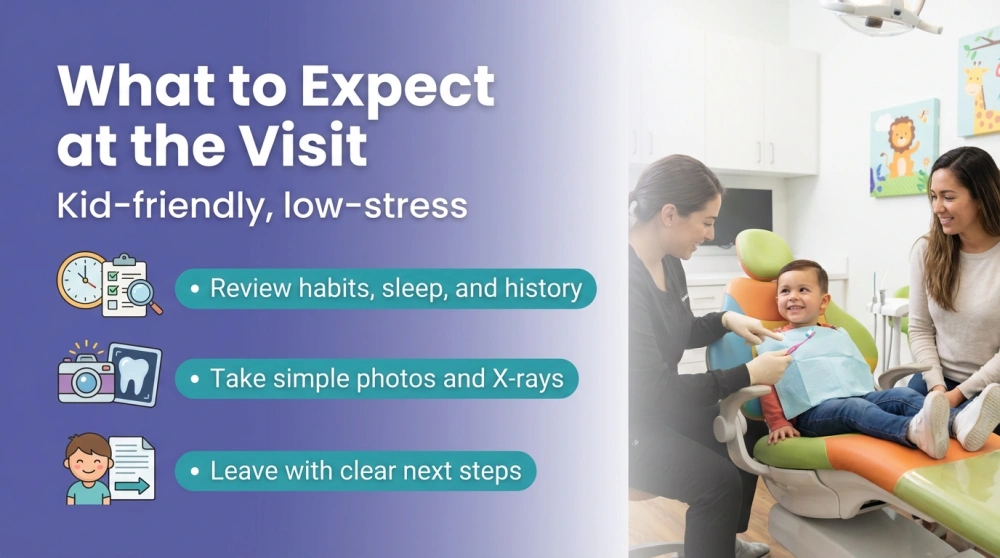
- Growth focused exam We evaluate face and jaw balance, airway and breathing history, and how the teeth guide the bite.
- Comfortable records Brief photos, gentle measurements, and child friendly X rays only when indicated help us plan thoughtfully [3].
- Clear roadmap We summarize findings in plain language and outline next steps so you know what to expect and when to return.
Regular Orthodontic monitoring helps us catch positive changes and potential detours early. These checkups are short and reassuring, and they help you stay informed as your child grows.
What imaging and diagnostics are safe for children during evaluation?
When imaging is needed, pediatric protocols use the lowest exposure that can reasonably provide the necessary information. The U.S. Food and Drug Administration and professional dental organizations provide guidance on radiation safety, equipment settings, and when to order specific images. Child sized settings, protective thyroid collars when appropriate, and modern digital sensors help keep exposure extremely low while supporting accurate diagnosis [3].
- Why imaging matters Seeing root positions, tooth development, and jaw relationships helps us plan predictable, comfortable care with fewer surprises [3].
- How we minimize exposure We follow pediatric selection criteria and use the shortest practical exposure times and the smallest field of view necessary for the task [3].
What should parents know about expanders, braces, and other Phase 1 options?
Phase 1 orthodontics is usually short and goal specific. The intention is not to perfect every tooth position. Instead, we create a healthy, stable foundation that supports later alignment when the rest of the adult teeth are present. Your child may benefit from one or more of the following options depending on findings [1] [2]:
- Palatal expansion Gentle, guided widening can correct transverse discrepancies and make room for crowded teeth when indicated.
- Limited braces or aligners Short alignment for specific teeth, often to correct crossbite of front teeth or to help a blocked tooth erupt into place.
- Space guidance Simple retainers or space maintainers can hold or create room after early tooth loss to support healthy eruption paths.
- Habit and growth appliances Devices that discourage thumb habits or re balance bite forces can support jaw growth in positive directions in selected cases.
As the rest of the adult teeth arrive, we reassess. Some children need little to no additional treatment. Others have a shorter and more predictable experience in Phase 2 because the foundation is already set from Phase 1 care.
How do growth patterns and timing influence treatment choices?
Timing can be as important as technique. During late elementary and early middle school years, growth centers in the jaws respond to gentle guidance. For many bite corrections, there is a window where treatment can be simpler and more comfortable. Outside that window, the same outcome might take longer or require different tools. That is why a thoughtful plan that includes periodic growth checks is so valuable. Orthodontic monitoring in Laguna Niguel helps families schedule care at the right moments while avoiding unnecessary interventions.
We also consider your child’s unique development pace, dental age versus chronological age, and cooperation and comfort. A collaborative plan that respects your family’s routine tends to deliver the most consistent results and a positive experience for your child [1].
How can parents support healthy oral habits and airway friendly routines at home?
Home routines make a big difference. Even small habits can add up over time. Try these practical steps to support healthy growth and a comfortable bite:
- Encourage nasal breathing Remind your child to rest lips together and breathe through the nose when possible and talk with your pediatrician if snoring or congestion persists [5].
- Support gentle habit change If thumb or finger sucking continues into school age, use positive reinforcement and talk with us about playful habit tools when needed [1].
- Protect growing teeth A simple sports mouthguard for active kids helps safeguard front teeth that may be more at risk during growth spurts.
- Prioritize nutrition and posture Chewing a variety of textures and practicing good posture can encourage balanced function and comfort.
- Keep routine checkups Short visits let us watch growth trends and make timely, minimal adjustments when they are most effective [1].
What questions should you ask during your child’s orthodontic consultation?
Bringing a few focused questions can help you feel confident in the plan. Here are helpful prompts:
- What is the main goal right now Ask whether the plan is to improve the bite, create space, reduce risk of trauma, or simply monitor growth.
- What are the alternatives Clarify if observation, a different appliance, or a later start would also be reasonable based on your child’s growth and comfort.
- How long might this take Request an estimated timeline, total number of visits, and what a typical checkup looks like.
- How will we maintain progress Discuss retainers, habit coaching, and home care to keep results stable between phases.
- How do we coordinate with medical care If airway or sleep concerns are present, ask how communication with your pediatrician or ENT will work [5].
How do California and national standards guide pediatric orthodontic care?
Care for children follows evidence based policies and safety standards at the state and national levels. In California, dental providers follow state regulations for professional licensing, infection control, consent, and anesthesia and sedation protocols. National organizations provide clinical practice guidelines for pediatric dental care, orthodontic considerations in the developing dentition, X ray safety, and sedation monitoring [1] [3] [4] [6] [7].
- Clinical indications Best practice policies from pediatric and orthodontic organizations outline when interceptive orthodontics, space maintenance, or habit intervention may be appropriate [1] [2].
- Imaging safety The FDA and professional groups provide guidance on appropriate selection and dose reduction for dental imaging in children [3].
- Sedation and comfort Pediatric sedation policies describe monitoring, trained personnel, and emergency readiness to support safe, child friendly care when sedation is indicated [4] [7].
- State regulations The Dental Board of California publishes rules and updates for professional standards and patient safety that providers follow in clinical practice [6].
Where can families in Laguna Niguel, Laguna Hills, Aliso Viejo, Laguna Beach, Mission Viejo, and San Juan Capistrano get help?
Parents across Laguna Niguel, Laguna Hills, Aliso Viejo, Laguna Beach, Mission Viejo, and San Juan Capistrano ask similar questions about signs child needs braces, palate expander for kids, and crossbite treatment in Orange County. A friendly, informative checkup can clarify whether your child would benefit from Phase 1 planning, a narrow palate expander, or simply growth tracking. Whether you are comparing options for kid friendly orthodontics or seeking a children’s dental clinic Laguna Hills resource, our team is here to help you make thoughtful, informed choices.
We meet families where they are, answer questions in plain language, and map out next steps that fit your child’s needs and your family’s schedule. If your child has specific concerns like mouth breathing in children teeth effects or overbite underbite kids treatment, we will coordinate with medical providers as needed for complete care [5].
Who are we and how do we support early orthodontic care in Laguna Niguel and South OC?
Kidz Modern Dentistry is a pediatric focused dental practice serving Laguna Niguel and surrounding Orange County communities including Laguna Hills, Aliso Viejo, Laguna Beach, Mission Viejo, and San Juan Capistrano. We welcome children of all ages and offer same day emergencies, kid friendly sedation when appropriate, and a supportive environment that helps little ones feel at ease from the first hello.
Our approach to early orthodontic treatment is collaborative and growth focused. We use clear communication and teach children what to expect before we do anything. For families exploring interceptive orthodontics or a palatal expander, we evaluate your child’s bite and growth, explain the options and an age-appropriate timeline, and refer you to a trusted orthodontist when an expander or other interceptive treatment would help. We monitor progress closely, adjust at gentle intervals, and keep you informed at every visit.
- Where we operate We serve families in Laguna Niguel and nearby South OC cities, welcoming patients from Laguna Hills, Aliso Viejo, Laguna Beach, Mission Viejo, and San Juan Capistrano.
- How our services relate to next steps From screening to planning and follow ups, we help you decide whether to observe, begin a brief Phase 1 plan, or coordinate care with medical partners for airway concerns.
- Our unique methodology We emphasize gentle visits, growth tracking, and family education. We pair child centered behavior guidance with clear milestones and at home success tips so your child knows how to take care of their smile.
- Leadership and experience Our pediatric team brings years of combined experience in preventive and interceptive care for growing smiles, with a track record of supportive, age appropriate outcomes.
- Personalized service You have direct access to qualified pediatric dental professionals who answer questions promptly, explain findings in plain language, and tailor plans to your child’s needs.
- Comfort and safety When sedation is indicated, we follow nationally recognized pediatric monitoring and safety policies with trained personnel and child sized equipment [4] [7].
- Tools and technology We use modern digital imaging with pediatric protocols, comfortable intraoral scanners when useful, and small custom appliances that fit growing mouths [3].
- Results and stories Families often tell us their children feel proud and excited when they see progress in bite comfort or spacing. While every case is unique, celebrating growth together keeps kids motivated and engaged.
For families seeking Aliso Viejo pediatric dentist resources or a Laguna Beach kids dentist for sensitive little ones, we make visits upbeat and approachable. Our reception and clinical teams love working with children and are trained to explain each step so kids feel included and empowered.
If you are comparing options for Mission Viejo pediatric orthodontics or need guidance about a crowded teeth kids concern, call us at +1 (949) 273 0110. We will schedule a convenient visit, answer your questions, and outline a plan that respects your child’s comfort and your family’s time.
Orthodontic monitoring is central to our preventive philosophy. Regular growth checks allow us to recommend the right intervention at the right time, and often the least invasive path to a healthy, confident smile.
References
- Developing Dentition and Occlusion in the Pediatric Patient – American Academy of Pediatric Dentistry
- Orthodontics Overview – National Institute of Dental and Craniofacial Research
- Dental Radiography Safety and Imaging – U.S. Food and Drug Administration
- Monitoring and Management of Pediatric Patients Before During and After Sedation – American Academy of Pediatric Dentistry
- Policy on Obstructive Sleep Apnea – American Academy of Pediatric Dentistry
- Laws and Regulations – Dental Board of California
- Policy on the Use of Anesthesia and Sedation in the Pediatric Dental Patient – American Academy of Pediatric Dentistry
- Child Orthodontic FAQs – American Association of Orthodontists
- Patient Education Resources – American Association of Orthodontists
- Dental X Rays and Radiation Safety – American Dental Association
Common Questions About This Topic
Find answers to frequently asked questions related to this article.