- What does it mean when my child’s teeth look yellow?
- How do baby teeth and permanent teeth differ in color?
- What are the most common causes of yellow teeth in children?
- How does a pediatric dentist evaluate yellow teeth in kids?
- What tests or imaging might be used and are they safe for children?
- When is yellow normal and when should I be concerned?
- What treatment options can help with yellow teeth in kids?
- Are there safe whitening options for kids and teens?
- What can parents do at home to prevent stains and yellowing?
- When should you see a pediatric dentist in Laguna Niguel, California?
- How do California guidelines influence dental care for children?
- How do dentists keep anxious children comfortable during an evaluation?
- Who is Kidz Modern Dentistry and how can we help your family in Laguna Niguel, California?
- Where can I find the references used in this article?
What does it mean when my child’s teeth look yellow?
You are not alone if you have wondered why your child’s smile looks more yellow than expected. Tooth color in children varies widely and can reflect anything from normal growth to harmless surface staining or a sign that a pediatric dentist should take a closer look. Yellow teeth in kids can be caused by plaque and tartar buildup, thinner or more translucent enamel, staining from foods and drinks, early enamel conditions like enamel hypoplasia, or developmental factors as adult teeth erupt. Some medications and past dental trauma may also change color. A careful evaluation can separate normal changes from issues that need treatment, and that evaluation starts with a pediatric dental exam and X rays when indicated [1] [2].
If you notice new yellow areas, persistent stains that do not brush away, or any tooth pain or sensitivity, it is wise to schedule an exam. Early checks are especially important because tooth decay is common in childhood and can sometimes change how teeth look. In the United States, more than half of children aged six to eight have had a cavity in their baby teeth, which underscores why regular prevention and timely evaluation matter [3].
How do baby teeth and permanent teeth differ in color?
Baby teeth often look quite white because their enamel is relatively thin and their dentin layer is lighter in shade. When permanent teeth begin to erupt next to baby teeth, many parents are surprised to see that the new adult teeth appear more yellow. This is typically normal because permanent teeth have a thicker dentin layer and a different light reflection pattern compared with primary teeth. The contrast can make new adult teeth seem darker, especially when they erupt behind very bright primary incisors. As more permanent teeth appear and baby teeth are lost, the overall smile usually looks more uniform. Pediatric dentists look for consistent shade, surface texture, and symmetry to distinguish normal color differences from true discoloration that warrants treatment [4] [5].
During the mixed dentition phase, which usually starts around six years old, it is common to see a mix of bright baby teeth and slightly deeper colored adult teeth. Where there is no plaque film, no roughness, and no brown or white defects, the difference often reflects normal development rather than disease [4].
What are the most common causes of yellow teeth in children?
Several factors can contribute to yellow teeth in children. Your pediatric dentist will look at these possibilities one by one to identify what applies to your child.
Could plaque and tartar buildup be making my child’s teeth look yellow?
Yes. A sticky bacterial film called plaque can accumulate between cleanings. When plaque picks up pigments from foods and drinks, it can look yellow or brown. If plaque hardens into tartar, the deposits often appear yellow and cannot be removed with a toothbrush. A professional cleaning removes tartar and can immediately improve the color of your child’s smile when buildup is the cause. Because plaque contributes to cavities and gum inflammation, reducing it is important for health as well as color [3] [6].
Can thin enamel or enamel hypoplasia cause a yellow appearance?
They can. Enamel hypoplasia refers to enamel that is thinner than normal or has pits and grooves from development. When enamel is thin, the underlying dentin shows through more strongly and can make teeth look yellow. A dentist can identify developmental enamel defects by examining the surface texture and using bright, angled lighting. Treatment ranges from remineralizing therapies to minimally invasive polishing or bonding depending on severity [7] [8].
Could fluorosis in kids lead to changes in color?
Excessive fluoride intake while enamel is forming can cause a condition called dental fluorosis. In milder cases, it may appear as faint white mottling or streaks. Moderate cases can look more creamy or yellowish in patches. Severe fluorosis is less common and can include brown areas and pitting. Pediatric dentists review your child’s fluoride exposure, including toothpaste use and water source, and tailor prevention to the right level for cavity protection without excess exposure [2] [6].
Do foods, drinks, and habits stain children’s teeth?
They can. Color compounds from berries, tomato sauces, soy sauce, sports drinks, tea, and flavored waters can cling to plaque and rough enamel. Frequent sipping allows pigments more time to bind to the tooth surface. Rinsing with water after pigmented snacks and brushing twice daily with fluoride toothpaste can help reduce staining. Regular professional cleanings remove surface stains that home care cannot fully address [6].
Can medications cause yellow or brown discoloration in a child’s teeth?
Certain medications taken during tooth development can cause internal discoloration. Classic examples include older tetracycline antibiotics which can incorporate into developing teeth and lead to yellow, gray, or brown discoloration. Today, prescribing practices consider tooth development when choosing antibiotics for children. Always let your dentist know about your child’s medication history so they can interpret color changes accurately [9].
Could past trauma to a baby tooth lead to discoloration?
Yes. An injury to a baby tooth can affect the developing adult tooth bud or the baby tooth itself. Sometimes the adult tooth may show a localized spot of enamel disruption or a change in color when it erupts. A thorough dental history helps connect the dots between a bumped tooth in toddler years and a color difference later on. Your pediatric dentist will assess whether the change is only cosmetic or if additional protection or treatment is indicated [8].
Are there genetic conditions that make teeth appear yellow?
Certain rare genetic conditions can affect enamel or dentin formation and lead to color differences. Dentinogenesis imperfecta, for example, can produce translucent or yellow brown teeth along with structural changes. These are uncommon and are typically identified by a dentist through a combination of history, exam, and sometimes family history [10].
How does a pediatric dentist evaluate yellow teeth in kids?
Pediatric dentists use a stepwise approach to identify why a child’s teeth look yellow and what to do next. The visit is child friendly and built to be reassuring for both you and your child.
What questions will the dentist ask during the history?
Expect questions about when you first noticed the color change, whether it is on one tooth or many, what your child eats and drinks, oral hygiene routines, toothpaste type and amount, fluoride sources, medication history, and any past injuries to the mouth. This context guides the exam and helps distinguish surface stains from developmental differences [6] [2].
What does the clinical exam include?
The clinical exam begins with a visual inspection in bright light. The dentist notes whether color is uniform or patchy, whether there are white or brown areas, and whether the surface is smooth or pitted. A plaque disclosing solution may be used to highlight areas where a sticky film has collected. The gums and bite are checked, and teeth are gently cleaned and dried so the true shade can be assessed. When appropriate, the dentist compares color to a shade guide and documents photographs for monitoring [1] [7].
Will a pediatric dental exam and X rays be needed?
Dental imaging is considered when it will add useful information, such as checking for cavities between teeth, evaluating developmental enamel issues, or assessing the health of tooth roots. Pediatric dentists follow evidence based recommendations to decide when radiographs are appropriate, and they use the minimum exposure needed to obtain a diagnostic image. The idea is to use imaging only when it benefits your child, following the ALARA principle which means keeping radiation as low as reasonably achievable [1] [11].
How are risk and prevention discussed?
After the exam, your dentist will review findings in plain language. If plaque is a big factor, you will get tailored home care tips. If diet seems to be staining, you will receive practical strategies to reduce pigments sticking to teeth. If a developmental enamel issue is identified, the discussion will outline options like remineralizing treatments or minimally invasive cosmetic care. The focus is on prevention first and targeted treatment second [7].
What tests or imaging might be used and are they safe for children?
Common imaging options in kids include bitewing radiographs to check between the back teeth, periapical images to view individual tooth roots, and, in select cases, a panoramic image to see developing teeth. Many offices use digital systems that reduce radiation compared with traditional film. Lead aprons and thyroid collars are used as additional safeguards. California providers also follow state regulations designed to protect patients, and families can ask for details about equipment and protocols used in the office [1] [11].
Imaging is not performed at every visit. The interval is based on your child’s age, cavity risk, and clinical findings, consistent with professional guidelines for children and adolescents [1].
When is yellow normal and when should I be concerned?
Yellow color can be normal when permanent teeth erupt next to bright baby teeth. Uniform coloration without spots or roughness is often just a normal shade difference. Concern is more likely when you see any of the following:
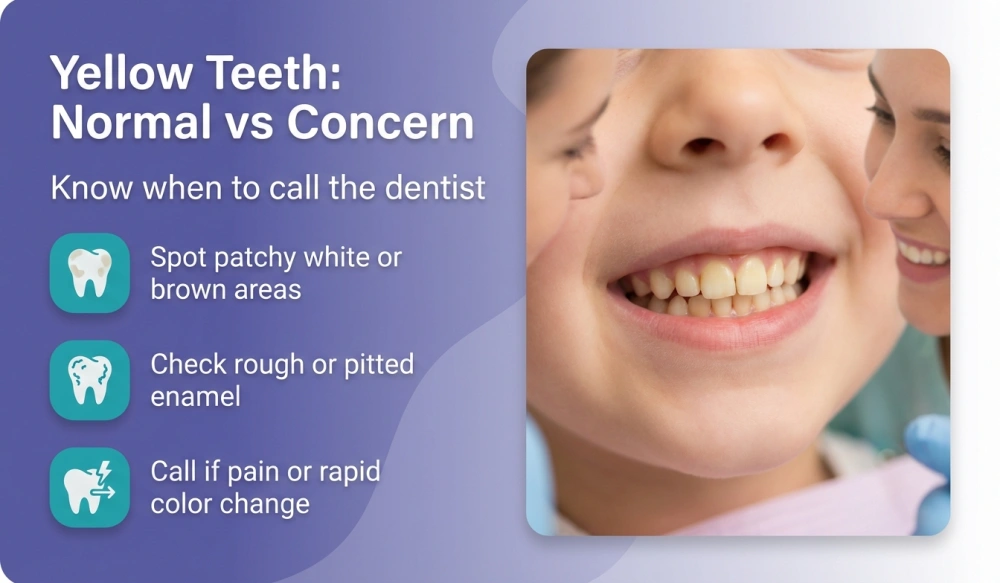
- Patchy or streaky changes that include white or brown areas
- Rough, pitted, or chalky enamel that seems to break down
- Stains that do not brush away after a professional cleaning
- Sensitivity to cold or sweets or pain with chewing
- Rapid change in the appearance of one tooth
When in doubt, a timely check helps identify the cause and the right next step for your child [6] [7].
What treatment options can help with yellow teeth in kids?
Treatment depends on the cause. Your pediatric dentist will explain options, starting with the least invasive approach and building as needed.
Can a professional cleaning for children remove yellowing?
Yes. If plaque or tartar is the main culprit, a professional cleaning and polishing can make a noticeable difference. Smooth enamel is less likely to hold stains, so polishing reduces future buildup. Your child will also receive personalized home care coaching to keep teeth brighter between visits [3] [6].
How do remineralizing treatments help strengthen enamel?
Topical fluoride varnish and fluoride toothpastes strengthen enamel and make it more resistant to acids and stains. Your dentist will recommend age appropriate toothpaste amounts and may suggest in office fluoride applications if your child has a history of cavities or enamel weakness. Using the right amount of fluoride supports enamel health while avoiding excess exposure during the years when teeth are forming [2] [6] [3].
What if there is enamel hypoplasia or localized defects?
For small, superficial defects, minimally invasive options like micro polishing or microabrasion can reduce visible contrast. In cases with deeper defects, resin infiltration or tooth colored bonding can mask color differences and protect the area. The choice depends on the thickness of enamel, location, and your child’s age. These treatments are designed to be conservative and to preserve healthy tooth structure while improving appearance and function [7] [8].
How are diet and habits addressed for long term results?
Your dentist will help you prioritize the few changes that give the biggest return, such as keeping water the main drink, limiting frequent sipping on sweet or colored beverages, and brushing at night with a pea sized amount of fluoride toothpaste for children six and older or a smear for younger children. These steps reduce new stains and support enamel recovery after meals [3] [6].
Can orthodontic crowding make teeth look more yellow?
Crowded areas can trap more plaque and stain. While orthodontic treatment is not performed just to change color, aligning teeth can make daily cleaning easier and reduce plaque related yellowing. Your dentist may suggest an orthodontic evaluation if crowding or bite issues are contributing to hygiene challenges [7].
Are there safe whitening options for kids and teens?
Teeth whitening products are not always the first or best step for children. Pediatric and dental organizations recommend identifying and treating the underlying cause of discoloration before considering bleaching. Supervised whitening may be appropriate for mature adolescent patients in select situations, but it should be considered only after a comprehensive exam and professional guidance. Over the counter bleaching products can cause sensitivity and are not tailored to a child’s needs. Your dentist will discuss whether conservative cosmetic options like micro polishing, resin infiltration, or bonding may be safer and more predictable at younger ages [12] [7].
What can parents do at home to prevent stains and yellowing?
Small, consistent routines make a big difference. Focus on habits that help both color and cavity prevention.
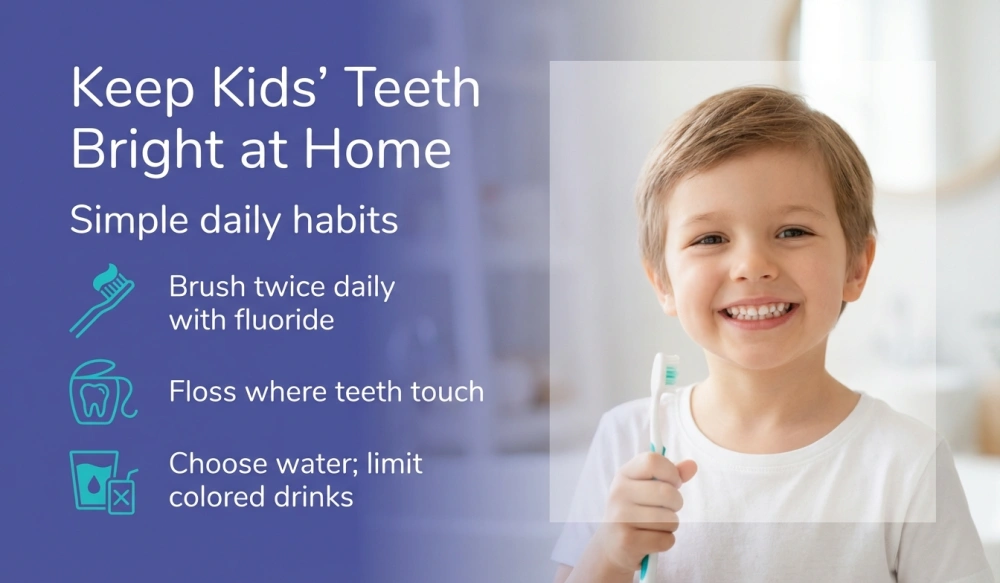
- Brush twice daily with fluoride toothpaste using a smear the size of a grain of rice for children under three and a pea sized amount for children three to six, transitioning to a pea sized amount for older children as they are able to spit [2].
- Floss daily where teeth touch to disrupt plaque in tight spots that trap stains [6].
- Keep water as the main beverage and limit frequent sipping on sweet or colored drinks to reduce pigment build up [3].
- Rinse with water after pigmented foods like berries or sauces to reduce staining [6].
- Schedule regular checkups and cleanings so any buildup or early changes are addressed promptly [7].
Routine visits also give your child’s dentist a chance to monitor developing adult teeth and adjust prevention strategies over time. Consistent care supports both color and overall oral health. Families seeking a focus on prevention often benefit from Preventive dentistry in Laguna Niguel to keep children’s smiles healthy and bright through the growth years.
When should you see a pediatric dentist in Laguna Niguel, California?
Call a pediatric dentist if you notice:
- Yellow or brown patches that do not brush away
- Sensitivity or pain along with color changes
- Rapid change in color on one tooth after a bump
- White spots that look chalky, especially near the gumline
- Any concern you want evaluated for peace of mind
Early reassurance is valuable. For many children, a gentle professional cleaning, polishing, and home care coaching are all that is needed. If additional care is appropriate, your dentist will explain options clearly and prioritize comfort at every step [7].
How do California guidelines influence dental care for children?
In California, dental teams follow state and federal safety standards that support thoughtful, conservative care for children. Radiation safety programs, equipment checks, and staff training are guided by state regulations along with professional recommendations. Providers use protective measures and the lowest exposure needed when imaging is indicated, consistent with national pediatric radiography guidance [11] [1].
Licensing and practice standards are overseen by the Dental Board of California, which regulates provider qualifications and permits for advanced services. Families can ask their provider about training, equipment, and protocols used in the office to support child safety and comfort [13].
How do dentists keep anxious children comfortable during an evaluation?
Many children are curious but cautious in new settings. Pediatric teams use child friendly language, show then tell demonstrations, and short, positive visits to build comfort. Distraction, gentle pacing, and praise go a long way. When additional support is needed, dentists discuss behavior guidance techniques and, in select cases, sedation options appropriate to the child’s age, health, and procedure. Any sedation is delivered under strict safety and permitting standards and only when truly beneficial to the child’s well being and dental care success [7] [13].
Who is Kidz Modern Dentistry and how can we help your family in Laguna Niguel, California?
At Kidz Modern Dentistry, we partner with families to understand why a child’s teeth look yellow and what matters most to you. Our pediatric team cares for infants through teens with a focus on prevention, comfort, and clear communication. We serve Laguna Niguel and nearby communities in Orange County, offering same day appointments for urgent concerns, kid friendly sedation when appropriate, and comprehensive pediatric services that meet children where they are.
Here is how we approach color concerns in children’s smiles:
- Thorough evaluation We start with a conversation about what you see at home, your child’s habits and preferences, and any past dental or medical history. A gentle exam looks at color patterns, plaque buildup, and enamel texture. We use photos to track progress and share findings with you clearly.
- Evidence guided imaging When radiographs are helpful, we use digital systems and protective gear guided by pediatric recommendations and California safety standards. We explain exactly why an image is advised and how it informs care.
- Prevention first Many color concerns improve with a professional cleaning, polishing, and targeted home routines. We coach brushing and flossing techniques that fit your child’s age and coordination and offer in office fluoride when indicated.
- Conservative cosmetic options For enamel defects or persistent discoloration, we discuss minimally invasive treatments such as micro polishing, resin infiltration, or bonding. Our goal is a natural look while preserving healthy tooth structure.
- Comfort centered care Visits are designed to be positive. If anxiety is a barrier, we use behavior guidance and, when appropriate, sedation options that align with safety standards and parental preferences.
What sets our practice apart for families:
- Child focused environment Our office design, communication style, and visit flow are built around how children learn and relax.
- Experienced pediatric team Our clinicians bring years of combined experience in preventive, restorative, and minimally invasive pediatric techniques.
- Clear next steps You leave each visit knowing what to watch at home, when to return, and which options can help if color remains a concern.
- Coordinated care We partner with your child’s medical providers when needed, including for medication reviews or complex dental needs.
- Responsive scheduling We reserve time for urgent visits so that sudden changes or dental injuries can be evaluated quickly.
We are here to answer questions about tooth color, stains, or any other pediatric dental concern. To schedule a visit, call +1 949 273 0110. We look forward to caring for your child’s smile in Laguna Niguel, California.
Where can I find the references used in this article?
- Prescribing Dental Radiographs for Infants, Children, Adolescents, and Persons with Special Health Care Needs – American Academy of Pediatric Dentistry
- Use of Fluoride for Caries Prevention in Children – American Academy of Pediatric Dentistry
- Children’s Oral Health Fast Facts – Centers for Disease Control and Prevention
- Baby Teeth and Permanent Teeth Information – American Dental Association MouthHealthy
- Tooth Eruption Charts – American Dental Association MouthHealthy
- Oral Health Conditions and Prevention – Centers for Disease Control and Prevention
- Periodicity of Examination and Preventive Dental Services – American Academy of Pediatric Dentistry
- Tooth Enamel and Enamel Defects Overview – National Institute of Dental and Craniofacial Research
- Tooth Discoloration Overview – MedlinePlus
- Dentinogenesis Imperfecta – MedlinePlus Genetics
- Radiologic Health Branch Radiation Safety Information – California Department of Public Health
- Teeth Whitening Basics and Safety – American Dental Association MouthHealthy
- Licensing and Practice Standards – Dental Board of California
Common Questions About This Topic
Find answers to frequently asked questions related to this article.