
- What should you do first when your child has a toothache?
- What are the most common reasons for toothache in children?
- Which home remedies for child toothache are safe and which should you avoid?
- When should you see a dentist for kids tooth pain in Laguna Niguel?
- How can you manage pain and swelling until the pediatric dentist visit?
- What if the toothache follows an injury or dental trauma?
- How do cavities cause toothache in children and what treatments might help?
- Could teething or eruption cause baby tooth pain and how can you tell the difference?
- What warning signs mean your child might have an infection?
- How do dentists diagnose the cause of tooth pain in kids?
- What professional treatments might a pediatric dentist in Laguna Niguel recommend?
- How do you prevent the next toothache through daily habits and checkups?
- What insurance and cost considerations should parents know for pediatric dental emergency care?
- What local and federal guidelines matter for pediatric dental care in California?
- How can you comfort a worried child who has tooth pain?
- Why choose timely same day pediatric dentist care and how quickly should you act?
- How can you prepare a home dental emergency kit for your family?
- How can Kidz Modern Dentistry in Laguna Niguel help your family today?
- Where can you find reliable sources and further reading?
What should you do first when your child has a toothache?
When your child tells you their tooth hurts, the first step is to stay calm and gather a few details. Ask when the pain started, whether it is sharp or dull, and what makes it better or worse. Look inside the mouth with clean hands and a small flashlight. Check for visible cavities, chips, food stuck between teeth, redness, or a pimple like bump on the gums that might signal an abscess. If your child is old enough, have them point to the exact area.
Rinse their mouth gently with warm salt water to soothe irritated tissues and to help dislodge food debris. Mix one half teaspoon of salt in one cup of warm water and have your child swish and spit a few times. This simple step can provide short term comfort while you arrange an appointment with a pediatric dentist [2].
If pain persists beyond a few hours, if your child wakes at night due to tooth pain, or if there is facial swelling or fever, prioritize a same day visit. Timely attention helps prevent complications and relieves discomfort. Our area offers resources for Pediatric dental emergencies that can assess and treat urgent concerns safely and promptly.
What are the most common reasons for toothache in children?
Toothache in children can have many causes. Understanding the likely reason helps you respond appropriately and know when to call a dentist.
- Tooth decay and cavities Tooth decay is the most common chronic disease of childhood, and cavities often cause sensitivity to sweets, cold, or pressure [3] [4].
- Gum irritation or gingivitis Plaque buildup can irritate the gums and lead to tenderness, bleeding, and swollen gums in a child who misses brushing or has areas that are hard to reach [4].
- Food impaction A seed, popcorn hull, or fibrous food can wedge between teeth and cause sharp pain until it is removed [2].
- Dental trauma A fall or sports injury can bruise the tooth, chip enamel, or crack a tooth, leading to pain with biting or temperature changes [7].
- Tooth eruption or teething New teeth coming in can cause temporary soreness that is usually mild and intermittent, more common around the time of first molars or the transition to permanent molars [4].
- Infection or abscess A deep cavity or cracked tooth allows bacteria to reach the nerve, causing persistent throbbing pain, swelling, or a gum pimple that may drain fluid [1].
- Sinus pressure In older children, upper back teeth can feel sore during a cold or sinus infection because of pressure near the roots. Pain that changes when bending over may relate to the sinuses.
Which home remedies for child toothache are safe and which should you avoid?
Gentle first aid can help for a short time, but it is important to avoid risky home treatments. See the safe steps below, then arrange a dental visit to address the cause.
- Try warm salt water rinses Rinsing can calm irritated gums and may help remove debris that triggers pain [2].
- Use gentle flossing if food is stuck Carefully guide floss between the teeth to remove trapped food. Do not snap floss into the gums.
- Apply a cold compress to the cheek Fifteen minutes on and fifteen minutes off can reduce swelling and make pain more manageable. Do not place ice directly on teeth.
- Consider pediatric appropriate pain relievers when needed Over the counter acetaminophen or ibuprofen may help for short term comfort. Follow your pediatricians guidance and product instructions for your childs age and weight [5].
- Avoid aspirin for children Aspirin is not recommended in children due to the risk of Reye syndrome, particularly with viral illness [6].
- Do not apply topical benzocaine gels to children under age two Certain topical anesthetics carry risks for young children and are not advised unless specifically directed by a clinician [5].
- Skip heat on the face Heat can worsen swelling if an infection is present.
- Do not place crushed pills or household substances on the tooth Home concoctions can burn tissues and do not solve the cause.
Home care may ease symptoms, but lasting relief comes from treating the source. Reach out if pain persists, if your child has trouble eating or sleeping, or if you see swelling or fever.
When should you see a dentist for kids tooth pain in Laguna Niguel?
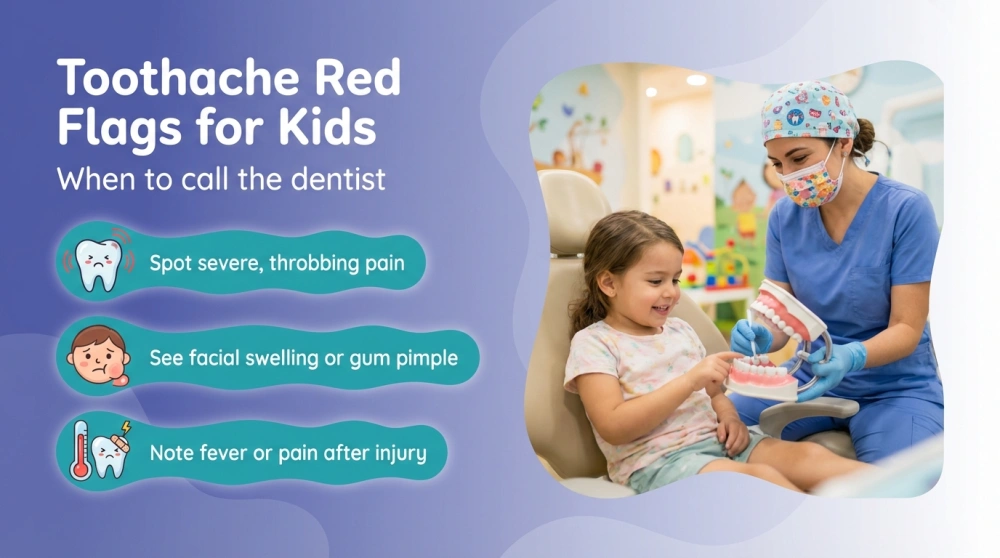
Call a pediatric dentist promptly if your child has any of the following:
- Severe or throbbing pain A strong or persistent ache suggests deep decay or a crack that needs care [1] [2].
- Facial swelling or a gum pimple Swelling can signal infection that needs urgent treatment, and a gum pimple may indicate drainage from an abscess [1].
- Fever, malaise, or swollen lymph nodes Systemic signs with a toothache require same day attention [1].
- Pain after an injury Any chipped, loose, displaced, or knocked out tooth after trauma needs immediate guidance [7].
- Night time pain or pain with chewing These patterns are common with deeper cavities.
If you are looking for a kids dentist near me Laguna Niguel, same day options are often available for urgent needs. Offices equipped for children can triage by phone, recommend safe first aid steps, and schedule a visit based on symptoms.
Families seeking Pediatric dental emergencies in Laguna Niguel can contact a local pediatric dentist for guidance on the fastest next step and for coordinated care if imaging or antibiotics are appropriate [1] [9].
How can you manage pain and swelling until the pediatric dentist visit?
While you arrange an appointment, a few practical steps can make your child more comfortable.
- Rinse and keep the area clean Warm salt water rinses and gentle brushing with a soft brush help reduce inflammation and lower the chance of worsening gum irritation [2] [4].
- Offer soft, cool foods Yogurt, smoothies, and lukewarm soups are easier to tolerate than crunchy or very hot items. Avoid sweets that can trigger sensitivity.
- Use a cold compress on the cheek Cold helps decrease swelling and numbs sore areas temporarily. Wrap ice in a cloth to protect the skin.
- Consider age appropriate analgesics Acetaminophen or ibuprofen can help with short term relief when used as directed by your pediatrician and the product label [5].
If swelling increases or your child develops fever or difficulty opening the mouth, seek urgent care. Antibiotics are not always needed, but dentists may prescribe them when there is evidence of spreading infection, following guidelines that support responsible antibiotic use [1].
What if the toothache follows an injury or dental trauma?
Trauma related tooth pain needs prompt evaluation to protect the tooth and surrounding tissues. After a fall or sports impact, check for bleeding, chipped enamel, a loose or displaced tooth, or sensitivity when biting.
- Control bleeding and clean the area Apply gentle pressure with a clean gauze pad and have your child rinse with clean water. For lip or cheek injuries, use a cold compress.
- Preserve any broken pieces If a fragment of tooth is found, keep it moist in milk or saline and bring it to the appointment [7].
- Call your pediatric dentist right away The team can advise immediate steps and schedule urgent care. Proper management depends on the type of injury and the childs age [7].
For a tooth knocked out completely, guidance differs for baby and permanent teeth. Baby teeth are not reimplanted, while a permanent tooth may be reimplanted if handled by the crown and kept moist. Call a dentist immediately for directions and proceed to care following trauma guidelines [7].
How do cavities cause toothache in children and what treatments might help?
Cavities begin when bacteria in plaque feed on sugars and produce acids that weaken enamel. Early white spot lesions may be painless, but as decay progresses into dentin, children often feel sensitivity to sweets and cold. When decay reaches the pulp, pain becomes more persistent and may throb. The right treatment depends on how deep the cavity has spread [3] [4].
- Remineralization for early lesions Fluoride therapies and improved daily care can halt very early decay before a hole forms [8].
- Tooth colored fillings For small to moderate cavities, a filling restores structure and relieves sensitivity by sealing the tooth.
- Pediatric crowns Larger cavities in baby molars may be best protected with a full coverage crown to restore strength for chewing.
- Pulp therapy If decay reaches the nerve of a baby tooth, a pulpotomy or pulpectomy can remove infected tissue, relieve pain, and preserve the tooth until it is time to fall out naturally [1].
- Extraction When a baby tooth cannot be saved safely, removal may be recommended, often followed by a space maintainer to guide proper eruption of the permanent tooth.
Your dentist will discuss the least invasive plan that resolves pain and protects oral health. Approaches follow pediatric guidelines that balance comfort, function, and growth considerations [1] [8].
Could teething or eruption cause baby tooth pain and how can you tell the difference?
Teething and the normal eruption of new teeth can cause mild discomfort, drooling, and a desire to chew. This soreness usually comes and goes, is not severe, and does not cause high fever or facial swelling. If your childs pain seems localized to the gums where a tooth is emerging and the discomfort is mild, simple measures like a clean chilled teething ring and gentle gum massage can help. If pain is intense, lasts more than a day, or is associated with fever or swelling, a different cause is more likely and a dental evaluation is important [4].
Tooth eruption discomfort should never be treated with numbing gels that contain benzocaine for children under age two, and these products are not usually necessary for older children either. Discuss options with your pediatrician and dentist before using topical anesthetics [5].
What warning signs mean your child might have an infection?
Certain symptoms suggest that bacteria have reached the nerve of the tooth or spread into nearby tissues. If you notice these signs, seek urgent dental care the same day.
- Facial swelling or rapid gum swelling Swelling that is new or increasing can mean infection from a tooth abscess [1].
- Fever or general illness Fever with a toothache suggests a systemic response that needs prompt attention [1].
- Pus discharge or a gum pimple A pimple like bump often indicates a draining abscess.
- Difficulty opening the mouth or swallowing These are emergency signs that require immediate care.
Antibiotics may be part of the plan when there is evidence of spreading infection, but the primary treatment often involves addressing the infected tooth directly. Pediatric guidelines encourage targeted use of antibiotics to avoid unnecessary exposure and resistance [1].
How do dentists diagnose the cause of tooth pain in kids?
A pediatric dentist begins by taking a careful history of the pain, recent illnesses or injuries, and any sensitivity to temperature or chewing. The dentist then examines the teeth and gums, checks for cavities, evaluates the bite, and gently taps or applies cold to the tooth to pinpoint the source. Dental radiographs may be recommended to look for decay between teeth, assess roots, or evaluate injuries. Pediatric dentists follow evidence based guidelines that aim to take images only when they are likely to change treatment decisions, and to use techniques that keep exposure as low as reasonably achievable [9].
Based on the findings, your dentist will discuss options that match your childs needs and your preferences. If your child is anxious, behavior guidance and, when appropriate, pediatric sedation protocols can help deliver care safely and comfortably under published monitoring standards [14].
What professional treatments might a pediatric dentist in Laguna Niguel recommend?
Treatment depends on the diagnosis, your childs age and comfort level, and the urgency of symptoms. A child with a small cavity may do well with a filling, while a child with a deep infection may need pulp therapy. For pain after trauma, care ranges from smoothing a chip to stabilizing a loose tooth. Pediatric teams tailor each step to your childs specific situation and follow recognized clinical guidelines [1] [7].
- Urgent evaluation and pain control The first priority is to relieve pain and address infection or injury.
- Conservative restoration Small to moderate lesions are restored with tooth colored materials.
- Pulp therapy or extraction Advanced decay may require nerve treatment or, when necessary, removal with space planning for healthy eruption later.
- Fluoride or sealants for prevention Strengthening enamel and sealing grooves reduces the risk of future decay [8].
- Sedation when indicated For some children, sedation guided by strict safety protocols helps complete needed care safely and comfortably [14].
Care plans are created with you and your child, with clear discussion of benefits, risks, and alternatives so you can make informed decisions together.
How do you prevent the next toothache through daily habits and checkups?
Prevention reduces the chance of kids tooth pain and helps protect your childs smile. A few consistent habits make a significant difference.
- Brush twice daily with fluoride toothpaste Use a smear for children under three and a pea sized amount for older children, and help with brushing until your child has the dexterity to do it well [8].
- Floss once daily Clean between teeth to remove plaque and prevent cavities that often start between molars.
- Choose tooth smart snacks Limit sticky or sugary foods and drinks, offer water between meals, and keep sweets with meals rather than as frequent snacks [4].
- Maintain regular checkups Routine visits allow early detection and preventive care like fluoride and sealants [8].
- Use mouthguards for sports Protect teeth during contact or high energy activities to reduce injury risk.
National data highlight the need for prevention. Tooth decay remains common among children, but early dental visits, fluoride exposure, and parent guided home care reduce the burden and help children stay comfortable and healthy [3] [4].
What insurance and cost considerations should parents know for pediatric dental emergency care?
Many plans cover evaluation and treatment for urgent dental problems, though coverage varies by plan and network. You can call your insurance company using the member number on your card to confirm benefits for examinations, radiographs, fillings, pulp therapy, extractions, and crowns for children. If you need care right away, pediatric offices often help you estimate out of pocket costs based on likely procedures. When possible, bring your childs insurance information to streamline verification.
If your family uses a health savings or flexible spending account, those funds commonly apply to qualified dental expenses. For families without insurance, ask about payment options. The priority in a pediatric dental emergency is to relieve pain and address any infection safely, and most offices will explain options clearly so you can make informed choices.
What local and federal guidelines matter for pediatric dental care in California?
Parents often want to know how dental practices are regulated and how safety is supported. In California, pediatric dental care follows state and federal standards that promote quality, safety, and privacy.
- State licensing and practice standards Dentists are licensed and regulated by the Dental Board of California, which enforces the Dental Practice Act and related regulations [10].
- Radiograph prescribing Pediatric dentists follow evidence based recommendations for when and how to take dental radiographs to minimize exposure while obtaining the information needed for diagnosis [9].
- Sedation safety If sedation is recommended, providers follow monitoring and emergency preparedness standards to enhance safety for infants, children, and adolescents [14].
- Infection control Practices follow federal standards for bloodborne pathogens and infection prevention to protect patients and staff [12].
- Privacy and records Health information is protected under federal privacy rules that guide how records are stored and shared [11].
These frameworks work together to support a safe and consistent experience for your family while receiving dental care.
How can you comfort a worried child who has tooth pain?
Tooth pain can feel scary for children, especially at night. Your calm presence and a few simple strategies can help your child feel secure while you arrange care.
- Use simple, reassuring words Let your child know you understand and that you will help them feel better soon.
- Offer routines that soothe A favorite book, gentle music, or quiet time can lower stress until pain relief takes effect.
- Try brief relaxation techniques Slow belly breathing together or counting can shift attention away from discomfort.
- Reframe the visit Explain that the dentist is a helper whose job is to find the problem and make it better.
Pediatric dental teams use behavior guidance strategies to help children feel safe and in control during visits, and they partner with parents to support comfort throughout care [14].
Why choose timely same day pediatric dentist care and how quickly should you act?
Toothaches rarely improve on their own once decay or infection is present. Early evaluation can prevent a small problem from becoming a larger one, reduces the chance of missed school and work, and helps children rest better at night. If you suspect an urgent issue, call a pediatric dentist as soon as you notice red flags like persistent pain, swelling, fever, or pain after an injury. Same day appointments are often available for urgent needs in our community, and calling early in the day can increase scheduling options.
If you are unsure how serious the situation is, a quick call allows a pediatric team to triage symptoms, share safe home steps, and recommend whether your child needs to be seen right away or within the next day or two. Clear communication and rapid response are cornerstones of effective urgent dental care for kids [1] [2].
How can you prepare a home dental emergency kit for your family?
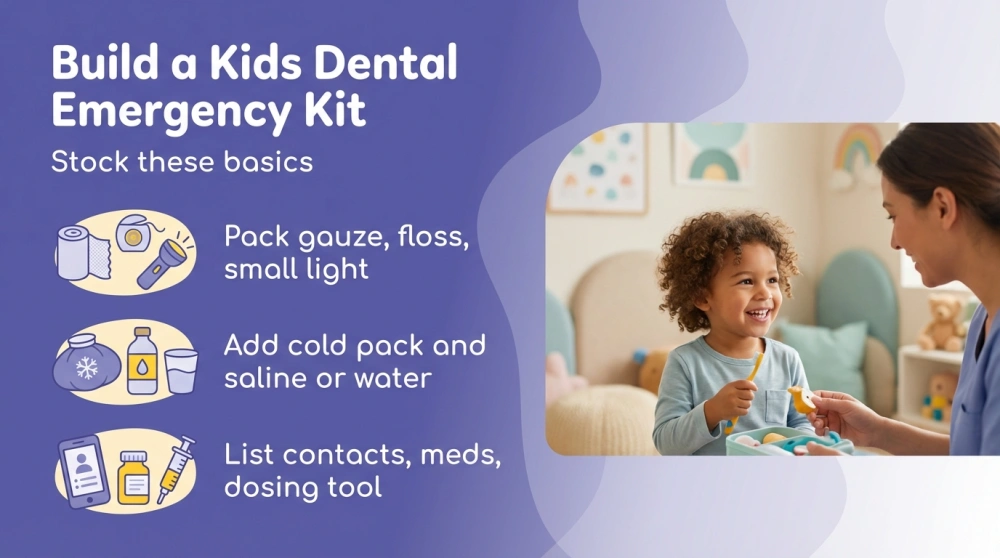
A small, well organized kit can make the first minutes after a toothache or dental injury easier. Keep your kit in a known spot and check it twice a year.
- Clean gauze and cotton Useful for gentle pressure on bleeding areas and to dry a tooth if directed by a dentist.
- Small flashlight and compact mirror Helpful for a quick look in the mouth.
- Dental floss A safe way to remove food trapped between teeth.
- Cold pack Reduces swelling and numb soreness on the cheek.
- Saline or clean water For rinsing the mouth after minor injuries.
- Medication list and dosing tools Include your childs weight, any allergies, and an oral syringe for accurate dosing if your pediatrician advises pain relievers [5].
- Emergency contact list Your pediatricians office, your pediatric dentist, and preferred urgent care numbers.
Having supplies ready reduces stress and helps you focus on comfort while you connect with a dentist for next steps.
How can Kidz Modern Dentistry in Laguna Niguel help your family today?
At Kidz Modern Dentistry, we focus on the needs of infants, children, and teens with same day access for urgent concerns, kid friendly sedation options when appropriate, and a team that explains each step in clear language. If your child wakes in the night with a toothache, if you notice a gum pimple that worries you, or if a playground fall leads to chipped enamel, we help you decide the next step and guide you through care that fits your child.
- Where we serve We care for families in Laguna Niguel and nearby communities across Orange County, California. If you have been searching kids dentist near me Laguna Niguel, our front desk can help you find a convenient time that fits your day.
- Our approach We combine gentle communication, behavior guidance, and practical comfort techniques with evidence based dentistry. From the first phone call to the final follow up, we focus on what helps your child feel safe and supported [14].
- Tools and technology When radiographs are needed, we follow pediatric selection criteria and use methods that keep exposure low while giving us the information needed for diagnosis [9].
- Experience and teamwork Our team brings years of combined pediatric experience, and we coordinate with physicians and specialists when needed to support children with complex needs.
- Transparent guidance We explain options for cavity care, pulp therapy, or extractions, and we discuss prevention with fluoride and sealants to reduce future risk [8].
- Rapid access for urgent needs Same day scheduling is often available for urgent visits so your child can be evaluated quickly and treated as indicated.
If your child has a toothache right now, call us at +1 949 273 0110 so we can help you decide the right next step. We are here to answer questions, review safe comfort measures, and schedule care that matches the urgency of your childs symptoms.
Where can you find reliable sources and further reading?
- Antibiotic Therapy for Pediatric Dental Patients – American Academy of Pediatric Dentistry
- Toothaches – American Dental Association MouthHealthy
- Tooth Decay and Cavities – National Institute of Dental and Craniofacial Research
- Children’s Oral Health Basics – Centers for Disease Control and Prevention
- Ibuprofen for Fever and Pain in Children – American Academy of Pediatrics
- Reye’s Syndrome Information – Centers for Disease Control and Prevention
- Guidelines for the Management of Traumatic Dental Injuries 2. Avulsion of Permanent Teeth – International Association of Dental Traumatology
- Fluoride Therapy – American Academy of Pediatric Dentistry
- Prescribing Dental Radiographs for Infants, Children, Adolescents – American Academy of Pediatric Dentistry
- Laws and Regulations Dental Practice Act – Dental Board of California
- Health Information Privacy HIPAA – U.S. Department of Health and Human Services
- Bloodborne Pathogens and Needlestick Prevention – Occupational Safety and Health Administration
- Behavior Guidance for the Pediatric Dental Patient – American Academy of Pediatric Dentistry
- Monitoring and Management of Pediatric Patients Before During and After Sedation – American Academy of Pediatric Dentistry and American Academy of Pediatrics
Common Questions About This Topic
Find answers to frequently asked questions related to this article.
