
- What are the most common reasons kids get cavities even with daily brushing?
- How do diet choices and snacking frequency affect cavity risk?
- Could toothbrushing technique be missing plaque that causes decay?
- Why does flossing matter for children who brush well?
- How do fluoride and dental sealants protect kids teeth?
- Could enamel weakness or enamel hypoplasia make cavities more likely?
- Do mouth breathing and dry mouth increase cavity risk?
- Can sippy cups and juice lead to cavities even with daily brushing?
- How do orthodontic crowding and tight spaces play into tooth decay?
- What role do professional cleanings and regular checkups play?
- What should parents expect at a pediatric dental checkup in Laguna Niguel?
- What California and local guidelines should families in Laguna Niguel know?
- How can parents build a daily cavity prevention plan that works?
- When should you see a pediatric dentist for a cavity concern?
- Why choose Kidz Modern Dentistry in Laguna Niguel for your child?
- Where can you find the research and resources cited here?
What are the most common reasons kids get cavities even with daily brushing?
If your child brushes every day yet still gets cavities, you are not alone. Tooth decay is one of the most common chronic conditions of childhood. National data show that many children have decay by grade school, and some have untreated cavities that can cause pain and infection [1]. Brushing is essential, but cavities form when multiple risk factors line up. Understanding those factors helps you take practical steps that fit your family.
Here are the most common reasons cavities can appear despite daily brushing:
- Frequent sugar exposure Small snacks and sips over many hours feed cavity causing bacteria even if you brush morning and night [1][13].
- Brushing method and timing If plaque stays along the gumline or molar grooves, brushing may not remove it fully. Brushing at least twice daily with fluoride toothpaste matters, as does technique [1].
- Lack of flossing Toothbrush bristles do not clean between tight teeth. Plaque between teeth can lead to cavities that brushing alone misses [11].
- Weaker enamel Enamel hypoplasia and developmental enamel defects raise risk even with good daily habits [9].
- Dry mouth and mouth breathing Less saliva or open mouth breathing reduces the natural cleansing and buffering that protect enamel [10].
- Prolonged use of sippy cups or juice Frequent exposure to sugary drinks increases risk, especially at bedtime [7][9].
- Crowded or overlapping teeth Tight spaces trap plaque and are hard to reach, even for diligent brushers [12].
- Skipped preventive care Professional cleanings, fluoride varnish, and sealants add protection that brushing alone cannot provide [3][5][6].
If you are in Laguna Niguel and wondering how to put the pieces together, Pediatric preventive dentistry in Laguna Niguel can help you identify which risk factors most affect your child and choose the next best steps for your family.
How do diet choices and snacking frequency affect cavity risk?
Diet is one of the strongest drivers of children tooth decay. When your child eats or drinks sugars and refined starches, mouth bacteria produce acids that lower pH and pull minerals out of enamel. Saliva helps neutralize acids and rebuild minerals, but that process takes time. Constant snacking or sipping resets the clock and keeps teeth in the danger zone [1].
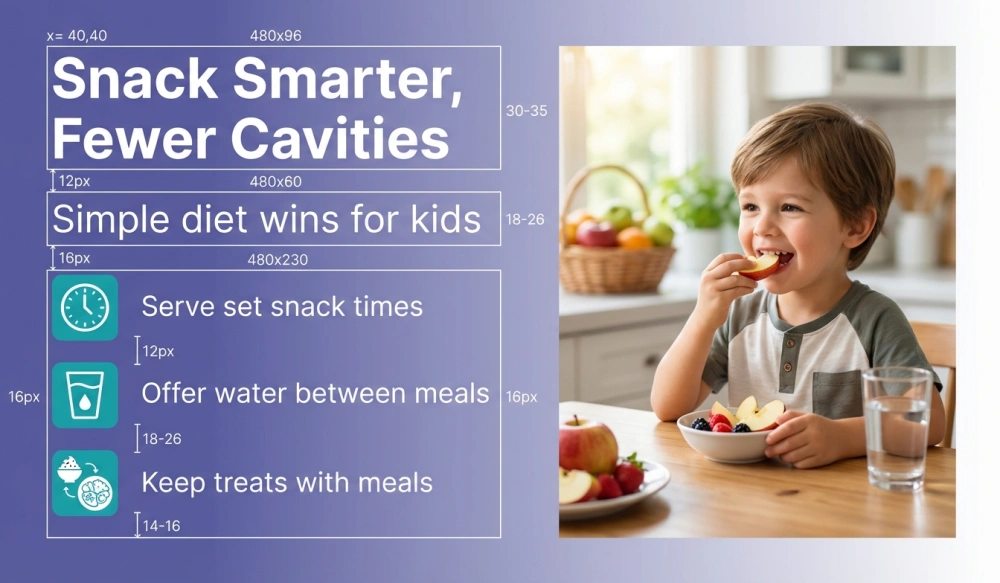
Key diet related patterns to watch:
- Added sugars and sweet drinks Limiting added sugars supports oral health and overall health [13].
- Prolonged sipping Juice pouches, sports drinks, or sodas carried around for long periods bathe teeth in sugar and acid [1].
- Sticky snacks Fruit snacks, caramels, or crackers that cling can feed bacteria for longer.
- Nighttime exposures Juice or milk in bed increases risk because saliva flow is lower during sleep [9].
Practical tips to reduce risk without making food a battle:
- Offer water as the default drink Keep water available, especially between meals. Check whether your water source has fluoride and talk to your dental team about supplements if it does not [14][3].
- Serve balanced meals and defined snack times Try to avoid grazing through the day so teeth spend more time in a neutral environment [1].
- Keep treats with meals Enjoy sweets occasionally with meals rather than as frequent stand alone snacks.
Could toothbrushing technique be missing plaque that causes decay?
Even motivated kids can miss plaque if the toothbrush does not contact the right spots or if toothpaste does not have the right amount of fluoride. The goal is gentle but thorough plaque removal twice a day with a soft bristle brush and fluoride toothpaste [1].
Technique ideas you can try tonight:
- Angle the bristles Tilt the brush toward the gumline and use short strokes on the outer, inner, and chewing surfaces.
- Brush for two minutes Use a simple timer or song to keep the pace fun and consistent.
- Use the right toothpaste amount A smear the size of a grain of rice for children younger than three and a pea sized amount for children three to six helps prevent cavities while limiting swallowing [1].
- Assist and check Most kids need help or supervision with brushing until they can tie their shoes well. Lift the lip and check the gumline for missed plaque.
Toothbrushing technique for kids improves quickly with coaching and encouragement. If you are unsure whether your child is reaching the back molars or gumline consistently, ask your pediatric dentist to demonstrate the approach at your next visit.
Why does flossing matter for children who brush well?
Flossing for children targets the spaces that bristles cannot reach. The contact area where two teeth touch is a prime spot for plaque. When plaque stays in that narrow space, acid can soften enamel and a cavity can form out of sight until it grows larger. Daily interdental cleaning helps prevent these between teeth cavities [11].
Helpful flossing strategies:
- Start when teeth touch As soon as two teeth contact, begin gently sliding floss between them to break up plaque.
- Use child friendly tools Floss picks can be easier for small hands and for parents helping in the back of the mouth.
- Make it routine Tie flossing to a daily habit like bedtime reading so it happens consistently.
How do fluoride and dental sealants protect kids teeth?
Fluoride strengthens enamel and helps it resist acid damage. In the dental office, your child can receive fluoride varnish applications that adhere to teeth and release fluoride over time. A national task force recommends that clinicians apply fluoride varnish to the primary teeth of all infants and children as soon as they have teeth, regardless of risk status [3]. At home, fluoride toothpaste further supports daily protection [1][4].
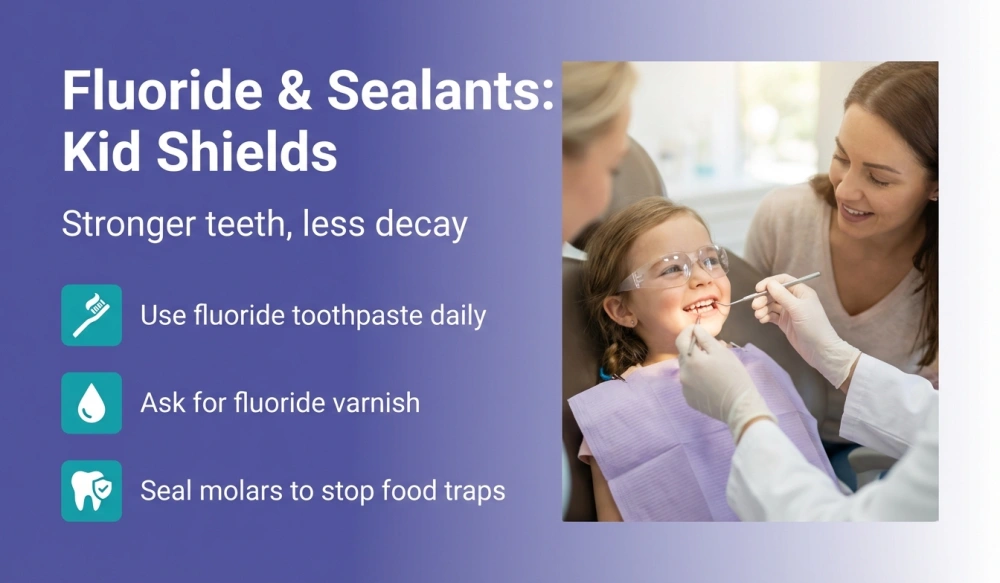
Dental sealants are thin coatings on back teeth that block food and bacteria from collecting in deep grooves. Sealants can prevent the majority of cavity formation in molar chewing surfaces during the first years after placement [6]. Sealants are painless, do not require numbing, and can be placed quickly at a routine visit.
Talk with your pediatric dentist about fluoride varnish and dental sealants if your child has a history of early childhood caries, deep molar grooves, or frequent sugar exposures. These preventive tools add a safety net to daily brushing and flossing [5][6].
Could enamel weakness or enamel hypoplasia make cavities more likely?
Yes. Some children have enamel that did not form with full thickness or uniform structure. Enamel hypoplasia and other developmental enamel defects create rough or thin areas that can trap plaque and break down faster. Children with these enamel conditions face higher risk and often benefit from added preventive measures such as fluoride varnish, sealants when appropriate, and closer recall intervals [9].
Signs to watch for include cream or brown spots on front teeth, grooves or pits on molars, and sensitivity to cold or sweets. If you suspect enamel weakness, your pediatric dentist can tailor a plan that protects vulnerable surfaces and monitors them over time.
Do mouth breathing and dry mouth increase cavity risk?
They can. Saliva protects teeth by washing away food, buffering acids, and supplying minerals like calcium and phosphate to support remineralization. When saliva is low, acids stay longer and enamel is less protected. Mouth breathing can dry oral tissues, and some medicines reduce saliva flow as well. Children with reduced saliva or chronic mouth breathing may be more prone to tooth decay [10].
What you can do if dry mouth is part of the picture:
- Encourage water Frequent water sips help moisten the mouth.
- Review medications Ask your pediatrician if any medicines might be contributing to dry mouth [10].
- Use fluoride strategies Professional varnish and daily fluoride toothpaste can offset some of the risk [3][4].
Can sippy cups and juice lead to cavities even with daily brushing?
They can if used over long periods or at bedtime. The American Academy of Pediatrics advises avoiding juice for infants and limiting juice portions for older children. Constant sipping of juice or sweet drinks exposes teeth to sugars and acids that increase decay risk. Bedtime or nap time bottles or sippy cups with milk or juice are especially challenging because saliva flow is lower during sleep [7][9].
Family friendly ideas:
- Offer milk with meals Use water between meals and at bedtime.
- Limit juice When given, serve small portions in an open cup and finish in one sitting [7].
- Transition from sippy cups Move to open cups as skills allow to reduce constant sipping exposures.
How do orthodontic crowding and tight spaces play into tooth decay?
Crowding and overlapping teeth make plaque control harder. Tight contacts create areas where bristles cannot reach, and deep grooves or rotated teeth trap debris. Even with daily brushing, kids with crowding may need extra help with flossing, targeted brushing angles, and perhaps earlier discussions about orthodontic guidance. Professional groups note that improving alignment can support better oral hygiene access and lower plaque accumulation [12].
If your child has crowding, ask your pediatric dentist how to adjust home care. They may suggest floss threaders, interdental brushes for older children, or specific angles for the toothbrush to reach tricky areas.
What role do professional cleanings and regular checkups play?
Professional cleanings remove hardened plaque that home care cannot reach. Routine exams allow your dental team to spot early changes before they become larger problems. Depending on risk, your pediatric dentist may recommend fluoride varnish applications, sealants on permanent molars as they erupt, and tailored home care coaching. The pediatric periodicity schedule provides guidance on how often children should be seen, with frequency based on individual risk and needs [5].
Laguna Niguel Pediatric preventive dentistry gives families a structured plan that pairs home care with professional support. This combination helps protect new teeth as they arrive and strengthens healthy habits that last.
What should parents expect at a pediatric dental checkup in Laguna Niguel?
A pediatric dental checkup Laguna Niguel visit is friendly, efficient, and focused on prevention. You can expect a review of recent health changes, dietary habits, and any concerns since the last visit. The clinical portion often includes a gentle cleaning, fluoride varnish if indicated, and an exam to evaluate gums, enamel quality, jaw growth, and eruption patterns [5].
Common elements of a checkup include:
- Caries risk assessment Your dentist evaluates diet, fluoride exposure, saliva factors, enamel defects, and hygiene to identify your child’s current risk level [9].
- Home care coaching You will get personalized tips on toothbrushing technique for kids, flossing, and choosing snacks and drinks that fit your routine [1][11].
- Preventive treatments Fluoride varnish and dental sealants are discussed and placed when appropriate [3][6].
- Growth and spacing check If early crowding is present, your dentist may discuss ways to keep teeth clean and whether an orthodontic monitoring visit makes sense [12].
If your child feels anxious or has special needs, let the team know beforehand so they can tailor the visit to your child’s comfort and attention span. Pediatric practices are designed to make visits positive and manageable for different ages and personalities.
What California and local guidelines should families in Laguna Niguel know?
Parents in Laguna Niguel and across California benefit from several public health guidelines that support children’s oral health.
- School entry oral health assessment California requires that children in kindergarten or first grade have a simple oral health assessment by a dentist or other authorized provider. The goal is to identify issues early and connect families to care [8].
- Fluoride access Community water fluoridation is a proven public health measure that prevents tooth decay. You can check the fluoridation status of your public water system online and speak with your pediatric dentist about fluoride options if you use private wells or non fluoridated water [14][3].
- Preventive visit timing Pediatric guidelines recommend establishing a dental home by age one and keeping regular visits based on your child’s risk and needs [5].
If you have questions about local resources in Laguna Niguel, your pediatric dental team can help you navigate options and plan next steps that fit your family.
How can parents build a daily cavity prevention plan that works?
A realistic plan meets your child where they are and adapts as they grow. Start with the basics and layer preventive steps that match your child’s risk.
- Set up a twice daily brushing routine Use a soft bristle brush and fluoride toothpaste in child sized amounts. Keep it positive and consistent [1].
- Add flossing once daily Use floss picks for convenience and focus on the back teeth where most cavities start [11].
- Make water the default drink Encourage water between meals. Check your water fluoride status and ask about supplements or varnish if needed [14][3].
- Plan snacks Offer balanced choices at set times and limit sticky or sweet options that linger [13][1].
- Use preventive dental treatments Ask about fluoride varnish frequency and sealants on molars as they erupt [3][6].
- Schedule routine visits Keep checkups and cleanings based on your dentist’s recommendation to catch small changes early [5].
Pediatric preventive dentistry puts these steps into a coherent plan that grows with your child. If you have tried these ideas and cavities still occur, ask your dentist about targeted changes such as higher fluoride toothpaste under guidance, xylitol products for older children, or more frequent professional fluoride applications.
When should you see a pediatric dentist for a cavity concern?
Make an appointment if you notice brown or white chalky spots, holes, pain with sweet foods, or sensitivity to cold. Early childhood caries can progress quickly, so early visits help prevent deeper decay and keep treatments as conservative as possible [9]. You should also reach out if your child is struggling with daily brushing or if diet patterns have changed. A visit is a great place to reset routines and get personalized feedback.
If you need a pediatric dentist Laguna Niguel resource, look for a practice that emphasizes prevention, clear communication, and a child centered environment. Ask how they partner with parents on diet, technique, and periodic risk assessments that guide care over time.
Why choose Kidz Modern Dentistry in Laguna Niguel for your child?
At Kidz Modern Dentistry, we help families understand why cavities happen and what to do next. Our practice serves children across Laguna Niguel, California with care that is friendly, clear, and focused on prevention first. We welcome infants, toddlers, children, and teens, and we tailor visits to each child’s needs and comfort level.
How our services support cavity prevention and healthy smiles:
- Prevention first approach We prioritize routine exams, professional cleanings, fluoride varnish, and dental sealants when indicated, so families get the practical tools that reduce risk over time [3][5][6].
- Education that fits your life We coach parents and kids on toothbrushing technique for kids, flossing for children, smart snack planning, and simple ways to build habits that last [1][11].
- Comfort and access We provide same day emergencies when available and kid friendly sedation options when appropriate, so necessary care is as comfortable as possible while staying focused on safety.
- Personalized plans We use caries risk assessments to tailor recall intervals and home care guidance. If enamel hypoplasia, dry mouth, or orthodontic crowding are part of the picture, we adjust your child’s plan accordingly [9][10][12].
- Clear next steps Whether you need dietary coaching, fluoride varnish, or sealants, we outline what to do now and what to monitor between visits, so you feel confident at home.
We deliver care through a collaborative team that believes every visit should be a positive experience for your child. Families can expect direct access to qualified professionals who listen, explain options, and help you decide what makes sense for your child today.
Our track record includes many families who arrived with repeated cavities despite daily brushing and, over time, saw fewer new lesions after small changes in snacking routines, improved brushing angles, and timely sealants. While every child is unique and results vary, we are committed to a steady, preventive path that supports long term health.
We offer comprehensive care in Laguna Niguel, California and welcome new families. To schedule a visit or ask a question, call us at +1 949 273 0110. We look forward to supporting your family’s goals with practical solutions and a calm, child friendly environment.
Where can you find the research and resources cited here?
- Children’s Oral Health – Centers for Disease Control and Prevention
- Prevention of Dental Caries in Children Younger Than Five Years – U.S. Preventive Services Task Force
- Fluoride Toothpaste Use for Young Children – American Dental Association
- Periodicity of Examination and Preventive Dental Services – American Academy of Pediatric Dentistry
- Dental Sealants – Centers for Disease Control and Prevention
- Fruit Juice Recommendations – American Academy of Pediatrics HealthyChildren
- Kindergarten Oral Health Assessment – California Department of Public Health
- Caries Risk Assessment and Management – American Academy of Pediatric Dentistry
- Dry Mouth – National Institute of Dental and Craniofacial Research
- Interdental Cleaners and Floss – American Dental Association
- How Orthodontics Benefits Oral Health – American Association of Orthodontists
- Know Your Limit for Added Sugars – Centers for Disease Control and Prevention
- My Water’s Fluoride – Centers for Disease Control and Prevention
Common Questions About This Topic
Find answers to frequently asked questions related to this article.
