
- What is newborn oral care and why should you clean gums before the first tooth?
- When should you start cleaning your baby’s gums and how often?
- What should you use to clean infant gums safely?
- How do you clean your baby’s gums step by step at home?
- How does gum cleaning support feeding, teething, and development?
- What should you know about water, fluoride, and toothpaste before teeth erupt?
- How can you lower the risk of early childhood caries before and after the first tooth?
- What can you do if your baby resists gum cleaning?
- Which products and ingredients should you avoid for pre teething gum care?
- How should you adjust gum care for preterm infants or special health care needs?
- When should your baby see a dentist and what happens at the first visit?
- What California and federal guidance might matter for families in Laguna Niguel, CA?
- Who is Kidz Modern Dentistry and how do we support families in Laguna Niguel, CA?
- Where can you find the research and resources cited?
What is newborn oral care and why should you clean gums before the first tooth?
Newborn oral care is about setting healthy habits from day one. Even before the first tooth appears, gentle daily cleaning removes milk residue and soft plaque from the gum line. This helps reduce the buildup of bacteria that can contribute to early tooth decay once teeth erupt and it helps your baby get used to routine mouth care from the start [7]. Early habits also make the transition to brushing much easier and support overall baby oral hygiene [1].
Families often ask whether cleaning gums matters if there are no teeth yet. The short answer is yes. Wiping the gums after feedings supports a clean oral environment, massages the tissues, and creates a predictable routine that calms many babies around sleep time [7]. It is part of a broader approach to Infant oral health that continues as the first teeth erupt [1].
When should you start cleaning your baby’s gums and how often?
You can begin once feeding is established and your baby is comfortable with gentle handling of the mouth. Most families start within the first weeks of life. Aim to clean at least once daily and ideally after the last feeding of the day. If you can, add a quick wipe after daytime feedings as well. This cadence sets a steady rhythm for newborn oral care and makes the habit second nature by the time the first tooth appears [7].
As teeth erupt, continue daily cleaning and transition to a soft infant toothbrush twice a day. The American Academy of Pediatric Dentistry recommends that oral hygiene begin with eruption of the first tooth and that a dental home be established by age one or within six months of the first tooth [1]. Consistency is more important than perfection. If your baby is fussy at a particular time, try again when they are calmer.
What should you use to clean infant gums safely?
The simplest approach is usually the best. Use a clean, damp washcloth for baby gums or moistened gauze wrapped around your finger. Warm water is comfortable for most infants and helps loosen residue. Some parents like a silicone finger brush designed for gums. Any of these tools can be effective when used gently and consistently [7].
- Damp washcloth for baby gums: Soft, reusable, and easy to control for gentle sweeping motions along the gums and cheeks [7].
- Moistened gauze: Disposable and easy to wrap around a finger for precise cleaning along the gum line and inside the cheeks.
- Silicone finger brush: A soft option some parents find helpful for gum massage for babies as long as it is cleaned thoroughly between uses.
Before the first tooth, use plain water only. Toothpaste is not needed until teeth begin to erupt. Once a tooth is visible, a tiny smear size similar to a grain of rice of fluoride toothpaste is recommended by leading dental and pediatric organizations [2] [3].
How do you clean your baby’s gums step by step at home?
These calm, repeatable steps can help you clean infant gums with confidence and minimal fuss. If anything feels uncomfortable for your baby, pause and try again later. Gentle consistency is the goal [7].
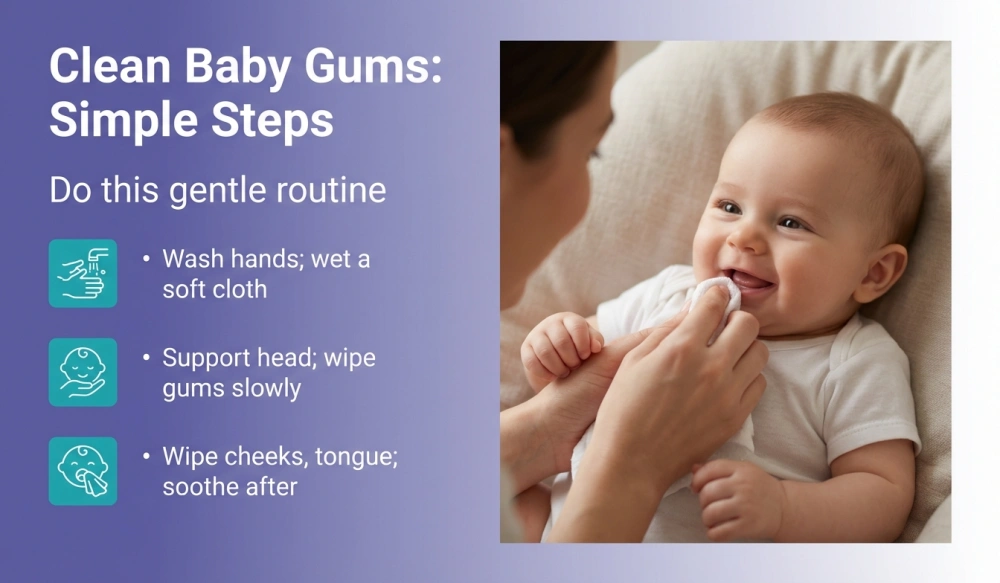
- Wash your hands thoroughly: Clean hands keep bacteria out of your baby’s mouth and prevent irritation.
- Prepare your cloth or gauze: Wet it with clean, warm water and wring it out so it is damp, not dripping.
- Choose a comfortable position: Cradle your baby with their head supported, or seat them semi reclined in your lap so you can see the gums clearly.
- Open gently: Use a calm voice and a finger along the cheek to open the mouth without forcing.
- Wipe the gums slowly: Wrap the gauze or cloth around your index finger and make small, soft circular motions across the upper and lower gums.
- Clean cheeks, tongue, and lips: Sweep along the inside of the cheeks and lightly wipe the top of the tongue only if you see residue. Finish by gently cleaning the inner surfaces of the lips.
- End with reassurance: Offer a cuddle or song so the experience feels safe and predictable.
- Timing tip: Many parents find it easiest to clean after the last feeding of the day before sleep, when babies are drowsy and more accepting [7].
- Comfort tip: If mild teething discomfort is present later on, a chilled clean washcloth can be soothing for supervised chewing.
How does gum cleaning support feeding, teething, and development?
Regular gum wiping does more than remove residue. It helps babies accept gentle touch in the mouth, which can ease the transition to toothbrushing and dental visits. A clean mouth environment also supports healthy bacteria balance and may reduce the amount of plaque that can start forming as teeth appear [7] [1].
- Routine building: Predictable nightly care makes the later step to brushing feel familiar rather than new or scary [1].
- Tissue comfort: Gentle massage can soothe tender gums and help babies tolerate teething stages.
- Healthy habits: Early consistency encourages you and your baby to keep up with baby oral hygiene as the mouth changes.
Starting simple habits early reinforces the values of prevention. This is the foundation of Infant oral health and helps you feel confident providing care each day [1].
What should you know about water, fluoride, and toothpaste before teeth erupt?
Before teeth erupt, you do not need toothpaste. Use plain water on a clean cloth. Once the first tooth appears, leading guidelines advise using a smear size similar to a grain of rice of fluoride toothpaste twice daily for children younger than three, and a pea sized amount for ages three to six, with an adult helping or supervising [2] [3].
Fluoride helps strengthen tooth enamel and reduce the risk of cavities. Many communities have fluoridated water, which supports lifelong oral health. You can look up local water fluoridation levels using the CDC My Water’s Fluoride tool to understand your area’s status and discuss any questions with your pediatric dentist [11]. In medical settings, the United States Preventive Services Task Force recommends that primary care clinicians apply fluoride varnish to the primary teeth of all infants and children starting at tooth eruption for those at high risk for caries [5].
- Water choice: If you use bottled water, note that not all bottled water contains fluoride. Your dentist can help you evaluate fluoride exposure based on your local water and your child’s needs [11].
- Toothpaste safety: Use only a smear size for under three years and help your child spit when they are able to do so reliably. Keep toothpaste out of reach between uses [3].
How can you lower the risk of early childhood caries before and after the first tooth?
Early childhood caries is a preventable disease influenced by diet, bacteria, and routine care. Small daily choices make a real difference. Focus on consistent cleaning, smart feeding routines, and regular checkups once teeth erupt [12] [4].
- Create a cleaning routine: Wipe gums daily before teeth and brush twice a day once teeth erupt using the amount of fluoride toothpaste recommended for your child’s age [3] [7].
- Avoid putting a baby to bed with a bottle: Milk, formula, or juice at sleep time can pool around the teeth and increase decay risk. Offer only water if a bottle is needed for comfort [4] [12].
- Mind sweet exposures: Limit sugary drinks and frequent snacks. Offer water between meals and keep juice, if used at all, with meals in small amounts [4] [12].
- Schedule the first dental visit: Establish your dental home by the first birthday or within six months of the first tooth to receive personalized anticipatory guidance and risk assessment [1].
- Consider fluoride varnish when indicated: Talk with your pediatrician or dentist about varnish applications, especially if your child is at higher risk for cavities [5].
What can you do if your baby resists gum cleaning?
Resistance is common and usually temporary. Keep sessions short, cheerful, and predictable. Try cleaning after a relaxing bath or while singing a familiar song. If your baby turns away, pause and try again later. Consistency with a soft approach keeps stress low and builds acceptance over time.
- Use a calm routine: Babies respond to tone and rhythm. Pick a regular time so the pattern becomes familiar.
- Offer gentle choices: Let your baby hold the clean cloth while you use another, or let them explore a silicone finger brush with supervision.
- Pair with comfort: A brief cuddle after cleaning helps associate mouth care with soothing attention.
Which products and ingredients should you avoid for pre teething gum care?
Safety comes first. Some common teething products are not recommended for infants. Avoid numbing gels or liquids with benzocaine due to the risk of methemoglobinemia, a rare but serious condition. The United States Food and Drug Administration has warned against benzocaine teething products for infants and young children [8]. Avoid prescription strength viscous lidocaine products for teething discomfort. Do not use honey in infants under one year due to the risk of botulism [9].
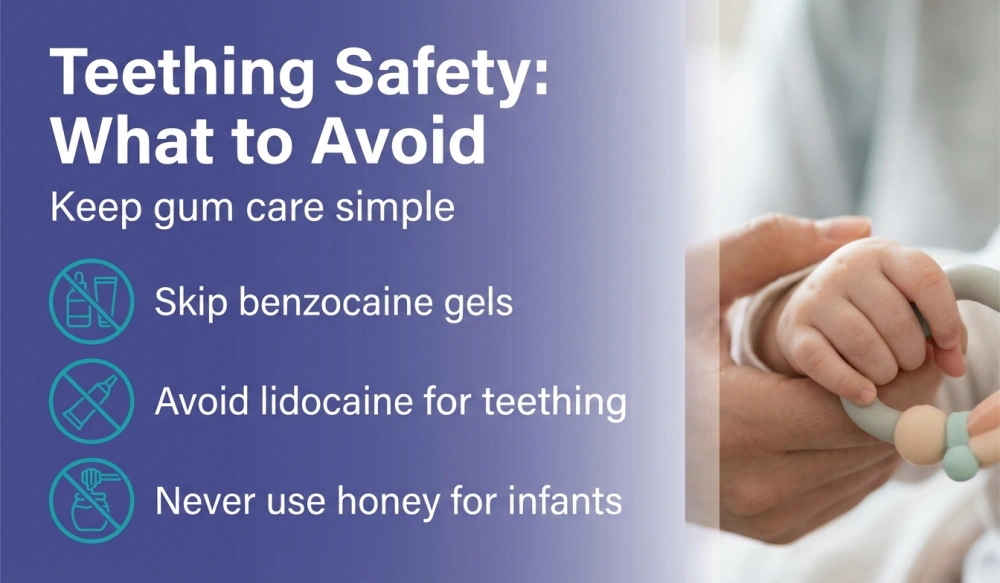
- Avoid numbing gels: Skip benzocaine and similar anesthetics for infant gum discomfort based on FDA safety communications [8].
- Avoid honey: Never use honey on pacifiers or gums in children under one year due to botulism risk [9].
- Be cautious with essential oils and herbal products: Consult your pediatrician or pediatric dentist before using any non standard products that could be swallowed or irritate tissues.
How should you adjust gum care for preterm infants or special health care needs?
Every child is unique. For preterm infants or babies with medical considerations, work closely with your pediatrician and pediatric dentist to tailor newborn oral care. You may start with very brief, gentle wipes and gradually increase duration as your baby tolerates more stimulation. A damp cloth remains the safest first step, with silicone tools introduced only if tolerated and advised by your care team.
- Go slow and observe: Use shorter sessions with plenty of pauses and soothing cues.
- Coordinate with your care team: Occupational or feeding therapists can suggest positions and sensory strategies that keep your baby comfortable.
- Transition gradually: As teeth erupt, introduce a small soft brush with the smear size of fluoride toothpaste recommended for age under close supervision [3].
When should your baby see a dentist and what happens at the first visit?
Plan the first visit by the first birthday or within six months of the first tooth. During this visit, you can expect a friendly exam, an assessment of growth and development, a review of feeding and hygiene routines, a personalized cavity risk assessment, and specific guidance for the next steps. This visit is also a great time to practice lifting the lip to check for plaque and early signs of decay and to get pediatric dentist advice about teething or feeding questions [1].
If your family is new to the area or establishing care, scheduling early supports Infant oral health and preventative habits. Early guidance helps you feel confident about what to use, how often to clean, and how to make care feel calm and positive for your baby [1].
For families seeking Infant oral health in Laguna Niguel, our team is happy to help you plan the first visit and walk through home care one step at a time in a supportive environment.
What California and federal guidance might matter for families in Laguna Niguel, CA?
California families can access statewide oral health education through the California Department of Public Health Oral Health Program. These resources reinforce prevention messages about avoiding sugary drinks, establishing early dental care, and using fluoride appropriately as teeth erupt [10]. Many communities in California have fluoridated water. You can review fluoridation status by community using the CDC My Water’s Fluoride tool and discuss any questions with your dentist [11].
The Dental Board of California provides consumer information on licensed providers and patient protections, which can be useful as you choose a dental home for your child [13]. National guidance from the AAP, ADA, USPSTF, and AAPD supports fluoride toothpaste use at tooth eruption in tiny amounts, early establishment of a dental home, and consideration of fluoride varnish for children at increased risk of cavities [2] [3] [5] [1].
Who is Kidz Modern Dentistry and how do we support families in Laguna Niguel, CA?
At Kidz Modern Dentistry, we help parents master everyday home care from the very first days and guide the transition from wiping gums to brushing and beyond. Our pediatric team focuses on education first so you always know what to use, how often, and how to keep each step gentle and predictable for your baby. We serve families across Laguna Niguel, CA and nearby communities.
- Personalized guidance: We demonstrate how to clean baby gums with damp cloth or moistened gauze, show lift the lip checks, and share developmentally appropriate tips that match your daily routine.
- Comfort focused care: Same day emergency availability, kid friendly sedation when appropriate, and a calm environment help children feel safe at every stage.
- Preventive roadmap: We outline a clear plan from pre teething gum care through the first tooth and early checkups, including fluoride toothpaste use and professional fluoride varnish when indicated.
- Collaborative support: We coordinate with your pediatrician and, when needed, feeding or occupational therapists for children with sensory or medical considerations.
- Accessible expertise: Our pediatric dentist provides direct, practical answers to your questions and offers hands on demonstrations during visits.
- Community centered care: We welcome families from Laguna Niguel, Aliso Viejo, Dana Point, Mission Viejo, and surrounding neighborhoods.
Whether you are expecting, caring for a newborn, or seeing the first tooth, we can help you build habits that fit your family. If you are looking for guidance on Infant oral health, we offer supportive visits that focus on prevention, calm routines, and practical tools you can use right away.
Ready to plan your baby’s first visit or talk through your home routine in person? Call us at +1 949 273 0110 and our team will find a time that works for you.
Where can you find the research and resources cited?
- Periodicity of Examination and Preventive Dental Services – American Academy of Pediatric Dentistry
- Fluoride Use in Caries Prevention in the Primary Care Setting – American Academy of Pediatrics
- Fluoride Toothpaste Use for Young Children – American Dental Association
- Children’s Oral Health Facts – Centers for Disease Control and Prevention
- Prevention of Dental Caries in Children Younger Than 5 Years – USPSTF
- Fluoride varnishes for preventing dental caries in children and adolescents – Cochrane Library
- Caring for Your Child’s Teeth – National Institute of Dental and Craniofacial Research
- FDA takes action against use of benzocaine teething products – U.S. Food and Drug Administration
- Infant Botulism Prevention and Honey – Centers for Disease Control and Prevention
- Oral Health Program Resources for Parents and Caregivers – California Department of Public Health
- My Water’s Fluoride Data Tool – Centers for Disease Control and Prevention
- Early Childhood Caries Policy – American Academy of Pediatric Dentistry
- Consumer Resources – Dental Board of California
Common Questions About This Topic
Find answers to frequently asked questions related to this article.
