- What makes pediatric dental insurance different?
- How do deductibles annual maximums and networks affect your child’s coverage?
- Which preventive services are usually covered for children?
- What should you know about sealants and fluoride for cavity prevention?
- How do exams X rays and cleanings work with insurance?
- When would a pediatric dental plan require preauthorization?
- How do emergency visits and same day care work with benefits?
- How does sedation dentistry for kids interact with insurance coverage?
- What is an Explanation of Benefits and how do you read it?
- How can you estimate out of pocket costs before treatment?
- How do coordination of benefits and dual coverage work for children?
- What steps help you maximize dental benefits each year?
- How do California regulations and programs affect children’s dental coverage?
- What should you do if a claim is denied or a bill looks higher than expected?
- Where does Kidz Modern Dentistry fit into your family’s insurance plan?
- References
What makes pediatric dental insurance different?
Parents often notice that children’s dental benefits are structured differently than adult plans. This is because children have distinct oral health needs and benefit from early prevention. National data show that cavities are common in kids, yet largely preventable. For example, many children experience tooth decay by elementary school and sealants can significantly reduce the risk of cavities in permanent molars [1] [2]. Pediatric dentistry insurance is designed to support early visits, routine screenings, and interventions that protect growing smiles.
Under federal marketplace rules pediatric dental coverage is considered an essential health benefit when included on marketplace plans. Coverage details vary by plan and carrier, but the intent is to make children’s dental care accessible for families [8]. If you buy a medical plan on the marketplace, the dental coverage for kids may be embedded or offered as a separate pediatric plan [9]. Outside the marketplace, employer and individual dental plans typically include robust children’s dental coverage for exams, cleanings, fluoride, and sealants.
Your Laguna Niguel pediatric dentist can help you understand how your child’s plan handles recall visits, X rays, and restorative treatments. In most plans, routine services have little or no cost at the time of service, while procedures like fillings or crowns may involve cost sharing. We can also explain terms like annual maximum, deductible, coinsurance, and waiting periods in the context of your family’s specific benefits.
Preventive care is the foundation of strong oral health for kids, and many plans build in frequent checkups and varnish applications to help reduce the chance of cavities early in life [3] [4].
How do deductibles annual maximums and networks affect your child’s coverage?
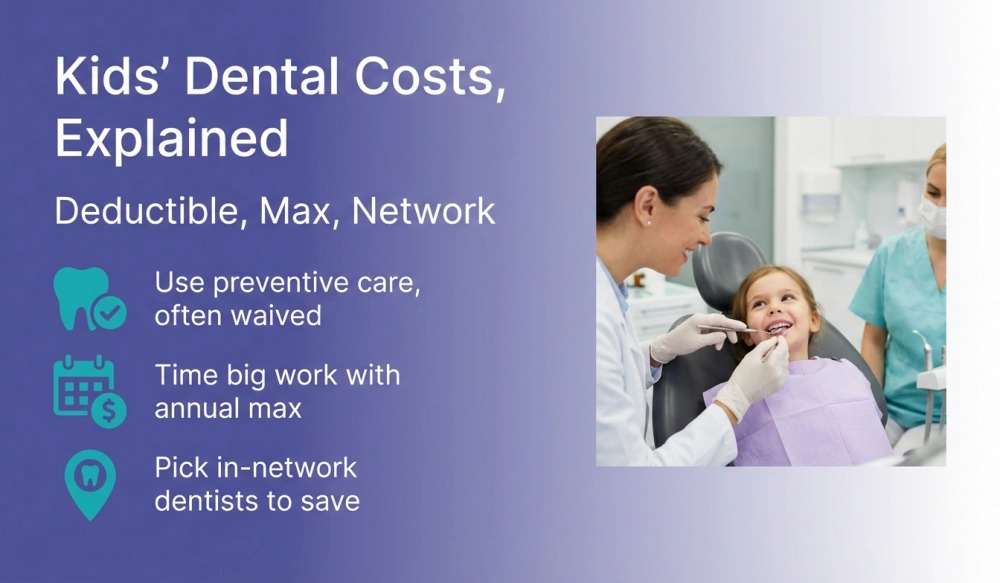
Three plan features determine most out of pocket costs for pediatric dental insurance. Understanding each one helps you plan visits and budget confidently.
What is a deductible and how does it apply to children?
The deductible is the amount you pay out of pocket before your plan starts paying for certain services. Many pediatric plans waive the deductible for preventive services such as exams, cleanings, fluoride treatments, and sometimes sealants. After the deductible is met, your plan begins sharing costs based on the coverage level. Always check your plan booklet or ask us to verify whether your child’s deductible resets each calendar year.
What is an annual maximum and how can it impact treatment timing?
The annual maximum is the most a plan will pay toward covered dental care in a plan year. Preventive care often does not count against the annual maximum, though this varies by carrier. Larger treatments such as fillings or crowns draw from the maximum. Strategic timing of non urgent care can help you avoid exceeding the maximum. For example, we may schedule a portion of treatment this year and the remainder next year if that reduces your family’s total out of pocket costs. We do this only when it is safe for your child’s health and consistent with clinical guidelines [3].
How does in network versus out of network affect costs?
Plans negotiate discounted fees with in network pediatric dentist providers. Visiting an in network pediatric dentist generally results in lower out of pocket costs because the office accepts the plan’s allowed amounts. Seeing an out of network dentist may increase costs and can also change how reimbursements are calculated. We are happy to check your network status and help you compare options so you can make an informed choice for your child.
Which preventive services are usually covered for children?
Most children’s plans emphasize routine checkups and education, since prevention is shown to reduce cavities and future costs. The American Academy of Pediatric Dentistry recommends creating a dental home by your child’s first birthday and using risk based recall intervals to catch problems early [3].
How often are cleanings and exams scheduled for kids?
Many plans cover two or more checkups per year for children, though the exact frequency depends on the plan and the child’s risk status. Visits typically include a clinical exam, cleaning, and topical fluoride application. The visit also includes home care coaching for brushing, flossing, and diet choices that protect teeth.
Are fluoride treatments covered and why are they important?
Topical fluoride varnish helps strengthen enamel and prevent decay. Pediatric dental insurance commonly covers fluoride at regular intervals for children because the evidence base is strong. National guidelines support fluoride varnish during routine pediatric visits for young children and at dental checkups for school age patients [4] [10].
Do plans cover sealants for permanent molars?
Sealants are thin protective coatings applied to the grooves of back teeth. Many plans cover sealants for children on first and second permanent molars because sealants reduce cavity risk significantly in those teeth [2] [12]. We will confirm age limits, tooth eligibility, and any frequency rules before treatment so you know what to expect.
Laguna Niguel Preventive care supports families in staying ahead of dental issues by focusing on what plans are most likely to cover fully or at a high level.
What should you know about sealants and fluoride for cavity prevention?
Sealants and professionally applied fluoride are among the most effective ways to protect children’s teeth. Research shows that sealants can prevent most cavities in the pits and fissures of molars by creating a barrier that blocks bacteria and food particles. Public health data emphasize their impact on reducing untreated decay and improving oral health equity for kids [2].
When are sealants recommended for children?
Sealants are commonly recommended soon after first permanent molars erupt, usually around age six, and again for second permanent molars around age twelve. The American Academy of Pediatric Dentistry supports sealant use as part of a comprehensive caries prevention strategy that includes fluoride and dietary counseling [12]. Many plans treat sealants as a preventive benefit with specific age or tooth guidelines. If your child is at higher risk for cavities, we may discuss additional options such as silver diamine fluoride in select cases, and we will check coverage before proceeding.
What types of fluoride are used and how often?
Dental offices typically apply fluoride varnish during routine visits. The AAPD supports fluoride therapy for children at risk of caries and encourages individualized recall intervals [4]. In medical settings, the United States Preventive Services Task Force recommends fluoride varnish starting with the eruption of primary teeth for children up to age five [10]. Plan frequency rules vary, and we can review your benefits to help you time applications to maintain coverage while maximizing protection.
How do exams X rays and cleanings work with insurance?
Clinical exams, cleanings, and X rays are the core components of routine care. Coverage policies typically follow evidence based guidelines but vary by plan. We align recommendations with your child’s risk level and growth stage.
How often should children have dental X rays?
The need for dental radiographs depends on your child’s age, oral hygiene, diet, and cavity risk. Federal recommendations advise taking radiographs only when they will influence diagnosis and treatment decisions. For children this typically means individualized intervals rather than a one schedule for everyone [5]. Many plans cover bitewing X rays at defined intervals, with longer intervals for low risk patients. We will explain why an image is needed before taking it and verify benefits when possible.
What if my child needs additional diagnostic tests?
Occasionally we order additional imaging or tests to evaluate something specific, such as a growth pattern or trauma to a tooth. Some of these services may require plan review or preauthorization. We inform you before we proceed, discuss any expected costs, and help you understand the medical necessity documentation your plan may ask for.
When would a pediatric dental plan require preauthorization?
Some procedures need plan review before treatment to confirm coverage and estimate costs. Insurers may use terms like preauthorization, prior authorization, or predetermination. The American Dental Association notes that these approvals indicate whether a service is likely to be covered under your plan, but they are not a promise of payment [7]. Final payment depends on eligibility at the time of service, plan maximums, and clinical findings.
Which children’s treatments are most likely to need approval?
Preauthorization is more common for higher cost or specialty procedures. In pediatrics, this might include crowns, certain pulp therapies, space maintainers, and sometimes sedation. Plans may ask for X rays, photos, and clinical notes. We assemble and submit these items for you, then review the plan’s estimate with you before scheduling care.
How long does review take and what can families do?
Review timelines vary by carrier. To avoid delays, bring your insurance card and any updates to your child’s medical history to the appointment. We will submit complete documentation promptly and keep you updated on progress. If your child is in pain or has an urgent need, we will discuss options that can be completed while authorization is pending, consistent with plan rules and your child’s well being.
How do emergency visits and same day care work with benefits?
Unexpected tooth pain or an injury can be stressful. Many plans cover problem focused exams, necessary X rays, and palliative treatments for pediatric dental emergencies. Coverage and copays depend on your plan and whether the dentist is in network. If your child experiences an urgent concern, call us right away so we can advise you on immediate steps and help you use your benefits wisely.
What counts as a pediatric dental emergency?
Examples include knocked out or displaced teeth, facial swelling, severe toothache, or dental trauma after a fall or sports incident. Our team triages by phone and offers same day pediatric dental emergencies whenever possible, then helps you document what the plan needs. Bring your insurance details and any accident information to streamline claims. For sports, we also discuss custom mouthguards at a future visit to reduce risk.
How does sedation dentistry for kids interact with insurance coverage?
Sedation dentistry for kids can support comfort and cooperation during complex or lengthy procedures. Safety standards guide when and how sedation is used in children, including careful monitoring, trained personnel, and informed consent. Professional guidelines outline equipment, staffing, and recovery protocols to protect pediatric patients before, during, and after sedation [6].
When might sedation be recommended for a child?
We consider sedation for extensive treatment, significant anxiety, very young patients who cannot tolerate lengthy procedures, or special health care needs. Alternatives such as behavior guidance and local anesthesia are used first. If sedation is appropriate, we explain the plan, review your child’s medical history, and discuss benefits and risks in detail.
Does insurance cover sedation and what documents are needed?
Certain plans cover sedation when medically necessary. Many carriers require preauthorization and documentation that the service is necessary for safe and effective care. We provide notes, imaging, and a treatment plan for review. Coverage can vary by plan and network status. We share cost estimates upfront so you can decide how to proceed.
What is an Explanation of Benefits and how do you read it?
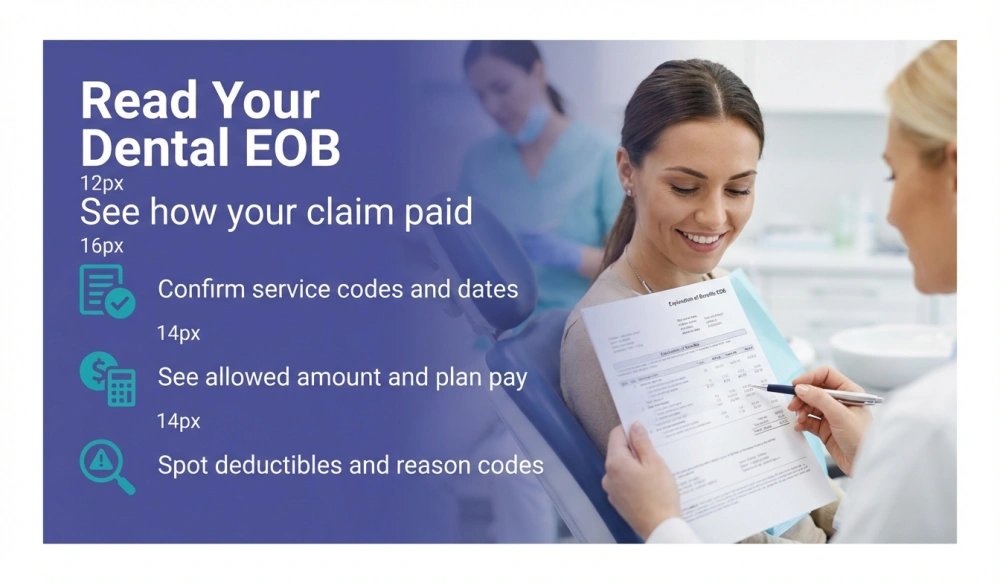
An Explanation of Benefits is a statement from your insurance company that shows how a claim was processed. It is not a bill. The EOB lists the services performed, the dentist’s fee, the plan’s allowed amount, any deductible that was applied, the percentage the plan paid, and your share of the cost. Learning to read your EOB helps you understand why a balance may remain after insurance pays [7] [8].
Which parts of the EOB should parents review closely?
Focus on the service codes and descriptions, the date of service, whether the deductible was applied, the annual maximum status, and any reason codes for reduced payment. If something looks off, contact our office with the EOB in hand. We can compare it to the claim we submitted and follow up with your plan if needed.
How can you estimate out of pocket costs before treatment?
Successful planning starts with an accurate picture of what the plan is likely to pay. We use the details on your policy to prepare a customized estimate for your child’s care.
What information helps create a reliable estimate?
Bring your plan booklet and the member ID card. Tell us if your child has had any dental care elsewhere this plan year, since previous claims may have used part of the annual maximum. With that information, we can request a written estimate from the insurer for larger treatments. Although not a guarantee, these estimates make budgeting easier [7].
How can families reduce unexpected balances?
Ask about covered alternatives. For example, if two treatment options are clinically appropriate, the plan may cover one at a higher level. We will explain the pros and cons so you can choose what fits your child’s needs and your budget. You can also schedule care across benefit years when appropriate to make better use of two annual maximums.
How do coordination of benefits and dual coverage work for children?
Some children are covered by two dental plans, such as when each parent has a plan. Coordination of benefits rules determine which plan pays first and how the secondary plan contributes. Plans typically designate a primary plan and a secondary plan based on established rules. The primary plan pays up to its coverage limits, and the secondary plan may cover some or all of the remaining balance according to its rules. We help you submit claims in the correct order for timely processing [7].
Do dual plans always result in zero balance?
Not always. Some plans have non duplication clauses or coordinate using different methods that limit payment to the higher of the two plan allowances. We explain these methods before treatment so expectations are clear. Please bring both insurance cards to your visit so we can verify benefits and file claims correctly.
What steps help you maximize dental benefits each year?
Families can take practical steps to make the most of pediatric dentistry insurance while prioritizing oral health. Our goal is to help you make smart, timely choices for your child’s care and your budget.
Which actions should you take at the start of the plan year?
- Confirm eligibility and network status Verify that your child is active on the plan and that we are in network to access negotiated rates.
- Schedule checkups early Book your two preventive visits before calendars fill, especially around school breaks.
- Review annual maximum and deductible Note what is waived for prevention and what counts toward the maximum.
- Share medical updates Let us know about medications or conditions that may affect oral health and coverage requirements.
How can midyear planning stretch your benefits?
- Complete prevention on time Keep fluoride and sealant appointments current to reduce the chance of costly treatment later [2] [4].
- Use written estimates for larger care Request preauthorization when advisable so you know the expected plan contribution [7].
- Sequence care wisely If the annual maximum is nearly reached, discuss safe, staged care with your dentist, aligning with clinical standards [3].
What should you do in the final quarter of the year?
- Use remaining benefits If covered visits or approved treatments remain, schedule before year end so benefits do not lapse.
- Set next year’s appointments Secure winter or spring preventive visits early to keep momentum.
- Update records Confirm any plan changes so January visits are smooth.
Preventive care in Laguna Niguel is the most reliable way to minimize future treatment needs and make every plan dollar work harder for your child.
How do California regulations and programs affect children’s dental coverage?
California families have access to state resources that complement private insurance. The California Department of Managed Health Care oversees many health and dental plans and offers a Help Center for consumers who need assistance resolving concerns with plan benefits and claims [11]. For eligible families, the Denti-Cal Program provides comprehensive dental services for children across the state through a network of participating providers [13].
What does this mean for families in Laguna Niguel CA?
Parents in Laguna Niguel can look to these state resources if they have questions about plan rules, appeals, or access to care. Whether you use an employer plan, marketplace coverage, or Denti-Cal, our team can help you understand benefits and connect you with the right contacts when state level support is helpful.
How do state and federal rules interact with private plans?
Private insurers design pediatric dental benefits within state and federal requirements, such as coverage standards and consumer protections. The essential health benefit designation for pediatric dental applies when dental coverage is part of marketplace offerings, though exact benefits vary by plan [9]. If you are unsure whether your child’s dental is embedded in a medical plan or a stand alone policy, bring your documents to your next visit and we will review together.
What should you do if a claim is denied or a bill looks higher than expected?
It is normal to have questions when a claim pays differently than expected. We are here to help you understand and respond effectively.
What are common reasons for denials or reduced payments?
- Eligibility issues Coverage not active on the service date or missing dependent enrollment information.
- Frequency limits Services exceeded plan limits for the time period.
- Documentation needs The plan requires X rays, photos, or notes to support medical necessity.
- Coordination of benefits The wrong plan was billed first or the secondary plan requires the primary EOB.
How can you appeal or request a review?
Start by reading the EOB and any reason codes. Call your plan or contact us to clarify the issue. We can submit additional documentation or a corrected claim when appropriate. If the issue remains unresolved and your plan is regulated by the state, you may contact the California Department of Managed Health Care Help Center for guidance on next steps [11].
Where does Kidz Modern Dentistry fit into your family’s insurance plan?
At Kidz Modern Dentistry in Laguna Niguel CA we focus on clear communication, compassionate care, and practical guidance that helps families make the most of pediatric dental insurance. Our practice provides same day emergencies, kid friendly sedation, and comprehensive care for children of all ages. Here is how we partner with you on next steps.
How do our services help you understand and use benefits?
- Benefit verification and plan education We verify eligibility, explain preventive care coverage, and outline how deductibles and annual maximums work in day to day terms for children.
- Customized treatment planning We build plans around your child’s needs and your coverage details, sequencing care when appropriate to manage out of pocket costs.
- Transparent estimates For significant procedures we obtain written estimates and discuss preauthorization so you have clarity before scheduling.
Where do we operate and whom do we serve?
We serve families across Laguna Niguel and nearby communities in Orange County. Our office is designed for children, from toddlers to teens, and our team takes time to help kids feel comfortable during visits.
What is our approach to comfort and cooperation?
- Child centered environment From the front desk to the clinical area we use age appropriate communication and calming techniques.
- Evidence based prevention We emphasize fluoride, sealants, and home care coaching that align with professional guidelines [3] [4] [12].
- Sedation when appropriate If your child needs sedation, we follow rigorous safety standards and coordinate benefits so you know what is covered [6].
Do we use any proprietary processes to streamline your experience?
- Previsit benefit checks We confirm plan details before the appointment to reduce surprises at checkout.
- Claim support Our team submits documentation with clarity to minimize back and forth with carriers.
- Emergency readiness We maintain protocols to accommodate same day pediatric dental emergencies whenever possible and help you navigate coverage during urgent situations.
What experience and leadership support our care?
- Focused pediatric expertise Our clinicians dedicate their practice to children’s oral health, following standards from leading professional organizations.
- Collaborative care We coordinate with pediatricians and specialists when helpful, especially for children with complex needs or when sedation is considered.
- Accessible communication Parents can reach us with questions about benefits, treatment timing, and EOBs. Call us at +1 949 273 0110 for support.
How have families benefited from our approach?
- Proactive prevention Families who maintain regular checkups often experience fewer urgent visits and clearer costs because prevention is typically covered.
- Clear budgeting Written estimates and thoughtful scheduling help families plan expenses across the year.
- Comfort focused care Children who are anxious or very young benefit from measured steps and when needed, sedation dentistry for kids under safety guidelines.
We believe every family deserves simple guidance on pediatric dentistry insurance and a friendly place for ongoing care. If you have questions about your child’s plan or need help scheduling, contact Kidz Modern Dentistry. We are here to help your family move forward confidently with a practical plan for care and coverage.
References
- Children’s Oral Health – Centers for Disease Control and Prevention
- Dental Sealants – Centers for Disease Control and Prevention
- Periodicity of Examination and Preventive Dental Services – American Academy of Pediatric Dentistry
- Policy on Fluoride Therapy – American Academy of Pediatric Dentistry
- Dental Radiographic Examinations Recommendations for Frequency – U.S. Food and Drug Administration
- Monitoring and Management of Pediatric Patients Before During and After Sedation – American Academy of Pediatric Dentistry
- Dental Benefits and Coding Resources – American Dental Association
- Explanation of Benefits – HealthCare.gov
- Dental Coverage in the Marketplace – HealthCare.gov
- Prevention of Dental Caries in Children from Birth through Age 5 Years – U.S. Preventive Services Task Force
- Help Center – California Department of Managed Health Care
- Use of Pit and Fissure Sealants – American Academy of Pediatric Dentistry
- Denti-Cal Program – California Department of Health Care Services
Common Questions About This Topic
Find answers to frequently asked questions related to this article.