<?xml encoding=”UTF-8″>
- What is early childhood caries and why does it matter?
- What subtle signs of early tooth decay in babies do parents often miss?
- What do white spots on baby teeth signal and how can you spot them?
- How can you tell if enamel looks chalky rather than healthy and glossy?
- Why do faint yellow or brown lines near the gumline appear on baby teeth?
- Can babies and toddlers show sensitivity to temperature or sweets?
- When does bad breath in a toddler suggest a dental problem?
- How can you tell the difference between teething and early decay?
- What causes early childhood caries in infants and toddlers?
- When should your baby see a dentist for the first time and what happens at that visit?
- What can you do at home to prevent early childhood caries?
- When is baby tooth decay an urgent situation that needs same day care?
- How is early decay in baby teeth treated in a gentle and child friendly way?
- What programs and guidance in California support infant and toddler oral health?
- How can a pediatric dentist in Laguna Niguel help you spot problems early?
- Who are we and how do we help families in Laguna Niguel?
- Where can you find the sources referenced here?
What is early childhood caries and why does it matter?
Early childhood caries, often called ECC, is tooth decay that affects infants and young children. Decay can begin soon after the first teeth erupt, and the earliest changes may be easy to overlook. Left unchecked, ECC can progress quickly because baby tooth enamel is thinner than adult enamel. That can lead to discomfort, feeding difficulties, sleep disruption, and challenges with growth and development. It can also affect speech and the way permanent teeth erupt later. Professional organizations and public health agencies recognize ECC as a common chronic condition in children, and they recommend early prevention and periodic assessments to catch issues sooner rather than later [1] [2] [3].
Parents often ask whether baby teeth are worth treating since they eventually fall out. Baby teeth matter for chewing, nutrition, speech, and guiding permanent teeth into place. Protecting them supports healthy habits and confidence. When we act early, many small problems can be managed with simple steps that are comfortable for your child [1] [2].
What subtle signs of early tooth decay in babies do parents often miss?
Many early signs do not look like cavities at first. Instead, they show up as changes to the color and texture of the enamel near the gums, small areas of roughness, and new sensitivity during feeding or brushing. Recognizing the earliest clues helps you get quick guidance from a pediatric dentist so that remineralization and prevention can begin right away [6].
- White or chalky spots on baby teeth are frequently the first visible sign of enamel demineralization and can be reversible with prompt care [6].
- Faint yellow or brown lines near the gumline may indicate progressing demineralization or early decay [1].
- New fussiness with cold water or gentle brushing may reflect sensitivity associated with enamel changes [3].
- Persistent bad breath not explained by diet or illness can sometimes signal dental plaque and early caries activity [2].
If you notice one or more of these changes, a short check with a pediatric dentist in Laguna Niguel can clarify whether what you are seeing is early decay or normal variation. The sooner you ask, the more options you have to protect those tiny teeth [1] [3].
What do white spots on baby teeth signal and how can you spot them?
White spots on baby teeth usually appear in the areas where plaque collects, often along the gumline of upper front teeth or on the chewing surfaces of molars. These are called white spot lesions and represent early enamel demineralization. They can look matte or chalky rather than glossy. Under bright light, you may notice that the enamel has lost its normal shine or looks faintly opaque in patches. Because these lesions are the first stage of caries, identifying them quickly provides a chance to stop or reverse the process with fluoride varnish, brushing changes, and diet adjustments [6] [3].
Try this simple check after brushing at night. Sit your child near a window or under a bright lamp and gently lift the upper lip. If you see opaque white patches near the gums that do not wipe off, take a photo in the same lighting each week and compare. If the area grows or changes color, schedule a visit so a professional can assess the risk and support you with a plan [6].
How can you tell if enamel looks chalky rather than healthy and glossy?
Healthy baby tooth enamel usually has a smooth, glossy surface. When acids weaken enamel, minerals leave the surface and create a porous, matte or chalky look. This texture change is an early warning sign that comes before a cavity. You might notice that the tooth looks less shiny, has fine roughness near the gumline, or appears patchy in bright light. A pediatric dentist uses lighting and magnification to grade these changes and tailor prevention to your child’s needs [6] [1].
Why do faint yellow or brown lines near the gumline appear on baby teeth?
As demineralization progresses, colored lines or small spots can develop near the gums where plaque and sugars meet. These lines may be tan or light brown and can darken over time. They suggest that the enamel has been repeatedly exposed to acids from bacterial activity on sugars or sweet liquids. Consistent brushing with a smear of fluoride toothpaste for children under three, a pea sized amount for ages three to six, and fluoride varnish at dental visits can help manage risk and strengthen weakened enamel [4] [3].
Can babies and toddlers show sensitivity to temperature or sweets?
Yes. Infants and toddlers can respond to tooth changes with subtle behaviors rather than words. Signs may include pulling away from cold water, fussiness when a toothbrush touches certain teeth, or brief irritability with sweet foods. While these reactions can have many causes, new sensitivity paired with white spots or visible plaque is a reason to schedule a quick evaluation. Early guidance can often reduce sensitivity through simple steps like technique coaching, fluoride applications, and diet tweaks [3] [4].
When does bad breath in a toddler suggest a dental problem?
Short term bad breath can follow strong foods or mouth breathing during a cold. Persistent odor, especially with visible plaque near the gums, may indicate bacterial activity that increases caries risk. Combining daily brushing with fluoride toothpaste, cleaning the gumline, and regular dental visits helps keep biofilm under control. If odor persists for more than a week despite careful brushing, ask your pediatric dentist to check for early lesions, inflamed gums, or other issues [2] [3].
How can you tell the difference between teething and early decay?
Teething and early decay can both cause irritability, but they differ in key ways. Teething usually brings sore gums, drooling, and a strong desire to chew. Early decay often produces localized changes on the teeth such as chalky white areas near the gums, visible plaque accumulation, and sensitivity during brushing in a specific spot. Teething should not cause persistent high fever or severe swelling. If you are unsure whether your child is teething or has early decay, a brief exam can provide clarity and comfort strategies [16] [6].
- More likely teething: drooling, gum rubbing, chewing on toys, mild irritability, normal appetite [16].
- More likely early decay: white spots that do not rub off, brown lines at the gumline, localized brushing sensitivity, visible plaque along the gum margin [6] [1].
What causes early childhood caries in infants and toddlers?
ECC happens when acid from bacteria in dental plaque removes minerals from enamel over time. Sugary liquids and frequent snacking provide fuel for these bacteria, and long exposures give acids time to act. Genetic and environmental factors influence risk, but daily routines make the biggest difference. Understanding how decay starts helps you take practical steps at home that fit your family’s schedule [1] [2].
What is baby bottle tooth decay and why is it so common?
Baby bottle tooth decay refers to cavities that form when a child frequently sips sweet liquids like milk, formula, juice, or sweetened drinks, especially at bedtime or through the night. During sleep, saliva flow decreases, which reduces the mouth’s buffering ability. When sugars stay against the teeth for long periods, acids have more time to weaken enamel. Placing a child to bed with a bottle or allowing frequent sipping throughout the day can raise the risk of ECC. Offering water between meals and limiting juice supports healthier enamel [8] [2].
Does enamel demineralization happen fast in baby teeth?
Baby tooth enamel is thinner than adult enamel, so early demineralization can progress quickly if the conditions favor acid production. Frequent exposures to sugars and prolonged bottle or sippy cup use set the stage for white spot lesions. The good news is that early demineralization can often be arrested or reversed with fluoride, brushing habits, and nutrition adjustments tailored to your child’s risk level [6] [3].
Can cavity causing bacteria pass from caregivers to babies?
Yes. Studies show that cavity causing bacteria like Streptococcus mutans can be transmitted through shared utensils or saliva contact. Reducing the sharing of spoons and pacifiers and maintaining caregiver oral health can limit transfer. This does not mean you must avoid normal affection. It simply highlights that healthy caregiver routines support your child’s mouth health too [7].
Do medications, dry mouth, or special needs conditions affect risk?
Some medicines contain sugar or lower saliva flow. Mouth breathing, chronic nasal congestion, and certain health conditions can also influence saliva and plaque. Pediatric dentists consider these factors when building a personalized prevention plan. If your child takes regular medication or has special health care needs, mention this at visits so the plan fits their situation [1] [3].
When should your baby see a dentist for the first time and what happens at that visit?
Professional groups recommend the first dental visit age one or within six months of the first tooth erupting. This visit focuses on prevention, family goals, and comfort. It usually includes a knee to knee exam for infants, a gentle look at the gums and teeth, a brief risk assessment, and coaching on brushing, diet, and fluoride. If stain or plaque is present, a quick cleaning may be done. Fluoride varnish can be applied to strengthen enamel and help prevent early lesions. These steps are quick and comfortable for little ones [5] [3] [4].
How do fluoride varnish and home fluoride toothpaste support weak enamel?
Fluoride varnish is a concentrated form of fluoride painted on the teeth. It adheres well and slowly releases fluoride to help rebuild enamel. The United States Preventive Services Task Force recommends fluoride varnish for all children as soon as the first teeth erupt, along with fluoride toothpaste at home in appropriate amounts. For children under three, a rice sized smear is advised. For ages three to six, a pea sized amount is appropriate. These simple steps support stronger enamel and lower cavity risk when combined with diet and brushing routines [3] [4].
Can early visits really prevent future problems for my child?
Early visits allow families to build habits before cavities form. Parents learn how to spot changes, choose snacks and drinks wisely, and brush effectively. When early signs appear, quick interventions like fluoride varnish or silver diamine fluoride may help slow or stop early lesions. Care that starts early tends to be more comfortable, more convenient, and less invasive for children [3] [12].
What can you do at home to prevent early childhood caries?
Prevention thrives on small, repeatable routines that fit your family. The aim is to limit frequent sugar exposures, keep plaque off the teeth, and strengthen enamel with fluoride. Your pediatric dentist can tailor these steps to your child’s risk and your daily schedule [1] [3] [4].
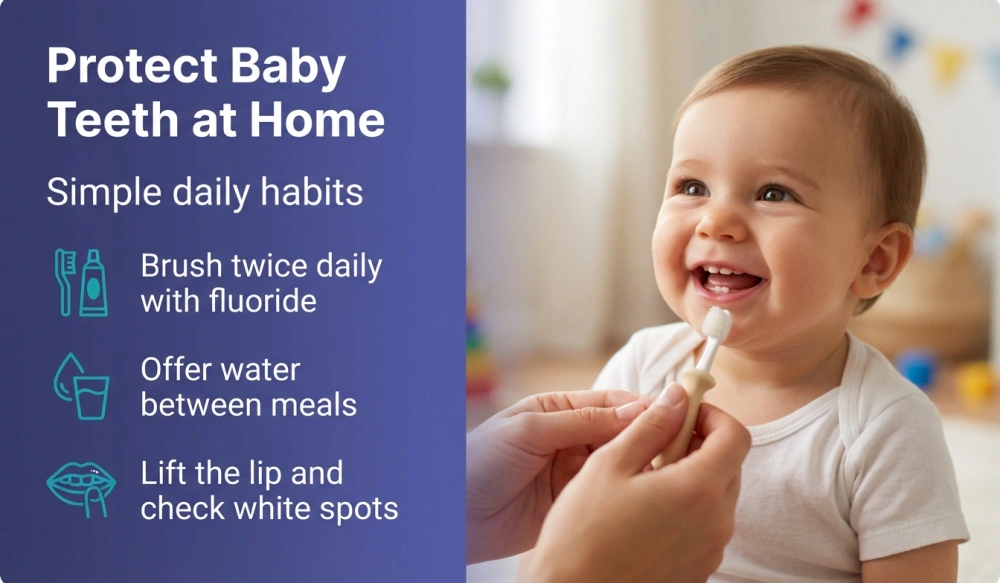
- Clean from the first tooth: brush twice daily with a soft brush. Use a rice sized smear of fluoride toothpaste for children under three and a pea sized amount for ages three to six [4].
- Lift the lip weekly: check the upper front teeth for white or chalky patches that do not wipe away. Call if you see changes [6].
- Offer water between meals: limit constant sipping on milk, formula, or juice. Avoid bottles at bedtime unless they contain only water [8].
- Transition from bottle: move toward open or straw cups as your child is ready. This reduces prolonged exposure to sugars at the front teeth [8].
- Choose tooth friendly snacks: prioritize fruits, vegetables, dairy, and proteins. Reserve sweets for mealtime and brush soon after when possible [2].
- Use fluoride varnish as advised: ask about varnish applications during checkups to protect at risk areas [3].
- Keep caregiver mouths healthy: maintain your own dental care to help reduce the transfer of cavity causing bacteria [7].
These changes reinforce one another. When you combine daily brushing, smart sipping, and periodic professional applications, you give enamel the best chance to stay strong [3] [4].
When is baby tooth decay an urgent situation that needs same day care?
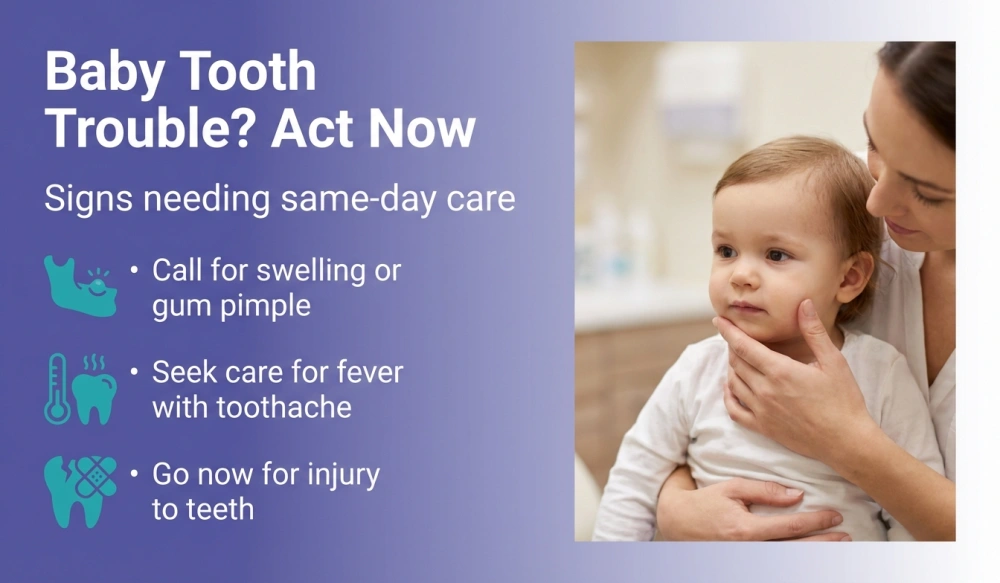
Contact a pediatric dentist right away if you see facial swelling, a pimple like bump on the gums, fever with tooth pain, difficulty swallowing, or trauma to the teeth. These signs can indicate infection that requires urgent attention. If your child is in pain or not sleeping due to tooth discomfort, prompt care helps relieve symptoms and prevent complications. Many pediatric practices reserve time for urgent visits so young children can be seen quickly when they need it most [2] [1].
How is early decay in baby teeth treated in a gentle and child friendly way?
Treatment depends on the stage of the lesion, your child’s comfort, and overall risk. The goal is always to use the least invasive option that protects the tooth and helps your child stay relaxed in the dental environment. Pediatric dental teams blend prevention, behavior guidance, and treatment so children leave feeling proud and comfortable [1] [12].
Can early lesions be reversed without drilling?
Yes, many early white spot lesions improve with regular brushing using fluoride toothpaste and professional fluoride varnish. In some cases, silver diamine fluoride can be applied to slow or arrest caries on baby teeth, especially when a child is very young or not yet ready for traditional restorative care. Your dentist will explain benefits, limitations, and appearance changes so you can decide together what fits your child’s needs and your goals [3] [12].
What happens if a cavity needs a filling or a crown?
When a cavity has progressed into the dentin, a small filling or a pediatric crown may be recommended. These options restore function and protect the tooth. For larger cavities on molars, a stainless steel or tooth colored pediatric crown may be used to cover and strengthen the tooth. If the decay reaches the nerve, gentle pulp therapy can relieve pain and keep the tooth in place until it is ready to be replaced naturally. These decisions are based on comfort, function, and long term health of the baby teeth [1].
Are dental X rays safe for children?
When X rays are indicated, pediatric dentists follow guidelines that recommend using the lowest radiation dose needed to obtain diagnostic images and only when the expected benefit outweighs the risk. Digital systems, thyroid collars, and child sized settings are used to enhance safety. Decisions to take images are individualized based on your child’s age, risk, and clinical findings [11].
What programs and guidance in California support infant and toddler oral health?
Families in Laguna Niguel, CA can access public health guidance and benefits designed to support infant and toddler mouth care. California’s Denti-Cal program includes preventive and restorative services for children, such as exams, cleanings, and fluoride treatments. The California Department of Public Health also provides educational resources for families and communities. If you have questions about eligibility or how to use benefits, your pediatric dental office can point you to the right contacts and forms [11] [13] [14].
How can you check local water fluoridation information?
Fluoridated community water supports stronger enamel and complements toothpaste and varnish. The Centers for Disease Control and Prevention provides a tool that reports fluoridation status for many communities. If you prefer bottled water, compare labels and ask your dentist how to keep your child’s fluoride exposure appropriate for their age and risk level [15] [3] [4].
How can a pediatric dentist in Laguna Niguel help you spot problems early?
A pediatric dentist Laguna Niguel can help you distinguish normal teething from early enamel changes, tailor prevention to your child’s diet and routines, and provide options that match your child’s comfort level. Regular checkups and coaching build your confidence in caring for tiny teeth. If areas of concern appear, timely care can keep visits short and comfortable [5] [3].
Infant oral health is the foundation for a healthy smile that grows with your child. During each visit, we focus on simple, practical steps that fit your day and support long term success. Small changes now add up over time and help your child feel good about brushing and visiting the dentist [5] [3].
For families nearby, Infant oral health in Laguna Niguel means timely guidance, friendly visits, and prevention focused care that respects your child’s pace and your family’s goals. If you are unsure about a white spot, a brown line, or a new sensitivity, a quick look can give you peace of mind and a clear plan [5] [6].
Who are we and how do we help families in Laguna Niguel?
At Kidz Modern Dentistry, we care for infants, toddlers, and children with a prevention first approach designed to make visits positive and comfortable. Our team serves families in Laguna Niguel, CA and nearby communities with same day appointments for urgent needs, personalized prevention plans, and child friendly options for comfort when treatment is needed. You can reach us at +1 949 273 0110 to schedule a visit or ask questions about your child’s teeth.
How do our services support parents who are watching for early signs?
We focus on education and early detection so you feel confident at home. Parents learn how to lift the lip and spot white spots, how to use fluoride toothpaste correctly, and how to adjust feeding routines to protect enamel. That way, you can act early and keep small problems small. If a concern appears, we explain options and next steps clearly so you can choose what fits your child.
What is our approach to comfort, safety, and gentle care?
We match care to your child’s age and comfort. For infants and toddlers, visits are brief and reassuring. We use behavior guidance and a calm environment to help children feel safe. When imaging is needed, we follow pediatric guidelines to keep doses low and only take images when they will meaningfully guide care. When treatment is recommended, we discuss the simplest approach first, including noninvasive options when appropriate.
How do we personalize prevention and care plans?
Every child has a unique risk profile. We consider feeding patterns, medical history, caregiver oral health, and daily routines to build a plan that works for your family. We recommend fluoride varnish schedules based on risk and coach you on brushing techniques that fit your child’s stage. If a lesion is early, we discuss remineralization options. If a restoration is needed, we explain materials, expected steps, and comfort options so you know what to expect.
Where do we operate and what experience do we bring to your family?
We are based in Laguna Niguel, CA and care for families across South Orange County. Our team brings years of combined experience in pediatric dentistry, ongoing training, and a focus on family communication. We welcome children of all ages and support those with special health care needs through adaptive strategies and thoughtful planning.
How do families benefit from our communication and follow up?
We stay connected between visits. Families receive practical tips and reminders that keep routines on track. If your child has treatment, we check in and adjust the plan as needed. Your questions are always welcome, and we provide direct access to qualified professionals for clear answers.
What outcomes have we seen and how do we measure success?
Parents tell us their children feel proud of brushing, sleep better without bottle use, and handle visits with confidence. We track progress by monitoring plaque, white spot changes, and brushing habits together. By focusing on early detection and simple, repeatable habits, many families find that appointments stay quick and comfortable over time.
How can you take the next step today?
If you have noticed white spots on baby teeth, questions about teething vs decay, or need guidance on toddler cavity symptoms, we are here to help. Call +1 949 273 0110 to schedule an infant checkup or to ask whether a quick visit would be helpful. We welcome new families and look forward to supporting your child’s smile with care that is warm, clear, and prevention focused.
Where can you find the sources referenced here?
- Policy on Early Childhood Caries Classification, Consequences, and Preventive Strategies – American Academy of Pediatric Dentistry
- Children’s Oral Health Fast Facts – Centers for Disease Control and Prevention
- Prevention of Dental Caries in Children Younger Than 5 Years Screening and Interventions – United States Preventive Services Task Force
- Fluoride Toothpaste Use for Young Children – American Dental Association
- Policy on the Dental Home – American Academy of Pediatric Dentistry
- ICDAS An International System for Caries Detection and Assessment to Improve Quality of Information and Aid Decision Making – National Institutes of Health PMC
- Acquisition and Transmission of Mutans Streptococci with Implications for the Caries Immunity Hypothesis – National Institutes of Health PMC
- Baby Bottle Tooth Decay – American Dental Association MouthHealthy
- Policy on Fluoride Therapy – American Academy of Pediatric Dentistry
- Guideline on Prescribing Dental Radiographs for Infants Children Adolescents and Individuals with Special Health Care Needs – American Academy of Pediatric Dentistry
- Denti-Cal Program Information – California Department of Health Care Services
- Policy on the Use of Silver Diamine Fluoride for Caries Arrest – American Academy of Pediatric Dentistry
- California Oral Health Program – California Department of Public Health
- Fluoride Varnish in Medical Settings – California Department of Health Care Services
- Community Water Fluoridation Information – Centers for Disease Control and Prevention
- Teething Symptoms and Care – American Academy of Pediatrics HealthyChildren
Common Questions About This Topic
Find answers to frequently asked questions related to this article.