
- What does general anesthesia mean in pediatric dentistry?
- When is general anesthesia considered for children’s dental procedures?
- How safe is general anesthesia for children during dental care?
- What do AAPD guidelines and professional standards recommend?
- How are children evaluated before anesthesia and what is the ASA classification?
- What anesthesia monitoring standards apply during dental general anesthesia?
- What happens during recovery and how do we manage aftercare?
- Are there risks such as breathing problems or nausea that parents should know about?
- What do California regulations require for dental general anesthesia?
- How can families in Laguna Niguel prepare for a safe anesthesia visit?
- What questions should you ask your pediatric dentist and anesthesia team?
- How do hospital and office settings compare for pediatric dental anesthesia?
- What should you expect with costs, insurance, and scheduling?
- Where can you find evidence based resources to learn more?
- Who are we and how do we support safe pediatric dental anesthesia in Laguna Niguel?
- References
What does general anesthesia mean in pediatric dentistry?
General anesthesia is a controlled state where your child is fully asleep and does not feel pain during dental treatment. Unlike minimal or moderate sedation where a child may be drowsy but responsive, general anesthesia renders a child unresponsive and requires dedicated monitoring of breathing and vital signs by trained professionals. This approach can make complex or lengthy procedures safer and more comfortable for certain children when behavioral or lighter sedation methods are not sufficient [1] [2] [12].
Parents often ask how general anesthesia differs from other options they may have heard about in dental care. Sedation techniques range from nitrous oxide to oral or intravenous medications that relax and reduce anxiety. By comparison, general anesthesia is deeper and requires advanced skills and equipment, including continuous monitoring and airway support by clinicians with specific training in pediatric anesthesia or deep sedation care [1] [4].
In dental settings, general anesthesia may be provided by a board certified anesthesiologist, a dentist anesthesiologist, or a dentist with a qualifying general anesthesia permit, depending on state regulations and practice policies. The clinical team works together so that the dentist focuses on the dental procedure while the anesthesia provider focuses on your child’s comfort and physiologic stability throughout the visit [2] [9].
When is general anesthesia considered for children’s dental procedures?
General anesthesia is considered based on your child’s health, age, treatment needs, and ability to cooperate safely in the dental chair. Your pediatric dentist will discuss options and consider a stepwise approach that includes behavior guidance, nonpharmacologic strategies, and lighter forms of sedation before recommending general anesthesia when appropriate [10] [1].
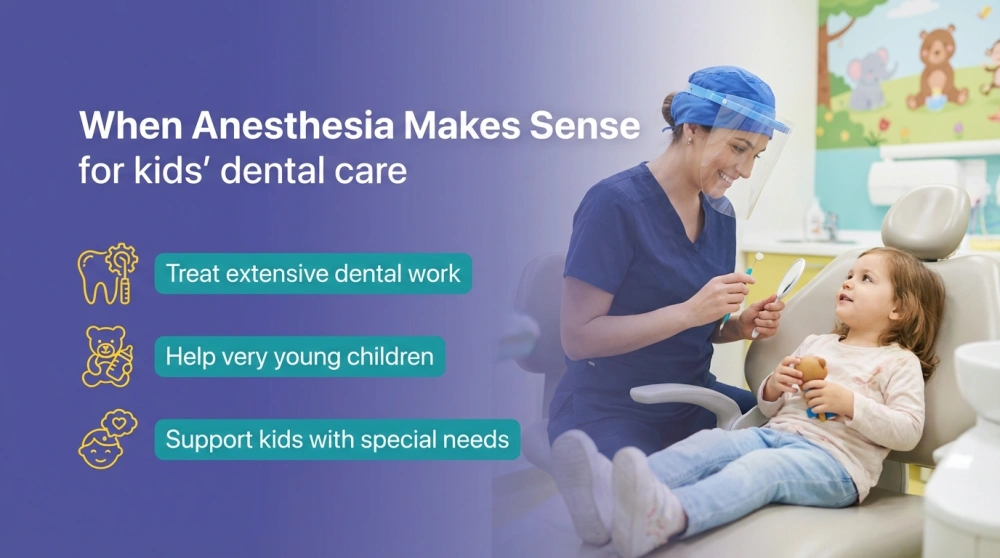
- Extensive dental treatment The need for multiple restorations, extractions, or procedures that would be difficult to complete over several shorter visits can make a single asleep visit safer and less stressful for a child [2].
- Very young age Toddlers and preschoolers often cannot understand or follow complex instructions for long periods, which can increase stress and movement during care [10].
- Special health care needs Children with developmental, sensory, or medical conditions may benefit from general anesthesia if office based treatment would be unsafe or traumatic [2] [10].
- Significant dental anxiety or previous difficulties Prior attempts with behaviour guidance or minimal sedation that did not allow needed treatment may lead the team to recommend a deeper level to complete care safely [1].
- Trauma or urgent surgical needs Dental injuries or infections sometimes require quick and comprehensive care that is best performed while a child is asleep [1].
- Airway or safety concerns Some procedures or anatomy require controlled airway management to reduce risk of aspiration or breathing complications during treatment [4].
When your dentist recommends general anesthesia, you will receive a clear explanation of the rationale, risks, benefits, and alternatives so you can make an informed decision together with the clinical team [1].
How safe is general anesthesia for children during dental care?
For healthy children in well equipped facilities with trained anesthesia professionals, serious complications from general anesthesia are uncommon according to large pediatric studies and professional standards. Continuous monitoring of breathing, heart rate, blood pressure, and oxygen levels, along with adherence to evidence based protocols, contribute to a strong safety record [4] [1].
Parents often wonder about effects on brain development. Multiple large studies have examined neurodevelopment after a single, brief exposure to general anesthesia in early childhood. The PANDA sibling cohort study in JAMA found no significant differences in IQ scores among children with a single exposure before age three compared with unexposed siblings [6]. The MASK study reported no significant differences in general intelligence after single exposures, with some domain specific findings mainly associated with multiple exposures [7]. The GAS randomized trial showed no difference in neurodevelopmental outcomes at five years between infants who had a brief general anesthetic and those who received regional anesthesia [8]. These data are reassuring for single, brief exposures, although clinicians still work to minimize duration and number of anesthetics when possible.
General safety is also supported by the structure of monitoring and training set by organizations such as the American Society of Anesthesiologists and the American Academy of Pediatric Dentistry, which require continuous physiologic monitoring, readiness for airway management, and team based emergency preparedness [4] [1]. In practice, most children experience minor effects like sleepiness or nausea that resolve the same day, and the care team discusses these expectations with you in advance [11].
If your child has medical conditions such as asthma, obstructive sleep apnea, heart conditions, or recent respiratory infections, the anesthesia team may recommend postponement, additional testing, or a hospital setting, balancing timing of dental care with the safest environment for anesthesia [3] [4].
What do AAPD guidelines and professional standards recommend?
Guidelines from the American Academy of Pediatric Dentistry and allied organizations outline who should be present, what equipment is required, and how to manage children before, during, and after sedation or anesthesia. These documents emphasize comprehensive assessment, informed consent, continuous monitoring, rescue capability, and quality improvement [1] [2].
- Team training Providers must maintain current training in pediatric advanced life support or equivalent rescue skills appropriate for the depth of sedation or anesthesia being delivered [1].
- Equipment readiness Immediate availability of oxygen delivery, suction, airway devices, emergency medications, and age appropriate equipment is required [1] [4].
- Monitoring standards Continuous pulse oximetry, ventilation assessment including capnography for deeper levels, heart rate, blood pressure at appropriate intervals, and temperature monitoring are described in detail [1] [4].
- Fasting and medication guidance Practices follow preoperative fasting recommendations to reduce aspiration risk and manage routine home medications in coordination with your child’s pediatrician when needed [5] [1].
- Informed consent and documentation The team documents the preoperative evaluation, discussion of risks and benefits, anesthetic plan, intraoperative records, and recovery details [1].
- Facility preparedness The clinical environment must be conducive to safe anesthesia with adequate space, lighting, suction, oxygen, and recovery areas, and a plan for timely activation of emergency medical services if indicated [2].
These standards help align pediatric dental anesthesia with practices used in hospitals and surgery centers while recognizing the unique needs of children receiving oral health care [1] [2].
How are children evaluated before anesthesia and what is the ASA classification?
A thorough preoperative evaluation is an essential safety step. The team reviews your child’s medical history, medications, allergies, prior anesthesia experiences, and family history while performing a focused examination. This helps categorize risk and tailor the plan to your child’s needs [1] [3].
- ASA physical status The American Society of Anesthesiologists physical status classification helps estimate anesthesia risk. Most healthy children are ASA I or ASA II, while children with significant systemic disease may be ASA III or higher, which can influence the setting or timing of care [3].
- Airway assessment Evaluation of tonsils, jaw movement, neck mobility, and history of snoring or apnea helps anticipate intubation or airway support needs during dental treatment [4].
- Fasting plan Fasting guidelines help reduce aspiration risk and typically allow clear liquids up to a certain time before anesthesia and require longer intervals for solids. Your team will give child specific instructions that align with current standards [5].
- Illness screening Recent upper respiratory infections or fevers may increase airway reactivity, and the team may recommend rescheduling to reduce risk [1].
- Behavior and coping Understanding your child’s learning style, sensory preferences, and coping strategies allows the team to personalize the experience from check in to recovery [10].
The preoperative visit is a great time to share questions and preferences, such as comfort items, how your child handles medical visits, and any prior anesthetic notes from hospitals or specialists. Open communication helps the team plan a smooth and safe day for your family.
What anesthesia monitoring standards apply during dental general anesthesia?
During general anesthesia, continuous monitoring is the safety net that tracks how your child is doing from moment to moment. The anesthesia provider records vital signs at frequent intervals and responds proactively to any changes [4] [1].
- Oxygenation Continuous pulse oximetry tracks oxygen levels and pulse, with alarms that alert the team to changes quickly [4].
- Ventilation Capnography measures exhaled carbon dioxide and confirms effective breathing or ventilation through a breathing tube or mask. Observation of chest movement and breath sounds adds another layer of safety [4] [1].
- Circulation Blood pressure and heart rate are measured at appropriate intervals and displayed on monitors the team reviews continuously [4].
- Temperature Children can lose heat during procedures, so temperature monitoring and warming strategies help maintain comfort and stability [4].
- Depth of anesthesia The provider continuously assesses clinical signs of anesthetic depth and adjusts medications for a balanced plan that supports comfort and safety [4].
- Emergency readiness Rescue equipment such as oxygen sources, suction, airway devices, and emergency medications remain immediately available throughout the procedure [1].
These practices reflect national standards for safe anesthesia care and are part of the routine checklist in offices and hospitals alike [4].
What happens during recovery and how do we manage aftercare?
After treatment is complete, your child transitions to recovery where trained staff monitor airway, breathing, circulation, pain, nausea, and readiness for discharge. The team uses standardized criteria to decide when a child is safe to go home and provides specific instructions for eating, activity, and medications [11] [1].
- Observation Staff watch your child until protective reflexes return, oxygen levels are stable on room air, and age appropriate responsiveness is reached [11].
- Comfort care The team addresses pain and nausea with medications and nonmedication strategies such as hydration, cool compresses, and quiet rest [11].
- Discharge criteria Standardized scores and clinical judgment guide safe discharge, and a responsible adult must accompany your child home and supervise for the rest of the day [11] [1].
- Home instructions You receive clear guidance on diet progression, oral care around treated teeth, and what to watch for, including when to call the office or seek urgent care [1].
Most children nap after anesthesia and resume quiet activities the same day. Minor throat soreness, hoarseness, or nausea may occur but typically resolve within 24 hours. Your team will schedule follow up and remain available for questions.
Are there risks such as breathing problems or nausea that parents should know about?
All anesthesia carries some risk, and your care team works to reduce that risk by careful screening, monitoring, and planning. Common temporary effects can include sleepiness, nausea, vomiting, sore throat, or agitation as anesthesia wears off. Rare but serious events may involve breathing difficulties, allergic reactions, or heart related issues, which is why trained professionals and appropriate equipment are always present [1] [4].
- Airway events Children have unique airway anatomy and physiology. The team anticipates and manages airway tone, secretions, and position to maintain ventilation and oxygenation safely [4].
- Nausea and vomiting Preventive medications and hydration strategies help reduce these effects, which are usually short lived [11].
- Behavioral changes Temporary irritability or sleep disturbances can occur after anesthesia. Most resolve within a day or two [11].
- Neurodevelopment concerns Large studies have not found differences in general intelligence after a single, brief exposure in early childhood, though teams aim to keep exposure time as short as is practical and combine treatments when reasonable [6] [7] [8].
Before the procedure, your clinician will explain your child’s personalized risk profile and the steps planned to mitigate potential issues, including reasons to postpone if your child is ill.
What do California regulations require for dental general anesthesia?
California has specific requirements for dentists and facilities that provide deep sedation and general anesthesia. Dentists must hold the appropriate anesthesia permit issued by the Dental Board of California and meet education, training, staffing, and equipment standards designed to protect patients. The Board also outlines facility and record keeping requirements and defines the scope of each permit category [9].
- Permits and training Dentists who provide or direct general anesthesia must hold an active general anesthesia permit and demonstrate ongoing competency through approved training and continuing education [9].
- Qualified personnel Support personnel must be trained to assist with anesthesia and emergencies, and appropriate life support certifications are required [9].
- Equipment and drugs Required equipment includes oxygen delivery systems, suction, monitoring devices, airway tools, and emergency medications maintained to current standards [9].
- Documentation The Board specifies preoperative evaluation, informed consent, anesthesia records, and recovery documentation elements to support safety and accountability [9].
These state level requirements align with national guidelines from professional organizations and help families in Laguna Niguel, CA understand what to expect when anesthesia is recommended for dental care [1] [4].
How can families in Laguna Niguel prepare for a safe anesthesia visit?
Preparation at home and clear communication with your care team contribute to a smooth experience for your child. Your pediatric dentist and anesthesia provider will give you written instructions that reflect current fasting, medication, and arrival time recommendations [5] [1].
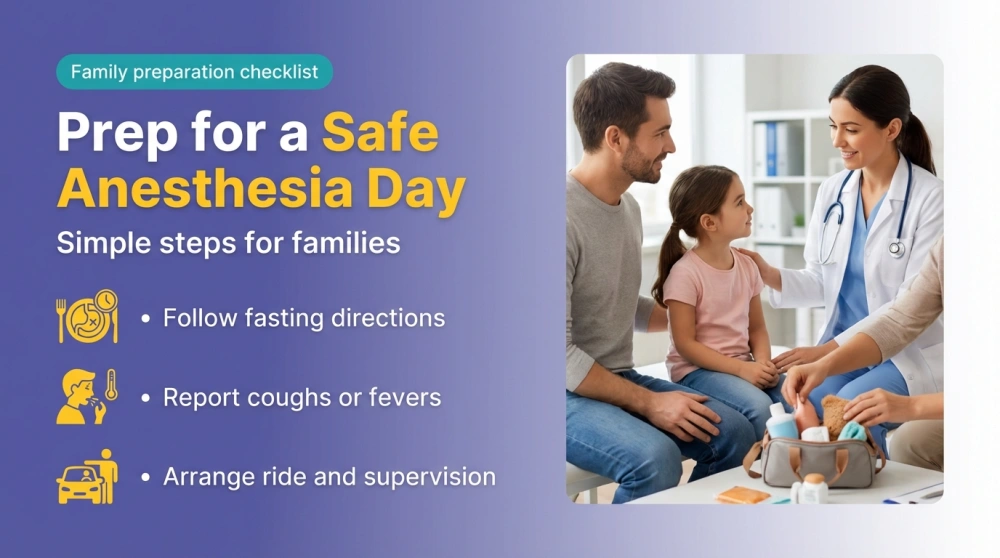
- Follow fasting instructions Your child will need to stop eating and drinking according to age specific guidance. When in doubt, call the office rather than guess [5].
- Share medical updates Tell your team about new symptoms like cough, fever, or runny nose. Respiratory illness may increase risk and lead to rescheduling [1].
- Plan comfort Bring a favorite blanket or toy and dress your child in comfortable clothing that allows easy access for monitors [10].
- Arrange supervision A responsible adult must accompany your child home and stay with them through the day to help with hydration, rest, and medication schedules [11].
- Review aftercare Go over the home care plan before the visit so you are ready with clear liquids, soft foods, and any prescribed medications when you return home [11].
In addition to general anesthesia, many families explore options within Pediatric sedation dentistry to match a child’s needs with the lightest effective approach. Your dentist will help you compare options and decide together what is most appropriate for your child’s care plan.
What questions should you ask your pediatric dentist and anesthesia team?
Asking informed questions builds confidence and helps you partner with your care team. Consider bringing a written list to your consultation so nothing is missed.
- Who will provide anesthesia Ask about the credentials of the anesthesia provider and the permits held by the dentist and facility [9].
- What monitoring is used Confirm the use of pulse oximetry, capnography, blood pressure, ECG as indicated, and temperature monitoring during the procedure [4] [1].
- How is my child assessed Discuss the preoperative evaluation, ASA classification, and fasting plan that applies to your child [3] [5].
- What should we expect in recovery Review typical recovery time, discharge criteria, and how to reach the office after hours if questions arise [11].
- What are the alternatives Explore options including staged care, behavior guidance strategies, or lighter sedation when appropriate [10] [1].
How do hospital and office settings compare for pediatric dental anesthesia?
Both settings can be appropriate depending on your child’s health and treatment needs. Office based care can be efficient and child centered for healthy children having dental procedures of limited duration. Hospital or surgery center settings may be preferred for children with higher medical risk, potential airway challenges, or when the procedure requires specialized resources [2] [4].
- Office based advantages Familiar environment, streamlined scheduling, and the ability to complete comprehensive care in one visit for healthy children.
- Hospital based advantages Access to full operating room resources and immediate specialty support if your child has complex medical needs.
- Decision making Your dentist and anesthesia provider will consider ASA status, airway factors, procedure length, and your child’s history to recommend the safest setting [3] [2].
What should you expect with costs, insurance, and scheduling?
Costs for pediatric dental anesthesia vary by setting, provider, and length of the procedure. Insurance plans sometimes cover anesthesia for children when medically necessary, such as cases with extensive dental needs, very young age, or special health care needs. Your care team can provide estimates and help you review coverage, authorizations, and payment options in advance so you can plan with fewer surprises.
- Preauthorization Contact your plan about documentation needed for coverage and whether a hospital or office setting affects benefits.
- Itemized estimates Ask for separate estimates for dental treatment fees, anesthesia professional fees, and facility fees if applicable.
- Scheduling Allow time for medical clearance if your child’s pediatrician or specialist input is needed, and follow fasting and arrival instructions carefully to avoid delays [5].
Your team will help you navigate logistics while keeping safety and your child’s comfort at the center of the plan.
Where can you find evidence based resources to learn more?
Parents deserve clear, trustworthy information. The following organizations publish widely used standards and research summaries to help you understand pediatric dental anesthesia. You can explore their resources and bring questions to your consultation.
- American Academy of Pediatric Dentistry Policies and guidelines on behavior guidance and sedation provide a dental specific perspective [1] [2] [10].
- American Society of Anesthesiologists Standards for monitoring, preoperative fasting, and postanesthesia care outline professional expectations across settings [3] [4] [5] [11].
- Peer reviewed studies Large studies such as PANDA, MASK, and GAS offer data on neurodevelopment after childhood anesthesia exposures [6] [7] [8].
- Dental Board of California State requirements for anesthesia permits and facility standards help you understand how practices are regulated locally [9].
- MedlinePlus Plain language overviews from a trusted federal resource can help you review anesthesia basics at your own pace [12].
Who are we and how do we support safe pediatric dental anesthesia in Laguna Niguel?
At Kidz Modern Dentistry, we care for children and families in Laguna Niguel, CA with a focus on comfort, clarity, and safe care planning from the first hello to the final follow up. Our team coordinates closely with board certified anesthesia professionals when general anesthesia is indicated, and we take the time to help you understand each step and what to expect on the day of treatment.
Our practice provides comprehensive pediatric dental care that includes staged treatment planning, behavior guidance, and a full range of options to personalize your child’s experience. As part of that spectrum, Pediatric sedation dentistry is available when lighter approaches are appropriate. For children who benefit from a single, efficient visit under general anesthesia, we collaborate with anesthesia providers who follow current national standards and California permit requirements for pediatric dental anesthesia care.
- Where we operate We serve families across Laguna Niguel, CA and nearby communities, coordinating care in office or hospital based settings as appropriate for each child.
- Our approach We begin with a detailed preoperative evaluation that includes medical history review, airway and behavior assessment, and an ASA risk discussion. We coordinate with your child’s pediatrician or specialists when needed to align everyone on the plan.
- Team and training Our pediatric dental team maintains current life support training and rehearses emergency drills with anesthesia partners so that preparation is second nature during every case.
- Technology and process We use age appropriate monitoring, thorough checklists, and structured recovery protocols that reflect national standards for safe care from induction through discharge.
- Communication We provide plain language explanations, written fasting and aftercare instructions, and direct access to our team so you can reach a knowledgeable person quickly when questions arise at home.
- Results and follow up Families often share that having comprehensive treatment completed in one visit reduces stress for their child and helps them return to school and activities sooner. We plan follow up to review healing and to support excellent daily habits that keep smiles healthy.
For families comparing options in Orange County, we can also help you decide whether office care or a hospital partner is the right setting for your child’s medical profile and treatment needs. Our goal is to be your trusted guide, offering reliable information and clear next steps in an environment designed for kids.
If you would like to talk through your child’s needs or schedule a consultation, call us at +1 949 273 0110. We are here to support you with information and a plan that puts safety and your child’s comfort first. For families searching for local resources, Pediatric sedation dentistry in Laguna Niguel can be discussed alongside general anesthesia to find the most appropriate path for your child’s care.
References
- Monitoring and Management of Pediatric Patients Before During and After Sedation for Diagnostic and Therapeutic Procedures – American Academy of Pediatric Dentistry
- Use of Anesthesia Personnel in the Administration of Office Based Deep Sedation General Anesthesia to the Pediatric Dental Patient – American Academy of Pediatric Dentistry
- ASA Physical Status Classification System – American Society of Anesthesiologists
- Standards for Basic Anesthetic Monitoring – American Society of Anesthesiologists
- Practice Guidelines for Preoperative Fasting – American Society of Anesthesiologists
- Association Between a Single General Anesthesia Exposure Before Age 36 Months and Neurocognitive Outcomes in Later Childhood – JAMA
- Neuropsychological and Behavioral Outcomes after Exposure of Young Children to Procedures Requiring General Anesthesia – Anesthesiology
- Neurodevelopmental Outcome at 5 Years of Age after General Anaesthesia or Awake Regional Anaesthesia in Infancy – The Lancet
- Anesthesia and Sedation Permits – Dental Board of California
- Behavior Guidance for the Pediatric Dental Patient – American Academy of Pediatric Dentistry
- Guidelines for Postanesthesia Care – American Society of Anesthesiologists
- Anesthesia Overview – MedlinePlus
Common Questions About This Topic
Find answers to frequently asked questions related to this article.
