- What are supernumerary teeth in children and why do they form?
- How common are extra teeth in kids and which types appear most often?
- What signs might suggest your child has an extra tooth?
- When should you get children’s dental X rays for suspected extra teeth?
- How can extra teeth affect eruption and orthodontic development?
- When do pediatric dentists recommend monitoring versus removal?
- What is a mesiodens and when is mesiodens removal considered?
- What does the evaluation process include before deciding on removal?
- Which imaging tools help locate impacted extra teeth safely?
- What are the treatment options and how is removal performed?
- What sedation options are kid friendly and how are they monitored safely?
- How is pain managed and what should recovery look like after extraction?
- Could leaving an extra tooth cause long term problems?
- What is the role of early orthodontic evaluation with supernumerary teeth?
- How do California and national guidelines shape safe care for kids?
- How can parents prepare their child for the visit and support healing at home?
- What questions should you ask a pediatric dentist in Laguna Hills, CA?
- When is it an emergency to contact a pediatric dentist?
- How can insurance and costs be approached for treatment?
- Who is Kidz Modern Dentistry and how do we support families in Laguna Hills, CA?
- Where can you find the references for this article?
What are supernumerary teeth in children and why do they form?
Supernumerary teeth in children are extra teeth that develop in addition to the typical number of primary or permanent teeth. You might hear your pediatric dentist use terms like mesiodens for an extra tooth that appears between the top front permanent teeth. These teeth can erupt in the mouth or remain impacted under the gums. Supernumerary teeth can vary widely in shape and size, from teeth that look almost normal to small cone shaped structures or even multiple roots. The exact cause is not fully understood, but most research points to factors in early tooth development and genetics. Some children have a family history of extra teeth, and supernumerary teeth can be associated with certain syndromes, although many children with an extra tooth have no related medical condition at all [1][2].
How common are extra teeth in kids and which types appear most often?
Extra teeth in kids are uncommon, but pediatric dentists see them regularly enough to have clear guidelines on evaluation and care. Studies have reported that supernumerary teeth occur in a small percentage of children, with mesiodens being the most frequently observed type in the front of the upper jaw. A widely cited review found that many supernumerary teeth in children are discovered during routine exams or when a permanent tooth is delayed in erupting [2][1]. While prevalence varies across populations, the key takeaway for parents is that these findings are known to pediatric dentists and orthodontists, and evidence based pathways exist for safe diagnosis and treatment.
What signs might suggest your child has an extra tooth?
It is not always easy to spot an extra tooth. Still, a few patterns often prompt a closer look.
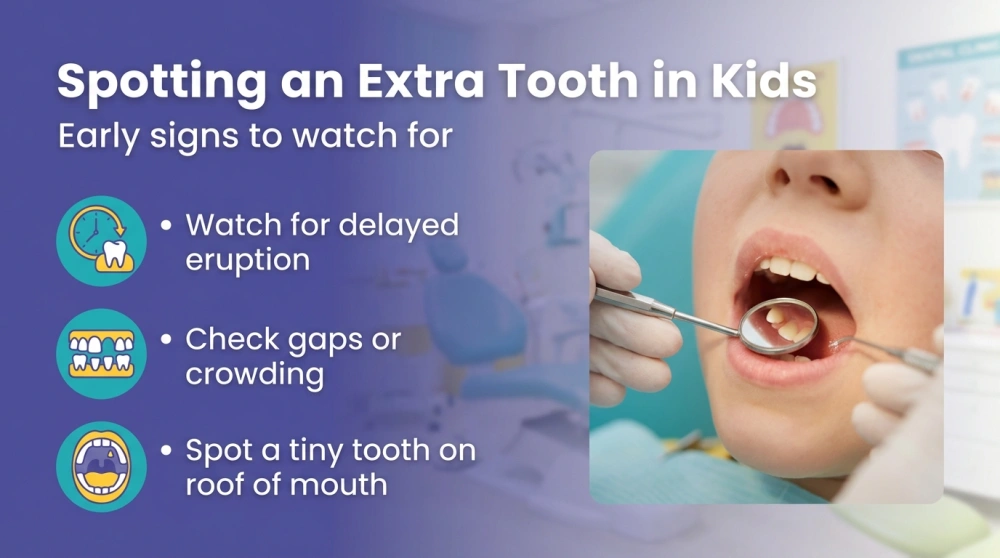
- Delayed tooth eruption A permanent tooth is not coming in on schedule, especially the top front teeth, while the same tooth on the other side has erupted [1][12].
- Unusual spacing or crowding You notice a gap between the top front teeth or dental crowding in children that seems out of proportion to jaw size [1].
- A small tooth visible in the palate A tiny or cone shaped tooth sometimes erupts behind the front teeth [2].
- Shifts in bite or tooth position Nearby teeth are drifting, rotating, or not aligning as expected [1].
- Pain or swelling Although many extra teeth are painless, impaction can occasionally irritate the gums or surrounding teeth [2].
If you notice one or more of these signs of extra teeth, a timely visit to a pediatric dentist in Laguna Hills, CA can help you understand what is happening and map out next steps.
When should you get children’s dental X rays for suspected extra teeth?
Dental X rays help confirm whether an extra tooth is present, where it sits, and how it relates to nearby developing teeth. Pediatric guidelines recommend selecting X rays based on your child’s age, dental development, and specific concerns rather than using a one size fits all schedule. When delayed eruption, asymmetry, or unexplained spacing is present, your dentist may recommend targeted images to locate a suspected supernumerary tooth [3][4].
Modern pediatric imaging strives to keep radiation as low as reasonably achievable, often referred to as the ALARA principle. Techniques include using digital sensors, thyroid collars, and child sized exposure settings, and choosing limited field images when possible. Campaigns like Image Gently support child specific protocols that maintain diagnostic quality while minimizing exposure [3][5]. In California, dental X ray operators and facilities must also follow state rules for equipment registration and safety, adding another layer of protection for your child [9].
In many cases, a simple set of upper front periapical X rays or a panoramic image can reveal a mesiodens or other supernumerary position. Your pediatric dentist will discuss why a certain view is recommended and how it will help guide care [3].
How can extra teeth affect eruption and orthodontic development?
Supernumerary teeth can interfere with the normal path of eruption for permanent teeth. They may block a permanent tooth, cause it to rotate, or contribute to gaps between front teeth. Sometimes they push neighboring teeth out of alignment or create a crossbite risk. These disruptions can influence the timing and type of orthodontic care a child may later need. For example, removing an obstructive mesiodens at the right time can allow a delayed front tooth to erupt on its own, which may reduce the need for complex treatment later [1][2].
Not every extra tooth causes a problem. Some remain small and do not alter eruption. That is why careful evaluation and follow up are key, especially for early orthodontic evaluation around age seven, a window endorsed by orthodontic organizations to spot growth and eruption issues sooner rather than later [6].
When do pediatric dentists recommend monitoring versus removal?
Decisions about when to remove extra teeth in kids are individualized. Pediatric dentists consider your child’s age, the position and shape of the extra tooth, whether it is blocking normal eruption, and whether nearby roots could be harmed by either leaving it in place or removing it. In general, removal is more likely when the extra tooth is clearly obstructing eruption, causing crowding or bite changes, or linked with pathology. If the extra tooth is not interfering, your dentist may monitor it with periodic exams and selective imaging to support safe growth and development [1][2].
- Monitor with scheduled reviews Chosen when the extra tooth is small, not impeding eruption, and not causing symptoms [1].
- Time removal to protect growth Planned when the permanent tooth’s root has developed enough and removal is likely to help eruption without harming nearby teeth [1].
- Coordinate with orthodontics Considered when space creation or guidance of eruption is part of the plan [1][6].
What is a mesiodens and when is mesiodens removal considered?
A mesiodens is an extra tooth that develops in the area between the two top permanent front teeth. It is the most common type of supernumerary tooth in children. A mesiodens can be inverted, cone shaped, or resemble a normal tooth. Dentists consider mesiodens removal when it delays eruption of the front teeth, causes spacing or rotation, or contributes to other bite problems. Early diagnosis with children’s dental X rays helps determine whether observation or timely removal will support normal eruption pathways. Professional guidelines provide algorithms for assessing eruption status and timing surgical intervention to protect developing roots and promote natural eruption [1][2].
What does the evaluation process include before deciding on removal?
Your child’s evaluation typically begins with a thorough dental and medical history, a review of eruption timelines, and a clinical exam. The dentist will compare sides to see if a matching tooth has erupted and gently assess for tenderness, swelling, or a visible extra tooth in the palate. Next, imaging is selected to confirm the number, location, and orientation of any extra teeth as well as their relationship to neighboring permanent teeth. This evaluation supports a shared decision process about whether to monitor or remove the extra tooth and how to coordinate any related orthodontic steps [1][3].
- History and eruption review Confirm eruption milestones and look for patterns of delayed tooth eruption [12].
- Targeted imaging Use the smallest field views that answer the question safely and effectively [3][5].
- Risk benefit discussion Clarify potential benefits of early removal versus watchful monitoring and schedule check ins as needed [1].
Which imaging tools help locate impacted extra teeth safely?
Pediatric dentists often begin with limited periapical images or an upper occlusal view to identify a mesiodens. A panoramic X ray can help when multiple teeth might be involved or when canine and incisor development needs review. In a subset of cases, three dimensional imaging can be useful to determine the exact position of an impacted extra tooth relative to adjacent roots and tooth buds. The use of cone beam computed tomography is reserved for situations where the additional three dimensional information is expected to change the treatment plan and where lower dose options would not be sufficient. Professional standards emphasize careful case selection and dose reduction strategies for children [3][10].
What are the treatment options and how is removal performed?
Treatment options range from careful monitoring to minor oral surgery. When removal is the best choice for your child, the procedure is planned to protect developing teeth and support natural eruption patterns. Many cases can be managed with Pediatric tooth extractions after careful clinical and radiographic planning. Your dental team will use local anesthesia to numb the area and may discuss behavior guidance or sedation options to keep your child comfortable and still during the procedure [1][7].
- Conservative exposure and removal A small opening is made to access the extra tooth followed by gentle removal and closure as needed [1].
- Guided eruption After removal, many front teeth erupt naturally within months; orthodontic traction is sometimes planned if a tooth remains impacted [1][6].
- Follow up checks Scheduled visits confirm healing and track eruption progress with limited, child appropriate imaging if indicated [3].
Your pediatric dentist will also discuss how the extra tooth’s shape and position influence the procedure. Conical mesiodens are often simpler to remove than teeth with complex roots. Thoughtful timing aims to minimize risk to adjacent permanent teeth while maximizing the chance of natural eruption afterward [1].
What sedation options are kid friendly and how are they monitored safely?
For many children, local anesthesia and age appropriate behavior guidance are enough. For others, kid friendly sedation options can help reduce anxiety and movement so the dentist can work precisely and safely. Options are chosen based on your child’s health, the expected length and complexity of care, and family preferences. Pediatric sedation is guided by national monitoring standards that emphasize pre procedure evaluation, trained clinical teams, and continuous observation during and after care [7].
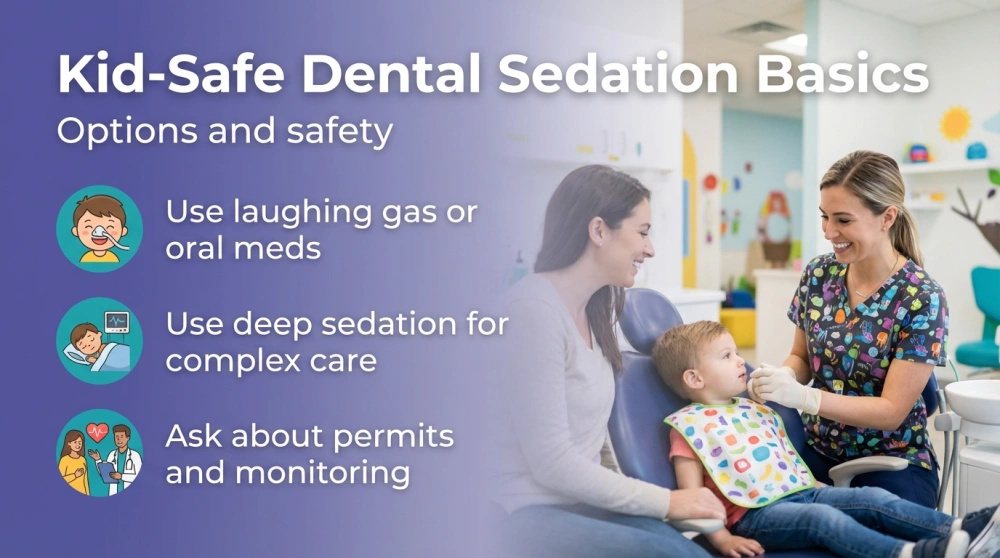
- Minimal to moderate sedation Oral medications or nitrous oxide may be used to help children relax while maintaining protective reflexes [7].
- Deeper levels of sedation For complex situations, deeper sedation or general anesthesia may be considered in a monitored setting with appropriately trained professionals [7].
- Safety standards Guidelines outline equipment, staffing, and discharge criteria to support safe recovery and follow up [7].
In California, dentists who provide certain levels of sedation must hold permits and comply with state specific requirements in addition to national guidelines. Families can ask their dentist which permits are held and how monitoring is performed throughout the visit [8].
How is pain managed and what should recovery look like after extraction?
After tooth extraction for kids, most children do well with a simple plan for comfort and healing. Your dentist will review a pain management approach that balances relief with safety, including using the lowest effective dose of recommended over the counter medications when appropriate, good wound care, rest, and soft foods. Written instructions help you know what to expect in the first 24 to 72 hours. You will also receive guidance on oral hygiene around the area and signs that call for a check in with your dentist. Pediatric dental organizations provide policies on safe, patient centered pain management for infants, children, and adolescents [13].
- Comfort plan Use recommended medications as directed by your provider, along with cool compresses and quiet activities [13].
- Oral care Keep the area clean with gentle rinsing when allowed and resume brushing carefully as advised [13].
- Diet and activity Offer soft, cool foods and avoid vigorous activity until your dentist clears your child to return to normal routines [13].
Could leaving an extra tooth cause long term problems?
In a portion of cases, leaving a supernumerary tooth undisturbed may be appropriate and safe with routine monitoring. In other cases, however, an untreated extra tooth can contribute to delayed eruption, displacement of nearby teeth, or rarely, cyst formation. The likelihood of problems depends on where the tooth sits, how it is shaped, and whether it is actively interfering with normal eruption. Your pediatric dentist will review these risks and the potential benefit of timely removal when a mesiodens or other extra tooth is obstructing eruption or altering alignment [1][11][2].
What is the role of early orthodontic evaluation with supernumerary teeth?
Early orthodontic evaluation is valuable when an extra tooth is present. Orthodontists can assess space, eruption pathways, and growth patterns and coordinate with your pediatric dentist to time removal, space management, or traction if a front tooth remains impacted. Orthodontic organizations recommend that children receive an initial evaluation around age seven, which aligns well with the timing when mesiodens related eruption issues often appear. This team approach helps families understand whether monitoring alone is likely to work or whether a combined dental orthodontic plan offers the best path forward [6][1].
How do California and national guidelines shape safe care for kids?
Parents often ask how safety is assured. In California, dental offices that take X rays must register equipment and follow state radiation safety rules, and operators must have required training. These steps help ensure that children receive the lowest dose needed to answer the clinical question at hand. Nationally, pediatric dental organizations and the FDA and ADA offer guidance on when imaging is appropriate and how to limit dose in children. Sedation care is guided by national monitoring and emergency preparedness standards, and in California, specific permits are required for certain levels of sedation. These overlapping layers of standards are designed to protect children at every step of care from diagnosis through recovery [9][3][4][5][7][8].
How can parents prepare their child for the visit and support healing at home?
Feeling prepared can lower stress for both you and your child. Before the appointment, let your child know in simple terms what will happen and why. Focus on what they can do, like holding still or breathing through a nose mask if nitrous oxide is used. Bring a comfort item and plan quiet time at home after the visit. Your dental team will provide printed and verbal instructions so you know how to manage comfort, oral care, and diet in the first days after treatment [13].
- Talk calmly Use simple, reassuring words to explain that the dentist will help the new tooth come out so the grown up tooth can come in.
- Plan for rest Arrange a calm day with soft foods and a favorite movie or book.
- Follow instructions Keep the area clean as directed and watch for any concerns that your dentist discussed.
What questions should you ask a pediatric dentist in Laguna Hills, CA?
Bringing a short list of questions to your visit helps you feel confident about the plan. Consider asking the following.
- Is the extra tooth blocking eruption Ask how the position of the extra tooth is affecting nearby teeth and timing [1].
- What are the monitoring and removal options Review the benefits and risks of observation compared with timely removal [1].
- Which images are needed and why Discuss the type and dose of X rays and how each view informs the plan [3][5].
- How will comfort be managed Learn about local anesthesia, behavior guidance, and sedation options if appropriate [7][13].
- What orthodontic steps might be needed Clarify whether space creation or traction could be part of care [6].
If you need rapid help, an emergency pediatric dentist Laguna Hills team can provide same day guidance when pain, swelling, or injury complicates the picture.
When is it an emergency to contact a pediatric dentist?
Call a pediatric dentist promptly if your child has pain, swelling, or fever near the area of a known or suspected extra tooth, if the gum is draining pus, or if a tooth has been knocked or injured. Also reach out if you notice a rapid change in bite or a front tooth that was moving into place seems stuck again. Even when it turns out not to be urgent, quick triage helps families avoid surprises and keeps treatment on track [1].
How can insurance and costs be approached for treatment?
Dental insurance plans vary in how they cover evaluation, imaging, and removal of extra teeth. Many plans cover exams and indicated X rays for diagnosis. Coverage for removal can depend on the tooth’s position and whether the insurer classifies the procedure as oral surgery. Your dental team can provide a pre treatment estimate to help you plan. Ask about payment options, preauthorization, and how orthodontic coordination may affect timing and benefits.
Who is Kidz Modern Dentistry and how do we support families in Laguna Hills, CA?
At Kidz Modern Dentistry, we care for children of all ages in Laguna Hills, CA, with services that include same day emergencies, kid friendly sedation, and comprehensive pediatric care. When your child has supernumerary teeth in children, our approach centers on education, gentle techniques, and clear communication so you understand each step.
- Personalized evaluation We review your child’s growth, eruption, and imaging to decide whether to monitor or proceed with removal, and we coordinate with your orthodontist when needed.
- Comfort focused care Options range from behavior guidance and local anesthesia to kid friendly sedation when appropriate, always aligned with safety standards and permits.
- Rapid access Same day support is available when an unexpected change or discomfort arises, helping you avoid delays.
- Collaborative planning We share findings with your child’s orthodontist and physician as appropriate to keep everyone aligned on goals.
- Clear aftercare You receive simple, written instructions and check in times so you can track healing confidently.
Families looking for help with Pediatric tooth extractions can expect thoughtful timing and careful technique that prioritize natural eruption and long term oral health. If your child needs Pediatric tooth extractions in Laguna Hills, our team can discuss options, review images together, and map a plan that fits your child’s needs and temperament.
We serve Laguna Hills and nearby communities across Orange County. If you would like to talk with our pediatric team or schedule a visit, call +1 949 273 0110. We are here to answer questions about extra teeth in kids, children’s dental X rays, early orthodontic evaluation, and mesiodens removal so you can decide next steps with confidence.
Where can you find the references for this article?
- Management of the Developing Dentition and Occlusion in Pediatric Dentistry – American Academy of Pediatric Dentistry
- Supernumerary teeth, review of the literature and a survey of 152 cases – International Journal of Paediatric Dentistry via PubMed
- Prescribing Dental Radiographs for Infants, Children, Adolescents, and Individuals with Special Health Care Needs – American Academy of Pediatric Dentistry
- Dental X Rays, Patient Selection and Limiting Radiation Exposure – American Dental Association
- Dental Imaging Protocols for Children – Image Gently Alliance
- When Should My Child See an Orthodontist – American Association of Orthodontists
- Monitoring and Management of Pediatric Patients Before, During, and After Sedation – American Academy of Pediatric Dentistry
- General Anesthesia, Conscious Sedation, and Oral Conscious Sedation Permits – Dental Board of California
- Dental X Ray Requirements and Resources – California Department of Public Health Radiologic Health Branch
- Parameters of Care, Cone Beam Computed Tomography Selection Criteria – American Academy of Oral and Maxillofacial Radiology
- Clinical characteristics and complications associated with mesiodentes in children – Journal of Oral and Maxillofacial Surgery via PubMed
- Tooth Eruption, Primary and Permanent Dentition – American Dental Association
- Pain Management in Infants, Children, Adolescents, and Individuals with Special Health Care Needs – American Academy of Pediatric Dentistry
Common Questions About This Topic
Find answers to frequently asked questions related to this article.