
- What will you learn about fluoride free dental care for kids in this guide?
- Why are more parents asking about fluoride free options for children?
- What is enamel remineralization and how do non fluoride options work?
- What is MI Paste and how does CPP ACP help children’s teeth?
- Is MI Paste safe for kids with milk allergy or lactose intolerance?
- How does nano hydroxyapatite toothpaste compare for kids?
- What should parents know about bioactive glass toothpaste for children?
- Can xylitol help with cavity prevention in kids?
- Does arginine toothpaste make sense for families seeking fluoride free care?
- What about calcium phosphate toothpastes and tricalcium phosphate for kids?
- What are practical dairy free alternatives to MI Paste for families?
- Where do dental sealants fit into a fluoride free prevention plan?
- How can diet and saliva support natural enamel strengthening for children?
- What labels and regulations should parents in California and the United States understand?
- How do pediatric dentists personalize fluoride free care plans for kids?
- When might a pediatric dentist still recommend fluoride with parental consent?
- What questions can you ask your Laguna Niguel pediatric dentist to make an informed choice?
- How does Kidz Modern Dentistry support your family’s goals in Laguna Niguel, CA?
- References
What will you learn about fluoride free dental care for kids in this guide?
Parents in Laguna Niguel and across Orange County want clear, balanced guidance on fluoride free dental care for kids. In this guide, we walk through the science behind fluoride alternatives, including MI Paste and casein phosphopeptide amorphous calcium phosphate, nano hydroxyapatite, bioactive glass toothpaste, xylitol, arginine toothpaste, and other calcium phosphate options. We explain how each option works, what the research suggests, and how to combine products with proven strategies such as regular checkups, diet adjustments, and sealants. We also outline relevant United States and California context that affects labels and claims for toothpaste and pastes, and we offer practical questions to ask your pediatric dentist so you can make confident choices for your child.
Families often want strong prevention with gentle products. That is the core of Pediatric preventive dentistry. Your child’s plan should be individualized, evidence informed, and designed with your goals in mind.
Why are more parents asking about fluoride free options for children?
There are a few common reasons parents explore fluoride free care. Some families have a preference for products without fluoride, some have concerns about ingestion in very young children, and others want to layer multiple strategies to support enamel. At the same time, national and pediatric dental organizations recognize fluoride as a proven caries prevention tool when used correctly and at recommended levels [1] [2] [3]. Our role is to share the current evidence and help you select the safest, most effective options that match your family’s preferences and your child’s risk level.
Local context also matters. Many communities in Southern California receive fluoridated drinking water at levels targeted to reduce decay while staying within federal recommendations [4]. If your household uses bottled or filtered water, or if your child rarely drinks tap water, your prevention needs may differ. We will review your child’s daily habits so we can build a plan that fits how your family lives.
What is enamel remineralization and how do non fluoride options work?
Tooth enamel is a dynamic structure, constantly losing and gaining minerals. Acids from plaque and foods pull minerals out of enamel, while saliva and certain components help put them back in. This continual process is known as demineralization and remineralization. Alternative oral care options, those without fluoride, focus on supplying calcium and phosphate in forms that can be integrated into the tooth structure or change the oral environment in ways that promote mineral gain and decrease harmful acids.
Which non fluoride categories are most discussed today?
- CPP ACP such as MI Paste delivers bioavailable calcium and phosphate stabilized by casein phosphopeptides [5].
- Nano hydroxyapatite provides tiny particles of the same mineral that makes up enamel and dentin, supporting surface repair and relief from sensitivity [6].
- Bioactive glass such as calcium sodium phosphosilicate releases calcium and phosphate in saliva and can form a protective layer that supports remineralization [7].
- Xylitol a plant derived sweetener that oral bacteria cannot ferment, potentially reducing acid production and supporting saliva flow [8].
- Arginine an amino acid that can support healthy pH buffering when paired with calcium and particular formulations [9].
- Other calcium phosphate technologies such as tri calcium phosphate or amorphous calcium phosphate that aim to deliver minerals for enamel strengthening.
The available options differ in their focus and efficacy. Some demonstrate advantages for early enamel lesions as reported from clinical or in situ studies, while others are more concerned with sensitivity. Furthermore, some options have shown promise but are limited by scarce pediatric-specific evidence. Below, we will delve into each alternative to assess their current scientific standing and how a dentist specializing in pediatrics may judiciously apply them.
What is MI Paste and how does CPP ACP help children’s teeth?
MI Paste is a topical tooth creme that contains casein phosphopeptide amorphous calcium phosphate. CPP ACP is designed to stabilize calcium and phosphate ions and keep them available at the tooth surface to support remineralization of early enamel lesions [5]. In practice, your child’s dentist may suggest MI Paste for areas of early white spot lesions, after orthodontic bracket removal, or when sensitivity and dryness make enamel more vulnerable.
What does the research say about CPP ACP in children?
- Mechanism support Reviews describe how CPP ACP can localize calcium and phosphate at the tooth surface and may aid repair of subsurface lesions under the right conditions [5].
- Clinical uncertainty Systematic reviews have found that while CPP ACP may help with white spot appearance and enamel repair, the overall certainty for caries prevention across populations is limited and more pediatric trials are needed [6].
Families who want to avoid fluoride may still benefit from a supervised schedule that includes MI Paste, professional cleanings, targeted brushing, and diet changes. Your dentist will consider your child’s risk level, enamel findings, and any allergies before recommending CPP ACP.
Is MI Paste safe for kids with milk allergy or lactose intolerance?
MI Paste includes Recaldent derived from milk casein, which is a milk protein. The manufacturer advises that individuals with milk protein allergy should avoid products containing Recaldent [10]. If your child has a known milk protein allergy, your dentist will recommend different remineralization strategies that do not contain dairy derived ingredients.
Lactose intolerance is a digestive sensitivity to milk sugar, not a protein allergy. Even so, parents should share any history of milk reactions with the dental team and pediatrician so we can choose the safest products for your child [10]. When in doubt, we use dairy free alternatives outlined below.
How does nano hydroxyapatite toothpaste compare for kids?
Nano hydroxyapatite contains tiny particles of hydroxyapatite similar to the mineral in tooth enamel. In laboratory and clinical settings, this ingredient has been shown to support remineralization of initial enamel lesions and reduce sensitivity. A number of controlled studies suggest benefits, and some pediatric and adolescent trials have explored its use around orthodontic appliances with promising findings [6].
How might families use nano hydroxyapatite safely?
- Daily brushing Children can use a pea sized amount of nano hydroxyapatite toothpaste under supervision. Spit thoroughly to reduce swallowing.
- Targeted application For white spot areas after braces, your dentist may suggest a short contact time before spitting to allow more interaction with tooth surfaces [6].
- Monitoring We track changes in enamel appearance and plaque control at follow up visits and adjust products based on progress.
Because formulations vary and research quality differs among products, selection and follow up with your pediatric dentist are important.
What should parents know about bioactive glass toothpaste for children?
Bioactive glass such as calcium sodium phosphosilicate can release calcium and phosphate when exposed to saliva. This release can help form a protective mineral rich layer on enamel and dentin. Clinical and in situ studies report benefits for sensitivity and for remineralization of early enamel lesions under controlled conditions [7]. As with other non fluoride options, the evidence for long term caries reduction in general pediatric populations is still developing.
When might a pediatric dentist suggest bioactive glass products?
- Sensitivity relief Children with exposed dentin or sensitivity after orthodontics may benefit from the occluding effect of bioactive glass on open tubules [7].
- Early white spot support Short term use may be considered as part of a remineralization plan for initial enamel lesions when families prefer fluoride free options.
- Adjunctive care We pair bioactive glass toothpaste with coaching on brushing technique, diet, and regular exams to reinforce results.
Can xylitol help with cavity prevention in kids?
Xylitol is a sugar alcohol that bacteria cannot ferment to acids, which may help reduce acid production and support a healthier oral environment. Some clinical studies show reduced caries among certain age groups and dosing schedules, but systematic reviews judge the overall certainty of the evidence to be low and findings inconsistent across products and regimens [8]. If your family prefers fluoride free care, xylitol can be considered as part of a prevention plan with dosing guidance from your dental team and your pediatrician.
How can families use xylitol thoughtfully?
- Age and safety first Gum and mints pose choking risks for young children. Discuss age appropriate choices with your pediatric dentist and pediatrician.
- Dose and frequency Some research used divided daily doses across multiple exposures. Your dentist can suggest a practical schedule if xylitol is appropriate [8].
- Household awareness Xylitol is toxic to dogs, so always store products securely away from pets.
Does arginine toothpaste make sense for families seeking fluoride free care?
Arginine is an amino acid that certain oral bacteria can metabolize in ways that produce alkaline byproducts, which helps buffer acids. Clinical studies, many conducted with arginine paired with calcium carbonate and sometimes with fluoride, report reductions in caries incidence compared with fluoride alone in some populations. Evidence for fluoride free arginine formulations is more limited, though data suggest a beneficial shift in biofilm pH and ecology when arginine is present with appropriate mineral partners [9].
What does this mean for your child’s routine?
- Product selection If you prefer to avoid fluoride, choose arginine products that list calcium sources and discuss options with your pediatric dentist.
- Comprehensive plan We use arginine as one element in a full plan that includes brushing coaching, flossing where indicated, diet guidance, and regular checkups.
What about calcium phosphate toothpastes and tricalcium phosphate for kids?
Several formulations deliver calcium and phosphate ions without fluoride, including amorphous calcium phosphate and tri calcium phosphate. These aim to make mineral ions available to enamel in a saliva friendly way. Laboratory and short term in situ studies often show favorable changes in enamel hardness and lesion depth, yet large pediatric clinical trials are fewer than for fluoride toothpaste. For families committed to fluoride free care, these pastes can be considered with dentist guidance and regular monitoring.
When we craft plans for families in Laguna Niguel, we consider taste, texture, and ease of use. A product that your child likes and uses consistently with supervision will outperform a stronger product that sits on a shelf.
What are practical dairy free alternatives to MI Paste for families?
If your child has a milk protein allergy or your family is dairy free or vegan, there are several non dairy options to discuss with your pediatric dentist. These include nano hydroxyapatite toothpaste, bioactive glass toothpaste, arginine formulations that do not include dairy ingredients, and other calcium phosphate products not derived from casein. Your dentist will review ingredient lists and consider any food allergies, asthma, eczema, or other atopic history before recommending a product. We also emphasize saliva support, timing of snacks, and regular professional cleanings to keep risk low.
Where do dental sealants fit into a fluoride free prevention plan?
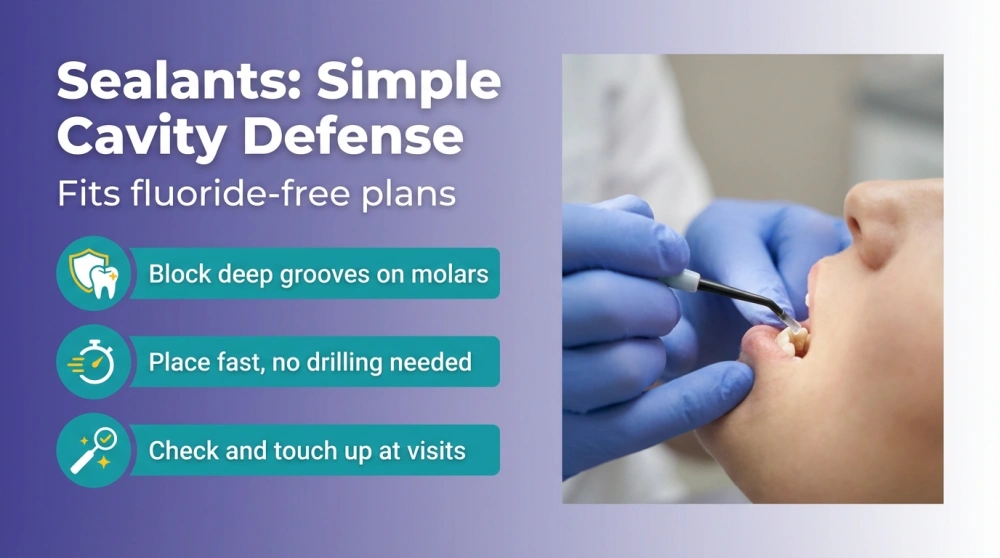
Dental sealants are thin coatings placed on the chewing surfaces of molars to block food and plaque from settling into deep grooves. Sealants are a cornerstone of prevention because they do not rely on daily use at home. Studies show that sealants can prevent most cavities in the chewing surfaces of molars in the first years after placement, especially in children with higher risk [11] [12]. Sealants are not the same as topical fluoride. They are a physical barrier applied in the dental office and can be used in fluoride free plans.
How are sealants placed for kids and what should parents expect?
- Gentle process We clean and prepare the tooth, place the liquid sealant, and cure it with a light. There is no drilling for preventive sealants.
- Follow up Sealants are checked at each exam and touched up if needed to keep protection strong [12].
- Diet and brushing Sealants work best alongside good brushing habits and a smart snack routine.
Parents looking for Laguna Niguel pediatric dentist care that prioritizes comfort often appreciate how easily most children tolerate sealant visits.
How can diet and saliva support natural enamel strengthening for children?
Fluoride free prevention works best when daily habits support enamel. Your pediatric dentist will look at how often your child eats and drinks, the types of snacks they choose, and hydration patterns. The goal is to reduce how long teeth are under acid attack and to maximize saliva’s natural buffering and mineral content.
Which daily habits make the biggest difference?
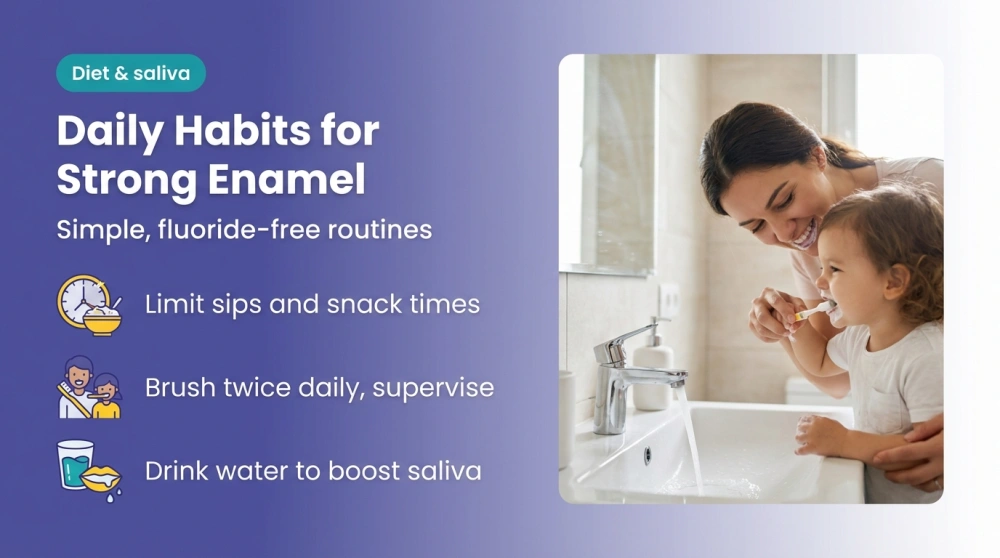
- Limit frequent sipping and snacking Grazing keeps acids high. Offer water between meals and time snacks so teeth get recovery periods.
- Choose tooth friendly snacks Cheese, nuts, crunchy vegetables, and yogurt alternatives without added sugars help balance the mouth.
- Brush twice daily with supervision Younger children need help to reach every surface. Use a pea sized amount of your chosen toothpaste.
- Floss where teeth touch Most molars touch and need flossing help from a parent.
- Hydration matters Saliva needs water. Children playing sports should have water available during and after activity.
We build plans that fit your family’s routines. Small, sustainable changes usually outperform perfect plans that are hard to maintain.
What labels and regulations should parents in California and the United States understand?
In the United States, over the counter toothpaste that claims to prevent cavities must follow the federal anticaries drug monograph. Fluoride toothpastes are covered by this monograph and can make specific claims when they meet all requirements. Toothpastes without fluoride are not covered by the anticaries monograph and generally cannot claim to prevent cavities under federal rules [13]. This is why many fluoride free toothpastes focus on benefits like enamel health, sensitivity relief, or plaque removal rather than officially stating caries prevention.
For California families, community water supplies in much of Southern California receive fluoride at target levels recommended nationally. The Metropolitan Water District of Southern California reports adjusted fluoride levels that align with public health recommendations and posts current water quality data for communities it serves [4]. If you have questions about your local water provider in Laguna Niguel, we can help you locate their most recent water quality report during your visit.
How do pediatric dentists personalize fluoride free care plans for kids?
Pediatric dentists start with a careful risk assessment. We look at your child’s history of cavities, diet patterns, visible plaque, enamel defects, orthodontic appliances, saliva flow, and medical considerations. We also ask about family preferences, allergies, and goals. From there, we choose specific products and schedules and set check in points to review progress.
What could a balanced fluoride free plan include for a child with early white spot lesions?
- Daily toothpaste choice A nano hydroxyapatite or bioactive glass toothpaste used twice daily with parent help.
- Targeted application A CPP ACP product such as MI Paste applied at bedtime if no milk protein allergy is present [5] [10].
- Sealants Placement on deep grooves of first or second molars to block plaque and food [11] [12].
- Snack timing Practical shifts from grazing to structured meals with water between.
- Follow ups Short interval reviews to document changes in white spots and adjust products.
Our team guides parents on setup at home, what to expect, and how to troubleshoot real world challenges like sports snacks, sleepovers, and school routines. Pediatric preventive dentistry is most effective when families feel supported and informed.
When might a pediatric dentist still recommend fluoride with parental consent?
Even when families prefer fluoride free care, some situations warrant a careful discussion about fluoride. Examples include rapid cavity progression, multiple new lesions between visits, enamel hypomineralization, or special health needs that raise risk. National and pediatric organizations recognize that appropriately dosed fluoride toothpaste and treatments can provide measurable risk reduction for many children [1] [2] [3]. If fluoride is discussed, your dentist will review benefits and risks in plain language, explain dosing and supervision, and respect your decision.
What questions can you ask your Laguna Niguel pediatric dentist to make an informed choice?
- Which non fluoride products fit my child’s age and risk Ask about nano hydroxyapatite, bioactive glass, CPP ACP, and other calcium phosphate options for your child’s specific enamel findings.
- Are there any ingredients my child should avoid Share any food allergies or sensitivities, especially milk protein allergy for CPP ACP products [10].
- How will we track progress Request photos or charts to monitor white spots and plaque control at each visit.
- What is the plan if risk increases Discuss when to add sealants or consider other clinical measures if lesions progress.
- How can we make this realistic Ask for tips that match your schedule, school lunch options, and sports routines.
Pediatric preventive dentistry in Laguna Niguel works best when you and your dental team build the plan together and adjust as your child grows.
How does Kidz Modern Dentistry support your family’s goals in Laguna Niguel, CA?
At Kidz Modern Dentistry, we care for infants through teens with a gentle and practical approach that respects your preferences. We serve families in Laguna Niguel, CA and the surrounding Orange County communities. Our clinicians are experienced with fluoride free strategies and will help you compare MI Paste, nano hydroxyapatite, bioactive glass, xylitol, arginine, and other options in the context of your child’s risk and routine.
How do our services connect to fluoride free prevention for kids?
- Comprehensive checkups We assess cavity risk, enamel condition, bite development, and hygiene so we can personalize your child’s plan.
- Evidence guided product selection We explain the science and practical use of CPP ACP, nano hydroxyapatite, bioactive glass, and calcium phosphate pastes with clear expectations and follow up schedules.
- Comfort focused sealants We place kids dental sealants in a calm setting and maintain them over time to extend protection.
- Real world coaching We share step by step brushing and flossing tips that work for busy families and sensory preferences.
- Same day help when needed If concerns arise, our team can see your child promptly to keep small issues from becoming bigger ones.
What makes our approach unique for families in Orange County?
- Child centric visits Our rooms and routines reduce anxiety and support positive dental experiences for every age.
- Team experience Our pediatric focused team brings years of combined experience with prevention, growth monitoring, and minimally invasive treatments for children.
- Clear communication We translate research into everyday language and provide written plans you can follow at home.
- Collaborative care We coordinate with pediatricians and orthodontists to support your child through phases like appliance wear or nutrition changes.
- Flexible options We respect your preferences and offer thoughtful alternatives within safe, professional standards.
How can you get started today?
Call +1 949 273 0110 to schedule a visit. We will review your goals, evaluate your child’s enamel, discuss fluoride free options such as MI Paste for children, nano hydroxyapatite toothpaste, bioactive glass toothpaste, xylitol for cavity prevention, arginine toothpaste, and calcium phosphate toothpaste, and create a stepwise plan. We welcome questions and will help you compare dairy free alternatives to MI Paste if your child has a milk protein allergy or your family follows a dairy free lifestyle.
We believe strong prevention begins with trust and teamwork. Whether you are new to Laguna Niguel or have lived here for years, our goal is to make preventive visits simple and reassuring for your child and for you.
References
- Policy on the Use of Fluoride – American Academy of Pediatric Dentistry
- Fluoride Toothpaste Use for Young Children – American Dental Association
- Community Water Fluoridation – Centers for Disease Control and Prevention
- Fluoridation Information – Metropolitan Water District of Southern California
- Casein phosphopeptide amorphous calcium phosphate the scientific evidence – PubMed
- Effect of nanohydroxyapatite on remineralization of enamel a systematic review – PubMed
- Enamel remineralisation with bioactive glass dentifrice an in situ study – PubMed
- Xylitol containing products for preventing dental caries in children and adults – PubMed
- Clinical anticaries efficacy of arginine containing toothpaste a review and meta analysis – PubMed
- MI Paste Product Information and Milk Protein Allergy Warning – GC America
- School Dental Sealant Programs – Centers for Disease Control and Prevention
- Evidence Based Guideline for Pit and Fissure Sealants – American Dental Association
- Anticaries Drug Products for Over the Counter Human Use 21 CFR Part 355 – eCFR
Common Questions About This Topic
Find answers to frequently asked questions related to this article.
