
- Why does flossing matter for kids and what problems can it help prevent?
- When should kids start flossing and who should help at each age?
- How often should kids floss and how long should it take?
- How do you floss children’s teeth step by step without tears?
- Which type of floss is best for kids and how do you choose?
- What is the difference between waxed and unwaxed floss for kids?
- Are floss picks better than string floss for children?
- Do toddler floss picks help with tiny mouths and limited coordination?
- What floss options work best for kids with braces?
- What if my child has sensitive gums or bleeding when we floss?
- How does fluoride fit with flossing and toothpaste for kids?
- What floss and tools work best for small mouths and different ages?
- Does flossing really reduce cavities in children and what does research say?
- What do national and California guidelines recommend for kids oral hygiene?
- How can families in Laguna Niguel and nearby cities get personalized flossing help?
- Who is Kidz Modern Dentistry and how do we support your family in South Orange County?
- Where can I find the research and resources used in this guide?
Why does flossing matter for kids and what problems can it help prevent?
Flossing for kids is about reaching the tight spaces a toothbrush cannot clean well. Food and plaque collect where teeth touch. If that buildup is left in place, it can inflame the gums and contribute to cavities between teeth. Cleaning between teeth helps remove plaque and supports healthy gums and enamel strength when paired with fluoride toothpaste and regular checkups [2].
To understand why this matters, consider that tooth decay is common in childhood. National data show that more than half of children ages 6 to 8 have had a cavity in a baby tooth, and more than half of adolescents ages 12 to 19 have had a cavity in a permanent tooth [1]. Daily brushing, smart snacks, community water fluoridation, and interdental cleaning all work together to lower risk [1] [2].
For many families, establishing a simple routine with the right tools is the key. Pediatric preventive dentistry focuses on habits like daily brushing with fluoride toothpaste, flossing where teeth touch, and professional guidance to keep small problems from becoming bigger ones [2].
When should kids start flossing and who should help at each age?
Most kids should start flossing as soon as two teeth touch. This often begins with the back baby molars. At that point, a toothbrush bristle cannot reach the contact area, so flossing becomes part of daily care [2] [3].
Who should guide the process for toddlers and young children?
Caregivers will need to do the flossing at first. Young children do not yet have the fine motor skills to clean between teeth on their own. Caregiver assistance is usually needed through the early school years, with gradual handover as your child learns and can demonstrate the correct technique [3].
How can you tell when a child is ready to floss independently?
Look for signs of good hand control, patience, and consistent brushing. Even when children begin flossing alone, spot checks and occasional help are useful to be sure plaque is removed and the gums stay healthy [2]. If you are unsure, ask your pediatric dentist to watch your child floss and offer tips tailored to your child’s mouth and stage of growth [3].
How often should kids floss and how long should it take?
Most children benefit from flossing once each day. The time it takes depends on the number of teeth that touch each other, but a careful routine often takes a few minutes. The priority is doing it well and gently every day rather than rushing [2].
Is nighttime better than morning for flossing?
Many families find evening works best so that plaque and food are removed before sleep, when saliva flow decreases. The best time is the time you can maintain consistently with your child. Consistency is what helps reduce plaque buildup between teeth [2].
How do you floss children’s teeth step by step without tears?
Set up a calm routine and use tools that fit your child’s age. Try standing behind your child in front of a mirror, so you can see and your child can watch and learn.
What does a simple step by step technique look like?
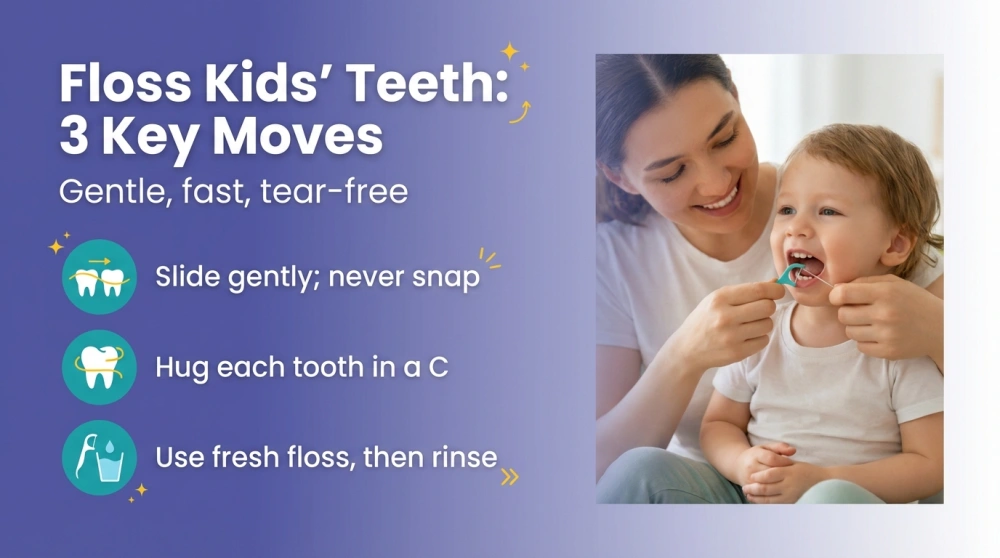
- Wash hands and prepare Clean hands help keep things hygienic. Have floss or a floss pick ready and a tissue for wiping if needed.
- Use a short length for control If using string, cut about 12 to 18 inches. Wind most around a middle finger on one hand and the rest on the other hand so you can move to a clean section as you go.
- Guide gently between teeth Slide the floss carefully between teeth with a gentle back and forth motion. Do not snap it into the gums [2].
- Curve into a C shape Wrap the floss into a C around the side of one tooth. Hug the tooth and move the floss up and down a few times to clean the side from just under the gumline to the chewing surface [2].
- Repeat for the neighbor Move the C shape to the adjacent tooth and repeat.
- Advance to a clean section Unwind a fresh section of floss for each space to avoid moving plaque from place to place.
- Finish with a rinse Have your child rinse to wash away loosened plaque and particles.
How can you keep flossing comfortable for kids?
- Go slow and steady A gentle, unhurried approach reduces discomfort and fear.
- Use child sized tools Smaller flossers or soft tape style floss can be easier on gums and more comfortable for small mouths.
- Add positive cues Play a short song, use a sticker chart, or pair flossing with a story to make it a predictable routine.
Which type of floss is best for kids and how do you choose?
The best floss for kids is the one your child will use well each day. Options include traditional string, tape style, soft spongy floss, and pediatric floss picks. Fit, comfort, and ease of use all matter. For many families, the choice varies by age and dental needs, such as whether your child wears braces. Professional guidance helps match tools to your child’s mouth shape and gum sensitivity [2] [3].
What is the difference between waxed and unwaxed floss for kids?
Waxed floss glides more easily, which can help in tight contacts or when you are teaching a new skill. Unwaxed floss can feel slightly grippier. There is no strong evidence that one removes more plaque than the other when used correctly. Technique and consistency matter more than material [2].
Are floss picks better than string floss for children?
Floss picks can make it easier to reach back teeth, especially for caregivers flossing a wiggly toddler or for early learners. String floss allows you to wrap into a deep C shape around each tooth. Either can work when you use gentle pressure and clean each side of the tooth fully. Choose what your child and you can use well every day [2] [3].
Do toddler floss picks help with tiny mouths and limited coordination?
Toddler floss picks can be a helpful bridge for small mouths and early routines. Caregivers should do the flossing for toddlers and preschoolers, guiding the pick slowly between teeth and curving around each side. Supervision is important so that picks are not chewed or played with after use, and each pick should be thrown away after a single session for hygiene [2].
How can you make flossing a toddler friendly routine?
- Choose soft and small tools Look for pediatric floss picks with soft floss and a small handle.
- Use a knee to knee position One adult can sit with knees touching another adult’s knees and the child resting on both laps. This gives a steady view and gentle control.
- Keep sessions short Aim for steady, brief sessions with praise at the end.
What floss options work best for kids with braces?
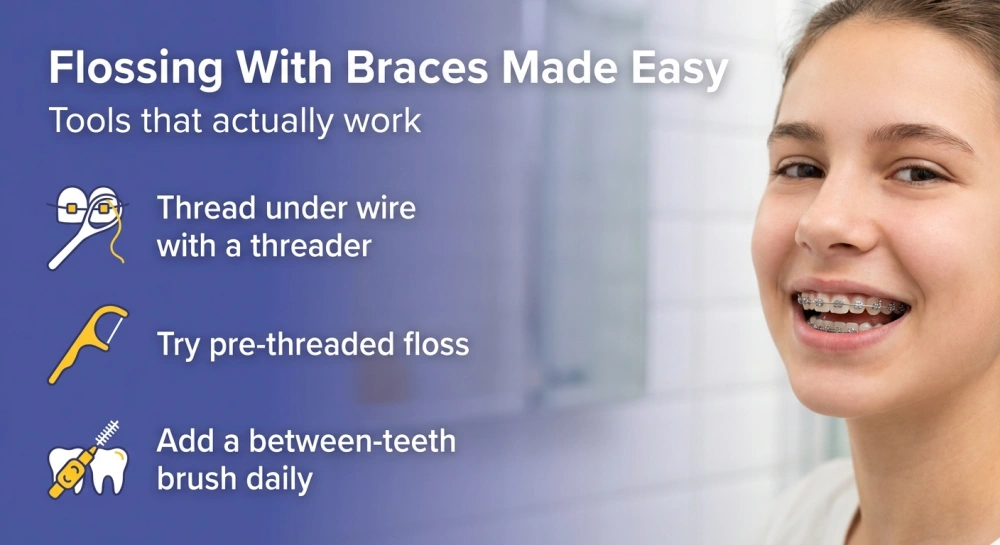
For floss for kids with braces, threading floss under the wire is the main challenge. Floss threaders, pre threaded orthodontic floss, and interdental brushes help reach the sides of teeth and the gumline around brackets and wires. A water flosser can also help remove food and plaque around orthodontic hardware as part of a daily routine. Your orthodontist’s care team can show you specific techniques that fit your child’s appliance [5] [2].
What is the simplest way to get floss under the wire?
- Use a floss threader Pull a piece of floss through the loop, guide the stiff end under the wire, then floss each side in a C shape.
- Try pre threaded floss Some products have a firm end that slides under the wire without a separate threader.
- Add an interdental brush A small cone shaped brush can help clean around brackets where food collects [2].
What if my child has sensitive gums or bleeding when we floss?
Mild tenderness or slight bleeding can happen when kids start flossing or when plaque has built up. This often improves within a week with gentle daily flossing. If bleeding or pain continues, check technique and ask your dentist to look for gum inflammation or other concerns [2] [3].
What helps make flossing gentle for sensitive gums?
- Choose soft or tape style floss Wider, softer floss or floss with a soft coating can be more comfortable.
- Use a gentle glide Avoid snapping the floss. Guide it slowly and curve around each tooth to reduce pressure on the gumline [2].
- Rinse after flossing A water rinse helps clear loosened plaque and may soothe tissues.
How does fluoride fit with flossing and toothpaste for kids?
Flossing removes plaque between teeth. Fluoride strengthens enamel and helps prevent cavities. For children, daily brushing with a smear or pea sized amount of fluoride toothpaste based on age, combined with smart snack choices and interdental cleaning, provides an effective prevention plan [7] [1].
Do fluoride coated flosses add extra protection?
Some flosses are coated with fluoride. The foundation of cavity prevention remains brushing with fluoride toothpaste, regular cleanings, and professional fluoride applications when indicated. Families can choose a fluoride coated floss if it feels comfortable, but consistent technique and daily habits are what matter most for preventing cavities in children [7] [8].
Does community water fluoridation help children’s teeth?
Community water fluoridation is supported by national public health organizations as a safe and effective way to prevent tooth decay across communities. It works together with brushing and flossing as part of a complete prevention plan for children and teens [6] [1].
What floss and tools work best for small mouths and different ages?
Dental floss for small mouths should be comfortable and easy to control. The right choice can change as your child grows.
What works well for toddlers and preschoolers?
- Soft floss picks Small handled picks with soft floss can help caregivers reach the back teeth gently.
- Tape style floss Wider, flat floss can be more comfortable across sensitive gums.
What works well for early school age children?
- String floss with a holder A small Y shaped holder can help kids practice the C shape clean around each tooth.
- Waxed floss for tight contacts Waxed options can glide more easily between newly erupted permanent teeth.
What works well for older kids and teens?
- Traditional string or tape Many adolescents can manage standard floss and prefer the control it offers.
- Interdental brushes For larger spaces or around orthodontic appliances, tiny brushes can reach spots floss may miss [2].
Does flossing really reduce cavities in children and what does research say?
Cavities start where plaque sits on enamel and acids weaken the surface. Plaque often remains between teeth unless it is removed with floss or another interdental cleaner. Evidence based guidance from professional organizations supports cleaning between teeth daily to remove plaque and support gum health. Brushing with fluoride toothpaste, sealants when recommended, and regular professional care form the rest of a prevention plan [2] [1] [8].
How should parents use research to guide daily routines?
- Focus on daily habits Consistent brushing with fluoride toothpaste and interdental cleaning are recommended by national dental organizations [2] [7].
- Ask for individualized advice Every child’s mouth is different. Your dentist can tailor tools and techniques to your child’s needs and stage of growth [3].
What do national and California guidelines recommend for kids oral hygiene?
National organizations recommend daily brushing with fluoride toothpaste and cleaning between teeth once per day, along with routine dental visits and preventive services such as fluoride varnish when indicated [2] [7] [8]. For families in California, care should be provided by or under the supervision of licensed dental professionals, and practices follow the California Dental Practice Act and related rules from the Dental Board of California [10].
How often should children see a dentist for prevention and guidance?
Regular checkups allow the dental team to monitor growth, coach technique, place sealants when appropriate, and guide home care based on your child’s risk level. Visit intervals are personalized based on your child’s needs and risk factors [3] [8].
How can families in Laguna Niguel and nearby cities get personalized flossing help?
Parents often have specific questions about when should kids start flossing, how to floss children’s teeth without a struggle, and how often should kids floss. Hands on coaching during a visit makes a big difference. A pediatric dental team can demonstrate floss picks vs string floss for children, suggest waxed vs unwaxed floss for kids based on tooth contacts, and recommend floss threaders for braces if your child is in orthodontic care [2] [5].
Families in Laguna Niguel, Aliso Viejo, Laguna Hills, Laguna Beach, San Juan Capistrano, and Mission Viejo can get practical guidance that fits each child’s age, mouth shape, and attention span. If your child has unique needs such as sensitive gums kids floss challenges or developmental considerations, a pediatric team can tailor strategies so flossing becomes manageable and comfortable [3].
Pediatric preventive dentistry supports your family with tools, coaching, and timely checkups that fit your child’s needs and learning style [2].
Families who are looking for Pediatric preventive dentistry in Laguna Niguel can connect with a local pediatric dental office for individual instruction and product suggestions that match your child’s mouth and routine [3].
Who is Kidz Modern Dentistry and how do we support your family in South Orange County?
At Kidz Modern Dentistry, we help parents make flossing for kids practical and doable. Our pediatric team provides demonstrations for how to floss children’s teeth, helps you compare pediatric floss picks and string options, and suggests the best floss for kids based on tooth spacing, gum sensitivity, and age. We serve families in Laguna Niguel, Aliso Viejo, Laguna Hills, Laguna Beach, San Juan Capistrano, and Mission Viejo with care designed for growing smiles.
How do our services relate to your child’s flossing and home care routine?
- Personalized coaching We demonstrate the C shape technique, show floss picks vs string floss for children, and practice with you and your child so you feel confident at home.
- Orthodontic support For floss for kids with braces, we teach threader and pre threaded floss techniques and recommend interdental tools that fit around brackets.
- Comfort focused care If your child has anxiety or sensory sensitivities, our team uses a calm stepwise approach. When appropriate, kid friendly sedation options are available to support needed care in a safe and monitored setting.
Where do we operate and how can you reach us?
- Service area We proudly care for children across Laguna Niguel, Aliso Viejo, Laguna Hills, Laguna Beach, San Juan Capistrano, and Mission Viejo.
- Contact Call us at +1 949 273 0110 to schedule a preventive visit or flossing lesson for your child.
What is our approach and how is it different for busy families?
- Right tool for the job We match floss type to tooth contacts and gum tissue, from tape style to soft spongy floss and child sized holders.
- Step by step learning We break flossing into tiny steps, give easy scripts parents can use, and provide take home tip sheets.
- Whole child focus We consider growth, habits, nutrition, and enamel strength so your child’s home routine is well supported.
- Rapid access Same day attention for urgent concerns means you get help when you need it most.
What experience and results inform our guidance?
- Years of pediatric focus Our team has years of combined experience supporting children of all ages and needs during daily care coaching and visits.
- Prevention track record Families return telling us their kids are flossing more often and with less struggle after seeing the techniques in action during visits.
How do we support next steps for your child’s flossing success?
- Hands on demonstrations We show you how to adapt technique for tight contacts, crowding, or braces.
- Product guidance We recommend age appropriate floss picks, holders, and threaders, including options for sensitive gums and small mouths.
- Ongoing check ins At each visit, we check plaque in common trouble spots and refresh technique so your child keeps making progress.
If you are searching for a children’s dentist near me Laguna Niguel to help with kids dental hygiene tips, our team is ready to guide you through simple routines that fit your family’s schedule and goals.
Where can I find the research and resources used in this guide?
- Children’s Oral Health Fast Facts – Centers for Disease Control and Prevention
- Interdental Cleaners – American Dental Association
- Children’s Oral Health – National Institute of Dental and Craniofacial Research
- Prevention of Dental Caries in Children Younger Than 5 Years – US Preventive Services Task Force
- Braces 101 Care and Maintenance – American Association of Orthodontists
- Community Water Fluoridation Basics – Centers for Disease Control and Prevention
- Fluoride Health Information – National Institute of Dental and Craniofacial Research
- Fluoride Toothpaste – American Dental Association
- Tooth Decay Overview – National Institute of Dental and Craniofacial Research
- Laws and Regulations – Dental Board of California
- ADA Seal Interdental Cleaners – American Dental Association
- Children’s Oral Health Overview – Centers for Disease Control and Prevention
Common Questions About This Topic
Find answers to frequently asked questions related to this article.
