- What age can kids start using an electric toothbrush?
- What do professional organizations advise about electric toothbrush use for children?
- How do manual and electric toothbrushes compare for children?
- Which safety features should a kids electric toothbrush have?
- How should you introduce an electric toothbrush to your toddler or child?
- What fluoride toothpaste amount should children use by age?
- How long and how often should children brush their teeth?
- What battery and choking safety steps should parents follow?
- How does orthodontic treatment or special needs influence toothbrush choice?
- What signs show your child is ready to handle an electric toothbrush?
- What local guidance is relevant for families in Laguna Niguel CA?
- When should you visit a pediatric dentist in Laguna Niguel CA?
- How can you build a positive brushing routine that sticks?
- What common mistakes with kids toothbrushes should parents avoid?
- Who are we and how do we support families in Laguna Niguel CA?
- Where can you find the sources for this guide?
What age can kids start using an electric toothbrush?
Many parents ask when a child can begin using an electric toothbrush. A simple rule is to match the brush to your child’s ability and comfort, then supervise closely. There is no single age that fits every child, since motor skills, attention, and sensory preferences vary. Professional guidance notes that both manual and electric toothbrushes can clean effectively when used properly, and the key is correct technique with fluoride toothpaste and daily consistency [1].
For infants and toddlers, parents should brush for the child with a small soft manual brush. Some families introduce a gentle kids electric toothbrush around ages 3 to 5 once the child tolerates vibration and can keep the brush in the mouth without biting or chewing on it. Other families wait until early grade school when a child can place the brush head at the gumline and let the bristles do the work for the recommended time. If you are unsure, ask your pediatric dentist for a hands on demonstration and age specific tips [2].
Pediatric preventive dentistry supports parents in choosing the simplest tools that make brushing easier and more effective for each stage of childhood. The right timing depends on readiness, not just birthday milestones, and your dental team can help you decide what fits your child’s needs [3].
What do professional organizations advise about electric toothbrush use for children?
Professional guidance centers on technique, fluoride use, and supervision rather than a strict age cutoff for powered brushes. Here are the most relevant points from trusted organizations.
- American Dental Association guidance Both manual and powered toothbrushes can effectively remove plaque when used correctly. Choose a brush with soft bristles and a size that fits the child’s mouth. Parents should help and supervise brushing until the child can do a thorough job independently [1].
- American Academy of Pediatric Dentistry recommendations Use a smear of fluoride toothpaste for children under age 3 and a pea sized amount for ages 3 to 6. Assist and monitor brushing to reduce the risk of swallowing toothpaste and to ensure full coverage of all tooth surfaces [2].
- US Preventive Services Task Force prevention guidance Clinicians should apply fluoride varnish to the primary teeth of all children beginning at tooth eruption and prescribe fluoride supplements when indicated. This strengthens enamel and supports cavity prevention while daily home brushing forms the baseline habit [4].
- FDA oversight of powered toothbrushes Powered toothbrushes are regulated medical devices and are listed in a category that reflects routine safety and manufacturing controls. This regulatory oversight helps parents shop with greater confidence when selecting a reputable brand [5].
These organizations emphasize that what matters most is daily brushing with fluoride toothpaste, routine dental checkups, and parent involvement. If an electric model helps your child brush longer and reach more surfaces, it can be a helpful choice that supports healthy habits [1] [2].
How do manual and electric toothbrushes compare for children?
Parents often weigh electric versus manual toothbrushes. Research in general populations has found that certain powered designs can reduce plaque and gingivitis more than manual brushes over time, although both types can be effective with good technique [6] [1]. For children, success often comes down to comfort, attention span, and parental help.
- Potential advantages of kids electric toothbrushes A small spinning or sonic head can help reach back molars, timers can promote two minute brushing, and some models have pressure sensors that cue gentle brushing. These features can support children who struggle with consistency [6].
- Strengths of manual toothbrushes They are simple, quiet, widely available, and easy to guide when parents are doing the brushing. They can be a great starting point for toddlers and young children who are still learning to tolerate toothbrushing sensations [1].
- What the evidence suggests Meta analyses in mixed age groups show powered brushes with oscillating rotation can reduce plaque slightly better than manual brushes. Pediatric data are more limited, and behavior factors like supervision and fluoride use are very important to outcomes [6] [2].
Bottom line for parents in Laguna Niguel CA. If your child brushes thoroughly with a manual brush, keep it up. If a powered brush makes brushing easier and more consistent, it can be a good option when introduced safely and with guidance from a pediatric dentist [1] [2].
Which safety features should a kids electric toothbrush have?
When choosing a kids electric toothbrush, focus on ease of use and safety. The right features can help your child brush better while reducing the chance of discomfort.
- Soft bristles and a small brush head These help clean along the gumline without irritating tissues and fit small mouths more comfortably [1].
- Built in timer and quadrant prompts These cues can help your child reach the full two minutes and distribute brushing evenly [1].
- Pressure sensor or soft start A gentle start and pressure control encourage light brushing, which protects gums and enamel.
- Child friendly handle A non slip, chunky grip makes it easier for small hands to hold correctly.
- Water resistance and sealed battery compartment Look for clear labeling and a secure battery door. Always supervise brushing and store devices out of reach to avoid battery access [7].
- ADA Seal of Acceptance when available The Seal indicates the product has met independent standards for safety and effectiveness claims that the company makes for the product [8].
How should you introduce an electric toothbrush to your toddler or child?
Introduce a kids electric toothbrush gradually to build confidence and comfort. Small steps can prevent gagging and reduce sensory overload.
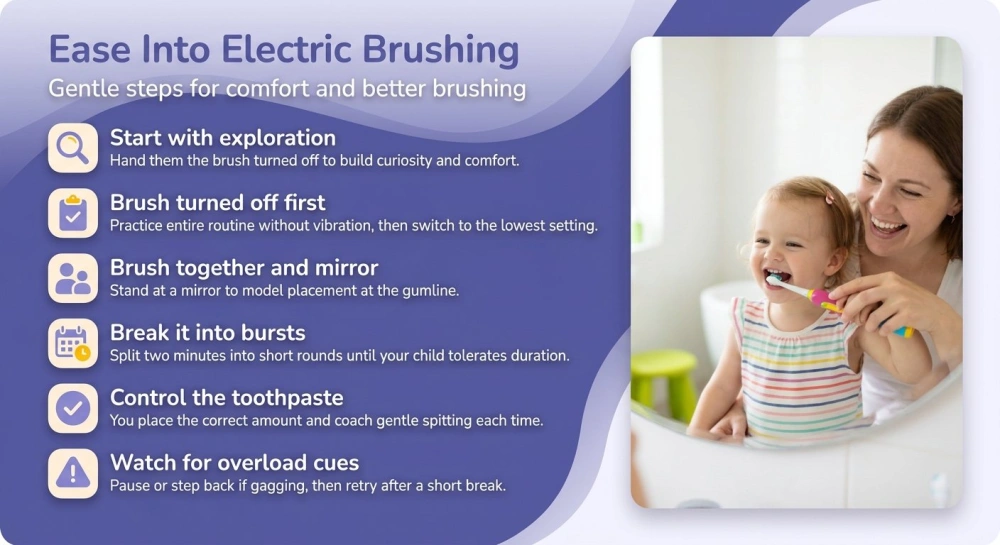
- Start with exploration Let your child hold the brush while it is turned off. Show how you use it. Keep sessions short and positive.
- Use the off setting first Brush with the device turned off for a few days. Then try the lowest power setting. Increase only when your child is ready.
- Model and mirror Brush together in front of a mirror. Children learn by watching, and this makes it easier to guide placement at the gumline.
- Break it into mini sessions If two minutes feels long at first, do two or three short sessions in the same morning and evening until your child tolerates the full time.
- Keep control of toothpaste You place the fluoride toothpaste on the brush in the age appropriate amount, and remind your child to spit instead of swallow [2] [3].
What fluoride toothpaste amount should children use by age?
Fluoride strengthens enamel and lowers cavity risk for children when used in the right amount. Professional groups offer clear, age based guidance for parents.
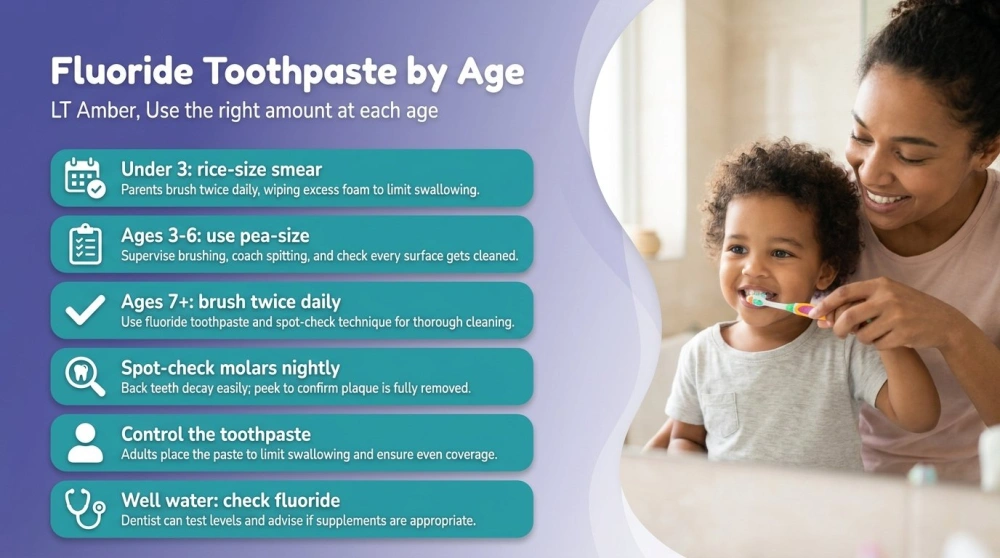
- Under age 3 Use a smear sized amount that is about the size of a grain of rice on the brush. Brush twice daily and wipe away excess foam. Parents should perform the brushing and keep the brush head under control [2] [3].
- Ages 3 to 6 Use a pea sized amount. Supervise to help your child spit and to make sure all surfaces are cleaned. Children may not be ready to brush alone until they can tie their own shoes or write in cursive, which signals improved hand skills [2].
- Ages 7 and older Continue twice daily brushing with a fluoride toothpaste and spot check to confirm thorough cleaning, especially of molars that are prone to decay.
For families with well water or questions about fluoride levels, ask your pediatric dentist about testing and whether supplements are appropriate, which aligns with preventive care guidance from national organizations [4].
How long and how often should children brush their teeth?
The routine stays the same whether you choose manual or electric. Brush for two minutes twice daily with a fluoride toothpaste. Most children need a parent to help reach all areas and to maintain gentle pressure throughout the session [2] [1].
- Morning and night Brushing after breakfast clears sugars and starches from enamel. Brushing before bedtime is essential because saliva flow drops during sleep.
- Timers and songs Use the built in timer or play a two minute song to keep things fun and consistent.
- Flossing Once two teeth touch, floss once daily. Many parents find flossers easier for small mouths.
Early habits matter. National health surveys show that more than one in five children ages 2 to 5 have experienced tooth decay in primary teeth, and risk rises with age. Daily brushing and routine dental visits help reduce this burden [9].
What battery and choking safety steps should parents follow?
Kids electric toothbrushes are common household devices, which means battery safety and small parts awareness are important. Simple precautions lower risks.
- Store devices out of reach Keep powered brushes and replacement heads where young children cannot access them without supervision.
- Secure the battery compartment Check the battery door for a screw and make sure it is fully closed. Button batteries can cause serious internal injuries if swallowed. If you suspect a child ingested a battery, go to the emergency department right away and follow national safety guidance [7].
- Inspect brush heads Replace the head every three months or sooner if bristles are frayed. A damaged head can loosen and pose a swallowing risk.
- Seat your child Brushing while seated helps reduce sudden movements that can lead to gagging or bumping the brush.
How does orthodontic treatment or special needs influence toothbrush choice?
Toothbrush choice should reflect your child’s unique needs, including braces, sensory preferences, or medical considerations. The goal is comfort, consistency, and thorough plaque removal.
- Children with braces Small head powered brushes and interdental brushes can help clean around brackets and wires. Timers and quadrant prompts can improve coverage. Your orthodontic team can personalize the plan.
- Sensory sensitivities Start with a very soft manual brush, then consider an electric model with a low setting and soft start. Introduce vibration gradually and allow plenty of practice sessions without toothpaste at first.
- Motor challenges A thicker handle and a powered head can reduce the dexterity demands of brushing. Parents can guide the handle while the child focuses on gentle opening and closing and head position.
- Medical guidance For children with specific health conditions, consult your pediatric dentist or physician team to align brushing tools with overall care [2].
What signs show your child is ready to handle an electric toothbrush?
Readiness depends on behavior and coordination rather than age alone. Look for these practical cues before handing over the controls.
- Comfort with gentle vibration Your child accepts the sensation without gagging or biting the brush.
- Ability to hold still Your child can stay seated and follow simple steps for two minutes.
- Gentle hand pressure Your child brushes with light pressure instead of scrubbing hard.
- Spitting on cue Your child can spit out toothpaste rather than swallow it, which is important with fluoride use [2].
If these are not in place yet, continue with parent led brushing and practice with a manual brush or with a powered brush turned off until your child is ready.
What local guidance is relevant for families in Laguna Niguel CA?
Families in Laguna Niguel have access to California based oral health resources. The California Department of Public Health Oral Health Program supports community prevention strategies and family education materials that align with national recommendations on fluoride use and routine dental care [10]. Local dental providers can also guide fluoride varnish schedules and help coordinate care if your child needs specialty services.
Pediatric preventive dentistry in Laguna Niguel connects daily home care with local prevention programs and regular checkups. If your child attends preschool or elementary school, ask about oral health education events or fluoride varnish programs supported by state partners. These efforts complement home brushing and professional cleanings [4] [10].
When should you visit a pediatric dentist in Laguna Niguel CA?
Schedule the first dental visit by your child’s first birthday or within six months of the first tooth. Early visits help parents learn simple techniques for daily care and allow your dentist to track growth and spot small issues before they become larger ones [2]. If you are wondering whether your toddler is ready to try a kids electric toothbrush, this is a perfect topic for an in person demonstration at a routine visit.
Common reasons to schedule outside of the regular checkup include visible plaque you cannot remove, bleeding gums, white or brown spots on teeth, mouth pain, or difficulty tolerating brushing at home. A pediatric dentist in Laguna Niguel can adjust the plan and recommend tools that make home care easier for your family’s daily routine.
How can you build a positive brushing routine that sticks?
Consistency and calm turn brushing into an easy part of your child’s day. Whether you prefer a manual brush or a kids electric toothbrush, these steps can help.
- Make it predictable Brush at the same times every day. Younger children do best with a visual routine chart and a short countdown before brushing starts.
- Keep it fun Try two minute songs, sticker charts, or a silly brushing dance. Let your child choose the brush color or a favorite character.
- Use coaching words Say gentle circles at the gumline and lift your cheeks so I can reach your molars.
- Do a parent pass Allow your child a turn, then a parent finishes the job to make sure all surfaces are clean.
- Check technique regularly Ask your dental team to show your child how to angle the brush and how little pressure is needed.
These small habits work alongside routine professional care. Pediatric preventive dentistry can provide simple coaching and age specific adjustments to keep your child on track at each stage.
What common mistakes with kids toothbrushes should parents avoid?
Avoiding a few pitfalls can make brushing safer and more effective for children.
- Using a brush head that is too large A small round head or compact oval head fits better and reaches molars more easily.
- Brushing too hard Light pressure is healthier for gums and enamel. A pressure sensor can help cue gentle brushing.
- Too much toothpaste Stick to a smear for under 3 and a pea size for ages 3 to 6 to reduce swallowing risk [2] [3].
- Not replacing brush heads Frayed bristles do not clean well. Replace every three months or sooner if worn.
- Leaving powered brushes within reach Secure storage limits access to batteries and small parts, which is important for safety [7].
Who are we and how do we support families in Laguna Niguel CA?
At Kidz Modern Dentistry, we care for children from the first tooth through the teen years with a calm, friendly approach that helps families feel prepared and supported. We serve Laguna Niguel and nearby communities across South Orange County and welcome both routine visits and same day concerns. You can reach our team at +1 949 273 0110 for questions, scheduling, or assistance.
Our pediatric dentist team focuses on practical guidance for home care and in office prevention. We tailor tips to your child’s age and comfort level, whether you are choosing a kids electric toothbrush, learning how to brush kids teeth more effectively, or comparing manual versus electric options. We also offer child friendly sedation when appropriate, emergency care for urgent needs, and comprehensive children’s dental care in a setting designed for families.
Here is how we support your next steps with electric toothbrush decisions and daily care.
- Age specific coaching We demonstrate how to position the brush at the gumline, use the right toothpaste amount, and pace brushing with a timer so parents can use the same steps at home.
- Personalized tool selection We help you choose brush head sizes, bristle softness, and handle styles that fit your child’s mouth and motor skills. For toddlers we share gentle transition plans that build tolerance over time.
- Hands on demonstrations During checkups we provide guided practice for parents and kids, including how to brush around erupting molars and how to adjust for braces.
- Coordinated preventive visits We combine cleanings, exams, fluoride treatments, and sealant discussions so you leave with a clear plan for the next six months.
- Same day support If your child has discomfort, a broken brush head, or bleeding gums with brushing, we offer same day emergency appointments when available to get you quick answers and relief.
Our team brings years of combined experience serving local families. We focus on clear communication, practical education, and a calm environment. Families see the same familiar professionals for continuity, and you will always have direct access to a qualified pediatric dentist for questions about your child’s oral health.
If you would like help deciding when your child is ready for a kids electric toothbrush or you want personalized kids oral hygiene tips, we are here to guide you with step by step coaching. We look forward to supporting your family with a plan that fits your daily routine and your child’s personality.
Where can you find the sources for this guide?
- Toothbrushes and Brushing Tips – American Dental Association
- Oral Health Policies and Best Practices – American Academy of Pediatric Dentistry
- Fluoride toothpaste use for young children – ADA Council on Scientific Affairs
- Prevention of Dental Caries in Children Younger Than 5 Years – US Preventive Services Task Force
- Powered Toothbrush Product Classification – US Food and Drug Administration
- Powered versus manual toothbrushing for oral health – Cochrane Review
- Button Battery Safety – US Consumer Product Safety Commission
- ADA Seal of Acceptance Program – American Dental Association
- Dental Caries and Sealant Prevalence in Children and Adolescents – National Center for Health Statistics
- Oral Health Program – California Department of Public Health
- Children’s Oral Health – National Institute of Dental and Craniofacial Research
- Brushing Your Teeth – American Dental Association
Common Questions About This Topic
Find answers to frequently asked questions related to this article.
