
- What is pediatric bruxism and how common is it?
- What causes teeth grinding in children?
- What signs and symptoms should parents watch for?
- How do dentists diagnose bruxism in kids?
- Why do kids grind their teeth at night and what is the role of sleep?
- Can bruxism affect the jaw joint in children?
- Is teeth grinding linked with ADHD or autism in kids?
- How can parents help reduce teeth grinding at home?
- What treatments do pediatric dentists use for bruxism?
- When should a child use a night guard or mouthguard?
- Could sleep apnea or snoring be part of the problem?
- How does bruxism differ in toddlers, school age children, and teens?
- What happens if teeth grinding goes untreated?
- When should you see a pediatric dentist in Laguna Niguel?
- How do local and professional guidelines shape pediatric bruxism care in California?
- How can families in South Orange County get care and support?
- Who is Kidz Modern Dentistry and how do we help children with bruxism?
- Which references and resources were used for this article?
What is pediatric bruxism and how common is it?
Pediatric bruxism means a child clenches or grinds their teeth. It can happen during the day or at night while sleeping. Nighttime teeth grinding is considered a sleep related movement behavior and it may be silent or loud enough that you can hear it across the room. Over time, bruxism can wear down tooth enamel, stress the jaw muscles, and in some cases contribute to headaches or jaw discomfort [1] [2].
How often does it happen in kids? Studies vary because researchers use different ways to measure grinding. Many dentists see it in everyday practice, and sleep specialists classify sleep bruxism as a recognized condition in children as well as adults [2]. If you hear grinding, notice morning jaw soreness, or see flattened chewing surfaces, it is worth a conversation with a pediatric dentist. Early guidance can prevent small issues from turning into larger problems for growing smiles [1].
What causes teeth grinding in children?
There is rarely a single cause. Bruxism usually results from a mix of factors that can differ by age and health history. Dentists and physicians consider the following possibilities when creating a care plan for your child:
Could stress, habits, or mood play a role?
Emotional stress, changes in routine, or tension can sometimes show up physically as clenching or grinding, especially at night. Some children develop oral habits like cheek biting or nail biting that appear alongside bruxism. Dental teams often suggest age appropriate coping tools, bedtime routines, or habit counseling when stress seems to be a driver [1] [6].
Can jaw growth, bite, or teething changes contribute?
In toddlers and young children, new teeth erupt, baby teeth loosen, and bites change quickly. Some temporary grinding may occur as the mouth adapts. In older children, certain bite patterns may place extra load on specific teeth. Pediatric dentists evaluate growth and occlusion during routine visits to see whether these changes are likely to be related to grinding [5].
Do sleep patterns or breathing affect bruxism?
Sleep quality matters. Sleep specialists note that sleep bruxism can occur along with other sleep related concerns such as snoring or disrupted breathing. Addressing sleep hygiene and screening for sleep problems can be an important part of care if nighttime grinding is frequent or intense [2].
Could medical conditions or medications be involved?
Some medical conditions and certain medications have been associated with bruxism in research. Stimulant medications, some antidepressants, and other agents may be linked in select cases. Always speak with your pediatrician or prescribing provider before making any changes to medications. A coordinated approach among your dentist and physician helps ensure safe, appropriate care [6].
What signs and symptoms should parents watch for?
Bruxism can be easy to miss because children might not realize they are grinding. Parents and caregivers can look for these common signs during home care and daily routines:
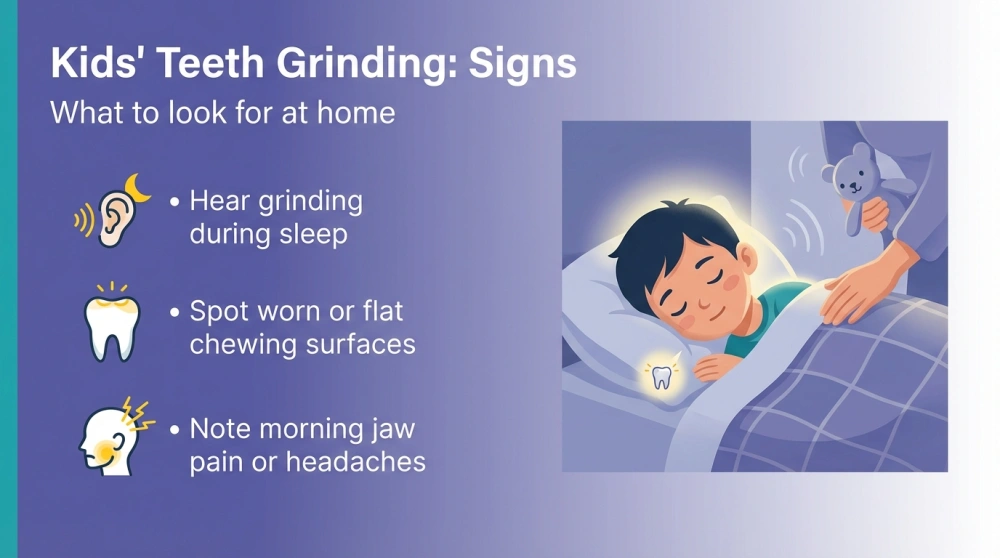
- Audible grinding at night that sounds like rubbing or crunching teeth together, often noticed by a parent or sibling [2].
- Worn enamel or flattened biting edges that look shiny or less detailed compared to other teeth [1].
- Tooth sensitivity to cold or brushing that seems new or more frequent [1].
- Morning jaw or cheek soreness and possible headaches after sleep [2].
- Cheek or tongue biting marks along the sides of the tongue or inside the cheeks [1].
- Difficulty opening widely or clicking in the jaw joint when yawning or chewing [3].
If you notice these signs, a pediatric dental exam can help determine whether grinding is temporary or part of a pattern that could affect teeth and joints over time [4].
How do dentists diagnose bruxism in kids?
Pediatric dentists start with a thorough conversation about your child’s sleep, stressors, daily routines, and any medications. Then they examine the teeth, gums, and jaw joints for signs of wear or tenderness. They may ask about headaches, morning soreness, or behaviors like chewing on pencils or ice. In some cases, photographs or simple models help track changes over time.
When sleep concerns are prominent, dentists may coordinate with your pediatrician or a sleep specialist for further screening. At times, a sleep study can clarify whether other sleep related breathing conditions are present. Collaboration helps create a plan that protects teeth while addressing the wider picture of your child’s health [2] [4].
Why do kids grind their teeth at night and what is the role of sleep?
Nighttime grinding can occur in lighter stages of sleep and around arousals. Children who have inconsistent bedtimes, limited wind down time, or interrupted sleep may be more prone to bruxism episodes. Building healthy sleep habits can help reduce intensity and frequency for some kids. If snoring, gasping, or restless sleep is present, talk with your pediatrician because these can point to other sleep issues that deserve attention [2].
Sleep experts describe sleep bruxism as a pattern that can be influenced by the nervous system, arousal responses, and airway factors. While not every child with grinding has a sleep disorder, it is wise to watch for signs of poor sleep quality and mention them during dental and medical visits [2].
Can bruxism affect the jaw joint in children?
Yes, repetitive clenching can strain the temporomandibular joints, also called TMJ. Children may wake with jaw fatigue, occasional clicking, or tenderness in the cheeks and temples. Most children respond well to conservative care such as habit changes, jaw stretching as directed by a dentist, and temporary bite protection when needed. Pediatric guidelines emphasize conservative, reversible approaches first to protect growing joints and teeth [3] [4].
Is teeth grinding linked with ADHD or autism in kids?
Research has explored possible connections between bruxism and conditions such as attention deficit hyperactivity disorder and autism spectrum disorder. Some studies report higher rates of grinding in groups of children with these conditions, while others do not find strong links. What matters most for families is an individualized plan that considers behavior, sensory needs, and any medications. Because ADHD is common in school age children, parents and dentists often work together to monitor oral habits and comfort over time [6] [9] [10].
If your child has a neurodevelopmental condition or complex medical history, let your dental team know. A calm environment, clear steps, and gentle desensitization can make visits easier and help your child build confidence in the chair [5].
How can parents help reduce teeth grinding at home?
Home strategies can make a real difference. You do not have to try everything at once. Pick a few ideas that fit your family and make them part of a consistent routine.
- Shape a calming bedtime routine. Aim for a predictable schedule, dim lights, and quiet activities before bed. Screens close to bedtime can make it harder to settle.
- Support relaxation. Gentle stretches, deep breathing, or reading together can lower nighttime tension. Some children like a warm bath or soft music.
- Protect the cheeks and tongue. If you notice frequent cheek or tongue biting, mention it to your dentist. Simple tips can reduce irritation while you assess the bigger picture.
- Limit chewing triggers. Ice, pens, or very sticky foods can train muscles to stay tight. Offer softer chewing options if your child tends to clench with concentration.
- Keep a simple diary. Note when grinding sounds loudest, whether mornings bring soreness, and any stressful events. These clues help your dentist tailor care.
- Encourage good hydration. A well hydrated mouth supports healthy muscles and tissues during sleep.
If you have tried these steps for several weeks and grinding still seems frequent or forceful, reach out to a pediatric dentist. Early guidance can save enamel and ease muscle strain [1].
What treatments do pediatric dentists use for bruxism?
Care is personalized based on your child’s age, symptoms, and exam findings. Most treatment plans start with the least invasive options and adjust as your child grows. Dentists may recommend one or more of the following:
Will education and habit coaching help?
Yes. Understanding what bruxism is and how daily routines affect it can be empowering for kids and parents. Habit coaching and guidance on jaw relaxation, posture, and healthy chewing choices are first line steps for many families [5].
Are short term protective appliances used?
When tooth wear, sensitivity, or jaw discomfort is present, dentists may use a custom protective device to shield teeth at night. Appliances for children are designed with growth in mind and are monitored closely. The goal is comfort and protection while avoiding long term changes to bite development [4].
Do dentists collaborate with physicians and therapists?
They often do. If stress, anxiety, or sleep breathing issues are part of the picture, a team approach with your pediatrician, behavioral health provider, or a sleep specialist can improve results. Adjusting routines, addressing allergies or congestion, and improving sleep quality can reduce grinding in some children [2] [6].
When should a child use a night guard or mouthguard?
There is no one size fits all answer. Dentists consider a night guard when a child shows clear enamel wear, recurring tooth sensitivity, or jaw pain that is not improving with conservative steps. The device is custom fitted and adjusted as needed. Pediatric dentists typically choose simple, reversible designs and reassess fit as teeth grow and erupt. These devices are not meant to change the bite. They are used to cushion forces and protect enamel while underlying factors are addressed [4].
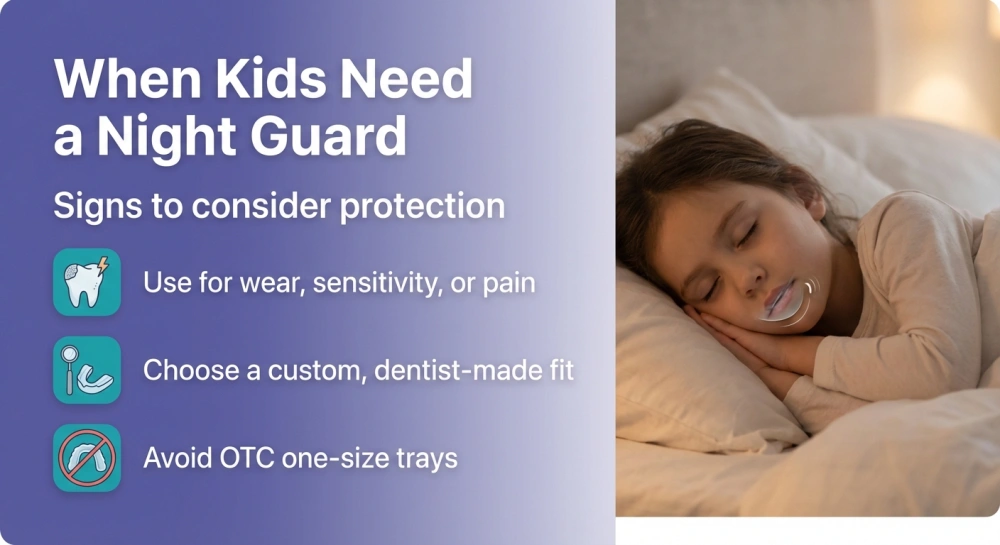
Some families ask about over the counter trays. These are not shaped for a growing mouth and can be bulky. A custom fit made by a dental professional is more comfortable and more likely to be worn as directed. For many children, dentists may recommend Teeth grinding mouthguards as part of a short term plan that also includes sleep and habit support [4] [6].
Could sleep apnea or snoring be part of the problem?
It is possible. Snoring, mouth breathing, restless sleep, or daytime sleepiness can signal a sleep breathing issue in children. Some research discusses bruxism appearing alongside sleep related breathing problems for certain kids. If you notice these signs, speak with your pediatrician. Screening and, when indicated, sleep testing can clarify what is happening at night. Treating airway concerns can improve sleep quality and may reduce grinding in some cases [2] [7].
Healthy sleep supports attention, mood, and growth. It also reduces the chance of night awakenings where grinding episodes often cluster. Your dentist and pediatrician can help you decide whether sleep evaluation is appropriate for your child [2] [7].
How does bruxism differ in toddlers, school age children, and teens?
What might parents see in toddlers and preschoolers?
In early childhood, brief grinding phases can occur as new teeth erupt and the bite changes. Many toddlers outgrow mild grinding without intervention. If grinding is loud, persistent, or causing chipped teeth, a pediatric dental visit is wise. Dentists can rule out enamel defects, discuss safe comfort strategies, and outline when to monitor versus treat [5].
What patterns appear in school age children?
School routines, sports, homework, and social changes can increase stress. Some children clench when concentrating or during sleep. This is when parents may start noticing flattened molars, cheek biting, or morning soreness. Conservative protection and habit coaching are often helpful at this stage. If snoring or congestion is part of the story, talk with your pediatrician about airway health as well [2].
What concerns arise during the teen years?
Teens may experience higher academic stress and use caffeine or energy drinks, both of which can affect sleep. Orthodontic changes may also interact with grinding. Communication matters here. Encourage your teen to share any jaw pain, headaches, or tooth sensitivity. A supportive plan that blends lifestyle steps and short term protection can keep the smile healthy during a busy season of life [4] [6].
What happens if teeth grinding goes untreated?
Untreated, frequent grinding can lead to cumulative wear. Baby teeth may flatten or chip, and in some cases permanent teeth can show early wear. Sensitive teeth can make brushing and eating uncomfortable, which can impact daily routines. Some children develop jaw muscle fatigue or occasional headaches. These problems are preventable. The earlier your family talks with a dentist, the simpler the steps usually are to protect teeth and reduce discomfort [1] [3].
When should you see a pediatric dentist in Laguna Niguel?
Reach out if you hear regular grinding at night, see flattened chewing surfaces, or notice morning jaw soreness. It also helps to schedule a visit if your child snores, wakes often, or has difficulty concentrating during the day, since sleep quality and grinding can be connected in some children. Families in Laguna Niguel, Aliso Viejo, Laguna Hills, Mission Viejo, Laguna Beach, and San Juan Capistrano can schedule a gentle exam to discuss a plan that fits your child’s needs and age [2].
If protection is part of the plan, custom options are available locally. Teeth grinding mouthguards in Laguna Niguel are made to fit growing smiles and monitored to keep up with changes as baby teeth give way to permanent teeth [4].
How do local and professional guidelines shape pediatric bruxism care in California?
In California, licensed dentists follow state regulations designed to protect patients and support high quality care. Practices must meet standards for safety, informed consent, and ongoing professional education under the Dental Board of California. For children, that includes communication with parents or guardians and age appropriate approaches to comfort and cooperation during care [8].
Clinical decisions for bruxism are also guided by professional best practices. The American Academy of Pediatric Dentistry provides recommendations that emphasize conservative, reversible treatments first for jaw and muscle discomfort, careful monitoring of bite and growth, and close follow up when protective appliances are used. These principles keep the focus on safety for developing teeth and joints [4] [5].
How can families in South Orange County get care and support?
If you live in Laguna Niguel or nearby communities like Aliso Viejo, Laguna Hills, Mission Viejo, Laguna Beach, or San Juan Capistrano, start by noting what you hear and see at home. Keep a simple log of grinding sounds, morning soreness, or triggers like busy school weeks. Then schedule a visit with a pediatric dentist who can examine your child’s teeth and discuss next steps that match your child’s age and comfort level.
Ask about sleep, stress, and daytime habits during your visit. When needed, your dentist can coordinate with your pediatrician or a sleep specialist so that everyone is working from the same playbook. Teamwork helps address not just the grinding, but the factors that might be adding fuel to the fire [2].
Who is Kidz Modern Dentistry and how do we help children with bruxism?
At Kidz Modern Dentistry, we care for children of all ages with a calm, step by step approach. Our team helps families understand pediatric bruxism, decide when to monitor, and choose practical treatments that protect teeth without interrupting healthy growth. We serve families across Laguna Niguel, Aliso Viejo, Laguna Hills, Mission Viejo, Laguna Beach, and San Juan Capistrano.
How do our services guide your next steps?
We begin with a conversation about your child’s sleep, routines, and comfort, then perform a gentle exam to check enamel, muscles, and joints. If grinding is mild, we focus on home strategies and regular checkups. If teeth are wearing or your child has morning soreness, we discuss short term protection and habit coaching. When sleep or breathing concerns are present, we coordinate with your pediatrician for timely screening.
What is our approach to comfort and cooperation?
Visits are paced to your child. We explain what will happen next, use show and tell, and offer small breaks when needed. For children who are anxious, we provide kid friendly sedation options when appropriate and only with parent or guardian consent. Our goal is to make each visit a positive experience so children build trust and confidence over time.
What tools and processes support quality care?
We use digital records and photography to track changes in wear and bite as your child grows. When a protective appliance is recommended, we take precise impressions or scans to fabricate a custom fit. Appliances are checked and adjusted at follow ups to keep pace with erupting teeth and changes in the bite.
How do we collaborate and personalize care?
We work closely with local pediatricians, therapists, and sleep specialists so that your child’s plan fits the whole health picture. For children with special health care needs, we tailor desensitization, communication, and scheduling to help make visits smooth and predictable.
Where do we operate and how can you reach us?
We welcome families from Laguna Niguel and neighboring South Orange County communities. Same day time is set aside for urgent concerns when grinding leads to a chipped tooth or sudden sensitivity. To schedule, call +1 949 273 0110 and our team will help you find a convenient time.
What results have families experienced through our care?
Parents often share that their child sleeps more comfortably once a plan is in place, and that sensitivity improves when enamel is protected. With regular checkups, we monitor for changes and help your family stay ahead of new concerns. If protective devices are used, we reassess fit and comfort as your child grows so that care stays effective and age appropriate.
Which references and resources were used for this article?
- Bruxism – MedlinePlus
- Bruxism – American Academy of Sleep Medicine Sleep Education
- Temporomandibular Joint Disorders – National Institute of Dental and Craniofacial Research
- Best Practices for Temporomandibular Disorders in Children – American Academy of Pediatric Dentistry
- Policy on Oral Habits – American Academy of Pediatric Dentistry
- Bruxism – StatPearls – NCBI Bookshelf
- Children and Sleep Apnea – American Academy of Sleep Medicine Sleep Education
- Dental Board of California – State of California
- ADHD Data and Statistics – Centers for Disease Control and Prevention
- Autism Data and Statistics – Centers for Disease Control and Prevention
Common Questions About This Topic
Find answers to frequently asked questions related to this article.
