- Why do kids get buildup on their lower teeth more than other spots?
- How often do kids need dental cleanings based on age and risk?
- What daily habits help prevent plaque on lower teeth in children?
- What dental conditions can result from ongoing buildup on lower front teeth?
- How does a pediatric cleaning work during a visit?
- What local and national guidelines apply to pediatric dental care in California?
- Who is Kidz Modern Dentistry and how do we help families in Laguna Niguel, CA?
- Which references and resources support this guide?
Why do kids get buildup on their lower teeth more than other spots?
If you are noticing a yellow or chalky white crust near the inside surfaces of your child’s lower front teeth, you are seeing plaque that has hardened into tartar, also called calculus. This area is a hot spot because the major saliva ducts open nearby on the floor of the mouth, and saliva contains minerals like calcium and phosphate that can rapidly harden dental plaque into calculus on those lower incisors [2]. Movement of the tongue and gravity also push food debris and saliva toward the lower front teeth, which is why parents often see more buildup there even when kids brush daily [2].
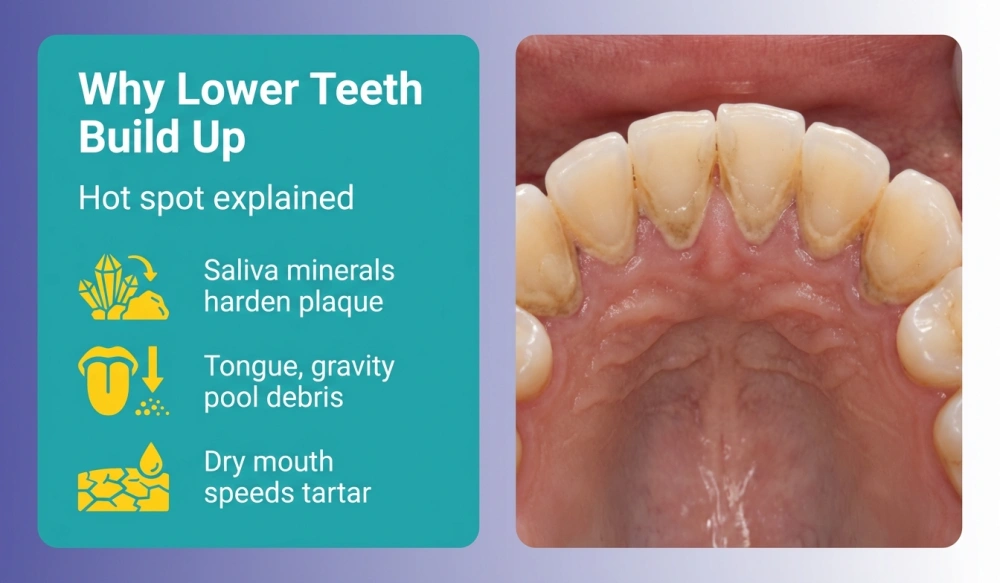
It helps to think of plaque as soft and removable, and tartar as hard and stuck. Plaque forms when bacteria in the mouth use sugars and starches to produce a sticky film on teeth. If plaque is not brushed and flossed away every day, minerals in saliva crystallize that film into tartar. Once tartar forms, regular home brushing will not remove it effectively and professional cleaning is needed [1][2]. Dental cleanings for children interrupt that process before tartar becomes thick and irritating to the gums.
What is the difference between plaque and tartar on kids’ teeth?
Soft plaque is a biofilm that grows quickly and contains bacteria that can inflame gums and produce acids that weaken enamel. Tartar forms when plaque stays in place and hardens. Tartar is rough and porous, which makes it easier for more plaque to stick, so the cycle accelerates until a professional cleaning removes it [2]. In kids, tartar tends to start along the gumline of the lower front teeth and around molars where brushing is difficult.
How do salivary glands and minerals contribute to lower teeth buildup?
The openings of the submandibular and sublingual glands are close to the back of the lower front teeth. Their saliva is rich in minerals that are essential for enamel health, but the same minerals can calcify plaque into tartar right where the ducts open, especially on the tongue side of the lower incisors [2]. This does not mean saliva is bad. In fact, saliva buffers acids and helps repair early enamel damage [7]. It simply means daily plaque removal is crucial in that location.
Could dry mouth or mouth breathing make buildup worse?
Yes. Saliva protects teeth by washing away food particles and neutralizing acids. When saliva flow is reduced, plaque can grow thicker and stickier, and tartar accumulates more quickly. Mouth breathing can dry oral tissues and change saliva distribution. Some medications can also reduce salivary flow. If your child has persistent dry mouth, ask your pediatric dentist for strategies to protect enamel and gums [7].
Why do some kids get tartar faster than others?
Several factors play a role:
- Plaque removal consistency Skipping thorough brushing along the gumline or skipping flossing lets plaque harden.
- Saliva composition Some children have saliva with higher mineral content which can calcify plaque more quickly [2].
- Diet and snacking frequency Frequent sugars and starches feed plaque and lower pH, which promotes mineral deposits and gum irritation [14].
- Orthodontic appliances Braces and expanders create plaque retention areas that need extra cleaning attention [1].
How often do kids need dental cleanings based on age and risk?
The right schedule depends on your child’s risk for cavities and gum inflammation. Professional organizations recommend the first dental visit by the first birthday, then regular recall visits at intervals tailored to the child’s needs. For many children, cleanings every six months are appropriate, but the interval can range from three to twelve months depending on risk factors and oral health status [1]. The decision is personalized and based on a dentist’s assessment, not a one size plan.
What does a risk based cleaning schedule look like for toddlers, school age children, and teens?
Here is a general overview that your pediatric dentist may adapt for your child:
- Toddlers and preschoolers First visit by age one, then recall visits every three to twelve months depending on risk. Fluoride varnish may be applied at periodic visits. Parents help with brushing twice daily using the correct amount of fluoride toothpaste [1][4].
- School age children Cleanings typically every six months, potentially more often if plaque control is difficult or early signs of gingivitis are present. Sealants are recommended on permanent molars when they erupt to reduce cavity risk [6].
- Teens Cleanings at six month intervals are common, with more frequent visits if braces are present, if sports drinks or frequent snacks are part of daily routine, or if periodontal inflammation is noted [1].
How do dentists decide the right recall interval for your child?
Your pediatric dentist will consider factors such as current plaque levels and tartar, gingival inflammation, caries history, fluoride exposure, diet, home hygiene consistency, orthodontic appliances, saliva flow, and any special health care needs. Based on this, the dentist will recommend an interval and supportive therapies such as fluoride varnish or sealants to lower risk [1][8].
What signs suggest a child might need more frequent cleanings?
- Visible tartar on lower front teeth Hard deposits or persistent discoloration despite brushing may indicate the need to shorten intervals [2].
- Gum bleeding or redness Bleeding during brushing or flossing signals gingival inflammation that benefits from improved home care and professional cleanings [12].
- New cavities or white spot lesions Early enamel changes or recent fillings can prompt closer follow up and supportive therapies [1].
- Orthodontic treatment Brackets and wires make cleaning harder and can lead to faster tartar accumulation and gum irritation [1].
How common are cavities in children and why does that matter for cleaning schedules?
Dental caries is one of the most common chronic diseases of childhood. More than half of children ages six to eight have had a cavity in a primary tooth, and about half of adolescents have had a cavity in a permanent tooth. Regular exams and cleanings help identify and manage risk early [3].
Are cleanings safe and comfortable for kids?
Yes. Pediatric cleanings use age appropriate techniques and gentle tools. If tartar is present, a clinician removes it carefully, then polishes to smooth the tooth surfaces. Fluoride varnish may be applied to strengthen enamel and reduce caries risk [5][8]. Your pediatric team will explain each step in child friendly language and adapt care for comfort.
Families in Orange County often ask about options close to home. Dental cleanings for children in Laguna Niguel are scheduled according to individual risk, with a focus on comfort and prevention for every age.
What daily habits help prevent plaque on lower teeth in children?
Daily habits make the biggest difference in preventing plaque on lower teeth in children. Focus on consistent brushing along the gumline and between teeth, smart snacking routines, and simple fluoride and sealant strategies that reinforce enamel strength.
Which brushing and flossing tips for kids are most effective?
- Brush twice daily with fluoride toothpaste For children under three, use a smear the size of a grain of rice. For ages three to six, use a pea sized amount. Help or supervise brushing until your child can tie shoes reliably [4].
- Angle the bristles at the gumline Aim the brush at a forty five degree angle to sweep plaque off the gumline of the lower front teeth where tartar tends to start [1].
- Use small circles on every surface Clean the front, back, and chewing surfaces of every tooth. On lower front teeth, remind kids to clean the tongue side slowly and thoroughly.
- Floss once daily when teeth touch Begin flossing as soon as two teeth contact to remove plaque that brushes miss. Floss picks can help little hands learn the motion [9].
- Choose the right brush A soft bristle brush with a small head is gentle on gums and can reach tight spots. Electric brushes can help some kids make more consistent strokes when supervised.
- Rinse or drink water after snacks Water helps clear sugars and acids that feed plaque bacteria between meals [7].
What about fluoride treatments for kids and dental sealants for children?
- Fluoride varnish boosts enamel strength Applied during checkups, fluoride varnish reduces cavities in primary and permanent teeth and is well tolerated by children [5][8].
- Sealants protect chewing surfaces Sealants can prevent up to 80 percent of cavities in the first two years after placement and continue working for several years with maintenance [6].
- Fluoride toothpaste is safe and effective When used in the recommended amounts with adult supervision, fluoride toothpaste is an important part of daily prevention [4][8].
What role does diet and snacking play in plaque and tartar formation?
It is not only how much sugar kids eat, but how often. Frequent snacking keeps acids active on teeth and gives bacteria constant fuel. Try to limit sugary drinks and snacks, offer water with meals and between meals, and include tooth friendly foods like cheese, nuts, crunchy vegetables, and yogurt. Reducing the frequency of free sugars supports enamel and gum health [14].
How can families make home care easier and more consistent?
- Make a routine Morning and bedtime brushing at the same time every day helps form a habit that sticks.
- Use a timer or song Two minutes can feel long to kids. A favorite song or timer keeps it fun.
- Brush together Young children do better when parents brush first and then let the child take a turn.
- Reward consistency Sticker charts or small weekly rewards for consistent brushing and flossing help motivation.
- Ask for personalized tips A quick demo from a pediatric hygienist can make your child’s routine smoother and more effective [1].
What dental conditions can result from ongoing buildup on lower front teeth?
Persistent plaque and tartar on lower front teeth can lead to gum inflammation, enamel demineralization, and unpleasant breath. While lower front teeth are not the most cavity prone surfaces, plaque retention along the gumline can still damage tissues and contribute to caries in susceptible children, especially when combined with frequent snacking and limited fluoride exposure [3][8].
What is gingivitis in children and what should parents watch for?
Gingivitis is inflammation of the gums caused by plaque at the gumline. Signs include redness, swelling, tenderness, and bleeding with brushing or flossing. Gingivitis is reversible with improved plaque removal and professional cleanings, but if left unaddressed it can progress in susceptible individuals [12]. Early attention keeps tissues healthy and comfortable.
Could calculus on lower front teeth kids affect speech or alignment?
Thick calculus can irritate gums and make teeth feel fuzzy or rough, which some kids notice when speaking or eating. Calculus itself does not move teeth, but if gum inflammation is chronic, the environment becomes less healthy. Clearing tartar and improving daily plaque control help kids speak and eat comfortably.
How does orthodontic treatment change plaque control needs?
Brackets, bands, and wires create ledges that hold plaque. Kids in braces need extra attention to brushing along the gumline and around brackets. Interdental brushes help clean under wires. More frequent professional cleanings may be recommended while appliances are in place to address heavy buildup, especially on lower front teeth [1].
How does a pediatric cleaning work during a visit?
Understanding what happens helps kids feel prepared and confident. Here is a typical flow for a pediatric preventive visit tailored to your child’s needs.
What steps are included in a pediatric cleaning appointment?
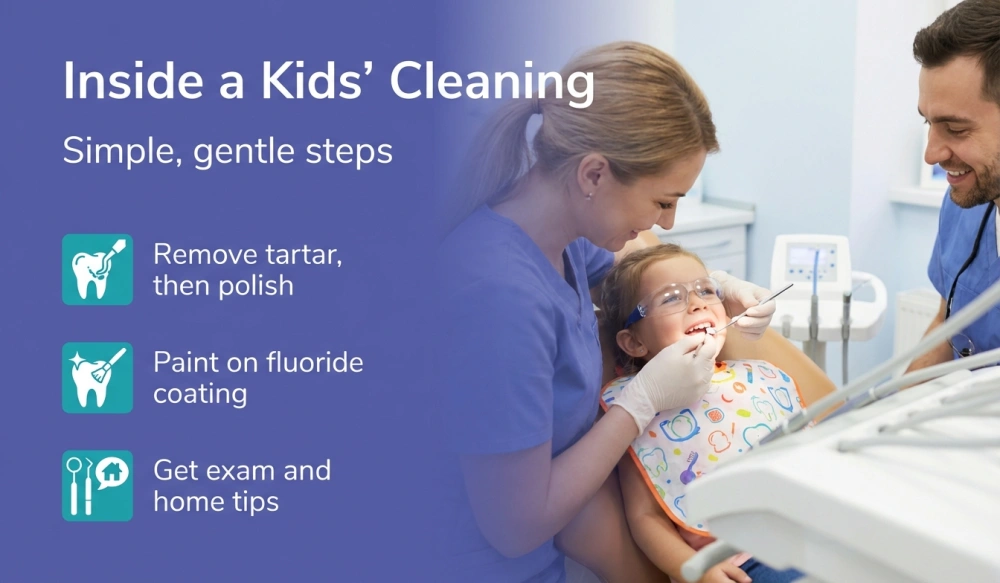
- Check in and comfort The team greets your child, reviews health history, and explains what will happen in simple terms.
- Plaque and tartar assessment The hygienist looks closely at the lower front teeth and other areas where plaque collects.
- Gentle tartar removal Any hardened deposits are removed with instruments designed for comfort. The goal is to restore smooth surfaces that resist plaque buildup [2].
- Tooth polishing Polishing paste removes soft plaque and surface stains so teeth feel clean and smooth.
- Fluoride varnish A quick, paint on fluoride varnish may be applied to strengthen enamel and reduce cavity risk [5][8].
- Exam and guidance The pediatric dentist evaluates teeth and gums, reviews home care, and recommends next steps and recall timing based on risk [1].
How do digital X rays fit into preventive care?
When needed, X rays help detect cavities between teeth and monitor tooth development. Pediatric dentists follow national recommendations to take radiographs only when the expected benefit outweighs the risk, using the lowest exposure needed for diagnostic quality and protective measures like thyroid collars [13]. Your child’s dentist will discuss whether images are needed at a given visit.
What if a child feels anxious or has special health care needs?
Pediatric teams use a tell show do approach, child friendly language, and behavior guidance to help kids feel comfortable. For children who need extra support, options can include morning appointments when children are well rested, comfort items from home, or in some cases sedation dentistry delivered by trained professionals in a controlled setting. The care plan is individualized to support a positive experience and safe, effective care [1].
What local and national guidelines apply to pediatric dental care in California?
In California, pediatric dental providers follow state and national standards designed to keep care safe and effective. Infection control follows the Dental Board of California minimum standards for sterilization and safety procedures in dental settings [10]. Fluoride and sealant recommendations align with guidance from professional organizations and federal agencies that evaluate safety and effectiveness for children [6][8]. Radiograph selection follows national consensus recommendations from dental and public health agencies [13]. These guidelines help ensure that preventive care is evidence based and appropriate for each child.
Who is Kidz Modern Dentistry and how do we help families in Laguna Niguel, CA?
We are a pediatric dental team that serves children and teens in Laguna Niguel, CA and nearby communities. If you are looking for a Laguna Niguel pediatric dentist, we focus on prevention first, with extra attention to the lower front teeth where buildup tends to collect. Our clinicians explain each step in child friendly language and partner with parents on daily habits that make home care easier.
Our approach is simple. We evaluate individual risk, create a personalized preventive plan, and schedule care at intervals that fit your child. That may include professional cleanings, fluoride varnish, and sealants when appropriate. We provide Dental cleanings for children for every age group and adapt visits for comfort. For families nearby, Laguna Niguel Dental cleanings for children are available with flexible scheduling that supports school and activity calendars.
- Where we operate We care for families across Laguna Niguel and surrounding South Orange County communities.
- How we help next steps After an exam, you receive a clear home care plan, diet advice tailored to your child, and a recall schedule based on risk so you know exactly what comes next.
- Unique methodology We use a prevention first model with risk assessment, gentle instrumentation focused on lower front teeth where tartar grows quickly, and step by step coaching for home routines.
- Supportive tools and processes Our office uses modern digital imaging when indicated, child sized instruments, and sensory friendly options to make visits positive.
- Leadership and experience Our pediatric dental providers bring years of combined experience caring for infants, children, and adolescents with a wide range of needs.
- Personalized service You have direct access to a pediatric dentist who answers questions and adapts care for your child’s comfort and goals.
- Success stories We often see kids with heavy lower front tartar return for follow up with healthier gums and easier home care after a few small habit changes and a well timed cleaning schedule.
- Service breadth From infant first visits to guidance through braces, we provide preventive care, education, and supportive treatments that fit growing smiles.
If you have questions or want help building an easy routine for your child, call us at +1 949 273 0110. We are here to answer questions and make visits a positive experience.
Which references and resources support this guide?
- Periodicity of Examination, Preventive Dental Services, Anticipatory Guidance and Oral Treatment for Infants, Children and Adolescents – American Academy of Pediatric Dentistry
- Dental Calculus – StatPearls, NCBI Bookshelf
- Children’s Oral Health Facts – Centers for Disease Control and Prevention
- Fluoride Toothpaste Use for Young Children – American Dental Association
- Fluoride varnishes for preventing dental caries in children and adolescents – Cochrane Library
- Dental Sealants Facts – Centers for Disease Control and Prevention
- Dry Mouth and Saliva Basics – National Institute of Dental and Craniofacial Research
- Policy on the Use of Fluoride – American Academy of Pediatric Dentistry
- Interdental Cleaners and Flossing – American Dental Association
- Minimum Standards for Infection Control – Dental Board of California
- Evidence Based Sealant Recommendations – American Dental Association
- Guideline on Periodontal Health in Children and Adolescents – American Academy of Pediatric Dentistry
- Dental Radiographic Examinations and Safety – American Dental Association and FDA
- Guideline: Sugars Intake for Adults and Children – World Health Organization
Common Questions About This Topic
Find answers to frequently asked questions related to this article.