- What does natural toothpaste for kids actually mean?
- How do kids toothpaste ingredients differ between natural and conventional options?
- Which toothpaste ingredients matter most for cavity prevention in children?
- Are fluoride free toothpastes effective for kids or mostly marketing?
- Is xylitol toothpaste for kids a good idea?
- What does safe toothpaste for toddlers age 2 to 3 look like?
- How do foaming agents flavors and dyes affect kids toothpaste choices?
- How should families in Laguna Niguel and South Orange County choose the best toothpaste for children?
- What do pediatric dentists in Laguna Niguel recommend for everyday brushing?
- Which regulations and standards govern toothpaste ingredients and claims in California and the United States?
- What practical children’s dental care tips can help prevent cavities at home?
- When is natural toothpaste a smart choice and when is it hype?
- How does Kidz Modern Dentistry support your child’s oral health choices?
- Which references and resources were used for this article?
What does natural toothpaste for kids actually mean?
Natural toothpaste for kids is a marketing term rather than a single regulated category. In practice it usually means the product favors plant derived or mineral based ingredients and avoids certain synthetic additives. What it does not automatically mean is that the toothpaste can prevent cavities. In the United States cavity protection claims are regulated and tied to specific active ingredients defined in the federal over the counter anticaries monograph that is administered by the Food and Drug Administration. Recognized anticaries fluoride actives include sodium fluoride stannous fluoride and sodium monofluorophosphate [3]. If a toothpaste is fluoride free it can help clean teeth but it typically is not permitted to claim prevention of tooth decay under that federal framework [3].
Another important signal is the ADA Seal of Acceptance. The American Dental Association evaluates submitted products for safety and effectiveness according to program standards. If you see the ADA Seal on a kids toothpaste it indicates the product met ADA criteria for the claims listed on its label which may include cavity prevention flavor compatibility and child friendly packaging [2]. The Seal is voluntary but it gives parents an easy way to identify products that have been independently reviewed.
So is natural toothpaste for kids a smart choice or hype. It can be either depending on your goals. If preventing cavities is the priority choose a children’s formula with an appropriate fluoride level and supervise brushing. If you are trying to avoid certain detergents or dyes a natural or free from labeled option may fit your family’s preferences. The most reliable way to sort choices is to look beyond the front label to the Drug Facts box ingredient list and any ADA Seal claims [2][3].
How do kids toothpaste ingredients differ between natural and conventional options?
Kids toothpaste formulas vary but most contain four functional parts. Understanding each piece helps you choose confidently.
- Active ingredient This is what prevents cavities. In the United States that is usually fluoride in a specific concentration and form recognized by federal standards [3].
- Abrasives These gentle polishers remove plaque and surface stains. Silica and calcium carbonate are common. Children’s formulas generally use milder abrasives than adult pastes.
- Detergents These create foam and help lift debris. Many conventional pastes use sodium lauryl sulfate. Families who prefer less foam may look for SLS free options.
- Flavor sweetener and color These make toothpaste more acceptable to children. Sweeteners used in toothpaste are non cariogenic such as xylitol or sorbitol and do not feed cavity bacteria. Color additives allowed in oral care in the United States must appear on the FDA list of permitted color additives for their intended use [14].
Natural or organic kids toothpaste often replaces conventional detergents flavors and colors with alternatives such as coconut derived surfactants essential oil flavors or plant based colorants. Some natural formulas are fluoride free while others include fluoride in the same concentrations found in conventional pediatric pastes. For cavity prevention the presence of a fluoride active is the key factor rather than whether the paste is marketed as natural [3].
Which toothpaste ingredients matter most for cavity prevention in children?
Decades of research show that fluoride in toothpaste strengthens enamel and reduces the risk of tooth decay when used correctly. National health agencies and professional associations recommend fluoride toothpaste for children as part of daily home care with age appropriate amounts and supervision to minimize swallowing [1][5][6].
Practical guidance for amounts is consistent across respected groups. For children younger than 3 years use a smear the size of a grain of rice. For children ages 3 to 6 use a pea sized amount. Help your child spit after brushing and do not rinse with large amounts of water so the small fluoride film can keep working [1][4][12]. This approach supports cavity prevention while reducing the chance of swallowing too much toothpaste during the years when kids are still learning good brushing habits.
Parents sometimes ask whether a higher or lower fluoride percentage is better. Within over the counter children’s products sold in the United States the active and level will follow the federal monograph and the label should state the fluoride type and concentration. Follow the label and your dentist’s advice for your child’s age and risk level [3].
In the broader context at home care works best alongside regular checkups and a prevention plan that suits your child’s needs. That is the heart of Pediatric preventive dentistry and it includes diet guidance fluoride varnish in office when indicated and dental sealants on permanent molars as kids grow [1].
Are fluoride free toothpastes effective for kids or mostly marketing?
Fluoride free pastes can help with the cosmetic goals of brushing such as removing plaque film and making breath feel fresh. They can be a good fit for families who want to avoid certain ingredients or for brief situations when a child cannot reliably spit and you are concerned about swallowing. That said preventing tooth decay requires an anticaries active ingredient. Under federal policy the recognized anticaries actives are fluoride compounds. Pastes without those actives cannot claim to prevent cavities and evidence for non fluoride alternatives is limited compared to fluoride toothpaste [3][6].
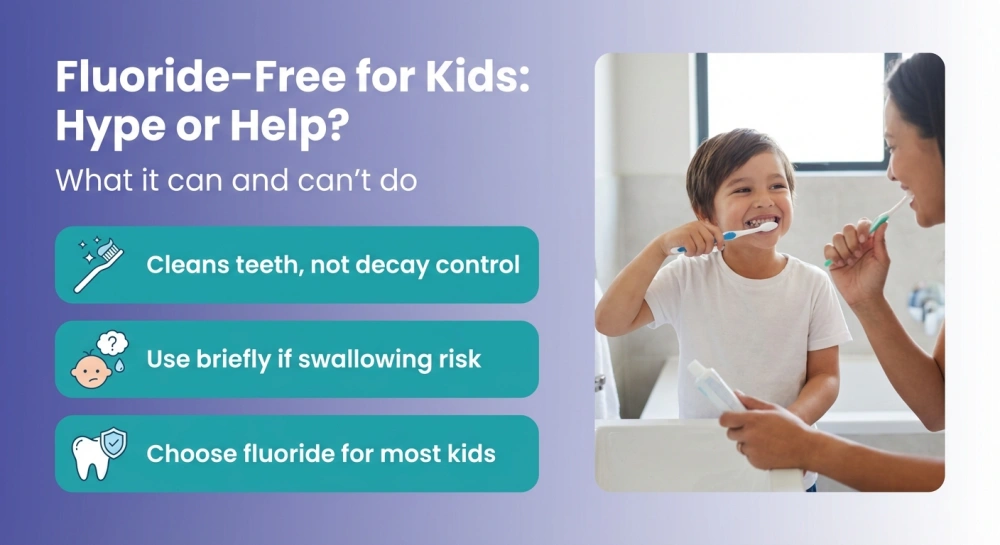
For most children especially those with any risk factors such as frequent snacking enamel defects or a history of early cavities national and specialty organizations recommend fluoride toothpaste with careful supervision rather than fluoride free options [1][5]. If your family prefers a natural style product consider one that still includes fluoride and carries the ADA Seal for the claims you care about [2].
Is xylitol toothpaste for kids a good idea?
Xylitol is a non cariogenic sweetener that does not feed cavity causing bacteria. Some products also promote xylitol as a cavity fighting ingredient. Research on xylitol for cavity prevention in children shows mixed results and often depends on the form dosage and frequency of use. A Cochrane systematic review found uncertainty about the benefits of xylitol containing products in children because the available studies were small or had risk of bias [7]. Toothpaste that contains both fluoride and xylitol can be acceptable but the proven anticaries benefit comes from the fluoride. If your child has special considerations ask your dentist whether a xylitol containing paste fits your prevention plan [1].
What does safe toothpaste for toddlers age 2 to 3 look like?
When it comes to toddlers, proper teeth care is crucial because they’re still learning how to spit and swallow correctly. This makes supervising their hygiene habits even more important than picking the right toothpaste brand. To ensure you’re following proper pediatric and dental advice, here are some simple steps to follow.
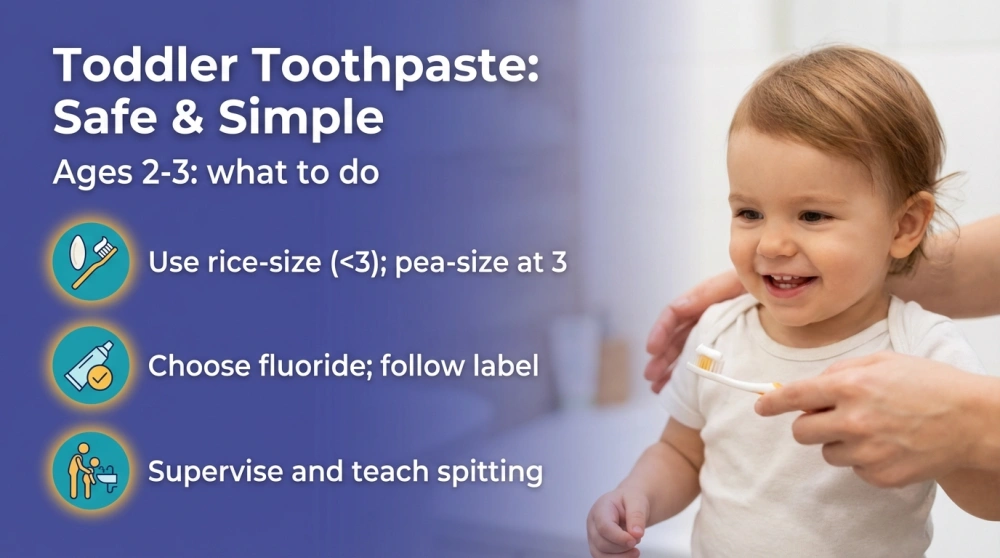
- Use the right amount For children younger than 3 years use a smear about a grain of rice. For ages 3 to 6 use a pea sized amount [4][12].
- Choose fluoride for most toddlers When used as above fluoride toothpaste helps protect new enamel and is recommended by national bodies for young children at risk of decay [1][6].
- Choose a child-friendly flavor: Opting for milder flavors can make it easier for youngsters who don’t enjoy the taste of mint in their toothpaste. Ensure you keep the tube away from your child to prevent any accidental consumption.
- Look for clear labeling The Drug Facts box lists the fluoride type and percentage when present. If a product is fluoride free it should not claim to prevent cavities under federal rules [3].
- Supervise and model spitting Gently help your child spit after brushing and wipe excess foam if needed. Consistent practice builds safe habits [11].
How do foaming agents flavors and dyes affect kids toothpaste choices?
Detergents such as sodium lauryl sulfate provide the foam that many of us expect. Some families report mouth sensitivity with foaming agents and choose SLS free kids toothpaste to reduce tingling or irritation. The ADA provides ingredient overviews and notes that people who get canker sores may prefer options without certain detergents [8]. If foaming seems to bother your child try a gentler formula and see whether brushing is more comfortable.
Color and flavor choices can motivate kids to brush but not all children tolerate strong flavors. Color additives used in toothpaste must be on the FDA list of color additives permitted for use in the United States and must meet identity and purity criteria. If your family prefers dye free toothpaste for children choose products that state dye free on the label and review the ingredient list to confirm [14]. Sweeteners in toothpaste are non cariogenic. Sugar is not used in toothpaste.
Remember that the core job of toothpaste is to help you brush well and deliver the active that prevents cavities. Flavor and color can support cooperation but they should not distract from daily brushing and flossing routines that fit your child’s stage of growth [11].
How should families in Laguna Niguel and South Orange County choose the best toothpaste for children?
If you live in Laguna Niguel Laguna Hills Aliso Viejo San Juan Capistrano Laguna Beach or Mission Viejo here is a practical selection checklist you can use today.
- Start with your child’s age and cavity risk Ask your dentist how often your child has new plaque buildup or enamel spots and whether your child is at low moderate or higher risk. This guides fluoride concentration and in office support like varnish [1].
- Look for the ADA Seal The ADA Seal of Acceptance is a quick way to spot kids toothpaste that has been evaluated for safety and effectiveness for the claims on its label [2].
- Confirm the active ingredient For cavity prevention choose a paste that lists an approved fluoride active in the Drug Facts box and follow the directions [3].
- Match flavor and texture to your child Mild flavors and smoother textures can encourage toddlers and sensitive kids to brush longer.
- Consider preferences and sensitivities If your child dislikes foam try an SLS free formula. If you prefer fewer colors choose dye free options that still have fluoride.
- Keep it simple A child who brushes twice daily with a pea sized or smear sized amount of fluoride toothpaste and gets regular dental checkups is following a plan that leading agencies support [1][5][6].
What do pediatric dentists in Laguna Niguel recommend for everyday brushing?
Local recommendations align with national guidance while adapting to your child’s specific needs. A pediatric dentist Laguna Niguel will typically suggest twice daily brushing with fluoride toothpaste using age based amounts and a soft child sized brush along with education for parents and caregivers on technique timing and motivation. Children benefit from fun timers songs or sticker charts to help reach the two minute mark each session [11].
Your family’s plan may also include fluoride varnish applications during cleanings if risk is moderate or higher diet coaching to reduce sugary drink frequency and sealants on permanent molars as they erupt. Laguna Niguel Pediatric preventive dentistry brings all of these pieces together so that home care toothpaste choices complement in office care and school schedules.
If your child has sensory needs food allergies or oral motor challenges your dentist can recommend specific flavors textures and techniques to make brushing more comfortable. For families interested in natural products your dentist can help you compare fluoride containing natural formulas that carry the ADA Seal with fluoride free options and explain what each can and cannot do [2][3].
Which regulations and standards govern toothpaste ingredients and claims in California and the United States?
Toothpaste sold in the United States falls under federal rules for over the counter drugs when it makes anticaries claims. The FDA anticaries monograph defines which active ingredients and concentrations are generally recognized as safe and effective and what manufacturers must include in Drug Facts labeling [3]. Advertising claims must be truthful not misleading and supported by competent and reliable evidence under the Federal Trade Commission’s standards for health related marketing [9].
Professional recommendations in California are guided by national evidence and the California Dental Board’s oversight of dental practice standards. The Board provides consumer information about dental care and licensure. Dentists must follow state law and ethical obligations when advising families about products and care plans [10].
Voluntary programs such as the ADA Seal of Acceptance provide additional independent review of safety and effectiveness for specific claims. Although the Seal is not a law it is widely recognized by professionals and families as a quality signal [2].
What practical children’s dental care tips can help prevent cavities at home?
Toothpaste choice is one part of a bigger picture. These daily steps matter just as much and help you get the most from whichever kids toothpaste you select.
- Brush twice daily Morning and night brushing with fluoride toothpaste and a soft brush removes plaque and strengthens enamel [11].
- Use the right amount Smear size for under age 3 and pea size for ages 3 to 6 with help spitting after brushing [4][12].
- Floss where teeth touch Begin flossing when any two teeth touch. Use child friendly flossers if that helps your child participate [11].
- Limit sugary snacks and drinks Offer water between meals. Sugary drinks increase cavity risk when sipped frequently [5].
- Ask about fluoride varnish and sealants These in office services add protection for children with elevated risk and for newly erupted molars [1].
- Know your water Community water fluoridation supports stronger enamel. Learn about fluoridation in your area through public health resources and ask your dentist how water habits fit your child’s plan [13].
- Schedule regular checkups Early preventive visits help catch issues before they become problems and keep kids comfortable in the dental setting [1].
When is natural toothpaste a smart choice and when is it hype?
Natural toothpaste can be a smart choice when your family wants a simpler ingredient list milder flavors or SLS free and dye free formulas and you still choose a fluoride containing option with credible backing such as the ADA Seal. It may be mostly hype if the front label implies cavity prevention without including a recognized active in the Drug Facts box or if marketing leans on vague terms that are not tied to safety or effectiveness standards [2][3].
For parents in Laguna Niguel Laguna Hills Aliso Viejo San Juan Capistrano Laguna Beach and Mission Viejo the best path is to match toothpaste to your child’s needs and habits with support from your dental team. If your child consistently brushes twice daily with a pea sized or smear sized amount of fluoride toothpaste and sees a South Orange County pediatric dentist for routine care you are following a path that leading health organizations support for reducing tooth decay in children [1][5][6].
In short choose a product with a proven active choose flavors and textures your child accepts and make brushing a positive family routine. If you have questions bring the tube to your next visit and ask for personalized guidance.
How does Kidz Modern Dentistry support your child’s oral health choices?
At Kidz Modern Dentistry we help parents turn information into simple daily habits that work for their child. Our team provides friendly guidance on natural toothpaste for kids how to read labels and how to set up morning and bedtime routines that stick. We serve families in Laguna Niguel and across South Orange County including Laguna Hills Aliso Viejo San Juan Capistrano Laguna Beach and Mission Viejo.
Our approach focuses on teamwork and education. We demonstrate brushing and flossing with your child explain fluoride amounts for each age and review your current toothpaste to confirm that it fits your goals. We also coordinate in office fluoride varnish when indicated and plan sealants for permanent molars at the right time. This is the everyday foundation of Laguna Niguel Pediatric preventive dentistry and it helps families align home care choices with effective clinical prevention.
We understand that some children feel anxious about care or flavors in toothpaste. Our kid friendly environment and gentle communication help children explore different brushes and tastes so they can find a combination they like. For young patients who need extra support we offer kid friendly sedation options only when appropriate along with same day help for unexpected concerns.
Parents often ask how to pick between fluoride vs fluoride free pastes or whether xylitol toothpaste for kids adds value. We give clear explanations grounded in professional guidance and current research so you can decide confidently. When needed we coordinate with your pediatrician about diet and swallowing skills and we can suggest SLS free kids toothpaste or dye free toothpaste for children if sensitivities are part of your child’s story.
- What we do every day Personalized brushing coaching ingredient reviews and prevention planning focused on your child’s age and risk level.
- How we support next steps Written home care plans quick reference guides on toothpaste amounts and reminders for checkups and sealants.
- Where we operate Convenient care for families in Laguna Niguel Laguna Hills Aliso Viejo San Juan Capistrano Laguna Beach and Mission Viejo.
- Why families choose us Calm visits positive coaching and direct access to pediatric dental professionals who listen answer questions and respect your preferences.
- Our experience Years of combined pediatric dental experience with a focus on prevention comfort and clear communication for parents and kids.
Whether you are comparing organic kids toothpaste choosing safe toothpaste for toddlers or deciding how to introduce new flavors we are here to help. Call us at +1 (949) 273 0110 to schedule a visit or ask questions about daily routines. Together we will map out simple steps that make sense for your family and support long term oral health. Pediatric preventive dentistry remains the thread that connects toothpaste choices diet and checkups into one plan that grows with your child.
Which references and resources were used for this article?
- Guideline on Fluoride Therapy – American Academy of Pediatric Dentistry
- ADA Seal of Acceptance – American Dental Association
- Anticaries Drug Products for Over the Counter Human Use – Electronic Code of Federal Regulations
- Toothbrushing and Flossing – American Academy of Pediatrics HealthyChildren
- Children’s Oral Health Basics – Centers for Disease Control and Prevention
- Fluoride: Water Toothpaste and More – National Institute of Dental and Craniofacial Research
- Xylitol containing products for preventing dental caries in children and adults – Cochrane Database of Systematic Reviews
- Toothpastes: Oral Health Topics – American Dental Association
- Advertising and Marketing on Health Claims – Federal Trade Commission
- Consumer Information – Dental Board of California
- Tooth Decay in Children – National Institute of Dental and Craniofacial Research
- Fluoride Toothpaste Use for Young Children: Clinical Recommendations – American Dental Association
- Community Water Fluoridation – Centers for Disease Control and Prevention
- Color Additives Permitted for Use in the United States – U.S. Food and Drug Administration
Common Questions About This Topic
Find answers to frequently asked questions related to this article.